Topic: Data

11 chapters across the catalog

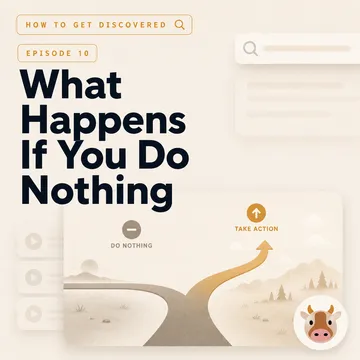
What Happens If You Do Nothing
Episode 10 13:10 - 15:29

10: What Happens If You Do Nothing

PodHerd Tool, Ownership and Domain Strategy

Tom reveals he has signed up for the PodHerd tool on a paid tier to integrate Search Console and manage his own domain via CNAME. He explains this shift as a move toward "building his own house" rather than relying on third-party platforms for his digital presence. This transition marks a change in his philosophy from skepticism to active implementation of discoverability infrastructure.
Compounding
Episode 9 0:00 - 2:45

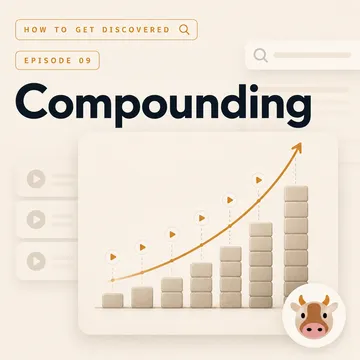
9: Compounding

Maya and Tom, Podcast Back Catalog Compounding Experiment

Maya and Tom introduce the concept of compounding data in podcasting, focusing on how back catalogs perform over long horizons. Maya reports on her three-week experiment with a new podcast feed, noting that while pages are being indexed by Google, the initial traffic numbers remain small. Tom argues that three weeks is insufficient for a dataset and prepares to explain why the growth curve of a podcast differs from typical expectations.

Under the Hood
Episode 8 0:00 - 1:47

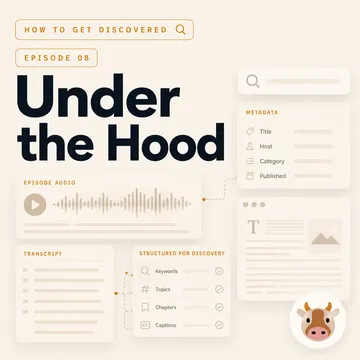
8: Under the Hood

Technical Vocabulary Rules for Podcast Discoverability Discussion

Maya and Tom introduce a technical episode of How to Get Discovered focused on transcript indexing and search engine behavior. Maya establishes a ground rule requiring Tom to define every technical term or three-letter acronym used, such as structured data, to ensure the conversation remains accessible to listeners. Tom hints at a personal admission regarding his own podcast setup to be revealed later in the episode.

Under the Hood
Episode 8 4:06 - 5:50

8: Under the Hood

Schema.org and Structured Data for Podcast Hosting

Structured data follows the schema.org vocabulary, allowing platforms to explicitly label titles, descriptions, durations, and transcripts for search engines. Many podcast hosting platforms fail to prioritize this markup, causing Google to index show notes as generic blog posts with audio rather than specialized podcast content. This technical legibility is increasingly vital for AI systems building topical databases of existing podcasts.

Under the Hood
Episode 8 14:44 - 15:36

8: Under the Hood

Google Search Console Benefits for Discoverability

Google Search Console is a free tool that provides data on which queries bring visitors to a site and how pages perform in search results. This tool is only available for domains that a user can prove they control, making it inaccessible for those using platform-hosted subdomains. Access to these metrics allows creators to see which episodes are earning impressions and which titles need improvement.

Under the Hood
Episode 8 15:36 - 18:09

8: Under the Hood

Tom's PodHerd Experiment and Show Outro

Tom admits to starting a three-month experiment by setting up a feed on the PodHerd starter tier to test the discoverability theories discussed throughout the season. While he is currently using the podherd.com domain rather than a custom CNAME, he intends to use the resulting data to validate Maya's claims about search performance. The hosts conclude the episode by previewing next week's discussion on data compounding.

The Episode That Won't Die
Episode 5 12:01 - 14:18

5: The Episode That Won't Die

Pricing Back Catalogue Listenership, Industry Standards

The podcast industry's current rate cards are built on the assumption that listens are front-loaded, which may be incorrect for discoverable shows. While back-catalogue listeners have different intent and engagement levels than launch-week fans, their value is not zero. Demonstrating this ongoing reach provides podcasters with a stronger negotiating position, turning discoverability into a tangible financial advantage.

When ChatGPT Recommends Your Show
Episode 3 8:53 - 11:19

3: When ChatGPT Recommends Your Show

Evolution of Machine Transcripts and Structured Data

The quality of text provided to AI models is identified as a critical factor, as simple "walls of text" from raw machine transcripts are often ineffective. Modern transcription technology has improved significantly in areas like speaker separation, punctuation, and paragraph breaks, making the output more readable for both humans and AI. High-quality, structured text is presented as a necessity for moving beyond the "slab" of data that characterized early automated transcription efforts.

Whose House Are You Building
Episode 2 10:08 - 11:42

2: Whose House Are You Building

Google Search Console Integration for Podcast Analytics

Owning a domain allows podcasters to use Google Search Console, a free tool that reveals specific search queries, rankings, and click-through rates. This data is unavailable on platform-hosted pages because Google requires domain verification to share performance signals. PodHerd offers an integration that connects these search insights directly to the creator's dashboard to validate growth strategies.

Whose House Are You Building
Episode 2 13:37 - 15:18

2: Whose House Are You Building

Best Practices for Writing Effective Podcast Show Notes

Effective show notes should function as a standalone summary of the episode, featuring three paragraphs that outline the premise, key discussion points, and guest backgrounds. Including quotes and relevant links improves the user experience for listeners who browse before they play. High-quality show notes prevent potential listeners from bouncing and improve the overall professional presentation of the show.

Invisible Shows
Episode 1 7:57 - 10:24

1: Invisible Shows

Structured Transcripts and PodHerd for Search Traffic

Standard podcast transcripts are often published as unstructured "blobs" of text that search engines cannot effectively parse or understand. By using tools like PodHerd to index and structure episodes with specific URLs and timestamps, creators can surface specific moments for search traffic. Data from an eight-month trial showed that properly indexed old episodes began receiving steady traffic and new subscribers years after their original release.