Topic: Transcripts

Transcripts comes up in 13 chapters across 8 episodes of How to Get Discovered, from August 2026 to October 2026.

August 2026 October 2026

Related topics

What Happens If You Do Nothing
Episode 10 • •

10: What Happens If You Do Nothing

How To Get Discovered Season Finale, Thought Experiment of Two Podcasts

Maya and Tom introduce the season finale of How To Get Discovered, titled "What Happens If You Do Nothing?" They present a thought experiment involving two identical podcasts, Show A and Show B, where only Show A invests in structured transcripts, dedicated web pages, and referrer analysis. The experiment aims to track the divergent paths of these shows over a one-year period.
What Happens If You Do Nothing
Episode 10 • • 14:37 - 16:03

10: What Happens If You Do Nothing

Season One Wrap-Up and Future Outlook

Maya and Tom conclude the first season of How To Get Discovered by encouraging listeners to view their back catalogues as active assets. They reflect on their journey from the first episode to their current understanding of podcast plumbing and DNS. The hosts announce a break before a potential second season and invite listener feedback on topics they may have missed or gotten wrong.

Compounding
Episode 9 • • 11:38 - 13:01

9: Compounding

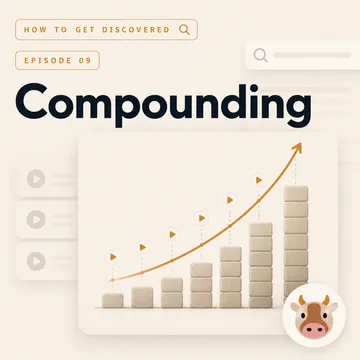
Evergreen Content vs. Reactionary News Episodes

Episodes that answer persistent questions, such as tax advice or gardening tips, maintain long-term value, whereas reactionary "news of the week" episodes typically die within seven days. To prevent a back catalogue from becoming a "pile of old newspapers," creators must ensure episodes are findable through descriptive titles and transcripts. Poorly titled episodes, such as those named only by date, fail to capture search traffic even if the internal content is high quality.

Under the Hood
Episode 8 • • 0:00 - 2:13

8: Under the Hood

Podcast Search Visibility and Under the Hood Technical Basics

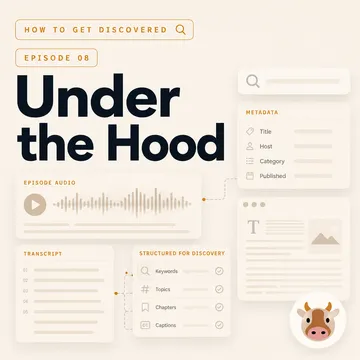
Hosts Maya and Tom introduce episode 8 of How To Get Discovered, titled Under the Hood, focusing on the technical aspects of how search engines process podcast transcript pages. They establish a "plain English" rule to avoid unexplained jargon throughout the discussion. The segment contrasts two identical-looking web pages to explain why one might be invisible to Google while the other is easily discoverable.

Under the Hood
Episode 8 • • 5:03 - 7:13

8: Under the Hood

Transcript Formatting and Anchor Links for SEO

Formatting transcripts into chapters with headings and timestamps allows search engines to index specific sections of an episode rather than treating it as a single block of text. The use of anchor links—bookmarks that point to specific spots on a page—enables Google to send users directly to the relevant answer within a long transcript. This transformation turns a single podcast page into a series of searchable answers to specific listener questions.

The Question Behind the Query
Episode 7 • • 4:54 - 5:33

7: The Question Behind the Query

Podcast Infrastructure as a Tool for Shape-Shifting

The technical "plumbing" of a podcast—including transcripts, chapters, and dedicated episode pages—is reframed as a way for a show to adapt its "shape" to the listener's needs. Rather than just being a chronological feed, these tools allow a podcast to serve as a quick answer, a browsable show, or a trusted authority page simultaneously.

transcriptschaptersepisode pagespodcast clipsdomain names
The Question Behind the Query
Episode 7 • • 13:04 - 13:48

7: The Question Behind the Query

Preview of Technical Metadata and Jargon-Free Search SEO

The hosts conclude the episode by previewing next week's technical deep dive into what search engines see when crawling a podcast page. Maya plans to explain metadata, structured transcripts, and domains while adhering to a "no jargon" rule enforced by Tom. The episode ends with a reminder to check listener feedback folders and a sign-off.

metadatastructured transcriptsseopodcastingjargon
The Episode That Won't Die
Episode 5 • • 8:30 - 10:29

5: The Episode That Won't Die

AI Transcription, Podherd Chapter Detection Tools

The conversation explores using AI tools like Podherd to transcribe back catalogues and automatically detect chapters and topics. By breaking long interviews into labeled, searchable sections, podcasters can create public episode pages that allow strangers to find specific answers within a larger recording. The "random Tuesday" test is suggested to determine which chapters are worth optimizing: if the content will still be relevant in five years, it is a candidate for a searchable title.

podherdai transcriptionchapter markerspodcast toolsdiscoverability
The Loyalty Trap
Episode 4 • • 8:17 - 9:33

4: The Loyalty Trap

Low-Maintenance Discoverability Tactics and Back Catalogues

The debate shifts to distinguishing between high-effort weekly optimization and "set it and forget it" tasks that improve discoverability without eating into prep time. Recommended low-maintenance actions include transcribing the back catalogue and writing clear feed descriptions that accurately reflect the show's purpose. These one-time setups allow the host to ignore dashboards and focus on the "engine" of word-of-mouth growth.

transcriptsfeed descriptionsback catalogueautomationpodcasting tools
When ChatGPT Recommends Your Show
Episode 3 • • 5:44 - 7:07

3: When ChatGPT Recommends Your Show

High Stakes of AI Visibility and Organic Text

Unlike Google, which offers multiple pages of results, AI assistants typically provide only a few top recommendations, making invisibility a total loss for creators. Authenticity is emphasized over "seeding" platforms like Reddit with fake reviews, suggesting that episode transcripts are the most honest source of searchable text.

search resultsvisibilityredditorganic contenttranscripts
When ChatGPT Recommends Your Show
Episode 3 • • 7:07 - 8:31

3: When ChatGPT Recommends Your Show

Failures of Raw Machine Transcripts

A personal anecdote describes the failure of pasting a raw, unformatted machine transcript onto a webpage, which resulted in a "long grey slab" that provided no value for two years. This highlights that AI assistants and human readers both require structured documents with headings and paragraphs rather than raw output.

machine transcriptionuser experienceformattingtimestampsaccessibility
When ChatGPT Recommends Your Show
Episode 3 • • 8:32 - 9:51

3: When ChatGPT Recommends Your Show

PodHerd Structured Transcripts and AI Chapters

PodHerd provides automated transcription, searchable public pages, and AI-generated chapters for podcast archives across all service tiers. The goal is to transform raw audio into a structured article-like format that allows users and AI assistants to navigate to specific moments in an episode.

podherdtranscription servicesai chapterstimestampssearchable pages
Invisible Shows
Episode 1 • • 6:21 - 7:50

1: Invisible Shows

Evolution of Podcast Transcripts and Search Engines

The effectiveness of podcast transcripts has evolved from simple walls of text to structured data that search engines like Google can index more effectively. Older methods of posting unformatted transcripts often failed to drive traffic because they lacked the headings and timestamps necessary for search engines to categorize specific topics within an audio file.