Topic: Evergreen Content

7 chapters across the catalog

What Happens If You Do Nothing
Episode 10 11:39 - 13:10

10: What Happens If You Do Nothing

Back Catalog Assets, Making Invisible Work Findable

The core argument of the season is that a podcast's back catalog should be treated as a valuable asset rather than a dead archive. Most podcasters underrate their past work, leaving high-quality conversations invisible to potential new listeners. The responsibility for making this content findable rests solely with the creator, moving beyond simple reliance on platforms or word-of-mouth.

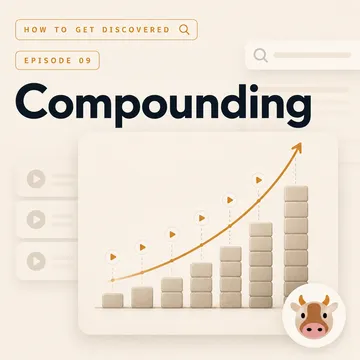
Compounding
Episode 9 9:46 - 12:18

9: Compounding

Newsjacking Risks, Evergreen Content vs Temporary Search Queries

Newsjacking involves creating rapid-response episodes based on current events to gain immediate spikes in engagement. While effective for serving an existing audience in the moment, these episodes rarely compound because the search queries they answer are temporary. A feed dominated by news-jacked content results in a "dead" archive where year-old episodes generate zero traffic, unlike evergreen content which maintains a long-term lifetime curve.

The Episode That Won't Die
Episode 5

5: The Episode That Won't Die

Evergreen Podcast Content, The Episode That Won't Die

Maya and Tom introduce a case study regarding a three-year-old podcast episode about tax structuring for freelancers. Despite its niche and potentially boring subject matter, the episode remains the most consistent source of new listeners for the show. The discussion sets the stage for exploring why certain episodes decay while others continue to attract traffic years after their initial release.

The Episode That Won't Die
Episode 5 1:40 - 4:09

5: The Episode That Won't Die

Searchable Content vs. Conversational Podcast Episodes

A debate emerges regarding whether the success of the tax episode was a fluke or a repeatable strategy. While many podcasts focus on guest life stories or weekly news, episodes that answer specific, persistent questions—like "sole trader vs. limited company"—map more effectively to user search intent. The tax episode was originally a last-minute filler, yet it became a long-term hit because it addressed a durable question that people continue to ask.

The Episode That Won't Die
Episode 5 4:09 - 5:47

5: The Episode That Won't Die

Durable Questions vs. News Cycle Content

Analysis of a 140-episode back catalogue reveals a pattern where episodes tied to specific news cycles or temporary celebrities lose value quickly. In contrast, content addressing persistent problems maintains its audience over time. This realization suggests that chasing "hot" guests may be less effective for long-term growth than creating resources that answer timeless questions.

Invisible Shows
Episode 1 1:41 - 4:16

1: Invisible Shows

Invisible Shows and the Beekeeping Podcast Search Experiment

A thought experiment involving a hypothetical listener named Sarah illustrates the difficulty of finding niche content like beekeeping podcasts through standard search queries. Most podcast episodes are described as "invisible" because they sink to the bottom of RSS feeds shortly after publication. While episodes function as evergreen content in theory, the lack of searchable metadata prevents them from reaching new audiences beyond existing subscribers.

Invisible Shows
Episode 1 6:11 - 7:57

1: Invisible Shows

Back Catalog as a Financial Asset Rather Than Archive

Podcasters are encouraged to view their back catalogs as active assets rather than historical archives. Using an example of a two-year-old episode regarding freelance rate negotiation, the hosts demonstrate that relevant advice often loses its value simply due to its chronological position in a feed. Without proper indexing, valuable evergreen conversations remain hidden from users searching for specific answers on Google.