Topic: Google Search

7 chapters across the catalog

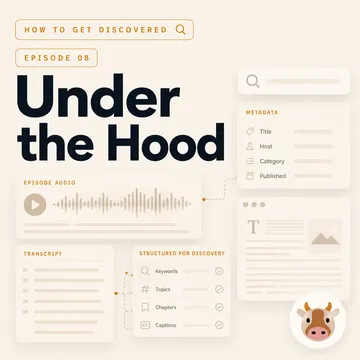
Under the Hood
Episode 8 9:04 - 11:24

8: Under the Hood

Mechanics of Web Crawling and Search Indexing

The process of appearing in search results involves three distinct steps: discovery, crawling, and ranking. Google uses programs to visit pages and feed them into a giant database index based on sitemaps and domain history. Final ranking depends on a combination of metadata, transcript quality, page speed, and external links, most of which remain invisible to the end listener.


Under the Hood
Episode 8 14:44 - 15:36

8: Under the Hood

Google Search Console Benefits for Discoverability

Google Search Console is a free tool that provides data on which queries bring visitors to a site and how pages perform in search results. This tool is only available for domains that a user can prove they control, making it inaccessible for those using platform-hosted subdomains. Access to these metrics allows creators to see which episodes are earning impressions and which titles need improvement.

The Episode That Won't Die
Episode 5 1:40 - 4:09

5: The Episode That Won't Die

Searchable Content vs. Conversational Podcast Episodes

A debate emerges regarding whether the success of the tax episode was a fluke or a repeatable strategy. While many podcasts focus on guest life stories or weekly news, episodes that answer specific, persistent questions—like "sole trader vs. limited company"—map more effectively to user search intent. The tax episode was originally a last-minute filler, yet it became a long-term hit because it addressed a durable question that people continue to ask.

When ChatGPT Recommends Your Show
Episode 3 2:25 - 5:23

3: When ChatGPT Recommends Your Show

Stability and Adoption of AI Search Recommendations

The discussion addresses the current scale of AI search, noting that while traditional Google searches and word-of-mouth still dominate podcast discovery, AI adoption is growing fastest among tech-adjacent audiences. Concerns are raised regarding the instability of chatbot answers, which can vary by day or prompt. The argument is made that podcasters should focus on being "discoverable" by these models rather than trying to optimize for specific, fluctuating queries.

Whose House Are You Building
Episode 2 3:39 - 5:13

2: Whose House Are You Building

Domain Authority and Search Engine Trust Scores

Search engines like Google assign trust scores, formerly known as domain authority, to websites based on age, reputable links, and consistent content. When transcripts are hosted on a platform's subdomain, the SEO benefits are diluted across thousands of other shows. Hosting transcripts on a personal domain allows every share and link to accrue lasting authority and ranking power for the creator's own property.

Whose House Are You Building
Episode 2 10:08 - 11:42

2: Whose House Are You Building

Google Search Console Integration for Podcast Analytics

Owning a domain allows podcasters to use Google Search Console, a free tool that reveals specific search queries, rankings, and click-through rates. This data is unavailable on platform-hosted pages because Google requires domain verification to share performance signals. PodHerd offers an integration that connects these search insights directly to the creator's dashboard to validate growth strategies.

Invisible Shows
Episode 1 7:57 - 10:24

1: Invisible Shows

Structured Transcripts and PodHerd for Search Traffic

Standard podcast transcripts are often published as unstructured "blobs" of text that search engines cannot effectively parse or understand. By using tools like PodHerd to index and structure episodes with specific URLs and timestamps, creators can surface specific moments for search traffic. Data from an eight-month trial showed that properly indexed old episodes began receiving steady traffic and new subscribers years after their original release.