Topic: Search Engines

Search Engines comes up in 12 chapters across 9 episodes of How to Get Discovered, from August 2026 to October 2026.

August 2026 October 2026

Related topics

What Happens If You Do Nothing
Episode 10 • •

10: What Happens If You Do Nothing

How To Get Discovered Season Finale, Thought Experiment of Two Podcasts

Maya and Tom introduce the season finale of How To Get Discovered, titled "What Happens If You Do Nothing?" They present a thought experiment involving two identical podcasts, Show A and Show B, where only Show A invests in structured transcripts, dedicated web pages, and referrer analysis. The experiment aims to track the divergent paths of these shows over a one-year period.
What Happens If You Do Nothing
Episode 10 • • 1:22 - 2:46

10: What Happens If You Do Nothing

Month One Progress, Foundations Versus Flat Lines

During the first month of the experiment, both Show A and Show B exhibit identical download numbers despite Show A's technical setup. While Show A has established its infrastructure with rewritten titles and uploaded transcripts, search engines have not yet indexed the content. The hosts acknowledge that laying foundations often results in a "flat line" of growth initially, citing a previous example involving a single visitor from Perplexity.ai.

search engine optimizationperplexity aigrowth metricspodcastingdata analysis
What Happens If You Do Nothing
Episode 10 • • 6:57 - 8:19

10: What Happens If You Do Nothing

Host Confession, Dangers of Over-Optimizing for Search

One host admits to a past mistake of prioritizing searchability over content quality. By titling every episode as a literal question and lead-loading descriptions with keywords, the show lost its unique voice and became "thinner." This confession highlights the balance required between making a show findable and ensuring it remains worth finding once discovered.

keyword stuffingcontent qualitypodcast titlessearch engine optimizationauthenticity
Compounding
Episode 9 • • 1:22 - 2:38

9: Compounding

First Three Weeks of Podcast SEO and Indexing

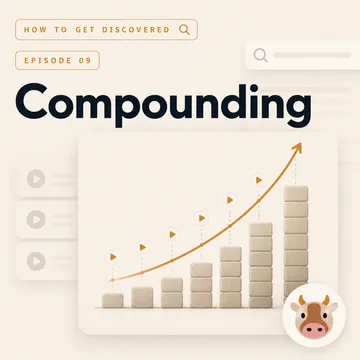
The first three weeks of making a podcast searchable often yield minimal results, as search engines like Google take time to crawl and index new pages. In the fictional gardening show example, the first week sees almost no traffic, while the second week marks the beginning of indexing for specific topics like "Blight." By week three, the show may see a handful of search impressions and rare visits from AI tools like Perplexity.ai, highlighting the slow start of the discovery process.

googleindexingsearch engineperplexity aisearch impressions
Under the Hood
Episode 8 • • 0:00 - 2:13

8: Under the Hood

Podcast Search Visibility and Under the Hood Technical Basics

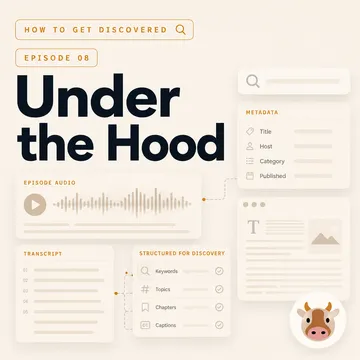
Hosts Maya and Tom introduce episode 8 of How To Get Discovered, titled Under the Hood, focusing on the technical aspects of how search engines process podcast transcript pages. They establish a "plain English" rule to avoid unexplained jargon throughout the discussion. The segment contrasts two identical-looking web pages to explain why one might be invisible to Google while the other is easily discoverable.

Under the Hood
Episode 8 • • 5:03 - 7:13

8: Under the Hood

Transcript Formatting and Anchor Links for SEO

Formatting transcripts into chapters with headings and timestamps allows search engines to index specific sections of an episode rather than treating it as a single block of text. The use of anchor links—bookmarks that point to specific spots on a page—enables Google to send users directly to the relevant answer within a long transcript. This transformation turns a single podcast page into a series of searchable answers to specific listener questions.

The Question Behind the Query
Episode 7 • • 5:33 - 8:21

7: The Question Behind the Query

Becoming a Citable Authority for Journalists and Researchers

Podcasts can gain influence and high-quality audiences by becoming "citable" resources that journalists and researchers reference in their work. Achieving this status requires being findable through search engines and providing accessible formats like time-stamped transcripts and descriptive chapter titles. One host recounts being quoted by a journalist who found a specific episode through a search query rather than being a regular listener.

journalistsresearcherscitationsfindabilitytimestampssearch engines
The Episode That Won't Die
Episode 5 • • 4:49 - 7:00

5: The Episode That Won't Die

Evergreen Content, Converting Searchers to Loyal Listeners

The hosts define evergreen content as answering "how" questions that remain relevant for years, such as pricing or technical fixes. While many searchers leave after getting their specific answer, a percentage stay to explore the rest of the feed, effectively using search as a recruitment tool. Maintaining a back catalogue is highlighted as a necessity, including adding updates to descriptions when older advice or tax thresholds change.

The Loyalty Trap
Episode 4 • • 0:00 - 2:01

4: The Loyalty Trap

Loyalty Trap and the Optimization Year Confession

Maya and Tom introduce the "loyalty trap," arguing that aggressive growth tactics often distract from creating quality content for existing fans. Tom shares a personal anecdote about an "optimization year" six years ago where he prioritized keyword-heavy titles and metadata over episode preparation. This shift led to a decline in show quality and a warning from a long-term listener who felt the podcast had become too sales-oriented.

loyalty trappodcast optimizationmetadatasearch engine optimizationlistener retention
When ChatGPT Recommends Your Show
Episode 3 • • 1:21 - 3:30

3: When ChatGPT Recommends Your Show

Conversational Search Habits and Podcast Recommendations

A hypothetical listener named Sarah demonstrates the transition from typing "beekeeping podcast" into Google to asking an assistant for specific recommendations. While traditional search and podcast apps still dominate, the conversational "slice" of discovery is growing rapidly among non-tech users.

beekeepingsearch engineschatbotssmart speakersuser behavior
Whose House Are You Building
Episode 2 • • 11:51 - 13:08

2: Whose House Are You Building

Episode Title Optimization for Search Discovery

Podcast episode titles often rely on "in-jokes" that fail to attract new listeners in search results. A dual-title strategy is recommended, combining a creative hook for regular listeners with a descriptive, keyword-rich phrase for strangers. For example, a vague title like "Show Me the Money" should be supplemented with a clear description like "How to raise your rates without losing clients" to improve discoverability.

Invisible Shows
Episode 1 • • 6:21 - 7:50

1: Invisible Shows

Evolution of Podcast Transcripts and Search Engines

The effectiveness of podcast transcripts has evolved from simple walls of text to structured data that search engines like Google can index more effectively. Older methods of posting unformatted transcripts often failed to drive traffic because they lacked the headings and timestamps necessary for search engines to categorize specific topics within an audio file.