Episodes

10 episodes

What Happens If You Do Nothing
Episode 10

10: What Happens If You Do Nothing

A twelve-month thought experiment involving two identical podcasts, Show A and Show B, reveals the compounding cost of ignoring technical SEO. While Show A invests in custom domains and optimized transcripts, Show B remains audio-only, leading to a massive divergence in subscriber growth by the six-month mark. This comparison illustrates how search engine indexing transforms a stagnant back catalog into a persistent engine for new listener acquisition. Maya and Tom address the invisible risks of stagnation and the dangerous lack of immediate negative feedback when creators fail to optimize. Maya admits to overestimating how AI chatbots cite sources and acknowledges that search-friendly titles can sometimes compromise a show’s unique voice. Meanwhile, Tom details his transition from SEO skepticism to active implementation, announcing his move to the PodHerd tool to manage his domain via CNAME. He argues that every loyal fan begins as a stranger, making acquisition infrastructure a prerequisite for long-term community building. This season finale of How to Get Discovered features Maya and Tom reflecting on their own technical errors and the energy required to maintain discoverability. Tom confesses his previous dismissiveness toward transcripts was a defensive mechanism against extra work. The pair concludes the ten-episode arc by urging creators to treat their archives as earning assets rather than dead files before beginning an indefinite production hiatus.

Compounding
Episode 9

9: Compounding

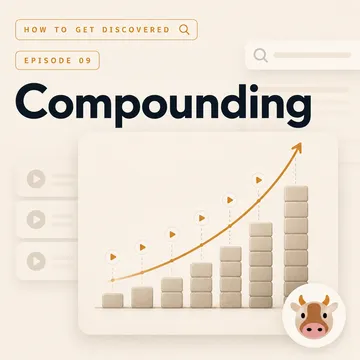
Maya and Tom challenge the industry standard of front-loaded podcast growth by presenting a three-week experiment on back-catalog compounding. Maya reports that while Google has indexed her new podcast feed, initial traffic remains negligible, prompting Tom to argue that traditional 90-day measurement windows fail to capture the true long-term asset value of search-driven discovery. Cohort analysis reveals that evergreen episodes often surpass their launch-month totals by year three, creating a back-loaded curve that contrasts sharply with the immediate spikes of newsjacking. While rapid-response content serves existing audiences, Tom notes that these temporary search queries lead to dead archives with zero residual traffic. Conversely, PodHerd data suggests that longform clips of five to fifteen minutes act as resilient units of value, converting new subscribers more effectively than 30-second TikTok teasers. Maya confirms she is upgrading to the Google Search Console integration to monitor these compounding signals as the experiment moves into its final phase. Tom dismisses the 30-second clip as mere algorithm fodder while Maya prepares her closing argument for the season finale. The pair debates whether a podcast is a disposable news product or a permanent library, setting the stage for a final showdown between search-optimized and traditional shows.

Under the Hood
Episode 8

8: Under the Hood

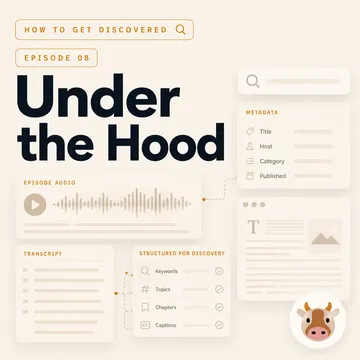
Google and Bing interpret podcast landing pages as structured documents rather than visual layouts, making technical legibility a requirement for modern discoverability. Maya and Tom establish a strict vocabulary rule for this technical deep dive, requiring every three-letter acronym to be defined for the audience. The episode centers on how Schema.org markup and invisible metadata dictate whether a search engine identifies a page as a specialized podcast episode or a generic blog post. Effective search indexing relies on a three-step process of discovery, crawling, and ranking. Tom explains that machine-generated transcripts often fail as a wall of text, whereas breaking content into addressable moments with timestamps creates unique URLs for specific topics like freelance rate negotiation. Using a custom domain via CNAME records ensures that search authority and compound interest accrue to the creator rather than a hosting provider. Tom reveals his own PodHerd experiment, where he is currently testing these discoverability theories on a starter tier domain to validate Maya's claims about long-term search performance. Google Search Console remains the essential free tool for tracking query data and impressions, though it remains inaccessible to creators stuck on platform-hosted subdomains. Tom admits to his own technical shortcuts in the PodHerd setup, while Maya holds the line on technical clarity. The episode concludes with a look toward data compounding and the long-term benefits of owning the digital phonebook entry for a podcast brand.

The Question Behind the Query
Episode 7

7: The Question Behind the Query

Maya and Tom reveal how podcasters can dominate long-tail search by identifying the specific intent behind user queries. The How to Get Discovered team analyzes three distinct search patterns regarding UK business structures and freelance rates to demonstrate how urgent, technical needs drive high-value listener acquisition. By transforming standard audio feeds into citeable, authoritative surfaces, creators can capture listeners who are actively seeking expert negotiation advice or financial decision-making frameworks. Specific search behaviors categorize audiences into one-clip, relationship, and authority listeners. While the SEO industry often prioritizes raw download spikes, this analysis advocates for retention metrics that align with long-term show value. Technical infrastructure such as custom domains, structured pages, and indexed transcripts allows a podcast to become a canonical resource for journalists and researchers. These surfaces act as entry points where strangers transition into loyal fans through a trust transfer initiated by a high-quality initial answer to a specific search query. Maya and Tom critique the common failure of shows to provide clippable content for the authority listener. The episode concludes with a preview of next week's technical deep dive into how search engines differentiate between standard show notes and full transcript indexing.

Stop Writing Bad Show Notes
Episode 6

6: Stop Writing Bad Show Notes

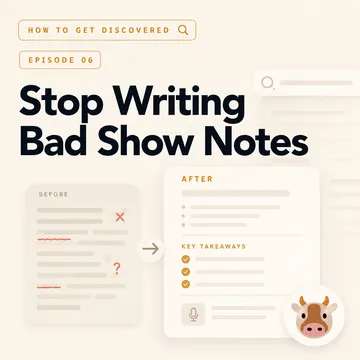
Tom and Maya reveal a three-paragraph framework for podcast show notes designed to convert strangers into listeners. This strategic shift moves away from one-sentence labels toward a structured pitch that prioritizes the hook, substance, and guest credibility to drive measurable growth in listener analytics. Podcast titles now fall into four distinct categories ranging from keyword-stuffed to human-centric descriptive formats. Strategic metadata optimization involves selecting niche subcategories like investing or careers on Apple Podcasts and Spotify to bypass broad competition in the business charts. PodHerd and other automation tools now facilitate multilingual transcripts, allowing English-language shows to surface in global ChatGPT queries and foreign-language search results. Feed descriptions in hosting platforms remain a critical discovery tool that many creators neglect by leaving fields blank or using minimal one-liners. Tom admits to three years of writing poor descriptions before adopting this 15-minute process for the marginal gains stack. The episode concludes with a preview of long-tail search intent and the specific ways journalists reference audio content in digital reporting.

The Episode That Won't Die
Episode 5

5: The Episode That Won't Die

Maya and Tom reveal how a three-year-old podcast episode on tax structuring for freelancers became a consistent listener acquisition engine. This case study from the How to Get Discovered archives demonstrates that niche, durable questions like sole trader vs. limited company status outperform celebrity guest interviews in long-term search traffic. The data suggests that evergreen content addressing persistent professional problems creates a permanent entry point for new audiences. Analysis of a 140-episode back catalogue processed through PodHerd shows that news-cycle content decays rapidly while searchable resources appreciate. One forgotten interview regarding the transition from agency to in-house work emerged as a top traffic driver after being indexed with structured timestamps. This shift challenges the industry standard 90-day advertising decay curve, as discoverable archives allow creators to negotiate long-term retainer deals based on ongoing reach rather than front-loaded launch week spikes. Current industry rate cards often undervalue these invisible assets, leaving significant earning potential on the table for independent producers. Maya and Tom highlight the uncomfortable lesson that valuable audio often sits invisible on servers due to poor discoverability. The duo previews next week's deep dive into show notes optimization and immediate workflow changes for better findability. This session concludes with a look at how PodHerd transcription results transformed a stagnant archive into a high-performing lead generator.

The Loyalty Trap
Episode 4

4: The Loyalty Trap

The Loyalty Trap theory posits that podcasters often optimize their way into mediocrity by prioritizing SEO and thumbnails over deep preparation. This strategic shift suggests that chasing new listeners through discoverability tactics drains the creative energy required to build a show that audiences truly love. By focusing on infrastructure rather than content, creators risk sacrificing the integrity of their work for the sake of algorithmic performance. Long-tail search queries regarding freelance rates and sole trader status provide a non-trivial path for additive growth without compromising show quality. PodHerd now enables listeners to generate five-to-fifteen-minute clips that function as portable segments for group chats, moving beyond the limitations of thirty-second TikTok snippets. This listener-driven clipping ensures that the host avoids performing for the algorithm while the audience identifies the most resonant exchanges. Trust and non-linear word-of-mouth recommendations remain the primary engines for long-term podcast success in 2026. Listeners prefer sharing specific moments rather than assigning homework via full episode links. This shift toward portable audio allows the setup and payoff of a conversation to travel further than a staged viral clip. The session concludes with a skeptical look at sudden growth case studies and a preview of how evergreen back catalogs compound traffic over time.

When ChatGPT Recommends Your Show
Episode 3

3: When ChatGPT Recommends Your Show

OpenAI's ChatGPT and competitors like Perplexity and Gemini are fundamentally altering how audiences find audio content by replacing traditional search boxes with conversational queries. This permanent shift in listener behavior forces creators to move beyond legacy SEO to capture 'soft' recommendations for niche topics like beekeeping. While word-of-mouth remains a primary driver, the rapid adoption of AI search among tech-adjacent demographics creates a new gatekeeper for the podcasting industry. AI chatbots currently prioritize text-based data from Reddit threads and structured transcripts over raw audio files. PodHerd now offers a solution by converting MP3s into searchable articles with extracted topics and functional timestamps, preventing the 'invisibility' that occurs when shows lack a text presence on the open web. Modern transcription technology has evolved past the unreadable 'slab' of early machine output, now providing the speaker separation and punctuation necessary for LLM ingestion. These structured pages ensure that shows appear in concise chatbot answers rather than being buried on the second page of Google. Concerns regarding the 'summarization trap' suggest that AI middlemen might satisfy curiosity without listeners ever pressing play on an episode. Maya and Tom argue that personality-driven content remains the only defense against this automated extraction of value. The program concludes with a preview of 'The Loyalty Trap,' a future segment challenging the industry obsession with search-based growth in favor of deep audience retention.

Whose House Are You Building
Episode 2

2: Whose House Are You Building

Maya and Tom reveal how podcasters unknowingly surrender their digital equity to giants like Spotify and Apple by hosting transcripts on third-party subdomains. This strategic error diverts domain authority away from the creator, effectively building a house on rented land. By prioritizing owned domains over default hosting URLs, creators can capture the long-term SEO value that search engines like Google assign to established web properties. Technical integrations such as CNAME records and Google Search Console provide the infrastructure for this independence. PodHerd now offers automated RSS feed transcription that can be mapped to a creator's personal URL, ensuring every backlink strengthens the show's own trust score. Maya and Tom argue that functional episode titles and dense metadata in the RSS feed are essential for discovery, as vague or creative titles often fail to trigger search algorithms. These optimizations allow creators to access granular performance data and click-through rates that remain hidden on platform-hosted pages. Next week, the focus shifts to the looming impact of AI search engines like ChatGPT and Perplexity on the podcasting landscape. Maya and Tom debate whether traditional SEO tactics will survive the transition to chatbot-driven recommendations. This episode serves as a foundational guide for any creator looking to turn a hobby into a searchable, high-authority digital asset.

Invisible Shows
Episode 1

1: Invisible Shows

Maya and Tom launch the How to Get Discovered series to challenge the industry standard of invisible podcasting. Maya argues that most RSS feeds function as content graveyards where valuable insights disappear shortly after publication. Tom counters with a decade of experience, questioning whether technical search optimization distracts from the creative quality that drives organic word-of-mouth growth. A hypothetical search for beekeeping podcasts illustrates why niche content remains hidden from listeners like Sarah despite the presence of relevant evergreen episodes. The PodHerd platform offers a solution by transforming unstructured transcript blobs into indexed assets with unique URLs and timestamps. Data from an eight-month trial indicates that properly structured back catalogs, such as two-year-old episodes on freelance rate negotiation, can generate consistent new subscriber traffic long after their original release dates. Tom and Maya debate the transition from search-shaped listeners seeking specific answers to loyal browsers who tune in during dog walks and commutes. The premiere concludes with a technical preview of domain authority and the strategic use of CNAME records for podcast SEO.