Topic: Experiment

4 chapters across the catalog

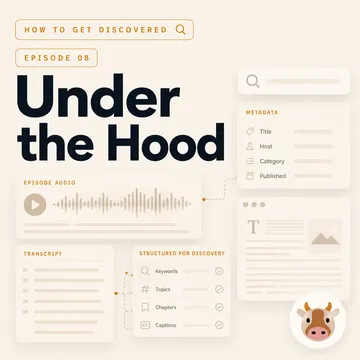
Under the Hood
Episode 8 15:36 - 18:09

8: Under the Hood

Tom's PodHerd Experiment and Show Outro

Tom admits to starting a three-month experiment by setting up a feed on the PodHerd starter tier to test the discoverability theories discussed throughout the season. While he is currently using the podherd.com domain rather than a custom CNAME, he intends to use the resulting data to validate Maya's claims about search performance. The hosts conclude the episode by previewing next week's discussion on data compounding.
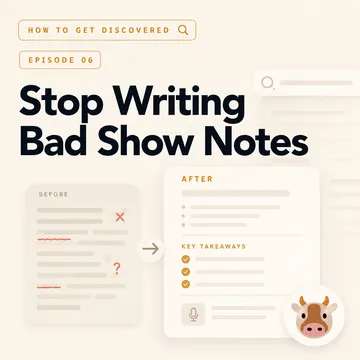

Stop Writing Bad Show Notes
Episode 6 5:07 - 8:42

6: Stop Writing Bad Show Notes

Four Categories of Podcast Episode Titles

Podcast titles are categorized into four types: cute/in-joke titles, lazy numbered titles, keyword-stuffed titles, and human-centric descriptive titles. The hosts argue for a structure that leads with a descriptive phrase followed by a guest name or "voice" hook to satisfy both search engines and human readers. They conclude that creators should "write for the stranger" while trusting regular listeners to tolerate less creative, more functional titles.

When ChatGPT Recommends Your Show
Episode 3 8:53 - 11:19

3: When ChatGPT Recommends Your Show

Evolution of Machine Transcripts and Structured Data

The quality of text provided to AI models is identified as a critical factor, as simple "walls of text" from raw machine transcripts are often ineffective. Modern transcription technology has improved significantly in areas like speaker separation, punctuation, and paragraph breaks, making the output more readable for both humans and AI. High-quality, structured text is presented as a necessity for moving beyond the "slab" of data that characterized early automated transcription efforts.

Invisible Shows
Episode 1 1:41 - 4:16

1: Invisible Shows

Invisible Shows and the Beekeeping Podcast Search Experiment

A thought experiment involving a hypothetical listener named Sarah illustrates the difficulty of finding niche content like beekeeping podcasts through standard search queries. Most podcast episodes are described as "invisible" because they sink to the bottom of RSS feeds shortly after publication. While episodes function as evergreen content in theory, the lack of searchable metadata prevents them from reaching new audiences beyond existing subscribers.