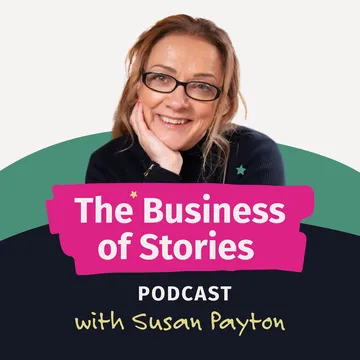
Episode 41 · Wednesday, 3 June 2026

Episode 41: What’s working on LinkedIn - with Noticed CEO Niall Ratcliffe

A leading LinkedIn agency CEO breaks down the transition from vanity metrics to high-utility storytelling for B2B founders seeking seven-figure revenue growth.

By The Business of Stories | 37m listen | 18 chapters
Episode 41: What’s working on LinkedIn - with Noticed CEO Niall Ratcliffe cover
The Business of Stories · No. 41

About this episode

Niall Ratcliffe, CEO of the LinkedIn agency Noticed, reveals how B2B founders are raising millions in venture capital and securing seven-figure revenues through strategic storytelling. As organic reach on LinkedIn declines with active posters rising from 1% to 3%, Ratcliffe argues that high-quality, human-centric narratives have become the only way to bypass the noise of AI-generated content. He joins Susan Paton to break down the shift from passive impressions to active conversation-starting on the world's premier professional network.

Noticed founders Niall and Morgan Ratcliffe built their agency after witnessing the power of personal branding at a London marketing startup. The strategy focuses on three essential story types: personal narratives that humanize the brand, business stories that establish authority, and customer-centric journeys that demonstrate empathy. Case studies from Mark Hutchinson of Hutchinson Engineering and the early days of Stephen Bartlett at Social Chain illustrate how even unsexy industries can generate millions of impressions by embracing vulnerability and unpolished, raw content. Ratcliffe emphasizes that profile optimization, specifically the banner and headline, serves as the first layer of positioning before moving into high-utility content that wraps data in lived experience.

Susan Paton shares a viral account of a wardrobe malfunction at Marks & Spencer to highlight the power of relatable, embarrassing moments in building trust. The conversation explores the rise of ugly content where unpolished videos outperform high-production studio shoots by fostering deeper emotional connections. Listeners are encouraged to register for a free storytelling masterclass on September 18th at TheBusinessOfStories.com to learn how to identify their own unique narratives.


CHAPTER 01 / 18 Discussion

Storytelling Masterclass Announcement, September 18th

Susan Paton announces a free storytelling masterclass scheduled for Friday, September 18th, at 12 noon UK time via Zoom. The session aims to help business owners identify and break down short stories using examples ranging from New York thrift shops to James Bond. Registration is available at TheBusinessOfStories.com.

storytelling masterclass· zoom· james bond· business of stories· september 18

00:00 Hey, Susan here. Before we jump into the episode I wanted to let you know that i'm running a free storytelling masterclass on Zoom on Friday the 18th of September at 12 noon UK time We'll start in a thrift shop in New York we'll talk about James Bond and you'll see that you have so many stories that you could be sharing in your business You'll see how to break them down into short, easy-to-share stories and we'll work on one of them on the call. To join me simply register at TheBusinessOfStories.com slash free masterclass Then look out for the Zoom link that you will get sent by email Put Friday 18th September at 12 noon in your diary And I'll see ya there!

CHAPTER 02 / 18 Discussion

Niall Ratcliffe, LinkedIn Content Strategy for B2B

Niall Ratcliffe, CEO of the LinkedIn agency Noticed, joins the podcast to discuss the effectiveness of storytelling in B2B environments. He addresses common misconceptions about LinkedIn being too formal for personal narratives, emphasizing that business is fundamentally conducted between humans who value trust. The conversation introduces Ratcliffe's background in scaling a personal branding agency.

niall ratcliffe· linkedin· b2b marketing· personal branding· noticed agency

00:54 You're listening to The Business of Stories with Susan Paton, showing you how to share stories that do the selling in your business so you don't have to. I often get people ask me if storytelling works for B2B businesses where the person looking for your services might be a HR director or an ops manager and your client is an organisation I also get questions about LinkedIn and whether stories really work on a platform that still feels very business focused. And here's what i always say about both, Business is done by humans and humans want to work with people they like and trust. Companies want to work with people they like and trust

01:47 So, whether you sell to customers or companies stories will help you stand out build trust and create connection. But you don't have to take my word for it! My guest today is Niall Ratcliffe CEO of Noticed who shares what's actually working on LinkedIn right now why generic content is struggling more than ever why saying the things that only YOU can say matters so much And the power of simply sounding like a real human being online. Here's my chat with Niall. Niall, welcome to The Business of Stories! It is lovely to have you here as a guest

CHAPTER 03 / 18 Discussion

Noticed Agency, Niall Ratcliffe's Career Journey

Niall Ratcliffe details his career path starting at age 19 at a London marketing startup focused on personal branding. He recounts witnessing clients raise over £10 million in venture capital and generate seven-figure revenues solely through LinkedIn direct messages. These observations led him and his brother Morgan to leave their jobs and launch Noticed, which has since grown into a leading UK LinkedIn agency.

noticed· london startup· venture capital· personal branding· morgan ratcliffe

02:35 It says on your LinkedIn profile that you and your brother run the UK's number one LinkedIn agency, which you can tell us a bit about in a minute. And it also says – and I love this – that I'm a pretty normal guy with a very fast-growing business mainly because of two reasons. One, I realised the opportunity on Linkedin So, I'm excited to talk to you about LinkedIn because I think a lot of business owners know there is a great opportunity on LinkedIn whether they are B2C or B2B which we can talk about as well but they don't know how to capitalise on it.

03:16 So I'm looking forward to getting your insights on that and there's lots that i want to talk about but first do you want to introduce yourself and share a little bit about that journey that has led you, and your agency Noticed, to becoming the UK's number one LinkedIn agency? Yeah, 100%. I'm the CEO of Noticed for the UK's number one LinkedIn agency. Obviously that wasn't always the case. A really quick kind of life story of myself is when i was 19, I got this really unusual opportunity to work at a marketing startup in London and it was unusual because it was a start-up that didn't actually market companies but they marketed people and it was personal branding agency before personal branding was like...I feel like nowadays it's almost Big

04:21 There's two particular clients that I worked with. One had a music startup that was raising money and i watched him raise over 10 million pound in his LinkedIn DMs and I just saw him send these messages back and forth of like VC companies, and he was just like Very free roaming his LinkedIn DMs and raising millions of pounds. And there's another person who was actually an MBE, I saw them make seven figures in their LinkedIn DMs and I was a 19 year old kid probably didn't even have £1,000 in my bank account at the time! And I was watching these kind of transactions take place on the LinkedIn DMS At that time the talk online was all around TikTok Instagram and a little bit of YouTube that had died off. And I sat there watching all this money be made on this platform people saw as a job site

05:04 So very quickly I understand there was a massive opportunity on LinkedIn. And I started talking about what I was learning on LinkedIn as the platform and very soon after someone approached me and virtually offered me my full-time salary just to run their LinkedIn account, so as any good brother would, I called my older brother Morgan I think there's something here, a business here. And he went me too like let's try something and we had nothing to lose at the time you know we were still very young but we came together and said okay let's just say let's post on LinkedIn leave our jobs both had good jobs at the time let's just post on LinkedIn and kind of say this is what was thinking of doing anyone interested so i posted on Linkedin and totally forgot my story what I'd learned so far why wanted it do and from that post


CHAPTER 04 / 18 Discussion

LinkedIn Organic Reach, Evolution of Platform Engagement

The discussion shifts to the changing landscape of LinkedIn, noting that active posters have increased from 1% to 3% of the user base. This shift in supply and demand has caused organic reach to decline, mirroring the trajectories of Facebook and Instagram. While high impressions were once easy to achieve with simple selfies, the platform now requires more strategic, high-quality content to maintain visibility.

organic reach· impressions· decision makers· facebook· instagram

05:46 So, let's get started. The Quite a big brand. Yeah, amazing and you're what 25 now? I just turned 25 yeah i feel really old actually at the moment, I'm 25 but uh... Amazing amazing so yeah let's talk about LinkedIn then So what is working on LinkedIn right now and maybe what doesn't work anymore that some people might still be doing

06:52 Yeah, really good question. I think to understand what's working right now you have to understand what's not working and you're from the cycle that LinkedIn has been on so when i first started posting on LinkedIn let's say three or four years ago it was a very different platform for today and its followed a very similar trajectory that Facebook Instagram have So when I first started posting I would post like a selfie and I'd say like guys always remember to go for a walk and be like 20 000 impressions It'd fly and I'd get hundreds of likes, which is fantastic. And at the time you saw people blowing up out of nowhere so you had people get hundreds thousands of followers or 50 000 followers very quickly. One of them grew from zero to 10 000-20 000 quite quickly in their early days but as time went on everyone else kind of saw the opportunity from a content perspective so more and more people poured on LinkedIn. This stat we always used to use is that

07:41 On LinkedIn, I think it's something like 61 million decision makers. But in terms of active posters is about 1%. Well that number now has jumped to 3% there so a one to three percent jump doesn't seem like a lot that's actually hundreds of thousands if not millions of people starting to post on LinkedIn and when that happens the supply and demand changes So before you had millions and millions of people looking at it The Business of Stories, So, back in the day it would have been the opposite. If you had a thousand followers you might have got ten thousand impressions now it's flipped so even with 10 000 followers on average your post will get 1000 impressions

08:43 So that's where it kind of used to be, very easy just post anything and get impressions. And I said that followed a very similar trajectory to Facebook and Instagram so in Facebook and Instagram in the early days you've had people blowing up with these like viral Facebook videos that they would do then you saw with Instagram where you had like the kind of Kylie Jenners of the world who could post them like millions and millions people would see But as more and more people post on these platforms, they shift away from being like just organic reach to being what I would say more business savvy. So for Instagram and Facebook that meant now if you want to get that traction you really have to boost your posts or use paid ads. And LinkedIn which we'll get to... The Business of Stories podcast is a podcast where you can find the best stories and

CHAPTER 05 / 18 Discussion

LinkedIn Profile Optimization, Banner and Headline Strategy

Niall Ratcliffe outlines the first layer of LinkedIn success: positioning through profile optimization. He recommends a professionally designed banner that clearly states a business outcome, high-quality headshots, and a headline that establishes immediate credibility. The "About" section is highlighted as a prime location for personal storytelling to build a connection with visitors.

profile optimization· banner design· fiverr· headshot· about section

09:37 And we kind of say there's three layers to it. So the first thing you have to do is like positioning, which is so important if you go to my profile right now there are loads of key aspects that we spent years and years refining The first one is your banner on LinkedIn. Your banner is a thing that sits above your headline and profile picture The simple things we always say to include on your banner One, a clear outcome of what you provide. So ours says I think it is like get noticed by your ICP in the banner that has to be well designed just from an authority standpoint it's such a low cost high ROI investment to get your banner professionally designed You can do them on Fiverr for 20 quid but like instantly looks good and then you have logos or some sort of credibility so that could be numbers things you've spoke at books you published

10:17 You then have a professional headshot which is also really, really key and then you'll have kind of your headline about section. Your headline is key just again credibility and really clear on who you work with and the outcome you provide and then your about section we like to tell a little story in there to get a bit personal so that's kind of your positioning on LinkedIn and the reason that's key is because everything else you do will feed back to your profile so everyone who comes to your profile you want to have like a really clear picture of what you do. The second thing is content And Susan, I could talk for about six hours on content. So I really have to do a whistle-stop tour of it but the first thing with content is back in the day you would be able to get away with posting really bad content today You have to post really good content to get traction and there's two ways I see content The first thing is if you want to do content for brand awareness to make more people aware of your business

CHAPTER 06 / 18 Discussion

Ash Jones, Saying Things Only You Can Say

Referencing personal branding expert Ash Jones, the conversation emphasizes the importance of sharing unique perspectives derived from lived experiences. As AI and Large Language Models make generic "viral" content easier to produce, the value of a unique human viewpoint increases. This strategy focuses on brand awareness by publishing insights that competitors cannot replicate.

ash jones· stephen bartlett· gary neville· personal branding· lived experience

11:02 You have to do what my good friend Ash Jones says is, say the things only you can say. And so if you don't know who Ash Jones is he's quite well known now as probably the best personal branding agency in the UK He has worked with all of the big names like Stephen Barlow and Gary Neville on their personal brands And I was with Ash recently and one thing we were talking about is in the past on LinkedIn you could just post like what i would call viral content so I could post like good versus bad LinkedIn posts it would do really really well but now anyone can do that with AI and the rise of these LLMs. So what Ashley's talking about now is that everyone shouldn't say the things that only they can say. That is content from lived experiences, so a unique perspective you have or a very specific way you view things. For example I might view content in slightly different ways than has been informed by my experience as well. That's kind of how I would see content from a brand and why perspective trying to say the things that only I can say or from a company level things only you could say The second way I view content is bishing

CHAPTER 07 / 18 Discussion

LinkedIn Networking, Outreach and Lead Generation

LinkedIn is characterized as a networking platform rather than just a social media site, with a focus on starting two-way conversations. Ratcliffe suggests using platform analytics to identify high-intent leads among profile viewers and post engagers. The primary metric for success should be the number of active conversations initiated rather than passive metrics like likes or impressions.

lead generation· b2b networking· analytics· engagement· business development

11:58 So the beauty of LinkedIn is that it's built as a business platform with a bunch of different analytics to help you from business perspective. It'll give you analytics on all the people who obviously engage in the content, who viewed your profile afterwards and commented, and they're essentially high intent leads. Like leads who know who you are and are curious about what you're doing so if you're talking about what you're doing and the way you view your industry all the people liking your content are essentially leads for your business that's why I say the content is almost phishing it's debate out there you see kind of bites onto it and then you can start the conversations off the back of that And then the third step of it is outreach. So LinkedIn is a platform people think of as a social media platform, A lot of people call it the B2B social media network. The reality is that its built as a networking platform and what that means is the whole platform is built to help a group of people get in touch with another group of people or an individual gets in touch with another individual. From a business development standpoint making sales, It means it's literally set up for you talk to your prospects

12:54 So that's what you have to do and optimize for conversations. Our number one metric I'd recommend people to track if they're starting on LinkedIn is how many conversations are you starting? That could be seeing people engaging on your content, reaching out to them and starting a conversation or going through the analytics that LinkedIn gives you – your profile views, your engagers, people searching, your search appearances – and then going out and start in those conversations as well. And again, I could speak for eight hours on different conversation starters and what's worked there but the basics is Get positioning right, you put up content and then you start those conversations. Yeah I love that and i think one of the mistakes maybe people make is they see it as a one-way thing but it's a two way thing right? Like I see people go and they do a post and then you see comments underneath and they haven't replied to the comments

13:43 And I'm like, that's rude. The whole point of it is like you say networking connecting building trust building relationships so if you're just posting and running and not interacting and not commenting your missing the opportunity to have conversations 100% connect with people You never know who where your next client is or somebody thats going to recommend you to somebody else mention you to somebody else So I love obviously that you talked a lot about saying the things only you can say, absolutely.

CHAPTER 08 / 18 Discussion

Three Story Types, Personal and Customer Narratives

Susan Paton defines three essential story categories for business: personal stories that show the human behind the brand, business stories that build authority, and customer stories that demonstrate empathy. By understanding the client's narrative, a business can position itself as the necessary guide to help the client reach their goals. The discussion also touches on emerging trends like employee-generated content.

personal stories· business stories· customer stories· expertise· authority

14:23 The three main types of stories that you can share, and number one is your personal stories. And this is where you give people an opportunity to see who you are right? The human behind the business what you're about what you stand for your insights, your perspective, your ideas, your values, your passion, all of those things that make you, YOU! Then you've got your business stories, which is where you build that credibility and authority and show your expertise. And maybe show your process or your steps or whatever. The third one is your customer story. It's really important to understand their story, understand what's going on for them because if you understand their story and what's going on for them, you'll understand where you fit in that story

15:11 And how to position yourself, like you talked about positioning. How to position yourself as the person that they actually need in their story right now because you can help them get where they want to go So with all of that in mind and also you mentioned about AI and all the AI generated content we're seeing out there Where do you see storytelling fitting into it all and what kind of storytelling do you see works well? I saw you did the four trends, and you mentioned employee-generated content and the behind-the-scenes stuff which is great. And also that audience inclusion and making sure that you're tuning in to their story and what's going on for them and bringing them into the conversation.

CHAPTER 09 / 18 Discussion

High Utility Content, Wrapping Data in Stories

Niall Ratcliffe explains how to make B2B content "high utility" by wrapping educational points in lived experiences rather than simple listicles. He introduces the concept of "case study stories," which focus on the problem-solving journey and specific hurdles rather than just final numbers. This approach leverages the human brain's natural inclination toward narrative consumption, similar to successful creators like MrBeast.

high utility· listicles· case study stories· mrbeast· b2b content

15:59 So what ways do you recommend to clients to incorporate storytelling into their videos? Yeah, it's a great question. When we first started out obviously now our service is much more commercialised from like an outreach perspective and driving new business for clients but when we first thought that were very content heavy and actually internally and externally as well would often define what we were doing is story driven marketing I think So underrated still is the idea of being able to tell a story. I think what we're recommending at the moment and kind of the way i see it, is that I'm trying to focus on making my content high utility so I mean whether that's as useful as possible for people who are reading it. When people say that though they think you need to make listicles of like 10 steps to have better LinkedIn

16:41 But generally speaking with AI, anyone can just prompt that. What's the 10 best things I need to do on LinkedIn? It makes it completely useless but what you can do is wrap it up in a story and like I said in the lived experience so what could I say that no one else can say about LinkedIn but for example I could write a post as like over the last three years my agency has written god knows how many posts let's 20,000 posts for clients on LinkedIn. We've got this many impressions here are kind of the five things that we've noticed over the last six months that are working better than ever and like even though I can still go through the listicle but if i suddenly wrapped that in a lived experience and wrapped it up into almost a story of kind of those few years... If you look at all the content that I'm sharing now I've actually pivoted closer to sharing more stories and like I said I'm trying to wrap everything in my lived experience or

17:27 And sometimes that is credibility. We used to talk about these things called case study stories, which I think are really underrated. People will say you need to share more about your results and the first thing people think about when they do that is We just did this for this client. It's like number, number, number and no one cares about that! And the way we say to wrap that up is into a case study story so essentially share like few months ago this client came to us with this problem and we tried this isn't this didn't work this did work and here's kind of the results that came off it and that can be much more interesting if you start to wrap it up in those stories and we forget that naturally as humans we spent 100

18:06 probably thousands of years reading stories and when it shifts to social media content people start to think, they completely forget that we're ingrained to consume that type of content. Even if you look at the types like MrBeasts on YouTube or the big creators they're wrapping up all their challenge videos and everything else into stories and you have to do the same with b2b content where you can. It's like the more we can thrive into an engaging format And it's the one thing AI can't do, right? Is tell your story.

CHAPTER 10 / 18 Discussion

Honesty in Business, The 2020-2026 Timeline

A specific LinkedIn post featuring a timeline from 2020 to 2026 is discussed as an example of effective vulnerability. By admitting that the agency "sucked at business" in 2024 despite being great at LinkedIn, the founders built trust through honesty. This transparency allows potential clients to see the hosts as relatable guides who have already navigated the challenges the clients are currently facing.

business growth· vulnerability· professional journey· guide· honesty

18:56 That's why I do what I do and help business owners to really share those stories that make them very real and relatable. And that's how you're going to stand out moving forwards. There was something that you put in your profile about, you did like a little timeline of from 2020-2026 and 2024 said we were great at LinkedIn but we sucked at business! So, it's that kind of honesty that helps people see okay you know like you didn't know what you were doing when you started. I didn't know what i was doing when I started but we kept going and learned loads along the way You know? We're still learning! We're still evolving...I'm 10 years in and I'm still learning every day But what it shows people is that we have been on that journey so A.)

19:44 Right, we understand them. We know how they're feeling so they feel seen and heard and also it shows that we have worked through this and we found some things that worked and some things that didn't and you know we can kind of position ourself as that guide that can take them by the hand and go look I can show you how to follow this path if that's what you want to do We've been kind of talking about LinkedIn and I know you do LinkedIn for B2B businesses. So let's talk about B2B marketing specifically because I get a lot of people asking me,

CHAPTER 11 / 18 Discussion

Social Chain, Stephen Bartlett's Marketing Strategy

The conversation examines how companies like HubSpot and Social Chain use B2C marketing tactics in a B2B world. Stephen Bartlett's early success with Social Chain is cited as a prime example of human-driven marketing, where young employees built personal brands to sign major clients like Uber and Amazon. This strategy relies on founders and employees sharing lessons publicly to feed the sales pipeline.

social chain· stephen bartlett· hubspot· employee generated content· b2c methods

20:20 Oh, does storytelling work if you're B2B? And I'm like absolutely. At the end of the day business is done by humans and a human is coming to your profile they're reading your posts they're reading your stories And humans, like you said are programmed to connect. So what advice would you give to listeners that are B2B and who are talking to maybe HR director or whatever? And what did you mean by, because I saw you did a post recently and said the B2B marketing and sales advice that your reading right now is already out of date? Yeah. So traditionally B2B has been seen as like...I think B2B marketing has more been seen as sales than it has anything else. Because of that they've kind of overlooked any sort of brand marketing or what feeds into that. What we've see over the last

21:16 So, I think that's a really good example of what you can do. And yet they're a billion dollar company. They've done the perfect blend of having a massive sales team that are doing the traditional B2B methods but also integrating almost like B2C methods of this more human personal touch, you've got to bridge that gap of

21:57 In the past, people would have seen B2B marketing or revenue driving activities like cold calling reaching out and trying to get sales in by any means necessary. And then marketing mainly did a little bit of blogging SEO and now we're starting to see that you need that human aspect to it like the HubSpot are doing And I think a really good example of this is, people forget Stephen Bortle gets a lot of slack nowadays because he brings on health experts and everyone on his podcast. But what Bortle actually did with social change was like a prime example when he was 19-20 years old of the impact you can have by having kind of a story driven and human driven marketing strategy. They were signing clients like Uber and Amazon as an agency full of kids and all they were doing

22:42 Two or three things were really, really simple. The first thing is they had Stephen building his personal brand so he was posting all over social media sharing the lessons they were learning at Social Chain and what they were doing and it had essentially one of the first EGC programs Employee Generated Content programs by accident because of the people they were hiring they were also all sharing on social media And now you have probably five or six of their team that were there, who have hundreds of thousands followers. So again putting humans to the faces that were working there and then they had a massive social push naturally because of what the agency did and so they were posting on Twitter at the time and Instagram but now it's kind of shifted to LinkedIn where most of the business talk is. There are three really simple things that they did years ago but now we're seeing in the billion dollar level with HubSpot or a company like Semrush or Ahrefs doing the same thing

CHAPTER 12 / 18 Discussion

Hutchinson Engineering, B2B Founder Social Media Impact

Mark Hutchinson of Hutchinson Engineering in Northern Ireland is presented as a case study for B2B social media success. By sharing the story of his family-owned engineering firm on LinkedIn, he generated a million impressions in a single month. This demonstrates that even "unsexy" industries can achieve significant reach by humanizing the leadership and sharing the company's ongoing journey.

hutchinson engineering· mark hutchinson· northern ireland· impressions· engineering

23:29 If you're a B2B company, what you've got to understand is your brand building activities will feed your sales activities. So get your founder on social media, get them posting on LinkedIn sharing the company story informing people of what's happening, get your employees incentivized to start sharing about the content and that's just a cascading effect of sharing their personal stories that can have more people relate to them which again just starts to compound and then actually use social media like people will say oh we're talking to VPs So, I'm going to be talking about the business of stories.

24:21 And if you think on the human level of that person, that's when you can start to get to. A really simple example of this is we work with a client called Hutchinson Engineering in Northern Ireland. They're reasonably sized engineering firm and like a really simple thing we did was get their founder and CEO, actually his dad was the founder but Mark Hutchinson on LinkedIn And I think in month one, there's something like a million impressions across the profiles we managed. It was like they weren't some viral brand or they weren't talking about anything sexy it was talking about engineering and yet you can have a massive impact as a B2B firm just by sharing your story so far what you're doing and taking yourself to social media. I think a lot of B2B companies will be surprised at how responsive they'll get

CHAPTER 13 / 18 Discussion

Stephen Bartlett's Early Podcast, Step One Commitment

The hosts reflect on the early, unpolished days of Stephen Bartlett’s podcast, which was originally recorded under his stairs. They emphasize that his current high-production studio was "step 1005," while "step one" was simply a commitment to posting one lesson a day on Twitter. This highlights the importance of starting with raw, authentic content rather than waiting for perfect production quality.

diary of a ceo· twitter· podcasting· authenticity· consistency

25:04 And I think also maybe with LinkedIn there's this impression that you need to be polished and perfect, right? That it will need to be very professional. But actually, you know, you talking about Stephen Bartlett – I loved Stephen Bartlett's podcast when it was him under the stairs in his boxer shorts at two o'clock in the morning talking about splitting up with his girlfriend, you know. It was very real and unplanned. Raw and authentic wasn't it? Yeah! I remember those early episodes it was like he talks about how he went to somewhere in Manchester and got a mic and put like the sock over something to stop it banging on the mic and generally it's easy to look now and think oh to succeed I have to have that we're big studio and these podcast mics

25:54 But the reality is, you don't realise what step one was. The actual step one was he committed to posting once a day on Twitter – one lesson he learned every day and that was the step 1. You know, 105 was to start a podcast and step 1005 was to get the studio on all the mics. And you've just got to start at step one. Yeah and interesting that I actually connected more to Step whatever it was when he started the podcast and it was just him! I have also heard that there's a thing now called ugly content? Have you heard that?

CHAPTER 14 / 18 Discussion

Ugly Content, Vulnerability and Relatability

"Ugly content" is introduced as a trend where creators post unpolished, raw videos without professional hair, makeup, or lighting. This style is often more relatable to audiences who are also at home in casual settings. The hosts argue that being prepared to look imperfect or feel "cringy" creates a deeper emotional connection and inspires followers who face similar daily challenges.

ugly content· authenticity· vulnerability· video marketing· human connection

26:36 Well, it's funny enough I was on a masterminds awhile ago and they said to me you know why don't you do more stuff on video? And i said well because you know I've gotta get my hair done. I've gotta get my makeup done. I gotta get the lighting right such a faff where I love just turning on the mic and just talking and not worrying about what look like and all of those things I know it's very vain but there you go And I said, and I often record stuff in the evening. You know like my husband gets home and so I sort of take myself out to the office quietly on my own and a lot and record stuff. And I've got my hair up on top of my head. I've got no makeup on and they said people love that!

27:17 People love that. It's called ugly content, like you know you're not trying to look amazing and like you've just come out of the you know some salon somewhere. You actually look real and you look like 98% of your audience looked like at home with your hair up or whatever but again it's just Being very real and a little bit vulnerable, you know. But vulnerability makes people feel very connected to you because you're prepared to actually say okay this is a little bit uncomfortable This story makes me feel a little bit vulnerable putting it out there but the reason I'm putting it out there is because I know that there are people who need to hear this. I know that this will inspire people. I know that this will help people to get through the challenge they're facing right now

28:05 And I think when you keep that focus on why you're sharing the stories, that helps to get over that uncomfortable cringy feeling. Yeah, I love that term ugly content! I'm gonna 100% steal it for a post It's funny that when you were saying that, one thing I was thinking about is last year or the year before I had my most viral LinkedIn piece of content ever put out. I had about 3 million impressions and the post was about how my brother used to cut my hair because I couldn't afford a haircut and there's a photo of me that we use and i'm like over-the-sink with this towel on my shoulders for like the worst haircut possible! And he just accidentally gave me a three all over when I wanted a skin fade

CHAPTER 15 / 18 Discussion

Viral Embarrassing Stories, M&S Wardrobe Malfunction

Niall and Susan share personal examples of embarrassing stories that performed well on social media. Niall describes a viral post about a bad haircut his brother gave him, while Susan recounts an incident involving a wardrobe malfunction at a Marks & Spencer department store after breastfeeding. These stories serve to humanize the tellers and invite the audience to share their own relatable "flawed" moments.

viral posts· relatability· marks and spencer· breastfeeding· human flaws

28:47 And it's ironic that when you say that, the thing that resonated most is probably like a photo that realistically never should have gone online. That is what was most relatable and resonated. Yeah and I've got um a story that I shared...I never ever intended sharing it but for some reason I was doing a challenge, I think I was doing a live, people were chatting we were telling stories and somebody said something like what if you've got a story that's embarrassing And I said, I've got loads of embarrassing stories and I've shared loads of embarrassing stories. One of them is the time that I walked through M&S through the men's department with my left boob out on show

29:29 And the reason I walked through the men's department with my left boob out on shows because i'd just been breastfeeding in the little hot stuffy room that was over in the corner right upstairs at the back of the men's department for some reason and it was so hot. I couldn't wait to get out there, I put baby back in the pram, I put everything away or I thought I'd put everything away I came out of the room, couldn't get out of the room quick enough. Walked across the length of the men's department and it wasn't until the lift doors opened and I saw the mirror at the back of the lift that I realised that I hadn't put everything away and I just walked through the men's department but the thing is

30:08 I never intended sharing that story, but then I did share it and I have shared it hundreds of times since right including just now. Because it just shows that we're all human right? We're all flawed we're not perfect we make mistakes but do you know what? I survived hopefully the people that saw me in that day got over it! You know it's like and I still think there's probably couples all over the place going or men all over the place going to remember I'm not saying my last episode. You know, people say to me when I talk to them. People say, I love that story that you shared and actually that I shared on LinkedIn eventually and I got tons of comments hundreds of comments from people saying oh my God! I've done the same or I walked around with a skirt tucked in my knickers or whatever. Yeah it's just so relatable and it just makes you a human. It makes you real. It makes you...people start to feel connected to you and feel comfortable

CHAPTER 16 / 18 Discussion

LinkedIn Cadence, Founder vs CMO Content

Niall Ratcliffe advises B2B founders and CMOs to commit to a consistent posting cadence, such as one story every Wednesday. He notes that marketing directors often feel less "worthy" of sharing their stories than founders, yet they are often more relatable to the target audience. Bulk creating content is suggested as a way to maintain this consistency without daily stress.

content cadence· cmo· marketing director· bulk creation· consistency

31:09 So yeah, more ugly content. That's what we want Niall I love that. That's a fantastic term to use Amazing! So if you could give B2B owners one piece of advice for building trust on LinkedIn right now What would it be? God is interesting Why i would say is just like the simplest advice Would be depending on the role If it's a founder I would say go on LinkedIn and just share one story a week That's a really simple thing, just commit to it. And I always say like if you've never done any sort of content marketing in a B2B business the biggest and most impact you can have is picking your cadence so pick okay Wednesdays are post and just die before you don't post on Wednesday like I don't care if its your wedding day get something out on Wednesday and really commit to getting something out Especially if it's your wedding day Yeah but I would say yes the first thing would be that if you're founder If you were CMO or anything like that then I'd do this same thing and I think thats actually the gap Susan

32:07 Founders often jump on board much quicker. It's like the head of marketing or the CMO or the revenue ops director that doesn't feel like they're worthy of telling their story and it's just understanding that you are, and actually ironically sometimes you might perform better than the founder because you're in a much more relatable position where you don't feel like you're selling to anyone because you've got a job and not a business as well so I would just commit to one day a week at first and bulk create it and then see what happens from there. I'm cheating here because I'm going I would then say go through all your engagement, all your profile views and just start conversations. I used to have something in my calendar before i started the business where every day again a thing to say start three conversations today

CHAPTER 17 / 18 Discussion

Conversation Starters, Asset-Based Outreach

The discussion covers practical methods for starting LinkedIn conversations, including simple follow-ups on post engagements and "asset-based" starters. Asset-based outreach involves offering a valuable document, such as a high-performing script, to interested parties. Both hosts emphasize the importance of sounding like a real human to distinguish oneself from AI-generated bots.

icp· outreach scripts· direct messages· lead conversion· human tone

32:47 And I would go on LinkedIn, and go for my engages, my profile views. I'd try and find three people in my ICP and start a conversation with them if they weren't in my ICP had to start someone who I thought could network with it who could pass someone on. If I couldn't find anyone like that, I'd go on LinkedIn, just search MyICP connect with them and just start the conversation but for small business just post once a week can start three conversations every day And how would you start a conversation? Two different types of conversations you can start. The first one is your simple conversation starter, so if you want to start with why are you reaching out... So hi I saw your profile and anything that can help whether it's just enjoying the content thats converted someone into new business for us like really simple message

33:23 Just have a conversation with them, not sell them. Or you could say hi so you're engaged on this post about the story of me walking through M&S and is it something you relate to? I'm just starting a conversation here really simple conversations starters why i'm reaching out then i'm asking like questions and start the conversation The other way is asset-based. So build something really valuable for your ICP, so for example one thing we've done recently is I created a document with our highest performing outreach message and anyone who's engaged on any of my content around outreach I'll reach out and say hi and even engage in some content mine Mine around outreach, which is put together this doc together of a high performing script. Are you going to be sending it over? So again it's like an asset based conversation starter they can say yeah please send it over I'll send it over and there was a follow-up with Japan that useful if that's something you're chatting about internally your finger what we linked in outreach right now And then all the automated if you're doing it from an enterprise level but from a small business level You can do yourself every day just three conversations Yeah, I think it's sounding like a human

34:19 Yeah, right. Not an AI not an auto-generated you know... Which is ironically tougher than ever to sound like a human! Sometimes I write my own post and think does that sound like AI? And I've wrote it myself. Because i always say and have done for years And now suddenly I'm like, hey, I keep telling everybody to write here's the thing. And then the other thing...I did a post the other day and I started it. I'm noisily building something in the background because if I said quietly you'd think of as a bot! Yeah that's funny so you're like Writing almost worse. Yeah, I'm trying to prove that i'm real and I'm a human so Niall thank you so much it's been absolutely great to chat! I've loved our conversation and there's been so much in there that I know will help people think differently about how they are showing up online and how they can connect with the people that they want to work with So thank you so much for joining me and sharing so generously Thank you so much for having me

CHAPTER 18 / 18 Discussion

Action Step, Unique Lived Experience

Susan Paton concludes the episode by summarizing the value of human connection in an AI-driven world. She provides a final action step: listeners should post something that only they can say, based on their unique lived experiences. The show ends with a request for ratings and reviews on platforms like Apple Podcasts and Spotify.

action step· unique perspective· business of stories· podcast review· apple podcasts

35:23 I loved that chat with Niall and it just goes to show that we're naturally all storytellers. Niall told stories to illustrate his points, I told stories to illustrate mine and that's what made our conversation so engaging. Stories help people understand what we mean AND feel more connected to us as a human And in a world of AI-generated content, that human connection matters more than ever So, as always before I go let me give you a quick action step that you can go away and do. And there are so many action steps i could give you from today's episode Niall suggested sharing one story a week on LinkedIn and starting conversations in the DMs or you could create some ugly content

36:17 Meaning it's not polished, it's not perfect. It's not overly produced or manufactured. It's just real unpolished natural unfiltered Here is the action step I'm going to give you today Say something that only YOU can say Something that comes from your unique view. Something that comes from your lived experience, something you've learnt or worked out or observed or realised... Or the very specific way that you view things So that's your action step for today Say something that only YOU can say in your posts and emails

37:01 And I'll see you next time for more stories that do the selling for you, so you don't have to. Thank you so much for being here! I love that we get to do this together Would you do me a huge favour and please rate review and follow this podcast in Apple Spotify or wherever you listen to your podcasts? And i'll see you next time For more honest conversations meaningful connections and of course stories The Business of Stories.