Topic: Marketing

Marketing comes up in 9 chapters across 8 episodes of How to Get Discovered, from August 2026 to October 2026.

August 2026 October 2026

Related topics

What Happens If You Do Nothing
Episode 10 • • 10:28 - 11:48

10: What Happens If You Do Nothing

Revaluing the Podcast Back Catalogue as an Asset

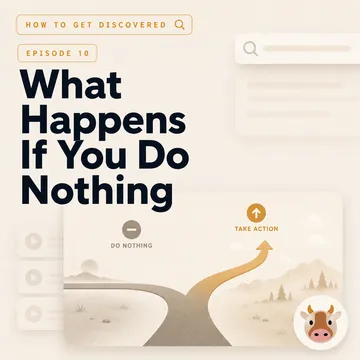
The core argument of the season is summarized: most podcasters undervalue their existing work by treating the back catalogue as a mere historical record. The hosts argue that if the advice and conversations remain relevant, they should be made visible to people typing questions into search boxes. This approach is framed as "respecting the work" rather than cynical trend-chasing or gaming algorithms.
content marketingpodcast archivesearch boxesinformation architectureevergreen content
Compounding
Episode 9 • • 5:58 - 8:03

9: Compounding

Backloaded Earnings and the Value of Old Episodes

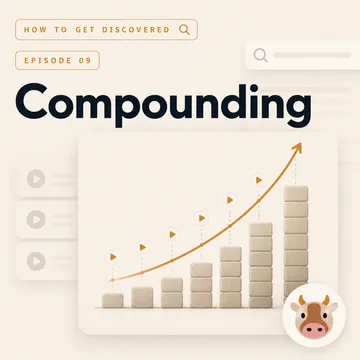
Searchable podcast episodes are "backloaded," meaning they earn more listeners over time compared to traditional episodes that see a spike at launch and then fade. This compounding effect allows a two-year-old episode to potentially outperform its original release month by answering persistent questions. Creators often realize they have been undercounting the value of their work by focusing only on the first fortnight of downloads rather than the long-term return on their "deposit" of content.

Under the Hood
Episode 8 • • 14:50 - 16:20

8: Under the Hood

Realistic SEO Growth and Next Week Preview

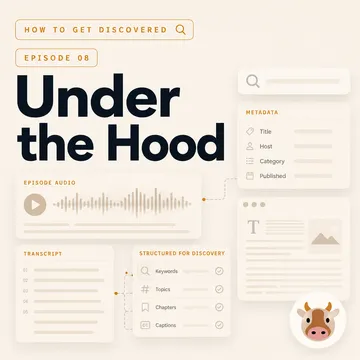
Maya challenges Tom to demonstrate the realistic, often "dull" first month of SEO results for an ordinary podcast rather than focusing on outlier success stories. They agree to a case study for the following week that will examine compounding growth and why some episodes provide long-term value while others fade quickly. The episode concludes with a preview of the "compounding" topic and a final jargon count.

seo growthcompoundingpodcast marketingcase studyanalytics
Stop Writing Bad Show Notes
Episode 6 • •

6: Stop Writing Bad Show Notes

Podcast Show Notes as Receipts vs Pitches

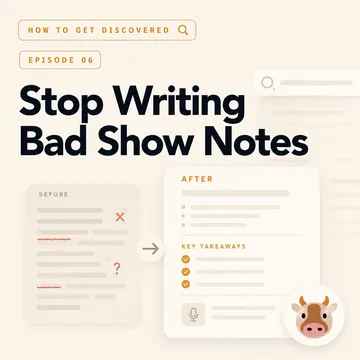
Maya and Tom introduce the sixth episode of How To Get Discovered, focusing on optimizing podcast show notes for better listener conversion. Tom confesses to years of writing "dreadful" one-sentence notes that served only as receipts rather than pitches to potential listeners. They argue that because show notes are the second thing a stranger sees after the title, they must function as a persuasive pitch to convince users to press play.

Stop Writing Bad Show Notes
Episode 6 • • 2:01 - 5:39

6: Stop Writing Bad Show Notes

Three-Part Structure for High-Converting Show Notes

A specific three-part framework for show notes is proposed to replace generic descriptions. The structure includes a "hook" paragraph framed for strangers, a "substance" section detailing three or four specific topics covered, and a "takeaways" section highlighting the guest's expertise. This approach prioritizes search-friendly phrases and concrete value over internal references, aiming to turn the show notes into a "better shop window" for the audio content.

copywritingseosearch intentpodcast marketingcontent structure
The Episode That Won't Die
Episode 5 • • 11:57 - 13:18

5: The Episode That Won't Die

Podcast Advertising, Long-Tail Value of Old Episodes

A commercial perspective is introduced regarding how sponsors value older podcast episodes. Many advertisers assume an ad's value drops to zero after 90 days, but evergreen episodes that continue to find new listeners years later challenge this model. Being able to demonstrate ongoing traffic to a back catalogue could change sponsorship negotiations, even if search-driven listeners have different engagement patterns than regular subscribers.

podcast advertisingsponsorshipad revenuelong-tailmarketing analytics
The Loyalty Trap
Episode 4 • • 4:05 - 6:08

4: The Loyalty Trap

Local History Podcast Success and Growth Arithmetic

A local history podcast serves as a case study for success without optimization, maintaining a "ferocious" small audience that actively participates through live events and corrections. The discussion highlights the mathematical risk of losing 5% of a loyal base—people who actively evangelize the show—in exchange for search-driven strangers who rarely convert to super-fans. The most effective marketing is identified as creating a product so high in quality that listeners feel compelled to share it with friends.

local historyword of mouthaudience engagementmarketinglistener loyalty
Whose House Are You Building
Episode 2 • • 14:27 - 15:51

2: Whose House Are You Building

Directing Traffic to Owned Web Pages

Creators are encouraged to stop sending listeners directly to Spotify or Apple links and instead direct them to a page on their own website. By hosting a player and description on a personal domain, the creator captures the "vote" of the link for SEO purposes while still providing buttons for users to listen on their preferred platforms. This strategy builds long-term equity in the creator's own digital property.

call to actionweb trafficspotifyconversiondigital marketing
Invisible Shows
Episode 1 • •

1: Invisible Shows

How To Get Discovered Series Introduction

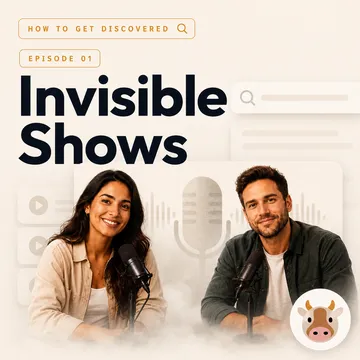
Hosts Maya and Tom introduce their new ten-episode series, How To Get Discovered, which explores the tension between podcast searchability and content quality. Maya, a content marketing expert, argues that every episode is a long-term asset, while Tom, a veteran podcaster of ten years, views growth hacks as potential distractions from making a better show.

mayatompodcastingdiscoverabilitycontent marketing