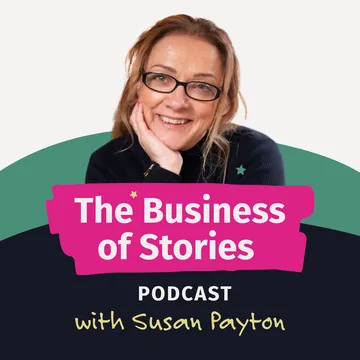
Episode 47 · Wednesday, 15 July 2026

Episode 47: Become the Only Choice: Building Your Category of One – with Olly Richards

A jazz musician turned entrepreneur reveals the blueprint for a ten-million-dollar education empire that runs on just two days of work per month.

By The Business of Stories | 36m listen | 10 chapters
Episode 47: Become the Only Choice: Building Your Category of One – with Olly Richards cover
The Business of Stories · No. 47

About this episode

Olly Richards transformed a hobbyist blog into a $10 million automated education empire called Story Learning by rejecting traditional organizational charts and the constant hustle of the digital economy. Richards manages this massive enterprise in just two days per month, utilizing a company of one philosophy that prioritizes high-leverage systems over headcount. He joins Susan Paton to detail the transition from a jazz musician in Japan to a dominant force in the language-learning market.

Richards explains how he differentiated Story Learning from competitors like Duolingo by owning a specific methodology rather than competing on price or generic features. The discussion covers the mechanics of his $10 million Story Learning model versus his high-touch mentorship for seven-figure entrepreneurs, where he charges premium rates for his specific thinking process. Susan Paton shares a case study of a rapid £20,000 product launch triggered by a first-quarter tax bill, demonstrating how a waitlist and a £195 digital library can solve immediate cash flow shortages. Additional topics include the ethics of business coaching, the dangers of shiny object syndrome, and the influence of Chris Guillebeau’s The $100 Startup on early-stage monetization.

Richards admits that good business is often boring and requires the discipline to repeat successful processes rather than chasing new innovations. He reflects on a pivotal moment when a therapist-coach helped him realize that his value lies in his unique perspective rather than just tactical advice. Susan Paton explores the adventurer archetype and the challenges of managing a business with an ADHD brain while striving for consistency.


CHAPTER 01 / 10 Discussion

Olly Richards, One-Person Empire and Passive Income

Susan Paton introduces guest Olly Richards, an entrepreneur who manages a $10 million automated online education business alongside a high-touch mentoring practice. Richards operates his primary education business in only two days per month, focusing on a "company of one" philosophy that rejects traditional organizational charts and constant hustle. The discussion previews concepts such as finding a "category of one" and identifying business leverage for profit and freedom.

olly richards· one-person empire· passive income· online education· mentoring

00:03 You're listening to The Business of Stories with Susan Paton, showing you how to share stories that do the selling in your business so you don't have to. Back in 2015, when I was starting my business a lot of the advice that came across felt quite overwhelming. That's not criticism of the people giving the advice it's just that I couldn't imagine having sales teams and payroll and investors or board meetings and i wasn't sure I wanted any of that then I came across the idea of being a company of one

00:41 And it was such a relief to find that there were people out there building successful businesses without organisational charts or layers of management. I saw that is possible to build a business without having to hustle, manage a big team or chase growth for growth's sake. Today's guest on The Business of Stories calls it building a one-person empire Olly Richards shares what he's learnt from growing two businesses. One is a $10 million online education business that is almost all passive and automated, and only requires him to work in it two days a month

01:25 The other is a hands-on mentoring and coaching business where people are buying direct access to him and his thinking. There are lots of great nuggets in this interview, including how Olly found his USP or as he calls it, his category of one! Why most business owners are trying to squeeze blood out of a stone. And how to find the leverage in your business so that it can give you both profit and freedom? Here's my chat with Olly. So, Olly welcome to The Business Of Stories podcast! It is lovely to have you here. Thank-you very much nice to be here

CHAPTER 02 / 10 Discussion

Story Learning, Blog Monetization and Professional Expertise

Olly Richards recounts the evolution of Story Learning from a hobbyist blog into a $10 million enterprise. After transitioning from a career as a professional jazz musician to an English teacher in Japan, Richards combined his language-learning skills with professional teaching expertise. Inspired by Chris Guillebeau’s book, The $100 Startup, he began monetizing his content through affiliate links, PDFs, and self-published books before scaling into a full-scale education company.

story learning· chris guillebeau· affiliate marketing· language learning· jazz musician

02:07 I think actually came across you on social media a little while ago and downloaded your anatomy of a $10 million education business. And basically it is you using your own 10 million dollar company, Story Learning as a living case study, you call it, how to build a profitable business The A couple of days a month, but who's counting? Oh! Couple of days a month. Yes sorry even better. And it is a fascinating story because story learning started as a blog right or and even a hobby before that so yeah would you share the story of how you even start to turn a blog into a 10 million dollar business

03:03 Yeah, I mean slowly and with a lot of persistence is the answer really. So I spent most of my 20s learning languages it was my hobby and I just loved doing it so I taught myself a bunch of languages and then in my late twenties I had a big career change packed in what I was doing before which was I was a professional jazz musician went to be an English teacher living in Japan And so after a few years I was in this situation where I developed this skill of learning languages, but I'd also developed this professional expertise in teaching languages. So I combined those two into this blog that I started and that's relevant because...I'm a big believer in the idea that the best businesses don't always come from being the best in the world at one skill but rather being really really good at 2 skills

03:52 Skills that you can combine and what I think i brought to my blog in the early days. Which is, you know call it the positioning or the USP. Call it whatever you want was this ability to talk about learning languages from a place of experience but also in a place of authority because I was both the learner and teacher so I was aware from the beginning that it was possible to monetize a blog The reason I got started in the first place really was because I read this book by a guy called Chris Gillibird called The $100 Startup which is fantastic book and It tells how people with hobbies are making money from those hobbies online. And so I was kind of familiar with the concept of selling PDFs, which it was back then and affiliate marketing you know what else? Patreon didn't exist back then it's like a buy me a coffee type things that you stick on the sidebar of your blog as well as familiar with all of this

04:48 I started doing it early on. If i was writing a blog post on how to learn a particular language, for example, I would know where to go and find the products out there that have affiliate offers in that language and I would put links in there so that we just leave these breadcrumbs So it started that way, you know. I remember the very first dollar I made online was an affiliate sale which was $20 that I got and I still remember that. I remember getting an email through saying oh you just made 20 dollars? And i remember turning to my wife at the time and saying look like I know it's only twenty dollars but I don't see any reason why this can't become more

05:27 And so I started off making a few affiliate sales and then that then branched out into, you know after a year or two I made my first product. And then lots of other things happened after that. So I started the podcast and had sponsorship and then I started writing self-publishing books which generated royalties. Then more blog posts, more affiliates etc., etc.. It was all like a very slow natural organic process And now I know that you mentor and work with business owners to help people create this profitable business.

CHAPTER 03 / 10 Discussion

Business Leverage, High-Volume Traffic vs. High-Touch Mentorship

Olly Richards explains the concept of leverage as the key to profitability without burnout. He contrasts his two business models: the Story Learning course business, which uses high-volume traffic and automation to sell digital products, and his mentorship business, which utilizes positioning and pricing leverage. By targeting established six and seven-figure business owners, he is able to charge premium rates for his expertise while maintaining a manageable workload.

business leverage· digital products· mentorship· pricing leverage· personal brand

06:11 My question is, what if you are your business? Right. So I'm the author of The Business of Stories. I'm the host of my podcast. I am the coach and the educator that people are coming to work with and I don't necessarily want my business to run without me. And I've certainly bought into those programs where there's little or no access to the expert that you bought into which can be very disappointing But what is possible in terms of having a lucrative, highly profitable business that doesn't take so much out of you that you burn out? Yeah. So every business needs some form of leverage in order to be profitable and some business models are, you know, to greater or lesser degree more reliant on the founder but it's in the leverage and understanding what your leverage is that you kind of buy

07:08 You buy your freedom as it were. So in the case of story learning which It is the simplest characterization, it's like a course business really although we do coaching and other kinds of things. But the leverage there is a combination of high volume traffic plus digital products because The Business works by creating YouTube content SEO content podcast content which thanks to algorithms spreads widely gets in front lots of people drives lots of traffic to our website where we then capture an email and sell Digital products. That's the simplest way of explaining it and that's all mostly passive

07:46 So, the only part that I have to play in that is that I record YouTube videos. But even then that doesn't take much of my time because I have a team...a YouTube team who just work on the YouTube channel they prepare the videos, the scripts thumbnails and everything and so all I actually need to do is read off a teleprompter once a week. It takes me 15 minutes! So, I have some amount of time investment there but other than that the entire business function is taken care of through automation Now if we look at my mentorship business which is my personal brand, the hat I'm wearing today. Then i get leverage through positioning

08:28 So, in my business brand I target established education business owners. So, I'm typically writing to businesses that are doing six or seven figures in revenue and obviously that's relevant to everybody so we get lots of beginners following me as well, lots of people who are at different revenue ranges but I'm writing to that avatar because the service that I offer and it is a service, this business, is mentorship And so I get people coming to me who run a six or seven figure business and say, I need some support, some perspective, some visibility, some help with either growing it or making it more fun. Or making it more sustainable or whatever it may be. So when you are selling to six or seven figure business owners, you have pricing leverage because you are able to charge as an individual quite a lot of money

09:30 For you as an individual, but it's not that much relative to the size of the business. So without going into my specific pricing if you offer a valuable service to a certain big business owner like you can quite legitimately go and charge 50 thousand 100 thousand for something and they will pay If you're able to demonstrate that you can provide that level of value to the business, which is actually only a small percentage of their annual revenue. So that's the leverage there and so in simple terms I'm able to go and charge what was quite a lot of money for me as individual but at great and justifiable expense for a business about scale. And it's as a result

10:15 I am able to, so i have to work more inside this business than i do in story learning and the language business. But the way i would explain it is not a lot of time but quite a lot of money and so trade off in terms of hourly rates is comparable now Those two things I've just described are at two extremes, really. It's either a high-traffic digital product model which is largely passive or it's the very very high touch, high engagement, high price offer there on the two extremes and so most people are kind of in the middle somewhere and to really what you need to do is find out what your leverage is

CHAPTER 04 / 10 Discussion

Audience Growth, Transitioning from One-to-One Coaching

The discussion focuses on the challenges coaches face when moving from one-to-one services to group programs without sufficient leverage. Richards suggests that those who cannot charge ultra-high prices must instead build leverage through audience growth via paid ads, social media, or guest appearances. Susan Paton notes that many business owners struggle because they repeatedly market to the same small audience rather than engaging in growth activities.

group coaching· audience growth· paid ads· guest expert· lead generation

11:03 And so if you're a coach for example and you start off working with individuals that's how most people started doing one to one then the pathway that people often follow is they then go from 1-1 to group coaching of some kind. The challenge with that is, You've got to make sure you have enough people coming through or else your group is hard to fill and people drop out. Then the group becomes a bit awkward, it's difficult to sustain. This happens when you have no leverage. For someone who is a coach in that scenario they need to get leveraged through audience either through pricing or through audience so if they don't... If you happen not to do something that you can charge lots and lots of money for

11:45 Then what you need to do instead is get leverage through audience. So, you can build your traffic through paid ads, through Instagram, through YouTube or whatever it may be and then with that audience then you are able to for example sell out easily sell out a live event or you're able to fill a group program where you have another coach who delivers on your method or you're able to sell large volumes of low ticket products for example All you're able to do all of those things and then have the one-to-one with you sit at the top and it's like ultra expensive. Be happy to do it because it's a lot more money, that's the leverage within that model in order to make that work you need traffic and audience and so what I like the skill that I tend to see really lacking

12:37 The Business of Stories. That's a very long answer, but... No. Yeah and I completely agree and I see this quite a lot in fact last month we did a 30 day audience growth challenge because i see a lot of people who are just marketing to the same people

13:14 They're putting a lot of time and effort into making beautiful graphics on Instagram, and they'll write a lovely post in the story and they're putting it out there but it's the same audience that they are selling to again and again because they aren't doing those audience growth activities. Exactly. And obviously not everybody's at the stage where they can invest in ads, but there are lots of other ways of leveraging audiences – I talk about doing guest expert sessions, podcast interviews, speaking at events even paying to speak at events if it is the right audience and you've got a talk that you know it going to really engage people and leave them wanting more

CHAPTER 05 / 10 Discussion

Manifesting Success, The £20,000 Product Launch Case Study

Susan Paton shares a personal anecdote about a rapid product launch triggered by a first-quarter cash flow shortage involving tax bills and school fees. She describes a "manifesting" exercise where she wrote a future-dated email claiming she had earned £20,000 from a new £195 product. By creating a waitlist and a "library" style digital product quickly, she successfully hit her financial goal within 30 days.

manifesting· product launch· waitlist· cash flow· business expenses

13:55 So lots of activities in there. And I know that one of the things you love doing is creating courses, right? There's a lot of courses on your website! Yeah definitely, I do make a lot of this stuff. Whenever I have things that I... whenever I kind of learn things, I just have this impulse – at least it's the teacher in me – I just have this impulse to package it up and codify it and all of that. Yeah, I'm exactly the same. In fact, I was writing something the other day and I remembered The Almost that is what my business is, right? Because I'm learning as I go and I'm learning from people like you. And then I'm putting stuff into action and trying things out in my business. Some stuff works and some stuff doesn't but I share it all and love to share that with people which is a lot about what this podcast is about. In fact the episode

15:02 The So on the 31st of March I wrote the email that i wanted to be able to send out to my list. Oh nice, a little bit woo-woo! A bit of manifesting there? Bit of manifesting...I actually sat and wrote the email like oh my god can't believe it's 30th April an extra £20 000 in my bank account

15:37 And actually, what I wrote in the email was and what's really amazing is there was no big launch. There was no singing and dancing on Instagram like actually it was the easiest launch I've ever done. I created a product that was 195 pounds and 100 people bought it That's what I wrote in the email. It was the very, very first thing I did. Dated it the 30th of April. I didn't go as far as scheduling it to go out but it was there sat in my draft ready to go out that's the very first thing I did then I worked my ass off literally started promoting it so on 31 March after I'd drafted this email a month into future and then came back to present wrote an e-mail to my list

16:24 I've got something coming. You're going to love this and this is the problem that it solves, right? And the problem that it solved was that you listen to me talking about storytelling and you think that's a great idea but you never do anything with it. You've captured my tips and when you've read my book and you've done the exercises but you're still overthinking every post, right? So I just named the problems that this product I was gonna create was gonna solve. So people started joining the waitlist straight away. Two days later, I went back to the waitlist and said hey! I'm not going to make you wait. I'm gonna give you an offer because you jumped in and said that you're interested so i'm going to give you first dibs because only the first 100 people are gonna get it for £195

17:08 And that's what I did. I don't know if this is a good analogy or not, but the one I used is it's like a library. Right? Because you don't go into a library and go right! I'm going to start here at this book and I'm gonna read get through the whole library. You go to the section you want, find the book you want, pull out what you need from it to be able to do whatever you need to do then put the book back

17:44 So that's what I created. So, I was creating this in the background very quickly. I literally put a Google dot together that explained what it was and I started selling it. And there are so many little nuggets in there! There are so many things from the goal setting – setting the goal up front – writing down the goal to creating something that addresses a specific problem to building an interest list The I got myself into a situation that I should not have gotten myself into. I had a lot of expenses the first quarter of the year, that I should have seen coming – tax bills, VAT bills, school fees, annual subscriptions people getting to the end of their payment plans… It was just like a whole load of stuff and suddenly got to 31st March and was lying in bed early hours thinking there's enough in my account to get me through next month

18:51 So I hope you haven't spent it all. I haven't spent it all, no and I definitely learned lessons from there. I've spoken to my bookkeeper and asked her to keep me informed of what's coming up so that I can budget better for sure but it was such an interesting exercise like it's not something I could just do on repeat every month And it was quite exhausting, but I learned lots over the course of that month which i shared in a recent podcast episode. So I love that you're very similar and you like to... all this stuff that you're learning as you go, you're sharing so one of your courses that I was particularly interested in is called The One Person Empire


CHAPTER 06 / 10 Discussion

Category of One, Differentiating Through Story-Based Learning

Olly Richards discusses the importance of becoming the "obvious choice" in a crowded market by focusing on being different rather than just being the best. He uses his business, Story Learning, as an example, noting that while hundreds of companies teach languages, he "owns" the niche of teaching specifically through stories. This clear differentiation attracts a specific type of learner and eliminates direct competition with generic platforms like Duolingo.

category of one· story learning· differentiation· competitive advantage· unique selling proposition

19:34 Because I feel like that is really speaking to the person that listens to my podcast, most of which you know majority of which are a one. You know they're a coach and they'll probably outsource some stuff to people but they are you know a company of one and you talk about positioning yourself as a category of one And magnetically attracting your idle customer. Can you talk to me a little bit about that? Yeah, so let me give two different examples from both of my businesses and one of the big jobs you've got whenever you do business anywhere and in any type is to answer the question why should someone learn from you as opposed to the next person? One of my sort of favourite exercises that I talk about in the case study that

20:24 Before was to imagine that your ideal customer has the best sitting researching solutions and they got nineteen browser tabs open. You and all your competitors. And they're looking through these browser tabs, people do this right? They're comparing it's like okay so get this program or this program... This program has got that and this program... When you lined up against 18 competitors why is someone choosing you rather than someone else? Making yourself the obvious choice for someone is a very complex thing We can simplify greatly by focusing on one thing which is making very clear how you're different. Because even if you can't be the best or the most experienced or longest in business, you could always be different

21:11 And when you're different, there's always going to be someone who gravitates more to you than someone else. So for example in my language business story learning we teach languages through stories. That's what we do and been doing that for ages and everything all of our products all about books or about coaching is all that it's all learning language through stories Now there are very few of all the many hundreds of language businesses that are out there on the internet. I'm not aware of a single one that says learn whatever language through stories, and some kind of flirt with the idea but we basically owned that term

21:54 So, that makes us different. Now there are many people who are not interested in stories. Lots of people want to learn a language by just speaking to people on the street or using Duolingo or whatever it may be but for everyone out there who is a reader and likes the idea I Putting together the concept for all of this and I knew i wanted to do something, have a business brand of some kind because by that point I was spending all my time talking about business anyway with other business owners that I knew. I was getting so many people coming to me asking for advice because I've just been doing it for 10 years already

CHAPTER 07 / 10 Discussion

Business Coaching Ethics, Building a Personal Brand

Richards addresses the "cognitive dissonance" in the business coaching industry where gurus only make money by teaching others how to make money. He positioned his personal brand by using his successful non-business enterprise, Story Learning, as a primary proof point. His strategy targets seven-figure business owners who seek freedom from their stressful operations, using a 120-page guide as a high-value lead magnet.

business coaching· personal brand· lead magnet· freedom· seven-figure business

23:09 So I thought, well i'm spending all my time talking about this stuff anyway. I may as well just write about it in a blog or whatever and use a newsletter so at least this is getting captured and I can build a personal brand that way but the reason why I took so long...I've been thinking about it for years and the reason I took so long to do it was because in the make money online business building space the world does not need another guru out there talking about um building bit like that And so I had to answer the question that you just asked me, how can you be different? How can you put yourself in a category of one? If i'm going to create a business brand how do I make it so that the way that I talk about myself, whether position myself or the things that I talk about and discuss this specific person I'm talking to is so different from everything else out there. That you just become kind of unignorable and I was talking this through with a mentor of mine at time as we were talking it through

24:07 He can help me realize that only the thing you've got, there are very few other people have it. You actually have a successful business that is not teaching business because this is kind of cognitive dissonance that happens with people who teach business which is that if I join John's and John teaches business, I go to John and say okay john I'm signing up to your list to learn from you but then whenever we think about how john makes money I realized, hang on John is teaching me how to make money by making money from me. That's slightly like there's something not very yeah there's something off about that it's one of the less savoury parts at the kind of business coaching space

24:46 And almost everyone does that. And so when I was looking at my stuff, the big thing that I've got is...I can point to this large business that I built over here and I don't need to rely on trust or faith or anything like that. I can just say like here's what I did over here and you can go to the website check it out and hear it. Like I don't even need to do any convincing because it's just all there So the single biggest differentiating factor that I had was the fact that i already had this big business over here, that I could just talk about. And it happened to be a business that as you mentioned earlier only work a couple of days a month in that business so...so is very very unique appealing proof point.

25:30 That's just sitting there and so I made my whole positioning about that. Who is the person who most wants that? The person who most wants a business like that is actually the person who already has a seven figure business but hates their business because they're working too much and they can't get out of it, its to stressful. Thats' the person who wants this business mostly right So I decided to speak directly to that avatar. The headline on the website is, build the empire keep your freedom. Big emphasis on the freedom part and when people are just getting started they want to make money but when people have already made money they want their freedom that's the step sequence that it goes in and so that avatar was really clear, the message very clear and then the whole lead magnet for the website became this 120 page guide that I wrote about

26:22 The Business that was the proof point right and so that then puts put me straight away in a category of one because I. There are very very few people out there teaching business who have actually built businesses before it's a bad is the category of one that's that's how i did it yeah. I talk about something called your unique blend which is that blend The Business of Stories And I think a lot of people don't lean into that at all, you know. They don't see their own strengths in fact i did an In-Person Day couple weeks ago 22 business owners came to and I got them to do an exercise where other people could relay back to them what they saw in them because we often don't see

CHAPTER 08 / 10 Discussion

External Perspectives, The Thinking Process as a Value Add

Olly Richards and Susan Paton discuss the difficulty of identifying one's own unique strengths without outside feedback. Richards shares how a therapist-coach encouraged him to ask friends for feedback, leading to the discovery that people valued his specific "thinking process" more than his tactical advice. Paton reflects on being called a "role model" and how sharing both successes and failures helps build a deeper connection with an audience.

messaging consultants· therapist· role model· adventurer archetype· personal growth

27:18 What other people see in us. And I remember a coach saying to me, actually, a few years ago... Which was really powerful and I don't think it's that easy to do that. It is not easy, yeah is not easy and this is why messaging consultants exist you know brand consultants messaging experts because even if you did know what's unique about you to be able to succinctly sum that up into a headline on the website or tagline is very difficult. Someone gave me a similar exercise a few years ago

27:54 But it was for personal stuff, not for business. And he said I want you to go out and ask like 20 friends and there were three questions and one of them was what do you most appreciate about me? Another one was what should... What do you think i could do more of or something you wish I did more of? The other third one is like what can I get better at And one of the things that came back with that was very unexpected for me, was a lot of people said to me I find it inspiring the way you think. Now that's...I found that weird because a lot of my friends haven't talked about business right? A lot of them I do these friends are probably split 50-50 between business friends and regular friends but a lot of people said I find it inspiring the way you think about stuff and that was a real eye opener to me because

28:46 I'm the kind of person who doesn't, I really don't inherently think myself as inspiring at all. I always cause up in my own thoughts and ideas. I really think about how that is perceived on the outside but that was really instrumental in me...in my content and business content to help me lean more into the approach of laying out like the thought process behind things right because you could imagine a one piece of content where your teaching something like a five day challenge or whatever You can talk about this five day challenge in many different ways. One of which is to talk about the thinking and the theory behind why it works, right? So not just what you do here's how you do it, how you should charge but also let's talk about the thinking behind why this five day challenge works and how it could strategically fit into your wider ecosystem and who should do it and who shouldn't. The kind of thoughts with all the thoughts behind it. And I leaned much more heavily into the thinking part

29:43 And sort of demonstrating to, in my content how I would think about stuff. And that had a really big impact on the general response that I got from people because I started to notice after that...I would get email when they got like coaching applications and things come through people would say oh just i just really like the way you think about stuff think about something about these this phrase is these words starting coming up over and over again but it but I wouldn't have gotten there by myself It was only through My coach was actually more of a therapist, he helped me realise that. Yeah very true and I had a very similar experience the first time somebody said to me you're a role model and I thought i'm not a role model like I...you know..I'm stumbling my way through the same as everybody else so I'm just trying to figure out what works and what doesn't and I'm sharing the journey along the way because

30:39 I know how inspired I get from other people who are sharing the hard bits, the challenges. The stuff that doesn't work you know not just the great success stories but the bits that are tough too and i know how inspiring and how much it's helped me so I make a point of sharing a lot of that stuff too but when somebody said that to me I really sat with it for a little while and I thought well actually That does make sense because I am out there giving these, trying these things and reporting back and you know letting people know what happened and what I learnt from it.

31:19 And also, I do like to bring a little bit of ruin. Right? I do like a little bit of manifesting and so I found the more I talked about that the more I was attracting people that really spoke too and they really loved it too So like your example when I said oh here's how I made £20,000 in 30 days when I needed to my very first step was to get myself into the right headspace To see myself having already accomplished it. And I've had so many messages off the back of that podcast just saying, you know, it's so inspiring and I need to do more of that and... You just realize that actually those things that you're doing and that you've learned along the way are really helping people!

CHAPTER 09 / 10 Discussion

Shiny Object Syndrome, Consistency in Boring Business

The conversation shifts to the "adventurer archetype" and the pressure to constantly innovate. Richards argues that "good business is boring" and requires repeating successful processes rather than constantly starting new projects. Paton mentions her own struggle with "shiny object syndrome" and her recent content regarding how to stay focused on one thing while managing an ADHD brain.

shiny object syndrome· adhd· business consistency· routine· focus

32:06 Yes, I mean this is the adventurer archetype. You're the pioneer and the one that's going out there and trying things and reporting it back. It's interesting... It's a storyteller! That way of doing business is great but also does put a fair bit of pressure on you because Keep discovering, which is interesting in itself because a lot of the time I think I've found that often good business is boring and it's not necessarily about trying new things and doing new things but more like repeating when you once you found something that works. Yeah sticking with it and repeating with it as much as possible and uh a lot of the time I'm always amazed by how many people I come across who

32:53 have a really good thing going on and then you see them a month later and they're like, oh yeah I've started this new thing now. Yeah And so what about the thing that was working? Oh yeah but there was this thing over here...and then whereas actually all he needed to do is just We will have a shiny object! Actually that was another episode that i did recently how to get known for one thing with an ADHD brain I hate that wants to be doing a million different things. Olly, that's been a fascinating conversation thank you so much your story is incredibly inspiring and i love that you genuinely want to help not just seven and eight figure business owners but the one person empires too! So yeah i really appreciate you taking the time today to talk to me thank you so much for being so honest and open and for being such great guests Thank you very much

CHAPTER 10 / 10 Discussion

Action Steps, Defining Your Unique Business Blend

Susan Paton concludes the episode by providing Olly Richards' contact information and summarizing the "unique blend" concept. She challenges listeners to identify the experiences and beliefs that make them a "category of one" to stand out among competitors. The segment ends with a call to action for listeners to rate and review the podcast on Apple or Spotify.

ollyrichards.co· unique blend· storytelling· call to action· podcast review

33:46 I was so enjoying my conversation with Olly, I completely forgot to ask him to share his contact details in case you want to go follow him. So i just wanted to share that you can find his blog courses and his anatomy of a 10 million dollar education business at ollyrichards.co. I'll pop the link in the show notes too I loved how Olly's idea of becoming a category of one dovetails so nicely with something that I've talked about in previous episodes. Your unique blend, that combination of your experience, perspective, personality, stories and your way of doing things that nobody else can copy because when you stop trying to compete with everyone else and instead lean into the things that make you different

34:41 Attracting your dream clients becomes so much easier. So, as always before I go let me give you a quick action step that you can go away and do! Here's your action step for today... Think about what YOUR category of one is? What makes you different from everyone else who does what you do? What experiences have shaped the way YOU work? What beliefs do you hold that other people in your industry don't? What's your unique way of solving the problem that you help people solve? Spend a bit of time thinking about what makes you unique and then talk about it. Tell stories about it because that's how people stop seeing you as one of 19 open tabs, and instead start seeing you as the only one!

35:37 So that's your action step for today. Lean into what makes you a category of one and let your stories do the rest, and I'll see you next time for more stories that DO THE SELLING FOR YOU so you don't have to! Thank you so much for being here. I love that we get to do this together! Would you do me a huge favour and please rate, review and follow this podcast in Apple Spotify or wherever you listen to your podcasts? And i'll see you next time for more honest conversations meaningful connections and of course stories