

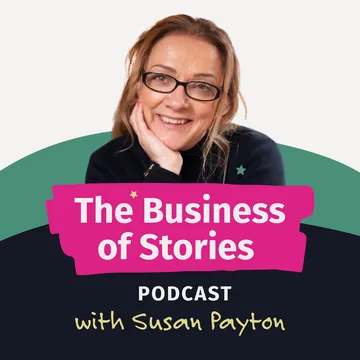
Episode 6 · Wednesday, 1 October 2025

Ep 06: Step #4 Your Why - The story behind your why, and why your clients need to hear it

Moving beyond the pressure of a global mission reveals how personal lifestyle choices and the ripple effect of client success create an authentic brand movement.

By The Business of Stories | 23m listen | 12 chapters
Ep 06: Step #4 Your Why - The story behind your why, and why your clients need to hear it cover
The Business of Stories · No. 6

About this episode

Simon Sinek popularized the concept of starting with why, but many entrepreneurs feel paralyzed by the pressure to define a world-changing mission. A business coach recently revealed at a networking event that he hid his relocation from the UK to Spain to play golf, fearing clients would view his lifestyle as a lack of professional commitment. This tension between personal freedom and public perception highlights the critical need for business owners to reconcile their private motivations with their brand narrative.

Entrepreneurial drive splits into two distinct categories: the personal why and the big why. A mid-90s career shift involving Capital Radio presenter Chris Tarrant illustrates the personal why, where the desire for presence over a childminder’s logbook led to a freelance transition. In contrast, the big why focuses on the ripple effect described in Pat Flynn’s Superfans, where changing one person’s world creates a movement. Examples include a music industry veteran challenging the boys’ club culture to empower women and Carl Jertson of Webster Digital demonstrating how storytelling builds the trust necessary to bypass aggressive bro-marketing tactics and manufactured scarcity.

Authentic human voices provide the only effective hedge against the rise of AI clones and sterile sales funnels. Listeners are encouraged to share their own intentional life design stories, even if they remain a work in progress, to evoke the emotional responses that drive purchasing decisions. The next installment of this series will move from internal motivations to Step 5: Your People.


CHAPTER 01 / 12 Discussion

Work-Life Balance, Spain Relocation Anecdote

A business coach revealed during an online networking event that he had moved from the UK to Spain to achieve a slower pace of life and play golf. Despite living his dream, he initially hid this information from clients for fear of appearing less committed to his work. The narrative illustrates how sharing personal lifestyle choices can actually inspire ideal clients and serve as a role model for intentional living.

spain· networking· work-life balance· business coach· lifestyle design

00:54 You're listening to The Business of Stories with Susan Payton, showing you how to share stories that do the selling in your business so you don't have too. I was attending an online networking event last year and we were put into breakout rooms and I got to spend some time with a business coach and we had a fascinating conversation I asked him where he was based and he told me that he was from the UK but had recently moved to Spain. He said it had been his dream for years, to sell their house in England buy a little apartment somewhere in the UK for when they want to go back but to spend nine or ten months a year in Spain and last year they'd done it! Him and his wife were now in Spain living the dream

01:47 He said he was still working with clients on Zoom but he only worked part-time in his business now and spent the rest of time exploring the region in Spain where they were, playing golf and enjoying a warmer climate and slower pace of life. And I said oh wow that's amazing! That is so inspiring – hope you're sharing lots of stories about that. To which he said No, I'm not. I never do! In fact most of my clients don't even know that I've moved to Spain." Really? I said... Why's that?" And then he said something that really shocked me He said, "...I don't want them thinking that I don't take my work seriously now or that I am any less committed to their success because I only work part time and spend three afternoons a week on the golf course!"

02:45 How interesting is that? That he had this story running in his head, that this fabulous life he was living was something to hide. That instead of inspiring his clients and being an amazing role model for them... ...and showing them that he knows the importance of building a business and a life So I asked him, do you think your idol client would love to believe that one day they could have that life too? And do you think that they would be more likely to see you as a coach who could help them achieve that if they saw how you've made it happen for you.

03:38 And I saw the light bulb go off. He'd never looked at it like that, but now he saw it and he left our chat excited to start sharing more about the work-life balance HE had achieved and how he can help his clients do the same It's such a good reminder to all of us that our stories of how we're being intentional about what we want our life to look like and how we're taking the steps to get there can inspire others and show them what is possible for them. When I first created my storytelling process for business owners, it only had four steps

CHAPTER 02 / 12 Discussion

Storytelling Process, Step Four and Finding the Why

The storytelling process for business owners evolved from three steps to include a fourth step focused on identifying a "why." By unpacking personal and business journeys, core values often emerge naturally, such as a client who translated a childhood lesson on valuing possessions into a business focused on valuing employees. This step aims to uncover the deeper motivations and drives behind a professional's work.

storytelling process· business values· personal story· customer story· motivation

04:24 Your personal story, business story, customer story and the sweet spot in the middle where all those stories connect and overlap and feel aligned. But then as things evolved and I took more clients through the process... ...I realised that looking back at the journey you've been on and unpacking all your stories... ...and understanding your customer story is only the beginning! And that the real magic starts to happen when you explore those stories that you've unpacked and look for the gold. I've never had to ask a client what their why is, it always jumps out of their story! I hear it when they share their stories with me – I see it, I feel it sometimes even before they do

05:13 If you listened to episode 4, I talked about the client whose why and values jumped out of his stories. About how he was taught to treasure and value and look after his possessions when he was a child And how as an adult he'd built a business that showed companies how to treasure, value and look after their people He'd never made that connection before, but when I pointed it out he got quite emotional and said it gave him a much deeper understanding of his own drive and motivations. So step four of my process is your why

CHAPTER 03 / 12 Discussion

Simon Sinek, Pressure of Finding a Big Why

The pressure to define a "big bold socially conscious goal" can cause stress for business owners who feel their motivations are too simple. While Simon Sinek's book "Start With Why" is a popular resource, many struggle to find a "good enough" reason for their business. The discussion clarifies that there are actually two distinct types of "whys" that drive an entrepreneur.

simon sinek· start with why· business coaching· social consciousness· motivation

05:54 And this is something I struggled with for years because, I didn't think I had one. And if i'm honest it used to irritate me when people asked what my why was? I remember being in a group where the coach said that you'll never be successful in business if you don't have a big why! Wow...the pressure to come up with one was immense I started to worry that there was something wrong with me, that i was shallow because I didn't have a big bold socially conscious goal of wanting to change the world. I just liked doing the work I was good at it made me happy he got great results for my clients I got paid well for doing it and like millions of other people I read Simon Sinek's Start With Why which is a great book

06:44 But I went round and round in circles for a long time trying to find a why that was good enough. It was really stressing me out, but then i started to work with business owners on their stories and I'd get a real sense of why they were doing the work they do and why it was important to them –why it mattered– why they cared? And it also helped me understand why I'd been confused about what my why was Because we have two why's. Right, the first one is your personal why Why you do what you do? Why you started your own business? Why you chose to work the way you do For instance I gave up a really good job in London and set up on my own at home long before being a VA was even a thing

CHAPTER 04 / 12 Discussion

Personal Why, Chris Tarrant and Working From Home

A personal career shift occurred in the mid-90s after realizing that reading about a daughter's day in a childminder's logbook was not a substitute for being present. This led to leaving a London job to work as a freelancer, which included managing fan mail for Capital Radio presenter Chris Tarrant. This "personal why" focuses on the freedom, flexibility, and lifestyle benefits a business provides to the owner.

chris tarrant· capital radio· freelance· childminder· work from home

07:39 In fact, one of my clients was Chris Tarrant. Some of you might remember him from The Breakfast Show on Capital Radio in London or as the original presenter of Who Wants to Be a Millionaire? in the UK Or if you're really old like me, you might remember Chis Ros And we didn't really use email back then in the mid 90s. So, we used to meet up in person he didn't live that far from me so I'd either go to his house or he'd come to mine Or sometimes would meet in a lay-by somewhere and he'd hand me a big envelope or bag which must have looked incredibly dodgy but it was full of post right fan mail and I'll take his fanmail back home and I'd answer every single letter and I'd print them all off and then going post them

08:24 So funny to think about that now, I can't remember the last time i printed off a letter and posted it. Anyway... The reason I gave up my job and started working from home was because I wanted to be there for my daughter. I didn't want to be getting her up at some ungodly hour of the morning and dropping her to a childminder while she was still half asleep I didn't want someone else picking her up from school and hearing all about her day before i did. And there was a moment for me that was the turning point, you might remember i talked about significant moments along the way in episode three. I'd given The Childminderer book to write things in about my daughter like what she'd eaten that day funny things she'd said what they've been up to anything that would help me not feel like i was missing out

09:14 But I was sat at home one evening reading the book and i was overcome with sadness because I realised, I WAS missing out. I was READING about her day instead of being there living it with her so I went into work the next day told them I was leaving and set up as a freelancer So that for me at the time was my personal why! I wanted to be there for my daughter and not miss a single minute of her growing up Maybe yours is that you wanted to work for yourself or be your own boss, choose your own hours. Or you wanted to be able to work from anywhere in the world? Or you wanted to turn your love for doing something into a business? Or be a great role model for your kids?

CHAPTER 05 / 12 Discussion

Personal Why vs Big Why Definitions

A "personal why" relates to the individual benefits of business ownership such as money, travel, and independence, while a "big why" focuses on the external impact and difference made for others. Sharing the personal journey of intentional life design can inspire others even if the entrepreneur is still a "work in progress." The big why is defined by the specific change or "ripple effect" created for a target audience.

personal why· big why· lifestyle· impact· business goals

10:02 Your personal why is about what your business gives you in terms of freedom, flexibility, lifestyle confidence energy passion independence travel money whatever it is for you. It's personal to you no one else is going to get excited about that Sharing stories about it can be a good reminder to others to check-in with why they do what they do Or what they want their business or life to look like. Or if they're being intentional about designing and living the life they want It can be inspiring for others, to see the steps you're taking To create the life YOU want Even if you are not there yet This is never about perfection or having it all sus You are work in progress So am I! So is everyone else

10:57 You can be honest about where you are on that journey and simply share your personal why and what steps you're taking to make that a reality, even if they're baby steps. So that's your personal why... And then there is your big WHY! Your BIG WHY is the difference you make to others when you do the work that you do – it's the impact you have And it's not about how many people you serve. It could be a handful of people, or it could be thousands of people. It's what you want for the people you love to work with. It's more than what you make – it's what you make happen! It's how you help them change their story. I remember a client saying that when she worked in corporate, it could take three years before she saw the results of her work play out

CHAPTER 06 / 12 Discussion

Ripple Effect, Client Success and Pat Flynn

The "big why" is illustrated through the ripple effect of helping specific groups, such as stressed parents, photographers, or managers, which in turn improves the lives of those they interact with. Referencing Pat Flynn’s book "Superfans," the concept emphasizes that a business does not need to change the entire world, but rather change "someone's world." This focus on impact creates a deeper emotional connection with the audience.

pat flynn· superfans· ripple effect· coaching· business impact

11:50 But now she coaches clients and she sees results in minutes. Someone letting something go, or finally seeing themselves as the incredible person they are Or setting boundaries Realising they have a choice Feeling good about themselves She said seeing someone change their state of mind in an instant is the most amazing feeling for her and her clients People tell me all the time that working through my process changed their business and that ultimately changed their life. One guy told me he gave up his copywriting business and went back to teaching because by unpacking his stories, he realised that was the work that truly lit him up And that's when he felt deeply aligned with what he was doing and how he was helping people

12:47 So it's not just your process or the work you do, it is what you help and enable and empower your clients to do. And the ripple effect of that! Whether you help stressed out parents or people recovering from an abusive relationship Or people who want to feel better about their body. Or women going through the menopause, or business owners who are overwhelmed or have ADHD. Or you help photographers build a photography business, or coaches build a coaching business, or personal trainers get more clients, or first-time managers lead with confidence? Who else gets to benefit when you help them

13:33 Feel calmer, or more grounded or more confident. Or clearer on what they want and where they're going? What is the ripple effect of that? That's what gives your big why purpose meaning and emotion! And it's not about changing the world It's about making it better for people you can make a difference to I love the quote from Pat Flynn in his book Superfans when he says, You don't need to change the entire world to build a successful business. You just need to change someone's world People will be drawn to your big why They might even want to be part of it Maybe what you do and why you do it feels like a movement One of my clients works with women in the music industry

CHAPTER 07 / 12 Discussion

Music Industry, Gender Culture and Movement Messaging

A client in the music industry developed a powerful brand message based on her experience navigating a "boys' club" culture where she was often dismissed or overlooked. Her "big why" became a movement to support the next generation of women in music, helping them back themselves rather than constantly proving themselves. This type of purpose-driven narrative acts as a rally cry that people feel compelled to join.

music industry· boys club· gender equality· messaging· movement

14:25 And she wanted me to help her get her messaging right and redo her homepage. So we started to unpack her story of how she built her career in the music industry, and how she was often the only woman in the room She told me that she was constantly having to navigate the boys' club culture and deal with being spoken over or dismissed She told me about the pressure of working long hours and having no life outside work But constantly getting passed over for promotion and not feeling like she was being seen or heard. And how that started to wear her down, affect her confidence and eventually she left the industry she loved but didn't want to sit back and do nothing. She didn't want to leave the next generation to deal with that

15:16 She wants to be there now for the women who are fed up with feeling overlooked and undervalued. She wants to change the music industry by supporting the women who are tired of proving themselves, and ready to start backing themselves Her why is clear And her message feels like a movement Right? That's a story people will want to be part of Because a movement is something that's way bigger than you. It's bigger than your business and the work that you do, it's a rally cry! It's about the change you want to see in the world The thing with a movement is that if people connect with the purpose or cause behind it they'll feel compelled to join it They'll want to be apart of it because its something bigger then they could ever achieve on their own

CHAPTER 08 / 12 Discussion

Bro-Marketing, Ethical Tactics and Authentic Connection

A rejection of "bro-marketing" tactics—such as manufactured scarcity, fake urgency, and manipulating pain points—led to a focus on authentic human connection. This movement prioritizes attracting clients through meaningful stories rather than making them feel desperate or small. The goal is to build a business based on real relationships rather than unpalatable manipulation techniques.

bro-marketing· internet marketing· scarcity tactics· authenticity· ethical marketing

16:07 Movements aren't about selling things. They have an energy that picks up momentum and inspires people to create the world they want to see So here's a question for you If your business was a movement, what would that movement be? For me it is about moving away from bro-marketing When I was trying to grow a business back in 2015 and I was searching online and learning about internet marketing, I found a lot of it really unpalatable. I didn't like the way a lot of internet marketers were teaching people how to exaggerate the pain you know twist the knife remind people how much their life sucks and then offer them your solution

16:55 And all the tactics people were teaching like manufactured scarcity and fake urgency and manipulating emotions. None of that felt okay, I didn't want to do it! And i'm pretty sure you don't either... That's why you're here listening to me talking about how to connect with humans in a way that feels natural and real and authentic and meaningful So that you attract people who want to work with you because they feel connected to you, not because you've made them feel small or desperate to buy. And it's an interesting way to look at it and open your mind up to it being more than what you do – see the bigger picture

CHAPTER 09 / 12 Discussion

Carl Jertson, Storytelling Results and Trust Building

Carl Jertson from Webster Digital asks how long it takes for storytelling to impact a business. Results can be immediate, with some participants in storytelling challenges securing contracts or inquiries from their very first post. However, the long-term value lies in building the "know, like, and trust" factor, which simplifies future launches by establishing a relationship before a sales pitch is ever made.

carl jertson· webster digital· storytelling challenge· lead generation· trust

17:47 It's another way to really tap into your why. And talking of you being here listening to me talk about storytelling, here is an interesting question from Carl. Hi Susan! I'm Carl Jertson from Webster Digital. Here is my question – From all the people you've worked with how long does it take for storytelling to make a difference? Let me know. Yes thank you for that question Carl The short answer is very quickly. I've lost count of the number of people who told me they got a client from their very first story post! I do a storytelling challenge every August where i send out a story prompt every day and have had people tell me they got a new client on day one or they shared one of their stories in an email to their list, and got a new customer

18:35 One person who writes sustainability policies for companies said she got two inquiries from one story post about travelling that led to two big contracts. And another person got contacted by a HR manager in Ireland, who then booked a number of their employees onto his programme So it absolutely can be the thing that makes someone instantly choose you over everyone else doing what you do But the real magic comes over time when you use stories to build trust and familiarity. I had a call this week with someone looking to come into Storytelling Mastery, and she was telling me all the stories I'd shared that she really related to. She said she felt like she already knew me

19:24 And actually she does, because I share a lot of stories. So over time she had got really good sense of who I am and how I show up my personality how i talk about what I do what's important to me and clearly felt aligned with who she is So while it can make a difference very, very quickly where it really starts to pay off is when your stories have consistently engaged your audience and built a relationship over time so that when you do launch something or put an offer out the connection is already there. The hard work is already done

CHAPTER 10 / 12 Discussion

AI Clones, Human Voice and Sales Funnels

As AI-generated content and clones make it harder to distinguish what is real, audiences are increasingly leaning toward honest, genuine human voices. Real stories that evoke emotion are presented as more effective than perfectly polished sales scripts or "funnel hacks." Building a relationship through consistent storytelling performs the "heavy lifting" that traditional marketing funnels often fail to achieve.

artificial intelligence· ai clones· sales funnels· authenticity· trust

20:04 And your success is not down to a slick high converting sales page or complicated funnel. It's down to the know, like and trust factor that you've built up with your audience in between the launches and promo windows. It's the stories you shared consistently in your content week after week that have done the heavy lifting before the launch ever began Before people buy from you, they want to buy into you now more than ever. As the lines between what's real and what isn't get more and more blurred with AI creating clones and twins that are harder and harder to spot People are leaning into real honest genuine voices they can trust

20:55 Not perfectly polished sales scripts, but real people with real stories that make them feel something. And that's something no funnel hack will ever beat! But going back to Carl's question about making a difference... Remember that stories are one of the most powerful things that connect us as humans So the real question is can you afford not to be using them in your content and marketing? And on that note, let me give you a quick action step that you can go away and do. Here's your action step for today... Share your why! Whether it is your personal why or big why – you can choose… Or share both! When did you last share the story of what led to here doing what you now do? When did you last tell your idol client WHY you chose this work?

CHAPTER 11 / 12 Discussion

Action Step, Sharing Your Why Story

The primary action step for listeners is to share their "personal why" or "big why" with their audience to evoke an emotional response. Since customers make decisions based on feelings rather than just explanations of services, articulating why the work matters is essential. This exercise helps clarify the brand message and connects more deeply with ideal clients.

action step· marketing strategy· brand message· emotional decision making· storytelling

21:53 How you found your thing. How often do you tell people why the work you do matters? Do people know how much it means to you, why you care? Does your audience understand who you love working with and why and what a great result you help them get? If not then they need to know so we need to put that right because as humans we are emotional beings and we make decisions based on how we're feeling Your customers will make decisions based on how they feel about you, your brand, your message and your story. And while explaining what you do isn't going to evoke an emotion, explaining why you do it will! So that's your action step to go away & do. Share your WHY? In the next episode I'll be talking about Step 5 of my process – YOUR PEOPLE

CHAPTER 12 / 12 Discussion

Outro, Next Episode Preview and Review Request

The host previews the next episode, which will cover Step 5 of the storytelling process regarding "Your People." Listeners are thanked for their participation and encouraged to rate, review, and follow the podcast on platforms like Apple and Spotify.

podcast review· apple podcasts· spotify· storytelling mastery· audience engagement

22:50 So I'll see you then for more stories that do the selling for you, so you don't have to. Thank you so much for being here! I love that we get to do this together Would you do me a huge favour and please rate review and follow this podcast in Apple Spotify or wherever you listen to your podcasts? And i'll see you next time for more honest conversations meaningful connections