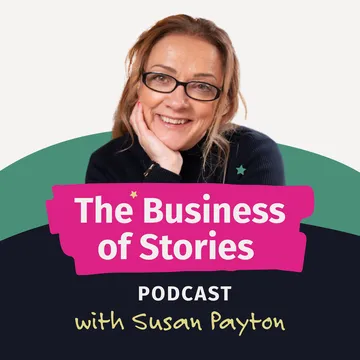
Episode 54 · Wednesday, 2 September 2026

Episode 54: Thinking of starting a podcast? Listen to this

A year of consistent broadcasting reveals why a dedicated content hub outperforms social media for consultants seeking to turn listeners into high-ticket clients.

By The Business of Stories | 30m listen | 10 chapters
Episode 54: Thinking of starting a podcast? Listen to this cover
The Business of Stories · No. 54

About this episode

Susan Peyton marks the one-year anniversary of The Business of Stories with a strategic breakdown of her 54-episode journey. Peyton details how her collaboration with Claire and Phoebe at Winter Audio established a professional foundation for her brand since the September 2025 launch. The narrative centers on the transition from social media scrolling to creating immersive content hubs that foster deep client trust.

Successful podcasting requires a core chorus that anchors every segment to a central brand promise. Peyton argues that storytelling, business, and mindset pillars must address the internal narratives of the audience to be effective. Guest appearances are strictly curated from the Storytelling Mastery program to ensure every interview aligns with the show's specific methodology. Technical production standards are framed as a primary sign of respect for the listener's time and attention.

Listeners often feel they know a host personally before the first discovery call due to the intimacy of audio. Susan Peyton reflects on the unique silence of one-way communication and the importance of Spotify reviews to bridge the feedback gap. The episode concludes with a challenge for entrepreneurs to select one primary channel for long-form immersion rather than diluting their message across multiple platforms.


CHAPTER 01 / 10 Discussion

Susan Peyton Celebrates One Year of The Business of Stories Podcast

Susan Peyton marks the one-year anniversary of her podcast, The Business of Stories, following the release of 54 episodes. She reflects on her personal journey as a podcaster and addresses frequent listener inquiries regarding her startup process and content approach. Peyton emphasizes the importance of documenting the professional journey and explains how the podcast has become a central pillar of her broader content strategy.

susan peyton· podcast anniversary· content strategy· storytelling· business of stories

00:03 You're listening to The Business of Stories with Susan Peyton, showing you how to share stories that do the selling in your business so you don't have to. When this episode goes out I'll be celebrating the fact that this podcast is won! It's my podcast birthday Because even though this is episode 54, we released the first three episodes in one go. So this episode is the one that truly marks a year of podcasting and what a journey it's been! So I thought I'd mark the occasion by doing an episode about what a year of podcasting has looked like for me anyway obviously my experience will be different to other people so I can only speak for myself

00:52 But I do get a lot of people asking me to share how i got started and how I approach it, and what I've learned along the way. And that sort of thing...and while I'm no expert far from it if you have been following along you'll know that I am a big fan of documenting the journey! So this is a nice way to take a bit of a snapshot of how I got started with my podcast what I've loved, what I've struggled with And why it's become a key part of my content strategy. So, let's talk about that! I think the first thing to talk about is why i started my podcast because I think knowing what I know now about how much work it is and what a big commitment it is

CHAPTER 02 / 10 Discussion

Creating Bingeable Content Hubs for Ideal Clients

Establishing a dedicated platform where potential clients can immerse themselves in a brand's methodology is essential for business growth. Rather than forcing prospects to scroll through personal social media feeds, entrepreneurs should provide a "deep dive" location such as a podcast, YouTube channel, or blog. This approach allows for an intimate connection that evolves over time, unlike static assets like books which may become outdated as a consultant's process matures.

content strategy· storytelling mastery· youtube· substack· bingeable content

01:44 It's important to know from the beginning why you're doing it, that you have a purpose behind it. That you know what you want to get from it and really this is true for anything in your business. It's important to know why you're doing things right? Why are you focusing on that and what we want the outcome to be for you and your ideal clients So let me start with why. I talk a lot in Storytelling Mastery about having a place where people can go and binge your content, like really get to know you and who you are and what you do and your approach, your way of doing what you do and who you help and how you help them and all of those things

02:31 So that if somebody comes across you and they're curious enough to want to find out more, because that thing you talk about is a real issue for them right now or the outcome you talk about is something they really want. That they've got somewhere to go to check you out because what you don't really want is them going into your Facebook account for instance and scrolling through your posts trying to understand what you do and if you can help them But actually what they're seeing is your holiday pictures. So I think it's really important to have somewhere that people can go deep, where people could literally go and get lost in content that's going to be highly relevant and relatable to them. And depending on how you like to create content – that might be a podcast or it might be a YouTube channel if you love doing video or it might be a blog if you love writing or Substack or whatever works for you

03:28 But you want to have somewhere that people could go and immerse themselves in your approach, your process. What you do? How you do it? What you believe what you stand for how you're different all of those things so for me podcasting was the one that made sense I like just being able to talk and not be looking into a camera I do love writing and obviously, I've written my book and I write a lot of content but i feel like podcasting is so much more intimate. And people can listen to you on the go and really feel like you're talking to them. Also, I've got my book and I've got the audio version of my book but the thing with that is that it's a bit stuck in time right? I wrote that in 2021

04:15 And my process and my approach and what I talk about, on how I work with clients has evolved a lot. Whereas what I love about podcasting is that I can literally think of something that I want to talk about going into my office hit record and talk about it. So for me it was the ideal way to be creating content that really helps people get to know me and what I talk about and what I share and what I teach and what I show business owners how to do And share lots of value and insights and takeaways about not just storytelling but life, business and the universe. All the other lovely things that I've talked about over the last year

CHAPTER 03 / 10 Discussion

Defining Audience Needs and Emotional Resonance in Podcasting

Initial podcast planning requires identifying the specific needs of an audience and determining how listeners should feel before they even press play. Familiarity and consistency are highlighted as key drivers for listener retention. The goal for this specific program is to make storytelling feel doable and simple, ensuring listeners feel confident and supported while navigating the challenges of business ownership.

audience engagement· podcasting groups· masterclasses· emotional connection· inspiration

04:57 So that's why for me it made sense to start a podcast. And once I made that decision, I obviously needed to decide what I wanted it to look like, what I wanted it to sound like how I wanted it to work and how I could do in a way that my ideal client would want to listen to it and engage with it and come back to it and hopefully share it with others. So I started to look around and see what other people were doing. I joined some podcasting groups on Facebook I signed up for a few masterclasses about podcasting and listened to some podcasts that were about having a podcast. And, I got some great tips from doing all of those things and i'm actually looking back in my notebook from my notes that I took at that time to remind myself what I did before I got started

05:48 And I wrote down a couple of questions in my notebook. This was very, very early days when i was just thinking about the concept and one of the questions I wrote down was what need does my audience have that I can keep serving? Which I thought was a great question! The other question I wrote down was how can I train my audience to know how they're going to feel when they listen before they even hit play Which is a really interesting question, right? And when I thought about it, I realized that what it means is people like familiarity and people like to know what they're getting. So I wanted to approach my podcast with that thought in the back of my head

06:34 How can I make it so that people feel like it's becoming familiar and that they know what to expect, and they know how they're going to feel? So I needed to think about how I want people to feel. And the way I want people to feel when they listen to my podcast is inspired, but also that it's doable. I want people to feel like they can do this and actually it can be very simple. It doesn't need to be complicated And I wanted people to know that the challenges that they're facing are normal and that they can get through them. And that i'm here to share whatever I can share, that helps make this roller coaster of a journey feel a little bit easier and manageable

07:25 And I want people to feel a bit more confident about going out there and sharing their stories, and putting their offers out. And showing up the way they wanna show up knowing that I'm in their corner and I really want them to win. So I hope that's the feeling you get when you listen to this podcast because that is what I was trying to achieve And that little bit of time I spent just thinking about those questions and how I want people to feel and how I want to approach it really helped me start putting my thoughts together. About why I was doing this, what need my audience had that I wanted them to keep serving and how I wanted them to feel every time they came in and listened to the episode

CHAPTER 04 / 10 Discussion

Developing a Core Message and Tagline for Brand Alignment

A successful content strategy requires a "chorus"—a central, punchy message that anchors every individual piece of content. For this podcast, the tagline "sharing stories that do the selling for you" was developed to answer how storytelling directly benefits a business. This core storyline, maintained since 2015, emphasizes that human-to-human connection through narrative is more powerful than traditional marketing tactics.

tagline· storyline· brand alignment· core message· marketing strategy

08:13 And once I had clarity on that, I started to think about the structure that I wanted it to have. What I wanted to cover? You know what I wanted each episode to sound like and how it would all come together. And again looking back through my notes, I realized that I actually did that in three stages And when I look at those three stages, it's pretty much how I approach everything that I do. And it's the stuff I talk to clients about all the time because these are the things that you need to get clear on for all of your content to feel connected and aligned and consistent around a core message. So let me talk you through the three main things that I did to help me get clarity on how my podcast could work

09:01 And the first one was that kind of big umbrella, you know what's the topic? What do I want to cover and what's going to be central to all of it. What's the core message that's gonna run through it and the analogy I often use for this and I'm sure I've talked about in a podcast before is... It's that you wanna find the chorus of your song when you think about a song its the chorus It holds it together. Every verse comes back to the chorus and the chorus gets sung over and over again, and it's normally very short and punchy and sums up what song is really about. And it's what sticks in people's heads. It's what they remember. It's usually what comes to mind when you talk about a song as you start hearing the chorus

09:53 And that's what you want with everything that you do, right? Not just a podcast. You wanna have a chorus for your song because when you've got a chorus then you can go out and write the verses. You can put posts out. You can do videos. You can do a podcast. You can do a blog. You can go and share all sorts of stories but the chorus brings everything back to what sits at the heart of it So, yes of course my podcast was always going to be about storytelling in business. Right? It's what I do it is what my book is The Business Of Stories but it is such a vast topic so I wanted to define it a bit more. I wanted to get really clear on what I was gonna focus on

10:39 And how I was going to make sure it all felt connected and not just random and disjointed. I needed a chorus to bring it all together, and make sure everything felt aligned and consistent. So I did two things. I decided to craft a tagline and a storyline because I knew that would help me stay I really liked the idea of having this central message and storyline that would run through everything.

11:31 So I got to work thinking about what that would be and first of all, I worked on the tagline. And the tagline I came up with was sharing stories that do the selling for you and now that i've told you that you're probably thinking oh yeah! I've heard you say that I say it at the beginning of every episode, and I say it at the end of every episode. So it's something you hear at least twice every time you listen to my podcast. And what I liked about that is that actually answers a couple questions. The first question I think it answers is how will storytelling help my business? People know storytelling is powerful but they don't necessarily know how its going to help their business

12:14 But when they hear stories can do the selling for them, okay now I know how it's going to help my business. And the other question it answers is How can I get people to buy my stuff? Well, the way you get people to buy your stuff is to share stories that connect and resonate with your ideal client and position you as the person they need in their story So that was my tagline sorted. And even that small exercise actually really helped give me a clear direction of where I was going with it and what I wanted the emphasis to be on. I wanted the emphasis to be on the fact that stories can do the selling for you

12:57 So then I thought about what is the storyline that runs through it all? And it's actually the thing I've been talking about since I shared my story back in 2015. And that is, that stories are one of the most powerful things that connects us as humans! That is the simple storyline that runs through everything that I do It's the message that sits at the heart of every single story I've shared. That you can spend a lot of time trying to do all the marketing things, but actually it's your stories that your ideal client will connect with human-to-human and that's what makes them so powerful So...I had my tagline, I had my storyline, I had the chorus of myself And that for me was step one To get really clear on those


CHAPTER 05 / 10 Discussion

Categorizing Content into Storytelling, Business, and Mindset

Content for the podcast is organized into three primary pillars: storytelling, business, and mindset. The mindset component is prioritized as it addresses the internal narratives that often hold clients back from success. By sharing personal experiences and the "roller coaster" of entrepreneurship, the host aims to provide practical, actionable advice that feels like a two-way conversation rather than a lecture.

mindset· business journey· storytelling· practical advice· professional development

13:50 Step two was to think about what are the topics that I want to cover. And, I had lots of ideas but as I started to list the things I wanted to talk about, I realised that they fell into three main categories and that was storytelling business and mindset so storytelling is the obvious one there's no way i'm going to do a podcast that wasn't about storytelling But actually talking about business and mindset are also a huge part of what I do. It's why my business is called The Business of Stories, and I love sharing stories about what having a business looks like and what that roller coaster of the journey that we're all on looks like for me because we're all different and my business and my experience is obviously different to yours

14:42 But I know how much it helps me when other people share what that journey looks like for them and the challenges they've had to overcome and what it took to get through the tough times, and what they learnt. And just knowing that we all have ups and downs and we all have good days and bad days and we all have things that work and don't work Just helps us all to deal with the stuff that comes up and know that we're still okay, we're still on track. And this is completely normal. So it was really important for me that I shared stuff about business too. And that third piece is mindset because it's the very first thing I work on when people come into my program. It's the first thing I work on when I start working with a one-to-one client

15:32 I can very quickly pick up the thing that's holding them back and it's always something they're telling themselves. I can see what's getting in the way, and I help them change that story first before we start to do anything else. So that story you're telling yourself has always been a big part of what I do – it's a chapter of my book, it's a module of my program – and it was always going to have to be something that I talk about in my podcast And by the way, none of these topics were things that I was trying to position myself as an expert in or that I have all the answers because I've never positioned myself that way. I always come at everything with the energy of well this is what I've learned. I'm still learning as I go and I always will be but i'm really happy to share what I've learned so far in case it's helpful to someone else

16:29 And I also wrote a few notes about what I wanted people to get from listening. So obviously, I wanted my podcast to be full of stories. I wanted to share lots of learnings. I wanted it to be really practical, very actionable everything I create, I try and make it as practical as possible. People often say to me that my book is like a big workbook right? Because its full of practical stuff and exercises and I wanted my podcast to be the same And I wanted people to feel like they were going on a journey with me. Not that I was just talking at them, but talking with them which i know sounds a bit odd because this is very much a one-sided conversation but I wanted people to feel like it was a conversation and they were getting to know me and that I understood them and I wanted to wrap all of that up in stories that feel relevant and relatable

CHAPTER 06 / 10 Discussion

Evolution of Podcast Episode Structures and Guest Interviews

The original podcast framework involved a story-first opening, listener questions, and specific action steps, though this has simplified over time to reduce production intensity. Guest interviews are strictly limited to individuals whose expertise aligns with the "core chorus" of the show, such as clients from the Storytelling Mastery program. These interviews focus on relatable journeys of overcoming business challenges to inspire the audience.

episode framework· listener questions· interview process· storytelling mastery· content evolution

17:26 That was step two of my process. So I now had my tagline, I had my storyline, I had my topic categories and I had a sense of what I wanted to include, what I wanted people to get from the podcast. I had some clarity around how I wanted it to look and sound and feel and what I wanted people to take away from it. The third step was to get right down to the structure of what I wanted each episode to have And I wanted the episodes to follow some kind of framework because I knew that would help me but also it would help to create that familiarity that was talking about earlier. This has changed over the year since I started, but my original structure was to start every episode with a story. Obviously it starts with an intro and little bit music which

18:21 Which includes my tagline and then goes into a story. So I don't start with introducing myself, I start with the story and then after the story have another little bit of music that kind of creates a little break there and then go into the main content of the episode And originally, I would also in that main piece of content. I would include a question from a listener and I would finish each episode with an action step something that people could go away and do. Then I'd have a little outro, little bit music thank people for listening and ask them to give me a review so that was the original structure that I followed for the first few months and it worked really well but

19:07 It was actually a lot of work. It took a lot of planning, I would come up with a topic and then I had to find a story that worked with the topic and I'd have to find a question that was relevant and worked with the topic and I'd have to come up with an action step that fitted and worked. And it...I think it worked really well and I think it helped me to get going with a really nice structure That kept it all nice and tight and consistent, around the same length. But over time I started to simplify it a bit more. I don't have a question from my listener every week – I do them occasionally

19:46 But I don't do them anywhere near as often as I did at the beginning. Although saying that, I still make a note of questions that I get whether it's from clients or people inside Storytelling Mastery or on social media. I always keep a note because its great way to get ideas for content and they often prompt an idea for an episode. In fact, it was having a few people ask me about my podcast recently that gave me the idea to do this episode So anyway, that was the structure that I started with. And like I say it's evolved and changed a bit over time but i still follow a framework and I still have the chorus of my song running through them even when I'm interviewing a guest. I only really interview people when I can see there's a real link between what they talk about and what I talk about

20:41 And that I can see that they would add real value to the conversations that i'm already having. And there's some way of bringing it back to the chorus of my song and I've done some interviews with clients who have been through my process, and can share their journey where they were what the challenge was how unpacking their stories joining all the dots And finding their golden thread helped them get really clear on their core message and how that impacted their business and their confidence, and how they were able to do things differently. And again, I choose people that I know their story is going to be very relatable. It's going to be very relevant to my audience and I know that a lot of people will have struggled with the same thing or are struggling with the same thing so hearing how somebody else worked through that challenge and got the clarity they needed and came out on the other side

CHAPTER 07 / 10 Discussion

Technical Setup and Launch with Winter Audio

The technical launch of the podcast was supported by a starter package from Claire and Phoebe at Winter Audio, which covered the first ten episodes. This collaboration ensured high-quality sound, professional editing, and brand alignment from the initial trailer release in September 2025. Maintaining high production standards is cited as a sign of respect for the listener's time.

winter audio· podcast production· microphone· software· trailer launch

21:35 And what's different now and what they can do that they couldn't do before, I know is really really helpful. And really inspiring and motivating and show people what's possible for them So...that was all the work that i did before I even recorded the first word And then what I did is, I bought a package from Claire and Phoebe at Winter Audio that was a starter package to help me get the first 10 episodes recorded and out there. And that was really helpful just to get up and running and obviously work with people who knew the process and could answer my questions and help me sort out things like

22:16 Microphone and software, and how to physically record a podcast. That was good quality it's always been important to me that the quality is good and the sound is good and the editing is good And the whole look and feel I wanted it to you know be very much part of my brand and something I'm really proud off so they helped me get up and running. I recorded a trailer which went out 10 days or so before we dropped the first three episodes In September 2025. And I've put out an episode every week since, and this is episode 54 which i can't actually believe how quick it's gone! And how many things I have found to talk about but...I have loved doing it

CHAPTER 08 / 10 Discussion

Challenges of One-Way Communication and Listener Feedback

Podcasting presents a unique challenge compared to live workshops or Zoom calls because of the lack of immediate visual feedback from the audience. Despite rising download numbers and positive analytics, the host notes the "silence" that often follows an episode release. Listeners are encouraged to send messages and leave reviews on platforms like Spotify to provide the necessary feedback that helps hosts understand the impact of their content.

listener feedback· analytics· spotify reviews· zoom· audience engagement

23:01 Has it always been easy? No, I have struggled sometimes with the amount of work that it takes. I do actually put a lot of work into each episode mainly because I really respect people's time and I've always wanted the episodes To be 20 to 30 minutes and packed full of value, and that actually takes a bit of planning so that I'm not rambling. And it is delivering what I set out to deliver The other thing I have struggled with a little bit is that it's very one way and i'm very much of people person. I love interacting with people and I do pretty much everything else, I do on zoom. I do master classes, I do workshops, I do events, I work with clients one-to-one and that's all two way right?

23:50 Whether you're on Zoom or standing on a stage, you can see people's faces. You can see what is landing and nodding and scowling. You know? You can look at people's body language. You get that feedback. You get the sense of how they are feeling and reacting And so you're getting that feedback all the time, whereas a podcast is very different. I can spend hours planning an episode. I go sit in my room and I record it and I send it off to Phoebe who does my editing as she sends it back And I write up the show notes and it all gets scheduled, and it goes out. And I write my email on a Wednesday morning letting people know that its out and what's about. And I do my post on social media and it goes out into the world...and then nothing! Which is completely normal

24:41 I listen to podcasts all the time. I've never thought to reach out to the host, to tell them that i'm really enjoying their podcast so I totally get it! I just hadn't really thought it through...I just wasn't really prepared for it and yes of course I look at the downloads every week I can see the analytics which is great and they're all going in the right direction. Last month was the most downloads i've had to date so that's great but it's not quite the same as seeing people's faces or hearing what's landed, knowing if people are enjoying it and what they're getting from it or how it's making them feel

25:21 So I have done some posts recently about that and, and I got the most amazing feedback from people. And I really do appreciate every single message that I get that lets me know that you are enjoying the podcast and that you're getting something from it, but its landing with you. And that some of you are even sharing it with other people which I really cannot thank you enough for So do please keep those messages coming to me and other podcast hosts, right? Because you've probably never thought about it but the only feedback they get is when people message them or leave a review. So those are great too!

26:01 And I love the reviews on the individual episodes in Spotify because i can actually go and reply to those too, which is awesome. So thank you if you are somebody who has ever reviewed my podcast or sent me a message to tell me that you've really enjoyed an episode So that's how I started my podcast, that's how I approached it and that work that I put in at the beginning definitely still to this day helps me keep it very focused on the things that I want to talk about with that central message that sits at the heart of it but also gives me the freedom and flexibility

CHAPTER 09 / 10 Discussion

Injecting Personality to Build Trust and Connection

Podcasters and content creators are encouraged to inject their unique personalities into their work to foster a sense of familiarity with their audience. This authenticity often leads to potential clients feeling as though they already know the host before their first official meeting. By showing up consistently as a guide, creators build the necessary trust for listeners to want them "in their corner" for professional support.

personality· linkedin· brand trust· authenticity· guide

26:41 To talk about things that are not necessarily directly related to storytelling, like pricing or what to do when your offer doesn't sell. Or even ordering stuff from the universe and actually that's what I've loved about it more than anything is it gives me a chance to talk about the things that I want to talk about and share the things that I want to share and reach people that I wouldn't otherwise reach and connect with people I might not have otherwise connected with And actually if there's one tip that I would give anyone that is thinking about starting a podcast, it is really decide how you want to show up. Inject your personality into your podcast. Let people know who you are

27:25 And that's the case whether you're doing a podcast or videos or blog, or LinkedIn articles. Or whatever it is let people start to get to know you I've had so many calls with people where they've come on Zoom and the first thing they say to me is oh It's so weird because I feel like I know you so well already and we've never even spoken! And that's what you want You want somewhere that people can go and binge your stuff, go deep on your content. Get to know you see if you're a good fit be inspired being motivated and feel connected to you And that they want YOU in their corner That they want YOU to be their guide That you're already there for them! That you are showing up every week putting the work in to help them before they've even started working with you

CHAPTER 10 / 10 Discussion

Action Steps for Building a Deep Content Hub

The episode concludes with a call to action for business owners to identify or create a platform where audiences can immerse themselves in their content for several hours. Listeners are advised to choose one channel—whether a podcast, blog, or video series—and commit to it regularly rather than spreading themselves too thin. The host closes with a request for ratings and reviews on Apple and Spotify.

action step· content immersion· apple podcasts· spotify· review

28:12 And if podcasting is the way that you want to provide that place for people to go deep, then I hope that this episode has given you some ideas about how to get started. So as always before I go let me give you a quick action step that you can go away and do here's your action step for today think about if and where people can binge your content Where can they immerse themselves in your world for a couple of hours? Where can they really get to know you and what you're about, and what you do, and what you help them do. Maybe you've already got somewhere that people can go deep And if so are you building your audience Are you letting people know about it? Are you doing it regularly So that people get familiar with it and keep coming back to it

29:10 And if you don't have somewhere that people can go deep, then have a think about what that could look like for you. What would you most enjoy creating? It's really important to choose something that you're happy to commit to and will enjoy doing. I would stick to one at least to begin with better to pick one channel and really do it well than try and do them all and spread yourself too thin So that's it. An easy action step for you today, just think about where you want people to go to get lost in your content without having to sift through your social media feeds somewhere that you will enjoy keeping up-to-date and relevant and sharing insights and learnings on the journey that you're on And I'll see you next time for more stories that do this selling for you so you don't have too

30:07 Thank you so much for being here. I love that we get to do this together Would you do me a huge favour and please rate, review and follow this podcast in Apple Spotify or wherever you listen to your podcasts? And i'll see you next time for more honest conversations meaningful connections and of course stories