

Thursday, 10 June 2021

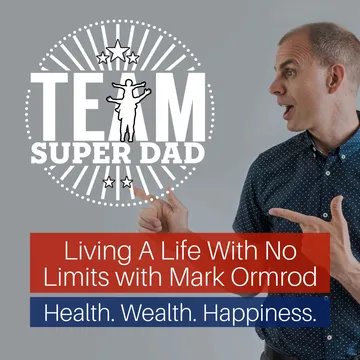
Living A Life With No Limits - with Mark Ormrod MBE

A triple-amputee veteran reveals how the brutal lessons of a Christmas Eve IED blast in Afghanistan forged a blueprint for modern fatherhood and entrepreneurial success.

Mark OrmrodRoyal MarinesInvictus GamesAmputee resilienceTeam SuperdadIED survivalHero Academy
By The Jonnie Jensen Show | 1h 11m listen | 20 chapters
Living A Life With No Limits - with Mark Ormrod MBE cover

About this episode

Mark Ormrod MBE survived a catastrophic IED blast in Afghanistan on Christmas Eve 2007, resulting in the loss of three limbs and a temporary clinical death during medical evacuation. The former Royal Marines Commando has since transformed into an Invictus Games medalist and entrepreneur, using his recovery to redefine the limits of physical and mental resilience. His viral training videos, including a fall on running blades that reached millions, serve as a testament to his refusal to let disability dictate his future.

Ormrod details his transition from military service to the Team Superdad Hero Academy, where he applies the Royal Marines mindset to business and fatherhood. He credits a 2009 prosthetic training trip to the United States for shifting his perspective, as American medical teams utilized a tough-love approach that forced him to navigate the world without a wheelchair. This philosophy extends to his parenting of three children, where he rejects mollycoddling in favor of building self-reliance. He manages multiple business ventures through the F5 framework—focus, fitness, finance, family, and fun—leveraging automation and tools like Insight Timer and Blinkist to maintain high performance.

Johnny Jensen and Mark Ormrod reflect on the importance of communication in marriage, noting how Ormrod and his wife Becky maintained a resilient bond despite the trauma of his injuries. The conversation highlights the power of private communities, such as Ormrod’s Facebook supporters group, in filtering out social media negativity. Ormrod concludes with a call for men to address the pressures of modern life and mental health, urging a culture of open dialogue to combat rising suicide rates.


CHAPTER 01 / 20 Discussion

Mark Ormrod and the Team Superdad Hero Academy

Johnny Jensen introduces the Team Superdad podcast and the Hero Academy program designed to help fathers balance their lives. The segment features guest Mark Ormrod, a former Royal Marines Commando and triple amputee who became an Invictus Games medalist and author. Jensen highlights Ormrod's resilience after losing his limbs to an improvised explosive device in Afghanistan and his recent viral success on YouTube.

mark ormrod· johnny jensen· team superdad· hero academy· royal marines commando· invictus games

00:00 In this episode of the Team Superdad podcast, I talk to former commando, triple amputee, Invictor Games medalist, entrepreneur, author, husband and dad. Yes, he really is all those things. The man that is, Mr. Mark Ormrod, role theme. Welcome to Team Super Dad. Real dads creating their best lives ever. More time, more money, more fun. You are not alone. You're on Team Super Dad. Hey, welcome to the Team Super Dad podcast.

00:35 It is great to have you here. My name's Johnny Jensen. I am the founder of the Team Superdad community and the creator of the Hero Academy program, the program for dads who want to create their best lives ever and accelerate it, if you like, on all things important. You know, dads, we get very worn out, maybe sometimes a bit too focused on one area of our life over the other. And actually, if you want to have it all, if you want to be the best version of yourself, enjoy life, be the man that you want and the dad that your family needs, then it's about balance. And we don't always know exactly what those things are that we need to do, but the people around us do.

01:19 And, you know, quite often it might be that it's just a bit of accountability, some motivation and direction. And that's what being part of Team Superdad is all about, which includes bringing guests like we have today. Mr. Mark Ormrod, you may well have seen him, particularly if you're in the UK. Although saying that, his recent, he tells me in our conversation that his video, the one where he falls over in his blades, has now reached 7 million views on YouTube. So the likelihood is that there are definitely a lot of people around the world who are now familiar with Mark.

02:00 So why is he so well known? Why is he so popular? Why is he so out there? I think it's just because he's so real. You know, like I said in the intro, he's a dad. He's a husband. He's a bloke. He talks about his mates and as a former soldier, former commando in the US, sorry, in the US, in the UK Army. You know, there's obviously a lot of squaddy bloke banter that goes on there as well. And that's part of being part of being real and part of having it all. You know, whatever having it all means to you, it doesn't have to be about the cars and the money and the holidays.

02:43 It really can be about enjoying life. And for someone like Mark, as he shares, to have his life turned upside down, you know, and he doesn't really talk about it like that. He says he, you know, talks about having his life totally changed by an improvised explosive device that he trod on. And in our conversation, he shares how he remembers each and every moment of that. And I just, I'm so grateful for him to come on the podcast and share that story with us all because we have life-changing decisions to make most days, most weeks, you know, whether it's to move house, whether it's to take a job, whether it's to change a job, start a

03:30 business, ask someone to marry you, decide that it's not working out and you're going to leave them, have a kid, not have a kid, you know, like life-changing decisions are all around us. But what happens when that choice, when that decision is actually made for you, such as it was for Mark? We what? We still have two choices, sink or swim. And Mark has chosen to get up off of that hospital bed when he was told he would never walk again without the aid of a wheelchair. He would never walk again. He would never move without the aid of a wheelchair. He was having none of it. And there are some documentaries out there of

04:13 his rehabilitation. And he talks about that a little bit, in particular about when he was in America and they were not quite as generous as the UK medical teams in making him basically get off his ass and learn how to use his prosthetics. And so the metaphor there for us all in our own life is what life-changing moment are we going to face where we're going to get up of our ass and say, I'm not going to let this define me. I'm going to go out there and create. And as you'll hear, Mark shares about how the more he pushes on, the more he leans into this.

04:55 And I don't mean Gary Vee kind of hustle, hustle, hustle. Just he's up to. to stuff. He's like, What do you mean we're gonna run 5K? Okay, yeah, go for it. What do you mean we're gonna swim a kilometer? I've only got one arm. Okay, go for it. You know, he just raised over 400,000 pounds in that one-kilometer open sea swim. And as he pushes into this, he goes on these adventures, more opportunity comes back his way. He touches the lives of more people. He meets new people, he learns new things. And I just know that message, if you've listened to the Team Super Dad podcast before, you'll know that that message is something we talk about all the time.

05:38 You know, what's it going to take? What is it you want? How are you going to make it happen? It doesn't have to be hard work. You just got to enjoy the journey. And Mark's story, it just exudes all of that. And it's just a really, he's a good bloke, really top bloke. Just a bloke. At the end of the day, just a bloke like you, like me. And we can all make this happen. So, wherever you're at, whatever it is that you want to create, more fun with your kids, a better relationship with your partner, the strength to start a business, the strength to break up positively. You know, we have to face these crossroads with strength and conviction and with a smile on our face, more than anything, with a smile on our face.

CHAPTER 02 / 20 Discussion

Entrepreneurship and Reinvention After Military Service

Mark Ormrod discusses his transition from a military career to becoming an entrepreneur and public figure. He emphasizes the importance of reinvention and overcoming struggles that might cause others to crumble. The conversation focuses on how fathers can use Ormrod's drive as inspiration to design their own lives rather than feeling stuck in their current circumstances.

mark ormrod· entrepreneurship· triple amputee· disability· personal development

06:22 I know you're going to love this. If you're interested in all the work we do at Team Superdad, come on over to teamsuperdad.com forward slash group. That will let you into our community and you really can start to create the life you desire and get out of the life you feel stuck in. I'll see you on the other side. Hello, Mr. Ormrod, Mark. Great to have you here with us. Thanks for joining us today. I'm Team Superdad Joe. Mate, what an epic intro. That was pretty cool. I enjoyed that. Thanks very much. Do you know that people do say that? And I put it together quite quick and found the music and got a guy to help make it.

07:03 And I keep thinking I need to change it because it's a bit cheesy. And then everyone keeps saying, oh, I love it. I love it. So, like, okay, it reminded me of like Shaft, you know, back in the day. It exactly is definitely some of that. Some inspiration from my funk and soul musical, musical interest. So, yeah, Mark, you're so many things, but people might have seen you recently for your reorg charity challenges, the one kilometer open sea swim, 5k run. Okay, yeah, quite impressive, maybe, but it's when they find out that you're a triple amputee.

07:45 There it is. There's one of them. The other two are under the desk. Not much of an arm there that could be useful when you do a swim in the sea. But yeah, also Invictus Games, medalist, a dad, most important part of your dad and a husband. But I'm also just finding out about some of your entrepreneur work and how you've built up your finances and how your future is being put together based on so much of your drive. And so that's what part of this show today is all about. You know, there's so much content online, lots of interviews. And yeah, for the people that don't know you, we'll touch on some of that.

08:28 But we're also really interested for the Team Super Dad community to talk about the dad stuff. And because, you know, I share this at the beginning for people that are just tuning in. Like, why should you listen? Team Super Dad is all about kickstarting your life, creating the life that you design, not the life that you feel stuck in. And that could be around your work, your relationship. It could be frustration with your kids. You know, men, we're so told to just get on with it, make the money, be happy. And it's when we don't take the struggle of that seriously that it can all go wrong.

09:08 And people are welcome to come and be part of the Team Super Dad community and hear more about what that actually involves. But today on this podcast, we're going to dig into some of those subjects so that people can feel inspired by how you have had to reinvent yourself and overcome things that other people might have crumbled in the face of. So what do people say when they introduce you? What are the bits, because people say loads of things about you, don't they? Oh, soldier, ex-commando, triple amputee. What do you like when people introduce you? What do you like people to say about you?

CHAPTER 03 / 20 Discussion

Identity and Public Perception of a Combat Veteran

Mark Ormrod reflects on how he is introduced to the public, balancing his identities as a commando, athlete, and father. He addresses the 99% positive feedback he receives on social media while acknowledging occasional negative comments regarding his deployments to Iraq and Afghanistan. He explains his choice to ignore ill-informed stereotypes about his former military role.

royal marines commando· iraq· afghanistan· social media· veteran identity

09:47 Never really thought about it, if I'm honest. It generally is, you know, former Royal Marines Commando, triple amputee. uh, things that you just said, you know, Invictus Games athlete. It's very hard, and in fact, it's funny you say it because a lot of the time, prior to podcasts, interviews, shows, that kind of stuff, people say, Look, look, what do you do? How do you introduce you? And we talked off air just now, and I was telling you about like the 50,000 different things I got going on. And I was like, Well, what do I do? Because I sit in this camp and this camp and this camp and this camp. How do I umbrella it all? And what kind of umbrella do I put all under? So I just thought, well, it's 90% of it, I would say, is entrepreneurial.

10:32 So I kind of just, I guess, a good thing would be former Royal Marines commando, triple amputee, and entrepreneur. Yeah. Maybe that's a decent way to intro me. It is. That's what I go with from now on. And this is why it's an interesting question, right? Dad, husband, son. Right. Are you a brother? Have you got siblings? I've got a twin sister. I'm an author. It's just mental. So I think when you put those everyday bits in, that someone else can go, oh, I'm a dad. I'm a brother. I'm a son. And you can look at Harry Kane or you can look at like someone, you know, actor or dance, like anything we might aspire to.

11:16 Like, oh, I could never do that. But at the end of the day, when they go home and shut the front door, they're back to daddy, husband. Right. Yeah. And that's the leveler for us all because it's easy to put people up on a pedestal and fail to realize what's actually going on. Social media, people must make judgments or expectations of you. Do they, through you know, based on what they see on social media? Yeah, I think they do. I think they do. And I've been very lucky in the social media realm in that for the 12 plus years that I've been on it on various different platforms, 99.99% of it has only ever been positive.

12:01 Yeah. I've had one or two people and I get it. And that's why I don't react to it. You know, I'll get people maybe, you know, they know I deployed in my past to Iraq, you know, and to Afghanistan, and I'll get the negative comments about you're a murderer and all this kind of stuff. You know, just angry, ill-informed people that stereotype and don't really understand, well, certainly don't understand me, but didn't really understand my job either. They just, so I just let it go, you know, it's no big deal. But 99.99, 99999% of it is all good.

CHAPTER 04 / 20 Discussion

Viral Running Fall and the Importance of Space

Mark Ormrod recounts the story behind a viral video where he fell while training on running blades, which has reached 7 million views. He explains the specific physical technique required for a triple amputee to stand back up and why he had to tell his coach to give him space. The incident serves as a metaphor for the balance between offering help and allowing individuals to build their own resilience.

running blades· youtube· viral video· prosthetic limbs· rehabilitation

12:39 Yeah. Well, that's how I, to be honest, I say that's how I first came across you was a few months back when you were training for your 5k run and the and the video where you where you slipped over. And on the wrap-up, we do a podcast on Friday evenings, which is the wrap-up of the week. Glenn and I and occasionally some other dads. And it's just a piss take. It's just chatting about what's been happening that week. How was work? How was life? Did we have any fun? Are we fit? You know, just taking the piss. We do a hot in the mud, trying to trying to remember who we back in the days of lads, mags, who we yogled over and stuff.

13:18 And then your video came up and you've got your blades on and you went ass over tit on the concrete. I just like it was it was funny. I mean, but it was the funniest part of it was when your coach or mate tried to help you up. You know, F off. Pushed him, pushed him back. And I just saw your drive and your like, like, just the bloateness of it there. Like, yeah, space. What's what's that? Obviously, the response to that video was pretty huge.

13:58 In terms of this last wave of stuff you've been doing, it seemed to kind of ignite around that video. Was that the case? Yeah, I literally checked it this morning and it's at like 7 million views. I can't keep up with the comments that are on it and thousands and thousands of shares. What did you say? We do have swearing on here, but it's sort of daytime. What did you say? Because did he come to help you or you were just like, get off? Yeah, no, I didn't. No, I didn't lose my temper with him. No, no, I know. You got a bit. I was super tired because I just ran about 2.2K. I was embarrassed because I hit the deck. But for me, in many different situations, as a triple amputee,

14:43 if I end up on my ass, or if I'm getting in that other car, or I've got to go up and downstairs, I have certain. certain techniques and like routines that I go through. So, when I, when I fall, especially on running blades, I have a set way to get up. And for me, it requires space. I basically go onto my knees, do this, the splits as far as I can, put my arm on the floor so I'm forming a triangle, and then gradually spider-walk my hand back till I'm upright. But people, and even Ben, I've known Ben for years, he's trained me for years, but we never ran together before. So, even people that know me don't necessarily know that, and all they want to do is help, right?

15:25 Which you understand, but sometimes that help can be a hindrance. So, and I'm always very aware that I, you know, stay polite, Mark. Don't say F off, I'm good, and get angry. Just be like, I don't exactly remember what I said, but it would have been along the lines of, I'm good, mate, I'm good, just give me some space. Yeah, it was. Um, and then we got up and we cracked on, but there's there's a lesson there, I think, for all of us. Whether it's you know, it that speaks to me quite a lot about over helping our kids as a dad. You know, um, when my wife, ex-wife now was sick, I now realize in hindsight, I tried too much to help her get better.

CHAPTER 05 / 20 Discussion

Rehabilitation in America and Adapting to the World

Mark Ormrod describes a pivotal moment in his recovery during a 2009 trip to the United States for prosthetic training. He contrasts the "tough love" approach of the American medical teams with the more protective environment in the UK. This experience taught him that the world will not adapt to his disability, forcing him to learn how to navigate difficult terrains like cobblestones without a wheelchair.

rehabilitation· prosthetics· wheelchair· medical team· physical therapy

16:07 She probably needed space, and she needed me to just get on with my own stuff, not try epically to fix her. And there's a lot to be said for that, and I'll put this into context with regards to like my recovery. Yeah, so in the beginning, that was exactly what it was like, even though it was, I was in a military environment, you got wrapped in cotton wool. It was it was very rare that you'd even, when you got to the stage where you could walk around semi-confidently, it was very rare that you'd go outside because it might be windy or it might be slippy or the gradients and the terrain might be too tricky.

16:51 And very early in my recovery, I posted about it. So, it's the 10th of June now. Yesterday, 9th of June, 2009, I flew out to America. So, it's my 12-year anniversary yesterday of not using a wheelchair. And they did the complete opposite. This is not what they said, but this was how I kind of vocalize a change in attitude. I'll hit the deck, they're like, get up, Nobed, let's go. You know what I mean? It was tough love, and it was rough. Like three weeks I went out there, and it was literally, you know, you come across a set of stairs out in the mall or something, for example. And before it would be like, oh, yeah, well, you know, we'll take the lift, or oh, can you help carry my bag?

17:35 They're like, just get up the stairs, mate. What are you doing? Hurry up. I'll meet you at the top. These are able-bodied people, right? And it was very much that, let's not mollycoddle him. This is life. And I always remember they said to me, The world will not adapt to you. You have to adapt to the world. You know, and it's true. You know, if I travel to a country where, you know, the terrain is very hilly, for example, I don't know, or somewhere like Italy, where it's all cobbled. You know, cobblestones are not tarmac. For me, it's a lot more difficult to walk on. They're not going to tarmac Italy for me, are they? If I go out there on holiday, I've got to deal with the cobbles. And they taught me that early on. So, yeah, absolutely.

CHAPTER 06 / 20 Discussion

Parenting Styles and Building Resilience in Children

The discussion shifts to parenting philosophies, with Mark Ormrod sharing how he encourages his 16-year-old daughter to navigate the job market independently. He argues against "mollycoddling" children, suggesting that over-guiding them prevents the development of essential life skills. He emphasizes being available for support while allowing children to figure out challenges on their own to build long-term self-reliance.

parenting· resilience· apprenticeship· self-reliance· childhood development

18:13 That you've got to, there's that line, I think, as well with your kids where you help them to a degree, but they've got to do stuff themselves. I'm going through that right now. I'm a 16-year-old. She's just left school, like two weeks ago, trying to get a job. I've helped her with a part-time job, and now she's going through the apprenticeship process. And I'm very conscious that I will be there to do everything I can. But at the same time, I'm like, just get on with it. All you've got to do is make a phone call, send an email, follow it up. Do you know what I mean? You're going to get knocked down. That's part of the process. Suck it up, move on to the next one. But I don't say that to her, but I'm very much like, I'll give her a clear, well, what I think is a clear direction.

18:56 And then I'll wait one day, two days, whatever it is for it to hear back. I won't be constantly emailing and messaging and calling every hour. So, how'd it go? What are you doing now? You've got to do it yourself. Even at 16, you know, I was pretty much on the cusp of starting Royal Marine recruit training at her age. Yeah. So you just got to dive in there early. You're not in school anymore. You know, you're in the real world now. And do you, as a dad, do you, do you, did you do that when they were younger as well? Do you feel like that's been a style of your parenting their whole life? I think so. So my eldest daughter is from a previous relationship. So, you know, it's been a roller coaster over the years.

19:40 You know, sometimes we've had real good contacts early on, not so good. good, and all that kind of stuff. But I'm very much, this is what I like to think my parenting style is, right? All three of them, they'll always know I'm there when they need me, but I'll always sit in the background and let them figure stuff out for themselves. Yeah, do you know what I mean? Like I think of a good example right now, but and I'm not judging, but you see some parents that are constantly, oh, I'll do this for you, I'll do that for you, let me do this, and try and overguide their kids. And you know, I mean, they're like there for everything, every second of the day.

20:22 And one, I don't think that's unhealthy, I think that's unhealthy. And two, it's not really helpful because there'll come a point when they're 25 years old and they're looking for you. And you're like, you're 25, sort of out yourself. But they've never had to build that resilience and that self-reliance to even the little things. You know, my other two, so Kezi is 16, Mason is nine, Evelyn is seven. Even now, I'm kind of like, figure it out. I'll be here if you really, really need me, but figure it out type thing, you know. And is there a part of that which then flips into role model where you're leading by example as much as anything?

CHAPTER 07 / 20 Discussion

Leading by Example and Overcoming Childhood Fears

Mark Ormrod discusses the importance of being a congruent role model by maintaining a strong work ethic and fitness routine that his children can witness daily. He shares anecdotes about encouraging his younger children to speak to shopkeepers to overcome shyness. These small interactions are framed as vital exercises in overcoming fear and achieving objectives at an early age.

role model· work ethic· confidence· social anxiety· dopamine

21:03 This is what I like to think that I do. So I, like I just said, I haven't used a wheelchair for 12 years. They won't get this right now because they're too young. Right. I get up every day at half past five. My son, I have to tell him to go back to bed because he'll get up and into the bed with me now at five to six in the everyday when he hears me get up. I work like harder than I ever have when I had all my limbs. I'm always traveling, working. I'm on a computer, a laptop, a phone, doing what I need to do to build, build, build, build, build. And although they don't always know what I'm doing, they always see, you know, I don't use a wheelchair.

21:45 I work, I use prosthetics every day. I still go to the gym and train. I don't make excuses. I'm still hustling, working, building. You know, I could just sit back and go, you know, I'm retired. I'm retired. I could have technically retired at 24 years old, but I didn't want to. You know, and so you can tell them a lot of stuff and, you know, give them inspirational quotes or whatever it is. But if they see you doing the opposite, later on, when they grow up, they'll see that conflict in what you say and what you do. And I guess the congruency is gone. But if they see you getting up every day doing things and saying things, then

22:28 they know that you mean it. You know what I mean? You're not just talking because they see you doing it every day. So, you know, I just hope that through the things that I do do, they see that. And later on, when they maybe do face some challenges, that'll, it will start to click. You know? Yeah, I think that's definitely the case, especially moving from toddlers into kids. And then you're moving from kids into tweenies, like both mine are hardcore practicing their teenage skills right now.

23:11 Boy, 11, girl, nine. Puberty at the same time. Lovely. But and then into teenage years, I've got mates who could, of course, kids are teenagers and just thinking, right? Well, there's no point saying to your teenager, why don't you talk to me if you've never really spoken to them when they were kids? And I like that because we spend so much time chatting and how's it going? How's your day? And what's, you know, what's any good bits, any bad bits? What are you creating at the moment? You know, they're trying to be leaders when they can at school. They're putting their hand up for to be in the play or to volunteer for things. And it's like, yes, that's when I see them doing that.

23:51 I'm thinking, yes, they pick up on my words and my actions. And when they become a teenager, dude, there's even silly little things, right? Like with my two youngest now. If they want something, like if we go into a toy shop, for example, and they want a packet of Pokemon cards, right? They've got the money and that's what we've gone there for. They can't find them. I'm like, well, go and ask somebody. Oh, I don't want to, daddy. I'm a bit embarrassed. I'm shy. What's the worst that can happen? Just go and ask them. So you almost, you know, trying to get that confidence instilled in them from an early age.

24:33 And I certainly at seven and nine would not have gone up to a shopkeeper and said, can you help me with this? I would have sent. my parents. Do you know what I mean? Yeah. So I'm trying to, those things are really important. Those life skills, people skills, that confidence, being able to go and do that. Do you know what I mean? Because I know it seems small, but it's effectively teaching them to overcome their fears at an early age. You know, it's uncomfortable. They don't want to do it. You've made them do it. Whether they realize it or not, they'll get that little dopamine hit at the end because they've done it and they've achieved their objective. And, you know, hopefully they'll learn a little lesson from it. Yeah. And that's that is mega, what you just said there.

CHAPTER 08 / 20 Discussion

Public Speaking and the Value of Failure

Mark Ormrod explains how he taught himself public speaking to advance his career, noting that communication skills often differentiate successful professionals. He criticizes the culture of participation trophies and the ban on cheering at school sports days. He argues that children need to experience failure to learn how to bounce back and develop the flexibility required to thrive in the real world.

public speaking· self-education· participation trophies· resilience· sports day

25:14 The science behind some of these things, the reaction, the habitual ways of being, the reward, the reward rather than the fear mechanism. Absolutely. So did you get that at home when you were a kid, or did you get that in? Where did you get that in the army? Or did you, where did you pick this up for yourself? I just think it's things that I've learned in life through experience, through self-education, self-development, you know, whatever I've done in my life, places I've been, experiences I've had, you just kind of learn it as you go.

25:54 You know, it's things like, I just look at like, for example, public speaking. You know, that's something that I do. It's something that I was very uncomfortable with doing in the beginning, but I coached myself and educated myself and taught myself to overcome that and be a lot more confident with that. And it is, it's got to be that that skill in itself has got to be one of the most impactful, powerful skills in the world. Because if when you grow up, if you're in a job, if you're that guy, you know, there's five people in a room, right?

26:32 And there's a promotion coming up. They've all got the exact same skill set. They work at the exact same hours. They've got the exact same job title, but one of them is able to get up and present or isn't afraid to go and ask the hierarchy this question, that question. They're going to stand out in front of the others, right? And I think they teach it a lot in America because American kids seem to be very confident and able to stand up in front of a room and present and do show and tell. But over here, they don't. They like you ask them to do a 30-second presentation and everyone clams up. You know, we don't really teach those kind of things in school.

27:09 So as a parent, you kind of, to whatever degree you want to, I guess, you need to pick up the ball and teach them that and be like, you know, you need to just develop your confidence at an early age. And, you know, more than that, the whole failure is feedback thing. Do you know what I mean? Failing at something doesn't mean that you're a failure. It just means you've not figured out how to do it yet. And you need to be resilient and keep pushing forward and figure out another way. You know, this is why I don't want to go down this road because this is my opinion. But the whole thing that I don't know if they do it here or not, but like this whole participation trophy thing, everyone's a winner.

27:50 You know, you're just teaching kids that you're taking away that gift of teaching them to bounce back from failure and to push a little bit harder. Well, Sports Day is a classic one for me. You know, have a running race. Come last. Come first, come last. But be in the race. You know, every race you lost, you finished ahead of anyone who didn't enter that race. I felt a little bit silly actually a couple of years ago, four or five years ago, at the youngest kids' sports day. I didn't know that you're not allowed to cheer anymore. Apparently, that's the thing.

28:31 So my kids start, I'm come on, Mason. And all their parents are looking at me like, and no one else is cheering. And then my wife says, you're not allowed to do that anymore at Sports Day. I'm like, what are you talking about? Oh, you're not allowed to cheer anymore because it's not encouraging for other kids. I don't know what her reasoning was, but I was just like, are you serious? She's like, yeah. I just, I don't know, you know, as well as the confidence and everything else, resilience is a big thing that we need to teach as parents. You know, that the ability to bounce back from failure. Teaching that failure is okay. In fact, it's better than, okay, it's good because you've learned something from it. And then be resilient enough and flexible enough to keep moving forward and try something new.

CHAPTER 09 / 20 Discussion

Facebook Supporters Group and Private Communities

Mark Ormrod describes his private Facebook supporters community, a subscription-based group designed to foster empowerment and support. He explains that the small monthly fee helps filter out the negativity common on public social media platforms. The group has grown organically, with members supporting one another through shared values and a positive mindset.

facebook· subscription· online community· social media· positivity

29:15 You know what I mean? These are really, I think they're really important things that we don't really teach. They start off as values for an individual, but then their core, I think, core attributes to what it is to survive and thrive, survive and thrive in life. The perfect segue into a different subject. But before. before we get into that, let's just mention a couple of the places where people can come and connect with you. And I know you've got the Facebook supporters group. Tell us a little bit about that and why people should go over there. And just some of the stuff that you're doing that, and then we'll touch onto REORG and then dip into what it's been like building yourself back up.

29:57 So yeah, tell us about the supporters group and some of the things you've got going on. Yeah, so I am a Facebook supporters. I've got my main page, and then at the top of the page, there's a little blue button that says become a supporter. And it's a subscription-based private supporters community. And I'm in the early stages of building it now to create content for it and value for the people in there. But it's like it's something Facebook introduced, I think, last year. I only found out about it after Christmas. So people join up if they like what you do, the content you deliver, what you're all about, you know, whatever it is, they'll pay like £3.49 a month, I think. Yeah, I'm in it. Right. And you're in this private community.

30:40 So the great thing, first of all, I thought, well, it drowns out a lot of the negativity that comes with social media because this is a private enclosed group. You're not likely to pay money to be in a group if that's about empowering and supporting each other if you're a negative person, right? So it kind of keeps all that out. But then what it does do, then the opposite is it does create that environment of empowerment, community, support, and it brings people together that have that similar mindset and that similar ethos, I think, and values. You know, there's a hundred, there's 181 people in there now.

31:20 And I've sat back and just read comments and stuff at the moment just to watch it grow. And it's really good because I didn't really encourage this, but it's what I wanted to happen was that people were just in there supporting each other. Right. And it's just kind of organically happened. Now, in the background, I'm creating routine schedules, systems, and everything to start pushing more content out myself and, you know, all sorts of bits and pieces, giveaways, prizes, meetups, all that kind of stuff. But so far, it's just organically morphed into what I had as a vision.

CHAPTER 10 / 20 Discussion

Scalable Business Models and Charitable Impact

Mark Ormrod discusses the scalability of his online business and his vision for using a portion of his revenue to help others in need. He shares the philosophy that financial success is a prerequisite for making a significant global impact. Johnny Jensen adds a story about the Team Superdad community raising funds to provide carpets and Christmas presents for a struggling father in Wales.

revenue streams· scalability· jim rohn· philanthropy· community support

31:59 And I haven't really done a lot to create that. The people in there have already just created it. And, you know, on the if you want to talk about the entrepreneurial kind of side of it, you know, I left my job in February and I've never been busier. Even though I don't technically have a job, I've never been busier. So I saw that then as a way of creating a revenue stream where I could do what I love, I could help people. I could do it anywhere in the world as long as I've got a smartphone and I can still live and provide for my family. You know, so, and what's exciting and equally scary about it is the scalability of it.

32:44 So there's 181 people in there right now. There's 36,000 people on my Facebook page. And if they all just go up and click that button and they pay that subscription, I don't know what £3.49 times 36,000 is, but it's a shit ton of money. You know what I mean? And I have a vision for that as well. What I would do with that or percentages of that to give back and to help other people in a kind of charitable way. No, it's not, I don't want to say charitable way. I don't, because it's not charity. It's in an empowering way. Yes. It's fueling your enterprise, fueling your mission. You can't, you can't.

33:29 I heard someone say it was like a Jim Rohn or someone, but yeah, you can't, if you haven't got any money, you can't do anything in the world. Right. Exactly. Right. So, for example, if that group was generating £10,000 a month, and I keep seeing, and you have to be careful with this, but if I see someone that recurring, you know, over the weeks and months that maybe has financial difficulties or I don't know, maybe as a disabled son or daughter that needs a bit of kit and it costs a thousand pounds, right? And like I say, you have to be careful with this. But if there was an opportunity then where I can go, I can help that person.

34:10 And this group's generating money, I just be like, and you're done. Yeah, yeah. You know what I mean? Two Christmases ago, there was a guy in the Team Super Dad group and transpired he didn't know where he was going to get presents from for his kids. I got talking to him, transpired he had no bloody carpet in his house. And I didn't know what to do. And a guy called Daniel Latto, an awesome guy, he said, We've got to do something for this guy. And between the Team Super Dad group and his community and his community, he was very generous. We raised about a thousand pounds, put carpet in this bloke's house before Christmas.

34:49 I spoke to a church in his village in a town in Wales, and they were doing a Christmas community-like thing. So he suddenly had somewhere to go on Christmas Day. And then we had like a 400-quid voucher to go and spend in Argos. So he got presents for all the kids. And I'm not saying that to big us up. If anything, Daniel was the real driving force behind that, but just mega that you can impact people's lives in that way. And I know that you probably think this as well. When you send stuff out like that, the ripples, the ripples come back for sure.

35:29 Could almost create like an army, an army for goodness with that supporters group. Do you know what I mean? And I know over time, what I'll do is I'll develop a group of admins, which I guess like in a business would be like trustees or board members. And then you want to make these decisions, we just put it to a group and you know what I mean, and just build and build and build and build. But the beauty of it is that you're not under anyone else's direction. You haven't got higher ups telling you you can't do this, you can't do that. Do you know what I mean? If I see the opportunity to do some good, I can do it.

CHAPTER 11 / 20 Discussion

Surviving an IED Blast on Christmas Eve

Mark Ormrod provides a detailed account of the moment he stepped on an improvised explosive device (IED) in Afghanistan on Christmas Eve 2007. He describes the lack of ground indicators due to recent rain and the surreal experience of the dust settling to reveal his injuries. He recounts the frantic medical evacuation and the moment he temporarily died before being resuscitated.

afghanistan· ied· combat injury· christmas eve· medical evacuation

36:05 Yeah. Do you know? Absolutely brilliant. So definitely, if you search Facebook, it's literally if you search Mark Ormrod supporters group, or if you support, if you search Mark Ormrod, if you get Mark Page and you get the supporters group, so go over and go over and do that. So we've spoken about being a dad, and I think absolutely bloody perfect way to start this chat, Rudy. And in the second section, let's talk about what it's been like rebuilding and creating your life as it is now. Because the reason this is so important to Team Superdad is so many families, so many dads at the top of their families are faced with these kinds of choices. Am I doing the right job? Have we got enough money? Is this the right place to live? Is our relationship working?

36:47 Are we going to break up or not? Like they seem like monumental, life-changing choices. But that's all like a frame. Monumental, life-changing is when you step on a mine and get most of your bits blown off. So for you, it wasn't a choice. And I think that if we can sort of piece this together, the inspiration I hope for dads listening will be, oh my gosh, okay, well, I can choose what happens next. And then I can, and I can, I can grow with it. My family can benefit from it.

37:27 So what's it like? I used to read a lot of comics, like Battle with my favorite comic. They, you know, kind of World War II, you would walk into a blown-up church and they would hit a tripwire and they would stop and they would kind of work on fixing the mine. So it's like, do you have any memory of treading on that bloody mine? Like, how much of a cock-up was that? Was it just instantaneous or what happened? I have every memory of it. And there's no click or two-second delay. Obviously, there are thousands of variants of IEDs, but the one I stood on was just

38:12 you know, I didn't even know I stood on it. And I was next thing I know, the dust cloud settles. You know, I look around and three of my limbs are just shredded off my body. And I'm lying in a pool of blood, dying in a crater. And you know what the funny thing was, is that we would always, me and the lads would always talk about stepping on IEDs, you know, because I was in Afghanistan, right? And I think a lot of people know what the terrain's like. It's very sandy and it's very dusty, but it's not like sand you find at a beach. It's very hard, compact kind of sand. So if people dig into that ground, it's pretty obvious that they've been digging in there.

38:53 Like a molehall, like a molehill. Well, you just see the disturbed ground and you know, it's not flat and it would be pretty obvious. But where I stood on the IED was in like a little bowl and it had been raining for like three or four days. So I guess where they dug in, the rain had smoothed, you know, debris had rolled down the sides and it smoothed over. And there was zero ground sign, you know, nothing to indicate at all that there were, there were actually six of these IEDs in the area that we were walking around, but no. ground sign at all to show any indicators. So it was literally, and I know it's cliché and people say that your life can change in a heartbeat or quicker, but it's literally, I'm just walking, and then next minute there's a big cloud of smoke.

39:40 And then two seconds after that, I'm looking at where my legs should have been and my arms should have been, and they're not there. And you're just in this chaotic, frantic, adrenaline-fueled panic, trying to figure out what the hell's going on because a split second ago, you were just about to take a fire position, and now your life is completely different if you survive at all. Yeah. You know, and it's very surreal. I think anybody who has been in a traumatic incident will know what I mean when I say it's surreal. Like time slows down externally, but speeds up internally. And you can't really comprehend what you're looking at. Your brain kind of freaks out and it's like, this doesn't make sense to me, especially if you're not in pain, which I wasn't.

40:28 So, yeah, I remember it all from the minute I stepped on it to the medic evacuating me to falling out the back of the vehicle that was evacuating me to then getting on the back of a helicopter and then passing out and dying temporarily. Yeah, it's a pretty hectic, pretty hectic Christmas Eve that time. It was Christmas Eve. It was, yeah. Your wife would have got the call at Christmas. She did, yeah. She was in Surrey with her parents, wrapping presents up. I was due home the day before New Year's Eve for two weeks RR, midway through the deployment. And she got the phone call saying I'd been injured.

CHAPTER 12 / 20 Discussion

Relationship Resilience and Communication After Trauma

Mark Ormrod reflects on the early stages of his relationship with his wife, Becky, who had only been with him for 11 months at the time of his injury. He discusses the importance of open communication and banter in maintaining a healthy marriage. Despite the severity of his life-changing injuries, the couple has experienced very few arguments over their 12-year relationship.

marriage· communication· trauma· relationship advice· surrey

41:11 Wow. And would you class your relationship as like healthy, close? You know, it was you were you were a tight team, were you? There was no kind of friction in your relationship at that point. There was zero friction, but we'd only been together for about 11 and a half months. Oh, wow. So, like, is she going to hang in there? Does she really want this? Yeah. So, my eldest daughter, I think I said it earlier, she's from a previous relationship. You know, she was born in 2005 and I was injured Christmas 2007. So, I had, you know, that relationship had ended. I had got into a new relationship with my now wife. We'd been together about 11 and a half months when I deployed, and she just finished university.

41:56 So, she was only, I was 24, she was 21. So, very young, whole life ahead of her. Now, she finds out her boyfriend, well, she only thought I'd lost a foot. It wasn't until they got to the hospital they realized the severity of my injuries. So, she actually had every right, and no one would have blamed her for walking away, but she didn't, and she stuck around. I mean, a lot of couples avoid difficult conversations, you know, like, can we have sex? Like, how difficult is that conversation? Should be quite easy, but in the in a fractured relationship, you're like terrified to even ask, can we have sex tonight?

42:37 Let alone, what are your goals for this year? Do you want to go back to that? Do you want to change career? Do you want to do you want to stick with a book who's just been blown to bits? Like, is communication something that was a cornerstone of your relationship before, or has it become even more so? Obviously, you're married, you've been together 10 years, I'm sure it has, but like, talk to me about communication as far as your relationship goes. Yeah, we talk all the time. Um, we talk, we moan about either each other or family or work. I'm not gonna lie about any of that stuff. We have all those conversations that people maybe don't talk about outside

43:21 of the house. Uh, we have banter, which I think makes it quite good. We bounce off each other, yeah. Um, we have little fallouts like anyone else, but you know, I'm 37. I went like most blokes through an array of girlfriends and relationships growing up, and I've never had less arguments than I have with my wife now. In 12 years, we've probably had less fallouts and arguments than I had in one six-month relationship when I was 19. You know, we just click, we just get on, um, we bounce off each other, we support each other.

CHAPTER 13 / 20 Discussion

Family Values and the Simplicity of Happiness

Mark Ormrod emphasizes that his family prioritizes adventures and memories over material wealth or luxury. He describes their preference for simple holidays in a caravan in Biddeford and quiet Friday nights at home with pizza. This grounded perspective helps him maintain balance despite the high-profile opportunities and exotic travel offers he receives.

family values· biddeford· lifestyle· minimalism· happiness

44:01 I understand fully how lucky I am to find that because in the past, it definitely wasn't the case. Um, do you think that's about blind values? Do you think that you click because you've got similar values? Yeah, absolutely. Um, you know, we don't stress out about money, we're more about adventures and memories. And, you know, I hope this doesn't sound like I'm bragging or anything, but what my situation has brought is that there's a lot of opportunity, and we always get offered crazy things like these really nice holidays to exotic places.

44:46 And it's all free. And I mean, this weekend, we're going to a caravan in Biddeford. That's where we're happiest. Going to some tin box in Biddeford, right? To go to some kids, I think it's called the Milky Way and the big sheep. We'll go and just chill out there for the weekend and maybe go paddle boarding or something. I don't know. But we have very low maintenance. You know, we could win a billion pounds and we'd still go to a caravan. It's not money's important. I get that. You need to survive, but it's not our number one value at all.

45:24 You know, we are happiest, certainly my happiest, is on Friday or Saturday when we close the curtains, put on a DVD and order a pizza. You know, some people want to go out to fancy restaurants and spend a thousand pounds and drink champagne and all that glam stuff. We just like to get in our pajamas at seven o'clock on a Friday night and just chill, you know. So I think it's definitely a values thing. Yeah. And that's that's what I said at the beginning about you can be Superman, you can be super footballer, you can be super soldier, you know, but at the end of the day, like on a Friday night, when that door shuts, your husband, friend, daddy, and it's about

46:07 you value those times. So when you started to put yourself back together and make a plan, were the plans you had for let's talk about, you know, we're going to touch on here about your entrepreneurial side and what you've had to learn and develop in yourself. Was that part of your toolbox when you were in the army? Were you already thinking about self-development and entrepreneurship back then? Or were you just thinking, I'm a squaddie. I'm a... Actually, you went to the squaddie, weren't you? You're flipping. You're a commando, right? That's like you're a bit of a badass. Yeah. A little bit. A little bit. No, I think.

CHAPTER 14 / 20 Discussion

Smart Work and the Royal Marines Mindset

Mark Ormrod explains how he applies the Royal Marines mindset to modern business by combining relentlessness with "smart" work. He highlights that technology allows him to run multiple businesses using just a smartphone despite his physical limitations. He encourages current service members to start side businesses early to ensure they have a backup plan for life after the military.

royal marines· emotional intelligence· smartphone· remote work· career pivot

46:53 Sorry, let me ask about that. Do you think that's part of why you're so driven now? Because you were, you know, you're top of the game as far as soldiers go. Is that part of your makeup? Is just to be relentless and keep going to be relentless, but to be smart at the same time. So a good soldier is a soldier that's alive. Yeah. Okay. So, right. But I don't think, and I say this to everybody, like being disabled, you couldn't have picked a better time in human history to be disabled right now. And I know we're going to lead into this talking about entrepreneurial stuff, but I've got four fingers and one thumb.

47:35 As long as I've got a smartphone, I can run a business. As long as I've got a smartphone, I can increase my footprint online with podcasts, social media posts. You know, we just talked about the Facebook supporters group. I can create an income stream. I don't need both arms, both legs, a big network, be grinding 28 hours a day to be quote unquote successful. So you've got to have that, you know, I take that Royal Marines mindset and then I try and mix it with a bit of a bit of IQ, bit of EQ, and work smart, you know, and do the things that I want to do to build the kind of life that I want to have.

48:15 You know, and you've got to have balance in it. Oh, oh, back in the, you know, when me and Becky first met, right, all that was available online really was MySpace. And I remember, I remember when she had an account, I'm like, you're a nerd. Why are you going on putting pictures on the internet of you going out drinking with your friends? What a stupid thing to do. And now I'm like the most social media intense bloke that she's ever met because I understand the value of it now. I use it for a design specific purpose. But yeah, I think I went a little bit off piece there with that answer.

48:55 I think what you shared there was that anybody with a goal, an ambition, a vision can go out there and achieve it. And it doesn't start with knowledge. It starts with a willingness. And then an idea of like, well, okay, that's what I want to achieve. I believe it's possible. else has done it before me? Where can I learn from? Who can I emulate? Who can I ask? Who can I get involved? Yeah, absolutely. And it's what I really like now is when I look at people in the military, I know numerous people that are still serving, but run side businesses, coffee companies, clothing companies,

49:39 whatever it may be, security companies, you know, as a partner with some guy or girl or whatever. And I really like that. You know, I always, I used to, when I worked for the Royal Marines charity, part of my job every two weeks was that I would go and speak to the recruits that were 28 and sign them up to the Royal Marines Association. And I'd always say to them, lads, you're just about to start this career, right? So this is probably not even on your radar, but it's never too early to start thinking about the next step or the additional step. You know what I mean? If you're doing this and you want to have a business on the side, you can do this now because you have a smartphone.

50:22 You know, back when I was in, you know, it's only 2001, but you were still using payphones back then. Do you know what I mean? Yeah, there's so much more opportunity now for people to do either completely alternative stuff to what they're doing now or stuff that complements what they're doing to help build build and build and build. You know, and these things come along in life that you don't expect. You could stand on a mine, your girlfriend could get pregnant, you might lose your job. You need to have those things in place, those backups in place, just trickling along in the background so you can pivot if you need to. Yeah. What about people that say, oh, well, yeah, I want to. I just haven't got time. I, you know,

CHAPTER 15 / 20 Discussion

Time Management and the F5 Framework

Mark Ormrod debunks the excuse of not having enough time, explaining how he manages three children and multiple businesses through systemization and automation. Johnny Jensen introduces his "F5" framework: focus, fitness, finance, family, and fun. They discuss how physical health and confidence are essential foundations for a man's performance in all other areas of life.

time management· automation· productivity· health· fitness

51:08 that's that's probably that's got to be the number one excuse out there, basically, hasn't it? I don't understand. So, this is one of the things I'm trying to do with the entrepreneurial stuff I do without coming across like a dick, right? My whole messaging behind it is: I've got one hand, right? I have time. I have three children. I have one hand. I have about, I think, off the top of my head, three businesses, three or four collaborations and partnerships. I run seven social media platforms. I've got three email addresses. I have time because I have systemized, automated, prioritized, collaborated with people, and put everything in place where I don't have to be working 23, 24 hours a day.

51:59 And that's all a lot of that is through self-education. And I'm by no means like super successful in those areas, but I'm chipping away at it a bit out of time and I'm getting there. And soon enough, I will be. And then I want to try and encourage other people. You know, my aim was really to kind of encourage disabled people, you know, because there are a lot of people out there that don't, if they become disabled, they don't want to just sit on their ass and do nothing. Do you know what I mean? They want to do something. It's something that lights them up, something that gives them a purpose, but that they can earn a living from. They don't want to live on handouts. And I'm trying to do this to say, look, you don't have to if you don't want to.

52:39 But then the side effect, hopefully, is that able-bodied people will see it as well and realize that you can run, work a job, and run a business. And there is time. Yeah. Well, you don't have to get blown to bits to be motivated, like, to find inspiration. No, no. Yeah, I still train pretty much every day as well. You know, I get up at half past five every day through choice. You know, and I people, I don't sleep like three hours a night. I get a good seven hours every night. But I've just kind of over the years structured my days, weeks, months into a way where they're efficient. Yeah. Do you know what I mean? So I can do things. Well, health and fitness for me are one of the, I call it the F5, right?

53:20 Fitness is one of the F5, focus, fitness, finance, family, and fun. And any human, man or woman, needs their health and fitness. And that doesn't have to be that you're going to win a triathlon, finish a triathlon. But it does have to be: get your heart pumping, be at an appropriate weight, be able to lift your toddler out of the car when they're asleep or, you know, outrun your teenager at the park just for kicks. This is and feel confident when you get naked with your partner. Like these demons, these things that cause our inner voice to run a number on us can so easily be addressed by 20 press-ups a day, doing a park run on a Saturday morning.

CHAPTER 16 / 20 Discussion

Double Tapping Time for Personal Growth

The conversation covers "double tapping" or "triple tapping" time by consuming educational content during exercise or commutes. Mark Ormrod and Johnny Jensen discuss using tools like Audible, podcasts, and book summary apps like Blinkist to maximize learning. They argue that most people have time for self-improvement if they replace passive entertainment like television with productive habits.

audible· podcasts· multitasking· blinkist· self-improvement

54:06 And I want as many men. men and their families to put health and fitness as just part of their everyday life. Like you clean the car or Hoover the Carpet, you just do a bit of exercise because it's what needs to be done. But I'm a super nerd when it comes to like double or treble tapping my time. So if I'm starting to train now for a hundred mile bike ride. So when I'm next door, I'm a terrible trainer. I'll have these on with a podcast or an audio book. So when I'm on there for two hours, I'm also consuming two hours of content and I'm learning.

54:43 Yeah. Right. And then later on, as my kids are growing up, like if I can include them in my workouts, then I'm spending time with them and I'm keeping fit and healthy. And then maybe we'll put the content on speakers. So they're also subliminally learning some stuff. So you've got three things that you're hitting in one hour of your day. Not even an hour, 45 minutes. Triple tap. Just double tap, triple tap. You know, when people are in, people say, oh, I haven't got time to read. How much time do you spend commuting every day to work? If you do half an hour in the morning, half hour in the evening, put a podcast on, audio book in the car, in the subway, and you've got an hour.

55:23 You've learned for an hour that day. And you've just double tapped your time. Instead of scrolling through Facebook, listening to more ag moaning about her neighbor. Do you know what I mean? Do some education. I love it. My Audible, I'm up to about, I've been a subscriber to Audible for about five years now. So I'm up to some kind of 70, 80 books. Even that, mate. Sorry to interrupt, but there's I forget. Oh, I think it's called Blink, Blink. They summarize books. So you can get seven hours of content in 15 minutes. Yeah. I've never used it, but it sounds pretty decent. Now, there's a bunch. Headway, Blinkist, exactly like you say, they have writers, authors, editors.

56:07 They read the book and shrink it down into an hour chunk. So you get the important bits. It's funny, mate. Sorry, I'm getting excited now. I get passionate about this. But it's funny. And I dabbled in the world of coaching a while ago, but other things took priority and I didn't feel like I could give enough attention to it to give people what they deserved. And when people say stuff like, I haven't got time to meditate, I'm too busy. So I'll be like, okay, what time do you get up in the morning? Half past six. We'll get up at 20 past six and do 10 minutes meditation. And then the light bulb goes off and they're like, well, yeah, it's only 10 minutes.

56:50 I'm like, okay, when you get home from work and you have dinner and you've done the dishes and it's seven o'clock and you put the kids to bed. So now it's half past eight. What time do you go to bed? Half past 10. What do you do in that two hours? I watch Love Island and East Enders and Big Brother. I'm like, it's two hours that you're wasting. Two hours you could be doing. And I'm not saying decompressing and doing things you enjoy is wasting time, but you do have the time if you make it a priority. Yeah. You know, and that's where a lot of people I think fall down. Well, like they say, no plan or no routine is a plan or a routine.

CHAPTER 17 / 20 Discussion

Meditation Techniques and Mental Headspace

Mark Ormrod shares his meditation routine, which involves using the Insight Timer app while taking a bath in a dark room. He uses this time for "brain dumps" to clear mental clutter and refocus on his long-term goals. He explains that even ten minutes of meditation can provide the necessary headspace to manage a high-speed, busy lifestyle.

meditation· insight timer· stress management· mental health· brain dump

57:30 You're just not actively, you're not constructively using it. And, you know, just as a message and an encouragement for people on that point, date nights and one-on-one time with your kids, it's got to be scheduled. It's got to be in the same way, personal development time, growth time, schedule it, make it a priority. What meditation? Tell me briefly what you get from meditation because I encourage this with all my clients and team super dad members. And some people really resist it. What do you get out of meditation? Space. Headspace. So

58:10 there are times when I do go at 150 mile an hour. Right. So I'll give you an example. Today I've got up, you know, we're doing stuff for the kids. Becky takes them to school. I'm then email, email, email, email, email about 50,000 different things. I come on this podcast for you. Then I've got to go to one of my properties and get a toilet unblocked because the tenant's not here. Right. And then I've got to go and do the school run and pick the kids up. Then Becky's going to get a haircut. So I've got to cook them dinner. Then I'm going out tonight with a friend of mine and just like super, super busy. I completely forgot now where we're going with this. Oh, I got a deep level. Meditation. Like, what do you get out of meditation?

58:50 Right. And so you're just like, all the time. But 10 minutes in the morning and in the evening, I like to do a little bit longer. Or for 15, 20 minutes in the evening, turn the phone off and you decompress because you've. you've I have to stay focused on the long-term vision of my life. You know, we talked before we went live about how I've got my own podcast, but I haven't been consistent with it. And I know that I really enjoy doing this, I really enjoy talking to people, but stuff gets in the way. But when you focus on it a bit more, that meditation time gives me time, right? Remember the big picture. What's the long-term goal here? You know, stop wasting time because I still do it a lot as well.

59:32 I waste time on stuff that isn't really relevant. It gives me that space to just cut the noise out and refocus and keep on track. Do you know what I mean? And what's your techniques? Insight timer, just some sort of meditating music, or you know, what's your style? What do you do? So I do use Insight Timer. Yeah, I think that's great. And I've got a little like a list of my favorite ones. And then I actually do it in the bath. So in the evening, I'll draw the curtain in my bed in my bathroom. I'll close the door. The kids know not to come in. And the bathroom's as dark as I can get it.

1:00:14 I don't have candles or any of that stuff. I just need it dark. And then I'll put usually in my bath. So, like, if I'm doing some sort of recovery from training, so there are absent salts and all that. And I'll just either focus on my goals for the year and just keep centered and keep envisaging what I want it to look like by the end of the year. Or sometimes I just have a brain dump where I'm like, right, I don't, I'm not focusing on anything. I'm just going to, whatever random crap comes into my head, I'm going to let it in and then let it out. Because we all get really overwhelmed, I think, from time to time. And it's very hard to concentrate.

1:00:56 So even when I do meditate, sometimes I'll struggle because I can't think about what I'm supposed to be thinking about. So I just have those brain dump sessions where I'm like, well, I have no mission here. It's just to come in, let all the stresses, the things that are playing on my mind come to the surface and then dump them, get out of the bath, and you just feel lighter and more focused. Yeah, I obviously an advocate of meditating as well. And for pretty much those reasons, and my style is very similar to yours there. Insight timer, by the way, everyone is an app. There's thousands and thousands of different types of meditation tracks on there, all free.

CHAPTER 18 / 20 Discussion

Tactical Planning for Career Changes

Mark Ormrod advises fathers against making rash career decisions, emphasizing the need for tactical planning and family discussion. He reflects on his own failure when leaving the military the first time without a plan. He points to the success of young content creators on YouTube as evidence that modern career options are vast for those with an open mindset.

career planning· financial security· mortgage· entrepreneurship· youtube

1:01:36 There's a paid level as well, but the free stuff is totally open. So get on there and do that. And just before we wrap up, Mark, you know, many dads will be stressed out and worrying about what to do next. I don't want this, isn't a challenging question, right? But when they've been thinking that for a long time and they're like stuck, worried about making that leap, like what's an encouragement you can give to those men if you're talking about careers, changes in careers and stuff like that.

1:02:20 Well, in fact, it doesn't really matter. I think the most important thing to do with any type of change, if you're a dad, you have responsibilities, is to plan for it. You know, don't make any rash decisions and just jump from one thing to the next without really planning. If you've got a mortgage and you've got children and a wife and all that kind of stuff, but plan, make a plan. Don't just don't make a plan and sit going over it and over it and over and over it. Make a realistic, solid plan. You know what I mean? Be tactical with it. Yeah. You know, because in many ways, I'm in a very fortunate position.

1:03:03 You know, I was medically discharged from the military and I've done stuff over the years, which means that I don't really need to work. But I do understand from previously, you know, when I left the military the first time when I was able-bodied and I failed massively. So I understand how that the stress is, the anxiety, the fear of failure, and that can affect people. But I had no plan the first time I left. I just did it because I was angry and annoyed, lots of stuff. And ultimately, I failed. So, like with a lot of things in life, you know, plan, plan stuff.

1:03:42 And, you know, it's obviously going to be very situation dependent. If you are married, everything discuss things, talk things over with your wife, with your family, and make sure you've got that backup and support so it gives you that confidence you need. And then just, you know, if it's. it's realistic and it's possible, do it. You know, because I can't think of anything worse than just going for years and years and years doing something you hate because you feel you have to. 30, 40 years ago, I get that because your options were limited. We just talked about how you can run a business from a smartphone. You know, your options aren't so limited nowadays with reference to what you want to do.

1:04:26 Some of the richest people, I think, on the planet are 16-year-old lads playing Minecraft on YouTube. It blew my mind. I watched my son watching this afternoon. You see him run through the house playing hide and seek on camera. They've got four Lamborghinis in the garage and they're 20 years old. You know, don't be afraid. Open your mindset, open your mind, and make a calculated decision. Brilliant. Brilliant. And people need to just, you know, whatever their situation is, they need to take a look at your situation. And it's not about who's better, who's worse off, who's that, but it's just faced with challenging circumstances and

CHAPTER 19 / 20 Discussion

Pressure on Modern Men and Mental Health

Mark Ormrod speaks about the evolving and increasing pressures on modern men to be providers, role models, and high-performers simultaneously. He urges men to reach out and talk about their anxieties to combat high suicide rates. Johnny Jensen reinforces the message, stating that looking out for friends and having serious conversations is a vital responsibility.

mental health· suicide prevention· fatherhood· social pressure· vulnerability

1:05:11 limitations that other people said you could or couldn't do. You've gone out there and absolutely smashed it. And I love something you said in one of your videos, and you even touched on it today: that the crazy thing is, more opportunities keep coming your way, the more that you swing out and take the world on. And I just believe that's how the world, the universe works. And you're really illustrating that and living that. And so it's been a pleasure, an absolute honor, in fact, to hear you share some of your wisdom and story today, Mark. Thank you. Mate, before I go, do you mind if I just say something?

1:05:51 Please do, yeah. Is that all right? It's just so I don't know if anyone needs to hear this or not, but and again, like everything, it's just my opinion. Yeah, the role that we play now as a father and a husband is, I think it's changed a lot over the years. And I feel personally there's a lot of pressure on men to provide for their families, to be a role model for their children, to be excellent in their job. You know what I mean? I don't think there's ever been that you go back in time and it was you go to work, you earn the money, you know, wife stays at home.

1:06:33 And there were clear-cut roles, if you like. And I just think I've taken on over the years more and more and more roles, you know, and it does have an effect, you know, and you need to talk to other people about the stresses that you're feeling, the anxieties you're feeling, the pressures you're feeling. So I guess what I'm trying to say is wreck that we do have a lot on our plate and don't be afraid to go and talk to people about it. You know what I mean? And just get it out there and see what other people are dealing with and see what other people can maybe help.

1:07:14 You know, because it feels sometimes there can have increased impiled pressure to do the very best you can, bring all the money in, pay for the holidays, you know, be there for the Christmas play and sports days. And, you know, I mean, it's a lot to do. So anyone listening who's struggling, feeling the stresses, just understand that, you know, loads of people understand what you're going through. And if you need to chat someone about it, you know, don't be afraid to reach out and have that conversation. Total, total wisdom there. And an important message that we need to keep saying and keep saying and keep saying male suicide rates, female suicide rates, any suicide is

1:07:55 a life cut short. And we've got to be there for our friends to have the banter, to take the piss out of the bloke that Flipping trod on and mine, he should have seen. And then straight afterwards, say, is there anything you need? Like, what can I do? I'm here for you. It's, it doesn't have to be serious, but we do have to look out for each other. So true. Yeah. Brilliant. Well, Mark, we'll wrap this up and I'll say goodbye on the other side, but let me play the video and say goodbye to everybody. Mark Ormrod supporters page on Facebook. And that was obviously all Mark's work is on markormrod.com.

CHAPTER 20 / 20 Discussion

Team Superdad Outro and Hero Academy

Johnny Jensen concludes the episode by reflecting on Mark Ormrod's inspiring journey and the lessons on resilience and fatherhood. He encourages listeners to join the Team Superdad community and explore the 90-day Hero Academy program. The segment ends with a call to subscribe to the podcast and a reminder that no father has to face life's challenges alone.

team superdad· hero academy· mark ormrod· podcast outro· community

1:08:36 And we will definitely be seeing your next, what is it, 100 mile bike ride? Yeah, it's my coach's idea. Good blades. You've got some special blades for that, I'm sure. Yeah. We'll get Peloton to sponsor you. It's going to be sweet. Yeah. There you go. Mark's. one for everyone watching. Thank you very much. You can catch this on the podcast. If you're listening to the podcast, then it's been a real pleasure to have you here for the last hour. Make sure you subscribe and we'll see you on the wrap-up this Friday where we have a laugh and talk about how our week has gone. I'll see you on the other side. Wow. I seem to always say wow. When I come back, I always seem to say, wow.

1:09:22 What a lot of fun that was. What an inspiring conversation. What a moment to reflect on different parts of our lives and think, okay, well, where did I not make a decision? Where did I not step up? Where's my relationship at with my wife? You know, that just blew me away. The bit when he was talking about how Becky and him had only been together 11 months. It was Christmas when he got injured and the relationship that they've created. He's a single dad to his first child. He's got new children with Becky, his wife.

1:10:01 And what a journey. I hope it inspired you. I hope it made you reflect on opportunities that you can create for yourself, for your life, areas of personal growth and development, your fitness. Like if we can swim a mile in the sea with one arm, how far can you swim this week? How many press-ups can you do? It's not about winning a triathlon, you know, but it is about finishing the race. Because you can, because you said you would, because you want to be a role model to your kids. And more than anything, because you want to have a really great life, being the man you want to be and the dad your family needs. So come on over to teamsuperdad.com forward slash group. I would love to have you part of our community.

1:10:45 You can find out about the Hero Academy just by messaging me via the group, via the website teamsuperdad.com and finding out more about the Hero Academy 90-day program. Subscribe, of course. I should have mentioned that loads of times already. If you're not subscribed to the podcast, get on it. We will be back on Friday night, Saturday morning with the wrap-up. You can watch that live or catch the recording on this. Wherever you're listening to this podcast now, subscribe and the wrap-up will be through to you this weekend. Dads, until next time, be the best version of yourself and make it happen. Ciao for now.

1:11:27 This has been Team Super Dad. Find us at teamsuperdad.com. Join the program and create the best life ever for you and your children. You are not alone. You're on Team Super Dad.