

Wednesday, 26 August 2020

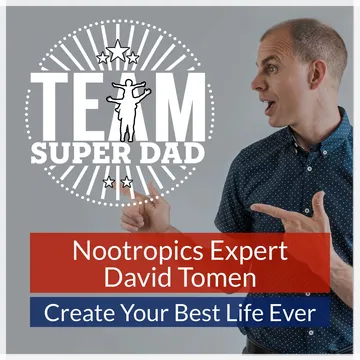
Can Nootropics Make You Superhuman - podcast with David Tomen

A health crisis involving total memory loss led David Tomen to uncover the science of neurochemistry and the specific amino acids required to rebuild a high-performance brain.

NootropicsNeurochemistryDavid TomenDopamineBrain healthCognitive enhancementBiohacking
By The Jonnie Jensen Show | 1h 11m listen | 20 chapters
Can Nootropics Make You Superhuman - podcast with David Tomen cover

About this episode

David Tomen and Jonnie Jensen challenge the pharmaceutical status quo by distinguishing true nootropics from prescription stimulants like Adderall and Ritalin. Tomen, founder of Nootropics Expert, details his journey from a career-ending hypothyroidism crisis and memory loss to mastering neurochemistry. The discussion centers on the legacy of Dr. Cornelio Giurgea and the five strict criteria that define a substance as a cognitive enhancer rather than a toxic stimulant.

Technical breakdowns include the mechanics of neurotransmitter precursors such as L-Tyrosine for dopamine and Alpha-GPC for acetylcholine synthesis. Tomen explains why 5-HTP can cause dangerous imbalances and why L-Tryptophan serves as a superior alternative for serotonin regulation. The conversation covers the impact of nutrient-depleted soil on modern food quality, the role of B-complex vitamins in synthesizing brain chemicals, and the specific dangers of synthetic flow agents like magnesium stearate found in mass-market supplements.

Personal anecdotes provide a human lens as Tomen recounts meeting his wife Lara and the complexities of step-parenting teenagers. He shares the specific stack his wife uses to manage her unique sensitivity to choline and explains why humans lose ten percent of their dopamine production every decade after age thirty-five. David Tomen also introduces his six-hundred-page manual, Head First, as a guide for fathers looking to optimize their focus and libido through evidence-based supplementation.


CHAPTER 01 / 20 Discussion

Team Super Dad Podcast Introduction and Community Overview

Host Jonnie Jensen introduces the Team Super Dad podcast, a community dedicated to helping fathers optimize their fitness, finance, focus, family, and fun. Jensen highlights upcoming initiatives including the Hero Academy nine-month program and the F5 four-week accountability challenge. The episode features David Tomen to discuss the technical and practical applications of nootropics for performance enhancement in various life stages.

team super dad· jonnie jensen· hero academy· f5 program· fatherhood· personal development

00:00 In this episode of the Team Super Dad podcast, I learn all about nootropics, enhancing your performance and landing a gorgeous wife with nootropics expert David Tomen, role theme. Welcome to Team Super Dad. Real dads creating their best lives ever. More time, more money, more fun. You are not alone. You're on Team Super Dad. Hello Team Super Dad. Welcome back to the Team Super Dad podcast. It's great to have you here. If you're a first-time listener, then welcome. This is the program and community for dads, busy dads, dads who want to create their best life ever.

00:43 If you are expecting a kid, if you've got children, teenage children, maybe they're all grown up and you're waiting on your grandchildren, this is the place for you. You know, life is pretty hectic. And if you don't stop to take a look around sometimes, as our good friend Ferris Bueller once said, then it can pass you by. In the Team Superdad community, we're all about creating your best life ever. You know, we work on the F5, fitness, finance, focus, family, and fun. And really, it's about making gains. So wherever you're at in any of those areas, welcome. We're here with another awesome podcast episode. Today, I'm talking to David Tomen.

01:24 He is a nootropics expert. Now, I didn't know really too much about nootropics until, well, until my wife was pretty ill. That was back in 2009 to no, not 2009, 2011. And I was listening to podcasts about functional medicine and health. And nootropics are basically performance enhancing. You know, we're going to talk a lot about what types of performance, but really any area of your life, from sleep to creativity to energy to sex to memory, vision, the whole lot. And it was really funny because when David and I finished the podcast, we got talking about some of the things that had mentioned.

02:05 And do you know, sometimes I wish I could leave the recording on even after we've said we're done because so much good stuff often happens after that. You'll hear David make reference to, where is it, to Performance Lab. They're a company based in the UK, but it was talking about their vision product. And he said, it's absolutely phenomenal for improving your vision, your eyesight, which as my eyesight deteriorates, I think I'm definitely going to try that. So so much you can take from this. Now, check this. Today's podcast is pretty technical, okay? If you've not

02:46 researched or looked into this subject before, then some of it is going to be pretty hard to follow. But I really want to encourage you to stick with it. I work hard during our conversation to keep bringing it back to what does that mean and what's that for. But I've got to tell you, when my wife was ill, and I learned a lot about my own health during that time as well. It's when I started juicing and it's when I started really paying attention to my workout and things like that. You can't expect to know everything on the first time you introduced to a subject. You've got to dig into it. And if you are at all interested in performance, like your own personal performance, whether it's in the bedroom, whether it's in the office, whether it's playing with your kids, whether it's out during your workouts, then the subject of nootropics and nutrition and getting wise on what's going into your body and what it's doing for you is

03:40 absolutely invaluable. Like there is no more important knowledge to have. So listen up. I will continue with this subject. Not every week, of course, but I will continue to add to it, to bring more people to you and definitely to have David Tomen back on again to talk about some more specifics. And I mentioned doing a Q ⁇ A session with him. Come over and join the Team Superdad community that teamsuperdad.com. The Hero Academy is shortly launching. That is our nine-month program for dads who really want to excel in all areas of life. But also, you might want to take part in the F5, which is our

04:22 four-week accountability program. Wherever you're at as a dad, I'm here because I'm on that journey with you. I'm here because I've been through struggles in my own business, in my family, and now I'm, in fact, I'm past the rebuild stage, but I've gone through that. I'm now really into like launching the next stage in my life. Team Superdad is part of that. The coaches I'm surrounding myself with, the input they're giving me that I'm providing to you. It's all part of it. We're on this journey together. So share this around. Please, if you are a regular podcast listener, go over to wherever you get your podcast from.

05:00 iTunes is the best place for reviews for me. But if you listen on Android, whether you're listening on Spotify, Google Play, wherever you get your podcasts from, please leave the Team Superdad podcast a review. Any feedback is welcome. You can join the community for free over at teamsuperdad.com forward slash get connected. You'll see the links on the get started page. Really, whatever it takes for you to get involved, it's time to take a stand, to take back control of your life, to be the man you want to be, to be the dad your children need you to be, and of course, to be the partner that your wife or your new relationship, your new love wants you to be as well. Thanks for joining me. I will see you on the other side.

CHAPTER 02 / 20 Discussion

David Tomen Career History and Caribbean Telecom Ventures

David Tomen details his professional background, including his nine-year tenure in Antigua where he helped build the first cellular telephone company in the Caribbean. Originally called Boat Phone, the company was eventually acquired by Cable and Wireless, where Tomen served as group sales and marketing manager. He recounts his transition from the islands to Austin, Texas, during the dot-com era before eventually settling in Miami in 2001.

david tomen· antigua· cable and wireless· mobile technology· boat phone· miami

05:49 Hello, good afternoon if you're in the UK. Good morning if you're in the States. This is the Team Superdad podcast. My name is Jonnie Jensen, the founder and creator of the Team Super Dad programme and community. Today I'm so excited to be joined by David Tomen, new tropics expert, known around the world for his knowledge and skills in new tropics. David, good day to you, sir. It's a pleasure to have you here. Thank you for inviting me. It's a pleasure to be here. I know. You can see by your tan that you are somewhere sunny. How is the weather today? Where are you joining us from? Miami, and I looked at it's only supposed to go to 88 Fahrenheit today. That's cool at this time of the year for us. It is actually, yeah. I love Miami.

06:32 I've been a few times, went there on my honeymoon for a couple of days. I've got family, you've got homes in Florida and stuff. So it's a great city. Have you always lived there? I've lived here since 2001. Went for the sunshine. Well, I was living in the Caribbean. I lived in Antigua for nine years. Okay. And I worked for, I helped build the first cellular telephone company in the Caribbean. And we started out as a company called Boat Phone because we were just installing cell phones. This is back early days in cell phones when people were still carrying around these great big three watches

07:10 with a strap on it. So you sling it. Yeah, I worked in mobile from 2004 to 2008. So we were pioneers in this and we started putting them on yachts. And then a couple of years after that, we got bought out by Cable and Wireless, big British telecom. Yeah. And I ended up the group sales and marketing manager for the Caribbean for Cable and Wireless Mobile for nine years. And good times. That was amazing. I love the islands. And then when I decided I wanted to leave the islands, I didn't know what to do, but I knew that things were happening in the States.

07:53 So I decided to come up here. I knew people. I first ended up in Austin, Texas. I was recruited to work for a dot-com. And the dot-com ran out of money, and I was looking for something to do. And I knew people in South Florida. So I ended up in South Florida, and I've been here ever since. Never left. Lovely. And we're on the Team Superdad podcast, of course. So are you a dad in any way? What's your family situation? I'm a stepdad. I just celebrated my 14th anniversary. My wife, Lara. Congratulations. I've been married. We met January 2006 on North Miami Beach.

CHAPTER 03 / 20 Discussion

David Tomen Marriage and Step-Parenting Experience

David Tomen shares the story of meeting his wife, Lara, on North Miami Beach in 2006 and their subsequent marriage six months later. He discusses the unique challenges and rewards of becoming a stepfather to two teenagers without having prior biological children. Tomen emphasizes the importance of maintaining a positive relationship with the biological father to ensure a healthy family environment.

lara tomen· step-parenting· marriage· north miami beach· family dynamics

08:35 And I saw her, fell in love six months later. We were married. So you, okay, so you, this is a good, let me ask you about this because this is, yeah, especially dads who are looking to get into new relationships. So, so what? You just spotted her walking along? I saw this gorgeous blonde on down by the water. And a friend of mine, Robbie, was beside me. And I said, who is that girl down there? She's gorgeous. And she really is beautiful. And he says, well, that's Lara. And I said, can I, I want to meet her. And so Robert being Robert, we call him Tarzan because he had this long ponytail hanging down the back. Okay. He went down to the water and dragged Lara back and introduced us.

09:20 And we fell in love and we got married six months later. And I inherited two kids, two teenagers. Wow. Yeah. No, two grandkids. No, because people often feel nervous about ask, even just introducing themselves. I was to a stranger for years because I was divorced in, I was divorced seven years before that. Right. And I had absolutely no interest in getting married again. Like none. And I dated here and there, but it was just kind of like because I really had. had my heart broken. And but when I saw this girl, man, it was just it changed my life.

10:01 And so you said she's gorgeous, right? Did you think at first she was out of your league? I've never thought that because I've always found that really beautiful women tend to have a hard time finding dates. Yeah, true, but equally, that's because a lot of men think they're out of their confidence out of reach. They don't go and approach them. That's brilliant. That's a fabulous encouragement to myself, but also to any dads that listen to this. Brilliant. And being a step parent is a challenge as well. It's almost one of those unspoken subjects. We cover it a lot on the Team Super Dad community and in the podcast. It's, you know, as well as responsibility to that child, there's also responsibility to

10:45 the biological dad and not getting in the way and things. It can be a challenging role. I think that I had a bit of an advantage because I didn't have kids prior. Right. So I didn't know what being a parent was like, except for, you know, my parents, who I had amazing parents. My dad is still alive. He's 94. He worked until he was 86 years old. Brilliant. So I had an amazing upbringing, but I never had any preconceived ideas of what it was like to raise a kid with another woman. So when I met Lara and her two kids were part of the picture,

11:28 it was all brand new for me. And I just kind of figured it out as we went along. Brilliant. Well, you mentioned as we were talking that the mom and the dad, Lara, and the dad and yourself, you all get on relatively well. And that makes things so much easier. Sure. It does. Everybody should strive for that. Well, thanks for sharing so much of that, David. It's good to get related and to share that with the audience as well. So the subject of nootropics, not many people even know what they are, let alone are able to confidently call themselves the nootropics expert. And, you know, if anyone's doubting that, they should see how much you've written on the subject and all the different podcasts you've been on.

CHAPTER 04 / 20 Discussion

Nootropics Definition and the Legacy of Dr. Cornelio Giurgea

David Tomen explains the origins of the term "nootropic," coined in 1972 by Romanian psychologist Dr. Cornelio Giurgea following the synthesis of Piracetam. The discussion outlines Giurgea's five criteria for a true nootropic, including memory enhancement, brain protection, and non-toxicity. Tomen criticizes the modern media for mislabeling prescription stimulants like Adderall and Ritalin as nootropics, asserting that true nootropics must be natural and non-prescription.

nootropics· cornelio giurgea· piracetam· gaba· cognitive enhancers· pharmacology

12:13 So, you know, without doubt, you are definitely a renowned person on this subject. What the hell are nootropics, though, for those people that don't know? And how long they've been around? They've been, well, nootropics have been around for millennia because now, well, the word, let me tell you where the word nootropic came from. There was a doctor named Dr. Cornelio Grigea, who he's a Romanian psychologist and chemist, and he synthesized paracetam in 1963. And he was in St. Petersburg, I think, working with Pavlov. Remember Pavlov's dogs, yeah. He was working with Pavlov, and he invented paracetam. And he

12:59 invented paracetam for, it's a derivative of GABA, so it was intended to be a calming type of drug for motion sickness. But despite this connection with GABA, that's not the way it worked out. Right. What Dr. Gurgea found was that paracetam modulates ampereceptors and boosts the function of acetylcholine in your brain. And as a result, has a significant impact on learning and memory. And so they put it out as a prescription drug. And it's still used in some countries today around the world as a prescription drug.

13:39 And there's a whole bunch of offshoots off of that. So one second, when you say synthesize, that means creating in a lab an otherwise natural product. Correct. It's a derivative of a GABA, which is a natural neurotransmitter in your brain. And so Dr. Gurgea saw what was going on that there were a bunch of offshoots, all derivatives of GABA with the same nucleus or the same core. People were inventing different drugs all around the world, all racetams based on paracetam. So he figured that he wanted to call this class of drugs something. And that's where nootropics came from.

14:21 Right. It's derived from the Greek nu for mind and trapend to bend. So to bend the mind. And that was in 1973. And then he went one step further. He decided that he was going to define what a nootropic is. And this is all in, this is written down. It's recorded. A true nootropic enhances memory and the ability to learn. It assists brain function under disruptive conditions like. a lack of oxygen or electroconvulsive shock. It protects the brain from chemical and physical toxins like cholinergic drugs and barbituates.

15:01 It increases natural cognitive processes and it must be non-toxic to humans. So, but now when you people have taken license with this word and they call everything that affects the brain a nootropic, which is not, I take issue with that because to my mind, nootropics are any cognitive enhancer that's natural that you don't need a prescription to get. In other words, you can buy it at your local Whole Foods or at the vitamin shop or your local health food store and you don't need to go to your doctor to get a prescription. And what the press is doing is they're taking things like Adderall and Ritalin and prescription stimulants and they're referring to them as nootropics.

15:47 And I think that's a sin. Well, it's a complete disservice to the definition of a true nootropic. And so I've been harping on this for the last five years. And just, I don't know if people are getting the message or not, but a nootropic is just a natural substance that helps the human brain somehow that you don't need a prescription to buy. And I've reviewed full complete reviews of close to 100 different supplements now that affect the human brain. So. And that's that, and that's perfect because you just wrapped it all up there at the end by saying exactly what the nootropics are.

CHAPTER 05 / 20 Discussion

David Tomen ADHD Diagnosis and Ritalin Experience

David Tomen describes his struggle with focus while working as a yacht broker during the 2008 recession, which led to a diagnosis of adult ADD and PTSD. He recounts how Ritalin initially transformed his ability to function but eventually led to tolerance issues after two years. This personal health crisis served as the catalyst for his deep dive into the neurochemistry of dopamine and acetylcholine.

adhd· ptsd· ritalin· dopamine· focus· yacht broker

16:28 And that's why it's gaining interest from people because it's giving people access to creativity, to concentration, to higher levels of performance in, I guess, any area of life, really, but quite commonly work and creative arts and those kind of things. Even in their relationships. I mean, because you can, there's, there's nootropics that can be used for anxiety. There's nootropics that can be used for depression, nootropics for PTSD, nootropics for OCD, just about anything for preventing Alzheimer's and dementia and stroke.

17:12 So there are, it's amazing what nootropics can do. I kind of like stumbled upon it. When I first encountered it, what, 13 years ago now, I didn't, I'd never heard the word nootropic. So what were you up to? What was your work? What was your work then? I was when I met this beautiful blonde in North Miami Beach, I was a yacht broker. But remember in 2008, the economy. Recession. Yeah. And so I couldn't sell a new yacht if my life depended on it.

17:49 And I decided to start a marketing business. But I was having real problems trying to build this business. And my wife saw what was going on. And so she introduced me to the psychiatrist in Palm Beach, which is north of here, who was kind of like a rock star. He's one of these unique individuals that are just amazing at their job. And he sat me down within 10 minutes. He diagnosed me adult ADD and PTSD. And it took me another 10 years before I think I know where PTSD came from. But adult ADD, man, that was the story of my life because

18:29 we were talking earlier about how I lived in the Caribbean for nine years and I helped build the first cellular telephone company there. I've been to 45 countries. Yeah, and one second, ADD, that's attention deficit disorder. So people might have heard that around more commonly children. They talk about the not concentrating in class and they got a problem child on their hands and they're ADD. ADD and there's ADHD. The H stands for hyperactivity. So I don't have a problem with hyperactivity, but I had a problem with focus because every time I had a performance review, my yearly performance review, it was, David, you were a fantastic manager. You're really good with people. But you got to learn how to focus. And so I bought the books and I bought on how to focus and I bought the books on beating yourself up about and I did whatever I could to learn how to focus and I just could not do it.

19:18 And this guy, this psychiatrist said, you're ADD. And he put me on Ritalin and it was like somebody turned the lights on on my brain. Yeah, I've heard about Ritalin. In my life. And there's something about the ADD brain that is our wiring is messed up. So we're not like a normal person. And there's something about stimulants that affect affect dopamine and norpinephrine. They affect the receptor, dopamine receptors, and transporters. And there's something about the way they work that reroutes how dopamine works in the brain that helps the ADD in the ADHD brain.

20:02 And dopamine is a very happy drug, right? Dopamine is involved in learning and memory. It's involved in mood. It's involved in libido. I mean, dopamine is just involved in so many different things. It affects so many different things in our life. But it certainly affects focus and concentration. The other one is acetylene. So what happened is that I had such success with Ritalin. It changed my life. A couple of years after I started taking it, I started growing tolerant to it. And it wasn't working as well. And I'm going, no, this is not going to happen.

CHAPTER 06 / 20 Discussion

Neurotransmitter Precursors and the Role of L-Tyrosine

The discussion focuses on the science of neurotransmitter precursors, specifically how L-Tyrosine serves as a building block for dopamine. Tomen explains the necessity of choline precursors like Alpha-GPC and CDP-Choline for synthesizing acetylcholine, as the neurotransmitter itself cannot be taken in pill form. They also touch upon how L-Carnitine requires an acetyl group to effectively cross the blood-brain barrier.

l-tyrosine· acetylcholine· alpha-gpc· dopamine· precursors· blood-brain barrier

20:42 For the first time in my life, I can focus and you're going to stop working. I don't think so. So I decided to find out how Ritalin worked. And I found that it was a dopamine reuptake inhibitor and it affected dopamine transporters and dopamine receptors. And so if it wasn't working, what does that mean? Well, maybe I don't have enough dopamine in my brain. So I looked that up. And of course, there was, but this was 13 years ago, and there wasn't 12 years ago. There wasn't a lot of this information around. So I really had to dig for it. But I found out that you could increase dopamine by taking L-tyrosine. So I went to a local GNC and I got some L-tyrosine. Is that a prescription drug or over-the-counter?

21:26 L-tyrosine? Yeah. L-tyrosine is a supplement. Oh, okay. Right. You don't need a prescription to get it. It's easy to get. It's not expensive. And so I got L-tyrosine. I also found out that acetylcholine was involved in brain cell signaling, and that was a problem in the ADD brain. And so I'm going, okay, how do I improve acetylcholine function? And I found out that you need a choline precursor to make acetylcholine because you can't take acetylcholine as a pill or a capsule. And so alpha-GBC or acetylcholine are both precursors to the synthesis of acetylcholine.

22:07 And acetyl-L-carnitine is just L-carnitine within acetyl group added to it as a cofactor in the synthesis of acetylcholine. Take those two together and I have more acetylcholine in my brain. Right. And L-cartinine, I think, do you see that quite often around gym supplements and stuff? Sure. Yeah. But the problem with L-carnitine is it's not, it can't cross the blood-brain barrier. Yeah. And so just to explain this to people, like precursor, that's a drug in the body that has to be present so the body can create another drug. That's in layman's terms, right? Yeah. And so people need to realize this quite often when people talk about thyroid problems and stuff, it might not actually be a thyroid problem.

22:50 They might have a precursor that's not there that's not producing enough TH. Is it TH3, TH4? And so these precursors are very important in the way that the human body works and the way they produce chemicals. Oddly enough, the thyroid hormone is L-tyrosine is involved in producing thyroid hormone. Right, okay. Because a friend of mine was given some selenium and iodine and vitamin C and magnesium. And just like you said, you got wise about what Ritalin was doing. People, I would encourage people to get really wise about what, you know, the doctor will prescribe, oh, you've got a thyroid problem, so it gives them quite strong drugs. But actually, a long period of stress could have caused fatigue in the body on the adrenals or whatever else.

CHAPTER 07 / 20 Discussion

Hypothyroidism Crisis and Memory Loss Recovery

At age 45, David Tomen experienced a severe health decline characterized by extreme fatigue and total memory loss, eventually diagnosed as hypothyroidism. After synthetic T4 treatments failed, he found success with natural desiccated thyroid derived from bovine or porcine sources. This period of physical and cognitive collapse forced Tomen to research clinical studies on PubMed to restore his brain function.

hypothyroidism· synthroid· desiccated thyroid· memory loss· health crisis

23:33 Actually, it's those precursors that are causing the thyroid problem, not a polythyroid. That very well could be true. Yeah, yeah. I mean, I went severely hypothyroid about seven years ago now, and I got really, really, really sick. Was this around the Ritalin stuff? No, I finally got Ritalin working again, and everything was hunky-dory. And then a few years later, I just started getting really sick and just out of the blue. And like feeling really physically sick and kind of like vibrating inside

24:13 and falling asleep at 2 o'clock in the afternoon every afternoon. What sort of age was this? Pardon? What sort of age was this? Around 45. Yeah. So quite, you know, quite a lot of team superdad listeners around sort of 35, 45, that sort of age. So they could be experiencing these sorts of same things basically. So there was finally one day my wife panicked and she thought I was having a heart attack and she took me to the ER. And so these guys tested my heart. My heart was fine. fine, but they said, you're hypothyroid. So they gave me synthroid. And synthroid is just synthetic T4. Right. And I tried using that for three months and I just kept on getting sicker.

24:54 And I said, okay, I'm either going to die or I'm going to fix this. And I found out about natural desiccated thyroid, which was taken from a pig or a cow. Yeah, bovine, yeah. Yeah. And my brother's a doctor up north, and he had sent some down. And I started using it, and I started feeling better. But during that time, I completely lost my memory. Just a curious little side effect or additional problems. No, I still didn't, had never heard the word nootropic up to that point. You know, I knew about L-tyrosine and cytokoline and acetyl-carnitine, but I hadn't heard the word nootropic.

25:38 When I lost my memory, I started fixing everything else in this body. So I started feeling, and my marriage was on the rocks too. I mean, my business was failing. We were broke. Lara wanted to leave. I mean, it was just, it was really, really bad. So I was just fighting to get well again. And that is something lots of dads can relate to. I call it buckets. So you've got different buckets in your life. All of a sudden, they're all looking pretty empty. You're sort of panicking, trying to find out which one is almost the most important. And quite often, we'll come back to your own personal health and well-being

26:17 as the baseline to improve all areas. In this case, it was just I had to get healthy again so I could start making money again if I expected my marriage to survive. Yeah. And so I started, I chose to live rather than die. I mean, I was that sick. Wow. It was a choice. And so I started doing research again, like I'd done a few years earlier when Ritalin stopped working. And I learned about how learning and memory work in the brain. And that's when I started finding out about nootropics. But at that time, now this is like seven years ago, there were no books on it. There were no websites on it.

CHAPTER 08 / 20 Discussion

Founding of Nootropics Expert and Copywriting Career

Following his recovery, David Tomen transitioned into direct response copywriting for dietary supplement companies after training with AWAI. He realized there was a significant lack of accessible, evidence-based information regarding nootropic stacks for the general public. This gap in the market led to the creation of the Nootropics Expert website five years ago to serve as a global authority on cognitive health.

nootropics expert· copywriting· awai· dietary supplements· medical research

26:57 I had to go to places like PubMed and read clinical studies. And I read hundreds of clinical studies to try to figure out how to fix, how to get my memory back. And I did. And when I finally started getting healthy again, just running a marketing company was too much. And I was going to concentrate on one thing. So I chose copywriting because I'd been a writer all of my life. And so I got trained by AWAI up in Delroy Beach in direct response copy. And I started writing copy for dietary supplement companies.

27:37 And I worked with a company in the UK who had a nootropic stack. And I wrote some advertorials for them. And I found out when I was writing these advertorials, I was having a heck of a time trying to find information to back up my copy. Okay, yeah. And so I'm going, if I'm having such a hard time finding this information, what's everybody else doing? Because I'm pretty darn good at this. And I figured, well, the world needs someplace to go. The world needs an authority on nootropics. And that's how Nootropics Expert came to be. I just decided to create the website. And that was five years ago now.

28:18 Yeah, and I thought that was around the same sort of time that I first heard of the word. I was looking at reasons why my wife was ill. You mentioned PTSD. That's post-traumatic stress disorder. She was experiencing autoimmune condition, physical pain, vivid nightmare, like the whole, it was just a disaster, right through to seizures and locked out syndrome. And I was listening to Sean Stevens' Model Health Show podcast, and that led me into some functional medicine podcasts, and that led me into new subjects, nootropics. And I was feeling like I was burnt out. I described it as burnt out. I couldn't keep going.

CHAPTER 09 / 20 Discussion

Serotonin Balance and L-Tryptophan vs 5-HTP

David Tomen warns against the long-term use of 5-HTP, noting that it can cause a neurotransmitter imbalance by depressing dopamine levels while raising serotonin. He recommends L-Tryptophan as a safer, two-step precursor for serotonin synthesis that is easier for the body to regulate. The conversation emphasizes that optimizing the brain requires a holistic approach rather than just "goosing" a single chemical.

5-htp· l-tryptophan· serotonin· melatonin· neurotransmitter balance· depression

28:59 Little did I know, I was actually quite depressed from everything that was going on. But I started taking 5-HTP, which, as I understand, is a precursor to melatonin, which is a happiness kind of feel-good chemical in the body. 5-HTP is a precursor to serotonin, which is synthesized melatonin. Right, okay. It's not the greatest way to increase serotonin because 5-HTP. The problem with 5-HTP is people dose it too high first. And the thing is, is that it's a direct precursor. And you can. run into the same problem with dopamine, with L-DOPA, is if you use a direct precursor, when you take that supplement, it immediately goes to your brain and starts making that neurotransmitter.

29:46 Right. Okay. Like there's no in-between steps, nothing. It grabs the cofactors it needs and it makes that makes serotonin. And what people were finding is that 5-HDP works fantastic for about five or six weeks and then it stops working. Yeah. And so they're going, why? This stuff doesn't work. And it turns out, and this is just my theory. Nobody's been able to, I've never seen any proof of this, but my theory on, and there's clinical studies that show that this is true. After four to six weeks of regular daily supplementation of 5-HTP, it treated depression, but all of a sudden stopped working. I think probably what happened was that there became an imbalance of neurotransmitters.

30:31 Because when you raise serotonin too much, you depress dopamine. Okay, that makes sense. If you raise dopamine too much, you depress serotonin. Likewise. So it's always about finding that balance. It's always about finding that balance. Now you can goose it up and you can have more serotonin, but you also need to support the rest of your neurotransmitters if you're going to do that. If you're going to optimize your brain so that it's kind of like just like supercharging a car, you can supercharge your brain to a certain extent, but you've got to be careful how you do that because you can't just put new chalk absorbers in it and expect to go an extra 100 miles an hour, right?

31:18 You've got, there's more work that needs to be done. So instead of using 5-HTP to raise serotonin, use L-tryptophan. Because L-tryptophan is two steps for making serotonin. It's safer. You can use a larger dose. It's easier to control. And so that's what I encourage people to use instead: L-tryptophan. Okay, nice. I will definitely, I'll look into that. And, you know, this is an interesting segue into this. We said people use nootropics in all different areas of life. Where, and this kind of brings it back to basics, really. You've got your busy dad who's juggling his life.

CHAPTER 10 / 20 Discussion

Beginner Nootropic Stacks for Specific Cognitive Goals

For those new to cognitive enhancement, Tomen suggests a self-audit to identify specific needs such as processing speed, memory, or anxiety relief. He lists several key ingredients for a beginner stack, including Lion's Mane mushroom, Aniracetam, and B-complex vitamins. The goal is to move from a state of overwhelm to targeted performance improvement based on individual biological requirements.

nootropic stack· lion's mane· b-complex· aniracetam· cognitive performance

31:59 He's feeling a bit exhausted. Generally, he wants things to be perhaps slightly better in all areas. Where does he start with, is it, you know, is it a self-audit? Does he need to do like it on himself or does he need to go away and find out about like does he suddenly become an expert on nootropics or is there a multi-notropic that he can start with kind of thing? But where does a dad start when he's looking at this sounds great? I can improve myself, but where the hell do I start? Step number one is come to your nootropics expert. Okay. Just do it. Do it right. I've written a few articles on exactly this kind of thing because there's lots and lots of people that are still new to this.

32:40 And so I've written articles on the best nootropic stack for the beginner. And what I do there is I walk people through how to assess yourself. Because you can't just grab something off the shelf from your local vitamin shop and expect things to get better. You need to kind of like evaluate what's going on. And so what do you want to fix? What do you want to improve? Do you want decision making and focus and thinking and processing speed to work better? Yes. Or do you want learning and memory to work better? Or is it a problem with energy and motivation?

33:24 Or is it a problem with anxiety and depression? These are all separate categories. Yeah. And speaking to myself, I've moved from depression and anxiety after the breakup, you know, which got dealt with at the time. And now you get into like the rebuild part of life or wherever it could be a young couple trying to like excel, then it gets into focus and creativity and decision making. So people's circumstances change as well. I can see that. Yeah. So I've done the research. And when you come to the website, you can look at some of the different lists that I've made. There's one tab on the main menu called Best Neotropics, and there's a table.

34:07 And so best nootropics for processing, speed, decision-making, focus, flow, and thinking. And then the recommended nootropics for that. And in this case, it's acetyl L-carnitine, which is just L-carnitine with an acetyl group added to it. So it can cross the blood-brain barrier. Anoracetam, which is one of the racetams, caffeine, CDP-choline. choline or acetycholine, lion's mane mushroom, anacetyl L-tyrosine or L-tyrosine, and the B-complex vitamins. Any of those, you can use all of those. Yeah. I do.

CHAPTER 11 / 20 Discussion

Caffeine Mechanics and the Stimulant Stack Formula

The discussion breaks down how caffeine acts as an adenosine antagonist to prevent sleepiness while also affecting dopamine and epinephrine. Tomen argues that a properly built stimulant stack must include L-Theanine to neutralize jitters and L-Tyrosine to replenish dopamine. He explains that many commercial energy drinks are poorly formulated because they lack the necessary precursors to support the brain after the initial caffeine buzz.

caffeine· l-theanine· adenosine· atp· ritalin· stimulant stack

34:47 Or you can just pick a couple of them and try them and see how they work for you. Yeah, yeah. And what about caffeine? Well, you know, we talked before we went on air about this bulk powders nootropic that I bought, kind of off the shelf, just like you were saying. And it's got per six capsules, which is what is the recommended dose per, you know, if you're taking it on that day, it takes six capsules. So that equals 200 milligrams of caffeine on that day. You know, caffeine's in coffee as well, and caffeine's everywhere. Why do they put caffeine in a nootropic? Just for the buzz, or what does it do? Because when people are new to this and they go to their vitamin shop and they're looking for a nootropic stack to try and the manufacturer wants them to try it and feel something, they put caffeine in it.

35:32 For the buzz. For the buzz. Because otherwise, if you don't put it in there, you're going to have an effective nootropic stack in all likelihood, but it's going to take a while for it to work. And it's going to take a while for you to start experiencing the benefits from it. Because a lot of these things are very subtle in how they work. Yeah. Okay. That's interesting. But caffeine, on the other hand, how caffeine works primarily is an adenosine antagonist. What happens is you've got mitochondria. You've got thousands of mitochondria in each one of your brain cells. And your mitochondria produce ATP or adenosine triphosphate, which is your main energy supply.

36:15 That's where your cellular energy comes from. Flowing all around your body. Flowing all around your body. Right. And especially in your brain and in your heart. Now, that adenosine triphosphate, once it's used, it casts off adenosine. And adenosine builds up in your body during the day, and that's what causes you to start feeling sleepy. So eventually you go to bed. Got it. Caffeine blocks that process. It's an adenosine antagonist. An antagonist means that it blocks the way adenosine naturally works in your body and in your brain.

36:58 So that's how it keeps you awake. But caffeine does a lot more than that. It affects acetylcholine. It affects epinephrine, which is adrenaline. It affects serotonin. And it boosts the use of dopamine. So it can exhaust you in all areas, but too much caffeine can exhaust you in all areas. It's a real drain on the body. It's a drain on the body, especially dopamine and the B, but it's also a diuretic. So you end up pissing out the B complex vitamins. But it's so funny. A lot of the energy drinks and stuff, they pump them full of B vitamins and caffeine. Yeah, and if you take a look at some of the newer stint, if you are looking for a stimulant stack, and so you just want something that'll give that you can use as needed.

37:45 So say you start flagging at three o'clock in the afternoon and you just need a little extra oomph, a little extra boost. You can look for it for specifically for a stimulant stack, but that stimulant stack needs to be built properly. If it's got caffeine in it, it's got to have L-theanine. The most basic nootropic stack is caffeine combined with L-theanine, because L-theanine helps boost levels of acetylcholine, norepinephrine, epinephrine, serotonin, and dopamine. And it affects alpha and theta brain waves, which provide a calming effect. So it helps calm the stimulant or the jitteriness of caffeine.

38:26 Yeah, we can all relate to that. But you also need to add in some extra L-tyrosine. So that stack should not only have caffeine and L-theanine, but it should have some L-tyrosine, which is a precursor to dopamine. So you're boosting dopamine. And it should have the B-complex vitamins in it, especially B6, B9, and B12, which are necessary cofactors for the synthesis of dopamine. Right. Right? So that's your stack. That's your stimulant stack. Caffeine, L-theanine, L-tyrosine, and B-complex. It's an amazing stimulant stack.

39:04 A lot of times, what you'll find in the vitamin shop instead is a supplement that just has caffeine and L-theanine. And that's just, it's not enough because L-theanine, while it influences in a boost, it kind of like boosts these new. neurotransmitters like serotonin and norepinephrine and dopamine in your brain, kind of like Ritalin does. Kind of like, not exactly like, but kind of like. It's not actually a precursor to the synthesis of these neurotransmitters. Yeah. Just like Ritalin is not a precursor to dopamine, right?

39:44 Or Adderall is not a precursor to dopamine. So Ritalin and Naderol just kind of like an interrupter. They just dive right in and interrupt things. They interrupt things and they kind of like rewire your brain. Because people, those two words, people commonly heard them perhaps around children. Children getting prescribed, those two things. I first heard of Ritalin because people in the London marketing community were getting hold of it to use for creativity and to work late nights. And it's effective for that. It's not the greatest choice, but it's effective for that. It's also really hard on your receptors. Ritalin is safer than Adderall. Yeah. By the way. But yeah, if you're going to use stimulant drugs like that, you really need to support it with nootropics just to keep your brain safe and from harming it when you're using these stimulants.

CHAPTER 12 / 20 Discussion

Nootropics for Relationships, Libido, and Aging

Nootropics are discussed as tools for improving interpersonal relationships by regulating mood and reducing irritability. Tomen highlights the connection between dopamine and libido, noting that humans lose approximately 10% of their dopamine production per decade starting at age 35. By age 55, a significant decline in dopamine can lead to a loss of sexual drive, which can be mitigated through targeted supplementation.

libido· aging brain· dopamine· sexual health· mood regulation

40:32 I think a snack for that too. Yeah. Well, I think that's the important thing is about knowledge. You know, this, I hope today for people who haven't ever heard about this subject or looked at the chemical, the movement, the creation and movement of chemicals around the body, some of what we've spoken about today might be a bit overwhelming, kind of like what the hell are they going on about? But in your free guide, which we will link to from the show notes, and we can give a link to at the end of this as well, that's all listed there and explained. So that's really helpful for people. But it also, for me, comes back to the importance of knowledge and understanding about these things. You know, we spoke when we were chatting together about rave culture and MDMA.

41:16 And, you know, it's a lot of drugs in their simple and pure forms aren't necessarily that dangerous. It's just what they get mixed with or how they get used and abused. And that's how the danger can come. And this subject is no different. So for people middle-aged, busy, you know, with goals in their life and things they've got to do on a day-to-day basis, getting knowledgeable about this subject can be a massive benefit to them. You've said so much about how it can benefit people. But just in broader terms, getting the right nootropic for your lifestyle, what can that do for someone who's feeling busy and overwhelmed?

42:01 It can change your life. I mean, it can do things. It depends on what you're doing and what you need it for, but it can improve your work because all of a sudden you're going to be more productive at work and you're going to be the person at the table that remembers things better than everybody else in the room and is able to come up with facts easier than anybody else in the room. You can think faster on your feet. Your relationships are going to be better because your mood is going to be better and you're not going to be as irritable and it's just going to be, you're going to be easier to live with. Important.

42:39 And your dream life is going to be a lot better. I find it's just there's nootropics can affect every aspect of your life, both at home and at work and in athletics. I've built a stack for the e-gaming community. Okay. And I've did consultations with people in the military. And so it can help anybody, really. Sex life? What about sex life? Sex life, it helps a lot. Well, dopamine, for example, is involved in libido.

43:18 Okay. And if your libido is shot, take a look at your dopamine levels. And this could obviously be both male and female, right? It is male and female. Yeah. Because, and I've written extensively on the aging brain, and I consult on the aging brain as well, because our brains just are age and they get older and things stop working as well. And there are things that, like dopamine, for example, you lose about 10% of your dopamine production capability per decade starting around age 35 or so. Okay, so by 55, you're 30% like, okay, you're a third

CHAPTER 13 / 20 Discussion

Dangers of the Silver Bullet and Individual Dosing

Tomen debunks the "one-pill solution" myth promoted by mainstream marketing, explaining that the brain requires a cocktail of cofactors to function. For example, synthesizing dopamine from L-Tyrosine requires B6, B9, B12, magnesium, and Vitamin C. He emphasizes biochemical individuality, noting that a dose of L-Tyrosine that works for him might cause heart palpitations and jitters in another person.

supplementation· biochemical individuality· l-tyrosine· magnesium· vitamin c

44:03 down on the guy across the table. Okay, wow. So if you're 55 and you have no libido, chances are you don't have enough dopamine. So, yeah, it can absolutely affect your sex life. And can people take these things long term so they get the stack? By the way, for stack, that means the cocktail, the mix of nootropics that someone's taking. That's what's that. There is no such thing as a one-pill solution. That is something that we've been conditioned to believe by mainstream medicine, and that's just not the way the human body works or the human brain works.

44:44 If you're going to fix something, just know that it's probably going to take a handful of capsules and they're each going to do something different. But just don't expect to be, don't expect to be able to get one thing like 5-HTP or L-tyrosine or St. John's Wart to fix something. That's not the way these things work. It's going to take probably, you have to learn how each one of these things work if you're trying to fix something and know what you have to put together for the most benefit. Right? Because dopamine, to synthesize dopamine, you not only need L-tyrosine, you need either phenylalanine, which is the dopamine pathway is this: is phenylalanine to L-tyrosine to L-DOPA to dopamine to norepinephrine to epinephrine.

45:39 Right? So dopamine and norepinephrine are the two really important ones. Epinephrine is your kind of fight or flight response. Norepinephrine is kind of like your attention, attention and focus and alertness. And dopamine is learning and memory and libido and muscle movement. And it's involved in all that. But you can't just take L-tyrosine with the expectation of making dopamine because L-tyrosine also requires the vitamins B6, B9, and V12 and magnesium and vitamin C all working together to create that dopamine molecule.

46:24 And so you'll see a hint of this if you know what you're looking at when you look at the supplement facts label in some of these nootropic stacks you can buy in store. If they're saying that this is going to boost your learning and memory and alertness and there's L-tyrosine in it, if you look towards at the very top or towards the bottom of the list, you're going to see vitamins B6, B9, and B12. That's why those are in there because they're cofactors in the synthesis of dopamine. L-tyrosine can't work on its own. So a one-stop, this is called complete nootropic, my one.

47:00 That's actually just a marketing kind of blag bullshit, basically. No disrespect to the manufacturer, but to have a one-nootropic fits all type supplement is nonsense, really, is what we're saying. You know, you would be really, really lucky if it were. Yeah, silver bullet. Well, we kind of laugh, but or you'll probably get some benefit, but not really be able to attribute any clear benefits to it to your lifestyle. If you tell me that, Jimmy, I need to fix learning and memory. So I'm going to say, all right, let's raise

47:39 dopamine and raise acetylcholine and prescribe L-tyrosine and cytokoline and vitamin C and magnesium and the B complex vitamins. And I can say, take this much of each one of these things, right? Yeah. But that might be right for you, the amount. Right? So, for example, I use mega doses of L-tyrosine because I use Ritalin and I'm older. So I can take a thousand milligrams of L-tyrosine first thing in the morning along with the B complex vitamin

48:21 and it works fine for me. If you tried that, you would probably be going around the bin in a book. Like in a confused way, or just like buzzing. Buzzing, buzzing, jittery. Yeah, and your heart would be racing. And so while each one of these things are common to each one of us, different amounts are going to be more appropriate. What works for me is not necessarily going to work for you. Yeah. And is that trial and error for someone when they go and absolutely trial and error? Okay, so like anything, they start with a lower dosage and just increase it. Well, like take it for a week and then increase it slightly or take it for another week.

CHAPTER 14 / 20 Discussion

Testing Individual Supplements and Listening to the Body

To avoid adverse reactions, Tomen advises beginners to test individual supplements one at a time for several days before combining them into a stack. He shares an anecdote about his wife's negative reaction to choline, which causes psychological distress for her despite being beneficial for others. He recommends keeping a detailed log of dosages and effects to understand how different amino acids and compounds interact with one's unique physiology.

biohacking· supplement testing· choline· side effects· tracking log

49:05 Yeah, this is the right other reason why for beginners or newbies coming to this, I discourage them from getting. preformulated stacks like this because if you take that and it either doesn't work or you have a bad reaction to it, it's not because all nootropics are garbage. You reacted to one thing in that formula of six or eight different ingredients, but there's absolutely no way you can tell what that thing is. Yeah. So if you put together, if you put to first put together your own stack, learn how to do this, put together your own stack so you end up with four or five or six individual supplements.

49:52 Figure out what the correct dose of each of those is. And if you've never taken any of these, take them one at a time. So take the first one and use it for a day and see what happens. And if there's no bad reaction, then add the next one for a day or two and see what happens. If there's no bad reaction, add the next one. So as soon as you add something and you have a bad reaction to it, you know that you can't use that supplement. Yep, got it. And this is really important because there's some people like my wife, she cannot take any kind of a choline supplement. If she takes anything with choline in it, like alpha GPC or acetylcholine,

50:34 she just goes bananas. She just goes psycho. And so. But that wears off, right? Like it's like for a couple of hours, something like that. It's not like a permanent thing. No, it'll definitely wear off. It's not fat. But it's really, really uncomfortable. Yeah. And particularly someone who's never taken drugs, I suppose. You know, for me, it was interesting when I, after my marriage breakdown and I was diagnosed depressed and I went on to antidepressants, I feel like having taken a fair amount of drugs like ecstasy and stuff during my life, I was kind of much more tuned into

51:15 how it was feeling or whether it was working or whether it was too much or whether I started to feel like, oh, actually, I could start to come off this now. Someone who's never really experienced recreational drugs too much might not be familiar with those kind of experiences. I call it listening to your body. Right, okay. But someone shouldn't naturally shouldn't, they should naturally not, well, I guess there's a fine line between overreacting and panicking unnecessarily and being oblivious to the fact that you're like completely wired off your brain type thing. Well, yeah, the only way that you can really make this thing, you can make anything work, this natural substances or drugs work is if you're listening to your body

51:59 and know what kind of effect it's having on your body and what kind of reaction you're having to it. Could someone keep a diary or is that quite practical things like that take notes? Yeah, people do keep a log and that's the most effective way to do it is to take a log, you know, keep a log and just keep your diary. And this is what this is how much I took at this particular time of the day. And that's the other thing is you can't expect to take this thing in the morning and for expect it to work all day for you because a lot of these are amino acids and they have a half-life of two or three hours. So that L-tyrosine that you take at eight or nine o'clock in the morning is not going to be there any longer at noon.

CHAPTER 15 / 20 Discussion

Nutrient Depletion in Modern Soil and Food

The conversation explores why modern diets are often nutrient-deficient, citing a study suggesting it would take a bushel of apples today to equal the nutrition of one apple from 1959. Tomen attributes this to depleted soil, rapid plant growth caused by increased carbon dioxide, and nutrient loss during transport and processing. This systemic decline in food quality makes high-quality supplementation a necessity for modern cognitive health.

soil depletion· agriculture· nutrition· phytonutrients· carbon dioxide

52:42 So if you want the same benefit at noon, you got to take it again. And is that okay? Can you keep taking it day in, day out? Yes. Okay, so as long as you get the stack right and it supports you, it's no different than an orange juice and other positive dietary intake. This is food. Yeah, food, yeah. This is well, think about this. We used to get this from food. All of this stuff we used to get, other than the adaptogens, we used to get this stuff from food. 50 years ago, there wasn't a supplement industry. 100 years ago, there wasn't a supplement industry because we didn't need one. It came from fresh food. We got this stuff from fresh food. But it would take a bushel of apples today to get the same kind of nutrition that you would get from one apple in 1959.

53:31 Wow. For all kinds of reasons, because this stuff is grown on depleted soil. And our carbon dioxide levels are double what they were a few decades ago, which means that plants are growing faster, which is a good thing, but they're growing so fast that what nutrients that are in the ground that they typically draw up, they haven't got time to draw up because they're growing so fast. Okay, yeah. And then nutrients are lost during harvesting, they're lost during transport, they're lost during storage, they're lost during cooking, they're lost during processing. So by the time you get get that food on your plate, this is negligible differences.

54:15 Everybody, especially in our modern world and in the Western world, that is not eating like really, really super fresh food right from the field outside into the kitchen and onto the table every single day, are deficient in so many things. And so, the biggest favor you can do yourself is find a really good high-quality multivitamin. Yeah. And you'd be amazed at how much different you would feel if you just had these nutrients in your body. Yeah. Yeah. And I similar, I've got one from bulk powders in the UK, and I it is a good one.

CHAPTER 16 / 20 Discussion

Identifying Toxic Ingredients in Low-Quality Supplements

David Tomen warns against cheap supermarket vitamins, which often contain synthetic ingredients and "ground-up rock" minerals that the body cannot absorb. He highlights the presence of toxic flow agents and preservatives like magnesium stearate and silicon dioxide used in mass manufacturing. Consumers are encouraged to read labels carefully and seek out supplements that use only natural ingredients and clean capsules.

magnesium stearate· silicon dioxide· synthetic vitamins· supplement labels· fillers

54:56 I trust that it comes from good ingredients and has the right amount of all those essential nutrients and vitamins in it. And I think it's important to say if something is a couple of dollars off the shelf in your supermarket, that's not the same as something that's $10 or £10 from a specialist, from a specialist provider. That's correct. There's a couple of issues, and I've written extensively on this too. The dietary supplement industry is self-policing. Really, there's no authority that, like the drug industry, that is governed by some government authority, government authority.

55:41 The supplement industry is self-policing. So the multivitamins that you can get from your supermarket or from Target or Walmart or are just, they're synthetic. The vitamins are synthetic and the minerals are ground up rock. Okay, not great then. Your body doesn't recognize it as food. Okay. So that's this is a really important subject. You know, someone could listen to all this and then gone out and bought something cheap because they were trying to save money and actually know that you need to put in the research not just to what you're going to take but where you're going to where you're going to purchase it from so what's your advice on on finding a good supplier a good good source a good shop come to nootropics expert hey of

56:27 course a sound advice just know what you're buying and know how to read a supplement label because not only do you want to find out you want to know that you're getting the right form of each vitamin and the right form of each mineral the minerals need to be chelated minerals and not ground up rock and the vitamins need to be made from either a food source or from yeast but in a form that your body when it gets into your body your body's going to go aha that's food I can use that and so it'll get into your cells and it'll use vitamin A vitamin B vitamin C vitamin E like it normally like it like it would if you were getting it

57:08 from from a meal yeah and the other thing that you want to watch for too is toxic ingredients because every supplement fax label has other ingredients underneath of it and there shouldn't be any other ingredients other than the capsule the thing is in because what I've discovered is it's not necessary and you're going to see things like magnesium stearate and silicon dioxide and just these chemical names that you don't know what they do they're not there for your benefit yeah yeah like a clean could be the thing they clean the machine with or something like that

57:48 it that's they use um they use them to help the powders flow through machines so that doesn't stick yeah they use it for a preservative so it doesn't spoil when it's sitting on the shelf they use it for color they use it so it smells better um and but if you take a look at these chemicals that they use for this every single one of these is toxic somehow to your body right like silicon dioxide is used as a colorant but it does bad things in your body and so you want to avoid that it is possible to make these supplements without other ingredients in them so you want the natural ingredient in the capsule that your body is going to recognize as food so that it can go oh okay i can use this and you

CHAPTER 17 / 20 Discussion

Performance Lab and NutriGenesis Natural Supplements

Tomen recommends Performance Lab and its parent company OptiNutra for their "NutriGenesis" process, which grows vitamins and minerals on yeast to mimic food. He notes that these supplements use fermented tapioca capsules instead of tree bark-based cellulose. Jensen and Tomen discuss the importance of viewing the human body as a high-performance vehicle that requires premium fuel to achieve professional and personal success.

performance lab· optinutra· nutrigensis· fermented tapioca· mind lab pro

58:42 don't want anything else in that capsule and it's possible to find it's really difficult to find there's a um somebody up the road from you optinutra um they're they got their offices in lamington spa okay they make a multivitamin that they call they they've got their own and it's grown in the lab on different types of yeast. It's called nutrogenesis. They're vitamins and minerals. And that was the first time in my life that I ever took a multivitamin, and I actually felt the difference. Yeah. Well, they call it Optinutra. Optinutra. Yeah. The line of supplements is called Performance Lab.

59:24 And they also make a nootropic stack. It's a different company, but it's owned by Optonutria, MindLab Pro, which I've been using for the last five years as the base of my stack. But this is where I first got a hint of how these supplements can be made naturally. And there's no toxic ingredients in them, none. And they even make the capsule that they put the stuff in is made out of fermented tapioca instead of cellulose or veggie capsules, which are basically bark tree bark. And this is the, people are thinking, oh, this sounds like a lot of hard work.

1:00:07 It's the exact opposite of taking no responsibility. So drinking coffee all day, you know, just burning ourselves out, eating lots of processed foods. It's the impact is so significant. It'll change your life. Yeah. So to take that, to take that level of responsibility and interest, it's about looking after something to get the results that you want. So you're wondering why your life isn't working quite so well. You want your relationship to better. You want your business to perform better. You want to have a better time with your kids. You want to have more fun. You want to wake up with more energy. And yet you're not prepared to put the work in.

1:00:50 It's, you know, this body that we have been gifted is a high-performance vehicle. And so working out exactly what helps it run effectively and then going to the best possible source for that fuel, you know, basically, is where we can find the success and results that we strive for. Yeah. And when you think about it, how much money do you spend on the supermarket every week? Right. So spend a little bit more on the supplements that you're getting. And all you're doing is you're supplementing what you're eating every day. And your brain is going to work better.

CHAPTER 18 / 20 Discussion

Nootropics and Multivitamins for Children

The discussion briefly touches on the use of supplements for children, particularly those dealing with ADHD or autism. Tomen advises extreme caution and emphasizes scaling down dosages significantly to be age-appropriate. While not encouraging heavy supplementation for kids, he suggests that a high-quality multivitamin is a foundational step for conscientious parents looking to support their children's development.

pediatric health· adhd· autism· children's vitamins· dosage scaling

1:01:29 You're going to feel better and you're going to perform better. Yeah. And just finally, because we haven't mentioned it yet, is this a subject to consider for our children? I don't mean like drugging our children, but like to what degree, particularly if the doctors are prescribing something, you know, let alone the rest of us. But there is this spectrum where doctors are happy prescribing Ritalin for our kids. Then we've got our kids who naturally want to eat Haribo and nerds and McDonald's. And then you've got the conscientious parent at the other end who's trying to cook natural food, which we've just heard has virtually got no nutrients in itself.

1:02:05 So then at what level, I mean, I give my kids a multivitamin, but at what level can we think about this in some terms of supporting our children? Right. I've done lots of now personal consultations with parents that want to help their kids and have to be careful here because the human body is an amazing machine. And when you're young like that, it's very forgiving. Right. They typically come to me when they're dealing with something like autism or their kid has got ADHD and the doctor wants to put them on Adderall and the parent doesn't want him to go on it. So what do they do? And you can do similar things that you do as an adult, but you just have to scale down the dose a lot

1:02:49 to be more age-appropriate. And just to see an example of this, go to someplace like Amazon and look at an adult multivitamin, a high-quality adult multivitamin and a high-quality kids multivitamin and compare the amount of each ingredient. Yeah. And that'll just give you some indication. Yeah, it's a huge difference. Yeah. They're using the same thing that adults are, but much smaller amounts because higher amounts can be toxic. Yeah. And people have got to take great care in doing this. I mean, like, I'm sure, speak for yourself, but I'm not encouraging people to start

1:03:34 buying lots of supplements for their kids. But on a basic level, like you just said, a decent multivitamin for our children is probably a good idea. Yeah. Amazing. Wow, I've got so many other questions that we could ask or dig into. No, but it's really interesting to consider because we never even touched on this. You know, in the UK, a lot of people who are age 35 to 55 were probably part of rave and clubbing cults. culture and quite a lot of recreational drug use and the impact that that might have had on them and how we can be supporting that as we move into middle and later stages of life. And I'm pretty certain as well off the back of this podcast episode and this live stream today, we'll get lots of questions.

CHAPTER 19 / 20 Discussion

Head First Book and Nootropics Expert Resources

David Tomen promotes his 600-page book, "Head First," which serves as a comprehensive manual for brain optimization. He also offers a free 92-page e-book titled "Secrets of the Optimized Brain" and provides personal consultations for individuals looking to tailor their supplement stacks. Tomen maintains an active YouTube channel and social media presence to educate the public on neurochemistry and cognitive health.

head first· david tomen· secrets of the optimized brain· youtube· consultations

1:04:19 Dad's inside the Team Superdad community. If you've got questions, then by all means ask them and we may be able to in future create a QA session or something with David that can work in a way for specific questions. David, this has been fascinating. And I kind of apologize, but also make no bones about it for people who thought, like, what the hell was that all about? It took me years to understand the kind of podcasts and information that I was reading about my wife's now ex-wife, but her condition. You know, until I started to really understand adrenal fatigue and precursors and TH3 and TH4 and thyroids and hippocampus.

1:05:05 And I was like, it's not until you've listened to a whole bunch of podcasts or read a whole bunch of blog posts or picked up a couple of books that the repeated reference to these terms and to these chemicals in the human body and to these supplements that it all starts to line up. And like any education, it then starts to make sense. It then starts to become something familiar. It then starts to become something you have a greater degree of confidence about. And the wrong thing to do is get put off on the very first time you look at it because it sounds overly complicated. The benefits are definitely worth it. And that knowledge that someone can take on board is what will build their future confidence and success.

1:05:49 And so they just have to stick to it and put the work in. I actually wrote a book too called Head First that's been really popular and it's almost 600 pages. First book since 1992 on nootropics. Wow. And it's basically a manual for your brain. Well, listen, let's wrap up by telling people where they can get in contact with you, where they can find these books. I've been to your website and downloaded some of your e-books already. So thank you for that. But where can, and I'll put all this in the show notes.

1:06:31 And if you're on the Team Superdad email newsletter, that's at teamsuperdad.com. This will all be included in this week's newsletter. But David, if you want to share where people can come and get in contact with you directly, please do. Okay. The main website is nootropicsexpert.com, n-o-otropicsexpert.com. And there you can download your free, your free book. It's called Secrets of the Optimized Brain. It's, I think, 92 pages. And it's got 90-some supplements, 80-some supplements in it that I briefly describe how they work, what they do in your brain, why you would want to take it, and the recommended dosage.

1:07:13 So it's a nice freebie. And all I ask is for your email address. And so I've got a newsletter too, once you subscribe. I also have a YouTube channel with over 100 videos on it. Neotropics Expert that has got a ton of information. People seem to love that. We've got a Facebook page, Nootropics Expert. And I try to tweet a couple of times a week. So I'm on Twitter. And my book, Head First, The Complete Guide to Healing and Optimizing Your Brain with Nootropic Supplements, that's available for less than what you'd pay for a pre-formulated nootropic stack. So I think it's well worth it. And you can also have, I also offer personal consultations.

1:07:56 You can hire me for an hour and I'll walk you through this stuff. Just tell me what your problems are, what kind of meds you're taking, what kind of supplement you're using right now, what your goals are. And we'll spend an hour together and we'll figure out what you can do to make things better. Absolutely brilliant. And, you know, that's a whole range of things for everybody. There really is no excuse now for anybody. You know, whatever you've taken from this last 60 minutes together, David's resources will help you to go to that next level, whether it's the e-book, the videos, or booking time with David. It will definitely be worth your while. David, thank you so much. It's been absolutely brilliant.

CHAPTER 20 / 20 Discussion

Team Super Dad Outro and Episode Reflection

Jonnie Jensen concludes the episode by reflecting on the value of David Tomen's expertise and the importance of continuous learning in the field of health. He encourages listeners to join the Team Super Dad community, leave reviews on iTunes or Spotify, and share the episode with other parents. Jensen expresses his passion for the podcast and hints at future explorations into nootropic stacks for focus and libido.

team super dad· jonnie jensen· podcast review· community· fatherhood

1:08:39 I look forward to follow-up conversations because I'm pretty sure they're going to be them. And as far as for you and me goes, enjoy the rest of the summer in Miami and good health to you and your family. Thank you for having me. It's been a pleasure. Cheers. that was brilliant. I'm so, I mean, getting David on the show was bloody great. I reached out to him. Not everybody says thank you. Not everyone says thank you. Most people say thank you. Not everyone says yes. And I understand that. There's a lot of people inviting experts onto podcasts these days. David said yes. We had a great time. He really got a lot out of it. We had a great chat before and afterwards.

1:09:22 And I hope it was a value to you. Like I said in the intro, you can't expect to understand this subject inside out on the first time you've heard about it. But stick with us. Stick with Team Superdad. I'm going to keep adding to this, helping you as I learn myself about what kind of nootropic stack I might need. You know, the one I've got, this complete nootropic, probably isn't right. And I'm curious. I'm interested to find out exactly what I do need for concentration, for focus, memory. My memory's pretty good as it goes. But we, in a lot of areas, maybe libido, who knows? I need to get a relationship before I can work out how my libido is.

1:10:06 But anyway, I hope you took a lot from this. Please share it with other dads that you know and mums as well. You know, that this time of life for women can be particularly tricky. And I think the nootropic subject is really useful for women as well. That's how I first got introduced to it. In fact, thanks again. I've said thanks about six times. I just love doing this podcast. It was brilliant. I love doing them all, in fact, and I hope it's of value to you. Leave us a review. Come and join the community. And I will see you on the next episode of the Team Super Dad podcast. For now, Team Super Dad out. See you next time. Bye. This has been Team Super Dad. Find us at teamsuperdad.com.