Episode 4 · Wednesday, 1 October 2025

Us vs Them?

A massive Nashville gathering serves as the backdrop for a deep look at megachurch growth, the Seven Mountain Mandate, and the spiritual battle for American sovereignty.

By We Get To Do This | 1h 21m listen | 25 chapters
Us vs Them? cover
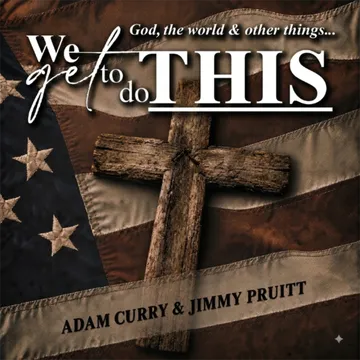
We Get To Do This · No. 4

About this episode

Donald Trump and the family of Charlie Kirk headlined the Culture and Christianity conference in Nashville, where 15,000 attendees gathered to navigate a shifting spiritual and political landscape. Keynote speaker Eric Metaxas and worship leader Matthew West addressed a crowd energized by the growth of megachurches like Josh Howerton’s Lake Point Church. The event highlighted a growing fusion of evangelical fervor and civic action, framing the current American trajectory as a battle for the nation's historical foundations.

Prometheus Action representative Barbara Boyd and Pastor Rob McCoy of Godspeak Calvary Chapel provided insights into the Seven Mountain Mandate and the rejection of European-style oligarchic influence. The discussion contrasted the relational leadership of modern pastors with traditional elder-led structures based on the Apostolic Council of Acts 15. Analysis of Isaiah 8:11-17 served as a warning against digital conspiracy theories, while Hillary Clinton’s recent critiques of Christian influence were cited as evidence of an advancing Marxist social agenda. Media outlets like NPR and scholars such as Matthew D. Taylor were noted for their scrutiny of Turning Point USA and the perceived rise of Christian nationalism.

Personal reflections on the pitfalls of social media ego featured a story from a 2000s-era blog in Belgium and a stern correction from mentor Rob Out. The hosts emphasized that while Benny Johnson speaks of the biblical sword of justice, the true Christian mandate remains blessing one's enemies and seeking quiet influence at local school boards. J.D. Vance was highlighted as a representative of a new, relatable generation of believers moving past the polished stereotypes of previous decades.


CHAPTER 01 / 25 Discussion

Opening Prayer and Introduction to Episode Four

The session opens with a prayer in the name of Jesus, expressing gratitude for the privilege of conversing about faith and the world. The hosts introduce the date as Wednesday, October 1st, marking the fourth episode of their program. They emphasize the gift of life and the opportunity to share their message with listeners.

jesus· holy spirit· prayer· podcast· christianity

00:00 Let's do it. You want to pray today? No, I'm not ready for that yet. But I will in the near future. All right. Father, in Jesus' name, what a privilege it is to be before you. We truly do get to do this. It's not just a moniker. It's not just a saying or a slogan. It is a truth. We get to do what we do. And so thank you that we're here today to converse and talk about you, about the world, about other things, whatever it is, Holy Spirit, that you would bring to our mind. And our heart's desire is that things we talk about, maybe perhaps the things that are anointed and appointed for such a time as this would help those who are listening to navigate and deal with this crazy life in this world.

00:50 And so we pray, pray for everyone who hears this and that you would take this where it needs to go. In Jesus' name, amen. Amen. It's Wednesday, October 1st. We get to do this. This is episode number four. This is the life we've been blessed with. This is a gift. We get to do this. This is the chance we cannot miss. This is a life. We get to do this. Yes, we do get to do this. We do. And it's our privilege and it's our joy to do so. Absolutely. How you doing, brother? Hey, I'm doing great. It's been a hot minute. It's been a wild week.

CHAPTER 02 / 25 Discussion

Nashville Trip and Alan Jackson Culture and Christianity Conference

A recent trip to Nashville for the Culture and Christianity conference hosted by Alan Jackson is recounted. The event, which drew approximately 15,000 people, took on a somber tone following news regarding Charlie Kirk. An anecdote is shared regarding an entrepreneur offering the use of a private jet to avoid commercial travel on Southwest Airlines.

nashville· alan jackson· charlie kirk· culture and christianity· southwest airlines

01:34 Like two weeks. What is today, by the way? October 1st. There you go. Yeah, we missed one because you were off in Nashville? Nashville. You got to tell us about Nashville, about the Nashville trip. So the Nashville trip was we took Pastor Brian and Naomi and Nomers, as I call her. I've called her that for 20 years. So their folks live there. Pastor Brian's parents live there, and they're dear friends of ours. We've known them for decades. And so anytime we go back to Nashville, it's kind of a homecoming to get together with the Mandels, to get together with my kids and my newest world baby. Also in Nashville. They're in Nashville as well. But we were going for a conference that Alan Jackson puts on every year.

02:16 It's called Culture and Christianity. And the unique thing about it this year that made it really, I guess, special, you'd say, or just different, is that Charlie and Erica Kirk were scheduled to be the keynote speakers. Yeah, that definitely didn't happen, I guess. That didn't happen, but it put a different tone and spin on the whole thing. The atmosphere was absolutely electric. The place was packed to the rafters. It was a sellout. And they house about 15,000 people. It's crazy. Really? That's how big. The church is 15,000. That's crazy. And growing.

02:55 And it's like, wait, does Alan Jackson have his own jet? Because that's always what people think of. They think of mega church jet. I actually don't think he does. By the way, I was offered a jet. I didn't even get to tell you this. What? I know. Hold on a second. I know, right? You're not going to tell me you turned it down. No, I just haven't. I talked to the guy last week and said, let's talk about it. I know. It's crazy. Can I fly it, please? Here's the deal. He heard me talking from the, you know, hey, we had to make a dash over here. I was on the airplane. Yeah. When I got the news that Charlie Kirk had been shot, we were coming back. You're on Southwest. Cattle car. We were on a cattle car. Herbs cattle car. Absolutely. And so, you know, we're watching other people.

03:34 We're all grabbing our iPads and phones. But anyway, he heard me tell that story and he was like, man, he said, you shouldn't have to take a three-hour flight from, you know. San Antonio. Well, yeah, right. From Dallas Love, basically. Of course, you got to stop in love to get here from Nashville. And he really felt bad about that, but he's an entrepreneur and he's got international businesses. And he just wrote me and said, hey, man, I'm not trying to make any money here. I mean, if you can just cover fuel and the pilot, that's what it costs. He said, man, I'd be glad to make sure you have dibs on that plane when you need to go.

04:15 Wow. And so, yeah, I was going to tell you about that. That's actually how the big boys do it. It's like, you want my plane? Just got to pay for the pilot and the fuel. Yeah. So I guess technically you could say Pastor Jimmy has a plane. So let's come on, haters. Let's use it. Let's grab all the haters and just pile off. All right, because as long as I go, I'll pay for it. That's what I'm saying. Oh, okay. Well, there you go. So anyway, that opportunity awaits. So that was a really cool thing. I've never had anyone offer me a plane before. Except for me. Well, you. And that's different because we're besties. But I mean, you know, just somebody in the congregation who's got that kind of access and says it wants to help us out. And yeah, very cool. Anyway, so I interrupted you about that. I don't own one, Jack.

CHAPTER 03 / 25 Discussion

Eric Metaxas and Matthew West at the Nashville Conference

Eric Metaxas filled a keynote slot at the Nashville conference, providing a finger on the pulse of current events following Charlie Kirk's absence. Matthew West and his daughter led worship sessions, performing anthems such as Unashamed. The atmosphere is described as a blend of grief and electric spiritual energy, incorporating quotes and clips curated by Matt Munt.

eric metaxas· matthew west· charlie kirk· worship· hello fred

04:58 So believe me, that's a plan. owning aircraft is way overrated, I can tell you. It's like owning a boat. It's worse. It's worse. So we were there for that conference. The tone was different, as I mentioned. So what they did, they brought in Eric Metaxas in place to fill that slot. And Eric is just such a, he's just really has a finger on the pulse of things. And so I loved what he brought. Every speaker knew Charlie personally. Yeah. So there was a lot of weight in the room. I mean, you could feel the gravity of mourning, the gravity of grief in the room. And yet, at the same time, there was this incredible electricity.

05:42 Like there was, when we went into worship, Matthew West and his daughter came out and that was really cool. Yeah. And led worship. She was phenomenal, by the way, and she's young, but wow, I think she's 18. But they came out and led worship. First time he came out with the band. Yeah. Second session, it was her and him with a spotlight on each of them and just him with his guitar. That I love the band, obviously. But that was actually more worshipful. They did some of his songs. Of course. You know, he did the song Unashamed. Yeah, Unashamed. But he did the version where Matt, by the way, Matt Mutt, Matt Mutt. He's the one who grabbed all the pieces. Did he have those pieces in that? Well, he did.

06:27 It's on Hello Fred right now. Yeah, I love it. When it comes on, I just get chill bumps. Yeah, it's good. Yeah, so when I was with Matt Munt in Tennessee doing his podcast, that's another story I'm going off. But anyway, so I asked Matt, I said, so because he works with Matthew West, I said, did you do the bites or the music or the editing? He said, I didn't do the editing, but I did pull all the clips for that. Like, that's so awesome. So good. And Matt's such a great guy. But it is the song is fantastic. I mean, he does, it seems like every year he comes out with an anthem. Yeah. Yeah. Just kind of a big anthem. Yeah. Let's pray. You know, don't stop this. I'm unashamed of the gospel of Jesus Christ.

07:07 Just solid. Perfect. Solid. Perfect. So, yeah. So they interjected Charlie's some quotes and stuff. And somebody else, a couple of other people, I wasn't sure who it was. There's a couple other voices in there. But anyway, it's very powerful. So, yeah. So I could spend time. So we did that conference. It was, like I said, electric. We go out there because it fills our tanks, fills our buckets. And it's really a lot of what we've been talking about just as friends for many years is bringing culture and Christianity together and speaking outside the walls of the church, which is just, I'm so proud of our church. I'm so proud of the staff and everybody here because it really resonates so well. And you see, it's filling up.

CHAPTER 04 / 25 Discussion

Growth of Megachurches and the Charlie Kirk Effect

Young pastors like Josh Howerton of Lake Point Church in Rockwall, Texas, are seeing massive growth, with in-person attendance reaching 27,000 people. This phenomenon is attributed in part to the Charlie Kirk effect and its impact on non-denominational congregations. The discussion questions whether a church can become too large to maintain personal relationships.

josh howerton· rockwall texas· charlie kirk· megachurch· lake point church

07:52 People are parking in my spot, Pastor Jimmy Pruitt. Sorry about that, brother. There's so many new people. You got to get on time. Yeah. We had people showing up early this week because that very reason. Wow. It was unreal. I've never seen this before. And, you know, there is a phenomenon going on. I was listening to Josh Howert and Jason McPherson. Several mega church pastors, but they're all young. These guys are in 40s, 30s and 40s, and they're mega church pastors. There's five of them. And they're all talking back and forth about the Charlie Kirk effect, what happened, the impact, what it's doing to their churches. Of course, they have mega churches. Most of their churches are non-denominational, you know, large churches.

08:34 You know, we're talking tens of thousands of people in these churches. Josh Howerton, I mean, he's in his 40s, early 40s. His church runs 27,000 people in person. Wow. Not just online, not just, I mean, 27 people. Where is his church? He's in Rockwall, Texas, just East Dallas, East of Adelaide. That's insane. I know. What an amount of people. Amazing. Phenomenal young pastor. These are kind of the up-and-coming voices. Do you think at some point it's too big? Can a megachurch be? I mean, what is because for Fredericksburg's population, we have a megachurch. Yeah, we would be like a thousand people. Yeah. Is there a point where it's too big?

CHAPTER 05 / 25 Discussion

Pastoral Leadership Styles and Church Governance Models

Different approaches to pastoral leadership are examined, contrasting relational styles with those that maintain strict authority and distance from the congregation. The benefits of an elder-led structure based on the Apostolic Council of Acts 15 are highlighted as a way to avoid red tape and church splits. Growing churches often utilize models that allow for decisive action and cultural engagement.

pastoral leadership· church government· elders· apostolic council· acts 15

09:13 Have you ever thought about these things? Oh, yeah. I've thought about it a lot. I mean, it kind of depends on your personality as a leader. I've never aspired for that. That's not something that makes me get excited, wanting to have 15 campuses and 30,000 people. Sounds like a job. Sounds like a big J-O-B, right? Yeah. But I'm very relational and very personal. So I like to know who's in the church. And I like to have friends in the church. I was sitting with a group of pastors. I'm going to just go chase this little rabbit because I'm going to talk about this tonight. A couple of weeks ago, sitting with some young pastors. And they're all having hard time. hard time.

09:55 They're kind of struggling in their churches. They're small churches, and they can't get a lot of traction. I've talked to them about engaging culture, and they're like, oh, we can't do that. They would fire me next week. I mean, these guys, but they have 80 people, 50 people, 40. I mean, it's hard. I remember being young and doing all that, paying my dues. This is how you get your reps in. And so I was talking to him, and one of the guys, somehow the topic came up about having friends in the church. And he goes, oh, no. I have no friends. I will never have friends in the congregation. Wow. First of all, the look on my face probably gave me away because I'm just like, oh, Pastor Jimmy doesn't hear me.

10:39 You're all 40 years old. And you're telling me, he said, because you've got to maintain your authority. They got to know you're the pastor. And I'm sitting there going, there's a reason why you only have 30 people in your church. Yeah. You didn't say that. No, but I certainly thought it. Because I didn't want to come back and say something cutting. I didn't want to disparage him. But the way he said it was with such conviction. And I just thought it sounds like even if I said something, it wouldn't have been gone. It's not really the pastors, but their elders or their board won't let them do that. That's what it sounds like. Well, you're talking about talking about culture or having friends in the church. Well, both of us talk about

11:21 separate issues. A lot of churches that are elder-led or we'll call them deacon-possessed. I know, right? They are hard on their pastors. They put a lot of restrictions around them. And so if you're a congregational-led church, that means the church votes on everything. Right. You can get in some hot water. Yeah, I can see. So it really depends on your government structure. We built a structure where, you know, the staff and then we have lay elders, but we have staff elders. So we do the day-to-day, we're boots on the ground. Right. And we get to make those decisions, but then we defer to our board of directors, which are like the Apostolic Council of Acts 15.

12:03 So we built on that model. What it allows us to do is get things done. Yeah. We're not sitting in red tape and waiting for everybody to vote and then seeing people, what's the word, do mutinies and voter registration to get that guy out. I mean, I've seen that ugly stuff in churches before. So you get a church split. We didn't build that way. And neither do these churches that are growing. The churches that are growing and moving the needle in the world right now are churches that are getting it done. And they've got a structure that allows them to do that. So as far as the culture thing, a lot of these young pastors feel restricted. You know, when I made the decision to go full speed ahead, I had to count the cost because I did not know

CHAPTER 06 / 25 Discussion

Responsibility of Pastors to Speak Truth in Culture

The conviction to address cultural issues from the pulpit is described as a spiritual responsibility, where withholding truth is viewed as a sin. A personal anecdote involves playing on a worship team under Pastor Russ to remain a submitted member of the church body. This participation serves as a way to contribute beyond preaching and leadership roles.

truth· sin· pastor russ· worship team· conviction

12:49 what would happen. It was an act of faith, but it was also an act of conviction before the Lord that I felt like as a pastor, I have a responsibility to speak the truth because of love. Speak the truth in love, speak the truth because of love. And to hold back, God had moved me into a place where it would be sin for me. The scripture says that to know for a man to know what to do and not do it to him, it is sin. That's a scripture. Do you know which one it is by any chance? I can tell you, right? It's not that important. It's in the Bible. Oh, in the New Testament. It's at the end. It is in the New Testament. I do know it's in the back half of the Bible. See, that's me. Okay. So anyway,

13:33 I felt like to not begin to address these things and really go there would be sin for me because once you have truth and you have a revelation or understanding of something, you're now responsible for it before God. As a pastor, that weighs heavy because I'm not only responsible to God, I'm responsible to hundreds of people or maybe even thousands, depending on your scope and reach. And so anyway, these guys are scared. Yeah. And maybe they don't have the same level of conviction I do about culture because they love their Bible studies and they talk about their preaching and their sermons all the time. I never talk about my preaching in my sermons. I talk about the message. The sermons come and go.

14:17 It's the message that we carry that matters because the message is the one thing. It's the bullet. It's the shot, hopefully heard around the world. And so anyway, walking with these guys is interesting, but to hear a young pastor say, I don't have friends in the church. I will never have friends in the church because they need to know who the authority is. Wow. And I'm like, whoa. I didn't say this, but you know me. I like to play on the worship team. Yes, you do. And it's not just because I like to play music. That's there, of course. I love playing guitar, and I've done it for my whole adult life as a Christian.

14:55 But the other piece of it, he allows me to be a church member. Yeah. It allows me to contribute something that's not preaching, that's not leading. I'm submitted to Pastor Russ, our worship pastor. And if he tells me he doesn't like that lick or tone that down, how could he, Pastor Jimmy Pruitt? Your licks are the best. I say, yes, sir. Yes, sir. I remember I didn't tell Russ this ever, but it'll be a joke if he hears this. About five years ago, I mean, I'd only been here a few years ago, and he was a little more temperamental back then. And he turned and snapped at me one time in rehearsal, and he did not like what I played.

15:35 And he made a snarky comment: I quit for six months. Wow. I was like, okay, I don't need a noise. So I stepped off the team for six months. And that's not why I took a break this last year. Yeah, no, I know, I know. Whole different thing. It's really just focused. But so, yeah, I quit because he made me mad. We got to do it. You raged quit with the children. I know, I raged. I took my toys and went home. So, obviously, Charlie Kirk dominates our world, dominates the world of faith of the church. And so I have a couple of things that I brought with me today because you know me. I'm doing my prep. I love it. First of all, you blew my mind this past week. You blew my mind.

CHAPTER 07 / 25 Discussion

Isaiah 8:12 and the Biblical Perspective on Conspiracies

Isaiah 8:11-17 is analyzed for its warning against thinking like the masses and calling everything a conspiracy. The scripture encourages believers to fear the Lord rather than living in dread of what frightens the world. While acknowledging that secret plots may exist, the emphasis is placed on trusting God's instructions over digital screens and theories.

isaiah· bible· conspiracy· charlie kirk· king james version

16:20 I've read the Bible. I've read it twice. Every day I'm in it for an hour. I'm reading things over and over again. And you sent me a scripture that I'm like, how did I never see this before? And it is Isaiah 8:12. And I'm so, I love this so much because there's so much right now, particularly where the whole world, and doesn't matter how many times I go through it, the whole world is in Charlie Kirk death conspiracy. The magic bullet is the kid of Patsy. I mean, and it's, and so this scripture fits it so well.

16:58 I think that's why we text several times a day. So I think that's why I sent it to you. Actually, I'm going to read 11 through 17 because even in my Bible, it's indented, which I think means something. And it has a heading in my Bible, a call to trust the Lord. So it starts with 11. The Lord has given me a strong warning not to think like everyone else does. He said, and this is Isaiah who received this word: don't call everything a conspiracy. Hello. Wow. Boom! Got my attention. Drop the mic. Like they do. And don't live in dread of what frightens them. Make the Lord of heaven's armies holy in your life. He is the one you should fear. He is the one who should make you tremble.

17:42 He will keep you safe, but to Israel and Judah, he will be a stone that makes people stumble, a rock that makes them fall. And for the people of Jerusalem, he will be a trap and a snare. Many will stumble and fall, never to rise again. They will be snared and captured. Preserve the teaching of God and trust his instructions to those who follow me. I will wait for the Lord who has turned away from descendants of Jacob. I will put my hope in him. So I went, I read like five different translations, went back to King James. Conspiracy used in King James. Wow. And I'm like, wow, this is amazing. But I also pulled up the message version. And so there it says, a boulder blocking your way. And it's a little more.

18:23 Now, interestingly, the message Bible doesn't use the term conspiracy, which I found unfortunate. But God spoke strong to me, grabbed me with both hands, warned me not to go along with this people. And so I take it not as, you know, there aren't conspiracies. It's like, don't bother with that. Don't what these people say. He makes a clear distinction. These people are doing conspiracy stuff. That's fine. Doesn't mean there's not conspiracies and things going on, but trust in the Lord, which comes right back to put down your screens, pick up your Bible.

19:07 Yeah, I love it. You know, that's really where my thinking is going. But I do have a bit of a bit of a conspiracy to discuss. Right after it says, don't call everything a conspiracy. Five words. Not discussing. Not everything. But what's happening is, so on one side, and unfortunately, there's sides here. We're all obsessed with who killed Charlie, all of these, these wild things, body armor, ricochets, on and on and on and on. Holograms. Holograms. Rapports. You know, CGI. CGI, AI, on and on and on and on.

CHAPTER 08 / 25 Discussion

Historical Foundations of America and the British Monarchy

The founding of the United States is traced back to the 1607 Dedication Prayer in Jamestown and the Mayflower Compact, rooted in a desire for religious freedom from the Church of England. A theory is proposed that old-world monarchies and their deep states continue to subvert American sovereignty. President Donald Trump is characterized as a figure fighting against these historical financial and political empires.

jamestown· mayflower compact· east india company· donald trump· monarchies

19:47 And I understand it. I understand why people, we've been raised on TV shows where it all gets resolved in 22 minutes minus the commercials, you know. But I have been studying a lot about the true enemy of America. And obviously, the devil is the enemy. But when I look historically, as we come up on a 250th, there's still a lot of old world that does not like what we did, which is, you know, we left England. We said, hey, King, you the church, and you're the boss of the Church of England. You're not letting us pray how we want to, not worship the way we want to.

20:29 We're going to start our own thing. We're going to do it over here in this new land. And all of the United States, all of America was founded on the Bible. I mean, just look at the Founders' Bible to understand that and see all the original documents from the Mayflower Compact. Actually, when they put the cross before the Mayflower Compacts, that was Bedford, but it wasn't Bedford. No, it was called the Dedication Prayer of 1607 in Jamestown. Jamestown, that's it. Right. And so they said, hey, man, this is it. We're here to spread the gospel. We're going to build this new land. But it's not like the East India Company from the Netherlands or the bloodlines of

21:12 all these countries that have monarchies really went away. And we don't need to go too deep into it, but I've always thought: is this really just ceremonial? Well, no, of course it's not. So I think there's a lot coming out of the monarchies and they have their own deep state and everything that is really true that is very that is messing with us. And I think that we are blessed by God with President Trump, who is literally fighting against that. And I think it's being overlooked, it's being missed. And I just wanted to play one background clip of that. This is from two ladies. They're called Prometheus Action. And they actually come out of the Lyndon LaRouche camp.

CHAPTER 09 / 25 Discussion

Prometheus Action and British Foreign Policy Influence

A clip from Barbara Boyd of Prometheus Action, a group following the Lyndon LaRouche tradition, discusses the curing of British foreign policy influences during the Charlie Kirk Memorial. The New York Times is criticized for its portrayal of the fusion between conservative Christianity and Trump's economic policies. The segment argues that American founders sought to escape the forever wars of European oligarchs.

prometheus action· lyndon larouche· barbara boyd· british foreign policy· new york times

21:56 I don't know if you remember Lyndon LaRouche, classic guy. I mean, you know, for years, he's dead now, but for decades, he was always trying to uncover the truth of what's really going on in government, et cetera. And so they're older, our age, to be honest about it. And here's just a little clip. They do shows like podcasts, I think, every other day or every two days. And I like a lot what they're saying. So I just wanted to set up our conversation with this. On Sunday at the Charlie Kirk Memorial, our chronic infection with British foreign policy diseases began to be cured.

22:34 Our founders' vision of the United States was revived. Contrary to the British agent Henry Kissinger, we were again a sovereign nation living and building and creating according to God's laws, freeing ourselves from the empire's foreign wars. But you wouldn't know that from the media. The New York Times and others implied that the Kirk event weirdly joined religion with Donald Trump's America first worker-first economic policies. They said this had never happened before at this scale. Here's the key quote: Perhaps never before at such a grand scale has such a fusion taken place in a public display.

23:17 More than just a tribute to the style of Mr. Kirk's evangelical tradition, this service represented a pinnacle event reflecting the degree to which conservative Christianity has melded with Republican politics in the Trump era. But prior to the most recent run of total control of our foreign policy by the British Foreign Office, we were always like this. All our founding documents and all our founders' foreign policies insisted we were guided by God in a continuous mission to find truth. We fled here to escape the forever wars of Europe's oligarchs. I'm Barbara Boyd, and I've been investigating and documenting the modern British financial empire subversion of our country since 1973.

24:04 So I play that just so they don't just hear it from me. This is true. And you hear what the New York Times writes, like, this is crazy. What's going on? In order for us as believers, as people who want to speak into culture, if we want to address it, because we can't just go out hating everybody or like, you're over there, I'm over here. We have to understand the other side. To be understood, you have to first understand. And so, wow, the media, which most people won't listen to this. I'm the guy that listens to NPR. I'm the guy that watches MSNBC. It's It's really. really getting pretty insane. And so this next clip is from what I call middle management of the North Sea nexus of, you know, I think the Clintons

CHAPTER 10 / 25 Discussion

Hillary Clinton on American Trajectory and Marxism

Hillary Clinton is heard discussing the trajectory of the United States and criticizing the desire to return to a world dominated by white Christian men. This perspective is framed by the hosts as an advancement of Marxism and Saul Alinsky's rules for radicals. The discussion links the Clinton era to shifts in social policies regarding marriage and abortion.

hillary clinton· bill clinton· marxism· saul alinsky· social justice

24:50 are the kind of the middle management kind of totally. Are you going to play her? Yes. Oh, I know what clip this is. Here it is. We haven't gotten to the more perfect union, and we fought a civil war over part of it. And people have been protesting, you know, for hundreds of years that, you know, things were not as they should be, given our ideals and how we should be moving toward them. So I think that's what makes us so special as a country. And the idea that you could turn the clock back and try to recreate a world that never was dominated by, you know, let's say it, white men of a certain persuasion, a certain religion, a certain point of view, a certain perspective.

25:35 I take that, by the way, is straight white Christian men. You got it. That's exactly. Conservative. Conservative, I mean persuasion. Just imagine anyone saying, oh, black men, I mean, you'd be run out of town, but no, that's okay. It's okay to say this. Of a certain persuasion, a certain religion, a certain point of view, a certain ideology. It's just doing such damage to what we should be aiming for. And we were on the path toward that. I mean, imperfectly, lots of bumps along the way, but I agree with you. We were on the right trajectory. And we know what the Clintons brought in. We do. I was thinking, let's define what that trajectory is.

26:15 Well, the trajectory she's talking about is gay marriage, abortion, trans, et cetera, et cetera. That's what she and Bill Clinton always stood for. And a larger covering of that would be Marxism. Amen. 101. Exactly. Exactly. There's your rulebook for radicals. Exactly. It's right there. So we don't have to worry too much about Hillary Clinton, but I know that the left, I'll just call it the left, they listen to NPR religiously, and NPR spins them up to just an incredible degree.

CHAPTER 11 / 25 Discussion

NPR Coverage of Turning Point USA and Rob McCoy

NPR's On the Media features scholar Matthew D. Taylor discussing the evolution of Charlie Kirk and Turning Point USA into a religious force. The segment highlights Pastor Rob McCoy of Godspeak Calvary Chapel, who gained prominence for flouting pandemic closure rules. The media's tone is described as biased against the influence of evangelical Christianity in politics.

npr· matthew d taylor· turning point usa· rob mccoy· godspeak calvary chapel

26:54 And one of my favorite podcasts, it's on the radio as well to listen to, is on the media, where they discuss the media, but they really don't discuss the media. They just hate Trump. But in this case, they brought on a guy who is from, it's actually in the intro. He's a scholar, mind you. The Institute for Christian Jewish Islamic Studies, I believe, which is like, well, that's quite a lot of study you got to do. And they discussed the Charlie Kirk Memorial and what they believe Christians are doing and believe. And I think they're saying it's dangerous. And so I wanted to run through a couple of these clips.

27:37 And if you're bored of it, let me know. Oh, no. Let's see. Because even I have questions about what they're confidently saying is the truth. So they start off with an introduction of this guy, a little bit of background of Charlie Kirk, and then quickly they get into the seven mountains, which is something that, you know, well, we'll discuss it after you play the clip. Matthew D. Taylor is the senior Christian scholar at the Institute for Islamic, Christian, and Jewish Studies in Baltimore. He's been exploring the phenomenon that was and is Charlie Kirk and his movement.

28:15 He says Christianity wasn't always a central part of Turning Point USA or of Charlie Kirk's public persona. If you had asked me circa 2018, what are the most influential religious right or even Christian organizations in the country? Turning point would not have been anywhere on that list. Today, it's probably number one. Do you believe that to be true? I thought Charlie really always came from a Christian believer background, and they're going to claim something else here. He did, but if you think about 2018, how old was Charlie Kirk? He was literally a child. He was a kid. So he was coming out with a different tone. I mean, he was like straight out of the Patriot Academy kind of thing.

28:56 Right. Young, wet behind the ears, figuring it out. And so, yeah, he's definitely morphed over the years more into I'm an evangelist who happens to comment on political issues. All right, we'll continue. So, Christianity was not a prominent feature of Charlie Kirk's conservative advocacy organization, Turning Point USA. But that did change in 2019, right? He met a California pastor named Robert McCoy. Yeah, Rob McCoy, who featured fairly prominently in the memorial service, is. is a pastor with an evangelical denomination called Calvary Chapel.

29:39 And McCoy is a pastor of a church called Godspeak outside of Los Angeles, has been very involved in local politics. And he actually was the first church to invite Charlie Kirk to speak there. Godspeak exploded in popularity during the pandemic because he flouted the church closure rules. He also introduced Kirk to the Seven Mountains mandate, which we've spoken about before, but give us a refresher. So before we get to the refresher, interesting. You know, Pastor Rob? I do. Yes. Wonderful. So I mean, right, I wasn't even saved when all this went down. So he was really one of the forerunners of, hey, you can't shut us down. Yes. There was a handful.

30:23 Jack Hibbs was another one. John MacArthur was another. There were several Calvary Chapels. Now, John MacArthur was not Calvary Chapel, but he was a large, large, influential church, probably the most influential. So, yeah, they all said, We're not closing. Now, the Seven Mountains. A refresher. Yeah, before you say that, I've just got to call out the nuances here. You heard it. Oh, the seven fastest mountains. The energy of the emphasis on the right syllables. I mean, just like wow. That's Brooke Gladstone. Makes $400,000 a year doing this show.

CHAPTER 12 / 25 Discussion

Seven Mountain Mandate and Cultural Influence

The Seven Mountain Mandate is explained as a strategy to influence seven sectors of society: education, family, religion, government, arts, media, and business. While critics view it as a plan for cultural conquest, the hosts describe it as a framework for the Great Commission and making disciples of nations. The concept is attributed to figures like Lance Wallnau and Bill Johnson.

seven mountain mandate· lance wallnau· bill johnson· cultural mandate· great commission

31:03 Which she can make all she wants, but yeah, it's so not national public radio. It's so one-sided public radio. But that's why I listen to it because I want to know what people are thinking. Yeah, here we go. So the Seven Mountain Mandate is a concept that comes out of charismatic evangelical circles. It's sometimes framed as a strategy for cultural conquest. It's also a prophecy that people believe was revealed by God to a prophet named Lance Walnell. And the idea. I think Lance would love being called a prophet, don't you? I think he'd say, wow, thank you. I didn't know I was a prophet. The prophet was revealed by God to a prophet named Lance Wall now.

31:44 And the idea is that every society can be divided up into seven arenas of cultural influence: education, family, religion, government, arts and entertainment, media, business, and commerce. Each of those sectors of society is imagined as a mountain. And in this prophecy, the top of those mountains is either controlled by Satan and the demons or by God and the Christians, and there's no in between. And so the mandate part is for Christians to take over the seven mountains, to rise to positions of cultural influence, to try to target those specific areas of influence in society, and then to let Christian influence flow down from the tops of the mountain.

32:28 They'll use democracy if it works for them, but the mandate, which they claim is from God, is for Christians to take over society. Hence this vision of merging religion and politics that resonated with Kirk. So while I don't think he's incorrect in his description, it is a lot I agree with. It drips with they're going to take over no matter what, despite democracy, we're going to go for it. The nuances. Yeah, it's all in the nuances. Because what he's saying in terms of content, I'm going, yeah, yeah, I'm aligned with that. But the way he's saying, it's not what you say, it's how you say it. So give me the Pastor Jimmy version of the Seven Mountain Mandate.

33:12 Yeah, I mean, the Seven Mountains, education, religion, slash faith, family, business, government, arts and entertainment, media. So those are just all these are, this is just a simple way to categorize culture. That's it. Yeah. If we have a cultural mandate, what we call the apostolic mandate or the great commission is a cultural mandate, and that is to go out and Jesus said, make disciples of all nations. Not just one nation or not a handful of people, all every nation. So as a Christian, I have a mandate. I have orders from my commanding officer to go and do this.

33:51 But you have to categorize things. I mean, in order for us to even metric something, you have to say, this is that. You have to define it. So Lance Wall now, there were others. Bill Johnson was another one out of California, Bethel Redding, and there were many others who landed on these seven categories. And all they are are categories. And there's nothing actually real about them. They're just names to say this is a segment of society. That's a good point because they make it sound so cut and dry. Like, here's these defined places. There's this conspiracy. Well, there it is. it is. Go after these. That's exactly what they're doing. That's exactly what they're trying to present.

34:35 There's no secrets here. There are books on this saying these are the, these, we've chosen these labels so that we know what we're shooting at. Right. It's like as a hunter. You know, when I was growing up, I hunted rabbits, squirrels, dove, quail, you name it, you know, birds and stuff. You can't shoot a target you can't hit that you can't see. You can't hit a target you can't see. So all this is is giving labels to categories so you understand these are the seven mountains of culture. Another way to say it is, these are the seven categories of culture. It's not that complicated.

CHAPTER 13 / 25 Discussion

Spiritual Authority and the Rejection of Theocracy

The discussion clarifies that the goal of Christian cultural engagement is not to establish a theocracy, citing the failures of Constantine. Using C.S. Lewis's Screwtape Letters as a reference, the hosts discuss the spiritual battle between God and the devil for influence. They emphasize that while Christianity was the dominant faith at America's founding, the current movement respects freedom of religion.

c s lewis· screwtape letters· constantine· theocracy· dominion

35:12 Do you agree with the, or what's your, that's not a fair question. What, what's your feeling on it's either run by God or by the devil? Well, because that's pretty black and white the way they put that. Okay, so you've got levels here. I mean, in the most simplistic terms, you've got God and you do have the devil. The thing about it is they're not equal foes. I mean, you've got God's over everything. You got the devil just trying to hang on until he gets cast into the lake of fire, right? So he's sort of struggling. So if you take C.S. Lewis's approach, he wrote his amazing book called The Screw Tape Letters, where it was just getting into the mind of the dark enemy, right?

35:58 Satan, and say basically the old thing that Paul Harvey did. If I were the devil, that's a classic. Yeah, it is classic. That'd be a great clip to play, but I'll bring it next. Yeah, I mean, if I were the devil, boom, boom, boom, boom, boom. So this is similar. So yes, at one level, you do have God, you do have the devil. But at the end of the day, God, Jesus gave us authority as believers. We have an apostolic or a dominion mandate in Genesis chapter one that we're to govern the earth. We're told that. This is what we're supposed to do. I created this earth.

36:38 I created it for you. Now go govern it. Now, if you use that language, it may mean something different to somebody in 2025 than it did in the Garden of Eden. Can you see how it scares people when they hear this? Oh, well, they think about, oh, they're trying to create a theocracy. And that's not the case. It sounds, I can see how someone who doesn't have any context would see that. But actually, it's not about creating a theocracy. That's what Augustine did. That's what Constantine did. Not Augustine. Constantine did. And we saw where that led. That did not end well.

37:18 Nor has it continued to go well. So that's not what we're talking about because we're talking about in America, freedom of faith, freedom of religion, whatever your religion is, as long as you don't kill each other and you're not a danger to yourself and others. We want and welcome people of other faiths. But we also understand there was a dominant religion, a dominant faith, and that is Christianity. And so while Hillary thinks we can't return to these silly ideals that never were. That never were. That's real. That was real nice caveat. Briggs at it. That's never everything. That was not us. Well, now we're going to get into the next part, which is about Charlie Kirk as a martyr and martyrdom in general.

CHAPTER 14 / 25 Discussion

Donald Trump and the Dual Narratives of Martyrdom

The Charlie Kirk Memorial highlighted two sides of the martyr narrative: Erica Kirk's message of forgiveness and Donald Trump's more combative stance toward opponents. Trump's off-script comments about hating his opponents are interpreted as tongue-in-cheek by the hosts, who view him as a new believer. They stress the importance of praying for leaders regardless of political affiliation.

donald trump· erica kirk· martyrdom· stephen miller· forgiveness

38:03 And things do take a turn here, of course. The rhetorical frames around martyrdom, they're not just limited to inspiring a lot of conversions. They can also spur some real violence. Yeah, and this is the dual nature of a martyr narrative, right? On the one hand, people like Stephen are seen as models in that they do not provoke, they do not fight back, but instead they accept the persecution, right? And Jesus had taught his followers to bless the persecutors, to love their enemies. So that's the one track. And I think we saw that in Erica Kirk's declaration of forgiveness. My husband, Charlie, he wanted to save

38:45 young men, just like the one who took his life. That man, that young man. I forgive him. I mean, I don't know a Christian who is steeped in the teachings of Jesus who would say that was the wrong choice, right? Jesus taught us to forgive. Now, I think Stephen Miller and Donald Trump and the memorial service really embodied the other side of the martyr narrative. I hate my opponents and I don't want the best for them. I'm sorry. I am sorry, Erica. But now Erica can talk to. to me and the whole group, and maybe they can convince me that that's not right, but I can't stand my opponent.

39:30 See, I wanted to leave that in there because President Trump leaves something open. We have to believe that he is a new believer. He has certainly said that he believes God saved him so we can save America. And that could very well be true. And he says, I'm not like Erica. I hate my opponent. He doesn't say opponents. But then after that, he says, Erica and the group can certainly come and try to convince me otherwise. I really that made me hopeful because even I forgot what he had said. I thought he had said the enemy, but it was the opponent. And that last bit, I think that's really quite extraordinary. Let me just play that again. And I don't want the best for them.

40:14 I'm sorry. I am sorry, Erica. But now Erica can talk to me and the whole group, and maybe they can convince me that that's not right, but I can't stand my. There's room there. There's room there. What's your feeling on that in general? Well, when I saw it roll out, you know, my first thought was, please go back to the teleprompter. Get back on the script. Come on. Because, I mean, we've watched Donald Trump since, you know, since the early days, his first go-around, every time he'd go off script, it'd be like, yeah, kind of like Biden going off script. Yeah, that was so fun. But also, if you watch the video, it's so different hearing it with no context when you've watched the whole service roll out.

40:57 And he said it in a very tongue-in-cheek way. He was grinning. He was kind of laughing. He was just making Donald Trump. He was being an old New York curmudgeon. I mean, so when I hear it, it doesn't sound offensive. I wish he hadn't said it, of course, because my first thought was, there's ammo for people who hate him. There it is. Because I like him. I want to protect him, right? You know, because I don't just see him as the president of the United States. I see him as a new brother in Christ. And I want to help him, you know? Yeah. I'm for him. Forget policy. Forget all this stuff. You know, one of the things that we're commanded in scripture to do is pray for those who are in leadership.

41:40 That's coming up. And I've prayed for Joe Biden. I've prayed for Hillary. After that clip, I'm really going to pray for Hillary. You know what I mean? She needs that. Lots of prayer for all of them by name. I mean, it's truly. So I'm for Trump, but boy, to hear him do that. But I saw that I was watching, where were we four or five hours in at this point? Oh, yeah, this is near the end. So it's probably five hours in. And in the context and the tongue-in-cheek way he said it, because he was grinning, he was laughing. He said it, but he said it like old Trump just popping off would say. But of course, everybody camps out on it. And they just go there. They go for the jugular, so to speak.

CHAPTER 15 / 25 Discussion

Media Allegations of Christian Violence and Anti-Semitism

NPR's coverage is criticized for linking modern Christian movements to historical violence, such as the Crusades and the blood libel of Simon of Trent. The hosts argue that the media is conjuring narratives of anti-Semitism and extremism to vilify the religious right. They point out that recent acts of desecration and chaos have largely originated from the political left.

pope urban ii· crusades· anti-semitism· blood libel· religious right

42:24 Well, and again, I just felt that last bit is like, hey, I'm open. I'm open. Convince him. Because who's the group? Erica? It's not Turning Point USA. It's the Office of Faith. It's all the people surrounding him. So I pray that that takes place. You too, brother. And now we get into historical stuff, which is just like, what are you doing, NPR? When Pope Urban II proclaims the First Crusader in 1095 CE. So now they're still on martyrdom and violence. Oh, okay. This is the big one. When Pope Urban II proclaims the First Crusader in 1095 CE, his rationale for why Christians need to go and slaughter Muslims and also Jews was that they have devastated the kingdom of God.

43:08 They are killing our brothers and sisters, our fellow Christians in the East, and we need to go and rescue those Christians. But then again, we also need to take back the Holy Land. We need to take back Jerusalem because it's a city of Jesus, right? And then there's the story of Simon of Trent. And yeah, Simon of Trent was a young man who disappeared in the medieval period, and the Christians blamed the Jews. I know this is crazy stuff, but they put it in there, and I presume they had a reason for it. Because I think the only reason is, hey, be careful. Christians can be violent. That's what I'm hearing. They're building it. The young man who disappeared in the medieval period.

43:44 And the Christians blamed the Jews. And this was part of the blood libel idea of Jewish communities secretively drinking the blood of Christian children as part of their ritual ceremonies. And so the disappearance of Simon of Trent leads to pogroms and attacks and becomes part of the conspiracy theory narratives and the vilification of Jews by Christians, right? Because a martyr is both a member of the community who is treasured in value, but a martyr is also a symbol that can be wielded for great violence. It is one of the most potent. potent forces in the Christian tradition. This is not merely another celebration of life that we witnessed in the memorial or in the collective grieving over Charlie Kirk's death.

44:33 This is a step change in the role of the religious right in American society and not just in the United States, but around the globe. I believe this is the devil conjuring up stuff. Absolutely. And specifically anti-Semitism, the Jews, the Jews, Israel killed Charlie, et cetera, et cetera. They're conjuring this. This to me was pure enemy that got into this so-called scholar. I don't know what you want to comment on. Well, as I'm listening to that, I'm thinking, why did they make this jump to violence? Where is the violence coming from right now? From the left. And you look at where, I mean, you look at all the Charlie Kirk memorials that have been desecrated.

45:15 Who were they desecrated by? The left. Over and over and over. Who rode through on a bike yelling F you? I mean, who is creating chaos and havoc? Well, this is the... This is not the religious right. This is Jacques. You know, this is, you are what you say I am. This is very typical. But it's dangerous speak. It is. It's, you know, it's like, this is, this is, I mean, there was no reason to do this, and yet they're doing it. And it just concerns me that, you know, this is out there because now, and it affects everybody. Anybody who hears this, you know, oh, yeah, you know, it's the religious right. And already now, it's the religious right, the religious far right.

CHAPTER 16 / 25 Discussion

Benny Johnson on Godly Leadership and the Sword

Benny Johnson's speech regarding God instituting rulers to wield the sword for the protection of good and the terror of evil is discussed. Critics like Bradley O'Nishi frame this as a dangerous "two kingdoms" theology that justifies state violence against enemies. The hosts argue that these biblical concepts are often misunderstood by non-believers who lack spiritual context.

benny johnson· romans 13· apostle paul· justice· martyrdom

45:59 Now we're, yeah, which sounds very extremist. Well, the extremist part comes next. Oh, okay. Benny Johnson goes on to say that God establishes the rulers of nations. In the audience right now, there are rulers of our land. See, this is the part where I know non-believers lose it. And it's understandable that if you don't believe that God is in control of everything, then, I mean, if you haven't just submitted to that, then you won't get it. And it sounds kooky. I can say this as a relatively new believer. I know how people think about this. Flip the script.

46:41 We've been subjected to the last four years of pure kookiness from the other side. And you got Hillary again? We're supposed to sit there and drink their poison and be okay with it. But now when the pendulum swings and the momentum's the other way and we're making declarations just like they did, and they continue to, but just like they did, suddenly we're extremist. We're prone to violence now. Yeah, that's what they're saying. And what's interesting, did you ever see the juxtaposition of the BLM riots and the Antifa riots, juxtaposed to the memorial? Of Charlie Kirk, yeah. Saying this is how we respond. Yeah. This is how they respond.

47:21 I mean, you could go down the line on a lot of those. Now, are there going to be occasional guys who are... Now, mind you, I believe if there was ever a conspiracy in Adam's mind, what we saw recently with these shootings, the church in the Latter-day Saints church. I mean, I'm just going to say that it's very easy to make people crazy these days. There's enough pharmaceuticals in people's systems. There's all kinds of platforms that people get on. This is not an unthinkable thing to get people to do the weirdest possible stuff. Veterans are always perceptible to PTSD. I mean, it's all very breaking.

48:03 Heartbreaking is the term. We'll continue with what they think is crazy. The State Department, the Department of War, the Department of Justice, the chief executive. God has instituted them. And what does the Apostle Paul in Romans say about a godly leadership? Rulers wield the sword for the protection of good men and for the terror of evil men. May we pray that our rulers here, rightfully instituted and given power by our God, wield the sword for the terror of evil men in our nation.

48:47 Well, I mean, I don't think anybody summarized the dual martyr narratives better than Benny Johnson in that service, right? That on the one hand, Charlie Kirk could be an innocent Stephen, but then, right, the turn is now the godly government needs to go after our enemies. And this takes me to something that the Christian nationalism scholar Bradley O'Nishi mentioned in his recap of Kirk's memorial. He said that some. MAGA factions subscribe to a two kingdoms theology. So. Wow. So, of course, we knew Benny Johnson and I think Jack Prisovic and even Stephen Miller that this was going to cause misunderstandings.

CHAPTER 17 / 25 Discussion

Two Kingdoms Theology and Christian Morality in Politics

The "two kingdoms" theology is explored as a distinction between the peaceful kingdom of God and the combative civil realm. Critics argue that Christians give Donald Trump a pass on morality because they view him as a tool to punish enemies. The hosts counter that Trump's survival of the Butler, Pennsylvania assassination attempt has solidified his message that God saved him to save the country.

theology· christian morality· donald trump· butler pennsylvania· forgiveness

49:33 But I love doing this podcast with you because I pray that people who are not believers listen to it, who may have a different view of things, that they can just hear how we view this and not how it's presented. Because, yeah, that can sound crazy and kooky and dangerous if you don't know where it's coming from. And also the presentation, you know, it's like, you got to have that crowd of what, how many thousand? 70, 80,000. You're a little fired up. You got a little adrenaline flowing on. You get into that. Yeah. You get into that. So how about the, so now the two kingdom theology. Have you heard of two kingdom theology? I want to hear what they're saying because I'm curious about that.

50:15 Buckle up. They believe there's a kingdom of God. And in that kingdom of God, you are going to see God who operates according to peace and justice and love. But there's also the civil kingdom. When it comes to the political realm, the civic realm, it's really about a friend-enemy distinction. It's either you or them. It's either dominate or be dominated. And when it comes to the two kingdoms theology, we want a woman who forgives the man that murdered her husband. And we want a president who's going to hate him enough to execute him. Let's just stop it right there.

50:53 Wow, man. He just. This is a scholar. He just ran down the hill on that. You know, it's one thing to take a few steps, but if you ever start running downhill, you ever done that as a kid? Yeah. And badly, did they? It does. You end at the bottom bruised and broken. Exactly. Covered in dirt. So I feel like that's what he did. And this is what happens about commentary that's going to be negative, or you've got an agenda with your commentary. Clearly. You're going to take a few steps, you get some momentum, and then you can't stop. And that's what I'm hearing here. Openly that hate is a way to love God. When we see a political coalition built around antipathy, aggressive politics, castigating people who disagree with them, fighting with their enemies, when that names itself as Christian and also embraces some of the rhetorical

51:45 styles and vocabulary of Christianity, it becomes very hard to disentangle those things. And I think Trump has played this dual role for American Christians over the last 10 years. Dual? Isn't he just playing on the second string? No, Donald Trump will sometimes mouth the pieties, especially since the assassination attempt in Butler, Pennsylvania. God saved me so that I could save America. That's a message that a lot of American Christians want to hear, but that's also not about Jesus.

52:22 And so Trump can present himself as a Christian, but he does not always conform to Christian morality. And the Christians give him a pass because they want to say, well, he's the one God has put in office. He is there to punish our enemies. So we can say that we love our enemies and celebrate their demise at Donald Trump's hands. Now, I thought this was important because I know many believers, many Christians who are very wary of President Trump, say, well, he hasn't declared, he doesn't declare Jesus. And so he's not real. He's an op. He's not the real deal. And I'm like, wow, this is hurting us, hurting all sides, this particular view of President Trump.

53:07 Yeah, agreed. Again, this running downhill thing. I'm hearing this, like this gathering momentum, but then making these leaps. I mean, this is sequential in the broadcast. I mean, I took out some non-seculars, but this is exactly how it works. It's fascinating because they start off with almost something that we could go, yeah, okay, I could kind of see that. But then they make this leap, you know, 80 feet down the hill instead of another foot. And it's like, so I'm hearing that. But again, if you have an agenda, of course you're going to fabricate a narrative to support what you want to believe or what you already believe.

CHAPTER 18 / 25 Discussion

Historical Shifts in Public Expressions of Faith

A timeline of faith in American public life is presented, moving from the trendy declarations of the 1950s-90s to a period of neutrality starting in 1994. The hosts link this shift to the Clinton presidency and the rise of the internet. They note a recent resurgence where public figures are once again becoming bold about their Christian beliefs.

mark driscoll· josh mcpherson· bill clinton· 9/11· faith

53:46 I was listening to Josh McPherson talk to Mark Driscoll on Charlie Kirk's podcast yesterday. I just heard this clip. I didn't listen to the whole thing yet, but I just heard this clip. I like Josh McPherson. Pastor's a big church. He's young. And they're going back and forth. And Josh was reading a book that talked about some this was. will come back into what we're talking about. So I want you to hear me out for a sec. So from basically the 50s, 60s into the 90s, the early 90s, there was

54:23 a season in American history and politics and popular culture where it was okay to talk about your faith. In fact, you couldn't get elected if you didn't declare your faith. Right. You know, and celebrities would often get up at the grant. Thank God for this. God gave me the song. Yeah, yeah, exactly. I mean, this is popular. And so it was very trendy and popular and okay to declare your faith. And then you had a period through the late 90s, roughly 94 on, and there were some things that precipitated that, where faith became neutral, became the Netherlands.

55:02 You know, we're not going to. No, no. Switzerland. Switzerland. Thank you. My bad. Thank you for the correction as somebody who lived there and grew up. So Switzerland, you know, we're not going to, you know, we're not going to go either way. And it was still okay to talk about it, but it was okay not to talk about it. And those in politics didn't have to declare. I mean, it just, there was a shift of ambivalence. So then you move into up to 2014, and we see another shift. This shift now goes to don't you, no, not 2014, up till recently. You don't talk about your faith.

55:42 In fact, now the now we are the enemy. It's scary. It's scary for people. It's become a scary thing to talk about your faith. If you're an actor, celebrity, you're in the Hollywood, you know, the circle, you know, don't you dare talk about your faith. But not even that, Pastor Jimmy. When I came out on Joe Rogan, and as I continue to profess my faith in my regular conversation, more and more people who I've known, not personally, but personally through email and feedback on my podcast, now they're coming out and they're saying, hey, I feel more comfortable. So it's not just celebrities, it's normal, everyday people. And people who I've known for seven years.

56:26 Hey, by the way, brother, just if you have any questions about Latter-day Saints, I've been a card-carrying member all my life. Didn't even know the guy was a believer at all. Right. This is amazing things that are happening. So it's not just Hollywood. Of course, Hollywood drives it and media. That's just the seven mountains. Mountain. Mountains. I was talking about you could go down in politics. You can go anything. So now we have this, you know, Trump gets re-elected in his inaugural speech. And you captured that clip beautifully and you played on the Godcast. We will not forget our country. We will not forget our Constitution. And we will not forget our God. And you added a nice echo to that. That reverb. That's actually, that's how it was recorded.

57:07 No way. That's pure recording. That was on there. That was literally the way it was. That's the way I have it recorded. Yeah. It's cooler. I mean, that's awesome. So he greenlighted faith. Yes. Yes. But now, you know, but it's been a war. I mean, it's people are coming out. But what's happening is we're getting this division. We're getting a chasm between the two worlds. This is really interesting because you say 1994. When was Bill Clinton president? I don't remember. 92 to 2000. Wow, that's making sense. And Bill Clinton, the president, I mean, we know what he stood for. Right.

CHAPTER 19 / 25 Discussion

J.D. Vance and the Next Generation of Relatable Pastors

J.D. Vance's recent public declarations of faith are cited as part of a new season of Christian inspiration. The hosts discuss a shift toward more relatable, less polished pastors who engage with culture directly. This next generation of leaders is described as being down-to-earth and unapologetic about their values, moving away from the "Docker-wearing" stereotypes of previous decades.

j d vance· josh howerton· austin stone church· pastors· millennials

57:47 He made certain sexual acts not sex anymore. Exactly. Also, 1994 is just when the internet started to blast through to homes everywhere, dial up, we could get on the internet. These two things happened concurrently. Interesting. You got 911, 2001. That's right. You've got George W., who was just elected. And then he's coming out claiming to be a card-carrying Christian. Looking back on things, I'm beginning to think otherwise. Skeptical. So you have these shifts that happened or these seasons and these movements. Well, then you've got J.D. Vance just a day or two ago on a podcast straight up saying, I will never be quiet about my faith again.

58:32 I will never shut up about my faith. I will honor my God. I'll honor Jesus and I'll honor my friend Charlie by not being. I mean, it's like another level. And you're seeing this, people that are not just motivated, they are inspired. And now we're moving into a new season. Now, we know what happens when that happens. Well, the enemy starts to strike, try to undermine, do anything he can. MPR. NPR, MPR. Hillary coming out. Hey, let me remind you about these people. The middle management comes out, who are just middleman. management. They're nothing. You know, it's like they're not even the manager of the restaurant.

59:09 I heard Josh Howerton, he pastors a very large church, Lake Point, 27,000 people in Rockwall, Texas, right outside of Dallas. And he was on with Josh McPherson and several other guys. Oh, I saw this. You sent me this clip, which is fantastic. Super good. These guys are amazing. They're all pretty young, aren't they? They're sharp. Yeah. 40s. It's next-gen leaders coming up. They all kind of look like you, Pastor Jimmy. They're all buffed. They got their muscles out. They do not have gray hair. These guys with time. They're young. With time. With coming. I think guys like you, and I don't have many. I mean, Pastor Darren, Tyler, I mean, you've been a great example for all of these new pastors.

59:51 I mean, I really love seeing it. I'm seeing pastors now. You know, we got, who's the one in another bridge, the bridge? There's another church in like a little east of Fredericksburg, young pastor. I'm forgetting the name of the town. They also have a godcaster as well. And he's got a beard. You know, he's like, drives his truck. And this is like, I love that. This is this. The first time in Austin, I went to Austin Stone Church. Tina and I had just been dating, and she was kind of interested. And I remember going there. I was, you know, I was being kind, like, this is a date. Okay. So I'd just done my show, so I was tired.

1:00:33 And I'm like, okay, everything sounds like YouTube. And the guys are wearing dockers and like, you know, the worship team, aka the band. Yeah. But they were, you know, wearing Docker pants and, you know, the button-down shirt. And it's, it's different now. And I think, you know, pastors like you have really brought up a whole new generation, which I'm just super excited to see. Common. There seems to be a generation now that are much more real down to earth. Yeah. Like relatable. Super polished. They're relatable. Yeah. They're not polished and typical briefcase, short hair and dockers, right? Just like you said. I had my fair share of dockers. I'm sure you did. I'm sure you did. I'm not real proud of that. But that was the early days. Nothing against dockers.

CHAPTER 20 / 25 Discussion

Clarifying the Identity of the Spiritual Enemy

A host recounts being roasted on social media for using the term "enemy," which many users misinterpreted as a reference to political opponents. He clarifies that in a Christian context, the enemy is Lucifer, not people or political movements. The discussion touches on the difficulty of discipleship online and the tendency of algorithms to fuel adversarial interactions.

lucifer· social media· instagram· algorithms· spiritual warfare

1:01:18 When you're young, you're trying to fit in, right? No, I never wore dockers. I remember a diverse kind of guy, but still not. But I love what's happening with this next generation. These guys are talking about what's happening in the culture. And they're doing some great deconstruction of some of these clips you just played, especially the one with Hillary. But they're bringing something fresh to the table. And they're saying, just like J.D. Vance, we will not apologize for who we are. And this is catching a lot of traction right now. But it's not because we're trying to beat somebody. There's only one enemy that's truly an enemy.

1:02:00 And I just got totally roasted on social media. I mean, my thing went, you know, you now have 44,000 views. Well, that's all evil, mean people sending it to each other. And bots. And then, oh, yeah, yeah, some ugly stuff. But there's a sense where there's no longer a fear of this, but because the enemy isn't a person. And the reason I got castigated is because I used the word enemy, the enemy. So people who don't know anything about Christianity, they thought I was talking about the left. They thought I was talking about people. Which is probably what most people would think. Which now it's just here's my thank you to 44,000 people who slice and dice me on social media.

1:02:43 Is, oh, I need to clarify my terms a little bit. Yes. If we're going to send this stuff out to the World Wide Web, I need to clarify terms a little bit more. Wow, you just dated something on the World Wide Web, brother. That's like, hello, hello, 1995. I want to show you the YouTube. The YouTube. Well, this is a good point because it does. I mean, even as a new believer, like the enemy, the enemy, it took me, it took me not long, obviously, but it took me a little bit. It's like, okay, who is the enemy? What is the enemy? Yeah. It is a clarification in terms. It really is. Lucifer. It's very. So I'm going to be more clear about that. Not because I don't want to be slice and dice in media. It's going to happen anyway because of where I stand.

1:03:28 But if I'm going to be slice and dice, I want it to be with clarity. I wasn't talking about people. I wasn't talking about a political movement. I was talking about the very real enemy of our souls, the devil. Do you ever feel like when you post on, because I think you post on Instagram, Facebook various things. That's the main thing. Do you think it really makes a difference? Do you think that there's really, is it just reaffirming people who already believe? And do you think you win any souls? Does the discipleship online really work? I think. it builds up those who are already in your persuasion. You know, the algos are going to make sure that happens, right? It's going to land unless you boost, which that kind of bypasses.

1:04:11 You pay for it. You pay for it. You pay it into other arenas outside the algae. Exactly. And my daughter, who runs our media, she'll boost our reels. And so they'll end up in places they normally wouldn't. That's where we get the, you're a pig. You're going to hell. I hope you burn in hell. I'll never go to church. Well, you're the reason I won't go to church. There's one thing we know. We know you're not going to hell. That's like that. I'm pretty cool on that. Yeah, I'm all good there. Here's what's fun about getting that kind of stuff. You talked about this too, is it gives me an opportunity, it gives me a name to pray for. Oh, yeah. A lot of people. This guy, because it's all their names, especially on Facebook. You just see who they are. Okay. All right, Mr. Rodriguez. We'll pray for you. Yeah. Yeah. All right, Mr. Schnell. I'm going to pray for you.

1:04:56 Thank you. Now I have a target. I've made the mistake. I've made the mistake early on to reply saying, I'm going to pray for you. Big mistake. That's what you don't do. You might as well just throw gasoline on the fire. Like, I'm going to pray for you, man. That will come back a million times. Like, oh, I'm praying for you. You know, you can even, I'm doing the voice just because I can hear it and hear you, brother. So we don't have any people enemies. And this is the thing about we're not trying to create a theocracy where it's us and them. Yeah. That's that's the mistake. But I can see if you heard Benny Johnson's speech or Procebek, either of those guys. Of course, Stephen Miller. Or Stephen Miller. Like, we're ready to go. You know, I was like, whoa, whoa, damn, boy.

CHAPTER 21 / 25 Discussion

Responding to Anger and the Human Condition

Proverbs 15:1, which states that a soft word turns away wrath, is offered as advice for dealing with online hostility. The hosts discuss the importance of maintaining empathy for those who are angry, noting that trauma and pain often drive vehement reactions. They argue that believers should look behind the veil of anger to see the hurting human condition.

proverbs· trauma· empathy· anger· john eldredge

1:05:40 You know what I mean? But you're always going to have that on all sides. You're going to have your guys who are ready to go fight. But it's just rhetoric. And I'm sad. That's not the stuff I wanted to hear in the memorial. I want to hear. Sure. Hey, let's get back to Charlie. Well, there was six hours of other stuff of wonderful, amazing, God-honoring, Charlie, honoring a young life well-lived. But of course, people are critics. They're going to jump on the stuff. And it's okay. To me, it just is part and parcel of what we do here. But it's sad that it's become such a us versus them.

1:06:22 My heart, I don't have enemies. I just don't. I have one. But the people that sit on another side of the aisle, they are not my enemies. And when they try to make it personal, I just don't let it be personal. So what can we give believers who want what advice, what, what tips and tricks, who, who want to speak boldly about their faith, who don't want to be unashamed of the gospel of Jesus Christ, and they're going to be doing this within the realm of people who are here. This is their media diet. This is what they're hearing. Should we just shut up or can we say things? How do we approach it? Any thoughts? It's like I'm interviewing you. What's going on here?

1:07:06 This is actually me with real questions. This is actual questions that I have. Let me start with just a scripture here, and it comes out of Proverbs 15:1. And it's really simple. It says, A soft word turns away wrath. And I've learned because, you know, when I start getting all that stuff, my first response is, oh, well, where's my keyboard? You know, even you. Oh, man, it's a human thing, right? Because it hurts, you know? Yeah. If it doesn't hurt, I don't ever want to get to where things don't hurt anymore. You know, I don't want to get that hard. I don't want my skin to get that thick. It's kind of like the guy saying, I don't have any friends in the church.

1:07:46 I'm like, dude, you don't have a church. I don't know what you have. I'm getting some people meeting, but it's not the church of Jesus Christ. It's not the faith community, a spiritual family. But I apply that thing to anything. I don't ever want to get that hard where it just rolls off my back. That's when you cease to feel, when you cease to feel, you cease to miss the human condition. There are reasons why people are angry. Let's get a little deeper. Let's go a little behind the veil and go, okay, what's creating that response? Why is that person so vehement? Why does he suddenly declare, I'm going to hell. I'm the reason they'll never go back to church. And, you know, you're a pig, you know, just crazy stuff.

1:08:30 Yeah. What's behind that? Frustration. Satan. Frustration. Pain. Fear, pain. Yeah. Trauma. I mean, you don't. And no way to deal with it. No, no way to deal with it the way I certainly, you know, I talk to God. I talk to Jesus. I give it to God. Like, got to give you this, God. I just got to get this off my chest. If you're hurting, crushed, mad. mad, and then you see some guy standing in a pulpit with a microphone and he's joyful, confident, standing and believing, you know, and man, it just sounds arrogant. Yeah, it sounds like I remember when I was at a really down place and I had friends that were doing great.

1:09:13 And there was a part of me, even as a Christian, that I was like, man, I just wish they wouldn't tell me how great they're doing so much. I just kill it. You know what I mean? Of course. The human side of you just goes, man, well, then what's wrong with me? So, you know, there's so many human dynamics that play into this. Besides spiritual, there's that. Born into a world of war, John Eldridge. You know, besides all that, there's the human condition of people are hurting. Yeah. And they're looking for things to hang it on. Where's a hook? Oh, you're a hook, Adam Curry, because you call yourself a Jesus freak. Well, let me tell you about those Zionist mosaists. They're taking over the world. Here's a hook. It's so true.


CHAPTER 22 / 25 Discussion

Pitfalls of Grandstanding and Social Media Victories

The temptation to post "victories" at school board meetings or church retreats on social media is criticized as a form of pride and idolatry. The hosts argue that the true win is shifting hearts toward the fruit of the spirit rather than gaining online validation. They suggest that constant photo-ops can detract from the genuine work of ministry.

social media· pride· fruit of the spirit· idolatry· school board

1:09:55 And they're looking for people to be mad at. They're looking for a face. And we're putting ours out there, right? We're putting our voice out there, putting our face. I'm okay with it. Hang it on me. I'm okay. You're right. As long as I got your name, I can do something for you. So there we go. So you asked a really good question. What can people do to come out of the closet, so to speak, to come out of the darkness into the light? First of all, don't go out looking for fights. I think what's happened is so many people I know, and I'm not going to name any organizations that I'm clearly good friends with and what, but there is a sense where I see some friends of mine going on social media posting their victories.

1:10:38 Here, we were at the school board meeting down here and so on, this place, place. Boy, we showed them and we won. And I'm like, guys, is that the point to win? What does winning mean? If we don't win a human heart, have we really won anything? You know, maybe we move the needle on getting some books out of the school. And that's not a bad thing. I'm not disparaging that, but that's not the win. The win is shifting culture, shifting hearts to embrace not only Jesus, but the fruit of the spirit. Love, joy, peace, patience, kindness, goodness, gentleness, faithfulness, self-control.

1:11:23 Patience and self-control are the big ones for you. All of those. All of those. All the above, those nine fruit of the spirit. So I think what's tempting to do when you're ready to come out, you want to come out big. We tend to like to grandstand things. Yeah. And then we post it, we slash it. Yeah, we throw it on IG, whatever. Then we, here's my victory. And I've been watching this and I've been, and you're helping me do this, whether you intend to or not. Just the more we talk about it, I'm backing away from it. I'm stepping back. And Ed even made a comment like, wow, you didn't even post anything about our retreat online.

1:12:03 I go, why should I? Whose business is it? We had a great retreat. It was amazing. But, you know, why do I feel, why would I feel the need to throw that out there to float it? I personally believe that's all prideful. It's all prideful. Because what are you doing it for? What are you actually doing? I mean, is it to confirm to the staff who see that? You confirm that. They'll know. You have another staff meeting this week. Everyone will agree. I wrote a DG about them how much I love them and appreciate and value, but having to take a bunch of pictures, make sure I get photo ops with all my friends.

CHAPTER 23 / 25 Discussion

Personal Reflection on Early Blogging and Ego

A host shares a story from the early 2000s in Belgium regarding his first blog and a scolding he received from a mentor named Rob Out. The mentor questioned the necessity of putting every detail of life on the internet for the sake of "breaking news." This experience serves as a lasting lesson on the role of ego in digital communication.

belgium· veronica television· blogging· ego· rob out

1:12:43 And then it's all idolatry, brother. You're messing me up in a good way because I'm beginning to look beyond just the initial photo of why. So when it comes to coming out, I don't think social media is the platform. I got to tell you a story which just came to mind. In the very, very early days of weblogs, this is the precursor to social media and news feeds, blogs. It was even before they were called blogs. And I was one of the early adopters. We're talking 2002, 2003.

1:13:22 And I was living, I think I was living in Belgium at the time. And I might have even had a reality show. So it was kind of a part of, you know, I'm going to post stuff about what I'm doing. And there were two bosses at the television company, television radio company that I'd really got my first start at Veronica Television and Radio. And my good friend Lex, who just turned 80, went to his birthday. And the other guy was. was a guy named Rob, Rob Out, funny enough. And he passed away. And he sent me, I think, he sent me a text. I think I had, we had texts at the time. He sent me a text message. Hey, Rob, I just passed away.

1:14:03 And I went ahead and put it on my blog. But that wasn't the family's wish. And I remember him calling me up and said, I don't understand this necessity to put your life and everything. He was mad. Put your life and everything out there on the internet. What's the point? Wow. And that just came to mind because I remember thinking, yeah, what was the point? That was me being breaking news. It was all ego at that point. And that has stuck with me for so long. And of course, now the medium is the message. The whole point is: look at me. Look at how awesome my life is.

1:14:48 It seems like it's not a got thing. Brother, my heart's there with you. And man, that had to be painful when you got the reality that he had. Particularly from him. Because you care about these people. This is like. And also, he was like my dad. Yeah. He was in a way a surrogate father for me. And he was scolding me correctly. And I was like, I'm a grown man. What am I doing? What was that about? So there you go. When we talk about having your voice heard or being vocal, starting to come get back in the public square. The question is, why are you doing it? Are you doing it because everybody else is doing it? Because you think about it. We get caught up in waves. We get caught up in movements. We get caught up in trends.

CHAPTER 24 / 25 Discussion

Effective Civic Engagement and Quiet Influence

Advice is given to believers to "come out" by showing up at local meetings, such as school boards and city councils, as allies rather than adversaries. The hosts emphasize the power of quiet prayer and lacing the atmosphere with the word of God. They suggest that those who speak infrequently and with class often command the most attention.

school board· city council· chamber of commerce· prayer· civic duty

1:15:34 And am I doing, is this just another TikTok dance video of, you know, Middle America wife doing a little dance, you know, to a Chico, you know, Chico outfit, you know? I mean, it just, it's like, or, or am I coming out not on social media, but showing up to a school board meeting? Yes. It's one thing to just come on and give your opinion about everything. It's way different to actually show up at a school board meeting, not looking for a fight. Right. Yeah. But how about lacing the atmosphere with the word of God and prayer? Yeah. And I'm not saying out loud, make yourself look weird. You know, you can pray with your eyes open. You don't have to look weird when you're praying. That's right. Where you're actually inviting and invoking the presence of God into that space.

1:16:18 And it works. And really works. Doing really something crazy, like going up and introducing yourself to school board members as an ally instead of an adversary. Yes. And I think some of the things that I'm seeing of people I love and care about is that they're adversarial from the get-go. Now, mind you. They're getting training all day long online. The training is there every single day. The training to be adversarial, to be prideful, to be made sure you post your pictures of your victory. And I get it because when we win, we want other people to cheer and we're excited about it.

1:17:00 By the way, I stumble over this all the time. I still, I'm not like Mr. Perfect over here, but far from it. I get it. I get it. I've even lately, I've had opportunities to get pictures with famous people and I don't. I just don't. I've just stopped it. This is the worst. And I, and I'm susceptible to it as well. Celebrity dies. Look, here's me with that dead celebrity in 1987. And I said, why am I doing that? I know. It's crazy. And, you know, I think there's points where you're like, I really want to eulogize this guy. And there's a good side to that. So I don't want to just sound like I'm just throwing buckets of cold water on everybody.

1:17:42 But I think we need to think about these things. So your question was, how do we come out? How do we, and I just think that's not the way. I've seen that work go badly for friends of mine who came out too quickly with a victory and it turned on them because they posted it in public on public online. I can name names, but I want to protect the innocent and the guilty and both. Yes. So anyway, coming out, come out by showing up. There you go. Come out by attending a meeting, a school board meeting. Go to a city council meeting. Go to the commerce, Chamber of Commerce meetings. All kinds of stuff.

1:18:22 County commissioner meetings are fast. Those are interesting. Those are very interesting. That's where you're going to be. There's a lot of stuff happening there. Yeah. I mean, people don't even think about it. You know, there's library committees. There's all kinds of things that you can do. I think the thing I would try to resist is getting in a gaggle of people, like on a text chain, and just constantly revving each other up. other up. This is about the conspiracies that we just read, that awesome scripture. This is a big deal. It is. There's a lot of that. A lot of that. I just go silent. I'm on a few, even with just a few people, and I just go silent. And I just let it pass. I don't change it. It's people down. And what it does, it gives, like, we were listening to those NPR, was it NPR?

1:19:07 NPR, yeah. Listening to them, and what we do is we give them ammo with this rhetoric, with this dark, combative rhetoric. Yeah. You know, the most classy athletes I ever played sports with were the quiet ones who would just show up, no flash, no victory dance, but they'd kick your butt on the ball field. Yeah. And then they'd come over and help you up. And it's all. Jenny Gunn, I remember the name. It's always the people who speak quietly and infrequently who get the most attention to what they're saying. Yes. Yes. And I think we should leave that there.

CHAPTER 25 / 25 Discussion

Closing Thoughts on Blessing Enemies and Outro

The episode concludes with a reminder of the biblical mandate to bless one's enemies rather than cursing them. The hosts express their enjoyment of the uninterrupted conversation and their hope to return the following week. The program ends with a recurring musical theme about the gift of life and the blessing of their work.

blessing· sermon on the mount· podcast· faith· christianity

1:19:47 We should mind that you got me going. We ended up back at social media. You notice this seems to be a common theme. Because we see the danger. We see danger. We see the temptation, the danger, and the nonsensical nature of it. It just doesn't necessarily help. It also reveals our flesh. It reveals where we're weak, not where we're strong. And where we're strong is we're supposed to bless our enemies. We're not supposed to curse them. We're supposed to bless them. Yes. That isn't popular right now.

1:20:28 That would not go very well in some of my circles. It's right there in the book. Yeah. It's right there in the book. Let's bring out the book. This is a conversation you and I would have had in a restaurant at your house, at my house. I want to know that we enjoy this. I hope you enjoyed listening to it. We enjoy it even more because we're uninterrupted. There's an on-air light outside your door, which people seem to respect. We can get set at opposite ends of the table. Exactly. In a big group. Brother, thank you so much. I really appreciate it. I love you too, brother. We will be back hopefully next week. We get to do this, everybody. This is the life we've been blessed with.

1:21:12 This is a gift from we get to do this. This is a chance we dare not miss. This is the life we get to do this.