

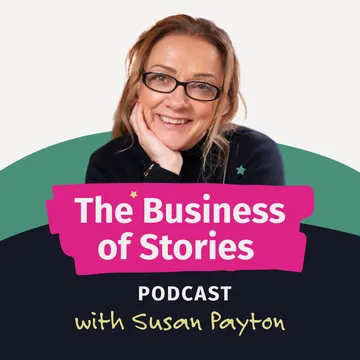
Episode 40 · Wednesday, 27 May 2026

Episode 40: How to get known for what you do

Generic messaging kills growth while specific niches create bestsellers as demonstrated by the contrasting business trajectories of Gary Das and Gary Belkin.

By The Business of Stories | 22m listen | 7 chapters
Episode 40: How to get known for what you do cover
The Business of Stories · No. 40

About this episode

Gary Das achieved Amazon bestseller status with The Self-Employed Mortgage Guide by narrowing his focus to a single tangible niche. This success contrasts sharply with the generic financial services messaging used by Gary Belkin, proving that specific positioning drives memorability and referrals. A narrow focus allows a brand to dominate a category rather than disappearing in a sea of generalists.

Effective marketing requires the repetition of a core message to cut through digital noise, much like a song chorus. Susan Paton explains that while business owners can perform various tasks, the public narrative must center on one specialty, such as LinkedIn strategy or scaling founders to seven figures. Intentional personal branding involves influencing audience perception through every interaction, as demonstrated by a secret anonymous survey that revealed perceptions ranging from approachable to rambling. Long-term trust is built through visibility on platforms like Apple and Spotify, where potential clients can binge content to vet expertise before converting.

Susan Paton challenges listeners to define their one thing in clear terms and communicate it immediately to their email lists. The conversation highlights the human element of business, emphasizing that showing the person behind the brand creates a foundation of safety for new followers. Gary Das remains the primary case study for how a specific lane creates a scalable authority platform.


CHAPTER 01 / 7 Discussion

Gary Belkin and Gary Das Business Growth Comparison

A comparison between two business owners, Gary Belkin and Gary Das, illustrates the impact of niche marketing on business growth. While Belkin struggled with generic messaging in financial services, Gary Das achieved significant success and reached number one on Amazon with "The Self-Employed Mortgage Guide" by focusing exclusively on mortgages for the self-employed. The contrast highlights how specific messaging makes a brand more memorable and referable.

gary belkin· gary das· financial services· mortgage consultancy· niche marketing

00:54 You're listening to The Business of Stories with Susan Paton, showing you how to share stories that do the selling in your business so you don't have too. Gary Belkin's business was two years old but his work and income wasn't consistent so he couldn't take on any staff because he didn't feel confident that there was enough work in the pipeline to justify it He was going to networking events but he wasn't getting many referrals and he suspected most of the people there wouldn't even remember what he did. He was writing posts on social media, but they weren't getting great engagement. How come? Because he didn't want a niche or focus on a specific idol client for fear of putting others off so he simply talked about offering financial services

01:52 But his messaging was generic and the topics he covered were broad. He didn't stand out, he wasn't memorable and he wasn't getting known for anything specific. Gary Das' business was also two years old but gaining real traction – and he was getting very well-known for what he did! His consultancy was busy and he was building a team of advisors His book, The Self-Employed Mortgage Guide had got to number one on Amazon and he was being invited to speak on stages at huge events full of his target market. How come? Because he was doing all the right things to get known for what he did! He showed up consistently and his messaging wasn't broad it was specific – he helped self employed people get a mortgage That's it

02:47 That's all he talked about. And his story and messaging spoke directly to his target market It was super easy for people to understand what he did, and who for – and tell others what he did! So news spread. Gary went on to build a very successful business But it all started with getting very clear and very intentional about what he wanted to get known for There's nothing more frustrating and disheartening and tragic than knowing that you're amazing at what you do. That you make a massive difference, that you can help people change their life or grow their business or reverse a health condition or save their marriage or whatever it is... Knowing that you can have THAT kind of impact but no one knows about it…or not enough people anyway!

03:47 And I say tragic because when that's the case, when not enough people know about you or people don't know what you do. You don't get to help the people that you could be helping and those people don't get to find you or hear about you and that's tragic! When you know what a difference you could be making And it's even more confusing and frustrating when you see other people getting known for what they do, getting invited onto panels being asked to speak at events doing guest expert sessions in other people's groups appearing on other peoples' podcasts. And getting tagged into posts all the time when somebody asks who do you know that can help me with this? The same names come up again and again because they've got known for what they do

CHAPTER 02 / 7 Discussion

Step 1, Deciding on a Specific and Tangible Niche

The first step in becoming well-known is deciding on a single, specific thing to be known for rather than offering broad or vague services. Effective niches are tangible, such as LinkedIn strategy or helping founders scale to seven figures, rather than abstract concepts like "inner peace." While a business owner can perform multiple tasks, the primary marketing message must remain focused on one core specialty to gain traction.

niche selection· brand identity· storytelling· business strategy· tangible outcomes

04:37 So, in this episode I'm going to talk to you about how to get known for what you do because there are definitely some very specific steps you can take to help you get there. Step 1 Decide what you want to be known for It sounds obvious but it's critical and I've lost count of the number of people that can't answer that question when i ask them What do you want to get known for? They're not sure or they give me something so vague or long-winded that never in a million years are they going to get known for that. Because it isn't even really a thing, So you need to know what is the thing that you want to get known for? And you don't get known if its too broad You don't get known if your trying to help everyone You dont' get known if you've got 17 different offers and messages out there

05:33 You don't get known if you're constantly changing direction, or changing your idle client. Or putting out content that just feels totally random and all over the place I talk in my book about putting a stake in the ground which is deciding what you want to get known for And it can change in the future but pick something now and go for it Pick one thing That doesn't mean you can only do one thing But you wanna get known for one thing I do lots of things, including helping people with their offers and pricing and sales strategy. And getting clear on their niche and ideal client. But i'm known for storytelling. Stories sit at the centre of everything that I do – and have done for the last 10 years! So decide what one thing you want to get known for? It's gotta be something specific… maybe it's LinkedIn

06:35 Or maybe your thing is helping people sleep. Or graphic design, or helping menopausal women fall in love with their body again? Or helping founders go from six figures to seven figures? Or helping people who've never spoken on stage before write and deliver a TEDx talk? I've talked about this before and i'm going to talk about it again! It's got to be tangible You're not going to get known for helping people find inner peace. You're not going to get known for helping people become the best version of themselves, it's got to be specific and it's gotta be tangible so decide what it is make sure it's clear make sure it's one thing make sure you know what it is and who it's for and go all in on it

CHAPTER 03 / 7 Discussion

Step 2, Importance of Repetition in Marketing Messaging

Repetition is identified as a critical tool for ensuring a message lands with a busy and distracted audience. Using the analogy of a song chorus, the discussion emphasizes that repeating core phrases and stories helps build memory and association. Business owners are encouraged to overcome the fear of being repetitive, as most audience members only see a small percentage of the content produced.

repetition· marketing messaging· brand recall· content strategy· audience engagement

07:25 Because getting known for what you do starts with you being really clear on what you do and who for. Step 2 is something I do a lot, but a lot of business owners try to avoid it which could be costing them dearly because it is repeating yourself! So many people are frightened of repetition but repetition is what will get you known for what you do You need to get comfortable with repeating yourself. You need to repeat yourself a lot! So many people fall into the trap of thinking that they've gotta keep creating things from scratch, finding new ways of talking about what they do, finding different ways of explaining it... That they've gotta mix things up We learn through repetition we learn by going over and over the same thing again and again right?

08:23 Think about when you learnt your spellings at school, or your times tables or a new language all learnt by repetition. You might have heard me talk in a previous episode about your messaging being like the chorus of a song and one of the reasons I use that analogy is because a chorus in a song is repeated a lot after every verse sometimes even repeated several times in a row That's why people remember it. That's why it sticks in your brain! We're trained to remember things that are repeated, so people will learn what you do if you keep repeating it with the same words, the same phrases and core message running through everything. If you listen to this podcast regularly, you'll have heard me say some things over and over again like sharing stories that do the selling for you

09:23 And actually doing the opposite, constantly reinventing your messaging and constantly changing things and mixing things up and talking about things in different ways can have the opposite effect. And stop you from getting known for what you do! I know that you think that you've got to keep putting different content out there but here's a thing to remember only seeing a tiny percentage of what you're putting out there So even though you feel like you're repeating yourself, you're the only person that's seeing it all. And I can tell you with almost complete certainty that you are not repeating yourself nearly as much as you think you are and even if you are people aren't seeing it all! AND... People need to hear something over and over again because they're busy, they're distracted, they're forgetful

10:21 But when you start to hear something over and over again, it starts to land. People start to remember! People start to connect your name with something specific but only if they've heard it lots So I look for ways to repeat myself so that I can get known for what I do. I look for opportunities to tell my story over and over again so that people remember me I repeat phrases like sharing stories that do the selling for you over and over again on this podcast in my content, in real life. And it works! Somebody said it back to me the other day... I love that you share stories that do the selling for you Think of any big name high profile person that you follow Do you think they keep trying to talk about what they do in a different way?

CHAPTER 04 / 7 Discussion

Step 3, Using Stories to Reinforce Expertise and Authority

Sharing stories that tie back to a central theme reinforces a professional's expertise and authority. Even when discussing diverse topics like pricing or mindset, the narrative should consistently return to the core specialty to strengthen brand positioning. This approach ensures that personal, business, and customer stories all serve to validate the primary message the owner wants to be known for.

storytelling· brand authority· personal anecdotes· expertise· business positioning

11:15 Or that they've only told their story once or twice? Of course not! I can guarantee they say the same things over and over again. The more consistently repetitive you are, the more your messaging will land, your stories will stick and people will think of YOU when they need help. Step 3 – Share stories that reinforce what you want to be known for Or at least think about how you can make your stories tie back to what you want to get known for. So I tell the most random, embarrassing, funny, cringy stories sometimes but I always know how to bring it back to be about storytelling and even this podcast i've talked about some things that you wouldn't necessarily associate with storytelling right like your pricing like mindset like what to do when your offer doesn't sell

12:16 But I always bring it back to storytelling, because storytelling sits at the heart of everything i do. It's what I've got known for! It's what I want to continue getting known for so I talk about it a lot and I bring everything back to it So think about how you can make your stories relevant to what you do And think about the stories that are going to show your expertise, your why, your passion. Stories that reinforce your message, your authority, your value, your insights. Stories that will strengthen your positioning not dilute it or confuse whether you're sharing customer stories personal stories business stories they can all come back to that thing that you want to get known for

CHAPTER 05 / 7 Discussion

Step 4, Intentional Personal Branding and Audience Perception

Personal branding is described as an intentional effort to influence the narrative others tell about a business owner based on every interaction. An anecdote regarding a secret anonymous survey reveals how audience perceptions can range from "approachable" to "rambling," highlighting the importance of being mindful of one's presence. Building a brand involves showing the person behind the business to foster human-to-human trust and connection.

personal brand· audience feedback· storytelling mastery· customer experience· brand trust

13:08 Step four is to be intentional about your personal brand. And I know that's a term that some people love and some people hate, but the thing is you've got one anyway whether you realise it or not. People are already seeing you a certain way they're already making assumptions forming an opinion deciding if you're someone they want to follow or engage with or work with All based on how you're showing up. Everything you do, every interaction you have How you show up? How people feel when they come across you and your business What people say about you to others It's all part of your story and your personal brand Your personal brand isn't a statement or some carefully written post it's a living breathing thing And it shows up in everything you do

14:10 So being intentional about building a personal brand is just you thinking about and consciously influencing the narrative that's being told by being mindful of what you put out, what you share, how you share it. You're telling a story and building a personal brand all the time! And I'm not just talking about what you post on social media I'm talking about how people experience you, what engaging with you is like online and offline and what happens after people buy. No matter what you say in your messaging & marketing the story your customers will share about you with others is the one they experience first hand Your personal brand is created in every interaction with every customer so think about everything you do

15:08 I would say from the day i went into my Facebook group and shared my story back in 2015, from that day onwards I've been building my personal brand. Not in a manipulative way but in an intentional way! I think about the things that are happening for me and going on in my life and my business that I know my ideal clients will connect with and resonate with. I think about how I'm showing up and coming across I put myself in my ideal client's shoes and think about what they want and need from me. And, I aim to delight! I love giving people extra awesome stuff that they weren't expecting

15:49 I constantly get feedback from people in Storytelling Mastery saying they've never been in a group where they have so much access and support from the person whose group it is, because they're used to joining programs and then being left to their own devices while the person they joined to learn from goes off to sell something else. And here's the thing that experience that they're delighted with? They tell other people word spreads And it helps me get known for what I do. If you're a coach or consultant, or therapist or trainer... if you work directly with your clients people are buying into YOU they're buying the opportunity to be coached by you or work with you human-to-human and to do that they need to know who YOU are

16:45 So your personal brand is not about making everything about you. It's about helping people understand who you are, what you stand for and that they can trust you And here's an interesting thing you can do to help you see how other people see you Send out a secret survey to your list I did it a couple of years ago and actually did it again this morning I asked people what they thought of me and my brand, completely anonymously. And I got some really interesting replies which ranged from very real and relatable and down to earth and approachable... ...to no-nonsense and archaic which i was very confused about! One person said that I ramble

17:32 And that's all fine. Building a brand isn't about changing who you are, but it is about showing people who you are – the person behind the business and the website and messaging – and being intentional about how you come across, knowing what you want your brand to stand for, understanding that those posts you're writing, the perspective & insights you're sharing The conversations you're having, the stories you're telling. The way you show up in groups and in chats and in person at events it's all forming your personal brand And that can help you get known for what you do. Step 5 is be visible Be consistent It's no good saying you want to get known for something and then barely ever showing up

CHAPTER 06 / 7 Discussion

Step 5, Visibility and Consistency for Long-Term Trust

Establishing trust requires showing up consistently over a long period, sometimes years, before a lead converts into a customer. Providing a platform where potential clients can "binge" content, such as a podcast, YouTube channel, or blog, allows them to quickly vet the provider's expertise. Consistency in a specific "lane" for years creates a foundation of safety for new followers who are looking for reliable experts.

visibility· consistency· trust building· content bingeing· long-term marketing

18:27 You have to keep showing up long enough for people to start to associate you with that thing you want to get known for. Familiarization is built over time, trust is absolutely built over time Some people will need to be in your world for a long time before they buy I've literally had people on my email list buy from me after four or five years And while I do have new people come into my world and buy very quickly, the thing is part of the reason they feel safe to do that is because they can quickly see that I've been around for a while. Right? That I'm really consistent. That I show up a lot. But I've been talking about my thing for a long time

19:15 I've written a book, I've got a podcast. So that immediately ticks that trust box because they can see this isn't something I've just been doing for a few days. This is something I've been doing for over a decade and honestly if you went back through my content and my social media and my emails for the last 10 years you'd see that iIve been very very consistent. I've showed up regularly, I'm absolutely stuck in my lane And by doing so I've built something on very strong foundations. That's not to say you have to have been doing your thing for 10 years, but if somebody is checking you out and wants to understand what you do, wants to see if you're the right person for them and they go to your social media...and the last time you posted was six weeks ago…they're not going to immediately feel in safe hands!

20:08 So, one of the best ways to be more visible and show up consistently in a way that gets you known for what you do is having somewhere that people can go and binge your content. It might be a podcast or YouTube channel if you like videos, or blog if you like writing But somewhere people can go deep, get lost in your world for an hour or two. Really get to know you very quickly and see if you are someone that can help them achieve what they want to achieve So getting known for what you do isn't about having to be in people's faces You can be an introvert and do this! You just need to be clear what it is. You need to be consistent. You need to think about how you're showing up

CHAPTER 07 / 7 Discussion

Action Steps for Defining and Communicating a Niche

The episode concludes with a specific action step for listeners to define what they want to be known for in clear, tangible terms. Once this niche is identified, business owners are instructed to communicate it immediately through social media posts and emails to their list. Susan Paton encourages listeners to rate and review the podcast on platforms like Apple and Spotify.

action plan· niche definition· email marketing· social media· brand clarity

20:56 It's about clarity. It's about repetition, it's about being intentional because all of those things will help people trust you feel confident that you can help them feel safe investing in you and remember you when someone says do you know anyone who could help me with this? And that's what will get you known for what you do So, as always before I go let me give you a quick action step that you can go away and do. Here's your action step for today If you can't tell me in a few words what you want to get known for then that's your action step Decide what you want to get known for make sure it's one thing make sure its clear Make sure its tangible if you do know what you want to get known for then

21:55 Do a post about it. Write an email to your list about it. Talk about it! You might know what you want to get known for, but does everyone else? So that is your action step for today Get really clear on what you want to get known for and start talking about it lots And I'll see you next time For more stories that do the selling for you so you don't have to Thank you so much for being here. I love that we get to do this together! Would you do me a huge favour and please rate, review and follow this podcast in Apple Spotify or wherever you listen to your podcasts? And i'll see you next time for more honest conversations meaningful connections and of course stories