

Thursday, 8 April 2021

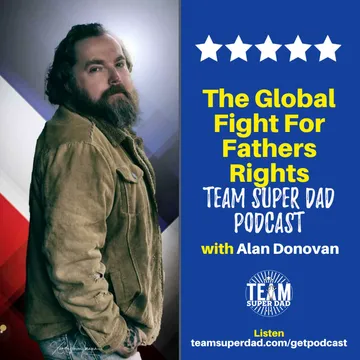
The Global Fight For Fathers Rights with Alan Donovan

A Montana-based advocate reveals the systemic legal barriers facing fathers and how he successfully navigated the family court system to secure full custody of his son.

Fathers Lives MatterFamily Court Reform50-50 CustodyChild Support IncentivesMontana Big SkyParental RightsCo-parenting
By The Jonnie Jensen Show | 57m listen | 15 chapters
The Global Fight For Fathers Rights with Alan Donovan cover

About this episode

Alan Donovan and the Fathers Lives Matter movement are challenging the systemic exclusion of men from their children's lives within the global family court system. Donovan joins the program from Montana to detail his transition from a 2015 custody battle to securing full custody of his son, Xander, through self-representation. He argues that the United States legal framework, specifically the Social Security Administration Act, creates financial incentives for courts to prioritize child support collection over 50-50 parenting time.

Secondary stories include the failure of a 50-50 custody bill in Florida following a gubernatorial veto and the rise of stepmother-led advocacy groups on Instagram. Donovan highlights the Father's Truth podcast and his upcoming documentary project aimed at streaming platforms like Netflix. The discussion touches on international barriers to fatherhood in the UK and Philippines, the psychological impact of generational silence in families from Chicago to London, and the influence of filmmaker Nick Askew on minimalist storytelling. Donovan also explains how his photography background led to the creation of the Fathers Lives Matter logo based on a handprint in the sand.

Distinctive moments include Donovan describing his weekend hobby of hunting for 250 pounds of raw opals along Amtrak tracks near Glacier Park. Host Johnny Jensen, a qualified firewalk instructor, reflects on his English and Irish roots while discussing the importance of open-heart parenting. The episode concludes with a look at Donovan’s son’s photograph being featured by the Montana State Board of Tourism in Chicago’s Union Station.


CHAPTER 01 / 15 Discussion

Team Superdad Community and Hero Academy Introduction

The Team Superdad podcast introduces its mission as a global community helping busy fathers improve their fitness, finance, focus, family, and fun. The host highlights the Hero Academy, a monthly success group designed to help dads move from feeling stuck to creating their best lives. This episode features Alan Donovan, founder of Fathers Lives Matter, to discuss parental rights and the global fight for children to see both parents.

team superdad· hero academy· fatherhood· coaching· community

00:00 In this episode of the Team Superdad podcast, I talk the global fight for our children's rights to see both parents with founder of Fathers Lives Matters, Alan Donovan, role theme. Welcome to Team Super Dad. Real dads creating their best lives ever. More time, more money, more fun. You are not alone. You're on Team Super Dad. Hey, friends, family, Team Superdad members all around the world. Welcome. Check this out. I'm like, the camera is panned out, right?

00:39 So never before have you seen the whole office. Although it is quite cool because you can see the Superman poster there. I quite like it. Maybe it feels a bit decadent. It feels a bit like welcome to my universe. But there's a good reason for this massive room. And that is because the guest that I've got on tonight's live Team Superdad podcast, I was looking like massive in the camera compared to him. So I fiddled about with it. And we're going to bring him in in just a second. Team Superdad is a community for dads, for busy dads all around the world.

01:18 We are creating the lives that we want rather than the lives we feel stuck with. And that comes through working on our fitness, our finance, our focus, our family, and our fun, really creating our best life ever because life's tough. And quite frankly, without good support, without tips and tricks, without people to have fun with, then it gets tough. And as our world shrinks, so does our experience of life. And that was sadly something that I went through. And my vision coming out of it was Team Superdad. Like, what if we could put all the skills, the knowledge, the coaches, the courses, the people I'd known?

01:58 What if we could put them all into one place and help dads to really turbocharge their life? And so that's what we've created. Team Superdad, you can come and find us over at teamsuperdad.com and the Hero Academy, which is the monthly success group. Get on board. Now then, tonight's guest, it's a real pleasure to have Father's Lives Matters on, represented by their founder, Alan Donovan. And rather than talk too much about how we first met, I'm going to bring Alan in and we can talk about it together because he's sat there right now. Boom. Alan, good evening to you, sir.

CHAPTER 02 / 15 Discussion

Alan Donovan and the Montana Big Sky Country Experience

Alan Donovan joins the program from Montana, describing the state's geography in the Pacific Northwest and its reputation as Big Sky Country. The conversation touches on the natural beauty of the region, including wildlife like bears and the visibility of stars, though Donovan notes increasing light pollution. Donovan's son, Xander, makes a brief appearance, leading to a discussion about the ages of the hosts' children and the importance of shared family experiences.

alan donovan· montana· big sky country· stargazing· light pollution

02:41 Welcome. Good to have you here. Hey, thank you. Thanks for having me on. And I'm glad we are finally able to make this connection. We kind of been bouncing around for the last, you know, couple years trying to make it happen. And it's happening. I'm laughing, right? Because the awkwardness and the embarrassment is slightly on me because we were chatting on Instagram, which for anyone who's looking to really connect with the Father's Lives Matters, Alan is blowing up on Instagram with his message and his community. So catch all his live stream over there. We'll talk more about all of those things. But yeah, so as someone who's worked in digital marketing for 20 years and had his own social media training courses and everything,

03:26 I'm rubbish at managing my Instagram inbox. I have to remind myself where the bloody thing is. And then, oops, there's Alan's message saying, hey, let's connect. Although, in my fairness, I did send you a couple of diary links as well back in the day. Well, and also, I got to say, you know, now that I'm thinking about it and going back, we were actually scheduled to do it. And I did not realize that you were over across the pond. And so I totally had my times backwards. And I was like, seven o'clock in the morning? What? Oh, yeah, we did, didn't we? We totally did. Yeah. Yeah, because you messaged me.

04:07 Yeah, you messaged me and it was like seven in the morning. I'm like, I'm at work. Aren't we supposed to be doing this tonight? So some of that blame goes on me. Good. Well, we're still friends out of it all. Yeah. So whereabouts in the States are you, Alan? I am in Montana. So for our non-American members of the audience, where the hell is Montana? Okay. So Montana is kind of sort of in the Pacific Northwest. So you've got Washington right here. And then over here is Idaho. And then here's Montana. Okay. And what is Montana famous for? What can we expect to find in Montana?

04:47 Well, lots of bears. Gold, silver, copper. Basically, Montana's nickname is, well, it has a lot of nicknames, but one of the most well-known ones is Big. Big Sky Country. Because it's, you know, it's just huge. Yeah, it's big skies everywhere you go. Oh, wow. Do you know what? My kids and I, we were asking about that because we were on vacation. And actually, my kids were asking me about it, but also I've been on date. We got another guest. Yes, brilliant. What's your name, buddy? Vander with an X. Oh, with an X, Xander. Okay, love that. Love that. Well, hello to you over

05:29 in Montana. And we're over here in the UK. So it's great to have you on board. Thank you. Yeah, my kids were asking. How old are you? 10. Oh, okay. My boy Jago, he's just turned 11 this week. And my daughter, Rosie, she's just turned nine. Actually, today it's her birthday today. Well, happy birthday. Oh, yeah. So we were on vacation and we were looking at the stars and they were asking about the stars. And then I was on a date a couple of weeks ago and we were laying on the beach together and we were looking at the stars and trying to point things out. So not with a great deal of success and certainly not the kind of middle of nowhere, no light pollution, big black sky, bright shiny stars type experience, which I think is what you're talking about.

06:13 You know, we used to have that, but the light pollution even here is getting pretty bad. So, you know, another 10, 15 years, you know, we're probably going to be on par with each other for light pollution, sadly. Well, that's another whole subject. Do you know what? Let's hope we're here in 10 to 15 years. Blindy. Well, Alan, you know, our father, our paths cross, as we can see by the, and I'll take this banner off in a minute, our paths crossed as part of what was my journey. My wife and I separated in 2015.

CHAPTER 03 / 15 Discussion

Fathers Lives Matter Origin and Self-Representation in Court

Alan Donovan recounts his 2015 custody battle, which began with a poor experience with a lawyer and losing initial custody of his son. After being offered only one week of visitation per year, Donovan fired his attorney and chose to represent himself in court despite his own father's skepticism. He successfully secured 50-50 custody and eventually full custody, leading him to establish the Fathers Lives Matter Instagram page to support other men facing similar legal challenges.

fathers lives matter· custody dispute· self-representation· family court· legal advice

06:53 And oh, in fact, this two days' time, the fifth, will be five years since that fateful night. But despite my desires to simply get along and share the kids, it was not suggested that I was going to be able to do that. And that led us to call and a fight for me to share access to my children. And in that pursuit of information, because I'm a bit of a fixer, right? I want to know what's going on. I want to know how to get myself out of this situation. Some might say to win, you know, I'm not altogether down with the idea of winning 50% of my children's time.

07:39 Like, I think that sounds when people celebrate when their situation has gone well or turned out right. I don't mean to, I don't get on my soapbox about it, but I'm like, there's no winners here, you know, you know, like, if it's worked out, then great, you know, like over time, then hopefully we're all going to win, but it's not, it's not a them versus us. But in that search, I came across yourself on Instagram. Would it have been, would I be right in saying that was kind of early days for you in and great. Yeah. So tell me about, and basically, just before we get started on that, thank you because, you know, to feel some connection with other people in that same boat, to feel like not only was I not alone, but it was a worldwide thing.

08:25 Oh my gosh, that blew my mind. But we can talk all about all, we can talk about all those elements. But tell us a little bit about your work and where it started. So basically, you know, my situation was a lot like yours. I found myself going through a custody dispute. You know, I did what most dads do. You know, I went out and basically hired the first lawyer that I could find, not really understanding that, you know, I should probably vet the lawyer and, you know, kind of get an idea of who I'm working with rather than just grabbing the first one I could.

09:01 And I did that. And it turned out to be a huge mistake. We got into court and, you know, my lawyer said maybe three or four words. And I got my butt kicked and I got out of court. You know, I had just lost basically custody of my son. He was going back with his mom. And I got home that night and I started looking for help. You know, I started thinking, you know, I'll jump online and see if there's help out there. And, you know, what I found, I found that for dads, there's pretty much nothing out there

09:46 for help. Now, had I been a mother, and this is in no slight to mothers at all, but just, you know. the truth of the matter is, had I been a mother, there would have been help for me in every area I could possibly think of: rental help, you know, cell phone bill help, everything. I mean, there was advocate that were, you know, helping mothers for free. And as a dad, I couldn't find it anything.

10:24 And my first thought was, wow, you know, I had just found Instagram. And so I created this page called Fathers Lives Matter. And, you know, when I first created it, I really didn't have an idea of what I was going to do with it. It was just, I created it. I left it there for a couple days. And then I thought, you know, you know what? I'm going to use this to try and foster support for what I'm going through. And so then I just started posting, you know, the stuff that I was going through. You know, when I first got to go down and see my son, I posted about that. And that's what I did. And

11:10 I went down to court six months later to where my son was at after my initial court visit or my quarter parents up here representing myself because I had fired my lawyer and I, you know, took the monumentally huge task of representing myself. And he, nobody gave me the chance to win. Even my own dad, before I left to go down there, he called me up and said, hey, you know, son, I want you to come over. You know, I want to talk to you. I said, okay. And I came over and we sat down. And he said, you know, I just want you to know that you're going to lose.

11:51 And I said, what do you mean? He goes, you're going to lose. You're going down for court. You're going to lose. You need to just accept what they're going to give you. And at that point, they were only offering a week out of an entire year. So I would have been able to see my son a week in the summer out of that entire year. And that's all they were offering. And, you know, it hurts that my dad, here, my dad, my own flesh and blood is telling me that I'm going to lose. And I said, well, you know, whatever. And I went down there and I walked away winning. And that gave me 50-50 custody. And then about a year and a half later, I was back in court again.

12:32 And I walked out, walked out of court 20 minutes later with custody of my son. I had represented myself again. And, you know, I've got this Instagram page where I think at the time I had maybe 1500 followers, something like that. And I had this decision to make: do I close this down and get on with my life? Or do I take all these experiences and all this wisdom that I've accumulated and do I start helping other fathers? And ultimately, I made the decision to start working with other fathers. And to this point, we're now three years removed from that. You know, and I've worked with thousands of fathers around the world, helping them with their situations. So it's been pretty dang incredible, I got to say.

CHAPTER 04 / 15 Discussion

Global Challenges of Fatherhood and Custody Systems

The discussion addresses the worldwide nature of custody disputes, noting that fathers in countries ranging from the UK to the Philippines face similar barriers to parenting. While some regions like Scandinavia and Italy have seen positive law changes, many systems still default to limited access for fathers. The hosts clarify that their advocacy focuses on dedicated fathers who want to be involved, rather than "deadbeat" parents or those with histories of abuse.

custody rights· deadbeat dads· scandinavia· united kingdom· family law

13:19 That's awesome. There's quite a lag, Alan. So if you're worried about me sat here looking at you, there's quite a lag. So we lose connection on it. No, there's just a lag. So I heard all of it. It just was, it was just, it might look a bit weird. No, I can still hear you. We are like 5,000. I can still hear you. I'm going to see if I can private chat. I can still hear you. Okay. Yeah, Alan. I can still hear you. We're just going to carry on. Yeah. So that's how it played out. Oh, looks like we're

14:08 okay. Yeah. Well, all right. Is it better now? Yeah, well, I can see you and I can see you and I can hear you. I think there is a little bit of some sort of lag between the two of us. Can you hear me now? Yep, I can hear you now. Oh, it's funny. There's a big lag between the voice and the picture, which may cause us problems. We might have to work out how we can fix that. There we go. Yeah. Okay. That seems a little bit better. It seems real time now. Yes, almost, almost. Yeah. So let's carry on and see how we get along. And so, so, and again, what? what year was that when all that was happening with you and the custody system?

14:53 That was 2015, is when that all happened. Okay, great. So, exactly at the point you were at was where I was getting started and was where I found you. Yeah. And, you know, people who are in this situation, it is a worldwide thing, pretty much. From Israel to Australia, all across Europe, America, dads are fighting for that. I've talked to fathers in the Philippines, in Vietnam, you know, all these, you know, what we would consider third world countries, undeveloped nations, however you want to look at it.

15:35 And they're dealing with it there too. So it is, it's truly a worldwide issue. And it's important to say, you know, because when this subject comes up, quite often people say, oh, yeah, what about the dads that don't care? What about the dads that are absent? What about the dad that hits the wife or the kid or whatever? And that it's not to say that that subject isn't real or present or not okay. It's just not this subject. Yeah, exactly. You know, the way I look at it when I get those questions, because I do get those questions, you know, a lot of times when I post something on Instagram, I'll have a mother come in and say, well, you know, what about the dad that is just, you know, the deadbeat dad, the actual real deadbeat dad?

16:24 And, you know, my response is always, yeah, there's going to be dads out there that are like that. You know, there's going to be mothers out there that are like that. But that's not what we're talking about. We're talking about these dads that want to be a part of their children's lives, these dads that are fighting to be a part of their children's lives, but they're not allowed. Whether it's, you know, the mother not allowing them, the court system, you know, or a combination of both of them. It happens. Yeah. And the weird thing is, in most countries, this is the case. And just on a positive note, Scandinavia, some recent law changes in Italy. There are countries, I understand Australia has improved a little bit over the last couple of years.

17:08 And certainly from my experiences in the UK, the court was more favorable to my situation and interested to hear from me as the dad. And I know that other dads are increasingly hearing and experiencing the same thing in courts. So it's good that that's happening. But I know in the States, it's really tough with payments to mums and access being limited in the most stringent of ways. I mean, to offer you one week a year, your boy could have spent more time with a chaperone at summer camp. Yeah, exactly. And they were perfectly okay with it.

17:52 To them, that was an acceptable thing one week out of the year. And, you know, at that time, I lived 2,000 miles from him. So traveling down there is going to take one day. Traveling back is going to take one day. So realistically, it would have been three days that I would have had with him. Yeah. And it's just, it's not acceptable at all. No, not at all. And even, you know, taking it to the other extreme, because out of my first court case, I ended up with about 60-40. So someone might say, oh, well, what does that look like? Okay, well, it looks like 12 days out of 14.

18:32 Okay. But then when you start to add it up, all of a sudden, that's 30, 32 days over a year. So that's a month. Okay, so that's a month less. And then anytime that something needs to be arranged, like, oh, could you just, could I just have them an extra night? I'm like, no. Or could they come to a sleepover? Or could they come to a Girl Scout thing, girl guide thing? You're just like, well, no, like I'm not going to let it sneak up to 40 days or something like that. And the amount of tension and upset and, oh my gosh, there's so much pain that comes from this.

CHAPTER 05 / 15 Discussion

Co-Parenting Success and Honoring the Child's Perspective

Alan Donovan describes his transition from a high-conflict separation to a positive co-parenting relationship where he views his ex-wife as a close friend. He emphasizes the importance of looking at the situation through the child's eyes and listening to their feelings about both parents. By being open and honest with his son, Xander, Donovan aims to prevent the psychological damage often caused when parents treat each other as enemies.

co-parenting· emotional well-being· child psychology· communication· divorce

19:12 What was it like? And say as much as this as you feel appropriate or comfortable about, but has your son shared much about what it's meant to him to be able to spend that increased amount of time with you? You know, we talk about it. Obviously, he admits as his mom, you know, and that's, you know, I understand that. And, you know, he actually got to see his mom for the first time in almost three years this last summer. She was finally. able to make it up here. And, you know, he understands the situation and he understands, you know, the sacrifices that I had to go through, you know, to get to this point in life.

19:58 And, you know, he loves us both. And I encourage that. You know, I encourage that relationship with his mom. It was never a thing where I didn't want his mom to be a part of his life. You know, it was never that. And thankfully, we've been able to get past, you know, the aggression and the negativity we had for each other, you know, to, you know, effectively co-parent, basically. Yeah. Where, you know, I view her as a good friend, close friend now, rather than viewing her as, say, an enemy or something like that. Yeah. But, you know, Xander, he understands what's going on because, you know, I let him know what's going on.

20:40 You know, for me, that's, that is a huge thing because I was a product of divorce and a really nasty custody battle when I was his age. And the difference between him and I is I didn't know what was going on. You know, I didn't have, you know, a father that, you know, told me what was going on. They sat down and had that conversation with me. All as I knew is I was being yanked here, being yanked there, everywhere. And so I make it a point to, you know, keep Xander aware of the situation and what's going on.

21:16 You know, and to me, that's only fair that he has that understanding and he's able to grasp what has happened, what has transpired to put us into this position. Yeah. Yeah. And how what again, not necessarily the personal details, but in terms of getting to the stage where you have quite a positive relationship, a positive co-parenting relationship with your ex, what have been, what have some of the breakthroughs been to create that that someone might try themselves? Well, you know, I think the biggest breakthrough for me was taking the time to look through his eyes and see how he sees everything and, you know, to honestly take his opinion, you know, and listen to it, because I don't think that's something that we do enough with our kids.

22:11 You know, we look at, you know, especially things like this, because, you know, it is a very emotional topic. You know, we think, well, you know, we're going to keep our kids out of that. We're going to keep them out of the loop. And in certain instances, yeah, I agree. But if it's not, you know, if there's not a lot of complexity to it, you know, I'm all for sitting down and having a conversation with your children and letting them know what's going on. And then honestly listening to what they have to say and taking that to heart. And I think that was the biggest breakthrough for me: being able to listen to what he had to say, listen to how he felt about his mom and how he misses her and how he loves her.

22:52 And knowing that, okay, going forward, I have to do this, this, and this, because it's going to be very detrimental to his well-being. And I've talked to, you know, I've talked to a lot of parents that didn't take that approach, that, you know, kind of made their ex their personal enemy. And I can tell you this, it always rubs off on the kids. And it's never in a good way. It's in a negative way. And it screws the kids up more than if they had just been straight. And so that's kind of the approach that I take with it is he always knows what's going on. He watches me do these podcasts. He listens to me talk to these fathers. He hears the advice that I give them because I want him to know what's going on and have, you know, full knowledge of everything, basically.

23:38 Yeah. I think I could summarize that in: you want to honor his feelings, his love for his mom. Exactly. Yeah. Yeah. And for most people, I would hope that that breaks through like hot water on ice, like our windshield in the winter when we spray it. Like whatever the hardness is towards your ex, I would hope that that putting yourself in the eyes of your child who would most likely say, I'd just like you guys to get on.

24:15 Yeah. Because then their life is easier. Oh, absolutely. You know, and one of the other things is, you know, I look at his life as an investment. You know, I am invested in his life to make him the best person that he can be. So later on down the line, when he becomes a parent, you know, he's got that moral foundation that. I helped to build and his mom helped build. Yeah, so we both, we both look at that, look at it as an investment in his future. Yeah, you're literally the blueprint for his relationship with his children. And if I take my experience of that, my dad made some shocking mistakes.

CHAPTER 06 / 15 Discussion

Generational Parenting Shifts and Open Communication

The hosts compare their modern parenting styles to the more closed-off communication of previous generations. One host reflects on his upbringing in a family with English and Irish roots in Chicago, where certain topics like a mother's death were never discussed. They agree that maintaining an open-heart policy and being transparent with children creates a foundation for the child to feel safe sharing their own struggles in the future.

generational trauma· parenting styles· chicago· family values· transparency

25:00 But the good thing is, I can frame what I do with that in mind whilst taking all the good bits and saying, I want to keep that and I'm going to better that. And it's cool when I chat to American people. You know, I've got a lot of family in Chicago and a great deal of my parenting style comes from them, which is actually a very Irish background. My family in Chicago are, they come from our side, which is English, and then the Irish side. So as well as having about 60 odd cousins in Chicago, there's a very strong family values.

25:41 But then the communication and the sport thing, I don't think generationally those guys got spoken to by their parents as openly as what perhaps you're talking to Xander and I do with my kids. But I know the amount of fun that I had with them when I was growing up in their house and the amount of communication that happened. Just like you're saying, I never knew from my dad why I was getting told off. I never, even when stuff went down, I never knew like, okay, well, your mum's died. Okay, right. Anyone going to tell me how or why or why? No, she's dead and it's sad, but we're going to be okay.

26:25 And by the way, we're never going to talk about it again. Never going to talk about it ever again. You know, and the other part of that, the other way that I look at it is, you know, by me being open and honest with him on pretty much all levels, you know, I hope that gives him the ability that when he needs to talk about something, he knows that he can come to me in full disclosure and not be worried about, you know, what he has to say because I'm going to be open and I'm going to listen to him. You know, and I'm not just brushing off to the side or anything like that. I think that's, you know, just as important

27:08 as well. Yeah. Open heart, open arms, open ears. It's all, it's all about that, that relationship and the communication. Yeah. Wow, you, you know, it's, you know what, in some ways, we're talking about this like it's really normal. And I know that it's not, you know, I know that not every parent has that skill set. And I'm definitely not saying I'm awesome. You know, and I know that you're not saying you've got it all nailed either. But these kind of conversations, I've learned from my experiences as a young person, being a child, I've learned from my experience as an adult reading

CHAPTER 07 / 15 Discussion

Father's Truth Podcast and Future Media Projects

Alan Donovan discusses the expansion of his work through The Father's Truth podcast and upcoming book projects. He reveals plans to develop a documentary series with the goal of pitching it to major streaming platforms like Netflix to give fathers a larger voice. The host suggests a connection with Nick Askew of Soul Biographies, a filmmaker known for intense, minimalist interview styles that capture raw human experiences.

the father's truth· netflix· documentary· nick askew· soul biographies

27:50 from my marriage breakdown, from seeing other parents, from looking at my children growing up and thinking, how do I want them to see this situation? So it's all a process of an evil evolution, basically. I guess on the subject of evolution, what's next for the Father's Lives Matters and the sort of the impact that you want to make in the world? Well, so last winter, I started a podcast and it's The Father's Truth. And when I started that, you know, my whole goal was to give fathers a voice everywhere. And, you know, that has really taken off. And, you know, as far as what I'm looking at over the next year,

28:35 I do have a book in the works, two books actually. And then I'm also looking at turning The Father's Truth into more of a documentary kind of series. You know, something along the lines that can be pitched to Netflix. So I've got my iron there and trying to get that all worked out. But other than that, just helping fathers, man. That's that's my passion. How close are you to Minneapolis? I am, well, yeah, we're about 500 miles from Minneapolis. Depending on which way you travel. Yeah, totally. There's a guy I interviewed last week, right, called Nick Askew. Nick Askew, he does this thing called soul biographies.

29:20 Search it up. I'll send you the link afterwards, right? Soul biographies. It's amazing. Absolutely amazing. It's all black and white. And it's quite intense for the person who's being interviewed because they're not actually being interviewed. He creates the setup and he just leaves them to talk. And it starts quite uncomfortable, it seems, but then people just open up in a kind of naked type way. So where he was explaining where he was in the States, I kind of had a feeling he's somewhere, somewhere heading towards heading towards you, basically.

30:05 But no, he could be quite good. Yeah, could be a good guy to connect with. And so, I mean, okay, in terms of like the global reach, what's been some of the cool stuff that's happened as a result of creating Father's Lives Matters? So obviously, being able to talk to you, that's awesome. You're over there in the UK. I've met so many cool guys that I call friends and brothers that are in different countries, Sweden, the UK, Italy, all these places where had I never done this, had I never stepped out of my comfort bubble and created this thing, I would have never have known any of you guys.

CHAPTER 09 / 15 Discussion

Political Barriers to 50-50 Custody Legislation

The conversation shifts to the slow pace of legal reform in the United States, citing a 50-50 custody bill in Florida that was vetoed by the governor. Donovan argues that fathers often struggle to take collective action because they fear jeopardizing the limited visitation time they currently have. They discuss the failure of various petitions and public demonstrations, such as a veteran's 1,000-mile walk, to gain long-term mainstream media attention or political traction.

florida· custody bill· lobbying· white house· activism

33:41 is there a shift? Is things getting better? And also maybe give some context to that as well, because what are we fighting for? So, you know, and it's hard to say from a worldwide scale. It's going to be a long battle from what I see from talking to the people I know in other parts of the world where dads have no rights. You know, it's hard for that. But in the United States, it's slowly shifting. You know, it's very slow in how it's shifting because over here, the courts are supposed to judge in what's in the best interest of the child.

34:20 But unfortunately, most of the judges still use their own opinion and automatically, most of the time, their own opinion goes to the mom. been a lot of cases that have come through Florida for one as a prime example. Year before last, they were trying to pass a 50-50 custody bill straight out of the gate, and it made it as far as the governor's desk, and the governor vetoed it. I don't know why, but it's very slow. You know, I don't think we're ever really going to get a shift in things until we can efficiently get all the dads together.

34:58 And, you know, we have to be able to do something big because I'll tell you, one of the biggest things that I've noticed in doing this is fathers are awesome about talking about what's wrong and talking about what needs to be fixed. But overall, we suck when it comes to taking action on that. And, you know, I don't mean that negatively because I know the reasons why. You know, it's very easy to be able to, you know, like I'm talking to you right now about this and talking about all the things that need to be done to change something. But when push comes to shove and you're standing up there, and by doing this, you could possibly be putting your visitation at risk. A lot of get a lot of dads get scared because they don't want to lose what little bit of time that they get with their kids.

35:43 Yeah. It's sad. And I know as well. It's that the groups instead of coming together, we're fragmented by our circumstances. So you've got those guys there who don't want to jeopardize the little bit they've got. And you've got other dads who are so burnt out by the process they've just given up. And then you've got someone like myself who has now got 50-50 and is so relieved and so exhausted by what it took to get that the idea that I'm going to rally and create a parade in London or, you know, it's,

36:23 I just want to get on with my life. And that's the problem is that there needs to be something where it keeps being pushed through. And here in the UK, if you, there's, you can create a petition, and if more than 150,000 people sign it, it has to get read out in the houses of parliament, which is our British political house. And basically, the same petition goes round and round, but it's not the same one petition. It's the same subject. So it ends up getting five, 600, maybe a thousand, maybe 2,000 signatures. If you could put them all together, you'd probably easily have the 150,000. But because it's so fragmented, it never gets enough.

37:06 And we were talking about it a couple of months ago. Someone's like, oh, we need to do a march. We need to. It's like, do you know what? We don't need a march. We need a parade. We need like, you know, like gay pride is, you know, it's like when it's gay pride, everyone parties. Well, who doesn't want to party? Like, if you're going to try and make a statement, you know, you need to be like, actually, dads, without trying to be better than mums or whatever, we just enjoy hanging out with our kids. We want to make stuff. We want to, we want to skateboard. We want to ride our bikes. We want to do painting or whatever. So the idea is that, you know, actually, we need to have a world dad's day where the celebration is of dads, but the underlying message is, you know, equality for all parents.

37:53 Yeah, no, I absolutely agree. And like what you were saying with the signatures, you know, and everything being read in parliament, we have something similar here where if you get enough signatures, I think it's 100,000, then the White House has to officially take notice of this. And they've tried it numerous times. You know, it'll get maybe 25, 30,000 signatures. You know, there was a guy a couple of years ago, he was a veteran, a Navy veteran. He walked, I think it was like a thousand miles. And he was, you know, trying to bring light to the situation. And it was cool for about a month, you know, about the time that it took him to walk.

38:32 And then it just kind of disappeared from the news. And it's been that way constantly over here. I know, you know, I've reached out to different news organizations on the behalf of fathers that I've been working with, and they won't touch it with a 10-foot pole. They just will not touch it. And it's sad. It's truly sad because it shouldn't be this way. You know, dads shouldn't have to be fighting to be a part of their children's lives. And their children shouldn't have to cry, you know, for not having their dad in their life. Yeah. Yeah, it's a bizarre one. I think politically, people don't want to jeopardize the woman vote.

CHAPTER 10 / 15 Discussion

Social Stigma and the Evolution of Parental Equality

The hosts explore why father's rights activism lacks the social momentum of movements like feminism or the Me Too movement. They compare the current social acceptance of fatherless homes to past norms like smoking on airplanes, suggesting that society needs to reach a tipping point where denying a child access to a parent is viewed as horrific. They note that men are often less likely to define themselves publicly as "dad activists" compared to other forms of social identity.

feminism· me too movement· social stigma· fathers for justice· activism

39:12 They don't want to alienate all the feminist groups because one way or another, the feminist groups are way more powerful than the men groups, the dad groups. Apart from the likes of yourself and I and Fathers for Justice in the UK, there's not a huge body of people. You know, you'll get many women who'll say, oh, I'm a feminist. You won't get many men saying I'm a dad's activist. It's not like part of your definition of who you are and what you do. And we just mentioned, because for anyone watching this, I was just on the Father's Truth with Alan, basically flipping this around.

39:53 And it was just, it's just really evident that I forgot what I was going to say now, but it's really evident that men aren't as not stigmatized in the same way that other aspects of what happens in society have become stigmatized, whether it's Me Too movement, rightly stigmatized, whether it's drink driving, rightly stigmatized, even smoking cigarettes. Like now, if someone sparked up a cigarette on an airplane, you'd be like,

40:31 like, arrest that person. Everyone would be horrified. But 20 years ago, they used to be: no, if you were in row J, you were in non-smoking. If you were in row M, you were in smoking. And that was the norm back then. What's that about? So, but so we have to go through that process where this idea that kids, when at the breakup, this idea that kids instantly don't get to see one of their parents needs to be horrific to society. Well, you know, and over here, one of the big things is, you know, we have an entire generation of fatherless children that are now raising their kids and their kids are fatherless.

CHAPTER 11 / 15 Discussion

Financial Incentives in the US Family Court System

Alan Donovan claims that the US family court system is driven by financial incentives, specifically citing the Social Security Administration Act. He explains that local courts receive federal "kickbacks" or funding based on the volume and amount of child support orders they enforce. This creates a systemic bias toward maximizing child support dockets rather than prioritizing effective co-parenting, which the hosts argue has a devastating generational impact on society.

social security act· child support· federal funding· family court· taxpayer cost

41:12 And it's just this really nasty cycle. If you look at the statistics, now this is just for the United States, but the number of crimes, drug use, teen pregnancy, suicide, all that is just through the roof. And it's attributed to these kids being fatherless. And it's, oh man, it breaks my heart when I hear this kind of stuff because it doesn't have to be this way. You know, and one of the most common questions that I get asked is, you know, Alan, how would you change this system if you could? And you know what my answer is? Take the dollar out of the equation. You know, because when you really look at it, at least here in the United States, the family court system is built on the almighty dollar.

41:55 And it's sad that, you know, when you go to court, you know, you're not a person, you know, you're not this unique individual at all. Neither are your children. When you walk through those doors, you know, you're a number on a docket somewhere. You know, all you represent is the financial aspect of the system. And I really truly think that if that was taken out of the court system and if the court system was rebuilt so it looked at the effects on the child of not having the dad in their life or not having the mom in their life versus what the effects are if both parents co-parent effectively, it would be a totally different thing.

42:37 It'd be a totally different world. Well, especially when you add up the cost. I've been involved with some stuff in the UK around making around forcing the subject onto the agenda in the UK government. And some of the documents that I saw, they were talking about the cost being in over 100 million a year to the UK taxpayer because doctors, hospitals, police, time off work, the actual child court, and you've got CAFCAS, which is the UK sort of child protection body. There's so much money goes into looking after this problem, whether it be the cost of medication, the cost of the police call, the cost of the council, or the cost of the,

43:23 and so much of it doesn't need to happen. And you are right that a lot of the people that would argue for this change, if the change came, the body that they represent, whether it be the court or the child protection group or the legal firm, they would all suddenly stop getting paid. They would be out of a job. You know, and over here, over here, they take it a step further. And, you know, when you were on my show, we were kind of talking about conspiracy theories. And the first time I heard this, I was like, no way, that can't be true.

43:59 So basically, what it was is that every time over here in the United States, there is a child support docket that is enforced by a particular court, that court gets a kickback from the federal government. And I was like, no, that can't be true. Lo and behold, it is. It's part of the Social Security's Administration. Administration Act. So every time a court has a dad or a mom on the docket and there's a child support enforcement order, the court gets kickback. So really, when you really look at it, it's in the best interest of that court to have as many parents on child support as they can get and get the max amount of child support because they get a kickback from the federal government.

44:43 Now, tell me that's not messed up. That's horrific, particularly when you look at the impact is actually generational, generational impact on our society through. And again, it's important to sort of take gender out of this, you know, as much as possible because it's not actually just about dads doing this to mums or mums doing this to dads. There are parents out there who are being, you know, who are struggling to see their children. And the, I've lost track of what I was saying, but the generational impact of that is huge, is absolutely shocking. The mind boggles really as to where this whole, as to where this whole subject ends.

CHAPTER 12 / 15 Discussion

Celebrity Custody Battles and Stepmother Advocacy Groups

The discussion notes that even high-profile celebrity custody cases, such as Brad Pitt's, are often relegated to entertainment news rather than being treated as serious social issues. Donovan highlights a positive trend of stepmother-led advocacy groups on Instagram and Facebook. These women often become fierce advocates for parental rights after witnessing their partners struggle through the family court system, aligning their voices with those of biological fathers.

brad pitt· tmz· stepmothers· facebook groups· parental alienation

45:28 The media needs to pick it up somehow and make more of it. And it needs to be, I don't know, needs to, maybe it'll take someone famous to die, maybe, who knows? But there have been celebrity parents, celebrity dads who've been through this. But maybe that's not enough either. Well, you know, and I had thought, you know, when I first started that the same thing, you know, if a big name celebrity was going through this, then maybe it would be news. Okay. Brad Pitt, one of the biggest actors in the world, he's going through it. And you never hear about it outside of like TMZ or, you know, the entertainment section.

46:10 It's never front-page news ever. It does not matter. Yeah. That's a bit sad, really, isn't it? A bit in a bit sort of a negative trough to take ourselves into. But actually, as I sit here kind of racking my brains, kind of thinking, where do I take this conversation now? That's actually the reality. It's like, as dads involved in this subject, I know so many dads' groups and stuff that where they come back around to is, oh my gosh, we're back to square one. Where do we take this? Where do we take this now? Which goes back to what you were saying earlier: is how do you keep the momentum up to actually bring about this change? I feel that somewhere in amongst all this

46:57 single parent groups, I said I don't like that term, but that's what they're called. They're single parent groups on Facebook. They're single parent groups on Meetup or whatever. It's something needs to happen in amongst those groups where the people who are running the group say, do you know what, people? This needs to be a bit more positive. This needs to be, you know, you can't just say all dads are this and you can't just do this. And so when I'm in some of those groups, they are some of the things that I will say. And particularly as far as Team Superdad goes, I've moved away from it being about a single dad community because actually it's about a dad community. It's about having loving relationships in our lives.

47:39 And whether that's co-parenting with our ex or falling in love with someone new or maintaining a really awesome relationship with our wife or our children's mother, that's actually the vision for me. And so I guess here's a good question for you. Have you come across any positive mothers groups that are really aligned with you? Yeah, actually, I have. There are about four or five mothers groups, bona fide mothers groups that follow me on Instagram. They are awesome. And basically what they are made up of, they are made up of stepmothers, you know, that married a, you know, married a guy, and then they found themselves dragged in to this whole family court thing.

48:29 And now they're fighting right alongside their father, their husband for these children. And there's about four or five of them that follow me. But as far as, you know, I don't want to say just mothers' rights groups because it's so innogulous as to what it is. Like how you feel about the whole single parent thing. I don't want to categorize that. Yeah. But, you know, the stepmothers are the big groups that follow me because, you know, our voices and what we're trying to do almost align perfectly. Because they're there for the love for their partner who's going through it, basically.

49:07 So they are emotionally connected and empowered. Well, listen, when we'll have to share that on email or something. something. And I'd love to get them on the podcast or when we get off here tonight, I'll send some info to you that way. Amazing. So, you spoke briefly about what the future is. In what way can people get in? Just as we're heading towards the end of the end of the podcast tonight, in what way can people get involved with Fathers' Lives Matters? Taser, here's two things actually. What can you do for them? What do you do for dads and how can people get involved?

CHAPTER 13 / 15 Discussion

Coaching Services and Contacting Fathers Lives Matter

Alan Donovan outlines the one-on-one coaching services he provides to fathers, focusing on court etiquette, responding to judges, and productive communication with ex-partners. While clarifying he is not a lawyer, he offers a "third set of eyes" for men who are too emotionally invested to see their cases clearly. He directs listeners to his official website, thefatherstruth.com, and his active Instagram account for direct support and resources.

coaching· litigation support· instagram· thefatherstruth.com· legal strategy

49:49 So, one of the main things that I do with dads, I do coaching one-on-one. And it's looking at the court aspect of what the father is dealing with, teaching them how to dress in court, teaching them how to respond to the judges, teaching them how to engage with their ex in a productive manner, you know, whether it be email or text. I do a lot of stuff like that. I'm not a lawyer, obviously. So, let me get that out there right now. I cannot represent any fathers, but I can focus, you know, I can work as a third set of eyes for these guys, you know, that can see things that they just may be blind to because I'm not emotionally invested in the situation.

50:40 So, I can look at what's going on and say, Hey, you know, you need to start looking at it this way and maybe try this with them rather than doing this. So, that's one of the big things that I do. As far as reaching out to me, the easiest way to get a hold of me is Instagram. It's Father's Lives Matter. Pretty well known on Instagram, easy to find. Send me a DM. I always answer my DMs. You don't have to worry about sending me a message and wondering if there's somebody else that's going to read it. It's just me. So, that being said, it may take a couple of days to get back to you because on a daily basis, I usually get anywhere from 100 to 150 messages per day.

51:21 So, I've got to try to go through those and weed them out. So, it does take some time. You can go to thefatherstruth.com. That's actually my official website. And it's got podcasts up there. It's got my personal information. It's got my business number, how to reach out to me. I do have a Facebook page, but I don't really do a whole lot with it. It kind of acts as a dumping ground for everything from Instagram. And I think I have a Twitter handle. I honestly don't know. I think I set up Twitter way back in the day, but I don't ever eat it. Good to grab it before someone else grabs it. Yeah. Yeah, exactly. Yeah, brilliant. Brilliant. And just finally, like, what's the rest of the weekend hold for you and Xander?

CHAPTER 14 / 15 Discussion

Amtrak Train Watching and Raw Opal Hunting

Alan Donovan shares details of his weekend plans with his son, which include visiting a Cuban-Mexican restaurant and watching Amtrak trains. He mentions a photograph he took of his son at Essex near Glacier Park that was purchased by the Montana State Board of Tourism for display in Chicago's Union Station. The pair also enjoys hunting for raw opals along train tracks, having collected approximately 250 pounds of the stones over several years.

amtrak· glacier park· opal hunting· tourism· family routines

52:06 I love the idea that you're out there chasing bears and stargazing. What's the rest of the weekend hold for you guys? When we get off this podcast, we are going to go into town and go to this great little Cuban Mexican restaurant called Mama Blanca's. We're going to have dinner and then we are going to go down and watch trains. We both love trains and we haven't done it in a little bit. It's funny. If you've got a second, I did a photo of my son when he was two years old that was up in a place called Essex, which is near Glacier Park. And it's a picture of him sitting in front of a big diesel engine.

52:51 And the Montana State Board of Tourism actually bought that picture and it was up in Chicago in Union Station for a couple of years. Yeah. And so, yeah, we're going to go watch Amtrak tonight come through, maybe do some opal hunting. That's another thing that we like to do. A couple of years ago, we started finding raw opals along the track. And yeah, and so far we've got, what do we got? Close to 200 pounds? I'd say 250 pounds. We've got around 200, 250 pounds of raw opals that we've collected over the last couple of years. So that's kind of our fun thing to do on the weekends. Yeah. Do you know what? I love that, right? You know, like having that thing,

53:36 that thing, and I encourage dads to do this, particularly if they've gone through a separation, is no matter how much time you've got with your kids, is find a thing, some kind of routine. Kids love routine, something that they can count as that thing that I do with my dad because it's such a grounding, it's such a reassuring, comforting, as well as an opportunity to laugh and joke and do the old familiar. But yeah, kids love routine and to. create that with your child. And it goes back into that idea of we are creating who they're going to be as parents in the future.

54:19 And it doesn't always have to be something new or something expensive, or it's just kids love hanging out with their dad. And I really acknowledge you for the fun you're having with Xander. Absolutely. It's the time and the memories. And you know, it's really stuff that he can do later on in life with his kids as well. Totally. Yeah. And you when you're granddad. Yeah, exactly. Oh, that's brilliant. Alan, it's been a real pleasure. I have absolutely loved this and I love being on your show earlier. I look forward to some other collaborations or wherever this adventure will take us to next.

54:59 I'm sure when I bring the Team Super Dad live, I'm a qualified firewalk instructor and we've got some other stuff like that, which as soon as we can get back and start doing these things in groups of people, I can't wait to have you over and be part of that. Absolutely. I would love to do that once COVID goes away. Heck yeah. Awesome. Good. Well, thank you, Xander, for letting us borrow your dad for the last couple of hours. I really appreciate that. Enjoy the rest of your thank you, buddy. Real pleasure. Thank you. And until next time, Alan, take care. Thanks a lot. Absolutely, Johnny. Have a great weekend and thank you very much. We will talk again. Yeah.

CHAPTER 15 / 15 Discussion

Team Superdad Podcast Outro and Guest Submissions

Host Johnny Jensen concludes the episode by thanking the audience and inviting them to subscribe to the Team Superdad podcast on platforms like Apple, Spotify, and Stitcher. He encourages listeners to submit guest suggestions or reach out via teamsuperdad.com for coaching and community engagement. Jensen mentions his background as a qualified firewalk instructor and looks forward to future collaborations with Alan Donovan before signing off.

team superdad· apple podcasts· spotify· johnny jensen· firewalk instructor

55:40 All the best. Bye. Guys, thanks so much for joining us. Team Super Dad podcast. We are on all your favorite podcast places: Apple, Google, Spotify, Stitcher, wherever you get your podcast, you will find us just by searching Team Superdad, Team Super Dad podcast with Johnny Jensen. If you've watched this until this time, then thank you so much. If you are on the replay, then give us a hashtag replay so we know you had joined us. This is something I love doing. It's Saturday night, and there's other things that I will do on other Saturday nights. It just so happened that Alan is over in the States and he works during the week, so this was the best time to do it.

56:23 If you know people who you think would be a great guest on the Team Super Dad podcast, then hook me up with them, send me their name, or if you're watching, you want to come on, then the same thing. Just private message me, come over to teamsuperdad.com and send let me leave me a message there. Whatever it takes, give me a call. You can find my phone number all over the place. Hopefully, not too many public toilets. And that's another story, eh? Thanks so much for being here tonight. This is Johnny, Team Super Dad out. Bye. This has been Team Super Dad. Find us at teamsuperdad.com. Join the program and create the best life ever for you and your children.

57:08 You are not alone. You're on Team Super Dad.