

Sunday, 14 December 2025

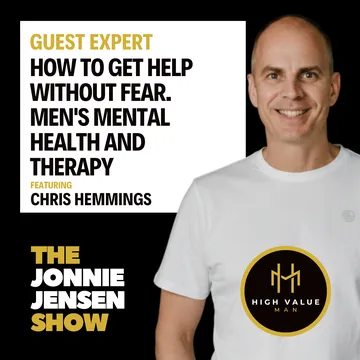
How Men Can Start Therapy Without Fear - Men's Mental Health

A new directory of male therapists aims to bridge the representation gap and provide men with the specific emotional toolboxes required for modern mental health.

Men's Therapy HubMale vulnerabilitySocial connectionToxic masculinityDad LaSoulMental health
By The Jonnie Jensen Show | 57m listen | 19 chapters
How Men Can Start Therapy Without Fear - Men's Mental Health cover

About this episode

Chris Hemmings, founder of the Men's Therapy Hub, joins the program to announce the launch of No Man's an Island, a podcast and directory addressing the critical shortage of male mental health practitioners in the UK. With only 20% of therapists being male, Hemmings details how his platform registered 148 professionals to combat the high dropout rates among men who feel misunderstood by traditional clinical approaches. This initiative targets the specific barriers preventing men from seeking help, from the 'lone wolf' archetype to the lack of emotional toolboxes provided during early socialization.

Johnny Jensen shares a personal account of his mental health journey following his brother's suicide and the end of his marriage, highlighting the reframing of antidepressants as tools for chemical balance. The discussion references a longitudinal Harvard University study identifying social connection as the primary predictor of a fulfilling life, while critiquing the 'toxic masculinity' label for alienating Gen Z boys. Hemmings cites the success of organizations like Dad LaSoul and Andy's Man Club, which utilize 'side-by-side' communication and productivity to foster vulnerability. Further analysis covers the socioeconomic struggles of white working-class boys and the reality of military conscription in Ukraine as counters to the narrative of universal male privilege.

Chris Hemmings uses a striking metaphor, comparing the expectation for men to express feelings to asking someone to play a jazz solo on a trombone without any prior training. He shares a powerful anecdote about a firefighter who found it easier to enter a burning building than to admit he was struggling emotionally. This segment redefines bravery as the courage to be vulnerable, featuring insights from Hemmings' book Be a Man and his ongoing corporate well-being work with KPMG.


CHAPTER 01 / 19 Discussion

Introduction to Chris Hemmings and the Men's Therapy Hub

Host Johnny Jensen introduces Chris Hemmings, a therapist, author, and founder of the Men's Therapy Hub. The discussion previews themes of male vulnerability, the UK's first directory of male therapists, and the importance of understanding masculinity as a strength. Jensen also highlights resources available through the High Value Man Project for modern fathers.

chris hemmings· men's therapy hub· masculinity· mental health· high value man project

00:00 I was speaking at a conference recently, and there was a firefighter in the audience. I said, Hey, man, it's easier for you to run into a burning building than it is to ask your mates for emotional help, right? And he likes, whoa. And I was like, he's and he nodded and I was like, right. Right. That's how mad it is. Welcome to the Johnny Jensen Show, where modern dads discover how to create the true riches, relationships, and results they deserve. Get your high-value man blueprint and join our community at highvalue manproject.com. Let's go. Welcome to the Johnny Jensen show. It's great to have you back here.

00:44 Today's guest episode is a beauty. If you're a man who's ever thought, I'm fine, I'll deal with it. I don't need help. While something inside you knew that wasn't quite right, well, this episode's for you. Today's conversation is about masculinity. It's also about therapy and silence, shame, and why so many men struggle to reach out even when they're struggling. My guest is Chris Hemmings, a therapist, author, and founder of the Men's Therapy Hub, UK's first and soon to be US's first directory of male therapists built by men for men. In this episode, we talk about grief, addiction, why men drop out of therapy, what actually helps, how men get into therapy, and how masculinity can be a strength rather than something to be ashamed of.

01:30 It's not fluffy, it's not anti-men, it's not about fixing you, it is about understanding yourself properly. It's an absolute beauty. And if anything from this episode resonates, well, of course, go and check out Chris and the men's therapyhub.co.uk. And for anything relating to the high-value man project, well, then come and get involved at our school group. It's at highvalumanproject.com forward slash group. We'd love to have you there. At the base level, you can access all the resources and tools for free and then look to join the high value man elite group or work one-on-one as we roll into 2026. Without further ado, let's crack on.

CHAPTER 02 / 19 Discussion

Launch of No Man's an Island Podcast and Therapy Directory

Chris Hemmings discusses the launch of his new podcast, No Man's an Island, and the rapid growth of the Men's Therapy Hub directory. The platform has already registered 148 therapists, exceeding its initial launch goal of 50. Hemmings notes the challenge of bridging the gap between providing therapists and encouraging men to utilize the services.

no man's an island· podcasting· therapist directory· mental health· startup

02:17 Chris, welcome to the Johnny Jensen Show. Absolutely brilliant to have you here. You are the founder of the Men's Therapy Hub. We got introduced on LinkedIn, active in the men's mental health, men's performance space. So really great to connect like this and have you here today. It's a pleasure to be here. Brilliant. You also got your own podcast, which was another part of how we came to be connected. Remind me again what you've called that. It's called No Man's an Island, and it is launched to support the work we're doing at Men's Therapy Hub. Oh, brilliant, brilliant. What episode are you on now? Quite fresh, isn't it? Yeah, it is pretty fresh.

02:56 Next Tuesday is episode 11. Good. Yeah, it's the early growth phase where you're checking the statistics and you're like, wow, those are low. But I know you'll know it takes time to build an audience. Yeah, yeah. Well, I told you, didn't I? The death point is episode 14. But I know you've got more guests. You got your way past that in your guest lineup, so you're going to get past there. Yeah, we've already got episode 14. He's done it. He's back. Yeah, yeah, yeah. It's ready to go. Good, good. So, you know, let's the context for today's chat is obviously men's mental health, men's therapy, but your story is also a wonderful example of the journey that so many of us go through.

03:41 You know, and I think it's great context for people for how you've come to be a men's therapist and how you've come to create the men's therapy hub. I love how quick that's gained momentum and the number of people that have joined there. The hub, yeah, we've already got 148 paid up therapists on Men's Therapy Hub, which is phenomenal. We were hoping for 50 by October for our launch week. And on launch week, we had like 120 or something. It was incredible. I will say the caveat to that is it's easier to get the therapists to sign up than it is to get the men to come and join. And sorry, than it is to get the men to come and use the therapists. Yeah, yeah. That is our next challenge, but to see such support for it has been incredible.

04:24 And I'm so grateful to every single one of them for taking the time and, you know, investing their time, energy, and money into the site. Yeah, brilliant. Remind everyone what's the URI of that? How they get to it? It's menstherapyhub.co.uk. If you're in the UK, and there'll be a dot-com in the US sometime in the new year. So menstherapyhub.com. Brilliant. And whilst we're talking about it, what's the importance of men finding a dedicated men's therapist? It's such a great question because the thing that we are never saying with men's therapy hub is that men. men should have a male therapist. We're definitely not saying that women are not good therapists for men because they are and they can be.

CHAPTER 03 / 19 Discussion

Importance of Male Therapists and Affinity Bias in Treatment

Chris Hemmings explains why a dedicated directory for male therapists is necessary, citing research by Zach Seidler showing that 40-50% of men drop out of therapy early due to feeling misunderstood. While acknowledging that female therapists can be effective, Hemmings argues that many men feel safer in environments run by men. He highlights that only 20% of therapists in the UK are male, creating a representation gap.

zach seidler· andy's man club· mankind project· affinity bias· psychotherapy

05:08 And the joke that I make is that there are just as many shit male therapists as there are shit female therapists percentage, right? However, the important thing about men's therapy from my perspective is I was one of three men who graduated on my cohort of 24 on my therapy class. There were more women of color that graduated than men. And that's great for women of colour, just to be clear. Not good for men. It's just an illustration of the numbers. Yeah, yeah. Right. And most of the men I speak to were the highest number I've heard so far is four men on the course. Most men were one of one or two on their course. And actually the statistics play that out: that only 20% of therapists in the UK are male, and fewer than a third of therapy clients are male.

05:55 And the frustration for that is research from Zach Seidler in Australia has shown that between 40 and 50% of men drop out of therapy early. And one of the major factors that they cite as their reason for dropout is that they don't feel understood by their therapist. Right. So for me, there is an obvious missing link here to say, well, is it possible that the men that are already coming to therapy, maybe they are more likely to feel understood by a man? And though that affinity bias would suggest so. And there is a lot of evidence to show that the places like Andy's Man Club and the Mankind Project, Talk Club, all of these wonderful places where men go, men are more likely to go to a space that they might see as kind of emotionally

06:45 threatening if it is run by men for men. Yeah. So that's what we're saying with Men's Therapy Hub. We are saying here are a load of men who specifically want to work with you, a man, because you are male. And so hopefully that might entice more men to come into therapy and use therapeutic services. Because of course, I am an advocate for therapy. I have experienced the benefit of being in therapy. And at some point, when I have some money in the bank, because I'm at very big minuses right now, I'm setting it up, I'd like to run an advertising campaign that says, unsure about therapy, question mark.

07:26 We get it. We were to men's therapy hub, male therapists for men. To normalize the fact that, yeah, going to therapy, like, what the fuck are you talking about going to therapy? That sounds terrifying. I don't want to sit in a room with a guy and tell him about how I feel. That is alien to our entire male socialization. And we want to say, yeah, we get that because we also went through that journey ourselves. And yet, here we are saying we believe in this space and we want to work with more men. So please do come and try it. And we are all specifically men who want to work with you because you're male. Yeah, yeah. I mean, this wasn't necessarily the start that I was planning on, but I'll tell you my story.

CHAPTER 04 / 19 Discussion

Personal Experience with Grief, Divorce, and Antidepressants

Johnny Jensen shares a personal account of his mental health journey following the end of his marriage and his brother's suicide. He describes his initial resistance to therapy and antidepressants, which he viewed as a sign of failure. Jensen details how a doctor reframed medication as a tool for chemical balance during a period of extreme emotional burnout.

suicide· antidepressants· marriage counseling· grief· mental health stigma

08:09 Basically, when I first went to therapy, it was the end of my marriage. My brother had taken his life in front of a train, you know, six months before. And I thought that we would go, I thought it was like marriage, sort of what we were going to repair the marriage, basically. The marriage was done, right? There's a picture. I wish I had a video of it equally. I wish I don't have a video of it where I was screaming at this little wonderful lady therapist. There's nothing wrong with me. There's nothing wrong with you're supposed to fix our marriage. Like literally screaming at this little South African woman. Clearly nothing wrong with you. Nothing at all. There's nothing to see here. This guy is completely stable, right? And when I saw the doctor, she said, I'm not going to work with you anymore unless you go and get antidepressants.

08:54 Now, the decline of our marriage had gone on over four years. Three miscarriages, my wife's poor health as a result of those. Then our daughter was born, which was hopefully going to be the start of everything getting better. And actually, my wife got more ill. Then my brother took us like a whole load of unfortunate life situations that maybe on a different scenario wouldn't have happened and we'd still be married. But when I eventually went to the doctors, because the therapy, the counselor, the marriage counselor said to me, I'm not working with you anymore unless you go and see the doctor. He sat, he sat me down and he said, tell me all about it.

09:32 And it was the first time I'd really given myself the space to say, oh, yeah, actually, I'm really, I think I'm really struggling. And he explained to me what antidepressants were. I thought they were a sign of failure. And the reason I'm bringing this up is I think that men might think that going to therapy is a sign of failure, right? Absolutely. And I was like, and he was like, no, you've been through such a shitstory. shitstorm for four and a half years of emotional stress and strain. You're like burnt out. Like, this is a chemical thing going on in your brain. Antidepressants are going to help address the chemical balance in your brain. So you're not burnt out anymore, like loosely, loosely speaking. And of course, from a holistic point of view, I carried on with therapy and I got fit and I spent time connecting with friends and basically looking after myself to put it all back together.

10:22 But it was, it was that bridging that gap between I'm fine, I can get through this, but as opposed to actually realizing, yeah, Johnny's struggling, Johnny needs to do some work, Johnny needs to take the situation seriously. The subject of men's mental health and suicide obviously taps into this and giving men the more freedom and capacity to go and find a therapist, a talking, you know, a counselor, someone that they can connect with and feel that there's a safe space there is absolutely essential. And that's what's happening at Men's Therapy Hub. So let's hope as a result of this podcast and others that you're on that more men go and find that.

CHAPTER 05 / 19 Discussion

Breaking the Jazz Solo Metaphor for Emotional Expression

Chris Hemmings addresses the concept of safe spaces and the lack of emotional "toolboxes" provided to men during socialization. He uses a metaphor of asking someone to play a jazz solo on a trombone without training to illustrate why men feel shame when they cannot articulate feelings. He advocates for a more direct, coaching-style approach to therapy for male clients.

emotional intelligence· shame· psychotherapy· communication skills· vulnerability

11:01 I hope so. And I just want to address something there because you talked about creating a safe space. And I think that can be a bit of a misnomer because I mean, there kind of is no such thing as a safe space. And particularly for men, the challenge of going into therapy is that they don't feel like it's going to be safe for them. One of the most common things I hear from clients after three, four sessions when I do a check-in is like, do you want to continue with this? Is this, how is this working for you? Is they say, I've never been in a space where I haven't felt judged before. I haven't been in a space where I haven't been told that I'm doing something wrong or that, and that is so powerful for men. And that is what a lot of people don't understand about therapy: therapy is not a space where you're going to be told you're doing anything wrong.

11:45 Therapy is a space where we're going to ask questions as to what it is that's going on with you. And increasingly now, particularly working with men, there is a movement away from the old kind of like blank screen therapist to being a bit more of a coach, a bit more direct, a bit more encouraging, challenging, you know, calling their bullshit where you see it, a bit more of a kind of humanistic approach rather than the old person-centered, which would be the kind of blank screen. Yeah. And to help guide men, because traditionally, what we've done in therapy is we've said to men, okay, here is a space where you need to come in and you need to figure out for yourself

12:26 with me in the space what's going on. But that doesn't take into account the fact that most guys don't have a toolbox. And I talked about my experience, maybe we can get onto this, is that when I opened my toolbox after the death of my dad, I just filled it with cocaine because that worked for a time, right? And I've done the research. It doesn't work long term. I filled it. And so we're asking guys to come into a space and, okay, just be emotional. Well, how? I can't do that. Yeah. And it's, and then men will feel really discouraged and shame. And the way that I explain it to my clients is I use a lot of imagery and metaphors. And I say, I'm going to give you a trombone and I'm going to ask you to play me a jazz solo. Can you do it?

13:11 And they say no. And I say, right. Do you feel ashamed of the fact that you can't do it? No. And I say, well, why not? Well, no one's ever taught me how to do it. Right. And yet here you are feeling ashamed of the fact that you don't know how to talk about your feelings and your emotions when nobody has shown you how to. And then, of course, what we do culturally is we say to men, you and your mates just need to start a jazz band together, despite the fact none of you have ever played an instrument in your life, which is just absurd. And all it does is lump more shame on. Yeah. So a lot of the movement now is to understand one. But when men come to therapy, a lot of it is normalizing the challenge and being more real with them and also being open about some of your own experiences to help them to realize that they're not alone in this challenge.

CHAPTER 06 / 19 Discussion

Finding the Right Fit and the Winter Coat Analogy

The discussion emphasizes that therapy is not a homogenous experience and that finding the right practitioner is essential. Hemmings compares searching for a therapist to shopping for a winter coat, suggesting that clients should not settle for the first option if the "vibe" is wrong. He highlights the diversity of the Men's Therapy Hub, including its first transmasculine therapist.

therapist selection· diversity· transmasculine· coaching· mental health access

13:57 You know, every therapist has been in therapy for the first time and shitting their pants about going to therapy. Yeah. Like that is a universal, a nearly universal experience. And so the more that we can let men know that there are people like me doing therapy and I'm not some like fancy Oxford educated posh guy. Like I'm some. Oh, I thought you were, Chris. No, I know. I know I sound like it. I know you definitely, yeah. Yeah, exactly. Right. Like, and, and, but also, if you don't want to work with someone who looks and sounds like me, there is someone out there who looks and sounds like you.

14:34 Yeah. And, and also, there are other people out there who have specialities. If you're queer, if you're different religion, race, you know, if you're struggling with your gender, Men's Therapy Hub has its first transmasculine therapist on it. And I'm like, fuck yeah, that's awesome because there are trans masculine men out there who might want to speak to a trans masculine therapist. So great. And maybe I'm not the right therapist for them, but therapy is not therapy is not a homogenous thing. We are all individuals as therapists. And so the space that we create as therapists is also individual. And that's what's really important to remember.

15:14 If you are doubting about going to therapy, wait until you find the right therapist. And once you do, it'll be life-changing. Oh, absolutely. I say to so many, because my work is distinctly coaching, right? And there's a degree that I'm not a therapist. I'm not qualified as a therapist. But it becomes apparent when I say to someone, okay, well, there's some trauma here that I think you could really benefit from working through. And then you say, like, the idea that you're going to go online, go through some list of people on Google and pick someone that's going to be the right one. It's, you're talking needling the haystacks stuff, really. So don't expect for it to be the first one to be the right one.

15:55 And that was the case for me. It was the third person I found that was literally a blessing, really. Wonderful woman. The way that I describe it is: if it's if it's October and you need to go and buy a new winter coat, you don't go to the first shop, don't find a coat, and say, oh, well, I guess I'll just freeze this one. You go, okay, I'm going to go to another shop. And if I can't find one there, I'm going to have to come out tomorrow. And it gets okay, it's a bit annoying, but you'll keep looking until you find the coat that you like. And then once you found the coat that you like, you'll wear it and it will help you to stay warm. And that's what it's like with a therapist: it is incumbent on the client to keep working to find the therapist that works that works for them.

CHAPTER 07 / 19 Discussion

Practical Advice for Vetting a Potential Therapist

Chris Hemmings provides actionable steps for men seeking therapy, recommending 15-minute consultations with multiple candidates. He advises potential clients to perform a "vibe check" based on photos, accents, and personal style. The goal is to find a professional with whom the client feels comfortable opening up over the long term.

consultation· directory· vetting· intuition· professional services

16:39 And sometimes I have clients that leave after three, four sessions and they go, I don't like your style. And I'm like, good, well done. Yeah, yeah, brilliant. Go and find somebody that is. And what could you say to men? There's so much to get into, right? But what can you say? Let's address this subject first because right here what we're talking about. For men to ask the right questions when they first meet a therapist, right? What sort of, you know, how does a man set himself up to find the right therapist and what sort of questions might he ask that help him work that out? Yeah. The best advice I can give you on how to find the right therapist is look through a directory. So if you go to men's therapy hub and you look through the directory, have a look at the photos.

17:23 First of all, right? I've got some like, I've got earrings and I've got some like bleach in my hair, right? If you think I look like a prick, don't use me as your therapist. If you think that I look like somebody you might be interested in talking to, then book a 15-minute consultation with me. Don't just say, I want to start with you. Say I want to book a 15-minute consultation with me. And then also do that for three or four other guys that you don't think look like pricks. And have a week where you have a few meetings with therapists. And we are used to that as a therapist. We are expecting that as therapists. And then when you come on the call, tell them a little bit about what's going on with you.

18:04 Let them ask you some questions and ask them how they work. Ask them a little bit about their practice. But most of all, you're doing a vibe check. You are doing a check of does this guy feel like somebody that I could maybe start to work with and open up to. And if it doesn't, then don't work with them. Right. And if you're really struggling to find anybody and everyone you meet doesn't feel like you're someone you can open up to, maybe you're not ready for therapy, right? Yeah. And that's okay too. But don't give up on it. Come back to it.

18:45 Because I've had clients come and do introductory sessions. And then six months later, I've been like, I actually, you were my first choice. I just wasn't ready for therapy. And now I am. So let's work together. And it is really about just getting a sense of what was the conversation like? Does he look and feel like a guy that I want to talk to every week? Because if you don't like my accent, if you don't like the sound of Lancashire/slash/Yorkshire, like accent like this, then don't have me as a therapist. Because that, because that ain't changing. No, I ain't going to change my accent for you. Exactly. Exactly. So it isn't easy to find the right therapist.

19:27 But that's kind of the beauty of it. Because when you do, it can unlock so much. And it is about investing in yourself. Yeah. So don't just go with the first guy, unless he feels immediately like a good fit for you. Take the time, do the the research, take a few 15-minute calls, and then go with your gut. Which is the guy that felt like the best fit for me. Yeah. I mean, the important thing that every man needs to realize is that as things stand, and particularly us lot that are now well into adulthood, we haven't been taught this stuff. We haven't been given an indication of what masculinity might look like in all its shapes and flavors.

CHAPTER 08 / 19 Discussion

Benefits of Men's Talking Groups and Vulnerability Modeling

The conversation shifts to the role of men's talking groups like Andy's Man Club and Talk Club as entry points for mental health support. These spaces allow men to observe vulnerability modeled by others without the immediate pressure to speak. Hemmings notes that the explosion of these groups in the last five years helps normalize the challenges of modern manhood.

andy's man club· talk club· brotherhood· camaraderie· peer support

20:11 We haven't been given the reassurance that it's okay to be having a bit of a wobble or to be in a marriage that isn't working and seek support. Like, oh, we'll just work it out. We'll be fine. Like, back, you know, like, I'll sort this out. You know, that lone wolf idea, you know, even if you've been given the tools, it still doesn't make sense to go lone wolf on it. A man who's feeling that gap, like not quite ready for therapy, doesn't really understand. Is there a should he go to an Andy's man club or some kind of group? Would that would that help him get a clearer idea of where he might be at?

20:49 It's often a really good starting point because what that does is it puts you into an environment where there are men who, again, you have to remember every guy who's in one of those spaces has been you who has arriving there on their first day for their first session and is shitting their pants because it's terrifying, right? What am I going to do? I'm going to sit in a circle and I'm going to talk to some blokes that I've never met. Like, what the fuck? And also, if you don't want to talk in the first sessions, no one's going to force you to. Well, but there's that fear, there's that fear that you might have to talk, isn't there? Yeah, of course. Of course, there is.

21:27 And so, yeah, I would say therapy is a very specific space, but there are lots of things that are therapeutic. I know that a lot of men coaching can be a therapeutic space because actually what they need a lot of guys is a bit of a kick up the ass from someone. And I know that it's more complex what you do, Johnny, but in essence, that's basic of it. Totally, yeah. Yeah, exactly. A bit of a coach, a bit of a cheerleader, right? Someone said someone to be, you know, on their team. And so find a space that will work for you. The men's groups, I mean, there's been an explosion in the past five years of the amount of men's talking groups.

22:05 And what we're hoping as a kind of men's collective is that we can get more men into spaces where men are and normalize the challenge of speaking. And in doing so, you can learn from the guys around you because that's partly what we're doing as therapists. We're also modeling vulnerability sometimes. And that's the beauty of those spaces because every guy there is there because they're challenged by something or they're lonely or they have had something big going on in their life and they need some camaraderie and some brotherhood. So if you're feeling any of those things, then a talking group is a fantastic starting point for that.

CHAPTER 09 / 19 Discussion

Social Connection through Dad LaSoul and Men's Sheds

Johnny Jensen highlights Dan Flanagan's organization, Dad LaSoul, which focuses on social connection through "dad play dates" and shared activities like hip-hop sessions. Hemmings discusses the "Men's Sheds" movement, where men build projects together to reach a brainwave state that makes sharing easier. Both agree that companionship and productivity are vital for male well-being.

dan flanagan· dad lasoul· men's sheds· social isolation· productivity

22:49 Well, and there's different flavors. Have you met Dan Flanagan, who runs Dad LaSoul? I have not. Okay, you've got to cook up with him, right? Get him on the No Man's Island podcast, right? Dan Flanagan, Dad LaSoul. Dan's thing, he used to organise parties and stuff in, you know, in the 90s and DJing and things. Then he got married and had kids. All of a sudden, he stopped doing all the things that he enjoyed, which is a classic part of one of the elements of high-value man project. Like, are you having fun? Like, are you doing things you used to enjoy? No, life's really boring. Okay, well, that's probably what you're miserable for. So Dan was like, I just want somewhere where I can go and hang out with my kids and have a laugh with other blokes, which basically was, I used to go to the pub or I used to go raving and hang out with mates and have a laugh.

23:32 And now I can't. So he created Dad LaSoul and it's they're like dad play dates. So some of them are with kids, some of them without kids. And so it's not always a circle of blokes sitting there talking about what they're struggling with. It can also be a bunch of blokes getting together, having a coffee. And Dan does stuff. They have like hip-hop sessions and fix and repair sessions and all sorts of cool, fun things, basically. That's all across the South and Southeast. Dad's base in Kent, another, another, again, more of a social type thing as well. Yeah, I mean, that's the genius of men's sheds is like, let's, let's get together and build some shit, which sounds terrible to me.

24:11 I mean, you should feel how soft my hands are. But for some guys, that is what's missing from their life is like a sense of productivity in that way. So let's go and build things. And actually, we can get into a brainwave state where sharing about ourselves is easier because we're focusing on something else. And even if you're not sharing about yourself, you are at least in companionship with others. And yeah, I mean, there's also, there's also men's retreats where you can go and, you know, you can chop down trees and build rafts and go swimming through waterfalls and like that stuff's great for me. I love the. outdoor stuff. And for each person, it's about finding the space that works for you. And it's very much the same with the therapist. It's about finding what sort of therapy do I want? Who do I want to find? And yeah, outside the therapy space, what sort of group do I want to go to? What sort of guys do I want to be around?

CHAPTER 10 / 19 Discussion

Historical Decline of Male Social Spaces and Lone Wolf Culture

Chris Hemmings analyzes the disappearance of traditional male congregation points like snooker halls and pubs in the UK. He traces the "keep calm and carry on" mentality to the World Wars and discusses the 1980s rise of the "lone wolf" archetype in cinema. This cultural shift has implicitly told men that reaching out for help is a sign of weakness.

snooker halls· pubs· hyper-masculinity· lone wolf· social disconnection

24:56 Yeah. Why do you think, shifting gears a little bit, why do you think men are lacking this so much? Like, is it, is it, is it just happened? Is it a modern society thing? Did we used to go to the pub and or the working men's club and just work, drink, go home? You know, like, what's where's this thing come from where men don't have things to do or friends to hang out with? How's it all happened? It's such a big question because there are so many interlinking reasons. I mean, the big one that you've just spoken about there with empath at my business that goes into schools and businesses to do talks on men's mental health, masculinity.

25:36 A young lad once stayed behind and he's like, what has changed? He basically asked this question. He's like, what has changed for men that in the past 10, 20 years, we've become so disconnected from each other. And these two old lads, as they were leaving, he just went, snooker halls, pubs, football teams, all the stuff where men used to congregate. I mean, the number of pubs closing every week in the UK is appalling, right? There used to be these places that were culturally male. Now, the problem is, and understandably so, the pub was a very male domain because women were forced to stay home.

26:19 And so what happened as women entered the workplace and men also were encouraged to engage with stuff at home is that those places became less and less popular. And also they became not just like male refuges, so to speak. So you've lost that. Add into that the socialization of men from like kind of mid-1800s onwards, that was then particularly drilled into us during the two major wars of keep calm and carry on. Don't complain about yourself. Don't talk about the challenges that you're having. And what that does is it drives disconnection between men.

27:01 And then there is a huge sense of risk for men that feels like a cultural risk for men to reach out and say, I'm struggling. I need help. I need some companionship. I need someone to talk to because we have been told, not necessarily explicitly, but definitely implicitly by the culture around us, the society around us, that to do that means that we are somehow weak, that we are somehow a failure. Yeah. And we are in right now an upsurge of like hyper-masculinity again. And it does come in waves. You know, the previous big wave of it was kind of like in the 80s. If you think about like Schwarzschenegger and all those sorts of films from the 80s. Miami Vice Don Jones.

27:47 All of those. But interestingly, quite a lot of those characters were lone wolves. That was like shining night saved a day on his own. Yeah, yeah. Exactly. And I used to say this to kids in schools. It's like, if you want to be a lone wolf, go and live in the woods. But like, none of us is a lone wolf because I used to say to them, like, but who fed you today? Who made your shoes? Did you build the car that you are driving that you are, the young parents are driving you to school in? Like, and I'm being kind of flippant because you're not alone, a lone wolf. We all need people.

CHAPTER 11 / 19 Discussion

Harvard Study on Social Connections and Comparison Culture

Hemmings references a longitudinal Harvard University study identifying the depth of social connections as the primary predictor of a fulfilling life. He critiques modern capitalist culture and social media for encouraging comparison and obsession with physical appearance or wealth. This environment often leaves young men feeling disaffected and mocked when they fail to meet unrealistic standards.

harvard university· social connection· capitalism· gen z· mental health

28:23 And actually, what this whole lone wolf, the sigma male, what this whole mentality is, sadly, is it's just another cover for I can't connect with people. So I'm kind of wearing it as a badge of pride because I want to own it and I don't want to feel ashamed of it. And what we are is we're driving so many young men away from the connection that they really need. Because the single most longitudinal study ever carried out by Harvard University, it, I think it was the it started in, it tracked the lives of babies all the way through and then it also tracked their family members.

29:02 And it has all but proven that the single biggest predictor of a fulfilling life is the depth and richness of your social connections. Yeah. Of course it's not about success. Of course it's not about money. Of course it's not about how hot your bird is. It's not about any of that. It's about how much do I feel connected to the world and environment around me and the people around me. And that's what we're missing out on as men when we are encouraging each other to disconnect from ourselves. ourselves and encouraging comparison culture, stepping over each other to try to prove that we are somehow superior.

29:45 But that doesn't work out in the long run. But that's so hard to convince young men. It's so difficult to convince young men that going to the gym at 14 and being obsessed with your body at 14 actually is setting yourself up for real challenges your whole life. And it's even harder to convince them that being rich won't make you happy. Yeah. It's almost impossible because so because we live in this absurd capitalist culture that is constantly telling you, oh, well, if you only have this shiny new phone, your whole life's going to be better. Oh, it has a something pixel camera. Oh, great. So, like, don't go, like, stop taking photos of stuff and actually go and look at stuff.

30:30 Yeah. Be present with stuff. Yeah, totally. And that's what we're missing out on culturally. And actually, but then what we do is young men become disaffected through no fault of their own and then they get shamed for it and then they get mocked for it. And I think that is so sad because all we're doing is confirming to them why they disconnected in the first place. Yeah. What do you see in teenagers when you're in school? What do you see about the dynamics between boys and girls and that relationship stuff? In my lad's social circle, and I'm not trying to big myself up here, but just sort of saying some of my practices as a dad is I want to know his mates' names.

CHAPTER 12 / 19 Discussion

Risks of Modern Dating and Social Media for Young Men

Johnny Jensen and Chris Hemmings discuss the high perceived risk in modern dating for teenage boys, specifically the "talking phase" and the fear of social media fallout. Hemmings expresses support for social media bans for minors, noting that young people are constantly curating their online presence to avoid "cancellation." One minor indiscretion can lead to total social ostracization in the digital age.

dating· social media· australia· cancel culture· reputation

31:12 I'm interested in if we're at football or something and one of their dads is there. I'm like, oh, hello, I'm Jaygo's dad. Hello. So I'm making sure that my kid knows that I'm interested in him. And when he's talking about his friends, I'm like, oh, is that Jack or is that Luke? Or is that like across the board? Few of them seem that interested in having a girlfriend. And whilst there's a bit of banter about it, almost like the risk of having a girlfriend doesn't seem worth it. Like if you think back to I'm 50 now, school disco, it was like, how many people did you snog? Like there was no, it was just, we're all having fun. We have a snog. I went out with her for three weeks. Now I'm going out with her mate. Like no one, there was no like

31:56 stigma or fear or anything about that. And yet when talking to them and seeing them in action, there feels like a lot of risk for dating someone. There's they do this whole thing where they have to text and chat before they can ask them out. It's called talking. Are you talking? Oh, yeah. Well, you can't talk with Sally because me and Sally are talking, like, you're in this talking phase. They've probably got a different word for it up north, whatever. But there just seems like a lot of risk for young lads in the dating space. Is that something that you've picked up on school? I mean, I guess this leans into what are lads being told at school about masculinity and who they're allowed to be and what they're not allowed to do.

32:37 Well, that doesn't help. Yeah. Of course. And just to go back a little bit, the whole concept of risk, it's one of the main reasons why young people don't drink is because there is a risk of loss of cultural capital if they are drunk. And then you can be on socials and, you know, thank God there weren't mobile phones when I was six. I know, you and me, right? Christ. Like, and so kids now feel like there's a massive risk, but also from the age of like 14 onwards, and I'm weirdly actually surprised how much I support the social media ban in Australia,

33:15 they are already curating their online presence because they know actually that one slip up can cost them everything now. Yeah, in their whole life. Yeah, yeah. I've spoken to young lads, I've worked with young lads who have had a minor indiscretion with a woman on a university campus and their whole social network has fallen apart. People are disavowing them. You can't even be seen to be with them because then suddenly someone will take a picture of it, upload it onto Instagram and say, X person is with them. So we need to cancel them too, right? Yeah. There's been quite a lot of coverage of this sort of thing.

CHAPTER 13 / 19 Discussion

False Allegations and the Stigma of Toxic Masculinity

The discussion covers the impact of "toxic masculinity" labels on young men who feel inherently blamed for societal issues. Hemmings notes that while a small minority follows figures like Andrew Tate or Sneeko, the majority of Gen Z boys do not agree with misogyny. He argues that labeling all boys as threats undermines their self-esteem and discourages positive connection.

andrew tate· sneeko· misogyny· toxic masculinity· gen z

33:58 Chris, it happened to a mate of mine's son. No, details don't matter, but a random incident, accusations, and he had his whole life shut down for his whole sixth form experience was shut down because of something that someone said that actually wasn't true. And he had no grounds to really push back. No. And look, I will always say that most allegations are true. Yeah. There are always going to be some. some false allegations. But actually, what we're talking about most often are not allegations of sexual abuse or allegations of rape, even.

34:38 Like, they're allegations of slightly overstepping a boundary, of not being a good boyfriend. Yeah, yeah, that's yeah, that, yeah. Right? And you can lose everything. So, to the young lads, you said it. Why would they risk? Why would they risk everything that they are building on unknown? Which is, I don't know how this person is going to respond if we break up. I don't know how this person because it's so easy to send one message and everything can blow up. So, I get it. I think that young men are living in a culture right now that is telling them that basically they are inherently toxic and they have to prove otherwise.

35:20 That is at least how a lot of them feel. Yes. Yeah. And can you imagine what that would be like to be told, you know, there's this kind of apocryphal tale almost from Australia where these 14-year-old boys were made to stand in front of the school and apologize for their toxicity. And it's like most of these lads are like, What have we done? No, but you're male. So you are therefore inherently wrong and bad. Yeah. And think about what that does to a young man's sense of esteem. It pushes him, it pushes him so far down and away from connecting with the culture in the way that we would actually like them to.

36:03 Because what's missing is empathy and compassion for men and boys. Yeah. To say, okay, but if a 14-year-old is behaving in this way, and if many 14-year-olds are behaving in this way, it's not the 14-year-old's fault that they're behaving this way. It's the culture around the 14-year-old that we need to look at. And actually, statistics do show, sadly, that, you know, I'm a millennial, that my generation has way less levels of misogyny than Gen Z boys do. However, the levels of misogyny in Gen Z boys is still, it's like nine out of ten or eight out of ten boys don't agree with misogyny.

36:46 Yeah. But so we're still focusing on this minority. Tiny percentage, exactly. Yeah. Who are buying into the rhetoric they hear from Sneeko and Andrew Tate and these guys online. Yeah. And saying, well, these boys are representative of all men. To which the rest of the boys go, like, well, no, hang on. I'm not like that. That's the bit that winds me up the most. And it happens for men as well. You know, like bad men, good men, good dads, bad dads. It's like, do you know what? The large, large, large percentage of us are all good. But we're all being told men are bad, men need to step up, men need it, or boys are a risk. The message that seems to come across for me that a lot of girls are being told is

CHAPTER 14 / 19 Discussion

Root Causes of Male Violence and Secondary Anger

Chris Hemmings argues that violence in men is often a result of being at odds with their own masculinity rather than being "too masculine." He critiques school programs that focus solely on teaching boys about misogyny without addressing the normalization of violence and cruelty among boys themselves. He defines outbursts as "secondary anger" resulting from suppressed pain and a lack of emotional outlets.

empathy· cycle of abuse· secondary anger· school safety· masculinity

37:29 teenage lads are a threat. Men are a threat. Yeah. And then that leaves lads going, I'm a threat. Seriously, what? Like, okay, like, wow. And then of the stomping down of what is inherent positive masculinity. You're like, okay, well, I better not speak up. I better not be strong and confident. I better not be me. I better not be me. That's it. That's the most pinching thing that we can do to anybody, man or woman. Don't be yourself. Terrible. Around about 78% of men globally identify as masculine. So that is a huge, more than three-quarters of men globally identify as masculine.

38:12 If you are then telling those men that their masculinity is unwanted, that it is unsafe, that it is, quote, toxic, you are directly undermining that man's sense of self. And in fact, by undermining a man's sense of self, you are more likely to create the sort of man that you are afraid of. Because it is mostly the men who don't have a good relationship to their manhood, to their masculinity, that are the ones out there being violent than the ones out there enacting those behaviors that you don't want them to

38:51 enact. The men who are violent towards other men and towards women are mostly repeating a cycle of abuse and violence that they have experienced around them. Whether that be physical, sexual, emotional abuse, they lash out because they need to reclaim something that they feel has been lost. So that is not a man being toxically masculine. That is a man at odds with his own masculinity. Yes, I totally agree. That's something that we're missing. Because instead, what we do is we throw tomatoes at each. at each other and we tell men that they're bad. And then we, when some people are speaking up for men, other people will say, well, we shouldn't be looking at men.

39:35 We need to be focusing on women. But then when we focus on women, some men will say, oh, but we need to stop focusing on women. We need to focus on men. It's like, no, hang on a second. We need to focus on everybody. We need to focus on what's best for everybody. And I've seen right now in the UK, there is about to be yet another effort at reducing misogyny and sexual violence against girls in schools, which, by the way, I am fully on board with the concept of. But the way that they are doing it is, let's focus on the boys and teach them about misogyny and teach them about how to be better men for girls. To which I say that needs to be the last part of it.

40:14 The first part of it needs to be: can we talk to the boys about the culture of boyhood and about the normalization of violence and cruelty amongst boys? Because what you're talking about are boys who are violent towards each other because that's been normalized. They are hurting. They are struggling. They don't get a space to express their pain. So their pain is suppressed and it comes out later as secondary anger. And secondary anger is much more prone to outbursts. And those outbursts are about reclaiming something that they feel have been lost.

40:54 So who is the easiest target for that? The girls around them who can't fight back physically. But we miss that. We're constantly focusing on the symptoms and we're never focusing on the causes. And the causes is this normalization of rigid ideals of masculinity that are bravery, strength, toughness in a traditional sense of showing my worth through my physicality. Yeah. And we're setting boys up to fail still. Absolutely. And this message in schools, as I see it as well, is out of balance. And particularly, just on that point back to some of the stuff that the girls get up to,

CHAPTER 15 / 19 Discussion

Universal Male Privilege and the Meat Grinder of War

The hosts challenge the concept of universal male privilege by highlighting issues like homelessness, addiction, and suicide rates. They reference a debate involving Kamala Harris and AOC regarding the policing of bodies, countering with the reality of military conscription in conflicts like the war in Ukraine. Hemmings argues that white working-class boys often have the lowest socioeconomic outcomes despite being labeled as privileged.

kamala harris· alexandria ocasio-cortez· conscription· ukraine· tin men

41:38 the lads are just like, it's just not worth it, you know. And that's about human dynamics. That's about managing relationships and respecting men and women. And for me, the magic is, you know, whatever age, but you know, a young man thriving and happy in himself, dating a young woman who's happy and thriving in herself, surely that's like, that's where we want to get people to. And allowing people to have sexual urges, allowing people to have upset, allowing people to change their mind and break up and it will be okay. Like allowing the normal to be normal. Yeah, your work is called high value man. And actually, a lot of the messaging is telling men that they're not culturally valuable.

42:19 Yeah. And the irony is, and I and I push back so hard against this concept of like universal male privilege, right? I'm super privileged. My biggest privilege is that I grew up in an emotionally stable household. That's truth, right? There was an awesome black woman on my course. And when we were talking about race and being underprivileged, she put her hand up and she was like, you can't just tell me that I am underprivileged. She grew up in a wealthy, stable household and is doing really well for herself. She's one of the coolest people I ever met, right? Yeah. And she's basically like, stop telling me that I'm not privileged just because I'm black. Like, and I do understand that there are a lot of challenges of people with different races and ethnicities in the UK.

43:04 So that's not what I'm getting at here. What I am getting at is saying that to say to men, you are inherently privileged means that, okay, so does that mean that when I'm suffering or experiencing trauma, that it's less important or worthy of care? Okay. I'm inherently privileged, even though I'm more likely to end my own life, become homeless, experience violence, develop addictions. Okay, that doesn't seem like I'm privileged. There was the Kamala Harris and AOC, I think, in the US, were talking about we can't think of any way that men's bodies are policed in the way that women's are with abortion laws.

43:44 And like George from the Tin Men, who you said earlier, coming on next week. He pointed out, like, what about conscription? Like, think about what's happening in Ukraine right now. Yeah. Like, men are being conscripted into the army. Their bodies are being thrown into what is being described literally as the meat grinder. Right? So, what do you mean we're inherently privileged? Okay, I can walk down the street and technically I can feel safer, but actually, technically, I'm not safer because the research would suggest I'm three or four times more likely to experience stranger violence. violence. So, this idea of universal privilege is also put upon boys.

CHAPTER 16 / 19 Discussion

Men's Well-being Networks and Corporate Resistance

Chris Hemmings discusses his work with KPMG to launch a men's well-being network and the resistance he faced from organizations questioning why men need specific help. He mentions his background in journalism and his book "Be a Man," while recommending George Bell's updated work "Be a Man About It." His organization, Empath, continues to conduct workshops in schools to support boys' emotional development.

kpmg· george bell· empath· workplace wellness· journalism

44:24 And we're talking about like a lot of white working class boys who have the lowest socioeconomic expectations and outcomes of any cultural of any societal group in the UK. And they're just told, no, no, no, no, you're privileged and we need to focus on the girls. Yeah. Basically, shut up and get on with it. Which is exactly what we're going back to the top of this conversation. It's exactly what we're saying. No, don't shut up and get on with it. Let's get down to being the real version of you. And it's the yes and approach. I will never say that we shouldn't be focusing on the challenges that girls and women face. Of course, it's yes, and we also need to focus on the specific challenges.

45:05 And it's not one ring to rule them all, right? It is, we need bespoke challenges. Sorry, we need bespoke interventions for each place on the intersection, wherever that might be. So it doesn't make sense to have a women's therapy hub because 80% of the therapists on the internet directories are female. But when I went into working construction, it makes sense to have a women of X or a queer LGBT of X. But what I've said is, because I've gone into some businesses and done this, is, and actually I can say this now, I helped KPMG2 to launch theirs some years back, which is, can we create a men's well-being network, not a men's network to try to advance ourselves better, stronger, yeah, yeah, because that already exists.

45:59 Yeah. A men's well-being network. But that was so difficult for so many organizations to swallow because it's like, well, why would we help men? Yeah. And you've so just to lean into as we hit up to the top of the hour some of the things that you've also done. You're a journalist by trade. You've written books. You've mentioned Empower as well. What's the book about? So the book was called Be a Man, How Macho Culture Damages Us and How to Escape It. It was written in 2016, came out in 2017. What I would say to you is, don't buy that book. Okay, right. Instead, buy the book by a guy called George Bell, which is called Be a Man About It, ironically.

46:39 And I've just interviewed him for No Man's an Island, our podcast. And he's basically written the 10-year update of my book. So going by his with MPath. So it's M hyphen. Oh, sorry. It's a cheesy play on words. And I actually don't go into the schools anymore, but my colleague Will goes into the, he runs it now. And we have multiple facilitators. They go in and do talks and workshops trying to meet boys in their reality and to say to the boys, like, we are here because we see you. And we're not here to say that you are problematic. We are here to say, how can we be better for yourself, for each other, and for the people around you? But it starts with the self, right? So we're never going in saying, boys, you need to be better for the girls.

CHAPTER 17 / 19 Discussion

Redefining Rigid Masculinity and Traditional Traits

Hemmings critiques the "rigid masculinity" that forces men into narrow roles, arguing that traditional traits like bravery, strength, and even aggression have positive applications if used correctly. He explains that the problem is not the traits themselves, but the expectation that men must embody them at all times. He encourages men to point these inherited traits in a direction that works for them as individuals.

bravery· leadership· aggression· biological traits· emotional regulation

47:22 We're doing that as part of a wider conversation about how we can be better for ourselves as men. Because it has to start with the self. So that's empath. And then, yeah, more recently, yeah, men's therapy hub. And my wife has told me that I'm not allowed to launch a new business for at least another five years. Yes, I get that. Yeah. And in terms of, you know, a great way to wrap this up, masculinity. Clearly, you've been involved in the conversation and your work, boys, men, you know, for a number of years now, journalists by trade. For a man looking to understand masculinity and tune into perhaps his own version of that, where would you steer him?

48:06 What would be some of your encouragements to reveal that? One of the things that I get frustrated by is culturally right now, we have so much conversation around all these different types of masculinity. There are so many prefixes that are ended with masculinity. And I find it quite tiresome because masculinity itself is not fixed. There is no such thing actually as it's not, it's not definable. You can't tell me 10 absolute guaranteed traits of masculinity. No. Instead, what we are talking about are partly biological, partly sociological, partly evolutionary traits associated with men.

48:52 And I do an exercise when I go into with 15-year-olds or with C-suite, and I put all of these, I put 10 traits of masculinity on the board. So we're talking about being tall, sorry, being strong, being brave, being tough, not showing emotion, being athletic, being successful, being assertive, being a provider. provider, being a leader. I almost got to 10, couldn't quite, that's nine. Yeah, and what I say is: can you point to any of these that are inherently negative? Oh, aggressive, sorry, that was the final one. Yeah, can you point to any of these that are inherently negative that have no positives to them whatsoever?

49:34 And some people would go, like, well, not showing emotion and aggressive. And I would say, okay, if my dog had died two days ago and I'm really sad, I'm doing work right now. This wouldn't have been a very good workshop if I just come here and sat down and cried because my dog's dead. So I have to not show emotion right now. But that doesn't mean I can't go home and cry later. Yeah. Right. Okay, what about aggressive? And I was like, well, I was a very bad rugby player, but I needed to be aggressive to play that, right? I was a much better fast bowler at cricket and I was a prick on the field. It was aggression. It helped me. So like aggression can also be beneficial.

50:15 But if I'm aggressive all the time. So for me, the problem with all of it is, and I'm going to add my own prefix, which I understand the irony of. It's rigid masculinity that's the problem. It's that we tell men there is only one way for you to be male. And if you don't hit every single one of these parameters, and they change, they change from different countries and different cultures and stuff. And I get that. But these are the rules of manhood. And if you don't live up to every single one of those, then you are somehow a failure. But the problem with that is we're guaranteed to fail because you can't be brave and tough and strong and athletic and a leader and assertive all the time.

51:00 It's not possible. So he set men up to fail. So what I say to men is, you have these wonderful traits that have been bestowed upon you from generations. But let's point them in a different direction and let's point them in a direction that works for us as individuals. Because what I will say is to my clients, for example, well done for making it to your first therapy session. I know how much courage it took you to get here. I understand that that is one of the hardest things you'll ever do is making it to this point. So now I'm going to keep calling that courage in because it's about to get harder before it gets easier, right?

CHAPTER 18 / 19 Discussion

Courage in Vulnerability and Diverse Expressions of Manhood

Chris Hemmings shares an anecdote about a firefighter who admitted it is easier to enter a burning building than to ask for emotional help. He redefines vulnerability as the ultimate form of bravery and leadership within male peer groups. The discussion also touches on diverse expressions of masculinity, citing a contestant from "I'm a Celebrity" as an example of how strength of character transcends traditional stereotypes.

firefighters· vulnerability· leadership· queer identity· i'm a celebrity

51:38 I will say to young lads, in my mind, the single bravest thing you will ever do in your life is put your hand up and ask for help. That's bravery. Yeah. And actually, I was speaking at a conference recently, and there was a firefighter in the audience. And I said, hey, man, it's easier for you to run into a burning building than it is to ask your mates for emotional help, right? And he's like, whoa. And I was like, he's, and he nodded and I was like, right. Right. That's how mad it is. So, can we take these concepts like being a leader?

52:18 One of the best things I've ever seen in a school was, so we always do an assembly. We're the only organization that I know of that does an assembly first where we introduce ourselves as facilitators because we don't want to be holier than thou. We're like the opposite. We're like, don't be like us, basically. And then these young lads filed in right to the back to join the workshop and they start dicking about. And this big lad, I saw him, he like clonk is like these two lads. And he was like, listen to this guy. And I'm like, that's leadership. Yeah. So who can be the leader in their male group to say, I'm going to try to be vulnerable. Can we stop being misogynistic? Can we stop being racist? Can we stop being homophobic?

53:00 And can we start being more real with each other? Not all the time. Geez, like, you know, me and my mates still take the piss out of each other like 90% of the time. That's part of being a man, definitely. Right. But 10% of the time, we're fully real. And also, if we're taking a piss and something doesn't land well, we have created the space where we can say, hey, I actually don't want you to use that nickname anymore, for example. And we go, okay, fair enough. Right? So let's take these straight, these, these, these amazing traits that are associated with masculinity. And the irony of, of course, also is that masculinity doesn't equal men because plenty of women have amazing masculine qualities and a lot of men have a lot of amazing feminine qualities.

53:41 And somehow we see that as a negative. So let's take those and let's expand our horizons with them. And let's say that there isn't just these 10 ways. There's infinite ways that you can be a man. But even with these traditional old ideals of masculinity, there is beauty in them that we can harness and move forward with now. So be courageous, be strong, be tough, be a leader, be assertive. but do it in a way that feels right for you and not just in the way that has been expected of you and your forefathers. Yeah. It was like a personal masculinity. It's like own owning it. I don't know if you watch much of I'm a Celeb, but the Klee's gay, right?

54:26 The guy from Striply, the Tom guy. I don't know. Oh, okay, right. Very camp in his voice and stuff, but also very masculine in the way that he's clearly strong, right? And he was confident and he was actively playing his role in the social circle. And to me, that was a part of how he minced around and spoke that was very, I'm going to use the word queer. I don't know if that's appropriate. And then there was another part of it where you just couldn't help but like him. You couldn't help but like his strength of character and how he came in there and brought a difference to the group.

CHAPTER 19 / 19 Discussion

Closing Remarks and Men's Therapy Hub Resources

Chris Hemmings concludes by directing listeners to the Men's Therapy Hub website and his podcast, No Man's an Island, co-hosted with Dr. Jet Stone. He expresses his commitment to normalizing male vulnerability and advocating for men's mental health. Johnny Jensen closes the episode by encouraging listeners to join the High Value Man Project community.

dr jet stone· no man's an island· mental health resources· high value man· podcasting

55:03 And I was like, it just, as I was watching it, I was like, yeah, that's a gay guy illustrating his masculinity. I just thought he did it so well in that show. Yeah, because there are infinite numbers of, however many men there are, there are that many ways of being a man. Yeah, yeah, yeah, totally, totally. Chris, absolutely brilliant conversation. Is there anywhere you people want to send people or anything you want to leave people with about the men's therapy hub or any of your other work? Yeah, so two places really. So menstherapyhub.co.uk, 150 nearly now male therapists who are ready to work with you if you're male.

55:44 I mean, they'll also work with you, most of them, if you're female too. And also our podcast, No Man's an Island, which is hosted by me and Dr. Jet Stone, who is a clinical psychologist based in the US. He's going to be launching the US version of the site. And we're just having conversations like these with interesting people and speaking about manhood, masculinity, advocating for men. And as much as you love doing this, Johnny, I love doing that podcast. And I will continue to do it. And I will get over that 14-episode hump by January. And yeah, actually, right now we're in that stage of a podcast where it can fly. And so, you know, if you do want to support men, and if you're like me and you consume a lot of podcasts, then please do add us to your roster and like and follow us and check us out.

56:31 Yeah, we're trying to normalize conversations about male vulnerability as much as we can. Yeah, brilliant. Absolutely brilliant. Chris, a real pleasure to get to know you and spend more time here together. I'll hit the outro and see you on the other side. Thanks. Thanks for tuning in to the Johnny Jensen show. Be sure to subscribe, leave a review and share it with fellow dads. Creating the life you deserve starts with you. Get your high value man blueprint and join our community of motivated modern dads at highvalumanproject.com. Let's go.