

Episode 170 · Saturday, 7 February 2026

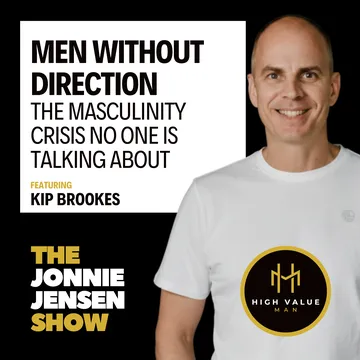
Men Without Direction – The Masculinity Crisis Nobody's Talking About feat. Kip Brooks

A deep dive into the psychological drivers of the modern masculinity crisis and the tactical shifts required for fathers to escape the digital comparison trap.

Masculinity crisisKip BrooksSocial media banStoicismHigh Value ManMental health
By The Jonnie Jensen Show | 56m listen | 12 chapters
Men Without Direction – The Masculinity Crisis Nobody's Talking About feat. Kip Brooks cover
The Jonnie Jensen Show · No. 170

About this episode

Transformational specialist Kip Brooks joins Johnny Jensen to address the escalating male suicide crisis and the systemic lack of support for modern fathers. Brooks identifies a dangerous provider trap where high-achievers at companies like Tesla and BMW equate their self-worth solely with professional accolades while struggling to navigate emotional vulnerability at home. The High Value Man Project emerges as a critical resource for men attempting to reconcile these professional demands with the need for genuine family connection.

Australia recently implemented a social media ban for users under 16 to combat the comparisonitis and anxiety fueled by digital algorithms. Brooks cites the work of UK advertising executive Rory Sutherland and his book Alchemy to explain how the subconscious mind prioritizes safety and pain avoidance over luxury desires. The discussion highlights the resurgence of Stoicism and the trend of off-grid silent retreats as necessary reactions to the attention economy. Influencers such as Ryan Holiday, Lewis Howes, and Andrew Tate are analyzed as modern blueprints that require a critical filter to separate personal development from aggressive marketing.

Kip Brooks shares a poignant reflection on how his father’s struggle with alcoholism serves as a core driver for his own commitment to present parenting. The conversation turns to the internal logic of men in crisis, urging those who feel like a burden to seek out communities like Andy’s Man Club or Men of Metal. Jensen and Brooks emphasize that failure is merely feedback, a sentiment echoed by the persistence of historical figures like Henry Ford and Michael Jordan.


CHAPTER 01 / 12 Discussion

Kip Brooks on Men's Mental Health and Trauma Release

Host Johnny Jensen welcomes transformational specialist Kip Brooks back to the show to discuss his focus on men's mindset and trauma release. Brooks highlights the lack of support systems for fathers compared to mothers and addresses the alarming rates of male suicide. The conversation introduces the High Value Man Project as a resource for dads seeking better relationships and results.

kip brooks· johnny jensen· trauma release· mindset coaching· male suicide· high value man project

00:00 Possibly since the birth of man, it's it's been our thing. It's in code, if we get caught up in the way to get this, whatever this is, the happy family, the happy spouse, the great vacations, the nice house, the nice car. The only way I know to get that is by go over here at work and just burn myself out. And that's that's where it's most tangible. That's where it's most measurable, right? Because we're not getting thanked at home all the time. Welcome to the Johnny Jensen Show, where modern dads discover how to create the true riches, relationships, and results they deserve.

00:40 Get your high-value man blueprint and join our community at highvalue manproject.com. Let's go. Kip Brooks, coach, transformational specialist, second time on the show. Last time it was the Team Super Dad Show here on the Johnny Jensen show. Absolutely great to have you back. Yeah, I love what you're doing. So I love the whole journey and the evolution of it. And yeah, whenever you read, I was just, oh, that's an absolute heck. Yes, right there. So, yeah, I'm glad to be here. Hopefully, we can drop some value bonds for somebody. Absolutely. For the people who don't know you, Kip, do you want to just tell us a bit about what you do and who you do it for?

01:21 Yes. Coach, mindset, work, trauma release has been the foundation of a whole lot of my work, more and more drive recently towards dads and men. As time goes on, there's a whole lot of support for moms, wives, women. Men keep getting pushed to the background a lot. And I run into men on a daily basis who are just like, man, I've got nobody. I've got no friends. I've got nobody. It's my wife, my work, and my kids. And so, and they just don't have time for other things. And I've heard way too many in things

02:03 prematurely. And so it's like, oh man, I'm tired of hearing the majority of suicides are people who look way too much like you and I aren't at the age range, you know, all that. And it's, it's needless. It's like there's something that needs to be done. And so I try to focus in that of just letting them know the tools and techniques that save me from the same thing. And then along the way, I do some stage hypnosis and for a little bit of fun and entertainment of my own. And youth empowerment, I'm on the board of youth empowerment leadership development nonprofit. So I speak at schools and work in the school system as well, trying to teach it younger when I needed it.

CHAPTER 02 / 12 Discussion

Social Media Impact on Youth Mental Health and Connection

Kip Brooks and Johnny Jensen examine the shift in human connection since 2010, attributing rising anxiety to social media and "comparisonitis." They discuss Australia's recent ban on social media for users under 16 as a necessary boundary for developing minds. The dialogue contrasts the pressure of being constantly watched online with the benefits of real-life engagement and physical play for teenagers.

social media· australia· mental health· comparisonitis· youth empowerment· digital boundaries

02:47 Brilliant. Really interested to dig into that in a little bit. Just the men's groups that I'm in on Facebook and school, I see the real difference in tone between European or British men and an American men. And it's interesting. Some of the sort of the male perspective in America is quite tough, quite kind of, you know, it's almost like they're a bit jaded. They're like, yeah, screw women. Like, yeah, you're better off without them. Like, yeah, do you know, like sort of real, I guess it's a little bit red pill sort of sort of sort of thing.

03:28 But and then on the flip side, of course, they're all around the world. We've got men struggling, we've got men's rights, we've got the problems with family court and what happens when people get divorced. So it feels like there's a lot of confusion, conflict. And as you rightly pointed out, the fallout of that is sadly men's mental health and the shocking rate of male suicide around the world. Yeah, it's really sad. These actually have quite a lot of stats from the UK on it as well. But it's, yeah, it amazes me at how many cultures it's actually hit. You know, like the more developed areas, like US, UK, Canada, it's like it seems to be more predominant there, but it's starting to spread more and more through areas that just shock me.

04:21 You know, different parts of just Australia, even Africa, but all through Europe, the more people I connect with and talk to, it's like, how is it getting worse? Right. And of course, you can trace a whole lot of it back, especially for kids around 2010. There was a huge shift. And of course, if you go back and look, and that's what the research and studies are starting to show, they're like, well, once social media started taking over and you really got introduced to the world, it's only exploded from the people who were like teenagers then or young kids, where that got to be a huge foundation of

05:00 their life so it's like okay well this is that's not the reason but it is a big reason because it's we're just getting less and less true connection right and we've traded um connection for a contact list and but we also they're showing it's that it's starting to make people feel like they're watched all the time because if we're watching others live this highlight reel through social media we're doing comparisonitis with ourselves but then also we feel like they're always seeing us and it's creating like this anxiety paranoia almost um this seems to be made matters worse i do feel like there's

05:40 actually a lot of hope i feel like we're at a turning point um and people my son's age uh my oldest just turned 18 the one you were asking about actually both of them were involved in the uh uh program you were talking about my youngest is coming up on 14 and they um their ages seem to have shifted it and realized there's something not right and we need to we need to make some changes and like my uh my oldest is in two different men's groups with guys from mid-teenage years up to like mid-20s just

06:20 online all around the world um supporting each other and uh um so it's beautiful i feel like there's i feel like there's hope i feel like there's something good and we're on the cusp of it um so i'm just trying to pull put or uh some fuel on the fire like i know you're doing as well so yeah brilliant did you see in australia this last week they've switched off social media for anyone under 16 yes i did man i kind of hope that catches on um because it will do it will do some good you know it's going to be a learning curve in the beginning for the ones that have already had it so i'm uh my heart goes out to the parents of those uh those kids but

07:00 and of course people will find a workaround i'm sure but um yeah that is a uh there needs to be some kind of barrier for that you know some kind of boundary the research just on and on continues to show that it's it's not good for really any of us but especially that tender age yeah exactly yeah their minds are so easily it's not so much even about the influence it's just the pressure like you mentioned that external pressure of being watched and what one mistake could mean and seeing my teenage lad and his relationships with with with friends he's actually got a

07:39 quite a good solid group of guy mates and they have a lot of fun and i love the fact that they go out and play football or sucker and and they they meet up in the park and they and they're actually very interested in having you know real life in engagement of course they play xbox and they on snapchat in the evening but you know as much as possible he's like i want to go out can i go out can i go and see my friends can i go and see my friends and interestingly there's some reluctance from a lot of parents to let their kids go out and do stuff and i'm just i'm just going right who who are you with where are you going what time you're coming home go and have some fun like just flipping don't get hurt come back happy that's what i want to tell them you know yeah it's funny you uh bring that up i saw um

CHAPTER 03 / 12 Discussion

Parental Pressure and the Illusion of Social Media Perfection

An anecdote about a mother at the Nebraska-Iowa border illustrates the modern parental obsession with capturing the "perfect selfie" at the expense of being present with children. The discussion explores how the pressure to appear as a perfect parent on social media creates separation anxiety and prevents genuine family bonding. This behavior is identified as a deep irony where the pursuit of a digital image destroys the actual experience.

parenting· nebraska· iowa· selfies· presence· family memories

08:25 i saw a little snippet earlier and they were talking about part of the challenges that kids are having now is exactly that because when you and i were growing up it was like yeah get out of the house in fact you were sometimes pushed out of the house and it's like don't come back till the streetlights are on or whatever and they're like you just had this freedom it's like you didn't have that much contact with your parents and then when you did get together the kid didn't mind the parent didn't mind everybody was present but now with social media and everything on the parents end it's like there's this pressure to be the perfect parent and all this and it's you know there's all these trends of oh look how good a mother i am look how good a dad i am

09:05 because i'm hanging out with my kids like all the time and so it's become this thing everybody's in the house kids don't want to leave they're playing on uh games or like say a lot of them or parents are afraid to let them go out and you know be free-range children or whatever and so it's created this thing of where like they're always together and so then they both create this anxiety of uh whenever you know separation anxiety of sorts but also the kids kind of putting up a wall because it's like you're always here so i don't want to talk to you anymore because you know there's that pressure um so they're feeling watched by their parents and it's like you know i never really even thought about that um i know there's a whole lot of

09:51 i i see it a lot in the world but it's like i never actually sat down and thought how much actually that that was impacting the parent to the point it was impacting the child my wife and i had the conversation a couple of times like we've um i feel like everyone has witnessed this at some point but there's this one specific uh situation about a year ago we were in omaha nebraska i was on a consulting contract out there and there's this bridge that runs across there's a river that is the border of nebraska and iowa and there's a bridge that runs across it and so right in the middle of the bridge they have it marked that you know right on this side of the line you're in nebraska

10:32 this side you're in iowa so it's just of course it's this touristy picture thing and they're just like driving her kid it's blazing hot outside it's like 97 degrees fahrenheit and the concrete's hot and she's got her kids laying on the border with their heads touching right at the borderline and they're hot they're miserable one's like probably five the other one's eight or nine and they're just crying they don't want to be there they're burning up and they just want to go home and uh or go play in the water or whatever and she's like no get a picture she's trying to get the perfect selfie and she takes like 15 pictures trying to get the best one for social media and it's like you're

11:12 not being present like the thing you want from the picture is happening right now in real life but you want it on the phone to show everybody instead of just experience it with your kids and create that lifelong memory with them and i've i've done my own fair share of my version of that it's amazing how much of our lives have gotten to be in here right in the screen and not out here even though we're trying to take what's out here and put it in the screen yeah the deep irony of trying to appear perfect but getting it dramatically wrong yeah and it's like the thing you're pursuing through the screen is actually out here happening so what do you think all this says about interesting i talk a lot pretty much my work is focused at business owning dads or you know career-minded dads who are creating success at work thinking

CHAPTER 04 / 12 Discussion

Work-Life Imbalance and the Provider Trap for Men

Johnny Jensen and Kip Brooks analyze why successful men often struggle at home despite achieving high-level results at companies like Tesla and BMW. They describe a "provider trap" where men equate their personal value with their paycheck and professional accolades because work offers measurable success while home life feels unpredictable. This dynamic often leads to burnout and a fear of emotional vulnerability within the family unit.

tesla· bmw· provider role· work-life balance· career success· emotional vulnerability

12:07 it's going to give them happiness at home and then they turn around and then their home life is all you know in the toilet basically and then there's that despair of i've worked so hard to create all this how come it's all going all going wrong and what i just took from from from that what you were sharing was really much about role models and and how guys are showing up for their for their families what what sort of pressure do you see when you're you know some of you i looked on your updated bio recently some of the big companies you're working in and tesla and bmw and stuff and seeing seeing at that higher level what's the what's the

12:44 you know the the where do men fall down there between being successful in business and then trying to be successful at home and it not really working out what what do you see in your work around that sort of type so much of the um really i never uh thought of it this way but very much same thing again it's um so we get especially as men because we're providers protectors right all of that just naturally and then the pressure put on us there's been the push to for gender equality and all that in the workplace but it's like it's it's ingrained in us for centuries right possibly since the birth of man it's it's been our thing it's encoded and

13:27 in today's world more and more again back to the screen life of comparison and all this it's like we get caught up in okay the way to get this whatever this is whether it's the happy family the happy spouse the the great vacations the nice house the nice car it's like the only way i know to get that is by go over here at work and just burn myself out but then um and we start achieving success we get the accolades and everything else and that's that's where it's most tangible that's where it's most um measurable right because we've seen our paycheck or a promotion or you know and there's multiple people around work patting us on the back and

14:09 i guess a bit addicted right because we're not getting thanked at home all the time our wife's not getting thanked at home like no one is we take each other there's a taking for granted almost on the home front right where you're at regularly it's like well yeah you're supposed to be a dad here you're supposed to be a husband you're just doing those things but at work we tend to get a little more notice especially depending on what the job is you know from the customers from superiors co-workers whatever but also there's that paycheck that we have to have you know it's a challenging thing with people um in like weight loss in food addiction it's like it's possibly one of the most

14:49 if not not the most challenging addiction because food is a necessity, right? And so it's hard for people to like break that addiction because no matter what, you got to eat. It's not like cigarettes. Like if you can build yourself to go cold turkey, you're fine because you'll never be around. You can create that world where you're never around it. But with food, you can't. Like you have to be around it or you're not going to survive. So there's this subconscious, just natural drive to find it. Same thing. Like we're not naturally driven for money, but we are driven towards what it brings us because it brings us food, shelter, and

15:27 all the main needs. And then it provides for our family. So it's real easy for anyone, but especially men to get obsessed with, okay, because we're just naturally designed to be able to sacrifice and suffer a little bit more and push through. So it's like, I will work myself into the ground to give this to my family. But then also, the family has other needs, right? They need some presence. They need some love and interaction. And providing it's not just financial, but we get caught up in it. And I've seen way too many just families getting torn apart and men be blindsided because it's like, I thought we were working towards the same thing, but now she's mad that I'm working all the time.

16:13 And then it gets this defensiveness comes in, right? It's like she's trying to take the thing that makes me a man, makes me a provider, makes me valuable because we start seeing that. We start equating our own personal value in the value of what we bring from work. And so then, you know, someone will say something about stepping away and it's like, we need you more at home. And it just becomes a burden for man because it's like we haven't ever been taught how to do that. Like we were just always told go to work and then get the job done. And then, you know, if there's an issue, just go to work and, you know, fix it.

16:53 Like, just keep going to work. And that becomes the closest thing to a therapy that most men have. And they just keep, it just keeps creating this separation. And then, and I've had it in my own experience plenty of times where it's like, man, as stressful as work is, at least, you know, it's the devil you know versus the devil you don't. It's like, I know what to expect there and I'm getting paid for it. And it's supposed to be hard because it's a job. And it's like, so I'll just go there and go to work. And it's like, because at least there's other people going through it. Their job's stressful.

17:33 My job's stressful. We recognize each other in that. And it's like, I'm terrified. I don't know what to do at home. That's what it tends to be. It's like at work, at least I know my job. I know what to do. Man, life at home is a multitude of other people, their needs, and they're changing, growing all the time. And they're looking to us for stuff. We feel overly responsible for them. And it becomes this like, I don't know what to do. It's like, I'll go to work. That's where I know, you know, that's the comfort zone. I know what to expect there. I know what to do there. And when I dig with a lot of men, there is, it's like when we get to that deep layer, it's like, there's a fear, right?

18:18 Like, I don't know how to be who they need me to be at home. Don't know how to be vulnerable. I don't know how to connect. I don't know how to communicate. And there's no one out there really teaching us, right? Everything in school is about going into the workforce. There's no class to teach you. This is how you connect with your kids. This is how you connect. Your son is different than your other son. Your son is different than your daughter. Your wife is different than your kids. You know, it's like, we're just taught this is how you show up on a schedule to work. And at the end of the schedule, it's done until the next day. But it's like life at home doesn't stop.

18:58 It's 24/7, whether we're at work or whether we're at home. It's going on and it needs us. And the subconscious mind doesn't like the unknown. So it's going to drive us to where it feels the most comfort, which is that closed loop of knowing, okay, here in this workspace, know what's expected. I know what to do. And I know that there's a time in this day that it'll end. And then on Friday, I get a weekend off. I know all the details are checked. I got all the rules to live by. But at home, there's none of that. Don't know. I could go home and be planning a family dinner. And then one of the kids gets sick, you know, or whatever.

19:39 And it's just, we're always on our toes. Yeah. And then they bring that. that, they bring that rigidity back home, which of course doesn't fit that the home setup doesn't, it's, it's not, it's, you can't be that rigid in work. And then he gets frustrated. I'm doing my best. You don't understand. Uh, you need to be more grateful. And then she's like, I need to be more grateful. How about you give more time to us? Or how about you be more interested in my needs? Or how about you be more, you know, I think in America, in America, is it, you know, do you think men are waking up a bit to this subject?

CHAPTER 05 / 12 Discussion

Stoicism and the Modern Movement Toward Disconnection

The conversation shifts to the resurgence of Stoicism and the growing trend of men seeking "off-grid" experiences to reclaim their mental clarity. Brooks shares a story of a friend on a 15-day silent retreat in the woods to illustrate the desperate need for a break from the attention economy and digital algorithms. They argue that while screens are permanent, families are beginning to prioritize basic human connection over constant information influx.

stoicism· ryan holiday· silent retreat· homesteading· attention economy· algorithms

20:18 Do you feel that they are becoming more interested in how to be, you know, the man at home that holds it all together? Or do you think he's really struggling to, you know, he's really struggling to work out what that means? Yeah, I think we're on a cuss, brother. I've seen more and more and had more conversations of like, I think before it was, that's kind of what caused like the midlife crisis that we'd recognize is just people just getting to a point. It's like, something's not working. Something's not right in my life. But we live in such an instant gratification culture.

20:59 It's okay, what? And, you know, we've been marketed since we're kids of the answer is always this thing I see on a screen, you know, a new car, a new toy of some sort. But yeah, I do see the stoicism movement has come back around in a big way and it seems to be catching on. And there's definitely a lot that has misinterpreted and misconstrued the message from it. But it's starting to get through and it's starting to, I think, wake more people up of like, yeah, like it doesn't matter how much I get from out here, good or bad. It's like, what really matters is like, where am I at inside? Let's get back to the basics.

21:43 And I hear on a regular basis, just people taking a off-grid. I've got, we've got a friend right now who's on a 15-day silent retreat just out in the woods that he's just doing on his own. He found a cabin out in the middle of nowhere. He stockpiled some food and he went with his dog. His wife and kid are at home. He's like, I just need to go bury myself out in the woods and not be around a soul. I'm leaving all electronics. Like he's hiking a mile into the woods from the car. I don't know how he's pulling it off for 15 days. His wife is awesome and supporting him. He's getting, he's getting

22:22 food. He's getting just eat delivered to him. But yeah, I hear similar stuff to that quite a bit. I think people are starting to wake up to it. And not just men, but even families, you know, the just homesteading and just getting back to just time with each other and disconnect from the screens a little bit. And let's come together. Like, we can't get rid of this. The time in the world we're in right now, we can't get rid of screens and all the outside distractions. They're not going to get it, get away. They're not going to go away. If anything, they're just going to get worse, right? Because it's been said, attention is the new real estate. But

23:08 people are starting to see just getting fed up with algorithms and different things. And I do think that people are starting to catch on to like, I just need to take a few minutes just to myself, just be with the family and just kind of hang out for a minute and like disconnect from everything and just shut down from the non-stop information all the time. Yeah, get back to basics a little bit. And kids need it. Their attention span is getting shot to pieces and that's terrible. I mean, on this subject of men, masculinity and men as role models, you know, it's interesting in America because you've got, you mentioned Stoicism.

CHAPTER 06 / 12 Discussion

Evaluating Masculinity Influencers and Personal Development Marketing

Johnny Jensen lists various male role models including Ryan Holiday, Lewis Howes, and Garrett White, noting their different approaches to masculinity. Kip Brooks advises listeners to maintain a "filter" when consuming content from high-level influencers like Andrew Tate, recognizing that many are selling products. They emphasize that while these figures offer useful blueprints, the truth usually lies in the middle of the ideological spectrum.

ryan holiday· lewis howes· garrett white· andrew tate· order of man· masculinity

23:49 So Ryan Holiday and the, you know, the Daily Stoic and stuff. And then you've got Lewis Howes, who has his book, The Masks of Masculinity. So I think those sort of messages, softer, softer type of present, masculine, you know, being arounded man. And then you've got Garrett White is, you know, very, from my, you know, from a, from a British perspective of listening to him, also all about very, very strong masculine role model and, you know, in a heavy lean, especially in the last few years towards the religious side.

24:29 Then you've got Order of Man, and which is much more about protector and provider. And I don't necessarily think any of these are right or wrong. they're not like flipping Andrew Tate kind of hardcore red pill stuff. They're just a message about being a strong man. And most of them, at least the ones I've heard, also have a message of family, of being successful, of creating the family, of bringing up happy kids, of your wife thriving. So I think they're all they've all got their flavors in there and they're all healthy, but at least they're talking about it. At least there's a blueprint there for men to show up, to have support, to be around other guys, and to be proactive in their own personal performance.

25:13 As an American, as a coach, as someone who works with dads, what do you see about all those different influencers and forces? You know, maybe what are the people you work with know of those people? Yeah, they've, um, I love the awareness that all of those have brought. And I've, you know, read Lewis Howe's book and read most of the stuff Ryan Holiday's put out and then went through stuff with Garrett White and so many others because I've been on my own path too of trying to like find what was missing as I grew up in the in my own life.

25:51 And then also just trying to, okay, well, if I'm raising future men here, it's like I need to like clients aside, it's like I've got two at home who are looking to me. I'm the only male in their life, you know, role model outside of their friends. I mean, now they've got their own role models and all sorts of stuff. But, you know, when I started this journey, and so I would go down and it's if you go far enough with anybody, you're going to run, you know, it's been said, don't meet your heroes. So it's like, and the reason why is because sooner or later you're going to run into where they're human. And the way you find it out is typically because, oh, somebody pulls the curtain back on the wizard and you see some flaws in them and it or see something that's like, oh man, you know, and step away.

26:40 And I know Garrett White is that for a lot of people. It's like, because he pushes from an extreme on one side. And anybody gets that loud at him or Andrew Tate, it's like, just recognize the wounded child inside. But they have said some things that are good. Everybody has said some things that is not so spot on. But again, it's all a spectrum, right? It's all like, I've heard you talk about the spiral of, you know, like the balance between home and work and all of that. And it's like, we get these pendulum swings. You know, Andrew Tate is hardcore on this side, you know, and then over here is someone on the opposite side.

27:24 And it's like, well, who's right or wrong? And it's like, in the right context, they all have like, they came to that conclusion somehow. But typically the truth is always in the middle, right? Or the good starting point. But yeah, really just, it's like, just check into it. Check a few of them. You know, do your research. It's just like going to buy a car. Like, you don't just take the first one that a salesman rolls up to you. It's like, think about your own values, what you're looking to get, and do a little research on it. Same thing with influence. It's like I've followed all of them at one point and then it has stripped down more and more over time.

28:03 And it's interesting as you grow on your own journey, who you were following yesterday that all of a sudden today you're like, I just, I don't, I don't get it anymore. Especially once people get to that size following and everything else. But and I know like, so my wife's a nutritionist, high-level nutritionist. And so she works with a lot of people trying to get either prevention or recover from some horrible diagnosis or something, you know, get their health in check. All sorts of reasons. We lost all that. And there's a lot of confusion in that world. And I see it now in personal development as well.

28:40 Politics, it's everywhere. Like we have this constant influx of information. And it's because the people preaching it the most, like Garrett White, why is he so noisy? He's trying to get attention and sell a product. He's going to tell you the problem and they sell you the product. He's got some great stuff out there. I've got several of his physical products, like books. I've taken, I've been in his online men's group, like not buying. He's just, he's very well known. It's like at the end of the day, he's still trying to sell you something. So just keep that in your mind. Doesn't mean it's right or wrong. And it's just like you go to the dealership.

29:18 You're not going there to get a hamburger, but you're going there to get a car and they know that and they're going to try to sell you one. They're going to try to sell you one they have. So it's like you got to have that filter with you a little bit and just kind of pay attention and know what you're looking looking for. for. And I know when I work with clients, a lot of times, especially men, they're like, I don't know what I want. I don't know what I'm looking for. It's like it's very unknown. So cool. That's the way to find it is you know exactly what you don't want. So let's look there, turn 180 degrees, see what's the opposite, and then look for that sweet spot in the middle between here and there.

CHAPTER 07 / 12 Discussion

Subconscious Drivers and Rory Sutherland's Alchemy

The discussion explores the primary drivers of the subconscious mind—safety and preservation—and how marketing exploits the fact that humans often don't know what they want. Johnny Jensen recommends the book Alchemy by UK ad executive Rory Sutherland to understand the absurdities of human decision-making. The segment explains that people are naturally designed to move away from pain rather than toward specific luxury desires.

rory sutherland· alchemy· subconscious mind· marketing· decision making· advertising

30:00 Because that's part of the advantage point, like politics, media, marketing, everything takes advantage of is that confusion point. We don't know what we want. You know, Henry Ford said if I'd asked people what they wanted, they would have said a faster horse. They didn't know that wanted a car. They didn't know it was an option. So he looked, created a solution, and then was like, here, here's what you want. And part of the reason why marketing is able to take such an advantage of that is because we don't actually know what we want. Our minds aren't necessarily designed to figure that out naturally. We're designed to know what we don't want, and that's to perish. Basically, the number one driver, number one, and number two, prime directors, drivers of the subconscious mind is protection and preservation or safety and preservation and self-protection to keep the species going.

30:50 Well, that has nothing to do with, oh, I want this magnificent car over here. I want this mansion. It has to do with, okay, how do I survive? Well, I got to make sure I've got shelter to stay away from the storm. I've also got to be protected from predators and scarcity of food. And so it's more of a starting from a move away thing. But we're taught all the time, oh, go after what you want. Well, we don't know what you want. Well, that's because we're going to market and sell you what you want. You just don't know yet. We're going to convince you. And that's how I got into studying hypnosis and all of that stuff so much was realizing how much it's being used against us.

31:35 And I wanted to understand how the mind works. And then found so many solutions to my own stuff. But yeah, it's really got to just check in with that again because the more the attention is out there and on the screen, the less we're paying attention to how we feel about it, like really feel and think about it. We're just going off of what it feels like. Let me ask you a little bit about that. Yeah. Yeah. But before I crack into that, a great book you should read based on what I just said is by a guy called Rory Sutherland. He's an advertising dude, like guru, basically. Oh, okay. So have you read alchemy? I have not.

32:19 I was actually getting ready to order it. It's funny you brought that up. And because, yeah, I followed every time I find him on YouTube. Like he's one of the few people that I religiously look for content actually. Because yeah, it's brilliant, absolutely fascinating what he puts out there. And it's like, yeah, if you realize how much for the listeners, right? He's a yeah, exactly that. For the listeners, he's a, he's a say older guy. He's probably only got like 10, 15 years on us, but he's a long-standing senior ad executive designer from the UK.

32:57 And he's got an incredible understanding about the philosophy of the human decision-making machine of the human buying psyche. And in his books, I mean, the YouTube and the TikTok videos are both fascinating and hilarious when he talks about the things that go on and how we view things. But in his book, Alchemy, it really pulls back the curtain on some of the absurdities of the human mind and how actually the decisions that we make aren't always the decisions that we think we're making or we're picking A versus B. It ain't for the reason we thought. It's for this weird thing that's underneath the hood that we didn't realize. So, and it's all done in a very accessible and enjoyable way.

CHAPTER 08 / 12 Discussion

Identifying Personal Desires and Overcoming Decision Paralysis

Kip Brooks describes his coaching process for men who feel distraught because they cannot identify what they want in life. He explains that the mind is functioning correctly when it prioritizes identifying what it *doesn't* want as a survival mechanism. By establishing safety and security foundations, men can eventually gain the clarity needed to set new directions for their families and careers.

coaching· fulfillment· mental health· clarity· goal setting· relationship goals

33:41 Let me ask you a question just about something you were talking about there. When a guy comes to you with some of the stuff that you've been outlining that we've been talking about today, one of the classic ones for me is, you know, you ask a guy, so what do you want? And then the first thing they tell me is all the stuff they don't want. Like, I want this to stop. I want that to stop. I've had enough of this. And you touched on it a moment ago about men not knowing what they want. Is that part of where you start when you're working with guys, helping them really, because for me, fulfillment starts with knowing what you want and knowing you're going after it. That's like the basis of fulfillment. Where do you start when a guy's like, I don't know what I want? Yeah, I go, that's become my go-to is something in that.

34:26 And, you know, I go where it needs to go. with each client, but it's in that general direction, like somehow we're heading there. But depending on what they say or what they come to me for, it's like, okay, if you don't know what you want, then how do you know you don't want what you got? I want to look for the pain point and figure out what's going on that we don't like and why is it. And then, but also just kind of get them, you know, in check with that. Because again, we're distracted so much out here. And I've definitely run into people that it's like, well, you know, I was actually, my wife and I talk about this. We both, there was a point in our lives where it's like, holy crap, things were getting better along the personal development journey.

35:10 And then all of a sudden, one day, I can accredit so much garbage in my life to this like one point. And it was because I was chasing personal development too much. Because again, getting caught up in the marketing and everything else. And so it was like, I went from going after what I actually wanted to like chasing the chasing the out of boys or, you know, oh, you should do this. Oh, you'd be great over here because of your story. And it's like, oh, yeah, okay. And it just felt good because everybody else was telling me that. And it's like, I was a lot happier back then. And it's like,

35:52 so it's like checking on me with, how do you know this isn't working? You know, get in with that. Is it because someone else tells you you should have something else? Or is it something like really not working? So I will dig around there. And again, like I say, it just kind of depends on what they come to me with. Then after that, because usually you've coached probably more people than me, the people that are like, I just don't know what I want. And they're just distraught from it. And it's like, it's this weight over them that it's like, there's no hope because I don't know what I want. And it's like, so my reaction is usually kind of just the energy of cool. I mean, your mind's doing what it's supposed to be doing. And that throws them off. It's a bit of a pattern interrupt.

36:36 And they're like, well, what do you mean by that? Your mind is not designed to seek out what you want nearly as much as it is to notify you of what you don't want. So it means it's functioning how it should. We just need to get it to open up to the other side because it wants you to find food. It wants you to find shelter. It wants you to find things. But first, more important, like it doesn't want you to stop and eat while there's a saber-toothed tiger chasing you. So much of my work is just getting them to realize, like, this is how we're naturally designed. It's just we've been taught that that means something's wrong with us. But this is actually how we're designed and this is why. There's two sides of every coin and there is a positive to it.

37:15 And they just, I've noticed people get in check with that or hear that it really releases a good bit of stress on a lot of people because until then we think something's broken. We think we're dumb or whatever. It's like, how do I not know what I want? I'm 40 years old. You weren't designed that way and you've never been shown. You've been told what you want. You never got to figure it out for yourself. Yeah. So it becomes a positive foundation for them then to build on top of. So I'm not broken. Everything's okay. I just stopped creating. I just stopped looking for what I wanted. Okay. Right. Well, what would I like? What would I want? Interesting. We were talking about relationships as well.

37:53 Couples, they fall in love. They, the passion, the sex, the joy, the euphoria, the proposal, the wedding. Everything's like, woohoo. Never actually stop to ask what each other wanted. Then you have to get to the question. And then hopefully, hopefully when you do ask it, you're both on the same page. But actually, to keep asking each other, right, what do you want now? Like, what should we create together now? Like, what direction should we go in now? And the magic of the human mind is so often that once those safety security foundations are put in place, then it's like, okay, what should I do for you next? You've got to give it that direction. And then as brilliant as the brain is, it's also just a dumb operating machine.

38:37 Oh, he wants destination X. Okay, let's do all we can to achieve destination X. And that's, it's that lack of clarity around what we want that creates a lot of uncertainty, even depression, mental health issues, anxiety, a doubt and a lack of clarity about where we're headed. And then I've seen in, again, some of some of your other podcast stuff. And you talk a lot about this idea of, you know, failure is never a failure. It's just an opportunity for some feedback and evolution. Tell me about that sort of, I understand that's a kind of an important part of your message as well, right?

CHAPTER 09 / 12 Discussion

Reframing Failure as Feedback for Personal Evolution

The concept that "there is no failure, only feedback" is explored through the lens of historical figures like Henry Ford and Michael Jordan. Brooks discusses how setbacks are actually filters that protect the ultimate goal for those willing to persist. They emphasize the power of men's groups and masterminds in providing a collective feedback loop that normalizes the struggles of the entrepreneurial and personal journey.

michael jordan· alex hormozi· henry ford· feedback loops· resilience· mastermind groups

39:18 Yeah, there's no failure only feedback. Man, when I first heard that, I wasn't much better. garbage. And the more I looked into it, like, really sort of take ownership of it, man, it's legit. And it's such a much more enjoyable experience. It's like, even if it's not true, I don't care anymore. It's like, it's working. I've been living through that for a lot of years now. And my wife does it. Like, she was born with that mentality. I was not. I had to learn it. And I had to really engrave it. But yeah, it's, you know,

40:00 we get to a point, you know, the older we get, like people use the metaphor, you know, the kid learning to walk. And it's like, it just keeps trying until it walks. And no parent is sitting around either telling, like, it's not in the kid's mind that he's not going to walk. They've seen adults around walking. They know it's possible. They've got the urge. I'm going to do it. There's no idea that I can't do it. Like, they don't even have that thought. And there's no parents in the room. They're not going to be able to. Like, you know, it's like they don't take it away. They all live in that idea that it's going to happen. But as we get older and we've had bumps and falls metaphorically and literally. And then, but also we start acquiring things

40:43 and, you know, like a squirrel stalking nuts away for the winter. We get more worried about losing that stuff. So then when something happens that we see as a setback or a failure, it's like it hits harder. Especially I see it with so many men because it's like, man, I let my family down. That one gets me emotional because that hits me still to this day. Like that pops up. But it's like just this path failed, but it's just feedback. The great basketball player, Michael Jordan, said, I never lost a game. I just ran out of time.

41:23 And it's another way of saying that. It's like, okay, well, just in this context, it didn't work with these details, but there's some way to make it work. I just got to keep going. And I heard someone tell me once, and I love this. I try to remind myself of this constantly because it's in the same vibe. And I've heard Alex from Mosey say it in his own version as well, but I heard it probably 10 years ago from a friend of mine named Keith. And he stole it from a buddy of his. But he's like, I love it when things start getting hard. He said, because I know that's God's way of filtering out everyone else who's not supposed to have it except me. And he's like, I just got to figure out where the pathway is because it's being protected for me.

42:04 And I was like, he's like, so when I run into a wall, it's not stopping me. It's just protecting it and what I want. And me, all of us, I just got to figure out, like Indiana Jones, figure out the way through the tomb. Man, that's a totally different and much better way to look at it than I was looking at it. And so, you know, when we play a game, it's the same thing. Like, play a video game and just get crushed over and over by the video game, but they'll keep playing it. And it's like, that's the only difference. Like, it's the same thing. You just got to see life as that game. It's like in the game, you get feedback of what didn't work. You try something else. You try a different path.

42:45 You try a different angle, a different approach, whatever it is. You shake it off. I've seen so many people get fed up. It's like, I'm never playing this game again. Stomp off. 20 minutes later, they're back at playing it once they had a little break, had a drink of water, got something to eat. So you just do that with life. And so you just shake it off. And Henry Ford said it. He's like, every failure is not a failure. He's like, I think it was Henry Floyd. It's a chance to start again with more information. Start more intelligently. That's it. It's not an end-all. It's just, okay, it worked up to this point. Now I've got to adjust something. And part of that is, you know, like Einstein talked about the

43:29 thoughts that got us here can't solve the problem. It's like, that's all it is. It's like we've grown to a level that now we've got to change our thinking. We've got to take ownership of what we've learned and kind of incorporate it and we'll get around it. But it's like, yeah, it's just, it's not failing. It is simply that feedback of like, you just got to adjust course a little bit. So it's like a GPS. It's the universe. It's God. It's your internal knowing, whatever you want to call it. But it's just that. It's just directing you. It's guiding you. Yeah. And that's the magic as well of putting yourself around other guys, of having that feedback loop, of having the experience of someone else go, oh, yeah, don't worry about that.

44:13 I went through that and now I'm over here. Oh, what? Where I want to get to? Yeah, yeah, I'm here already. It's like, oh, okay. Well, I've. was going to try and work that out on my own, but now we're here. How did you do it? And that's the perversity of thinking, well, I couldn't possibly ask someone else. Like, how, how on earth would that look if I asked someone else how they did it? And then you break through that and you put yourself in a mastermind or a men's group. I know you got your men of metal group that you started doing. Like the power of being in that collective, that tribe, that clan, of being able to say, yeah, I don't know what to do here. And I think I'm the only one. And everyone else goes, no, mate. I've done that. Yeah.

44:54 Hands up kind of thing. And you realize that the failure wasn't a failure. It was just actually the expected journey that you've all been on. And one of the expressions that I love to use is the man you're meant to be today had to get through tomorrow. Sorry, had to get through yesterday. You couldn't be here if you didn't succeed yesterday. No matter what yesterday looked like the man you're meant to be today had to get through yesterday. Yeah, that's beautiful. I love it. That's a beautiful thing. And so where do you, you know, like you mentioned, you talk in schools and obviously this other work you do as a sort of a way to wrap things up.

CHAPTER 10 / 12 Discussion

Finding the Core Driver and Parenting Motivation

Kip Brooks shares personal reflections on how his own father's absence and alcoholism drive him to be a more present parent and husband. He encourages men to look beneath their surface-level "why" to find the deeper symbolic meanings behind their actions. Understanding these core drivers is presented as a vital defense against losing sight of one's purpose during harsh life challenges.

parenting· legacy· childhood trauma· motivation· family leadership· role models

45:35 What's your encouragement to men in terms of finding themselves, of finding that energy inside them to let go of like the things that have upsetting them and holding them back or stressing them out quietly? Like where do you, what do you, what's your sort of like one of your go-to ways of having men really grab hold of the man they want to be and go after it? Yeah, it's every man, regardless of whether they have a spouse, kids, even if they have no pets, no kids, no spouse. It's like, I have yet to meet a man that doesn't have someone that they feel like they're showing up for.

46:19 At a time of my life, it was my kid sister. And, you know, when I was a teenager. And then, and to this day, like, I'm, I'm her go-to when it really is when something really pops off, really, hits the fan there. And it's like, oh, men have that somewhere. A buddy, you know, something, two different friends that I was the person holding them as they passed away. It's like, we all have someone because we're just too natural and protective. So just getting in touch with that, but also it's like, what is the why behind that?

47:01 Like, what does it really mean? What is that? Because everything we do, everything we think, the way our mind works, everything is a metaphor. Everything's symbolism for something. And it's like, yeah, that's your, that's your kid. That's, you love him. But what else is under there? What other layers are in there? And, you know, like one of my drivers for how I parent is the parenting I didn't get. You know, I was younger than my boys are when my dad passed away. So it's like, I didn't, I didn't have that. So that's what drove me so much into the men's work. And so people are like, oh man, you're very into your kids.

47:42 Very great dad, blah, blah, blah. And it's like, you must take a lot of pride in that. And it's like, it had his, that is built so much out of trying to protect them back to that thing of what I didn't want. It's like I didn't want for them the crying nights and, you know, all the pain I went through as a kid, because even when my dad was alive, like he was always at work or he was always somewhere else. He was never around. Rarely. He worked a ton. And then alcoholic and other things. So he was, he was not around. He didn't want to be in the home. He had other things to do. He did work himself to death to provide for us, but it

48:27 without going down any of that rabbit hole at this point. But it's that's a drive. And it's the same drive that pushes me to be a better husband. It's the same drive that pushes me to show up for my clients best and all that, because it all creates that I want better in my home than the home I grew up in. I want the world to be better because I was here. I want people to be sad that I died. I don't want them to be like, it's just another guy. But yeah, it's helping guys really see what that driver is because it's like, even if you think you're in touch with your why, it's like why you do something, why you push.

49:10 It's like there's going to get a time to where you question if it's worth it. worth it um because life is life is funny and it's it's harsh but it's fair it's completely fair because it's completely unfair to all of us and just really understanding what those big drivers are even the ones underneath the why it's like what does that really mean for you like what does that get you and they say we got to stay in touch with that because um like we've talked about on this like there are plenty of men who end it because they lose they lose sight of it and the fight seems more challenging the dragon seems bigger than the sword yeah absolutely

CHAPTER 11 / 12 Discussion

Addressing the Logic of Male Suicide and Crisis Intervention

In a serious turn, the speakers discuss the internal logic of male suicide, noting that men often view it as a "fix" to stop being a burden to their families. Brooks and Jensen urge men in crisis to "put a pin in it" and choose to see what tomorrow brings, emphasizing that suicide removes all future options. They advocate for reaching out to others before making an irreversible decision.

suicide prevention· mental health crisis· depression· emotional support· male psychology

49:50 and that's a that's a beautiful way to to sort of wrap things up you know having men realize that the challenges that you're facing you're actually supposed to face like it's not the end it's just part of the journey and uh at the risk of ending on on a on a bit of a heavy note you know suicide is really easy i i hear people say oh how could he do it i didn't we know how selfish you know all this not really the magic of suicide is it it just fixes everything yeah and that's that's why it's so clean and simple for lots of guys the process is horrible getting to that point but on the day you actually do it it's the biggest relief out there you're like oh yeah brilliant i finally decided today's the

50:30 day all the struggle ends now of course you leave a lot of stuff behind and our perspective would both be listen my friend the struggle's worth it trust us like the what's what's down the line what's next week what's next month will seem tiny compared to what where you're at today and the fact that you've now shared this and and the triumph the comeback story is going to be beautiful like way better than this sad situation you're in right now but the reason men do it is because it's just like oh man i can't take this anymore i know what i'm going to do boom and it's done yeah it's clean it's a it's a fix and men like to fix things that's a uh yeah

51:10 that's a big big point a perfect way to state it because yeah it is because especially when it gets to that point like we take it on ourselves like this is all my fault i'm a burden and that's like people who judge people who commit suicide you got to understand like they think they're doing everyone a favor they don't see it as hurting their family they see it as i'm keeping them safe from the crap i'm bringing to this and and when people reach out to me and they're getting close to that point i tell them it's like man just understand that that is always an option so why don't we put a pin in it for today and see what tomorrow brings you know and it's like because once you take that option there is no tomorrow but just because you choose tomorrow doesn't mean you can't come back to this like you've that's always

51:57 an option but once you take that option there are no other options so it's like let's uh let's take a breath for a minute you know and um it's like sometimes you know it's one step at a time one breath at a time and it's like let's just see if we can survive to the next one and but yeah it's it's um it's horrible that anybody gets to that point and feels that way but if you actually think about it just like you you described it's like you if you put yourself in that place and just kind of think of it from that perspective it's like it makes perfect sense it's like i'm sometimes this throws people off but i'm like you know sometimes i'm surprised it's the the rates aren't higher um because of some of the stories i hear people coming through and saying man i don't know if i made it through that um and i don't want anybody to uh to not

52:49 make it through um but yeah i don't i don't judge anyone who's done it i uh i've seen too much um yeah it's uh anyone out there that's that's mean it's like reach out to johnny reach out yeah absolutely i mean that's the important thing any town any city there are now men's groups wherever you're at if you if you typed into the google men's group near me men's men's therapy near me um you know uh never never at the point anybody you know to be to be appropriate and supportive here at the end here having reported this subject up again never be at the point where you think okay this is the only option i've got left and i'm gonna do it you know have it be like it's the only option i've got left let me just

CHAPTER 12 / 12 Discussion

Men's Support Resources and Final Sign-off

The episode concludes with a list of resources for men, including Andy's Man Club in the UK and the Men of Metal virtual group. Kip Brooks provides his contact information via kipbrooks.com and Facebook, offering support to those feeling isolated. Johnny Jensen closes the show by directing listeners to the High Value Man Project for community and blueprints for modern fatherhood.

kip brooks· samaritans· andy's man club· men of metal· high value man project· coaching

53:38 check to be really sure and um and that google search that phone call in the uk there's samaritans there's andy's man club there's you know what are some of the organizations in the us oh there's plenty you know uh funny the first one that came to my us us and the one that came up for me is actually uh one i know of in australia that is now kind of is in several other countries but it started in australia um by someone my wife introduced me to alan stevens um it's called the uh uh campfire and uh but um yeah there are several I know there's Dad's tribe Andrew Brian Andrew O'Brien they're doing a lot of great work from what I hear and I've known Andrew for a long time so I can anything he does I'm sure is always going to be good

54:26 and then I've put a virtual group together men of metal men of metal and but you know there's church groups there's so many like you say how do people how do people find how do people find your group um kip um probably the easiest way especially right now because uh like we were talking about before we started recording there's a website debacles going on this week for some reason um but typically you'll be able to find me and connect with me at kipbrooks.com uh but i'm on facebook um that's the easiest way outside of the website probably to uh to track me down uh also if you see anything that says kipnosis that's me as well that's for my uh stage hypnosis stuff reach out to me through that at all because yeah if you get to that point especially and you think there's no other option well

55:19 there is an option because you haven't talked to johnny or you haven't talked to me you haven't there's somebody you haven't talked to so there's another option and at least give one of those options a chance but um yeah regardless of where you're at on the uh on the spectrum but yeah reach out the uh intermediate it's uh it's it's virtual so anybody can take part in it and we don't turn our back on on anybody there's some there's some coaching there's some support just try to put a little mix of everything just go with what's needed brilliant brilliant well absolutely lovely to catch up with you kip uh great to share uh hear some of your wisdom and uh i'm gonna hit uh hit the outro and catch you on the other side thanks again absolutely thank you so much

56:02 thanks for tuning in to the johnny jensen show be sure to subscribe leave a review and share it with fellow dads creating the life you deserve starts with you get your high value man blueprint and join our community of motivated modern dads at highvalumanproject.com let's go