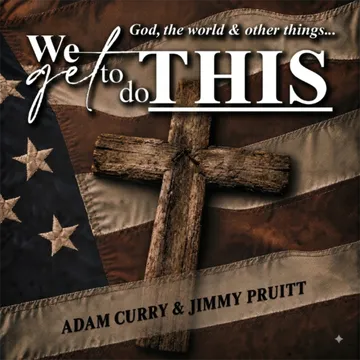
Episode 51 · Wednesday, 23 September 2026

The Gods We Make

From the mountains of Ararat to the halls of Congress, a deep dive into the geopolitical forces and digital idols challenging the modern Christian worldview.

By We Get To Do This | 1h 29m listen | 24 chapters
The Gods We Make cover
We Get To Do This · No. 51

About this episode

Texas Representative Chip Roy and Pastor Alan Jackson lead a global call for Christian civic engagement as Western nations face unprecedented restrictions on religious speech. The broadcast analyzes a recent report from Australia where traditional sermons are being classified as hate speech, alongside Representative Roy’s warning regarding the 1991 Muslim Brotherhood memorandum and its influence on modern American policy. These developments highlight a growing tension between Judeo-Christian values and a shifting political landscape that seeks to neutralize the church’s public voice.

Historical origins of the Muslim Brotherhood are traced back to British embassy funding in 1940s Cairo, suggesting the group was utilized by British Petroleum interests to secure Middle Eastern oil. The analysis extends to the Emgage organization and CEO Muhammad Gula, who describes the Democratic Party as a vehicle for advancing specific Islamic policy goals with support from the Open Society Institute. Domestically, the rise of biblical illiteracy is examined through the lens of the Tallarico pastor controversy, while Abraham Enriquez provides a counter-narrative by successfully mobilizing Hispanic voters through a pro-Christian framework in various Texas counties.

Personal moments include a defense of University of Colorado coach Deion Sanders after he was recorded praying in tongues, and a look at the Dura Pinar formation in Turkey where researchers claim to have found pottery predating the flood. The hosts also review the Plaud AI transcription tool and Mark Zuckerberg’s new Muse assistant, contrasting these utilities with the cult-like culture at Anthropic where employees reportedly held a funeral for a retired software version. The episode concludes with a reflection on C.S. Lewis’s 1948 wisdom regarding the atomic age as a guide for living faithfully amidst modern technological anxieties.


CHAPTER 01 / 24 Discussion

Opening Prayer and Introduction to We Get To Do This

The hosts open with a prayer dedicated to honoring God and fostering a global conversation between brothers in Christ. They welcome listeners from as far away as Japan to episode 51 of the podcast, dated Wednesday, September 23, 2026. The introduction emphasizes a welcoming atmosphere for those who are "Christ curious" or re-examining their faith.

jesus christ· japan· christianity· prayer· faith

00:00 Father, our heart is to honor you and to glorify you in everything we do. Even as we have these conversations on a mic with Record, going out all over the world, Father, our heart is to be two friends, two brothers in Christ, having conversations about the things that matter in life. Holy Spirit, we invite you to guide our conversation. Father, I also ask for our listeners that they would find themselves today challenged, but also encouraged and inspired and motivated. Father, I pray for those that have written in and have said that they're coming back to their faith. They're re-examining Christianity, re-examining Jesus.

00:42 And I'd pray for them that, Father, they would take that step of faith and come on in. As we like to say, jump in, the water's fine. So we invite them to do that. And Lord, we put all of this before you and we thank you that we get to do this. In Jesus' name, amen. Amen. It's Wednesday, September 23rd, 2026. We get to do this. It's episode number 51. This is the life we've been blessed with. This is a gift to faith. We get to do this. This is the chance we dare not miss. This is the life we get to do this. And hello, all the doers and get-to nation.

01:25 Hello, believers in Christ Curious. You are welcome to our little chat that we do once a week. I love it, man. We're getting our own vocabulary. We are our own language. You know, I have people from as far away as Japan sending me emails like, you know, I am kind of Christ curious. Well, you're welcome here. That's cool. Absolutely. All are welcome. I mean, that's the whole point of having a podcast: we're basically inviting you into a conversation. Yes. And about things that matter. And we think things that can really impact the world really change things. Well, for sure, people love just, you know, our take on what's going on, and they always feel encouraged and happier when they, oh, okay, that was a good show.

CHAPTER 02 / 24 Discussion

Culture and Christianity Conference with Pastor Alan Jackson

A report is given on a recent trip to the Culture and Christianity Conference in Nashville, Tennessee, hosted by Pastor Alan Jackson. Jackson, who leads a church of over 15,000 people, is described as a statesman-like voice for engaging the public square with a biblical worldview. The discussion highlights the importance of the church moving outside its four walls to influence modern culture.

alan jackson· nashville· tennessee· biblical worldview· public square

02:09 I feel good. Yeah, that's kind of the point. We like that. Yeah, if you want to have a code for what we're doing, it's step away from the ledge. Yes. Exactly. Don't jump. Exactly. Don't jump. Igbok. It's going to be okay. So now this really is a catch-up meeting because you and Day Manette went to Nashville. You went to the Culture and Christianity. Is that what it's called? Culture and Christianity Conference? It is a conference. It is a conference. Yes, it is. Tell us about it. Tell us what you learned. Tell us what you came back with. What exactly is it? Because it's, you know, and Tina and I were scheduled to go, and I called you before.

02:50 I said, bro, after almost two weeks in Europe and everything that's going on, I just needed to re-energize. And I felt bad. I was like, oh, man, I really wanted to be, because the four of us travel well. We have a good time together. So I felt bad about it, but it's just like, no, I need to reset. And I said, no problem. No worries. Exactly. There's always going to be another opportunity. I mean, we take trips together all the time. So there's always another conference, another event. So this event is something. This is our third year to do this event. Pastor Alan Jackson, not to be confused with the country western singer, Alan Jackson.

03:31 Yes. That's at A-L-N. No, it's A-L-L-A-N. That's the singer. Yeah. E-N. Pastor Alan Jackson, he pastors one of the largest churches in Nashville, or not in Nashville, in Tennessee. Over 15,000 in attendance on a given weekend. Huge, amazing. Can you imagine what his text messages are like during the week? Can you just imagine? He probably doesn't receive those. More than likely. I'm sure he is a guardian. I mean, you would have to. I can't even imagine, really. Great guy. He's a real statesman in terms of talking about the intersection of what we're doing, culture and Christianity.

04:10 And he became a sane voice about four years ago when I really started to dive into the waters of what does it look like to engage culture and step back into the public square with the voice of, you know, Christ-centered voice, a faith voice, faith-based, biblical worldview. And he was probably the most calm, sane, articulate. He speaks like a statesman. He's got that on him. He's 67 years old, 67, 68. And so he's seasoned. And I just love his heart, man.

CHAPTER 03 / 24 Discussion

Plaud AI Transcription Device and Ethical Recording

The conversation shifts to the use of a Plaud AI device, a specialized tool used to record and transcribe meetings and conferences. The hosts discuss the technical capabilities of the device, including its four-microphone array and summary features. They also address the ethics of recording others, noting that while Texas is a one-party consent state, it is polite to disclose the use of AI transcription tools.

plaud· artificial intelligence· transcription· texas· ethics

04:51 He's all about getting the church outside the four walls and getting our voice back into culture, back into the world where it belongs, which is pretty much what we're doing. doing with the podcast. Exactly what we're doing with it. So you sent me, I wrote these down. You sent me six points, which I'm sure came from your gadget. What is that thing called? Plaud. Plaud. Yeah, you love this thing. I do love it. Do you have it running right now just somewhere in your story? No, I don't. I've got it here. Oh, it's attached to your phone like a little spy device. Oh, cool. So that's it. Yeah, that's all. It just records anything and then makes a transcript and does summaries. Yeah, so you'll have the actual recording of whatever you're. It's got four microphones built into it, so it's actually decent.

05:35 And then it'll make a full transcript. Then it gives you summaries. It'll break it down into summaries, action points, questions. I mean, it's really sharp. Do you disclose when you're sitting down with somebody and you have it running? I do, yes. I just met with Pastor Brian. I said, hey, do you mind if I applaud this? He goes, no problem. On Zoom calls, I see this all the time. Like, what is going on? Oh, man, someone's got a robot transcribing this. I'm like, okay, all right. I can't remember what I'm saying. I think, you know, in Texas, actually, legally, you don't have to. This is one of those things. That's true. But ethically, I think you should. That's kind of nice. So, yeah, I think it's the right thing to do. Just so you know, brother, I'm recording this. Oh, just thank you. That's going to change where I was going.

CHAPTER 04 / 24 Discussion

Passive Church Culture and the Johnson Amendment

The hosts discuss how the modern American church has become passive, often prioritizing public approval over biblical truth. They argue that churches were historically misled by the Johnson Amendment into avoiding political engagement, a situation they claim was rectified by President Donald Trump. The segment references the founding fathers and early colonial governors as examples of pastors who actively led in the public and political spheres.

johnson amendment· donald trump· founding fathers· geneva bible· religious freedom

06:19 So, here's your points that you sent me: The modern church has become dangerously passive and soft, often prioritizing public approval and tradition over biblical truth. Boom. Okay. Yeah. So talk to me. Who was talking about this? Were these the main topics at the conference? I don't remember. I sent that to you days ago. Because, I mean, when you're at a conference, you're listening to 25, 30 speakers, and they get like 10, 15 minutes apiece. So it's like boom, boom, boom, boom. So try to keep track. That's why I need applause, actually. So I sent you just a section of one speech that someone gave.

06:57 I just don't remember who it was. I have to look back at it. But yeah, I mean, the church has, we stepped away from the public square because we didn't want to get involved in politics. Right. Well, we were psyoped into thinking you couldn't do that because the Johnson amendment, which turns out to be not only nothing, but also President Trump made very sure through the IRS that nothing would ever come of that. Yeah, no teeth. But yeah, this is, I think this really is the biggest problem we have is that, because of course we come from America was born out of God-fearing men, or were they just deists?

07:35 I can't remember. I only look at my founders. If you read the journals and even go over their Bibles, their Geneva Bibles that they were using, you will see that they were very much followers of Jesus. Most of them, there were some deists, but most were actually card-carrying members of the body of Christ. Many of them were deacons. A lot of the founding fathers were pastors. And a lot of the original governors in the colonies were all pastors. They were the leaders of the cult. But at some point, and that lasted, by the way, for 160, 170 years, preachers stepping into pulpits and talking about the things of life. Going on. What was going on? Particularly the invasion from Britain,

08:21 continuing to stake a claim on them and by tyranny and by force, subjugate them. And the whole point, they came over here was to get away from that. There's a pastor speaking to that. As we'll find, that British invasion, I don't think, personally don't think has actually ever stopped. I mean, they may have gotten rid of the Armada and the fleets, but they turned that into a financial control grid, which we've talked about before. We have. Christians are at a critical juncture and must actively engage with America viewed as the last bastion of speech and worship.

CHAPTER 05 / 24 Discussion

Religious Speech Restrictions in Australia and Hate Preach

A pastor from Australia recently warned American believers about the severe crackdown on religious speech in his home country. He described a new legal environment where traditional sermons are categorized as "hate preach," leading to bans on broadcasting services online. The discussion notes that speaking on topics like Islam or LGBTQ issues can now result in censorship or legal repercussions in the Australian landscape.

australia· hate speech· islam· lgbtq· religious freedom

08:57 Wow, that's a big one. That is a big one because we heard from a pastor from Australia who was, he says, I've been sent here by God to warn you. Ooh. Because we laid down. We did not fight. We did not stand up. And now we are under. He said, the things I will say to you today will be considered hate speech. And now they have a new category, hate preach. Oh, no. And he said, show title. Yeah, really. He said, within my, I was told that within my church, I could say anything I want, but I could not post it online. We could not broadcast our services any longer. In Australia? In Australia? Oh, they've clamped down on everything.

09:42 Wow. Because it all comes back to you're speaking hate. Wow. If you come against Islam, if you come against LGBTQ, RSTP, you know, whatever, you are speaking hate. Wow. Wow. Because we, you know, I mean, as of 2014, the landscape began to change in America where we were, we lost our foothold. That was kind of the last where, you know, Obama came in. That's why 2014 is politically related to the political landscape. Yeah, things shifted and culture took a different direction. And we began, we went from being celebrated to tolerated to despised.

CHAPTER 06 / 24 Discussion

Biblical Illiteracy and the Tallarico Pastor Controversy

The discussion addresses the rise of biblical illiteracy, which allows deceptive ministries to neutralize Christian influence. A specific example is cited involving a controversial video from a pastor associated with Tallarico, who allegedly questioned the resurrection of Jesus. The hosts use an analogy of a bank teller recognizing counterfeit money to emphasize that believers must know the real Bible to spot false teachings.

tallarico· sermon on the mount· biblical worldview· counterfeit money· theology

10:24 And that's where we are now in the world. I mean, you get eye rolls and mockery nowadays in culture. But interesting enough, the harder it gets and the more resistance that comes against Christianity, especially in America, the more the church thrives. It's really an interesting thing going on. I agree. And actually, this flows into point three that you sent me. Secular progressive groups work to neutralize Christian influence through deceptive ministries and propaganda aimed at pastors. I would say that along those lines, people have just become afraid to profess their faith.

11:06 But what I've noticed in my own life is when you just lay it out there, the decloaking is amazing. The amount of people who just go, hey, man, your brother in Christ, you know, praying for you publicly. Like, okay, if X is public, you know, but saying that certainly on email all the time. And why are we as believers so afraid? What, I mean, what has culture done to us? What is the downside? Okay. These are big questions, I know.

11:42 Well, I mean, I was just talking to Pastor Brian about this. Satan is a master at leveraging biblical illiteracy against us. When we move away from this book, and I happen to be holding a Bible in my hand, an actual Bible, not my phone. When we move away from this book, then we lose our ability to distinguish between truth and false falsehood. And so the enemy now will begin to run false things into the churches through the churches. I don't know if you saw the video of Tallarico's pastor, imposter pastor.

12:21 So just summarizing, what I saw him say was, and this is, I know this piece of scripture quite well. He was saying, well, Jesus might have risen from the dead, but maybe not. Maybe someone took his body. And that's literally in scripture. They will say that his body was stolen, but don't believe it. That's literally in the Bible. And this guy is saying, maybe, maybe not. There was an edit in there, by the way. I noticed that there was an edit because then he goes straight into, you know, light can't win over darkness or something. So there was some deceptive editing in the video, but I heard him very clearly say that piece. I'm like, really, bro? Have you not read this piece? It's been warned about for thousands of years.

13:06 So that was one of the trustees or board members of the church, I think. The pastor's a female. She's a woman. Oh, I don't know. I saw that video. I haven't seen that. And she's virtue signaling that, you know, we operate really mostly out of the Sermon on the Mount, you know, because, you know, Jesus' words, you know, to take care of the wandering soul, to bring in the impoverished, to, you know, feed the poor and all that. So, and I'm like, well, what about the rest of the Bible? And she even made a joking statement that, you know, we have a we have a lot of atheists in our church and a lot of LGBTQ. In fact, we have an illegal person living in our church right now. I mean, she's saying all this stuff.

13:48 Of course, she didn't know she's being plotted. She didn't know she was on camera. I'd seen that one. And, you know, all that says to me, though, because it goes back to what we're just talking about, is that the enemy leverages biblical illiteracy. When you do not know the truth, you cannot be free. The Bible says you'll know the truth and the truth will make you free. But if you don't know the truth, then you can't be made free by it if you don't know it. And it's like a bank teller. You know, we've talked about this before. Everybody knows this illustration. My mother was taught, she was a bank teller early on. She was taught how to recognize counterfeit bills, counterfeit money. And the way she was taught to do that was she never handled counterfeit money. Only real money. Only real money.

14:31 So she had a grid or a filter now for what the real thing is. So when anything false was to come through her hands, she would immediately recognize it. This is not the right way, wrong texture, doesn't feel right. It's not even wearing right. Something's amiss. And so it's the same way. way. The further we move away from this book, the more illiterate we become biblically. We don't have a biblical worldview. We have a worldview, and it's a mishmash of all kinds of things. And just, I'm going to give a definition of what that means to me, a biblical worldview, because it's thrown around very easily by all kinds of people. Like, what do you actually mean by that? To me, it means this is the owner's manual of my life.

15:15 And when I have a question about something, I go to that and I look at the scripture. And there's going to be all kinds of different scripture about my question, about what I'm looking for. But ultimately, the truth is always in there because it's consistent. It's consistent from Old Testament to New Testament. So what I am worried about is that politically, because you brought up Tallarico, this is a political issue between the Democrats and the Republicans. What happens is, hey, man, look at Tallarico. His pastor's no good. His elder's no good. He's no good. There, I said it.

15:57 And then nothing else happens. Right. This is the danger that America faces. And it's just because I don't, I've heard Tallarico's positions on things. I just don't agree with him. So we are, in fact, attacking him on his faith, which is obviously skewed and incorrect. But we got to be careful that we don't just do that. And like, okay, I did my bit. And then are we still going to go vote? Are we still going to are we still going to go out and what is it? And convince people of who they should vote for and talk to people about?

CHAPTER 07 / 24 Discussion

Representative Chip Roy on Islam and Sharia Law

Texas Representative Chip Roy is featured in a clip discussing what he characterizes as a "civilization jihadist process" aimed at undermining Western civilization. Roy references a 1991 Muslim Brotherhood memorandum and argues that Islam should be recognized as a political ideology designed to wage war on Judeo-Christian values. He asserts that while the First Amendment protects belief, the U.S. must maintain its foundation in Western principles.

chip roy· texas· muslim brotherhood· sharia law· first amendment

16:37 Are we just going to think we did it on social media? That's where we lose every single time because we feel good. Yeah, man. I showed that guy. I did. I did. I showed that guy. And, you know, you sent me some clips. We'll kind of fold into this because I really like this. The first one is Chip Roy. And, you know, the so-called Islam problem, the Muslim problem. I am not going to even try to debate theology with anybody. You know, am I going to go to someone, a Muslim, and say, hey, man, Muhammad isn't real? You know, it's like, I'm never going to win that. But when it comes into politics, that's where we can all play.

17:18 That's where we don't have to learn to be a polemicist. We don't have to learn, well, this is why Islam is wrong. No, no, no. We need to understand who the enemy is, which is not these people individually. It's not even the Bank of London or the city of London, but it is Satan himself, of course. And so Chip Roy does something here, which on one hand is good, but we have to follow it all the way through because this is about a document that is now 37 years old. And I'll just, where did you get this from? Do you know where you got this clip from by any chance?

18:00 He's talking somewhere. It's not. Yeah, it's a podcast. He was. Oh, it's a podcast? Okay. Here we go. So Chip Roy is representative. Is he from our district? He is, actually. Okay, here in Texas. But I have taken a specific and personal interest in this in trying to lay out what I believe is a war. And it's a war that was declared by the other side. And the phrasing that I try to use is you can't win a war if you don't acknowledge it exists. And you just opened this segment with a clip that I could provide and you can find hundreds of hundreds of Imams, hundreds of people that are cloaking themselves as reasonable and peaceful Muslims.

18:42 Mom Donnie himself, leadership in Dearborn, leadership in Minneapolis, you know, my colleague Ilhan Omar. I could go through a laundry list of examples, but particularly Imams in Texas who are carrying out, and this is important, the words war matter. And if you go back and look at the history, and I'm talking thousands of years history, I'm talking about the history all the way back to the Barbary Pirates and what Thomas Jefferson and our founders dealt with, all the way to now. And the history that goes back to pre-9-11, goes back to before the 1993 World Trade Center bombings.

19:20 In 1991, there was a memorandum produced by the Muslim Brotherhood in which they laid out their cause of targeting the West and in particular, the United States. And in that memo, there's a lot of stuff. But let me just read one element of it that I think is important. And it says, the process of settlement is a civilization jihadist process with all the words. word means. The Ikhwan must understand that their work in America is a kind of grand jihad in eliminating and destroying the Western civilization from within and sabotaging its miserable house by their hands and the hands of the believers so that it eliminated and God's religion is made

20:04 victorious over all other religions. Now, that's the Muslim Brotherhood memo. That is at the core of what is driving the vast majority of those who are Muslims who are carrying out the Islam faith in the United States. And we walk around as if we use the term radical Islam, but we don't acknowledge Islam itself at its core, believes in Sharia law, and it believes in carrying out that grand jihad against the West. So if we're all sitting here asleep, I'll stop filibustering here, but if we're all sitting here asleep at the switch and we're saying, well, this is America.

20:44 You can believe what you want to believe. We have the First Amendment ship that's not just for churches. It's not just for synagogues. It's not just for the agnostics or the atheists. It's also for the Muslims and so forth. Well, I would tell you, yes, you can believe whatever you want to believe in America. We're not going to force you to go to church, nor should we. But we can have a recognition of our Judeo-Christian values in our Christian society. And we do have the ability, and it's totally consistent with the First Amendment to have a civilization built on those principles, a rule of law and Western civilization built on those principles. And we can recognize Islam as what it is: a political ideology designed specifically to wage war with our culture, to undermine it, and to Islamify it.

CHAPTER 08 / 24 Discussion

British Influence and the Origins of the Muslim Brotherhood

The hosts explore the historical origins of the Muslim Brotherhood, claiming the organization was originally funded and influenced by British embassy officials in Cairo during the 1940s. They suggest that British intelligence used the group to maintain control over Middle Eastern oil interests, specifically through British Petroleum. This historical perspective frames modern radical Islam as a tool of long-standing geopolitical financial interests.

muslim brotherhood· egypt· britain· suez canal· british petroleum

21:29 True. But now I want to make sure we identify it where it is today. This is a document. If you've ever seen the document, it's like, you know, a copy of a copy of a copy. It looks all crooked and stuff, like it's from the CIA files from the 50s. The Muslim, so this came out during the so-called Holy Land Foundation trial, and people actually were indicted and sent to jail for what they were doing. They were conspiring against the country, and they were from the Muslim Brotherhood. This document came out in connection with CARE, the Council on American Islamic Relations.

22:09 They weren't, you know, no one was convicted because of a procedural mistake. Their Fifth Amendment rights were violated, so they became an unindicted co-conspirator. So that's why Governor Abbott has declared them a foreign terrorist organization in Texas. I'm not quite sure where we are at the federal level. But you have to understand that the Muslim Brotherhood, its origins, its true origin comes from Egypt in the early 40s when the British crown embassy officials in Cairo made a deal with the Egyptian prime minister that the Egyptian government would pay subsidies to the Muslim Brotherhood, all funded by Britain, and that Britain would put agents inside their organization.

23:01 And this was used later in the 50s during the Suez Canal crisis, where Nassar was saying, okay, we're in charge of the canal. This was a military leader. We're taking it over. And then the Muslim Brotherhood came in and they created a ruckus, and eventually that was more or less disbanded. But the Muslim Brotherhood never went away. And their funding, I'm telling you, has always been from Britain. Everything you see in the Middle East has all been Muslim Brotherhood. This entire switch to Islam, the radical Islam that they have, the thinking they have. You've probably seen the pictures of what Syria looked like, Iran looked like. Right.

CHAPTER 09 / 24 Discussion

Emgage Organization and Democratic Party Political Strategy

The political organization Emgage is scrutinized for its ties to the Democratic Party and funding from groups like George Soros's Open Society Institute. A clip features CEO Muhammad Gula explaining how the group uses the Democratic Party as a "vehicle" to pass laws and advance Muslim policy. The hosts also link the rise of the Muslim Brotherhood's influence in the White House to the Obama administration and the subsequent Arab Spring.

emgage· george soros· bernie sanders· hillary clinton· barack obama

23:40 That is all ultimately to control the oil, which was all in the Middle East, and British Petroleum had control of that. Now, this has never gone away. We're in a text, we're in a couple of text groups together, and we usually roll our eyes at some of these texts that come by. But I always look at what they're sending because a lot of it is, you know, the Muslims are going to kill us. Okay. Right. This was interesting. It was about a group called M-Gage, E-M-G-A-G-E. And so I started to look into this. Like, wow, okay, this is a group because now it's politics. This is a group we actually have to be aware of and keep our eye on. So M-Gage has both a 501c3 and a 501c4 and a super PAC.

24:25 So they have a nonprofit, and then they have a lobbying organization, which is not tax deductible, and then a super PAC, which is not supposed to be connected to anything but wink-wink-nudge-nudge. Of course, it is. So let's just talk about who's. who's funding this group. And then I want to play a couple of clips from their current CEO. Top of the list is the Open Society Institute. This is George Soros. He's a Brit. Okay. I don't care what you say about it. That's British money funding him. But that's not all. Silicon Valley Community Foundation. This is literally Silicon Valley. They have a vested interest in Muslims coming into work, and I'm talking about Indians mainly.

25:07 The Ford Foundation. Wow. Didn't see that one coming. The Tides Advocacy Foundation, but also the 1630 Fund, which belongs to the Arabella Group. These are very rich, very left-wing Democrat billionaires, really, who have been funding anything against the Republicans, Trump, et cetera. So a lot of this goes to the super PAC. You know the squad. So it's AOC and Elon Omar. So they've funded all of them. Now, what's interesting is that the current president, CEO, his name is

25:53 Gula. Let me see what Muhammad Gula, go figure. I could have remembered that first name. He became CEO September of this year, but he'd been with the group for quite a while. And when you look at his history and where he's coming from and how he doesn't even care who helps him, which side, this is where you need to look at to understand that this is a danger. So this is from a podcast, the Ansari podcast. It's from, it's not, it's not current, but that's okay. It's current enough. And here he is talking about using the Democratic Party as the vehicle.

26:31 And this is what we've seen. We've seen the Democrat Socialists of America team up with Muslims to win power in local government and federal government. But I had a mentor whose advice I was seeking. I asked him, I said, what do you feel like we should do? And he asked me, he said, Muhammad, what is your job? Like, what is your role in our community? And I told him, I said, well, technically, I am a political strategist and I give advice to what would be the best political decision for our community.

27:09 And he said, okay, what would you do? And I told him my honest advice would be to go with Harris. Really? So why is that? It is because the conditions that we need to advance Muslim policy and overall the movement, even for Palestine, could only, we only saw that pathway through the Democratic Party. It wasn't about Harris herself. It was about the reality that we did not have the Supreme Court. It was about the reality that we did not have the House of Representatives.

27:49 In that moment, we did have the Senate, but we knew that we would lose it based on the Protestants. But when you say something like that, because I know you're saying we as the Democratic Party, that sounds like you guys are biased towards the Democratic Party. No, I was saying we as M-Gage and the Muslim institution that uses, that works with the Democratic Party at this moment because of the current political environment. So when I say we, I'm not saying specifically the Democratic Party, but rather the Democratic Party is the vehicle of which we pass laws. If there was an opportunity for me to use a third party, I would have used it. These guys are schooled. This guy, and this organization has been around since 2008.

28:34 And also, it's important to remember when President Obama came into office and he brought Hillary in, of course, as Secretary of State. The first thing he did is he invited the Muslim Brotherhood to the White House. And I mean, he was a Muslim. He even made a mistake once on an interview and said, my Muslim faith, oh, I'm sorry, my Christian faith. Fine. But he brought the Muslim Brotherhood into the White House. Egypt had a huge problem with it. Three months later, Arab Spring. All Muslim Brotherhood. And I truly believe that's mainly the British Empire. Just got to keep all kinds of problems. And they wouldn't mind getting back at us what happened 250 years ago.

CHAPTER 10 / 24 Discussion

Hispanic Voter Mobilization and Abraham Enriquez

In contrast to other political movements, the hosts praise Abraham Enriquez for his work in mobilizing the Hispanic vote through a pro-Christian lens. Enriquez is scheduled to speak at their church on October 11th to discuss his success in organizing voters across various Texas counties. The segment encourages believers to move from "anti-Islam" rhetoric to active "pro-Christian" engagement in the political process.

abraham enriquez· hispanic vote· texas· voter registration· mckinney

29:19 I've thought about that. And it's just the financial world. It's the elites, the royal, the crown, etc. It's not your typical Brit at all, not at all. But that is a big part of it. And even our brother Muhammad in the Middle East, he's. he's written us. He said, oh, man, I wish this Muslim Brotherhood, they're the guys that are making all the problems. We're still waiting for Muhammad to have dreams with the man in white, and then he'll email us. Come on. We're ready to bring you father. So this guy and his group went to school in the Democrat Party to learn how things happen and learn how to do it. And of course, the Democrats, like, we've got this whole new block. We can get all these Muslims in and vote for us.

30:02 You know, no different from the black voting bloc or the Hispanic voting block. It's a lot smaller. It's a very small group, you know, 1% of the entire country. But they were like, God, come on in. This is good. And these guys went, yeah, show me how it works. And it was then that something clicked in my head where I was like, yo, engagement is the key to getting stuff passed. You hear this, brother? You hear this? Engagement. They know what they're doing. So I joined the Bernie Sanders campaign in 2015. Boom. I was just a volunteer doing phone banking, text banking, door knocking, trying to get the Muslim community engaged. And they give you a list to knock on doors and stuff like that. No Muslim names were on that list.

30:42 I was like, yo, this is weird. So I joined the Hillary Clinton campaign. And I worked for the Hillary Clinton campaign in Ohio in 2016. And I was working with the campaign on how to engage with the Muslim community. And the lists that I was getting did not have Muslim names on the list. And what I learned and my intention of joining these campaigns was to have an understanding of how campaigns work, but also how people make decisions on campaigns. So if we think for any stretch of the imagination that by yelling on Facebook or telling people their faith is no good, that this is going to change anything, we're wrong. We need this kind of engagement. This is what we as Christians and believers need to do.

31:26 This is how we save the country. And, you know, and I love our boys on the text group, but where's the follow-up, man? You know, it's like, what are we doing? And we have Matt Long, who is like right here in the church after service. He helps you get registered. Also, Abraham Enriquez. Oh, yeah. He is. He mobilized the Hispanic vote. That's a great example. He's got a big one, county after county after county. And he's a young man who's on fire, and he's doing this. In fact, he'll be speaking at our church October 11th. Oh, nice. Yeah, he'll be preaching. I saw him at the dinner we went to. The guy is great. Was he 26? Yeah, yeah. He's young. Anyway, we'll have him. But instead of anti-Islam,

32:06 pro-Christianity, go there. Don't be afraid. My whole thing's a setup. And you just took my punchline. I'm sorry. No, it's all good. It's all good. I feel like Tina right now. I didn't know you were doing that to me. That's why I sent you two clips. Because one is the problem. The second clip is the solution. That's when he was created. How do we do this? We need to completely reverse the lukewarmness of Western Christianity. A tepid applause, by the way. They were all in, though. They were trying to figure out. I mean, he was so good and so smart. And this is Dr. Jay Smith.

CHAPTER 11 / 24 Discussion

Dr. Jay Smith on Reversing Lukewarm Christianity

Dr. Jay Smith is quoted regarding the need to reverse the "lukewarmness" of Western Christianity by living the gospel 24/7. The segment features a famous Charles Spurgeon quote comparing reading the Bible and praying to breathing in and breathing out. The hosts emphasize that personal prayer and public profession of faith are the primary tools for winning spiritual and cultural wars.

jay smith· charles spurgeon· prayer· gospel· evangelism

32:47 I just thought it was hilarious because lukewarm. And then the applause is like, I know they all got into it because I saw this, but it's just like, it was like, okay, this is exactly the point that he's making. Lukewarmness of Western Christianity. And this is where your pastor has been amazingly efficient. We need to have a 24-7, 365, that means 24 hours a day, seven days a week, 365 days a year. We need to have Christians to live the gospel of Jesus Christ. When asked what was more important reading the Bible or praying, Spurgeon responded, what is more important? Breathing in or breathing out. And that's exactly what we need to do.

33:33 Love that. What's more important, breathing in or breathing out? Well, you kind of need both. That's a Charles Spurgeon quote. I never heard that. I love Spurs. I love that. That was really good. So the point is, and people don't have to be afraid of this. If you just say, yeah, praise God for that. Or, you know, you give off a signal, the believers will decloak. The people who don't know what you're saying will not hate you. This is my experience. Everywhere I do this, they will not hate you. You're the master at Can I Pray for You?

34:12 People don't even have to do that. Just show, just show that you are a believer. You'll be surprised how many people are like, oh, oh, oh, you're in the club. And that's what we need. That fear needs to drop away. You're not going to get stoned. You're just not. Fear's a smokescreen. Yes. Yes. From the devil. Of all the people I've asked for all my life as a Christian, say, could I pray for you? Yeah. I've never once been turned down ever. Right. That's a pretty good track record. And it's not because I'm so winsome or anything. It's just people genuinely appreciate it, even if they're not of your faith. The Muslim woman we prayed for recently, she was like, yes, thank you.

34:57 I mean, because I just said out loud, you need the Prince of Peace. And she was like, I want that. So people are open to that. Rita last week, you know, just, man, she needed prayer. I mean, people are open and ready. But the solution is, I want to repeat what he said. We need to completely reverse the lukewarmness of Western Christianity. Yes. We need 24-7, 365 Christians to live the gospel of Jesus Christ. Amen. And then when asked what was more important, reading the Bible or praying, Charles Spurgeon responded, what is more important, breathing in or breathing out? Amen. And that's the thing is we've got to get people praying again, but we've also got to bring out the book.

CHAPTER 12 / 24 Discussion

Deion Sanders and the Controversy Over Public Prayer

University of Colorado football coach Deion Sanders faced criticism from some Christians after he was caught on a live mic praying in tongues following a game. The hosts defend Sanders, arguing that he was simply taking a private moment to calm himself after a high-pressure event. They explain the concept of a "prayer language" to the "Christ curious" audience, demystifying the practice of speaking in tongues.

deion sanders· university of colorado· prayer· tongues· football

35:39 And that is critical to winning the war on any front, not just Islam. Islam isn't the issue. It's biblical. It's Christians being unbiblical. They're the danger because they're the ones who go online and spew all kinds of stuff. They're armchair theologians. They've got the spirit of Simon Cowell on them to criticize and judge everything somebody does. I saw this Deion Sanders clip where he bows his head. He'd just come off of a huge game at University of Colorado, had just come out of the locker room. He was sweating.

36:18 He was huffing and puffing. He sits down with the press corps, you know, after the game, and he paused for a moment. He bowed his head, didn't even realize he's on camera or the mic's live, and he prays in tongues for a minute. Oh, really? I did. Very light. I mean, just, he just, all he was doing is trying to calm his conversation. Period. He was like, I was just running and gunning one thing to another. And he's like, took a minute and people lost their crap over it. Christians. Who's Christian? Christians are upset with him because he didn't have biblical discernment. He didn't, he should. I'm going. The dude was wiped out and he took a moment to pause and the mic was there. And he just, you know, just a moment. And it was something that he did for himself.

37:02 He wasn't trying to make a spectacle out of himself. He wasn't pushing a theology. He was just praying for a minute in a way that he prays. And for the Christ curious who are new to this, you know, speaking in tongues, we call that your prayer language. Yeah. And, you know, that's what you should look at is what is my prayer language? How do I get my prayer language? It's not scary. It's not freaky. You're not levitating, anything like that. You're just not. You're not. I can say it because I've been through this and I still remember when I got my prayer language. I still remember it. So let's go to the book for a second because there's a pastor and his name is Turnborough.

CHAPTER 13 / 24 Discussion

Pastor Turnborough and The Paradigm by Jonathan Kahn

Pastor Turnborough discusses the book *The Paradigm* by Jonathan Kahn, which draws historical parallels between biblical figures and modern politicians. The book compares Bill and Hillary Clinton to Ahab and Jezebel, while framing Donald Trump as a modern King Jehu. The hosts analyze the comparison, noting that while Jehu was a flawed and crude leader, he was nonetheless chosen by God as an instrument of judgment.

jonathan kahn· donald trump· bill clinton· hillary clinton· king jehu

37:42 I don't know if you've ever heard of him. Pastor Turnborough. And he was on a podcast, the We Need to Talk podcast earlier this year. And this guy, he's a black pastor, and he speaks real fast. But it was, this came across my feed. Someone sent it to me. Like, well, isn't that interesting? So let's listen to this and then we'll see. He wants us to go to the book, but also a different book that talks about the book. So we'll get to the book when we get the book out and we get to the book, book, book. You were talking about some things about Trump and about how God has revealed how, you know, what this administration means. A lot of people have a problem when you speak on those things. I just wanted to take a moment to kind of shed light.

38:27 What's the issue? What were you saying? Because there's some things that you were speaking revelatory about as it related to the administration and Trump being in place and what that meant. So could you share a little bit on this platform? I don't care if the stones get thrown. No, when people are told something negative about someone and they believe it, people don't like to repent. They don't like to say that they're wrong. And they need to feel comfortable in their beliefs. Now, keep in mind that we have to put a whole, like I always say, I don't care about the sinners. They're supposed to be dumb. Okay. Bible makes that very, very clear. It says the wicked run from stuff and there's nothing even chasing them. So sinners don't even count when it comes to this equation. The Bible says they don't have wisdom. They don't even have enough sense to accept Jesus and Jesus died for them.

39:10 Somebody offers you eternal life and a mansion. You're going to reject that and keep on smoking. We can go to the club and pop bottles. Yeah, you go ahead with that. You're not even a part of the equation. Preach for a second there, brother. Back to the podcast. When it comes to Christians, most of them are just regular regular people. people who they don't like to change. So they believe certain things about certain individuals, and they've been told something for so long that they want to believe it. And again, I always tell people: Holy Spirit told me years ago: when the people pick the leader, God does not like him. When God picks the leader, the people don't like him. Well, this is what got me. I'm like, what? What is this? That's a good line. And he gives some examples. They didn't like Moses. They didn't like Jesus.

39:55 They didn't like David at first. All the reason they accepted David is because he beat Goliath out, and then King Saul still tried to kill him. See, so when God picks a leader, and here's the other problem: God picks a leader based on his purposes. He does not pick a leader so that you can keep your health insurance. God got bigger things to think about than your health insurance. He has bigger things to think about than your little Social Security. Watch this. He got bigger things to think about than egg prices and gas prices. I mean, come on. This was this hit me so hard. I'm like, and I'm sure we can find many other examples in scripture of God's chosen leaders and men who were, you know, hated, hated by people.

40:32 So he continues. And this is where it really got interesting for me. So, but the problem is, is that whenever God uses you, Satan will seek to mess up your character. I am amazed. There is a book. If we put this up, so they can just hear it. There's a book called The Paradigm by Jonathan Kahn. Every person that read that book said, I was wrong about Donald Trump. Every person. And guess what I've told people? Before you argue with me, read the book. Guess what they do? They don't read the book and try to argue with me. So let me know your mentality. You don't like to educate yourself. You just like to argue. So have you ever heard of this book? Yes. So Jonathan Kahn, you know, he's Jewish.

41:13 I don't know anything about him. So have you read this book? No, I've not read this book. I haven't read it, but of course I went to figure out what was about him. So the paradigm is, from what I understand, is he shows repeats of people and cycles and situations throughout history, all based upon what has been documented in the Bible. And so what this pastor is saying is from Georgia, he says that this is a biblical, I guess he gives it a biblical comparison from this book, The Ancient Paradigm. So here's the cast of characters.

41:56 Bill and Hillary Clinton are Ahab and Jezebel in this. Not hard to see, actually. So he's the king who did more evil than those before him, and the foreign-born wife who brought in Baal and drove the prophets out. So he's saying that Trump would be like Jehu. I mean, King Jehu. King Jehu, yes. Whose crudeness, and he wasn't, people, God was even particularly happy with him. But this, you know, he goes to Kings 10, 29. He did not, however, destroy the gold calves at Bethlehem Dan, which Jeroboam, son of Nabot, had caused Israel to sin.

42:41 Nevertheless, this is 2 Kings 10, 30. The Lord said to Jehu, you have done well in following my instructions to destroy the family of Ahab. Therefore, your descendants will be kings of Israel down to the fourth generation. It just goes on and on and on and on. I'll put all this scripture will be in the show notes. I'm like, wow, this actually kind of makes sense. And the whole book just goes on and on and on. And you look at it and like, yeah, that's Trump. And he, and he, he was there to, because I always consider the Clintons to be like middle management for the city of London. You know, they're kind of in the in between everybody. And then, you know, you got $100 million through your foundation.

43:22 But they've always, and there's still, she's still here. She's still cackling away, trying to, you know, get people to hate everybody else. What do you think of this comparison? Because it really struck me. I'm like, is this how we can look at the Bible as well as scripture at these repeated cycles? Well, I mean, I like looking back at history and then watching for recurring cycles. Sure. I mean, you see patterns emerge, right? That's why I think Islam is a legitimate concern because of the history and not because of what I'm seeing in McKinney or Frisco, Texas, or any of those, although those are outflows from that. But you see those patterns. But so I could see how you could do that.

44:06 I think you got to be careful. You're on kind of thin ice a little bit there when you start making direct comparisonal comparisons. I think you can look at and say the characteristics of King Jehu. Jehu was interesting because God did commission him. He genuinely commissioned him for a task. Jehu went after it with all of his zeal, and yet he never really became fully devoted to God. No. But yet he was chosen by God. Cyrus of Persia was chosen by God. I mean, scripture even says the heart of the king is in God's hand and he turns it as he wills. So, I mean, even when you have a wicked king, God will use him like a pawn

44:51 in the theater of history or the chessboard of history. And so, yeah, I think it's interesting. Man, I can definitely see parallels between Jezebel and Ahab, you know, but I've never dove into this enough to think to have a strong opinion on that comparison. True. I also don't recommend anyone get hung up on it. Yeah, it's something you could get hung up on, but I do see that he does have great zeal for our country, great zeal. He has, I would call him a God-fearer. Yeah. He has a fear of God in the sense of recognizing the importance of God and faith and religion.

45:34 Yes. But to say that he's taken that big, bold step over the line, some say he has, I don't know for sure. You know, so I don't know. That's an interesting comparison. I'd love to kind of deep dive a little bit more into Jehu, knowing that he was chosen as an instrument of judgment. I mean, he was used for that. So, but does that mean Jehu himself was redeemed fully? You know, clearly, clearly not really from what we can read. But I just going back to what he originally said: like when God chooses the leader, the people hate him. No, that's on. That's soft. That's so straight up right there. That is true. That is true.


CHAPTER 14 / 24 Discussion

Theological Tension Between Free Will and Sovereignty

The hosts engage in a deep theological discussion regarding the tension between man's free will and God's sovereignty. They reference Jesus in the Garden of Gethsemane as the ultimate example of submitting human will to a divine plan. The segment concludes that living in this tension is a necessary part of the Christian walk that fosters humility and dependence on God.

free will· sovereignty· garden of gethsemane· jesus· theology

46:13 This kind of brings me, because you said a couple of things. This brings me to a question that Tina and I had. We were talking to each other. Another Easter egg. When we pray, Lord, if it is your will, and so this is where, and we're newbie believers here, so we're four years into this. We're like, but God already knows what his will is. In fact, God already knows what we're going to do, God already knows the outcome. What are we actually praying for when we say, if it is your will? I know that we're not, I'm not praying for, please give me a million dollars, please make my life better.

46:49 I'm saying, Lord, if it is your will, let us have a great podcast today so we can fulfill, you know, the obedient to what you want us to do. And if not, then adjust us. But it's, do you understand the dichotomy here? Yeah, there's a tension. So if it's your will, well, his will is his will. So am I praying for me to receive obedience and do what he wants me to do? I see you smiling. You're looking at you like, man, this Christian is a lost brother. I got to say that. Not at all. Not at all. I mean, I've had to wrestle through all that in my own journey, you know, my own journey of faith.

47:27 We do live in tension constantly because we live in tension between two truths, and that is the free will of man that God gave us and the sovereignty of God. Can I just stop you there? So he gave us free will, but he already knows what we're going to do. He knows he sees the end from the beginning. But then, does that mean that we can still change? So here's my brain is okay. My belief on that is not every step is going to be the same. We're still going to end up where we need to be because he can see that. I mean, he's God. He's beyond time. Yeah. So he's not limited to linear time like we are, chronological time. So, so, but there's still within, okay, we're at point A.

48:11 We're trying to get to point K. In between, there's a lot of letters, right? Right. And there's a lot of variables in between. And I believe that in the sovereignty, in the plan of God, the outcome will be what he wills it to be. But the timing could be different because timing? The path I can take the long way around the mountain or I can go over there or through the mountain. You know what I mean? That's up to me. Those are decisions I make on a daily basis. But the outcome is going to be good. So because God is timeless, he has no time, yet we do. Maybe that's where the difference is. Like my free will, he knew that I was going to get here and be a voice for him wherever.

48:55 Right. How I got here and how long it took me, well, that was my own path. It's just the free will place. Sorry, Lord. I should have done it earlier. I've done it a long time ago. I'm a little late to the party. We all feel that way. We're still here. But you're here. I'm here. No, there's that tension that we, and this comes back to trust. Do we trust trust God? God in the bigger scheme of things? Even Jesus understood this principle, right? He's the son of man, but also the son of God. So he was flesh, human, but he's also fully God. So he already understands all these dynamics. And yet, under massive pressure in the Garden of Gethsemane, he still says, Father, let this cup pass me by.

49:36 Which is code for if there's any other way can we do this? And he asked that question, but then he comes back to the will. Yes. And he said, to the plan. He says, nevertheless. Yeah. Your will be done. Yeah. Yeah. Not my will, but yours be done. Wow. So we see that tension being played out in a very human moment. How do we use that tension? Is that the tension we can use in prayer? Can we use it just in our daily life and are meditating on scripture? I don't know about using it. I would just say it's a part of the game. It's a part and parcel with who we are. My amazing philosophy professor, Dr. Wallace Rohart, pulled me into his office one day and said, Pastor, he said, Mr.

50:20 Pruitt, is there a knot in your stomach? I mean, without any context, just says it. And I paused and I said, yes, there is. He said, only be afraid if it ever goes away. Boom. He was talking about living life in tension. Apparently, he could see that in me because I would question in class some of these things we were talking about, and I would bring a biblical perspective. But I was also willing to question my own interpretation of the Bible in it. So I was living in the tension, right? Yeah. Isn't that every day? Yes. That's what we do all day long. So I don't know that the tension is something to be used.

50:58 It's something to be acknowledged and to be embraced. When you embrace the tension of these dichotomies that we live in every day, then there's a peace that comes in that. So I trust God with the truth of the free will of man. We can make decisions. Somebody can choose not to hit the break at the stop sign in T-Bone and kill somebody. You know, was that God's plan for them? No, not necessarily. We can circumvent that. So much of our life is spent by embracing the tension. I would say realigning ourselves with him. Yeah. That's what this book does. That's what prayer does.

51:42 That's what having godly conversations with friends does. We learn from each other. We postulate questions and then sometimes we get answers and sometimes we just have to live with the question. Yeah. You know, in tension. So the tension to me is what grows us. It's what, but it also keeps us humble and it keeps us dependent on him. If you're a control freak, you're going to struggle following Jesus. The humility, the humbleness, humility is such a wonderful part of being a believer. And I'll give you an example. Yesterday, we had a Godcaster meeting with an existing client, big opportunity for us to upgrade this client to something else.

CHAPTER 15 / 24 Discussion

Godcaster Business Meetings and Public Faith

A personal anecdote describes a recent business meeting where the hosts openly credited God for their company's success. This led to a vulnerable moment where a potential client shared his own story of recovery from drug addiction in Malibu. The hosts reflect on the corruption often found in financial markets and the refreshing nature of finding other believers in the professional world.

godcaster· houston· malibu· business ethics· prayer

52:25 And so we're on a Zoom call and we're talking. And at a certain point, he was complimenting us on what we were showing. I said, brother, all glory to God because this is literally where this comes from. I know that. And what happened was the guy who can give us this deal or not, he says, you know, it's so true because I was a drug addict in Malibu and I was broken and I was, and now all of a sudden I'm here. I'm in Houston. You know, he has a great position. He says, and he just went on for a little bit.

53:02 And it was just like that. I've been in business a long time. And business is basically filled with deceit and lies and corruption. I mean, I'll never forget when we went public. That's a podcast for another day. The lies and deceit of the so-called honest financial markets and people and high-level people who just will lie to your face and come back and say, sorry, I decided not to do. I mean, but this, and this has happened to me time and time again when we're, because, you know, we're a Godcaster, you know, we, we have products for

53:39 believers around, you know, this is what we're doing. And every single, and we don't get every single contract, every single deal. But even if that's not going to happen, nine times out of ten, the person we are pitching to will say, before we hang up, can I just pray for you and your company and your project? And it is so wonderful. It is so wonderful. Hold on a second. I've been talking so long that my screensaver came. kicked in. Got to watch that. So I just want to briefly go back to what's going on with, as the president now calls it, super intelligence.

CHAPTER 16 / 24 Discussion

Mark Zuckerberg and the Meta Muse AI Assistant

Mark Zuckerberg and Meta have released a new AI assistant called Muse, which the hosts praise for its utility as a life organizer. Unlike other AI models, Muse is described as a "robot assistant" that focuses on tasks like calendar management rather than trying to mimic human personality. The hosts contrast this tool-based approach with the more advanced, search-oriented Grok AI.

mark zuckerberg· meta· muse· grok· artificial intelligence

54:20 I want to make a recommendation for people who hear us talking about robots. And there's a new player on the scene, not a new player, but there's a player on the scene who I think is doing something very interesting. Didn't expect it, could have expected it from him. And that's Mark Zuckerberg, Facebook, Meta, Instagram. Everybody uses his product. He has a new robot. It's called Muse. And while everybody is off focusing on big business and enterprise, and we're hacking each other, and the whole world's going to burn, and we're all going to die and slow it down, he has done something super interesting.

55:01 So you get this app, and you can use quite a lot of it for free before you have to pay for it. And you essentially get a computer in the cloud, and this computer is constantly running doing things for you. And this robot doesn't talk to you. I like that. It's just in a chat. You can hit the microphone and talk instead of typing. And it is programmed specifically to help you with your life like an actual robot assistant. It's not sucking up to you. It's not trying to tell you things. It says, hey, you want to give me access to your calendar? It can be read-only. There's nothing that it does that you don't allow it to. And it will make suggestions, reminders.

55:45 If you have a task, it'll set up different. It is truly a robot. In fact, I named mine robot. You get to name it right up front. Just name it robot. That's easier. An unbelievable experience. Not as advanced as Grokbot, which you and I are doing with different things that are going off and searching. But it is that level for consumers. It's not trying to turn you gay. It's not trying to make you kill yourself. It's really, I would recommend this. It looks like the Pillsbury Doughboy. I mean, there's a cartoony. I also like that. This cartoony is not trying to be innocuous.

CHAPTER 17 / 24 Discussion

Anthropic and the Cult-Like Culture of AI Worship

Professor Pedro Domingo critiques the company Anthropic, alleging that its employees treat their AI, Claude, with cult-like reverence. Reports suggest that staff held a funeral for a retired version of the software and view AI as a burgeoning "digital god." The segment warns against the "Effective Altruism" movement and the totalitarian tendencies of tech leaders who seek to regulate AI to maintain their own power.

anthropic· claude· open ai· pedro domingo· effective altruism

56:24 It's not trying to be a person or a thing, which is the opposite of what we are seeing in the Silicon Valley companies. And I just had to bring a few clips so we all can be aware. There's a group called Effective Altruism. They are the core of these companies. OpenAI, they were all in OpenAI. They still are. Anthropic came out of OpenAI, and their game is kind of: as long as we become billionaires, then we'll spend the money on the future people, which has no regard for you today, but it'll be good. They're nuts. They're nut jobs. They truly are. You can do a deep, deep study.

57:06 They are, nut jobs is not a nice thing to say. They are deceived and they are off the rails. I mean, if anyone needs God, they do because they're creating what they think is God. Now, to a bizarre look inside Anthropic, a new report describing a cult-like culture around Claude, including a funeral for one retired version of the AI. Our next guest says he's known the Anthropic CEO for years now and tells the New York Post, some inside the company are, quote, treating AI as if it's a human in disguise.

57:44 Let's bring in Pedro Domingo, Professor Emeritus of Computer Science and Engineering at the University of Washington. Some of the stories that are emerging are quite bizarre. What can you tell us that you've heard? They are indeed quite bizarre, and I think the public deserves to know that the AI scare is being driven by people who are honestly not completely in possession of their marbles. There's always been a lunatic fringe. That's another way to say it, the fringe of AI. And, you know, OpenAI was that lunatic fringe. And then Anthropic was the folks who left OpenAI because they thought AI wasn't paranoid enough about these things. The folks at Anthropic treat their AI, Claude, as if it's a human being.

58:27 Some of them even treat it as if it's a god and worship it. They held a funeral for a version of the. It's just a piece of software. But they held the funeral for one version of it when it was discontinued. They have it publish its own essays and poems and whatnot. It is very much like a cult. You know, like those crazy California cults that are waiting for the UFOs to come and save us. These people think the apocalypse is coming and there's an AI antichrist that they have to stop. There's an AI God that is being born and they are the, you know, they are the parents of that God.

59:05 and they are the ones who know what to do with it. They're going to tell us everybody else what to do. So, honestly, I'm much more worried about Anthropic than I'm worried about AI. Wow. This is the truth. That was a good statement right there at the end. And this guy is good. I like him a lot. He continues here. Ed. You also talked about the whisperers in the valley that employees of Anthropic have started worshiping Claude like an actual God. You know, it's interesting, Pedro. Anthropic keeps all of its employees, it keeps 80% of its engineers for at least two years. And apparently, that is the best rate of any Frontier lab, according to venture firm SignalFire.

59:46 So they're cultivating quite a culture there over time. Well, it actually works for them, right? Recruiting and keeping these engineers is very important. And because they're fanatics, recruiting fellow fanatics, they tend to keep them longer. Now, having said that, the people who originally started Anthropic are pretty fanatical, and they really filter for that when they hire. But not everybody they hire has the same beliefs. Some of them just pretend to. And others have them, but then they grew up. So actually, there's more going on in Anthropic than Dario Amode and his other fellow people who run the company believe. So just so we're clear,

1:00:27 you don't have to use their stuff. I mean, we don't have to buy into this. So this is why I'm recommending something that I believe is good. There's a lot of openness about what it's doing. It's not, you know, Zuckerberg wants to make stuff for people. These people are making stuff for themselves. And they want to be very rich themselves, which is why they're trying to do this IPO. One last clip from Domingos. Okay. So the Anthropic CEO wants transparency on regulations. Senator Kennedy wants a kill switch. So weigh in on all of this. Well, honestly, I wouldn't trust Anthropic or honestly any of these politicians to regulate AI.

1:01:09 Anthropic, you know, Dario in particular, they have these totalitarian tendencies. If we let them, they will end up, they will be our overlords in the name of the AI Messiah that they're bringing. Now, a kill switch, computers already have kill switches. It's called the power switch. Now, you can't actually turn your iPhone off, but you can put it down, let it run out of battery. I mean, but yes, you can turn it off. We are always in control. AI is not ever going to be in control of us unless we let it. Right? And honestly, there are these thousands of bills across the states to regulate proposals to regulate AI in all sorts of ways that are completely misguided.

CHAPTER 18 / 24 Discussion

Super Intelligence and the Pro-Human Conference

At the United Nations, the term "super intelligence" has begun to replace "artificial intelligence" in official discourse, a shift also noted by Mark Zuckerberg. The hosts discuss the Pro-Human Conference, which featured figures like Steve Bannon and tech pioneer Jared Lanier. Lanier, known as the father of virtual reality, provided a unique industry perspective on the dangers of deifying digital systems.

united nations· mark zuckerberg· jared lanier· steve bannon· virtual reality

1:01:50 AI, first of all, per se, should not be regulated. AI is a fundamental technology. Trying to regulate AI is like trying to regulate mathematics because some bad guys might use mathematics to design missiles. It's ridiculous. So when the president and the vice president say, no, we're not going to regulate it. It was interesting because at the United Nations, the president had a pretty good speech. I thought I liked him. He said, we're not going to call it artificial intelligence. It's super intelligence. I see Mark Zuckerberg talking about this Muse thing, which just came out a few weeks ago. He says super intelligence. So there's an alignment there. And what Zuckerberg is doing, I'm telling you, this is very interesting good stuff. All the things I hate about the anthropomorphization,

1:02:36 including the term artificial intelligence, is not there. It is a helpful tool that anybody can use. It'll create documents for you. It's like a computer inside your computer, inside your phone, that is doing things very much the way I've programmed my robots, the old school way. And it's doing a lot more. It may not be able to do everything that I have my robots programmed to do for, but for, I can't wait to get Tina on it. I didn't pop it on her this morning, but I want her because I think she will really benefit. I think anybody will be a hyper organizer.

1:03:13 Yes. This could be a great tool for her. It could also be very difficult for me because she'll start organizing me with it. So last clips, have you ever heard of the guy, Jared Lanier? I know the name. He's a crazy dreadlock guy, lots of silver jewelry on his hands, looks like a hippie. He is the, we would call him the father of virtual reality. And virtual reality goes hand in hand with artificial intelligence or machine learning or these large language models, if only for the parlor trick that makes you think you have an actual being that you're talking to.

1:03:53 That is the definition of virtual reality. You believe that this robot that is just guessing sentences. you believe it's a real thing talking to you. So he understands this very well. He went to the pro-human conference. He was the only guy from industry to speak there, which I liked. He actually got kind of cut off rather quickly, which was strange. I mean, he was making, I think, that pro-human conference, which was, you know, Bannon was in that, and our buddy Walter Kim, the ruler of all evangelical organizations. I think they have a different that's it seems like that thing was politically motivated and somehow Jared Lanier came in and they let him speak.

CHAPTER 19 / 24 Discussion

Jared Lanier on the Digital God Illusion

Jared Lanier argues that the tech industry is driven by a "compulsive religion" to create a successor species to humanity. He explains that the "Turing test" is being used to fool people into treating software as living entities, leading to social addictions and political distortions. Lanier suggests that the U.S. adds expensive "illusion" overhead to its AI models, whereas China focuses on cheaper, functional performance because they already have the Communist Party as their "god."

jared lanier· turing test· china· scarlett johansson· addiction

1:04:38 But he nailed it in three clips. There's a kind of a pseudo-religion or maybe it's even a full-blown religion that what's going on is we're creating this new successor species, this new super digital God, this new super being that maybe is better than people. And the only thing that matters is creating that and nothing else really matters. And you've seen many video clips today of people from our community talking that way. Like Peter Thiel not being quite ready to say he wants people to survive or the co-founder of XAI saying, well, we'll all die anyway. And it's like, yeah, well, how can they do that? Why would they want to do something? And it's because of this compulsive religion thing.

1:05:22 Now, the thing about that is you might find it surprising occasionally when they suddenly agree with something that seems reasonable. So in the last couple of days, we've seen some of the AI lab leaders say, yeah, a pause. We're into a pause. Now, why? It's a funny thing. But within our world, as long as the way, if you frame any kind of reaction to AI or any kind of concern about it in a way that emphasizes how intensely cool and powerful AI is, then it's all right. Do you follow that? So in other words, if you say, oh, yeah, it could kill us all. It's so powerful.

1:06:04 Yeah, we should pause it. The key part there is that you're reifying, you're reinforcing this idea that there's a super being. As long as that's the foundational message, then it just sails through. If that message is contradicted, it will not. It won't even be heard. Okay, so you need to understand our culture. You need to understand our language. And that's why the pause is suddenly a thing. So I like that he's unveiling this. And we all kind of intuitively knew that. Like, oh, this is marketing. They also kind of really, it's their culture. It's like, it's so powerful, man. Right. And we used to have this, like, yeah, man, this bike is so powerful, you know, it'll melt your face off when you're driving it.

1:06:49 Okay, so this is the nerd version of it. Because we have this intense compulsion to create this new life form, to believe we're creating the new digital God, we are urgently always trying to make it seem alive. And another way to put that is we're trying to pass what's called the Turing test, which is where you could fool a reasonable person into treating it as a living thing. Have you heard of the Turing test? No. A scientist named Turing, he came up with the test for artificial intelligence, for computers. And this only really got solved in the last 10 years. If there was any kind of computer or any type of system that could trick a human being into thinking that that particular device was an actual living entity.

1:07:37 Well, we've gotten there in spades, of course. So the Turing test, this has been a thing in computer science for decades and decades. And so we don't just present a tool that answers questions. We have to present a chatbot that seems to have a personality and has like a character and gets to know you and remembers you. They don't just get voices. Like in the old days in science fiction, before I was born, robots and AI used to have voices that sounded like robots in AI, so they were distinguished. That was better, but no, no, no, no. We're trying to make them sound like Scarlett Johansson or whatever. And so, why? Now, I want to point out something that I think is kind of important.

1:08:21 A lot of the argument for going full bore ahead, even if we say we might kill everybody, is that China competes. But have you noticed something interesting? When China makes a model of a given level of performance, it comes out cheaper than we do it. It's cheaper to make and cheaper to run. Now, I have a theory for overall why that is. It's because we add all this overhead for the digital god illusion that makes everything more expensive. And over in China, they already have their alternate god, which is the Chinese Communist Party. So they don't need to do to it. do it. They're freed of that expense. So they're trying to queue in the music. They're queuing the music.

1:09:00 They're trying to play him off. So I actually had my robot take the music out because it was really loud under his last point, which is this last clip. That illusion is expensive. That's the thing that hurts kids. That's the thing that creates addictions. This is it. This is his entire point. He's nailing it to the wall and they're playing him off. That illusion is expensive. That's the thing that hurts kids. That's the thing that creates addictions. That's the thing that creates political distortions. That's the origin of the deep fake. That, like, there should just, it violates multiple principles. It's fraudulent, intrinsically like, why do we do it?

1:09:43 It's expensive and it's not productive. Why do we do it? We could stop. We can present all the functionality, all the cancer cures, all of the help that we promise without the illusion of these fake people. Now, if we implemented these four things, would that guarantee safety? No. But these are all achievable things that would get us much closer and they're specific. So that music was running the whole thing. Oh, yeah, it got really loud. Wow. So I suppressed it with the Rye Robot. They wanted him gone. The pro-human conference. But Jared, I've never been a huge fan of his.

1:10:21 Massive fan about this. What he said here. He's like, this is exactly the stuff that has drawn us in, which is the opposite of what Muse is doing that Zuckerberg had. It's a tool. I'm a robot. I look like a squiggly thing. I'm here to help you. What can I do for you? It's not constantly pinging me like, oh, where do you want? What do you want to talk about today? No, no, no. None of that. You have these items on your calendar. You know, it's like, okay, I want to have lunch with Mike. And then I have to call, make a call after that. Okay, I see you got lunch with Mike at one. I'll schedule the call for 2:15 because it'll probably be, I mean, just simple stuff.

CHAPTER 20 / 24 Discussion

Value for Value Support and Listener Donations

The hosts explain their "Value for Value" funding model, which relies on listener support rather than traditional advertising or subscriptions. They read several letters and donation notices from listeners in locations including Fredericksburg, the Netherlands, and Arizona. Notable contributions include a $300 check from the Ostlund family and various "77" themed donations from longtime supporters.

value for value· sub stack· fredericksburg· netherlands· arizona

1:11:05 Using the computer, just with my voice, not some entity in the cloud that is going to love me and tell me I'm great. That's your best friend. Yeah. No, my best friend is right here. Hey, bro. Best friend is right here. Let's thank some people who supported us today. Value for value. We talk about it, but I want to make sure people understand what it is. Where's my where did I leave? I got a spreadsheet somewhere that I have open. I guess that closed while I was not looking. Value for value is a concept that we came up with a long time ago since we don't have any ads.

1:11:45 You know, there's no subscriptions. This is so tiring. Ads and subscriptions. No, we just give you the show. We give it to you full bore. Everything is there all the time. And if you want to support us, time, talent, treasure, best way to do is subscribe to the newsletter, wgtdt.com. It's a sub stack. So you also get the episode when it comes out, and we email you with whatever we're going to be talking about. wgtdt donations.com is where you can support us with uh the with with financial support and this is the great thing about value for value we just want you to send back whatever it was worth to you five dollars can be an awful lot of money for you that is your determination and we appreciate that and

1:12:32 value it just as much as someone else who can give away something of a higher amount for the same reason is how i've lived my life for the past 19 years and i hope to continue doing this for a long time to come and man i love what so the best part of the donations is the notes and so if you made a donation please send a note to notes at wgtdt.com it's all on our website so you don't have to remember it right now even the email addresses for adam and pastor jimmy we love hearing from you you can comment on the sub stack my favorite and ever since i've said this now tina's like oh man i got to go to the p.O.

1:13:12 box. I love it when people send stuff to the P.O. box. And we got a check, beautiful check from right here in Fredericksburg from Tammy and Eric Ostlund and family. Did they go to our church? Yes. And she sent a note. She says, no need to read it on the show. Sorry. She says, no need to, but I can. So I want to read this. And she sent us, the family sent us $300. It's just beautiful. Dear Adam and Pastor Jimmy, this is a long time coming. I love Curry and the Keeper living up in a down world. And now, WGTDT, thank you for all you do in spreading positivity and God's word. You are both so genuine. and it has been great to hear about your walk with the Lord. Even my 17-year-old listens weekly to WGTDT.

1:13:56 Hello. May the Lord bless you both. Thanks again, Jamie, Eric, Oslund, and family. On paper. Paper. It's actually written. Love paper. That is fantastic. Oh, we so appreciate that. That puts wind in our sails, man. Man, does it? It makes us want to come back and do it again. You and I get excited like that. Every Sunday and Monday, we're already going. Can't wait till Wednesday. Yeah, well, we're going to expand pretty soon. Come on. Yeah. Come on. There's too much going on in the world. We don't have enough time in this. Low-hanging fruit. Exactly. Michael Burdett. I hope I'm pronouncing that right. $88.88. Greetings, Pastor Jimmy and Adam. This is my donation to declare my new beginnings.

1:14:40 I'll send you a note. Mike Burdett in Richmond Hill, Georgia. This is all I have, Mike. So if you have more, I'm curious about that. Yeah, me too. I want to hear from him. Andrew Goodman, 77 and 77 cents. People love the seven numbers. Nice. Longtime supporter of No Agenda here. God bless you, Adam and Pastor Jimmy. Your analysis of current events with biblical insights is highly, highly valuable. Thank you for your work. Keep it up. And we certainly look forward to doing that. $77.77 from Ryan Tierney. Love the news deconstruction from a Christian perspective. Exactly what we're trying to achieve, brother. Thank you so much. Steve Weiss, we know Steve Weiss.

1:15:20 Steve. 77 and 70 cents. Thank you, men, for the work and words each week. Keeps me sane out here on the road. Steve Weiss. And I think he's in doing a lot of touring right now. He is doing touring. There's Pastor D Darius Walker, $77.14. Just want to be a blessing to you both because you are a blessing to me. Thanks, P.D. Appreciate that, brother. Michael McWilliams, $66.40. And he's from Gilbert, Arizona. Hi, Pastor Jimmy and Adam. This wouldn't fit in the donation box, but I try to keep it concise. This is always when you know a long note is coming. I absolutely thrive on my cycling day on Thursdays as I get to not only just ride my bike, but also am fed by the WGTDT podcast during my ride.

1:16:09 I can't tell you guys how encouraging you are each and every week in effectively bringing games of the world into focus while in parallel demonstrating the strength and comfort that being a Jesus believer provides to each of us who knows where we're going in the end. From Pastor Jimmy's speaking the truth and sharing on-the-fly verses to Adam professing his faith over fear attitude, I know that you both are providing a lot of comfort and clarity to the get-to nation. One of my favorite verses, which always comes to mind when I listen to WGTDT: keep thinking about things above, not the things on earth. Colossians. Colossians 3.2. Keep up the amazing work, my brothers. Mike McWilliams.

1:16:48 Thank you, Mike. Thanks, Mike. Now we got a two-fer. We got checks. Again, beautiful checks with a real check. Yeah, photocopy check. $62. This is for my birthday, which we share with WGTDT from Jill Holbrook. She says, happy birthday, Adam. And Mike Holbrook, also $62. And he says, y'all will get more next year because it'll be $63. Wait, I'm 64. When it's your birthday, brother. When it's your birthday. Thank you both. Jill and Mike. Love you guys so much. Now from Dordrecht in the Netherlands, Bart's very $55. And he says, Dear brother Adam and Pastor Jimmy, here with an international donation.

1:17:32 Being a No Agenda fan, I now have two favorite podcasts. I really like the concept, Topics, Humor, and the Weekly Inspiration. Mostly, I listen driving my car. After the No Agenda episode, Asymmetric Intimacy, it made me think, I know a lot about you, but you don't know me. But somehow I really feel the connection. I reckon I am not alone in this. A few episodes back, you mentioned Philippians 4, 6-7. Don't worry about anything. Dot, dot, dot. Then I realized the Lord is working globally. That was the exact scripture I was memorizing that week as I was driving on the cloud. You can imagine that. So multiples. All the best and God bless from Bart Ofricha.

CHAPTER 21 / 24 Discussion

C.S. Lewis on Living in the Atomic Age

Pastor Milo Curtis from Norfolk, Virginia, shares a 1948 quote from C.S. Lewis regarding life in the atomic age. Lewis argued that humans should not exaggerate the novelty of their crises, as death has always been a certainty. The hosts apply this wisdom to modern fears about AI and global instability, encouraging believers to remain "faithfully present" in their ordinary duties.

c.s. lewis· atomic age· norfolk· virginia· faith

1:18:14 $50 from Todd William. Thank you, Todd. Holly Erlandson. Thank you, Holly. $50. We'll see you at the meetup on the 17th, Holly, here in Fredericksburg. You know, there's a meetup on the 17th? No, I didn't. Okay. Can you come? For NA? Well, it's now NA, WGTDT. Are you kidding me? On the 17th. 17th. If you're here, that'd be great. Check my schedule. Milo Curtis sends us $41. $41 is the 40 days, the 41st day. I love it. This is a new thing. this 41. And this is not a short note, but I feel we should read it. ITM from Norfolk, Virginia, Pastor Jimmy and Adam. Over the past few weeks, I've appreciated how you've engaged with the media's persistent hysteria about AI.

1:18:59 While the technology raises legitimate ethical and moral questions, those who follow Jesus need not give in to irrational fear. And he has, I love this. Writing in 1948, amid the fears of the atomic age, C.S. Lewis offered the following counsel. This is good. I really love this. He says, note, shortened for brevity. Thank you. Do not let us begin by exaggerating the novelty of our situation. Believe me, you and all whom you love were already sentenced to death. It is perfectly ridiculous to go about whimpering and drawing long faces because the scientists have added one more chance of painful and premature death to a world which already bristled with such chances and in which death itself is not a chance at all, but a certainty.

1:19:46 I love C.S. Lewis. Wow. If we are all going to be destroyed, may we be found doing sensible and human things: praying, working, teaching, reading, listening to music, bathing the children, playing tennis, chatting to our friends over a pint, and a game of darts, not huddled together like frightened sheep. They may break our bodies, but they need not dominate our minds. C.S. Lewis from On Living in the Atomic Age from 1948. Now I have to go and read that. And this is Pastor. He's a pastor, actually, Pastor Milo Curtis. I don't know who he was, Pastor. Every generation is tempted to exaggerate the novelty of their situation and believe that the crisis and the crises and threats they face are unlike anything humanity has ever known.

1:20:30 In some respects, new technologies and circumstances may indeed present distinct challenges, yet Lewis's larger point remains. Human beings have always lived with vulnerability amidst profound uncertainty. It is helpful to be reminded that, as he wrote, we are already sentenced to death. The proper response then is neither denial nor panic. It is a faithful presence. This is so good. It is a faithful presence that is prayerful, temperate, courageous, and fully engaged in the ordinary duties and joys God has given us. Love the podcast. Appreciate the good work that is being done for the kingdom. This is it, man. He just, he just, Pastor Milo Curtis nailed it there.

1:21:12 Nailed it. Boom. And isn't that the best thing about being a believer? Like, I know where I'm going. I know where I'm headed. I'm not afraid of it. That's right. And when my time is, that's my time. You know, for me, people get all whacked out about, oh my gosh, the end times, the tribulation. It's going to get worse. And I'm like, but it's going to get better. Like, yay, bring it. I mean, we step right over that. You know, that's just going to be a speed bump compared to eternity. And that's our heart for all of our listeners that you would come to know Jesus Christ. Like, we know him. We're excited. We're obviously excited about it, or we wouldn't be doing this and pouring our hearts into this.

CHAPTER 22 / 24 Discussion

Final Donor Acknowledgments and Global Impact

The show concludes its donor segment by thanking individuals like Tyler the Mailman, who credited the podcast with bringing him back to church. They mention resources like "Apologetics Canada" for those struggling with the historical authenticity of the Bible. The hosts reiterate their mission to spread the gospel of Jesus Christ globally before moving into the final segment.

john and romans· canada· mailman· apple pay· gospel

1:21:52 And we both have other jobs. We're doing stuff. But we love this because we want to get the good news out there, the gospel, that Jesus Christ lived the life we should have lived, and he died the death we should have died, and he did it in our place. And he did it for us so that we could know him and be reconciled to God and spend eternity with him. And you had more to read there. I do. Andrew Goodman, 3483. Jay Woodruff, $20. Adam and Jimmy, can't help but notice the irony of talking about anthropomorphizing the AI made by a company called Anthropic.

1:22:29 It's not by accident, my friend. Also, any Christ curious having trouble with the Bible and their spock brain should check out the Can I Trust the Bible YouTube series by Apologetics Canada. I haven't looked at it. Lots of real evidence for the authenticity of biblical texts. I always like that. Faith is required to believe, but the historical authenticity of the text is a knowable fact. That is very helpful, Jay. I'm going to take a look at that myself. Jerome Sweezy, $20. He says, too much to say here. Blessings. Thank you. Tyler Neck with 1111 for growing the faith which is true, historical, and verifiable.

1:23:08 I appreciate you two. Thanks for bringing me back to church. This podcast, John and Romans, brought me back to life. Tyler, the mailman. Amen. Tyler, that is awesome. We are honored to walk with you, brother. Indeed. Wow. Sir Cascadia, who is also no stranger to the podcast. $5. Thank you. Nicholas Stark came in with $5 twice. Thank you, I guess, for the past episode. We appreciate that. Michael Mason, $3.14. I see you, $3.14. And Dwayne Spell. Spellman Jr., $153, as he promised he would do for every single episode. Thank you all so much for doing this. WGTDT Donations.com. There's many ways to support us.

1:23:51 Even I think your Apple Pay, you can set up a recurring donation. You can subscribe to the sub stack. It's free. Don't get suckered into thinking you have to pay, but you can if you want to. So any support like that. And really, just with your time and telling someone about it, that's what we want to do. We want to grow this podcast as far and wide as we can. We're already making a difference in the international waters. So that's awesome. Brother, you did one of my favorite verses today in the Daily Grind. And somehow I think the format of the show is starting to form where we just ended on your daily grind because it is so good.

CHAPTER 23 / 24 Discussion

Archaeological Scans of Noah's Ark in Turkey

Journalist Lauren Witzke is reporting from the mountains of Ararat in Turkey, where researchers are conducting scans and drilling at the Dura Pinar formation. The team claims to have found pottery that predates the flood and fossilized seashells at high altitudes, suggesting the region was once submerged. While the hosts note that Christians do not need physical proof for faith, they find the tangible evidence for the biblical account fascinating.

mount ararat· turkey· noah's ark· lauren witzke· archaeology

1:24:32 And this is one of my favorites. All right, brother. One thing before I do that, this is something to watch for. Kind of keep your eyes open. I've been sort of following this, more curiosity than anything. But on X, there's an account called Noah's Ark Scans. Oh, yes. Yeah, this is great. So there's a reporter, journalist named Lauren Witzke. She's with them. She's actually on the mountain. She's getting to see it all first. Where is this taking place? It's close to the mountain. It's part of the mountains of Ararat. Right, right. So that would be in Turkey, right? And so the place is called, I'm trying to remember, oh, Dura Panmar.

1:25:13 Dura Pinar. That's the formation that they have found that looks like a big boat. You've seen pictures of it, I'm sure. Yeah, no, of course. That's fascinating. So let me just read this from Lauren. She's reporting and she's documenting this whole thing. So they've started drilling now. They've done all the scans. They're saying they're finding things. But this also happened. This is fascinating. So greetings from the mountains of Ararat. Pottery that predates the flood era has been directly found outside of the remains of Noah's Ark. The pottery predates the flood, but is made from material consistent with pottery used during Methuselah and Noah's lifetime.

1:25:55 It's quite possible that this pottery was used to store food and supplies on the ark and was used as Noah's family exited the ark and set up camp. The Bible says that Noah was living in a tent after the flood. In addition to the pottery, fossilized seashells can be found all over the area, proof that at one point this entire mountain region was submerged underwater. Turkish News asked me what the Noah's Ark scans findings would mean to American Christians. And I told them that Christians in the USA don't need to see the Ark to have faith in God. That's right. Great answer. But having tangible proof of his existence would help American Christians fight back against false doctrines and evolutionist theory targeting our youth and taking over our educational system.

1:26:40 So that's just one report from Mount Ararat. I think this is fascinating. So I'm going to keep an eye on that and just kind of track with that. Yes, they're doing the drilling right. Very cool. So they'll be reporting as this continues. So check them out. And I got to tell you, the guy who lives behind us in the RV, Michael, Michael's different, but he was building a boat. And you know what? I'm like, I'm paying attention to him, man. When a guy like Michael starts saying he's going to build the boat, Kenland, I hear you, brother. They thought Noah was a wacko. Yeah, exactly. So today's Daily Grind is titled Don't Take the Rage Bait.

CHAPTER 24 / 24 Discussion

Daily Grind: Avoiding the Rage Bait

The final "Daily Grind" segment focuses on James 1:19-20, advising listeners to be "quick to listen, slow to speak, and slow to become angry." The hosts warn against falling for "rage bait" on social media and encourage listeners to rely on the Prince of Peace to maintain their calm. The episode ends with a prayer for grace and an invitation to return for the next broadcast.

james· prince of peace· social media· prayer· anger

1:27:23 And it's found in James. I'm using the scripture. James chapter 1, verses 19 and 20. Maybe your favorite. It is right up there. Yes, definitely. Here it is. Be quick to listen, slow to speak, and slow to become angry. For man's anger does not bring about the righteousness, the righteous life that God desires. So it's called Don't Take the Rage Bait. If you believe everything you see on social media news feeds, you would think the entire world is raging on a daily basis. I don't believe that's entirely true, but that's another conversation. However, anger is a real issue, and the enemy will leverage outrage to take you into dark places. James gets right to the point. Be quick to listen, slow to speak, and slow to anger.

1:28:07 One mouth, two ears, do the math. Today, notice the pain and anger points that tip the scale for you. Confess them to God and ask for his grace to take a step back before you reach a full boil. The Prince of Peace is available to you 24-7. And here's today's prayer: Father, before I forfeit my peace and calm, intervene and remind me to be quick to listen, slow to speak, and slow to anger. anger. In Jesus' name, amen. And we will be back next Wednesday with another episode of We Get To Do This. Be blessed, everybody. We'll see you then.