

Episode 46 · Wednesday, 19 August 2026

Islamophobia

Religious leaders and constitutional experts weigh the collapse of secularism in Michigan against the rise of gospel-centric outreach to Muslim communities across the West.

By We Get To Do This | 1h 33m listen | 14 chapters
Islamophobia cover
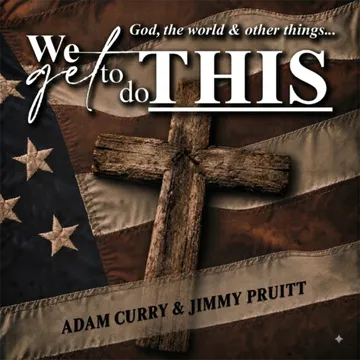
We Get To Do This · No. 46

About this episode

The TPUSA Faith Pastors Gathering in Santa Barbara recently brought together 500 leaders, including Eric Metaxas and Greg Laurie, to pivot away from political nationalism toward biblical discipleship. This shift comes as Texas Representatives Keith Self and Chip Roy expand the Sharia Free America Caucus to 60 members, arguing that Sharia governance fundamentally conflicts with the U.S. Constitution. The movement highlights a growing tension between national sovereignty and the First Amendment protections analyzed by legal scholar Ilya Soman regarding the deportation of religious adherents.

In the United Kingdom, a 262-page report commissioned by Rupert Lowe exposes systemic failures across 149 districts where police and social services ignored organized rape gangs to avoid accusations of Islamophobia. Meanwhile, the city of Hamtramck, Michigan, demonstrates the friction between secular progressivism and Islamic governance after its Muslim-majority council banned pride flags. These institutional collapses contrast with the grassroots efforts of Pastor Darren Tyler and evangelists in Dearborn who advocate for gospel-centric engagement over state-led ideological warfare. Historical analysis from Raymond Ibrahim further suggests that the alliance between the secular left and Islamic groups is a strategic partnership against Christian civilization that ultimately fails to address deep spiritual needs.

Personal encounters in San Antonio and mission fields in Mozambique reveal a human side to these global shifts, where individuals report transformative spiritual dreams of a man in white. Erica Kirk shares a powerful testimony on the cost of truth-telling and the necessity of forgiveness following the tragic loss of her husband. The program concludes with a reflection on the importance of community brotherhood in the American church as it approaches its first anniversary on September 3, 2026.


CHAPTER 01 / 14 Discussion

TPUSA Faith Pastors Gathering in Santa Barbara

A gathering of approximately 500 pastors took place in Santa Barbara, California, hosted by TPUSA Faith. Speakers including Eric Metaxas, Rick Green, and Greg Laurie emphasized a return to gospel-centric preaching and biblical discipleship over political rallies. The event focused on equipping church leaders to engage with culture through the lens of scripture rather than prioritizing nationalism.

tpusa faith· santa barbara· eric metaxas· rick green· greg lowrie· pastors conference

00:00 Abba, Father, we are grateful, Adam and I, that we get to come and do this today. We get to do this. It's a privilege to do it. We don't look at it as an entitlement or a right, but a get-to. And we don't got to either, to use bad grammar, but we get to do this. Thank you, Father, for your presence, even as we talk and discuss and talk about what's going on in our world. And Father, where we find the crossroads between culture and Christianity, we commit this to you. We consecrate it to you. We pray for our amazing listeners and just the amazing feedback we've been getting from them. Father, it is our heart for them to grow and to develop and to continue on their journey of faith.

00:43 In Jesus' name, we honor you. Amen. Amen. It's Wednesday, August 19th, 2026. We get to do this. This is episode number 46. This is the life we've been blessed with. This is a gift for you. We get to do this. This is a chance we dare not miss. This is the life we get to do this. Yes, we do. Hello, get to nation. And to all the doers out there, you did it. I did it. I couldn't help myself. It's excellent. Hey, brother, how are you doing? Brother, I'm doing fantastic.

01:24 As my old boss, Dave Rams, used to say, better than I deserve. Yeah. So even though it sounds like we're right across from each other, you are on the road once again. Appreciate you dialing in for our little podcast here. Absolutely. What are you doing? We are suffering for Jesus in Santa Barbara, California. Oh, yeah. The suffering is great. Suffering is great, brother. Somebody's got to do it. Well, we were invited to be a part of this relatively small gathering of pastors in Santa Barbara by TPUSA Faith, their faith division. We'd never been to this event. We were invited last year, and we actually had scheduled to go. And we'd traveled so much.

02:09 I was traveled out, and we both said, let's not do another event. Let's stay home. So we didn't go last year, but this year we planned ahead. And it's been a fantastic experience so far. And we've got, this is the last day of it. I think Annette's going to head over and she's going to record for me while she's not, while I'm not there. Then I'll join her after this. But yeah, it's been great. They've had a lot of big lineup of speakers like Eric Metaxas and, oh, gosh, it's a long list of people. Rick Green's here. We ran into Rick and had a good reunion there. And it's always fun to see each other outside of our normal environments and catch up.

02:53 And so it's been great. It's been already a day and a half, and this is the last day. It's like a half day today. And yeah, just encouraged, motivated. And the thing that was a surprise to me, I thought it would be a raw-raw America and raw-rah Donald Trump meeting, and it has not been that at all. Interesting. It has been gospel-centric. It's get back and preach the gospel. Nice. We had Pastor Greg Lowry was here on the first night, and it was the closer for the first night. He got up and narrowed a word about politics or anything.

03:35 It's like brothers because he's talking to pastors. How many pastors? You said relatively small. How many pastors are there? Yeah, about 500. About 500. It's an intimate group, an intimate gathering. Yeah, a tiny group. Yeah. I mean, as you know, we've been to a lot of conferences that are big, and this is a smaller group. And what's so cool about it is that they have these dinners, they had a reception. So there's a lot of opportunities to mix and connect with people. I've got friends here that we didn't know we were all going to be here. So we've had some family reunion moments as well with some dear pastors and friends that we ministered alongside of

04:14 a number of years ago back in Abilene, Texas. We got to catch up with them. But the whole thing, the whole tone of it is get back to preaching the Bible, teaching your people, making disciples. And if we will do that well, our people will indeed be equipped to engage culture because you cannot teach the Bible without the go therefore. You know what I mean? Yes. Go and as you are going. That's the cultural piece. And so it has been a great surprise because I've been to a lot of ra-raw America rallies that just I'm kind of done with that, honestly.

04:50 I mean, I love my country, but the idea of being gospel-centric and then other things spin out of that as opposed to. to country before God. It's God before country. So it's all this has been. And honestly, I didn't expect that here. And it's been a great surprise. I love that. I love that. And of course, today on the show, it's going to be a mix of things. God, the world, and other things. Yes, indeed. Yes, indeed. And I kind of got to go back to last week as,

CHAPTER 02 / 14 Discussion

Acts 17 and Shifting Perspectives on Muslim Immigration

A discussion of Acts 17:22-28 highlights the Apostle Paul's approach to the religious culture in Athens as a model for modern engagement with immigrants. Rather than viewing the arrival of people from Muslim nations through a lens of fear or invasion, the perspective is offered that God may be bringing the nations to the West to provide opportunities for sharing the gospel. This shift in perspective encourages Christians to move from a defensive posture to one of Christ-confident outreach.

acts 17· apostle paul· athens· muslim immigration· fredericksburg· great commission

05:27 you know, there was a lot going on. There's been a lot going on in my life in general, but there was a lot going on. People yelling on social media and text groups, you know, Texas, of course, is, you know, we're under complete invasion by Muslims. I keep seeing the same map of 5,000 mosques in 24 months. Absolutely not true, but it just keeps on being repeated. And as I'm just observing this, like, I want to say thank you, Holy Spirit, because out of the blue, it just hits me. And when we talked about this, we went out to dinner Friday night, the four of us, for an early birthday celebration for me, since I won't be here.

06:07 And if people get the newsletter, if you don't sign up at wgtdt.com, it's free to sign up and subscribe. I was in a straitjacket. Thank you. I love that. Thank you, AI. I mean, I came in. I was like, man, we can't talk too much about it. We just got to tell you what happened and what was on my heart and what the words I was hearing. And I had to look it up because I think we're all, I don't want to say we're all because at the same time as I was thinking of this, something you've said several times throughout the past few weeks on the show, either before or after or on the show, kept popping up in my mind.

06:49 And it goes back to our brother Muhammad in Bahrain, who sent a note. And I think we are, I think on the show, it's like, hey, we still want to get him for Jesus. And you've said this several times. Wow, man, it would be great to, I want to tell these people the gospel. And so everything started to click in my head. And Acts 17 came up. And this is verse 22 through 28. And so I'll read the New Living Translation, but I have some commentary. So Paul, standing before the council, addressed them as follows.

07:28 Men of Athens, I notice you are very religious in every way. So he's going into Athens and he's not, he's observing first. It's like, hey, I noticed something. You guys are pretty religious. As for walking along, I saw your many shrines and one of your altars had this inscription on it to an unknown God. This God whom you worship without knowing is the one I'm telling you about. So he starts right off by talking about their unknown God. So this is what an approach he has here. What an unbelievable approach. He is the God who made the world and everything in it. Since he is Lord in heaven and earth, he doesn't live in man-made temples.

08:10 So now he's starting to shape his message a little bit. And human hands can't serve his needs, for he has no needs. He himself gives life and breath to everything and he satisfies every need. From one man, he created all the nations throughout the whole earth. I don't think any religion really disputes that part, maybe. He decided beforehand when they should rise and fall and he determined their boundaries. His purpose was for the nations to seek after God and perhaps feel their way toward him and find him, though he is not far from any of us. And here he comes. For in him we live and move and exist. As some of your own poets have said, we are his offspring.

08:50 And so now he pulls out their poets, not his, their poets. And we came to your house. I'm like, man, we're doing this wrong. We got to go after these people. And so we didn't talk too much about it. We tried to restrain because we wanted to keep it fresh for the show. But then on Sunday, you delivered such an amazing message in the cultural briefing part of your, you know, the reborn series that you're doing. I had to pull a clip just so I can share that with everybody because it was just so on point, so good.

09:31 I just want to play this about a minute and a half. It's so good. We used to think that we needed to get on an airplane and spend a lot of money and go to the nations to bring the gospel and go on a mission trip. But guess what? God is sending the nations right here to us. There's a couple of ways to see what's happening with Islam in our nation right now. You can look at it through the eyes of fear. can look at it through the eyes of, oh no, what about our way of life? You can look at it as an invasion. But what if, stay with me on this? What if God, in his much higher ways than ours, is actually saying, if you won't go to the Middle East and take Jesus to them, I will bring them to you.

10:18 And I will put them in the middle of you. And you have a choice. You can hunker down, be afraid, sit in your room with your nine millimeter Glock, waiting for something to happen, or you can go to them and show them the love of Jesus. You can show them what the real Prince of Peace is about. You can show them what it looks like to walk into a room so Christ-confident that they're shaking and they want to know what is it about your God that's better than ours. God is bringing the nations here. So the way you see it, you need to shift your perspective. I love Mel in the background. He's like, come on, preacher. And Jill.

11:01 Only in Franklin. Oh, yeah. Only in Fredericksburg, Texas, will you get this kind of message? You can sit there with your nine millimeter Glock. So good. Everybody there knows what I'm saying. Yeah. Now, of course, I know that a lot of people responded after each service. And I think a lot of people were very encouraged by it. I had lunch with coffee with Matt Long yesterday here in town. Matt does the Matt Long show on Hill Country Radio. It's also a podcast. You can listen to it on Hello Fred and the Godcaster. And he's like, man, Pastor Jimmy, so right on. What you guys are talking about on the show is you're right there.

CHAPTER 03 / 14 Discussion

Political Narratives and the Midterm Election Cycle

The conversation addresses how political cycles influence public fear, noting a shift from concerns about Israel or Chinese military-age men to a focus on Muslim immigration ahead of the midterms. This pattern is identified as a potential psychological operation used by both political parties to leverage hot-button issues for electoral gains. The importance of maintaining a biblical response over an emotional or reactionary one is emphasized.

midterm elections· psychological operations· matt long· hill country radio· political narratives

11:40 He says, but the pushback I'm getting, Adam, he says, it's so harsh. Yeah. And he has a lot of friends who are politicians. And he says, they just push him back and they're pushing back. We've got to defend America. And so I kind of wanted to unpack how this came to be with you and then, you know, how we can really look at what you're saying and what I completely agree with. And I'm close to being overclipped, probably, but there's just so much rich material out there from people that you and I both like and respect.

12:21 But the first thing Matt said to me, he says, you know, Adam, isn't it amazing that, and I think you made reference to this in your message as well. He says, Israel is so six weeks ago. Right. Donald Trump's controlled by Israel. Israel, APAC, everything is all the problem of Israel and the Jews. And then we got to talking about it and said, you know, what was the thing before that? Oh, before that, it was the big energy storage system. It was the, you know, the big battery things. He says, that's gone away. No one talks about that. And before that, and before that, it was military age men from China. They're building an army inside our country.

13:03 Exactly. And Matt says, you know, Adam, it's coming up on the midterms. Yep. Bingo. And I'm like, yeah, yeah, I think you're right, Matt. It's be afraid of Muslims. Vote Republican. Right. And the Democrats have their own message as well, which we'll get to. I'll just pause here for a second before I get into the psychoport portion of it for anything you want to say, particularly since it was your message at the church. Well, where this came from was we were informed in our community of an organization that had some property that was up for auction.

13:50 And they were, it didn't take long before someone came up with and said, oh, there's a huge organization, Muslim organization out of Houston that has put in a bid or they're about to put in a bid and they've got the money and the resources. And the initial reactions that we heard from people were just such vitriol, such fear, such, it was such a visceral reaction from people. And it set me back a little bit because I began to think, and obviously when you hear something like that at first, it's kind of like, whoa, what? You know, you're processing. And you know me, I'm a pauser. You know, I tend to pause and think. And I said, well, I took a pause and just said, okay, Lord, what's really going on?

14:35 And this is when a book by Wesley Duel that I read many years ago called it's about prayer. And it's, I'm trying to remember the name of the book because it's been years since I read it. I just rebought it because I wanted to go. go back over it. But it's basically when we pray, we're literally there in that location, spiritually speaking. It's called touch the world through prayer. And it's a mentality of what we pray matters and what we do moves the needle. And so I was thinking about that and it just hit me: what if, and Annette and I talked about this as well.

15:14 What if God, in his much higher ways than ours, as I said in church on Sunday, because his ways are higher than ours, they're too much to understand. What if God is saying, I'm going to bring the nations to you, and I'm going to put them right smack in the middle of an academy, of a place that has been prayed over, believed over. The land has been anointed with oil. There's Bibles buried there. Exactly. What if I drop a bunch of young people from another religion in that spot? And what if they're there to learn from you and see you and observe you and see that the Prince of Peace is really with you?

15:59 And so I had a different take on it. Now, let me be clear on this. What I'm not saying is that we need to just go drop everything and say, all right, let's just go walk into the middle of them and preach Jesus. No, there is a real threat. There are things that we need to be aware of. We need to be wise about. We need to be strategic about. But my thing is, let's not, to use your words, set our hair on fire and go with these emotional responses. Let's go with a biblical and a godly response. Holy Spirit, what would you have us do? And at that point, we say, yes, Lord. And now we are under the lordship of Christ, not under the lordship of our emotions and our flesh.

16:43 So that was my whole point of bringing what I did to the church. I knew it could very possibly not be popular, but God didn't call me to preach what's popular or what would get out of boys. Or, yeah, stay on that preacher. I'm a truth teller. He called me to be a clarion voice of truth. And so I knew it was going to cross-cut. I told one guy, I said, I feel like I was petting a cat backwards, you know, rubbing the fur the wrong way. And it's like, what are you doing? That doesn't feel good at all, you know, just rubbing the fur the wrong way. But I didn't do it to be grandstanding or anything like that. I did it to call, prophetically call our people back in the style of the Old Testament prophets who would speak into culture and into power and call them back to the word of God.

17:34 Call them back to radical faith, radical Christianity, not some cultural Christianity that just goes with the flow and has blue or red on their carb to say, this is who I am. Who we are is not red or blue. Who we are are sons and daughters of the most high God. He is who we obey. He is who we follow, not the latest cultural trend, craze, or political, cultural trend or faith. So I just wanted to be clear about that. Am I concerned about what we're seeing across the country? Am I concerned about what we see in Michigan and Detroit and Chicago? Yeah, I am.

18:14 I would be a fool not to be. But I'm not going to go start a dumpster fire just on my emotions. I've learned the hard way at the age I'm at right now. Every time I've acted on my initial response or reaction in terms of emotions, it's usually ended bad. And I've had to learn how to pause. So I want to get to the psychological operation part of it because you're absolutely right. And there's no denying Plano, McKinney, Dearborn. There's no denying that. There's no denying what people are seeing. But scale is always very difficult when you're looking at it on a phone-sized screen.

CHAPTER 04 / 14 Discussion

UK Rape Gang Inquiry and Systemic Institutional Failure

A 262-page report funded by Rupert Lowe details systemic failures across 149 districts in the United Kingdom regarding organized rape gangs. The inquiry found that the police, NHS, and social services often ignored or suppressed evidence of abuse due to fears of being labeled racist or Islamophobic. While the perpetrators were often identified as Pakistani immigrants, the report characterizes the issue as a catastrophic failure of policing and judicial systems rather than a purely religious problem.

united kingdom· rupert lowe· pakistan· nhs· systemic failure· grooming gangs

18:56 True. And the actual scale of how many mosques versus churches or synagogues or temples is quite minute. But you get stuff, you get into the algo, and things start popping up. And the thing that, because I'm on board with everything you're saying, particularly once Acts 17 hit me, I'm like, oh, we're doing this the wrong way. What people will throw out is, yeah, tell that to the 250,000 rape victims in the UK. So that has been thrown out. Yeah. So when you throw me a 262-page report, guess what? I'm going to read it. And what you see 111 times is the word Muslim, but it's always followed by the word Pakistanis, Muslim Pakistanis.

19:42 What happened in northern England? England, which has been touted as we're next, we have two years before it's here, is not, I don't even think it's a Muslim problem. It may just be a policing and justice problem. And so this report, now, this has been going on for years and years and years and has been completely ignored. It turns out that judges and police officers and child protective services, they were involved in these gangs. I mean, when you, I have a top-line kind of number of what was going on there, just to give you an example of the scale of what was happening in the UK regarding Muslims from Pakistan, immigrants.

20:27 Well, let's talk now about this rape gang inquiry that has been published. Rupert Lowe raised £600,000 from a crowdfunder and put together a very comprehensive inquiry, actually. The evidence found how in the inquiries view police discouraged victims, destroyed evidence, and in some cases were active members of networks when it came to rape gangs. Social care placed children into homes that became hubs for traffickers. The NHS failed to act on obvious signs of sexual abuse and even sent children back to their abusers. Schools ignored clear safeguarding concerns and instead punished and excluded victims. We have found, the press release says, evidence that the same unspeakable crimes occurred in at least 149 local authority districts, close to 40% of all such districts across the United Kingdom.

21:16 Rupert Lowe has put out a little video about this. Let's have a bit of a look at some of it now. We're also intent on naming those people in Parliament, where we're not going to prejudice a legal case, so that everybody knows those people who are responsible who should have dealt with this but failed to deal with it. So it's been a long, hard, arduous 16 months. And I want to thank everybody. And I hope that every member of the British public has the time to read this.

21:52 It's not straightforward. It will take time. But it needs to be understood and it needs to be dealt with and dealt with now. 149 districts. I mean, this was a failure of a system which has nothing to do with religion. This is purely a gang. Just like in the Netherlands, there's the Moroccans. No one says the Muslims in Holland, by the way. They say the Moroccans run the macro mafia in Minneapolis. It's the Somalis. Now, it turns out they're also Muslim, but people understand these are gangs.

22:32 This is organized crime. There's, you know, when you talk with people about this, they will sometimes say, hey, look, I'm not an Islamophobe. And to that, I say, you're right. Because Islamophobia, the definition is an irrational fear of Islam. You don't have an you have a very rational fear based upon the information you're being presented with. And based on history. Yes, exactly. Based on history as well. Now, there is, now, I think people say that because there has been a

23:12 thread of conversation, which I also don't think is entirely true. And we're really talking about the UK now, which is a very different system. I mean, there are a lot of problems in the UK that people didn't want to bring it up because they were afraid of being called racist, Islamophobes, et cetera. And that is very possible, but at this scale, I kind of doubt it. I have one more quick clip about that. How and why have we been so reticent to come to these conclusions before? Is it simply fear of being called racist? Because that has manifested itself in lots of different ways.

23:50 It's not just about people not calling it out and saying these things. It's also manifested itself in lots of different ways of essentially saying, well, I don't want to be called racist, therefore I won't raise a child safeguarding concern. I won't refer this to social services or it will be missed or put down the priority level by social services, by healthcare, by education. I mean, this is a multi-faceted, systematic failure of, we're talking about, I mean, what is alleged to be a quarter of a million women and girls in this country in 149 local authority districts, close to 40% of all districts

24:32 in the United Kingdom. Now, even if it were so, that people were just afraid to say anything because they'd been so beaten down. down with socialist views, very leftist views. You can't be name-calling, Islamophobia, racist, et cetera. I'm pretty sure here in America, that train left a long time ago. President Trump broke the DEI mold. You barely even hear that anymore. So, you know, for that reason alone, I don't think anything of this scale could happen. And it's kind of just a false equivalency to throw that out and say, if we don't do something, here's the result.

CHAPTER 05 / 14 Discussion

Sharia Free America Caucus and Constitutional Sovereignty

Texas Representatives Keith Self and Chip Roy launched the Sharia Free America Caucus to address concerns regarding the influence of Sharia law in the United States. The caucus, which has grown to 60 members, argues that Sharia is a comprehensive system of governance that conflicts with the U.S. Constitution and individual liberty. The discussion supports the right of sovereign nations to determine immigration criteria and ensure that newcomers assimilate into the existing legal framework.

keith self· chip roy· sharia free america caucus· thomas jefferson· immigration policy

25:14 Right. And I've heard both sides of that spectrum. I mean, from the radical to more rational, to more of a central thing. And I think I would fall more of a central where I want to live aware. I want to live with my eyes wide open. I want to continue to watch and monitor as best as possible what's happening. I think there are concerns, I think, of what's happening, you know, and Dearborn has definitely kind of become the poster child for that. But again, to me, it's not so much about whether we're being invaded or not or whether there's an intentional agenda, because I think that goes without question.

25:55 There is. We, again, from history, know the pattern. We see it's actually very predictable in those terms. If you look down through history and where they've been all over the world and what their MO is. So there's a clear MO, and the Imams are very clear about that. They don't hold anything back in terms of their intentions. What I'm concerned about more than that is the reactions of people who say they are followers of Christ, people who say they believe that God's on the throne. He's not left the building. You know, Elvis didn't, but neither Elvis did leave the building.

26:33 God has not. He's still on the throne. So I'm more concerned from a gospel-centric perspective, not a political/slash/political religious perspective. So my commentary from Sunday was geared more towards how we're responding to it than whether it is happening or not. Does that make sense? Absolutely. But I feel like a lot of people miss that because I did get some not-so-nice responses straight up. Because people, once I said the very first thing, they didn't hear the rest of what I said. They tuned out. They missed it in the message. Because they've already bought into a narrative. They've already bought into a psyop. And I agree with you, Adam.

27:18 We're approaching the midterms. You've been saying this for months. Get ready. Fasten your seatbelts. Midterms are coming. It always gets nuts. And I believe that this is being leveraged by both sides. It's like, hey, we have found something that is a hot button in everybody's heart. More than transphobia, more than LGBTQ. This one is scarier than all of them put together. And both sides are leveraging this for their ends to get people elected, no doubt. So on that note, there is legislation, and I agree with 99% of it.

27:58 And I'm glad that this is taking place. Launched in December 2025 by Texas Representatives Keith Self and Chip Roy, our very own Chip Roy here, is the Sharia Free America Caucus. And I have a couple clips from Keith, Representative Self, talking about the caucus, how big it is, and what their plans are. Mr. Speaker, I rise today with my colleagues from the Sharia Free America Caucus, which my good friend and fellow Texan, Congressman Chip Roy, and I proudly chair.

28:34 Just today, we added our 60th member. I am delighted to announce that the caucus now has representation from 25 states across the United States, which is half of all the states in this union. America was founded on a timeless principle, individual freedom secured by self-government under a clear and supreme rule of constitutional law. As John Adams warned, our Constitution was made only for a moral and religious people. It is wholly inadequate to the government of any other. Good little preamble. And I had not even heard of the Sharia Free America Caucus. I haven't heard. I haven't either.

29:17 I presume we'll hear about it closer to November. But they have good intentions here. Today we witness the painful truth of those words. Multitudes arrive at our borders with no intention of assimilating into our culture or embracing the founding principles. principles of liberty under the U.S. Constitution. The clash is not new. In 1786, Thomas Jefferson and John Adams asked the ambassador from Tripoli why his nation attacked peaceful countries with no provocation. He replied that it was their right and duty under their laws of the Prophet of the Quran to make war on all who do not acknowledge Islamic authority to enslave prisoners and that every fighter slain would go to paradise.

30:06 This was then and remains today a stark contrast of civilizations, one rooted in submission and domination, the other in individual liberty under constitutional law. And this, I think, is even the genesis of our Navy, the Tripoli attacks. Yeah, that was very clearly said. That was everything he just said is what I understand to be as accurate. And he brings up there immigration. And this is where I'm 100% on board. We determine who comes into our country. Every country determines who comes into their country. You want to go to Australia? You literally have to be a rocket scientist or have $5 million.

30:50 That's Australian dollars. I think that's about $1.50 here in the States. But still, it's, you know, the countries get to determine any country sovereign. But I don't like the way you smell. It doesn't matter to me. If we want to create those laws and we all agree on it, that's okay. I'm totally okay with that. And this is also what President Trump did. No, stop. You're not coming in. Borders are closed. We're making it complicated. Took a page out of the Australian playbook. Hey, you can get a gold card if you come here with a million bucks. So I'm okay with all that. And Europe, and particularly the UK, have not done that.

31:32 Their borders are open. Their internal borders are open. And that's why it's a mess. And it's been that way for 30 years at minimum. Yeah, great observation, Adam. I'm right on there with you. You know, it comes back to me for this, and this is a simple way of saying it, but I'm a simple man, so I hope it resonates with people. When people come to America, knowing what I know about our history, and I have become a huge history nerd, still young in it and learning. I wish I'd done this 20 years ago, 30 years ago, but still learning. But what I understand, and you know, I've had many conversations, when a group of people come to another nation and they refuse to assimilate and they refuse and they begin to build parallel communities and parallel

32:20 cultures that are not in line with that nation they went to, then that to me is dangerous. That is where things begin to depart. And so, and I think that's been very clearly documented. And of course, right now, everything's here on fire, dumpster fire, like you say. But I think that is happening. And I think it is the intent that is happening. So I really appreciate what this man just said who's heading this organization. I feel like he said it with clarity and without trying to, you know, breaking news, alert, alert.

CHAPTER 06 / 14 Discussion

Constitutional Limits on Deporting Religious Adherents

Constitutional lawyer Ilya Soman critiques proposed legislation that would allow for the deportation of non-citizens based solely on their adherence to Sharia law. Such measures are argued to violate the First Amendment, which protects the freedom of belief and religious practice for citizens and green card holders alike. The discussion notes that while illegal actions must be policed, the government cannot constitutionally penalize individuals for their private thoughts or religious ideologies.

first amendment· ilya soman· sharia law· supreme court· religious freedom· green cards

32:59 You know, I feel like he said it with such clarity. That's maybe one of the clearest things I've heard on this in a while. And this flows into H-1B visas, which are mainly Indians, and a lot of them are Muslims, and a lot of them don't want to integrate whether it's for their faith or not. There's tremendous fraud in the H-1B visa system, which is being overhauled. And Vice President Vance is literally going after that fraud continuously. Great. So this is all good. Sharia poses a unique and profound danger.

33:35 It is far more than a personal faith. It is a comprehensive system of governance, culture, and domination that enforces submission through violence. All cultures are not morally equivalent. Whereas Christianity is the religion of peace, of reconciliation, of love, Islam is a religion of the sword. It stands in direct, irreconcilable conflict with a maximum individual freedom at the heart of Western civilization and our Judeo-Christian heritage. No argument for me. I'm not a theologian. Well said. Sounds right. Now,

34:15 here's where they go a little bit off the rails and where we have to be careful. Listen to this. Legislation alone cannot halt this creeping threat, but Congress has a sworn duty to act. Seven bills stand. stand ready to ban Sharia's influence. Fortify our immigration and legal systems. Deport adherents who promote it. There it is. Deport adherents who promote it. So now you're talking about deporting people who believe in Sharia law. Let's play that again. Fortify our immigration and legal system. I'm on board. Fortify our legal and immigration system. 100%. Good to go. Fortify our immigration and legal systems.

34:58 Deport adherents who promote it. Designate the Muslim Brotherhood and CARES terrorist organizations. Strengthen vetting. Advance the PALS Act to stop all immigration. And ensure no court ever considers Sharia or any foreign religious code. Mr. Speaker, the American people demand that we defend the Constitution against ideology seeking to subplant it, replace it. That's why Congressman. I'm not entirely sure that's true, by the way. He's saying that, but it literally says in our documents: if we don't like our government, we have the right to change it.

35:36 So, you know, again, I'm in agreement with most of it, but he has to be constitutionally careful with what's being said here. Ideology seeking to subplant it, replace it. That's why Congressman Roy and I founded this caucus. It has grown rapidly because patriots nationwide are awakening. I urge every colleague, Republican or Democrat, who believes in American sovereignty to join the Sharia Free America Caucus today. Let us stand firm. One nation, one constitution, one rule of law. Sharia has no place in America. Okay. So

36:19 this caucus, they had a hearing in the House. And this is the, you know, in Washington, D.C. And the thing that came up, which is, I think, where we as believers and Christians need to come in, is for the people who are already here, who have been here, who have been born here, who've been here their whole lives. Now, H-1B, that's easy. You want someone out of the country? I'm sorry, I revoke your H-1B visa. I don't like what you're thinking. I can literally do that as a country. I don't like how you think you're not coming in. I'm completely on board. You can't kill people. So you can say honor killings.

36:57 You can't kill people. We don't do that here. So there's laws about that. There's also laws on the books about female genital mutilation. There's laws. Now, when it comes to the other parts of Sharia, which is debatable about prayer and hygiene and eating, okay. But this is Ilya Soman, and he is a constitutional lawyer discussing the adherence to these concepts of Islam during this conference. And he makes some very important constitutional points. Whereas the proposed preserving a Sharia Free America Act is wrong.

37:37 If enacted and upheld by the courts, it would expel tens of thousands of people from the United States just because of their religion by virtue of making any non-citizen adherent of Sharia law subject to exclusion or deportation. That violates the First Amendment, and it would do nothing to improve American national security. Indeed, the only real winners would be radical Islamist terrorists who would benefit from this by getting a free propaganda victory. Exactly. Exactly. If you're going to go running through the streets and saying, do you believe in Sharia?

38:12 You're deported. That is going to cause mayhem. And there is case law in Supreme Court after Supreme Court that you cannot throw a citizen, even someone who's here on a green card, because immigration laws, no law can be made against the right to freedom of speech or religion and practice thereof. And it adheres to people who are here on green cards as well. And then he goes into a long case history of it, but that's just true. And the reason why you don't want that is because you use it for one religion, maybe the other party's in charge next year.

38:58 And they're like, you know, you Christians, if you believe in this, we can kick you out. This is why you can't. And believe me, why wouldn't that happen? We think it's not possible. So I'm thinking as I heard that, where do we draw the distinction between having a faith belief, but realizing I live in a country that I cannot enforce that? I cannot. And where's the line between political, actually political belief? Where does Sharia stop being religious and start being political in the sense that enforcing their laws, enforcing their, because that's to me that we got to find that line of distinction?

39:43 Because it's one thing for them to have that belief. You know, I can have a belief, but it may be I'm in a culture where I can't go slaughter a lamb. I can't go sacrifice an animal, you know, on an altar. But yes, maybe actually, there's been court cases, and it is allowed to slaughter a lamb on an altar. The Supreme Court ruled on it. Okay. But bad metaphor. No, no, but it's important because you're right. The problem here is you can't say, well, your belief is political, therefore you're out. You know, you can't do certain things. You can't do things against our law. You can't bring in your own.

40:27 It's called Sharia law. I mean, it's like Talmudic law. It's like Catholic canonism. You know, at a certain point, if it goes into action that is illegal by the laws of our country, clearly that's a no. Right. There it is. But you can think it all you want. People think horrible things all day long. People, dudes, wear dresses. You know, you can't stop. That's the whole point of the First Amendment. I'm free to think what I want. Exactly. I agree. And therefore, if you decide we're going to build our own commune, commune, community, our own group, our own thing, and we're going to have our own law in our own community.

41:10 Is that legal? No. Is that? So that's what I'm saying is that has been attempted. But that's a policing and judicial issue. Agreed. Agreed. And it needs to be police. And it looks sound, and it sounds like the caucus, from what I've heard so far, there may be some nuances that you don't agree with, but I think that the end result and goal is good. And they're at least saying, there's one little thing I thought about as I was hearing the guy from the caucus. The thing is, I think that those who are pushing their agenda for Sharia law, I don't think they want the Constitution to go away because they're actually using our Constitution against us.

CHAPTER 07 / 14 Discussion

Josh Howerton and the Three Institutions of Flourishing

Pastor Josh Howerton and historian Raymond Ibrahim discuss the need for Christians to think in distinct categories regarding the family, the church, and the state. They explore the historical alliance between the progressive left and Islamic groups, characterizing it as an "enemy of my enemy" partnership aimed at Christian civilization. Ibrahim suggests that the modern left functions as a descendant of paganism, sharing a common target with Islamic expansionism despite having diametrically opposed social values.

josh howerton· raymond ibrahim· family· church· state· paganism

41:57 Not even against us. I think there's more at play. And now I want to move into Pastor Josh Howerton, who had a very interesting guest on his podcast. And I like using Josh Howerton because people will say, I'm with Howerton. You know, I love Muslims. I hate Islam. And Howerton is very clear. And this is why I think it dovetails perfectly with what the Sharia Free America caucus is doing, because absolutely, there are things that just cannot be done. There are laws and they should be enforced and reinforced and made very, very clear.

42:37 But for those who are here, and you're about to hear what the real issue is, this is where we as Christians and believers, and I think this was your message. This is where we come in, not going around saying, oh, they believe in Sharia. I got to kick them out of the country. That goes against the whole idea of, as you said, maybe God brought him to us for a reason. This is what I love so much about your message. And here's Howardon. Now, for listeners, what I'm doing for Christians is I just want to remind you something like biblically and theologically, what you got in the scriptures is that God establishes three institutions for the flourishing of humanity.

43:18 He establishes the family, the church, and the state. And what Christians are not good at doing, and this is not going to be a surprise to Raymond, what Christians are not good at doing is thinking in categories. So what Christians have to learn to do is with any issue, honestly, especially things like Islam, Muslim immigration, that sort of thing. Christians have to learn how to put their theological thinking cap on, open the Bible, and then think in categories and ask three questions, not one. Instead of just asking, man, how should I think or feel about Muslims and Muslim immigration? We actually have to ask three questions. Again, family, church, state. So you need to ask the question one, for me as an individual Christian leading a Christian family, how am I supposed to relate to my Muslim neighbors?

43:59 Dude, we got commands for that. I'm supposed to love my neighbor. I'm supposed to share the gospel with my neighbor. Question number two. Then we need to ask the question, awesome, man. I'm a pastor of a church with a massive missions budget. This is just, you don't know anything about me, but that's what we. And like our goal is to fulfill the Great Commission, is to share Christ with all nations, teaching them to obey all the things, baptizing. them in the name of the Father, Son, and the Spirit. So then we ask the question: what should we do as churches? Well, we're supposed to fulfill the Great Commission. So I'm like, dude, I love every Jesus loves everybody in the world. I love everybody in the world. We're going to try to share the gospel with everybody. But then what Christians historically are not good at doing, which you are good at helping people think about, is asking the third question: What about the role of the state and thinking civilizationally?

44:43 Christians, honestly, we haven't had to think like that for a couple hundred years. This is so good because it's exactly what needs to be done. And we're missing almost kind of missing all the points, I think. Good. So this guy is, his name is Raymond Ibrahim. He's a Coptic American historian. He's not an official historian, but I'll call him that because he sounds his, what I can tell, it's solid. And he wrote a book called Sword and Scimitar, The Al-Qaeda Reader. And he was actually a guy who found all these bin Laden messages in the Library of Congress that had never been read before, you know, before 9-11.

45:28 So the guy has a lot of history. And he starts off by explaining why this has happened in Europe. Can you grab? Can you pull that? There's a graphic that does the three phases of Muslim immigration. So this went like viral a few years ago. I want to know, this is why I like doing stuff like this because I can ask you if this is true or not. So like this went crazy viral like a year ago and I grabbed it. It's three phases of Muslim immigration. Phase one, few in number, oppressed Islam, play the victim, claim Islamophobia, more tolerant of others. Phase two, large minority, indignant Islam, threatening, demand Sharia law, intolerant infidels. Phase three, clear majority, dominant Islam, militant, strict Sharia law, kill, subdue all infidels.

46:11 And then it says for 1400 years, this pattern hasn't changed, et cetera. Moderately relevant. Historically, is that true? Logically, it's true. Historically, I'll say it's not true for one reason because you can only get away with this amongst stupid Westerners. Wow. And it's true. This is it is true. We listen to this. Annette and I listen to this podcast. It was fantastic. It's phenomenal. And that is Europe. Europe are the, we're not stupid Westerners. We're far from it. But what's happened in Europe is the politically people have just given up as far as I'm concerned.

46:51 And so, yeah, he's right. This is not something that you tried to do this a couple hundred years ago in Europe. No, it would chop your head off. No, this is not going to happen here. And historically, Westerners weren't stupid. Okay, so the phase one, play the victim, claim Islamophobia wouldn't have worked a few centuries ago. You can't go to a European country in a medieval era and be open to oppressed Muslim. It doesn't work in like Anglo-Saxon Britain, probably. Okay, so yeah, it works now, but historically, to their credit, Europeans would not have fallen because it requires naivety. You have to, for phase one, you have to be naive and go, oh, they're poor victims. Oh, Islamophobia.

47:28 Oh, I got to give you tolerance. That wouldn't have happened. Okay. So, but, but now, yes, this is absolutely correct amongst the naive West. There you go. He nailed it. He totally nailed it. And I saw it happen. I've seen it for over 26 years in Holland where I grew up. I saw this happen. I heard those exact terms. And it got so bad that, you know, politically, people were assassinated over this. Not by Muslims, by extreme leftist nutjobs. This is the crazy part about it. That's how the Pim Fortain, who was going to win the election on Stop Islamifying the Netherlands.

48:11 It was a leftist member of the Animal Party, believe it or not, who assassinated him, just completely crazed by the, oh, you're an Islamophobe. So we've got to be careful in our approach. This guy continues. I think people look at that, this alliance of like the progressive left and Muslims, and they're like, wait, you guys are supposed to be for women's rights, but it's like, that's not the vibe of Islam. And you guys are for LGBT quote-unquote rights. And that's not so. Like, let me just ask, like, what is going on in your mind? And this is important because this is the other side of the ban Sharia, kick out the Muslims, vote Republican.

48:55 Here's the other side of it. This is the leftist side. It's like, stop being an Islamophobia. It's all political. This is all about political power. It makes perfect sense to me. What's going on is you have to see beyond it all. And this is now we have to get spiritual and talk about religion. And what's going on is, yeah, you're absolutely right. right. These are two antithetical mentalities. I mean, Muslims are draconian, you know, patriarchal, not homosexual friendly. And then you have the left, which is the exact opposite. So, how does that work? That's what you're asking. How do they comport? And I think it comes down to the idea of the enemy of my enemies, my friend. And both of them have the same enemy, which is basically Christian civilization. Yeah, that's the way I see it.

49:38 And they're coming from different angles. And this actually does have precedence. Again, but most people don't know it. If you go back in time and you had the medieval Christian world, we know the Muslims were attacking it, right? But also the pagans. And guess what? They were often allied with each other. Fascinating. And they both hated it for the same reason. Vikings destroying crosses, Muslims destroying crosses. Okay. So, in many ways, I see the left as the descendants of the pagans, and the Muslims are the descendants of the Muslims. And they still have the same enemy. So, this is very interesting to me. Spot on. Do we have only Muslims that we have to be careful of?

CHAPTER 08 / 14 Discussion

Hamtramck City Council and the Failure of Secularism

The city of Hamtramck, Michigan, serves as a case study where a Muslim-majority city council, initially supported by progressives, voted to cancel gay pride events. This incident is used to illustrate the friction between secular leftist goals and Islamic governance. Historian Raymond Ibrahim argues that secularism fails to resonate with Muslims, and that only a direct engagement through Christian theology—"fighting fire with fire"—is effective in religious dialogue and conversion.

hamtramck· michigan· gay pride· secularism· religious conversion· city council

50:20 Not at all. No, no. No. And he continues and says, Christianity is the target. And of course, it is. The Bible tells us it's going to be forever. And, you know, of course, once the if you let Muslims into your government, especially if you promote that as leftists, you will, as we say in the old country, you will come home from a very cold carnival. And what will happen? I love your old country sayings, brother. How do you say that? I love it. I kept that one for you.

51:05 So, so what's going to happen? These two get into bed together, right? Okay, they're going to produce a child. I know that's a terrible metaphor, but they're into bed. They're in bed together for one thing, and that is to stop anybody from the Christianity. So that's a big, that's a very macro thing. I mean, no, yeah, it's a macro thing. It's big and high-level. But here's the thing: what's so insane about it? I heard someone say, when you're in sin, you're insane. You never think right. And when you're swimming in those waters, that to get rid of Christianity and to get rid of the impact of Christianity in your nation, which is without doubt, we have the receipts.

51:50 It's documented. It is the foundations of your nation. But when you find two groups that are aligned in that ideal of getting rid of those foundations and building a brand new thing, then they get in bed together whether they're on the same side or not, which is so insane when you think about people from the woke radical left who are pushing LGBTQ at all the letters and numbers you can, and then pushing rights, gay rights, all these different things, all these different, and they're diametrically and religiously and morally opposite of the people they're getting in

52:30 bed with. How do they think this is going to end? They get together. Let's say they push the boulder over the top of the hill and they win. What's going to happen when Sharia law is the law? You think they're going to be kind to those groups? Here's the come on. Here's an actual example. And it's an alliance of convenience. So, for example, we just saw Momdami with the gay flag and all that sort of thing. And maybe you're familiar with this story. I think it's in Hamtramick. I've heard of it in Michigan. You got to get elected, yeah. Yeah, where basically it's last I heard, the city council is Muslim majority. And it was the left that went out of their way to bring them in and empower them and represent them.

53:13 And once they became the majority of the city council, they canceled gay pride. First thing. First thing, right? So again, all the progressives felt betrayed. Yes. Well, but they're idiots because, of course, I mean, that is Islam. Islam's not on your side, but they're both helping each other because their true enemy is the Christian body, is really Christianity. But the media doesn't show it that way. Nobody's going to discuss it that way. But that's why you can get two diametrically opposed forces who are working in cahoots because what they really hate is us. There it is. There it is. There it is. So boom, there it is. We got a lot of work to do. And then Ibrahim says something very interesting in this last clip.

53:57 And this is why Islam is such a problem in the secular West, because it has, you can't, you can't, you have to fight fire with fire. Muslims are believers. They believe in God. They believe in. know, in doing right works. I think a lot of the works isn't bad. A lot of it is considered, you know, it's not like everything you do is evil. Okay. People sometimes have that idea. So in order to get to a Muslim, you have to fight fire with fire, which means you're not going to supplant their religion by telling them about secularism and human rights. You have to actually talk to them about something like Christianity. That will resonate. I used to watch, his name was Father Zachary Boutros.

54:36 He was a priest, and his shows are all in Arabic. And he was one of the most hated priests in the Islamic world because he would actually, a lot of Muslims would convert because he would get into the Quran and the Hadith and talk about the Bible. And, you know, he was a polemicist. And he was power. What he did worked because he was fighting fire with fire. He was going against a religion with a religion, going against the holy book with a holy book, going against the God with a God. And I think that's what you definitely need to do. And this is why when Muslims, it's amazing, if you look at Muslims in the West, the problematic ones are the ones who have been born there two, three, four generations.

55:14 It's not the guy that just came over. Isn't that weird? And that's because I believe Western culture, the more hedonistic and nihilistic it becomes, the more it pushes them back to something, to some kind of faith, because Islam is better than that, believe it or not. And I think that's because they are. There's a lot of good Muslims who are searching for the truth. And that's why these stories you're talking about, Christ appearing to them, they're just everywhere. And they, you know, cross cultures, cross-it's not, it's, it's like a, it's a real phenomenon. It's not something that just, you know, it's happening in one area. Happens in Africa and Iran and Asia. So I do believe that's real.

CHAPTER 09 / 14 Discussion

Encountering an Iranian Immigrant in San Antonio

A personal anecdote describes an encounter with an Iranian woman working in a San Antonio department store who expressed a deep need for peace. After offering to pray for her in the name of the "Prince of Peace," the woman was visibly moved to tears and responded with gratitude. The story illustrates a "seed-planting" approach to evangelism that focuses on spiritual connection rather than high-pressure sales tactics or theological debate.

san antonio· iran· prince of peace· evangelism· prayer

55:52 Isn't that interesting? It's not necessarily the new, the newcomers. It's not necessarily the immigrants. It's the ones who have been here for 20 years see this country, our country, going down a dark road, and they're looking for some faith. They're looking for something different. No, we're not in for truth. Truth. Exactly. Do you mind? Can I bring this story up again? Because it was a lady we ran into, Annette and I, when we were traveling, and we were actually over in San Antonio. We ran into this lady. She's selling us the cologne. Okay. I won't go through the whole story. I already told the story, but here's the thing: what he said just resonated with me because we do not know if she was Muslim or not.

56:35 She's from Iran and she's been here in America. Her family is still there in Iran, and they're under horrific oppression. But she never said whether she was Muslim, Christian, or none of the above. But I would venture a guess, probably a practicing Muslim, but don't know that for sure. She was very clear, very clear that she needed peace. And when she said that, I really believe that the Holy Spirit dropped this into me because it just came to me before I even could get it processed. Prince of peace. And so I said to her, I said, could we pray for you?

57:15 Because we know the prince of peace. And I think you need the prince of peace right now because that's what she said. I need peace. I have no peace. When I said it, it resonated with her and she teared up immediately. She just tears filled her eyes, you know, the big crocodile tears. And I said, Could we pray for you? And she said, Yes, please. Now, we prayed for her. She didn't respond, didn't react. I didn't go into a full-blown Billy Graham-oriented gospel presentation. Not pushing her over backwards in the department store. I see that hand, you know. Yeah, the buses will wait. You know, none of that. It was just, it was a moment.

57:54 And it was a moment where I felt like it was a seed being planted. When she opened her eyes, because she did bow her head with us, she had tears are running down her face. And then after she finished her little thing there at the cash razor, she comes out from behind the, you know, she, they're in those bays, you know, they're in those cosmetic bays at these stores. She comes all the way. I didn't know where she was going. She's walking off, but she was coming out and she walked over to Annette and hugged her. Then she walked over to me and hugged me and said, thank you. And thank you. And that's that's it. Our job is to plant the seed.

58:34 We're not supposed. I mean, again, new Christian, amateur theologian. I don't think we're supposed to go up to people and say, nah, I'm going to got to get right with God. This is what it is. Turn or burn. Turn or burn. Get right or get left. Our job is to plant the seed. And God makes it grow. So we're going to be like, we don't have, I mean, this is scripture. You know, it's like, I just read my Bible. I'm like, oh, I'm not supposed to stand there till the person says, all right, I'm ready to be baptized. No. This isn't a sale where we're trying to close the deal. We're sowing seeds and trusting God.

CHAPTER 10 / 14 Discussion

Darren Tyler on Gospelizing vs Bombing Ideologies

Pastor Darren Tyler of Conduit Church emphasizes that while the government's role is to protect the nation, the church's role is to "gospelize" rather than attempt to bomb an ideology out of people. Drawing from his mission experience in Africa and Mozambique, Tyler argues that the church must equip its members to win over Muslim neighbors through love and truth. He notes the phenomenon of Muslims reporting dreams of a "man in white" as a sign of divine outreach to the Islamic world.

darren tyler· conduit church· mozambique· missions· great commission

59:12 And to bring it around to your message, now, this is a pastor that we both know personally, Pastor Darren Tyler from Conduit Church in Tennessee. He was actually on with Howarton. I think Howerton is in this briefly. But knowing Pastor Darren, I can never get Pastor Darren on the phone. He's actually a Godcaster customer. We can never get him on the phone because I'm in Mozambique. I'm in the jungle. Haiti. I'm in Haiti. He's everywhere. I'm South Korea today. Sorry. Can't talk. And so his church does a lot of mission work. That's his life, man. He loves doing mission work.

59:52 For sure. And I believe Josh, Pastor Howerton's church is also has a big mission component to it. I'm not sure. I think so. And so this is Pastor Darren Tyler, and he just brings it all the way around. If you've got a Muslim next door, you don't have to be scared of them. Because I would say one of the things what we're doing as a church is saying that, look, the government should absolutely be protecting us. That is the government's job. I have no problem with them protecting us. But you cannot bomb an ideology out of somebody. Boom. You can, however, gospel it out. And so while the government's doing their job, the church has got, we've got to step up our game.

1:00:36 And I say that, saying that I spent all my time in these other nations and realizing, you know, the United States actually is a nation. You know, Jesus didn't say going to all the nations from Washington. He said in Jerusalem. And so in our own nation, as churches, this is a cancer. Like I've seen it in Africa. It just, the Islamic tide rolling from north into all the way down to Mozambique, it's a cancer. And, you know, whether it's Dearborn, Michigan, Plano, Texas, Minneapolis, Minnesota, and now New York, this is a real thing on our shores. And so as a church, we've got to be very purposeful in training, equipping, number one, our own people from falling into Islam.

1:01:21 That's coming. But also, how do we win and love our Muslim neighbors? Tell them the truth, but lead them to Jesus because that's the ultimate. I mean, you guys have heard the stories. I've actually met people. They've had the dream of the man in white. We got those people in our church. Yes. Yeah. I first encountered it 12 years ago. I'm like, whoa, tell me about this, man. It was a guy in North Africa and it's proliferated. So Jesus is coming for the Muslims in all the best ways. And we can be a part of that. And at the same time, be very politically savvy to know that whether it's in elections,

1:02:03 local, state, city, we can't look the other way. Even if you're not, quote unquote, radical Islamist, you are now, we talk about this, right? Like if we, the Christians, don't step into political offices, then the godless will. That also includes Islamists. Dude, it's not just Adam and Pastor Jimmy in Little Fredericksburg, Texas. You know, this is pastors are talking about, not all of them. But this is being discussed, and I'm so encouraged by hearing this from them. Me too, me too. And, you know, Darren would know, like you said, he does travel the world. I mean, he didn't even want to be a pastor. He literally is a marriage.

1:02:46 Wasn't he in the ANR department at a music company? Yeah, yeah. Oh, yeah. He's been in the music industry in Nashville for years. And here he is going on these mission trips. And a group of people that he kept taking on these trips are sitting around him. And basically, one of them said, he's like, I don't want to be a pastor. We should be a church. And he's like, I don't want to be a pastor. And then the lady's like, I think you already are. Look around. So that's kind of how that church was started, was out of a missionary heart. So he has traveled the world and he has seen from the inside out the very things we're talking about. So when I hear somebody like Darren or the other guy that was with Josh, Howerton, say, this is what it's going to take.

CHAPTER 11 / 14 Discussion

Erica Kirk and the Legacy of a Martyr

Erica Kirk, widow of a murdered activist, spoke at a TPUSA event about the cost of following Jesus and the importance of forgiveness. Despite facing public vitriol and personal tragedy, she expressed a commitment to her mission, echoing the Apostle Paul's sentiment in Philippians 1:21 that "to live is Christ, and to die is gain." The segment highlights her willingness to remain a "truth teller" regardless of the demonic-driven forces or personal risks involved.

erica kirk· charlie kirk· tpusa· martyrdom· forgiveness· philippians

1:03:29 And I love the saying, using the word gospelized. You know, you can't bomb it out of them, but you can gospelize it out of them. Can I share something here as we sort of land? And I know, man, I can't wait to thank our folks that are listening and whatnot. But I feel like this will be an encouragement to our people. And it really, I think, puts an exclamation point on what we're talking about. So last night at the close of the sessions, Erica Kirk was brought onto the platform. It was in an interview style. style. She walks out on the platform. Of course, everyone's cheering for her because this is a TPUSA event, right? And she is just, she's humbled. She's got tears in her eyes. She's standing there posturing almost like a 10-year-old girl.

1:04:13 Like, I'm almost embarrassed to be here. It was amazing. And then she sat down and there was a little interview moment where she was asking some pointy questions about how she's doing and whatnot. And I got to tell you something, there is so much hate and vitriol for her out there from some psychopaths, podcasters, and others. You know, it's, and to me, it's one of those confirmations of when you're truly over the target, eventually you become the target. That's right. And she's that. And this organization represents that. We've met so many wonderful people here. So she was sharing and talking about the mission.

1:04:48 And here she is. Her husband was murdered in front of thousands of people. And video-wise, millions saw this video of her husband being killed simply for stepping onto a college campus and allowing young people to ask him hard questions. And he was as much a listener as he was a talker. They usually don't show that in videos, but actually, I mean, he would literally, he had a physical move that he did when he was talking to somebody. He would lay his mic down. And it's something he did on purpose to posture for those young people coming up to the microphone to say, I'm listening to you.

1:05:24 I'm not just trying to get a response. I'm literally, he set his microphone down. If you ever notice that, she talked about that was intentional on his part because he wanted them to be heard before he rebutted or spoke to them. And that's why young people absolutely flocked to him on that. So, because he really was listening. So she talks about that, but then she talks about how it has been since her husband was murdered. And you would think a country would come around her. And she stood before the nation at his funeral and forgave the young man who killed him, which was like a shockwave going throughout the nation.

1:06:06 For a moment, there, there was unity in our country. For a moment. And then propagandists and opportunists jumped on a bandwagon to vilify her and get their podcast built up to massive, you know, epic scale. And it worked. And but what it's done, it's left a family in shards. And who cares, right? As long as my podcast gets millions of hits, I've done my job. That's my objective. Forget who's left in the wake of that. So she shared, she didn't go into deep anything about hatred or anger or anything.

1:06:44 She just talked about the fact that what all of this has confirmed for her in her mission is to continue to carry the torch, to not step down, to not back up. She said, as a mother, the thing I would have loved to have done, and Riley Gaines was here saying some similar things as well. Both of them said, as mothers, we want nothing more than to isolate ourselves in our homes and protect our children. Riley Gaines just had her first baby, Erica and Charlie have two children. And they said, they both said it in different sessions. As moms, all we want to do is stay home, take care, and protect our kids.

1:07:26 But they both said, but as followers of Jesus, we want to be on mission with him. And even if it means laying our lives down, we will do it. And so I wrote this daily, did you have something you started to say? No, go ahead. Go ahead. Okay. I wrote a daily grind day, just really moved by this. It's Philippians chapter 1, verse 21, when Paul is talking about the cost of following Jesus. And he says this: for to me, to live is Christ, and to die is gain. He actually goes on to say in the verses after that, I would rather die and be with Jesus.

1:08:05 But for your sakes, I will stay here and continue the mission. So I called it truth without compromise. The apostle was getting real about the cost of his mission to preach the message of Jesus to cities and villages that hated him for it. Truth tellers are rarely welcomed by those living in darkness. Paul understood that he could lose his life for Christ. We were recently in a meeting with the widow of a martyr last night, and she too had been targeted by evil. Like Paul, she is willing to pay the price. Are you willing to die for the cause of Christ and the mission of telling the world about his mercy, grace, and forgiveness?

1:08:49 Are you willing to lay down your life to be a truth teller without compromise? And then I wrote this little activation piece. Today, count the cost. Would you continue to stand when demonic-driven forces line up against you? Will you stand in courage or bow in fear? And then I gave a prayer at the end of that, and maybe I'll just save that for the end of the program. Yes, I'd like you to do that. And before we thank people who've supported us so graciously today, so what's the word I'm looking for? I can't think of the word.

CHAPTER 12 / 14 Discussion

Street Evangelism and Building Bridges in Dearborn

A YouTuber named Lorenzo documented his efforts to share the gospel in Dearborn, Michigan, during Ramadan. By avoiding confrontational tactics like burning Qurans, he engaged in honest conversations with residents about their spiritual experiences. One interaction with a woman named Alma highlighted the difference between being in love with the "idea" of God and having an experiential knowledge of Jesus. The segment encourages Christians to use genuine compliments and curiosity about cultures to build bridges.

dearborn· michigan· ramadan· street evangelism· religious experience

1:09:30 I'm just blown away by it. The people may be listening to us, Pastor Jimmy, and thinking, yeah, that's easy. You know, if you're Charlie Kirk, if you're Erica Kirk, I'm not that. You know, I'm not the Apostle Paul. Can I do this? How do I do this? I went looking for people who are taking this to heart. And this is a dude, Lorenzo, on YouTube. A dude Lorenzo on YouTube. I'm only going to play two of the clips. I had a whole bunch more. But here's how he approached it. So guys, we are in Deborah, Michigan, which has the highest population of Muslims in America.

1:10:12 And we are at the Islamic Society Mosque. There's a Greek Orthodox church right next to it on Altar Road, which I think is just, it's just, it's not coincidence. So yeah, we're out here in Deborah. We're going to be out here for a few hours. Our goal is not to bring controversy. We're not here to argue. We're not here to tell people that Islam is demonic or wrong, even though it is. But we're here to actually spread the gospel of Jesus Christ. I've noticed over the years of evangelism that when you witness to a Muslim and you come with debating or you come with you're wrong and I'm right, not always is it fruitful.

1:10:49 By the way, it's Ramadan. So we came during Ramadan. I want Muslims to hear the gospel of Jesus Christ so they can at least say they heard it, whether they receive it or not. I believe seeds are going to be planted. If God wants to move and he wants someone to get saved or baptized, that's on him. I don't know where we baptize people because it's cold. But if God wants it to be done, a way will be made. But we're just out here in faith with the love of Jesus, with the truth of the gospel, and preaching repentance and remission of sins. And I believe that people will be receptive, receive prayer during a month where they're fasting and worshiping their deity, their God. So he just went around. It was going into bars, into restaurants.

1:11:33 And actually, I'll play two. So he meets this. I'm in no rush. Oh, okay. Okay. Let me see. What is this? Let me check and see if this is. This is short. Excuse me, sir. Excuse me. We're doing a YouTube documentary for social media. I know it's Ramadan. Are you Muslim? No, yeah, I know. I'm sorry. Maybe like a few questions? Thank you. Okay. Okay. God bless. All right. Would you guys want to do an interview? No. Everyone that we've been asking for an interview is very closed off. It's because people are defensive. A few months ago, some Christians came out here and sparked a big old riot burning Qurans and sitting in the streets. And it caused a lot of division. It caused the people of this city to just really put their guard up into defense mode.

1:12:17 That's why we're out here doing trying to do something different. And I believe this video is going to really just show Muslims that, you know, not every Christian is out here trying to come at you like you're crazy or treat you like a like a demon. We're actually here to preach the truth, man. That's the goal. See, this is important. This is, that's the wrong approach. You know, to go out there and burn Qurans and throw bacon around and, you know, awful. And, you know, people mean well, but that is not the way to go. I just love what this guy is doing. So now he walks into a presentation. Guys, so we're at, what shop is this? Arden Eatsi House. Cool, cool. And are you Middle Eastern? Are you Muslim? Yeah, I'm Middle Eastern. Where are you from? Some hat from Palestine, hat from Jordan.

1:12:58 Okay. That's cool. And you were born over there? I was not. I was born here in Detroit. Okay. So I want to ask questions like, why do you believe in Islam? I was raised with it, but I'm really appreciative of the fact and the aspect of the religion that there is one God. Have you ever had an experience, like a spiritual, supernatural, like something experiential with Allah? Like where you experience God in a way where you're like, oh my goodness, that was, you know, God, that was him. Or is it kind of like you pray and you believe you have faith, but you haven't had that experience yet? To be honest, I find the opposite. I find it really hard sometimes to appreciate and stay faithful in religion at times.

1:13:42 I haven't had an experience like that. Okay. But I think it's really comforting and really reflecting. amazing that in this world, uh, it feels good to feel like a God is there for us. Um, and I think, yeah, and have faith, and I think it brings us really a lot of comfort. That's, I love your honesty, by the way. That's really commendable. This is this is like the Paul playbook. Exactly. I was thinking that as she's sharing that, like, yeah, I know there's something out there, but God, so on point.

1:14:17 And she finds it comforting that there's a God. So she has all the right elements. Now, he goes into his testimony, which I'm not going to play, but it's, you know, he's talking about how he got into drugs and to alternative, you know, crystals and tarot cards and everything. But then he had an experience. He had an experience with God. And that's what got her interest because she said herself, you know, I've never had that experience. I've read about it and I've read your poets. You know, your poets tell you this. And then this is how he kind of, he kind of nails it down. Again, he's just planting a seed. He's not telling her what to do.

1:14:55 We can't know God unless we experience him. And like for me in my 20s, I was just like, I couldn't, I couldn't bow down to a God or a religion unless I had experience. And I was very like, just like, I'm not going to do it. Like, I'm not going to go to. I told my mom, like, mom, I love you, but I'm not going to go to church. Like, I haven't experienced Jesus. Like, I haven't. And I was just like, I love my mom. I honor my mom. And there'd be times where she would be like, hey, come to church. And I'll go just for her. You know what I'm saying? Like on holidays and whatever. But I didn't take it serious. Like, cause I didn't have experience. It's like, imagine this, right? Are you married yet? So I'm married right before kids. Imagine if I tell you, what's your name? Alma. I said, Alma. I'm married to my wife for 10 years. I'm so in love with her.

1:15:40 And I can tell you every detail about her. And then you say, where's she at? And I say, I've never met her. I've never met her in person. I've only read about her. But I've never met my wife. But I'm so in love with her. Would you believe that I'm in love with a woman I've never met? I believe that you're in love with the idea of her. Damn. And that's what a lot of people do, not just in Christianity and just religion. Religion is being in love with the idea that God might be true, but not having experiential knowledge. And that's where it gets scary because, like, if we convince ourselves enough to just believe in an idea, it could become deception.

1:16:21 And then we could be fighting for something that we don't even know is true. And there it is. He's not Charlie Kirk. He's not Erica Kirk. He's not a pastor. He's just out there planting seeds. And he even says, bam, there it is. There it is. Wow. You know, I'm like, so anybody can do this. And that's what I, and I want to, I want to hone my own skills at this too. So that was phenomenal. If I see someone walking on the street or if I see someone in a hijab or a, you know, whatever, you know, some bearded dude in Fredericksburg, you know, I want to be, hey, man, how you doing? And that's it. But it's scary for people. People are afraid.

1:17:05 And that's the part we have to get over. So good, Adam. Thanks for playing that. That is, that is the heart behind even what I said. The thing is, is we cannot be fearful. When we approach people, I always like to ask a question. When I hear somebody and they've got a different accent, I just say, your accent is beautiful. Where are you from? That right there is so disarming for people because people who are from the East, they're kind of used to, they've got their guard up just like they were there, you know, where he was. And they even said, you know, he even said, people here have their guard up, you know, because of some bad things that happened.

1:17:44 And so people have their guard up naturally. But when you approach them with a, just a genuine, a genuine compliment, because I think accents are amazing. I think I sound like a hick from West Texas, but everything else is just beautiful. You know, I love it. So, but when you approach somebody complimenting them on something that's genuine, they'll know you're genuine. Yes. And Annette and I, that's our heart. We want to be genuine when we approach people. And so, for example, with that lady, I just, I love your accent. There was another time, another department store, same thing. Where are you from? And she, she bowed her head and she was afraid to say it. And she said, Afghanistan.

1:18:24 And we said, we love the people of Afghanistan. I mean, that just shocks people because they're not used to two white people from America. And that's definitely Texans. That's the way in. That's the way in. That's a perfect thing. We love your people because that's the thing. We love your people, but we reject your religion, you know. I mean, I wouldn't say that out loud. That's obviously the rhetorical thought. But I'm not there to make an enemy. I'm there to win a friend and introduce them to the best thing that will ever happen to them. And that is the Prince of Peace. And for the men listening, this is my last one, brother.

CHAPTER 13 / 14 Discussion

Community as the Primary Driver of Church Growth

A discussion on the importance of community reveals that young men often look toward Islam because they perceive a sense of brotherhood and connection that is sometimes lacking in the American church. It is argued that people no longer attend church primarily for sermons, but for the "clubhouse" environment and authentic relationships. Pastors are encouraged to be accessible members of their own communities rather than untouchable figures, fostering an environment where people stay for the fellowship.

community· discipleship· brotherhood· church growth· men's breakfast

1:19:05 I'm sorry. I just, I went all out on this. I was so happy. I'm excited to share this. No, I'm loving this. So now he's on the street. He meets a couple of dudes and listen to what happens here. And this is for men, men in particular, certainly older men, you know, mature men, old guys like us, what we have to be on the lookout for in the younger men in our towns, in our cities, in our schools, everywhere. So let me ask y'all a question. What y'all think the purpose of life is? Like, what are we doing here on this planet? To be successful. Have our kids learn. You feel me? Always be a student and stuff.

1:19:45 You would never know, you know, what's new to you. You feel me? That's real. And like, would you say, bro, like, you have a religion, like you believe in something? Yeah, I'm Christian. You're a Christian? Yeah. You know, there's a 55% Muslim, right? You know, it's Ramadan, too. Are you Christian too? Partially. You want to become Muslim? He says he wants to be Muslim. Why? Not because of doctrine, because of community. Because what he sees in Islam looks peaceful and connected. And this is a hard check for the American church. We preach at people, but we don't love them well. We give them theology, but not brotherhood and community. Young men are hungry for family and for the truth.

1:20:26 If we don't give them the family of God, they'll look for it anywhere else. And that's not their failure. That's our failure. And we need to repent. Dude. Wow. This is why our men's breakfast is important. Bring young men to it. Bring not just your sons, your grandsons, bring their friends. You know, community. That's all people are always looking for. They're just looking for community and to belong to something. And yeah, if Islam is standing there, like, hey, brother, come on in. You can be a part of our community. And we're not there. Well, there you go. That's that is it. That is it. You know, I just shared with Pastor Brian.

1:21:07 We had a great conversation last week, and I brought him something that I had read from a guy who's sort of a church doctor. He diagnoses churches. You know, he goes in and he said the number one thing. He said, Preacher, people do not come to hear you preach anymore. Those days are gone. They come for community. Yes. That's it. That's what will you, you may, you may, you'll touch them with your sermons. You'll disciple. You'll meet. You'll help them. But at the end of the day, they don't come and stay for you. They come and stay for community. And that's the way Tina and I feel about our church, too. It's like, me too. And I'm the pastor. I'm the preacher. It's our clubhouse, man. It's cool.

1:21:51 There's always something going on. Family. It is. You'll hear me very often from the pulpit. And I don't hear a lot of preachers do this, but, and some would even say don't do this. But I tell our church, I'm not just the pastor here. That's my role that God designated. I'm a member of this community. I'm a member of this church. I'm in it with you. We're learning together. We're learning to navigate, you know, conflict. We're learning to navigate weird aunts and uncles in our family. We're learning to navigate, you know, mistakes and have grace for one another. And I'm in it with you. And I just want people to, I never want to be that pastor who's like the man of God, you know, just the untouchable, you know, unreachable.

1:22:37 I just, I can't function like that. And first of all, I can't live up to that. I'm a person who has the same temptations, the same issues, the same stuff anybody else has. It's just I'm in a different role. But at the end of the day, I'm a member of this community, and that is what brings me life. It's not preaching. I love to preach, love to play on the worship team. I love those are fun things for me. But what really brings me life, honestly, are the conversations that happen before church starts and then in the meetup after church. I live for that. The meetup in the middle. Yeah, we have two meetups after each service, and I'm with people for seven hours on Sunday morning, and I never turn it off because I love being with my community.

CHAPTER 14 / 14 Discussion

First Anniversary Announcement and Closing Prayer

The program concludes by noting its upcoming first anniversary on September 3, 2026, marking 46 episodes since its inception. A final prayer from the "Daily Grind" devotional is offered, committing to being a truth-teller regardless of the cost. The hosts sign off with a reminder that life is a gift and a privilege to be used for God's glory.

anniversary· daily grind· closing prayer· benediction

1:31:53 Yeah, and they're all different sizes. So I feel that I'm going to give you the big one, brother. Oh, thanks. I'll find a place for it, brother. So thank you all so much for supporting. We get to do this. Get to Nation. We appreciate you. And we look forward to many, many more podcasts like this. We're actually coming up on our first anniversary. Can you believe it? Yeah, 46 episodes in. We started on September 3rd, 2025, which is my birthday. Tina, which Tina's like, this is a mistake. You got to do a one-year anniversary and a birthday donation. Okay. Wow. That's cool. That's the no agenda one. I didn't realize that. Yeah, I didn't realize it.

1:32:36 Anyway, brother, thank you so much for delaying the last few hours of the conference. If you could just close us out in some prayer, that'd be wonderful. Yeah, yeah. I'm just going to start with the prayer that I prayed at the end of the daily grind because it really is. It's one of those draw a line in the sand kind of things. And it simply goes like this. Father, I choose to be a truth teller, no matter the cost. Jesus died for me. The least I can do is live for him and, if need, lay down my earthly tent for his glory. In Jesus' name, amen. Amen. And with that, we will be back next week with another episode of We Get To Do This.

1:33:17 Thank you, brother. This is a life we've been blessed with. This is a gift for this. This is a chance we. we dare not miss. This is the life we get to do this.