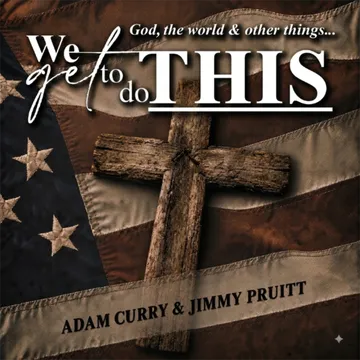
Episode 35 · Wednesday, 3 June 2026

The Rise of Islam: Panic or Perspective

A deep dive into the historical shifts of European immigration and the rise of political Islam reveals why modern cultural warfare requires biblical virtue over reactionary fear.

By We Get To Do This | 58m listen | 21 chapters
The Rise of Islam: Panic or Perspective cover
We Get To Do This · No. 35

About this episode

The assassination of Dutch politician Pim Fortuyn and the 2004 murder of filmmaker Theo Van Gogh serve as a stark warning about the historical consequences of unintegrated immigration and radicalization. Following Van Gogh’s collaboration with Ayan Hirsi Ali, the Netherlands faced a violent cultural shift that transformed the national landscape from a system of guest workers to one of isolated asylum centers. This episode analyzes the rise of political Islamification in Europe and its parallels to current American border security debates involving the Biden administration and the World Economic Forum.

Susan Kokinda of Promethean Action joins the analysis to debunk viral misinformation regarding Sharia law in Dearborn, Michigan, noting that many Arab Americans in Wayne County actually supported Donald Trump. The discussion highlights the origins of the Muslim Brotherhood and its ties to British intelligence, while criticizing the use of inflammatory statistics—or online bazookas—to incite fear. Specific attention is given to the work of Chris Dunham from Patriot Academy and the spiritual mentorship of Papa Don Finto of Caleb Global, contrasting globalist agendas with the necessity of local political engagement through school boards and zoning committees.

Returning to the Jesus way requires a rejection of the torches and pitchforks mentality in favor of forgotten virtues like meekness and long-suffering. A host recounts a personal moment of humility after confusing dispensationalism with cessationalism during a sermon, illustrating the power of public apology. The segment features a tribute to the philosophy of Dr. Wallace Roark, urging believers to embrace the tension of a secular world while maintaining the theater of the mind through focused, audio-only reflection.


CHAPTER 01 / 21 Discussion

Introduction to Against the Truth Episode 35

The hosts open episode 35 of Against the Truth on Wednesday, June 3rd, 2026, with a prayer for listener inspiration and guidance. One host discusses the commitment of recording while on vacation, emphasizing that a true podcaster brings their equipment, including microphones and processors, wherever they go.

against the truth· podcasting· vacation· ministry· prayer

00:00 Father, what a joy it is to be before you today. It's our honor, our privilege, and we really do get to do this. We pray for our listeners today that they'll be encouraged, they'll be lifted up, perhaps inspired, Lord. That's our heart to put some lift under their wings. We bless them even as we do this and have this conversation, Lord. And we ask, Holy Spirit, you would literally guide this conversation today and give us solutions and answers, or at least even greater questions. So we honor you in everything we do and say today. In Jesus' name, amen. Amen. It's Wednesday, June 3rd, 2026. We get to do this. This is episode number 35.

00:44 This is the life we've been blessed with. This is against the truth. We get to do this. This is the chance we did not miss. This is the life we get to do this. You know, you're a real podcaster when you're doing a podcast on your vacation. I'm in, brother. I am all in with what we're doing. That is when you are a true podcaster. You watch, before you know it, you'll be like, okay, we're going to the beach. Honey, I got to bring my rig because I got to do a podcast. I will be bringing my rig. Are you bringing it? Oh, you guys are going to be there? You put it all together. Yeah. I've got my microphone, my cords.

CHAPTER 02 / 21 Discussion

Pastoral Life and the Rooted Discipleship Study

A host reflects on the unique nature of pastoral work, noting that the "machine" of the church continues even while the lead pastor is away. He mentions studying a 10-week discipleship journey called Rooted with his wife, Annette, to determine if the curriculum is suitable for their congregation.

rooted· discipleship· substack· pastoral ministry· church leadership

01:27 I've got my mini. My mini. Processor. Yeah. I've got that all in one bag that'll fit either in my suitcase or right in there. You got the little stand for the mic? I do. Yeah. Those are perfect for yeah, it's a little bitty one. How's the vacation been, brother? Must be so weird as a pastor to not be at your church. It's odd. And the machine keeps on running. Yeah. It's good, odd, though. You know, it's odd or different, but it's good, different. I stay busy because I love what I do and I love interacting and engaging with people. So I continue to do that online easily. I'm reading some great guys on Substack right now. I've been encouraging and just studying.

02:09 Annette and I started a study called Rooted, which is, I didn't name our series after it. It just happens to be called Rooted. And it's a fantastic 10-week discipleship journey. So we're sort of screening it to see if this is something we want to implement for our church. Yeah, nice. So it sounds like work, but it's what we love to do: get in the word and study and read. And so far, it's been fantastic. People have no idea what the life of a pastor is or pastor is because you're very strange. Pastors together. They think it's like, oh, man, what a gig that is. You know, you show up on Sunday. Oh, okay, you got to do two messages. But the work that goes on in between is really we tend to look happy most of the time.

CHAPTER 03 / 21 Discussion

Philosophy of Finishing Strong and Longevity in Ministry

Reflecting on over 40 years in ministry, a host shares his philosophy of "playing the long game" and finishing strong, comparing life to a golf game where the arrival matters more than the drive. He observes that many of his former classmates from theology and Christian education programs have since left the ministry, highlighting the difficulty of staying in the "game."

theology· graduate work· christian education· golf· perseverance

02:52 We're with people. Well, there's that. It's the world we're in. And truly, we are. We love what we do. I've been doing this 43 years now, 42, 43 years. And I'm just as excited about what I do today as I was the day I started. It shows, brother. It's joyful. It really does. One of my long-term thinking philosophies, if you would, has been play the long game, play the long game, finish strong. You know, we used to say in golf, you know, it's not how you drive, it's how you arrive. You know, true, because sometimes you can whack one out in the weeds, and then you have a couple of good shots and you're back at the end.

03:33 And you can make it right back up. So you don't ever just panic over a bad drive. You just try to, okay, all right, it's not how you drive, it's how you arrive. It's the same in life. My attitude is: I want to finish strong. I want to run through the tape. I want to be in a sprint over the finish line, not crawling or coming up short. So many guys that I went to school with, because I did my undergrad in theology, and then I did my graduate work in ministry as well and what's called Christian education. And so I did a lot of years of school around church. I mean, my whole bachelor's and master's degree. And there's quite honestly very few of those guys still in the game.

04:17 It's heartbreaking. And it's such a false equivalency, but it is a bit like being a podcaster. Apparently, I am one now. They're very similar. I mean, it's like people give up. Yes. It's very hard to. So when you're on vacation, and actually, Pastor Brian, he's also, I believe, on vacation. Yeah, they did their second week. Right. So you have an interesting task of filling the pulpit with somebody. Correct. Because church doesn't stop. That's right. So, what is the process for fill-ins? I mean, how does that even work? It's relational. These are guys. people I know, people I trust.

CHAPTER 04 / 21 Discussion

Selecting Guest Speakers and the Visit of Papa Don Finto

The process for selecting guest speakers to fill the pulpit involves long-term relational trust rather than random bookings. Upcoming and past speakers mentioned include Chris Dunham, Tommy Hayes, Victor Marks, and Todd from Nashville. A highlight is the upcoming visit from Papa Don Finto of Caleb Global, a spiritual mentor to artists like Michael W. Smith and Amy Grant.

chris dunham· tommy hayes· victor marks· papa don finto· caleb global

05:03 I don't just call anybody out of the blue and go, hey, you know, and we plan this out for months in advance. So we had Chris Dunham this last weekend, but that's been planned for months when we hosted Reagan, you know, in the pulpit. Right, right. We'd plan that months ahead. So we do that way out front. So we know who's going to. Tommy is going to be with us one of these weeks. Beautiful. Tommy Hayes. Tommy is like, he compresses a thousand pounds of TNT into 30 minutes, and we get out early and you're like, what just happened? And he smiles the whole time. He's so excited to do it. I love this one. So these are men I know. These are people I walk with and have had a relationship with. I rarely will put somebody in my pulpit that I don't know.

05:47 Yeah. Rare. Victor Marks was one of those. Another great example. I didn't know Victor personally, but I knew people around him personally. And I liked what I'd heard. I've been listening to some podcasts with him and read his book. And so by the time he got here, I felt like I knew him. And we ended up hitting it off like brothers from another mother kind of thing. So, yeah, that's a rare, rare thing. We'll be hosting Todd out of Nashville. His last name escapes me off the top of my head. So I don't know him that well, but I know about him and I've known around him.

06:25 When I was in Nashville, you know, 12 years ago, I knew him then, but it wasn't like best friends, but I knew who he worked for and who he worked with. Big surprise, we've got the Caleb Global coming to do a weekend seminar. Big surprise is Papa Don Finto is a good thing. Coming himself? He's coming. He wanted to. He said, I want to come. I'm going to be there. I'm mad. We're going to be out of the country. I'm just sad with my he's literally one of my heroes in the faith. And so, I mean, he discipled Michael W. Smith, Amy Grant. I mean, all these people that we love and know on the Godcasters. He's been one of the spiritual advisors over most of those artists. One way or another, they know Papa Don.

CHAPTER 05 / 21 Discussion

Chris Dunham and the Patriot Academy Apologetics

Chris Dunham, the Dean of Patriot Academy, recently delivered a two-part series on Islam at the church. The hosts praise Dunham's skills as an apologist and suggest he would be an excellent guest for the Joe Rogan Experience due to his humor and deep knowledge of the subject matter.

chris dunham· patriot academy· apologetics· joe rogan· islam

07:08 So, Chris Dunham, Dean of the Patriot Academy. His actual title is Dean of Patriot Academy. Scholars? Scholars, I think. That's what they call their students, scholars. And he's preached before, and he is one of my favorite apologetics guys. Is that the term? Apologetic guy. He does apologetics. Apologist. He's an apologist. Which is always confusing for new Christians. Like, why are you apologizing, man? What are you apologizing for? There's nothing to be sorry about on here. And he came, he did some things. And by the way, he's so much one of my favorite guys. I wish I could get him on Rogan. I'm afraid that Rogan might not be able to keep up with him.

07:56 It would work, and I'm going to suggest it. Wow. Absolutely. He is, and he's funny, and he has a great story. And he spoke, and it's a two-part series. He spoke on Sunday, and it's about Islam. And what he was doing, as I've listened to both services, is he was kind of waking everybody up in service one, and then this coming Sunday, he's going to dive deep. This hit me so hard because I have been, I've literally been talking about this for 20 years. Two things, really. One, growing up in the Netherlands, when I moved there when I was seven,

CHAPTER 06 / 21 Discussion

European Immigration History and the Dutch Asylum System

A host recounts his upbringing in the Netherlands, witnessing the shift from Indonesian and Turkish guest workers to the influx of Moroccan immigrants under the European Union. He describes the transition from integrated labor to the establishment of asylum seeker centers in rural areas, which he claims led to a housing shortage and a change in the national landscape.

netherlands· indonesia· turkey· morocco· european union

08:40 it's really odd what people accuse me of because really it's Isaac and Ishmael that I've grown up with. On one hand, I had kids that I played with whose grandmothers had numbers tattooed on their arm from concentration camps, and I learned a lot, a lot, a lot. More than most Americans would ever learn just by the fact that so much happened there. But also growing up, I played with a lot of Muslim kids, but we didn't know them as Muslims. In the 70s, they were Indonesians because that was a Dutch colony. So the Indonesians had a citizenship actually right to be in the Netherlands. In the 80s, we had something, we got a new group of Muslims, but we didn't call them Muslims.

09:23 We called them Turks because there was a guest worker program, and it was specifically open to Turkish people to come with their families and work because the country was being constructed and we just didn't have enough labor. And then later, what happened is the liberal world government of Europe, as the European Union started to drop borders and create one form of money and all kinds of interesting things. They tried to become the United States of Europe, really, which was not a great idea. They shipped in Moroccans. Never said Muslims. They just shipped in Moroccans. And they didn't ship them in with jobs. No, here's a house that you get and a Dutch person doesn't get. Here's money that you get.

10:07 And when the houses were. That sounds like the last administration here. We're going to get to that big. I figured. And when the houses ran out, there's a huge shortage of houses. They started something called asylum seeker centers. And these are like not a detention center, but a camp where they would put them in and give them money, but no job. And they were on the outskirts of the country, you know, kind of in the rural areas until they ran out of that. And now they're in everybody's backyard. And so now at this point, we've got prayer calls five days a week everywhere.

CHAPTER 07 / 21 Discussion

Political Islamification and the Assassinations of Fortuyn and Van Gogh

The discussion details the rise of anti-Islamification sentiment in the Netherlands, focusing on the 2002 assassination of politician Pim Fortuyn and the 2004 murder of filmmaker Theo Van Gogh. Van Gogh was killed by a radicalized Islamist following his collaboration with Ayan Hirsi Ali on a film criticizing the treatment of women in Islam.

pim fortuyn· theo van gogh· ayan hirsi ali· netherlands· islamification

10:44 We've got the whole, they call it the street picture, Strachbelt. The street picture has changed from originally people in wooden shoes to kind of modern Western people to burqas, literal burqas. Wow. And the part that is unique to me is I went back to the Netherlands in 99 and I saw, whoa, what just happened here? And there were two guys that I knew and met and interacted with who were saying we have to stop the Islamification of the Netherlands.

11:24 And that doesn't mean we need to stop people from being Muslims, but the Islamification, which is a political issue. One is a guy named Pim Fortan. And he was a very, he was a professor of economics and history and openly gay, larger-than-life guy. And he's like, I'm running for political office. He won posthumously, and I say posthumously because the establishment hated him so much that he was assassinated two weeks before the election right outside the radio station where I worked. Wow. Killed, not by a Muslim, by a radical leftist member of the Animal Party or something like that. Wow. And his party won the election. Of course, that fell apart because their leader was gone.

12:07 But I remember distinctly seeing the whole country from Amsterdam to The Hague. His funeral procession went, and this is like 40 miles. The whole highway was filled with people, slow claps, and you never heard anything about Islamification again. The message was: don't say anything. We're going to kill you. Except for one guy, Theo Van Gogh, direct descendant of the painter. I knew him because he was in television. He was a columnist. He wrote, he was a huge leftist until he met Ayan Hirshi Ali. You've probably heard of her. She was a politician in the Netherlands. She's from Somalia. And she said, hey, what's going on here in Holland is no good. And the female genital mutilation, that was

12:52 one of her big talking points. But they teamed up together and made a movie. He was also a filmmaker. And he got killed on his bike going shopping in Amsterdam by a radicalized Islamist with an AK-47, which you can't even get guns anywhere in Holland. And just to accentuate the point, stuck a knife in his chest with a note on it of who would be next. Wow. And so I knew these people. And so I've seen firsthand what happens if you let the political Islamification take over your country. And I think those, yeah, there's something going on with the construction. We'll just pretend we're not hearing it. Okay.

CHAPTER 08 / 21 Discussion

Countering Misinformation and Online "Bazookas" Regarding Mosques

The hosts discuss the danger of "online bazookas"—inflammatory or inaccurate statistics used to incite fear. They debunk a viral claim that 245 mosques were built in the Dallas-Fort Worth area in five years, noting that only one was actually built in the last two years. They advocate for political engagement through zoning committees and school boards rather than performative protests.

quran· dallas-fort worth· mosque· zoning committee· misinformation

13:34 And so Krish was talking about this. And we've talked on the show a lot about what people are getting really spun up and fearful of. And so I really wanted to sharpen iron with him today because he was coming at it from such a knowledgeable background of the Quran and really Indian culture as well. A lot of people don't know that most Muslims in the world live here's the order of countries: Indonesia, India, Pakistan, Bangladesh. It's a long time before you hit Iraq, Iran, and Somalia and all those others. But he's right. He's right that we cannot let this. Is that outside?

14:18 Yeah, it is. Okay. We'll just ignore it. We're under construction. We have been for that. It's five years. Stop talking about it. People won't hear it in a minute. And he's so right about what he was saying. He did two services. I attended the first one. I heard the second one. I'm like, oh, man, you're really firing on all single cylinders. But I needed to talk to him and sharpen some ire about what I call bazookas. I said, we have these bazookas that we create online. And the problem with the bazooka online is. anybody can fire it. So you may build something you want to fire. For example, if you say we're funding our own demise with $4 billion given to Muslim nonprofits, which is, I think, a number that has been created.

15:06 It's got legs somewhere. It's got a lot of legs. It grew. What happens is if you fire the, so the bazooka is meant to say we got to stop funding Muslim nonprofits. But what happens is you fire that bazooka, and the first thing my wife Tina said is, We got to get Abbott out. I'm like, hold on, let's slow down for a second. And why not, right? It makes sense that you say, wait a minute, if Abbott is doing this, then we've got to get another governor. So you have to be very careful. The other thing is how many mosques are in the Dallas Metro, Fort Worth area. And there's a number that's out there: 245 in the last five years. And there's a map that pops up on Facebook, and all this stuff happens. And Krish actually

15:51 true. It's actually only one has been built in the last two years. One has been expanded. There are a few other small ones, but most of these mosques were built in 79, in the 80s. The most recent big one was built in 2018. And I agree that we should not have this epic center or the meadow, as it's called. It is now, yeah. But when you fire bazookas, what good American Christian people do is they go put up signs and hammer pieces of pork to it.

16:27 This is not the way we're going to stop this. No, you stop that by getting on the zoning committee, by being on your city council, by being part of the school board. This is how we do it, which has been such a driver of Bridge Church. And look what we got. We got our Mayor Brilliant. So this is, I really wanted to talk to him about the bazookas. And man, it was so wonderful because he said, yeah, you know, you're right. I agree. I got to temper that a little bit because I'm just firing off stuff. And what happens is the message gets lost. And so it was so wonderful to sit here because, man, this guy is knowledgeable. Hey, sharp. He is beyond, beyond sharp. There are real dangers.

CHAPTER 09 / 21 Discussion

Muslim Brotherhood History and U.S. Immigration Policy

The conversation shifts to the origins of the Muslim Brotherhood and its historical ties to British intelligence. The hosts criticize past administrations, specifically mentioning President Obama's 2009 Egypt speech and the Biden administration's immigration policies regarding Somali and Haitian populations in cities like Minneapolis.

muslim brotherhood· barack obama· minneapolis· somalia· haiti

17:10 Muslim Brotherhood is, which was started in the 50s by British intelligence, funny enough, because they hated Egyptian President Nasser because he was taking over the Suez Canal. This is all history, which we're not taught in America ever. But they have been truly the funding, the basis of all terrorism, all Islamic terrorism around the world. You might remember President Obama came into office. You remember the first thing he did in his first term? No, not offhand. He went to Egypt on an apology tour and apologized to the Muslim Brotherhood for being racist. Wow. I'm paraphrasing a lot there. That was the first thing he did.

17:52 And so one other bazooka that we fire is: hey, man, they are procreating like rabbits. Every one of them's got four wives. That means they're going to have four kids. It's 16 before you know it. So this is factually didn't happen in Holland, didn't happen in the UK, didn't happen in Sweden. Yes, no doubt. It looked like 2.6 kids from what you said. It's 2.6 versus 1.5. And that is a problem. I mean, even 1.5 will be dead in 100 years. There's nobody left. We need to make more babies for sure. But immigration and the biggest pop in the Dallas-Fort Worth metro area of Muslim immigrants by about 100,000 extra ones was during the 2000, 2024 Biden administration.

18:44 This is what Minneapolis is. Minneapolis is filled with Somalians. Somalians came in because there was a temporary protected status because of the state of their country. When you hear President Trump saying, go back to your country, it's horrible. The only business they got there is killing people. That's why they were brought in. They're brought into a particular area to work for particular companies who need cheap labor. But then you, in essence, let them overrun an area. Same thing happened with Haitians. Remember, we had there eating the dogs? Those Haitians were brought there for the factories. So this is a political issue that we need to solve spiritually.

CHAPTER 10 / 21 Discussion

Susan Kokinda on Globalist Agendas and Border Security

The hosts reference Susan Kokinda of Promethean Action, who argues that mass immigration is a World Economic Forum globalist deployment intended to carry out cultural warfare. Kokinda suggests that while there are legitimate concerns about border security, the issue is often weaponized by elites to destroy national cultures.

susan kokinda· promethean action· world economic forum· globalism· immigration

19:24 There you go. Thank you. And that is really what was on my heart. And Krish completely agreed. And it was, I got to tell you, I was a little anxious about saying to him, hey, man, I think you need to tone some things down because I'm out there on a different battlefield than you are. And I'm seeing what the results are. result is. And if what we're saying is making people hammer pieces of pork to signs outside of a mosque, we're not really winning the war. You know, that's not how we're going to do it. There's a lady, don't take it from Adam, please. There's a lady, Susan Kokinda. She's part of Promethean Action. I think I've played a clip of hers before on our show.

20:04 She lives right outside of Dearborn, Michigan. And she's a little older than we are. She's, I think, 68. I remember that clip. Have you seen this clip? No, I don't know. I remember one you played on our show. Yeah, this is what I'm saying. This is a new one. I don't know this one. Okay. And she's been with the Lyndon LaRouche organization before, you know, when it still existed. I think she actually had a falling out with them, but she has been a political strategist and in the game since the 70s. So longer than I've been doing it. And she and her partner, Barbara, I forget her name. And when I say partner, business partner, I know you got to qualify that. You do. You do.

20:46 They do three 15-minute reports every single week on YouTube. So I can't really call it a podcast. And she says something the other day, which mirrored exactly what I feel is happening. Remember, Dearborn. So if you talk about Dearborn, oh, it's lost to Muslims. Dearborn, by the way, has been a big attractor for Arab Americans since the 70s. I mean, this is, you know, we have places where Indians live, we have places where Chinese live, we have places where Hasidic Jews live. I mean, this is America. You know, look at Fredericksburg. What are we? You know, how many black people do we have here? We're just not attracting many of them. Luckily, we're seeing more and more. You know, we are diversifying a bit in Fred.

21:31 So listen what she has to say about Dearborn, Michigan. Clearly, people look at what is happening in Europe from the standpoint of the complete open borders and flooding these societies with Muslim immigrants, many of whom are being deliberately deployed to carry out a cultural warfare against the civilizations of these European nations. That is a World Economic Forum globalist deployment. You see a certain reflection of that here in Minnesota with the Somali population and the way that it has essentially been weaponized. In other words, certain layers who are being weaponized by the global elite.

CHAPTER 11 / 21 Discussion

Dearborn Michigan and the Reality of Sharia Law Claims

Susan Kokinda clarifies that despite rumors, Sharia law does not exist in Dearborn, Michigan. She notes that many Arab Americans in Wayne County actually supported Donald Trump in the election. The hosts conclude that the "divide and conquer" tactics used to stir conflict between religious groups follow Saul Alinsky's rules for radicals.

dearborn· michigan· sharia law· donald trump· saul alinsky

22:15 But that is not a Muslim question. That is the global elite using this to try and destroy cultures, to create terrorist capabilities, something that we've documented. So people have that legitimate concern, and it's especially acute when you look at the European countries. And it would have been especially acute if we hadn't got Donald Trump back in, and we've now closed our borders to that. Then there is the question of God-fearing people from Muslim countries who want to emigrate to the United States and have emigrated to the United States because they want a better life and they are not trying to change our culture.

22:59 And I'm living like seven miles away from Dearborn. Newsflash people, there is no Sharia law in Dearborn. Okay. This is one of the rabbit holes that everybody wants to be driven down. Now, are there problems in Dearborn? Yeah. It's because you have a layer of the Muslim and Arab American population, which is bat shit crazy liberals. And that's their problem. And then you have many other people, many of whom voted for Donald Trump and, in fact, delivered the victory for Trump in Michigan because of the vote from the Muslim community in Wayne County here.

23:34 It was one of the absolutely critical margins for President Trump winning. I can't speak for what is going on in other states, but given the fact that we have the largest Muslim Arab American population in the Western hemisphere, about six miles away from me, you know, the majority of people in Dearborn are not trying to Islamify the United States. They are part of our society and our culture, and they practice their religion, you know, shoulder to shoulder with Jews and Christians. This is a psy-war operation. It's taking a legitimate danger that the global elites themselves are deploying these populations, and especially radicalized and criminal populations for their purposes, and then trying to do one of these broadbushes,

24:24 everywhere you have a mosque, you have Sharia law. Again, I've got news for you. It's not true. So this is what we're really up against, a psy-war psy-op. And I love how she describes what's what's happening in Dearborn. I got a lot of people telling me in Dearborn, like, well, yeah, it's been this way forever. But yes, Muslim Brotherhood Council on American Islamic Relations. And its intent is to divide and conquer, divide and conquer. Conquer the population. There it is. And then you can take them over. Right back to Salolinsky's rules for radicals.

25:00 Exactly. And the more we get all spun up and mad and post stuff online, the more we're playing right into their hands. Right into their hands. And bingo was his name. And that's what I love about where Chris is taking this. And man, I mean, I think he has like a two or three day seminar. We should probably think about having him do that here at the church. Well, this would be a good feeder into that. Yeah, we need a lot more knowledge about because it's true. Quran and Islam, it's not compatible with our Western values.

CHAPTER 12 / 21 Discussion

Top Five Forgotten Biblical Virtues

Using AI tools like Logos and Sermon AI, a host identifies five underrated biblical virtues: humility, meekness, patience, contentment, and forgiveness. He contrasts these virtues with the "bravado" and "raging" often seen in modern Christian social media culture, urging a return to the "Jesus way."

humility· meekness· patience· contentment· forgiveness

25:40 But that doesn't mean that every brown person is out here to kill us. Exactly. And that's also not who we are as Americans and not who we are as Christians. I'm believing that. Thank you for saying that because let's start with Christians and then we can talk about Americans. But it's, I did some research. I did a little deep dive. I've been really. Why does that not surprise me, my brother? Well, I posed the question, and of course I used AI for this. But I use, I've got Law Goss and then I've got Sermon AI, which is another Bible study program that's all internal unless you tell it to go external.

26:21 It's a robot. It's a robot. Yeah, actually, it's good, though. So I asked the question, you know, what are the top, I mean, actually, I'm going to look it up. What are the top biblical virtues that are the most forgotten or overlooked? And I felt like I was prompted to do this because a young man who's a church planter reached out to me and said, you know, I value your experience and your story. And I've just listened to some of your sermons. And he said, what would you tell a young new pastor starting out, someone starting in ministry? What's the one thing? I'm like, one thing? No, sorry. Right. Can't do that.

27:03 And so he got me thinking. And I was going to see if I had this locked in on here. Here it is. By the way, there's nothing I love more in a podcast than silence. I really mean that. It's a beautiful thing. Dead air. You never have dead air anymore. Everyone has to fill it up all the time. Boy, no kidding. So we're going for the phone. I have it here. So, and the reason I wanted to look this up is because I've been struggling with a lot of the bravado I see in the Christian world, whether it's pastors showing themselves at the gym, pumping iron.

27:49 You know, I'm going, okay, I'm all about temper, temple care, mind, body, spirit, but we don't need to see your see you flex to this bravado, proud, loud, railing against, you know, instead of rage against the machine, they're raging against Islam. They're raging against Mormons. They're raging against whoever they are not them. And I'm going, this is not the Jesus way. Amen. And it's been really just on my heart. And so I did a little query this morning on, I got to find out which one I used.

28:28 I've got here it is. And I, and I just, it's called underrated biblical virtues. And here's the top five that are that are underappreciated in our culture or underrated. Humility is number one. Ah, this comes back to your daily grind from today. Yeah. See where that got informed. Of course, I do. And I was thinking, because I had written down off the top of my head before I even looked this up when that young man asked me the question. He didn't ask me in real time. So I get to formulate my answer a little bit. And I grabbed my little pad here and I wrote down humility, the greatest and least appreciated virtue. I wrote that down in real time after I was thinking about his question. I wrote down some other things.

CHAPTER 13 / 21 Discussion

Respectful Engagement and the Mind of Christ

The hosts emphasize the importance of addressing cultural issues with respect and honor rather than a "torches and pitchforks" mentality. They discuss the need for Christians to respond mindfully using the "mind of Christ" rather than reacting impulsively to news cycles or social media trends.

constitution· social media· bridge church· spiritual maturity· respect

29:11 But humility is number one. Number two is meekness. Number three, patience. Number four, contentment. Number five, forgiveness. Think about how Christ has tried to teach us to respond to our enemies. Bless those who curse you. Pray for those who persecute you. If they compel you to go one mile, go two. I mean, we have so jacked this around, and it's really been bothering me lately because I have a lot of dear friends that are beating a lot of drums right now.

29:52 And listen, I'm all about speaking up. Our Constitution has given us the right and privilege to push back. And so I think we should do that. But I think we should do it always. And Chris actually read this scripture respectfully. Yes. Respectfully, with respect, with honor, not this torches and pitchforks mentality, hair on fire, as you use my favorite term, hair on fire. And so as I was reading, thinking about addressing these, the issues that are at hand, it's like, how do we address this as not just a Bible-believing Christian, but how do we believe it as one who says,

30:36 I am intentionally conforming in my life to Christ. What would Jesus do? It's interesting because as Christ and I were talking this morning, we had this meeting. He says, why is it? He posed the question. Why is it that, and I think some of this is true and some of it is rehashed social media images, that Muslims can stop traffic around Times Square. You can't even drive near Times Square, but Times Square to do prayer five times a day. But we're afraid to go out and sing carols and stop traffic because we're praising our God, our Jesus.

31:17 And part of his message is: we're not even showing our brand, let alone do we even know what it is. I would say if that's true, and I'm saying if, because I know a lot of a lot of believers who are bold with their faith, I think we can make these broad sweeping generalizations where one size fits all. You know, I hear it all the time. Well, pastors just aren't speaking up about culture. And I'm going, what am I chopped liver over here? I've done it for the last number of years and will continue. We just got our mayor elected and we will get more involved and connected.

32:00 And there'll be some appointments coming with that election for people from our church. So, no, we're in the game. But, you know, when I hear these broad generalizations, it really has to take a step back and go, okay, let me think through what they're trying to say, not what they just said. Correct. What's the message behind what they just said? Because there's more to it. You got to see it in 3D. And so I'm concerned about my brothers, my sisters getting on social media, raging against the machine, whatever the machine of the day is, because it's not always the same. It changes. And my ask for believers is to

CHAPTER 14 / 21 Discussion

Prioritizing Scripture Over News and Admitting Mistakes

A host appeals to listeners to ground themselves in scripture before consuming daily news. He shares a personal anecdote about mistakenly confusing "dispensationalism" with "cessationalism" during a sermon and the positive impact of publicly apologizing and correcting the error the following week.

scripture· prayer· dispensationalism· cessationalism· repentance

32:43 understand the sky is not falling. Yes. Jesus, unlike Elvis, you know, Elvis says Elvis has left the building. Jesus has not left the building. And we as Christians need to get our faith back on track. And we're so getting if we're jumping on our phones in the morning and our screens and we're getting our news before we're getting in the scripture, we are already off center. We're already fighting an unfair fight. And so my appeal, my cry, my exhortation, my ask is: could we get back to the scripture and get grounded in God's word before we get versed in all these other fields?

33:32 I'm okay with going outside my house. I'm okay with stepping into another ballpark and playing the game. You know what I mean? Somebody say, well, this is our ball field. No, no, it's all of ours. It's the ground's level. But I want to make sure that I am prayed up, that I've got, I'm worded up, that I've been walking with Jesus, not just from a distance, but up close, so that when I do speak into culture or into a situation, I'm doing it mindfully, not mindlessly. Scripture says we have the mind of Christ. We need to tap into that and then respond accordingly, not react, but respond.

34:09 And what I'm seeing from a lot of my brothers and sisters, especially on social media platforms, podcasting, is reaction, reaction, reaction, reaction. And then they got to go back and either clean up the mess or they don't, which is even worse, to come back and say, I missed that. I was wrong. Swing and a miss. I told you a story one time. A couple came to me in church after a Wednesday night. It's about six years ago. And I had been talking about, I'd been talking about, I was thinking dispensationalism, but I was saying cessationalism. Two very different things. Very different, yes. But I didn't realize it. And so I just got the terms mixed up. And they came to me very kind of upset, not mad, but just, you know, that's not right.

34:55 We're dispensationalists. You know, you're talking about, and I said, what do you mean? And when we talked about it, and they brought me an article and I sat down, I read it, and I'm like, oh my gosh, I totally flipped that. And I got up the next Wednesday night and I apologized and repented to the church and said, and I did it with a smile. I messed up. I made a mistake. I know, shock and awe, everybody. Human. But I'm a human and I made a mistake. And I want to apologize for that. I want to clarify. So I kind of went back into it and retaught it accurately. And it was an honest mistake. It wasn't a big deal. But I remember after that service, people coming to me and thanking me for, they said, I've never heard a pastor say he was sorry for something he said in a pulpit.

35:38 Really? And I'm like, what? Well, get ready because there'll be more. You know, you speak several hundred thousand words, you know, a month. You're going to, you're going to have some misses. Oh, wait until you get going as a podcaster, brother. Oh, I'm just quadrupling my chances. You're going to stick my foot in my mouth. But you know what? We got to be willing to go. You know what? I was wrong. Yeah. I missed that. Or I didn't have the right information. Why can't we just be good people and good Christians and back up and say, I'm so sorry I missed that? You talked about praying up, you know, and so I, and I shared some of this list with you the other day. I just have a list of when I think of, oh, oh, wow, here's the fear.


CHAPTER 15 / 21 Discussion

Biblical Mandates Against Fear and for Spiritual Warfare

The hosts review several scriptures intended to combat fear, including 2 Timothy 1:7 and Ephesians 6:12. They discuss the concept of spiritual warfare, noting that struggles are not against flesh and blood but against dark authorities. They also touch on the biblical precedent for God raising and removing kings, encouraging listeners to pray over their votes.

timothy 1:7· ephesians 6:12· daniel 2:21· spiritual warfare· voting

36:21 This is all the things that are happening. As a new Christian, I have such a benefit because these things are so fresh on my heart. This is part of the reason why I took it from a conspiracy theory to conspiracy therapy. Timothy 1:7, right off the top. For God has not given us a spirit of fear, but of power and of love and of a sound mind. There it is. Like that was a big one for me when I was just starting to. So let me define sound mind. Please. It literally means the ability to think well. Perfect. It's that simple. Chronicles 32:7. This kind of goes back to the actual Muslim fear thing.

37:01 Be strong and courageous. Do not be afraid or discouraged because the king of Assyria and the vast army with him. For there is a greater power with us than with him. With him is only the arm of flesh, but with us is the Lord our God to help us and to fight our battles. That's how this country was born, man. We prayed to God and this little ragtag group of guys defeated the British. This is true. Mind-bending, miraculous. Ephesians 6:12. This is the one that, you know, for me, you know, this. This is one of my, like, I want, I'm still looking to get something tattooed for this. I don't know how to do it yet. For our struggles against flesh and blood. This is the truth.

37:45 But against the rulers, against the authorities, against the powers of this dark world and principalities, etc. And then one that I'm always, I always have this kind of, remember I talked about Eddie Murphy, who doesn't vote. He says, God's got this. Not that I'm saying he shouldn't vote. But Daniel 2:21, he removes kings and he raises up kings. And, you know, so when I, when I, when I really, when I really just want to pray up, I think of these, these scriptures. I'm like, what am I worried about? It doesn't mean I don't have to take action. Right. Exactly. Doesn't mean we don't have to have things to do. But even when Jesus,

38:27 when the, I'm sorry, when the disciples wanted to replace Judas, they prayed and then they cast lots. The way I read that is, okay, Lord, I'm praying and now I'm going to vote. Yeah. And you've always said, like, pray over who you're going to vote for. Don't just vote because of a letter in front of their name or whatever. Vote, pray about it. And this has changed my life so much. I probably would have been spun up out there slinging pork. So let me give another scripture that's right in line here. And you'll recognize this immediately. 2 Corinthians 10, 3. For though we walk in the flesh, we do not war according to the flesh.

CHAPTER 16 / 21 Discussion

Embracing Tension and the Wisdom of Dr. Wallace Roark

The discussion posits that America has a spiritual problem rather than a political one. A host shares a story about his philosophy professor, Dr. Wallace Roark, who taught him to "embrace the tension" of being a believer in a secular world, warning that one should be afraid if the "knot in the stomach" ever disappears.

wallace roark· philosophy· romans· political problems· spiritual problems

39:10 I mean, we don't have to take another step. Just do that. Right. Because that is what we're talking about. You know, you've heard me for the last few years stand and say, we do not have a political problem in America. We have a spiritual problem. And I will continue. continue to beat that drum because it's true. And when I see my brothers and sisters get so spun up that they're no longer tapping into the mind of Christ, they're no longer thinking well in that spirit. They've been given the sound mind. They're not operating in a sound mind. And it's just like kings and rulers. We're told in Romans that we're to submit to them. But it says, Because they have your good in mind, it's because they and they will reward the good and punish the bad.

39:56 But what that doesn't say, but it is saying, is that if those rulers are wrong, they need to be deposed. And there's no, that is a biblical precedent. And God will turn them into a donkey and make him eat grass out on the hillside. Didn't end well. So that's the thing: is at what level, you know, there's always going to be a tension. In fact, when I was writing this young man, I haven't given it to him yet. One of the things is you have to learn to embrace tension because we're talking about tension here. At what point do you stand and fight? Do you stand and stand? Do you, when you push back, when you show up, when you protest, the things that we're allowed to do, peaceful protest, of course, not seeing a lot of those right now.

40:40 And I saw Senator Mullen cracking down on that before the Senate hearing. Yes. It was pretty interesting. But tension, embrace it. Be afraid of it if it goes away. I had a professor, Dr. Wallace Roark, philosophy professor, godly man, called me into his office one day, scared the bejebis out of me because he was very intimidating because he was so smart. We all kind of revered him, you know. And he said, Mr. Pruitt, could you come into my office, please? And I'm like, oh, what did I do? You know, I'm going down the list. I think I'm okay. And I go in there and I sit down. I mean, I feel, and he's behind this big desk, and his room looks like an F5 tornado just went through there.

41:23 That's how you know he's smart. Right, right. There's books and papers and shelves, and it is chaos. It wasn't to him, but it was to me. I sit down. He says, I need to ask you a question, Mr. Pruitt. And I said, okay. He goes, Do you have a knot in your stomach? I never would have expected that. I said, yes, I do. He said, be afraid if it ever goes away. Wow. What he was doing, he was following up on a challenge I issued in a class, one of his philosophy classes, where we were talking about it came down to, he didn't identify it, but it was the tension that we live in as believers who believe scripture and stand and then the world in which we have to navigate.

CHAPTER 17 / 21 Discussion

Defining Meekness, Patience, and Contentment

The hosts provide deeper definitions for the forgotten virtues, explaining that "meekness" is power under control and "patience" (long-suffering) involves enduring for a long time. They discuss "contentment" as being satisfied with what one has, citing the Apostle Paul's ability to be content in both abundance and need.

meekness· long-suffering· contentment· apostle paul· wealth

42:09 And there will always be tension in that. And he said, be afraid if it goes away. If it goes away, that's so good. I was like, whoa. Yeah. I walked out, wrote that down. What's your list again? You had five. You can go through that again because I really like that. Yeah, yeah. That was a very good. I love the meekness one because immediately I think because the meek shall inherit the earth. And there's nothing weak about meekness. Meek is not weak. Meek is literally power under control. It's like having a car that's fast. But it doesn't show, but it doesn't show it. But you don't have to. You don't have to. You've got it, but that doesn't mean you're using it. You know what I'm saying? Right. And meekness is that strength under control.

42:49 That's what it literally means. Do you know the Greek word for it? I don't know. Top of my head. But I believe, because, you know, man, we know so little. We don't learn anything anymore. But I love that. I'm going to have to look that up. Meek does not mean weak. That's not. That's very good. So humility was the first. Right. Meekness the second. Patience. I love the King James really did it right when they identified the word patience as long-suffering because patience means to suffer long. Wow. That's what it literally means. When the scripture talks about God is patient with us, He's suffering long time.

43:29 He's suffering long with us. Isn't that beautiful? Yeah. Number four is contentment. Break that one down. Oh, contentment simply means being satisfied with what you have. Yes. Not this living with this striving, this consumer. More and more me, me, me. More clicks, more likes. More. Look at everything. More followers. Yeah. More influence. Yeah. Yes. No. Contentment is, and these all work together. You can see how they're like fingers on a hand, right? They work together. I think it was Paul who said, you know, I've had a lot. I've had little. I've always been. And by the way, that's me. I've had millions. I've had nothing.

44:10 And I'm kind of okay, but I am okay. I am okay. I don't care. Okay, I'm good. Annette and I, we've said the same thing. We might not have had millions, but we were fine. We've done well. We've not done well. And here's the deal: we never lost our joy through the journey. Amen. And we never got bitter. We never started to look at other people and go, well, why do they have something? And I don't. Why am I suffering? Well, that's the covetousness, of course. It is. So, this idea of contentment, Paul says this: godliness with contentment is great gain. Godliness with contentment is great gain. And that was in that passage you were just quoting where I've had, I've been debased.

44:54 I've had nothing. I've had it all. Godliness with contentment is great gain. That's true riches and true wealth. Amen. Amen. Is that beautiful? Because I'll tell you, when I had millions and millions, unhappiest time of my life. I get it. And I'm not the first one to say that. When I saw that little document, little BBC clip of you and saw you in your gold lace and in your posturing, I was going, that is all BS, man. Just because I know your heart. You know me. I know deep underneath all that facade. Look at me, look at me. Trying to go, man.

CHAPTER 18 / 21 Discussion

Hospitality, Submission, and the "Make a Hand" Philosophy

The hosts discuss the gift of hospitality and the often-misunderstood concept of submission. They introduce the "make a hand" philosophy—doing one's best to make an employer successful—as a spiritual principle for career advancement, using a dedicated employee at a Planet Fitness as a modern example.

hospitality· submission· work ethic· planet fitness· career success

45:34 I just want to make a difference somehow, some way. And you're chasing something. The last one was forgiveness. Yes. And then it lists honorable mentions that almost made the list. Purity. Purity. Self-control. Well, that's right up there with patience. Yeah. The top two for me of the food of the spirit. Yeah. Hospitality, opening your home and life to others. We have some friends that are very gifted in that area. Do we ever? Oh my God. You know what I'm talking about. To the point where I'm like, we got to do something back because we're not doing it the way it does. It does. It does. For sure. But that's a gift. And when they're in there, it is a gift. They're full of joy.

46:16 Yes. You're so. We always tell Andrea, no, we don't worry. We're not going to come for Thanksgiving. You've doing so much. She's like, I love to do this. She does. She does. She does. Thank the Lord. Amen. Submission. Submission in its proper context, not abuse, but willing order and trust. Yes. So that word submit is such a Americans struggle with that. Anybody in the West struggles with that because we default to the dark stuff. But there's submission to healthy leadership and healthy bosses, healthy supervisors, healthy CEOs. There are a lot of good people out there doing good things. And I learned the hard way.

46:58 I can rage against the machine and stay down here or I can make a hand and get up here. Every job I ever had outside of ministry, I got promotions all the time because I went in there. My dad taught me well on this. Go make a hand. Go make a hand. Your job is to make him or her successful. And when I operated that way, there was blessing that came with that. I didn't even realize I was operating in a spiritual biblical principle. But it worked. Say that, go make a hand, explain that again. Because I think I interrupted you earlier when you were about to do that. The submission piece, submitting, the idea to go make a hand means you go do your best for them. They're paying you fair, you know, sometimes, most of the time, you know, fair.

47:44 You're for hire. And you said yes to the job. So now you have a responsibility to make them successful. Yes. Because if you will make them successful, nine times out of ten, they'll make you successful. What a lesson that is for our younger generation right now. It's kind of gotten lost. Oh. It's kind of gotten lost. Yeah. Like, I just got a job, you know, just doing this for now, you know, biding my time. Yeah. But the whole, that's part of America is making your company successful. Isn't it interesting when you meet somebody who's found joy in what they're doing? And in your mind, you're thinking, God, that's not like what I'd consider a great job, but they make it amazing.

48:24 That's right. There's this girl who works at Planet Fitness in Bernie. I don't even know her name. I see her every couple of days. Me and Annette, that girl has got life. And Annette asked her, Are you the manager here? And she goes, No, I'm just one of. She acts like a manager. She'll be a manager. Absolutely. In fact, she should have got promoted along. She should be running that place because whenever all the other kids are over there on their phones, ignoring you when you walk in, she's out there cleaning machines, cleaning the bathroom. Straight up, man. She's doing it. And what'll happen? Somebody will see that. There'll be somebody who goes to that gym and says, I'm going to hire her. I don't even know what her skill set is, but if she'll apply that to anything, she'll be successful.

CHAPTER 19 / 21 Discussion

Theater of the Mind and the Value of Audio-Only Podcasts

A host explains his preference for audio-only podcasts, arguing that video often distracts from the message. He advocates for "theater of the mind," where listeners use their imagination to process the human voice. He notes that 95% of people now use captions for video, suggesting a decline in focused listening skills.

theater of the mind· audio engineering· youtube· listening skills· podcasting

49:08 As someone who has hired over 800 people in my life and you've hired a lot yourself. And fired a lot. Oh, absolutely. That is truly, it is the secret to success, man. You're looking for the people who've got that, who've got that. You don't even have to have all the skill set for the job, but you got that. You're in like Flynn. You know what was important to me, and you're so right. When I was looking at this list, and the reason I am is because I've seen how our culture has so moved away from this and where we value. I even wrote this down: things that we value now. See if I put that into something.

49:52 I wrote, I'm writing this young man, this young guy going into ministry. Choose the forgotten biblical virtues: humility, contentment, forgiveness, meekness, patience, purity over likes, clicks, views, followers, popularity, and influence culture. Because that seems to be what's garnering the attention now. And it is. But it's a short game. It is a very short game. Can you imagine being an influencer? You know, and you're just killing it. And then one bad bobble and over. Immediately. You're done. Immediately. I've seen it happen over and over and over. I've watched it, and these people are destroyed.

50:36 Yeah. This is the reason why I never even want to do video for podcasts. Okay, explain that. That's interesting. This would look really cool. People listening want to know. Because, well, I'm a big theater of the mind guy. And that's why I love ears to hear. When this listening, listening to a podcast, you are building an image. You're using your brain. Your brain is building an image of what we're wearing, what we're looking like, whatever. Maybe it's not, it's more subconscious than anything. You're not looking at us. You're not looking at this sign on the wall.

51:14 You're not looking at the lighting. All of that distracts, distracts completely from what is being said. And the subtleness of the human voice is, this is what I've done my entire life since I was 13 years old. To be able to, even the way I process our sound is meant for you listening in earbuds above anything else. It works pretty well in the car, too. This is how you can really communicate. We are so bad at listening. Our listening experience is so bad that 95, myself included, 95% of people watch a movie with captions on.

CHAPTER 20 / 21 Discussion

Authenticity in Podcasting and the Appeal of "The Mess"

The hosts discuss the importance of authenticity and "the mess" of real life in podcasting, citing shows like Curry and the Keeper. They argue against overly slick production and editing, suggesting that listeners appreciate hearing natural moments, such as a dog barking or a brief silence, which make the experience feel more personal.

joe rogan· curry and the keeper· authenticity· audio production· storytelling

51:59 We went to that screening of Young Washington. It didn't have captions. I'm like, uh-oh. It's like watching The Chosen without captions. Yes. And I heard. And you know what happened? We got dialed in. We got focused. Yes. Not for a second was I distracted by someone rustling with a candy wrap or anything. I was like, I was in it. I was completely focused. That's the long game. That is the long game. Video, you know, the YouTube pastors, they got a lot of, there was a lot of them are good looking.

52:38 You know, it's fun to watch them. Then they edit. And by the way, it's very dishonest when you see like a short and it jumps from left to right, from left to right, because they're cutting stuff out. What I just said, I love silence on a podcast. Give me three, four seconds of silence. You know what happens? People go, what? What's happening? You know what? One of my favorite moments in Curry and the Keeper is when the Amazon guy showed up and Phoebe goes into a wild bark. To me, that's life, man. You just invited us into your house. Yes, exactly. As a listener, I'm now in your home laughing because Phoebe's losing her mind. That's right. Over the prime guy. That's why

53:23 I never edited anything. I never edit anything out. There's no penalty against it. I was talking to one of our people at church who Day Manette had said, oh, Adam will do it. Like she wants to do a podcast. Adam will do it. Go talk to Adam. That's my girl. Wendy. Lovely woman. And she has a really good idea. Oh, I know what you're talking about. Yeah. And I said, do you think in video? She says, no, I don't think so. I said, good. And I took her down the path. And she's a storyteller. She wants to tell stories. And I'm so excited about helping her getting her set up. Oh, clearly. These are the things that when podcasting started, this was the appeal.

54:06 The appeal was not slickness. The appeal was, it was, hey, hey, that's just some dude who's talking into a microphone. Doesn't even really sound all that great, but he's just telling his story, which some would call a soliloquy. But it was the Dawn and Drew, the young couple who lived in a farmhouse in Minnesota. It was Michael Butler, the rock and roll geek who was drinking three long necks after a bad gig where nobody showed up. I mean, that's what it was. And of course, money came in and everyone thinks they have to professionalize. But it's not. That's why, I mean, you and I are both like, because we're audio freaks. Like, what am I hearing? What does that say?

54:46 Oh, I know, right? But at the same time, it's like, oh, that's just life. That's just, hey, we're in the video. It really is. We could have done this at your house. We might have got a bark out of the face. You would have gotten that in there. You're going to get pure studio sound. I like the mess. Because life is messy. Amen. It is. Embrace it. And video is, yeah, I like watching Joe Rogan, and then I can see President Trump sitting there. That's interesting. But Newsflash, 90% of what people are watching on YouTube happens with the screen off in their pocket. They're listening to it. I was going to say, it's usually me driving down the road. Exactly. Doing something else. Exactly. So, yeah. And too, isn't there, isn't it different when you're watching?

CHAPTER 21 / 21 Discussion

Future Plans for Against the Truth and Outro

The hosts announce plans to expand the show's infrastructure, including a new website, newsletter, and proper show notes. They direct listeners to hyperlocalpodcast.com for resources on starting their own podcasts. The episode concludes with a message of encouragement and a reminder that they "get to do this" every Wednesday.

hyperlocal podcast· newsletter· show notes· website· encouragement

55:30 It turns. I'm not saying this for everybody, but sometimes when Annette and I watch a podcast, it feels like we're just watching TV again. That's right. It's almost entertainment as opposed to, am I deeply thinking about this? Is this going into me without distractions? So I don't know, just thinking in terms of just the dynamics of it. You know, we bought cameras. We were going to do, you know, and we did like three of them, and I hated them. And Annette was like, it was torture for her. Of course. She's a girl. Because all the distractions. How do I look? What is the shot? And then I got to have a producer in here. And we can't just do what we're doing

56:13 in the middle of construction and just go, hey, just hit record, man. Let's just do it. So thank you for sharing that. I think that's important for people to hear. Yeah. There may be people listening going, man. I've wanted to do a podcast, but I can't afford cameras in a studio. And I need it. Closets are great. There's audio. A website I set up, hyperlocalpodcast.com, hyperlocalpodcast.com. You go there, and there's my list of how you get started. You can get started for about 75 bucks. Man, that's great. Yeah, I've had that for a long time. You know, I'm looking forward to in the near future saying, we'll put that in the show notes. Oh, this is coming. I know. Tell a little bit because we want to, we're getting there.

56:56 Well, we're making steps. We are definitely, we're getting ready. We're actually going to have a website. We're going to have a little newsletter that reminds people that we're going to do something. We're going to have proper show notes. We're going to have an actual way for you to send us feedback because this right here, this is a long-term project. And I see it going beyond once a week. I agree. I'm with you. I see it happening. I feel the progress and I feel the taps. I feel the God tap saying something's good here. Yeah. I'm in, bro. I love that, brother. Whatever we need to do to help people, and that's our hearts to lift up and encourage people and inspire them to

57:36 grab hold of more than what they're enjoying right now. Because there's such a, even though the world's insane and there's chaos, there is so much good. Yes. And we want people to hear that. We want people to know that. And we will do that again next week. We get to do this. We'll see you on Wednesday, everybody. This is the life we've been blessed with. This is a gift. We get to do this. This is the chance we cannot miss. This is the life we get to do this night.