

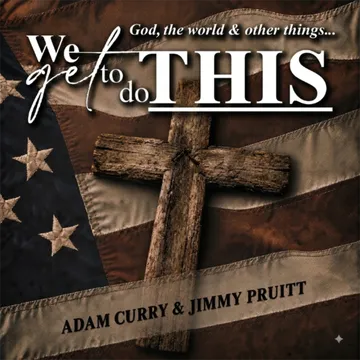
Episode 1 · Wednesday, 3 September 2025

The Genesis Episode

A media pioneer and a Texas pastor bridge the gap between secular culture and scripture to deconstruct the military-industrial complex and modern spiritual warfare.

By We Get To Do This | 1h 16m listen | 16 chapters
The Genesis Episode cover
We Get To Do This · No. 1

About this episode

Adam Curry and the pastor of Bridge Church launch their inaugural podcast, marking a three-year journey from their first meeting to a public exploration of faith and culture. Curry celebrates his 61st birthday by reflecting on his spiritual transformation since being baptized and his decision to eliminate profanity from his media appearances. The debut features production work by Jeff Smith and cover art by Craig Weinberg.

Gen Z Christians at a Charlie Kirk roundtable express growing frustration over U.S. taxpayer dollars being sent to Israel and Ukraine while domestic housing and border security suffer. Curry deconstructs the narrative of AIPAC control, arguing that lobbying from defense contractors like Raytheon and Boeing drives foreign aid to bolster the military-industrial complex. The discussion analyzes the biblical mandate for Israel in Psalm 122 against the geopolitical realities described by Daniel Cohen and the historical reforms of King Josiah. Additional focus is placed on the linguistic evolution of the word exploit in Daniel 11:32 and the psychological impact of labeling dissent as anti-Semitism.

Adam Curry shares his relief after eight years away from Facebook, finding spiritual clarity in the Texas night sky and the constellations of Orion's Belt. The hosts advocate for the Godcaster app as a private alternative for listeners seeking to escape the data tracking of mainstream social media. This first episode concludes with a call for national repentance based on the humility found in 2 Chronicles 7:14.


CHAPTER 01 / 16 Discussion

Adam Curry and Bridge Church Pastor Launch New Podcast

Adam Curry and the pastor of Bridge Church launch their inaugural podcast episode, reflecting on a three-year journey toward this collaboration. The hosts recount their first meeting at a dinner with their wives, Tina and Annette, which led to a fast friendship and the eventual decision to discuss faith and culture publicly. They credit Jeff Smith for the audio production and Craig Weinberg for the show's cover art.

adam curry· bridge church· jeff smith· craig weinberg· podcast launch· gratitude

00:00 Father, we thank you for this time. And it is a privilege. When we say we get to do this, it's not trying to be clever or cute. It's not just a slogan. It's truly a mindset of gratitude, mindset of understanding that what we get to do isn't a privilege. It's a privilege, not an entitlement. So, Lord, we do this trusting and believing that you'd led us into this. And so, as we start down this track together, I ask God that you would, by your Holy Spirit, lead and literally direct our conversations where we need to go, what will help people, what'll make a difference. We give it all to you in Jesus' name. Amen. Amen. It's Wednesday, September 3rd, 2025.

00:43 We get to do this. This is episode number one. This is the life we've been blessed with. This is a gift for we get to do this. This is a chance we dare not miss. This is a life we get to do this. As if we've been doing it for years. I like it. I like that last line. We get to do this. We do this. That's cool. Hey, brother. Stick with you. This has been, I don't know, three years coming, maybe? Yeah. You know, we did a little precursor about, what, three weeks ago? I'm living up in a down world.

01:21 Yeah, we just, we hit record and we had a blast. And so you tell me why you feel like we need to be doing this because you shared some things with me. Well, I knew this from the first dinner we met. When you told me I had a great show. That's exactly right. The first, for those who don't know the story, the first time we ever met was at dinner. And Tina and I were a little nervous. Like we're meeting the pastor and his wife. You know, I guess we had like a Thornbirds, you know, like old school, like, you know, here's the pastor, you know, old English countryside idea. And yeah, the first thing I said was, man, I love your show. And you just started cracking up. And Tina's hiding her eyes.

02:05 She's like, oh, I can't believe you did that. I think she physically hit your show. She might have nudged me. She threw you. It's true. It's true. And your comeback was like, yeah, yeah, it is. I totally get it. And I think from that minute, and that's actually why I suggested pretty quickly that you and Dave Manette that you start a podcast. You did right off the bat. Because I was like, you know, these guys, it makes so much sense. Because that's how we met is when I guess you heard that Tina and I were doing the podcast and we were talking about bridge and about things you were saying in the message. You know, it was interesting as I'd never gotten into podcasts per se. I mean, I just, that was, I got a lot on my plate.

02:48 I'm reading a lot of books and just constantly studying. So the thought of adding more content input was like, you know, I didn't know if I could handle it right. So when I met you, it's actually Peggy Layden. Yes. Our friend Peggy showed up in our church and she said, hey, do you know you have some famous podcasters in your church? I'm like, I have, no, what's podcast? No, I didn't say it quite. I wasn't quite that ignorant. I know what a podcast is, but I was like, no, I didn't. And she said, yeah, and they're actually talking about your church, your messages. So she did this through Link. Of all things, she DM'd me through LinkedIn. Who does that? And well, you actually apparently read LinkedIn.

03:31 Well, it popped up. I was like, oh, there's a notification. Okay. Whenever I go to LinkedIn, there's like 8,000 notifications. Like, nope, nope, log out. I'm done. Yeah, most of them are LinkedIn wanting to get into that premium program. Yeah, get me into your schools and all this. Don't want a part of that. That's how Peggy reached out. And then she said, yeah, she explained that Tina was coming by herself because you're doing prep for a show called No Agenda on Sunday mornings. And when she said that, I remembered seeing Tina because she was sitting by herself. And you thought church widow. I did, actually. I literally thought that. I mean, I've been around this 42 years now.

04:12 So, you know, you kind of, you size things up and you see congregation, you start to read things. But anyway, so we had not met formally at all. And then she showed up at one of the classes we were doing, like an introductory class. Connect class, probably. And I wasn't even sure if that was Tina. So I just said out loud, Annette and I were standing there. I go, Tina. And she whipped around like, who knows what? What? And then she came over and that was when we had our first introduction. And immediately she said, yeah, Adam and I, we want to get dinner with you guys. And we're like, well, set it up. So, I mean, it all happened very quickly once we made an introduction. And then we went out, I think, that next week. Was it that quickly? It was quick.

04:56 I thought it took a bit because I kept asking her, have you set it up yet? Have you set it up? up yet? That must have been further over. Might have been, might have been. She said you had been saying, Hey, we need to go get dinner with you. Yeah, that's right. That's right. So we went to Crossroads, awesome place. And we just sort of were in the cave and we had our own little area. And oh my gosh, when you said, You have a great show, you put on a great show. That's, I was like, I'm in. I don't know him, but he's got a great sense of humor, and that's all I need to know. I was serious. I wasn't being funny. I'm like, I get this. This is a show. And so, throughout the years, and this will be just a little introductory as well for this whole podcast, how it came to be. Throughout the years, we've always sat down, we've discussed what you call God, the world, and other things.

05:41 And we've talked about doing this podcast for quite a while. And I don't know, it's just his perfect timing, I guess. Things kind of came together. Thank you, by the way, Jeff Smith, for our intros and outros. Thank you, Craig Weinberg, for our fantastic art. You know, we were waiting another two weeks, like, are we ready to go? And like, no, I said, just let these guys go. They'll come up with something. And yeah, you're right. On the last, you know, three weeks ago, we just sat down and just started talking about stuff. So I came with thoughts and ideas, but I wanted to ask what's going on in your world, first of all.

CHAPTER 02 / 16 Discussion

Adam Curry Celebrates 61st Birthday and Social Media Boundaries

Adam Curry celebrates his 61st birthday, noting that while he feels much younger, the milestone marks a transition into a new decade. He discusses his decision to stay off Facebook for the past eight years, despite the influx of birthday notifications across various messaging apps. The conversation highlights the value of using social media strictly for personal connection rather than constant engagement.

adam curry· birthday· facebook· social media· communication· aging

06:17 Got a few thoughts and ideas I jotted down as well. So the first thing I want to say before we talk about Moi, I want to say happy birthday, Adam Curry, today. Today. I will not reveal your age. I'll just say that. No, it's okay. 61. There you go. Might as well be proud of it. For the first time, I thought this morning walking, I'm like, 61, that's like a real age now. You know, you might as well be 71 or 81. You put that one after a number. It's like, you're in your 60s now. So, yeah. I know. Yeah. Trust me. Although I still feel 50 years. I'm still ahead of you. I'm 69. I'm 63, and I don't feel a day literally over 20. I mean, and mentality-wise, I'm about 17.

07:00 So holding sure. Got to be careful. Never, never moved past that. Got to be careful of what we're saying. Don't want it all to just flow out altogether. Oh, my gosh. So happy birthday, brother. I'm sorry. Thank you very much. We get to do dinner tonight, a birthday dinner. And I got you a gift. Got you a present. I can't wait to give it to you. I'm looking forward to it. You didn't have to get anything. No, spoiled surprise, have they? No, no, no, no. And I don't expect any gifts. You know, I'm like, I even, this morning I woke up. I did not remember it was my birthday until in today's modern world, everybody's calendar goes off. You know, I'm sure it's, I haven't logged into Facebook in eight years. I've shut my account down.

07:41 If they can still find me, I'm sure people are saying happy birthday, but it's unbelievable. I had to go to like five different messaging apps this morning. And you want to say thank you. Right. You know, it was like, oh, there's this one, there's that one. And some surprising ones who pop up. So it's, which I think is what social media really is all about. It's just when you do too. When you have self-pity and you want to say happy birthday. I don't think there's anything else you should be on social media for. Not much for it. So happy birthday. Looking forward to tonight and get some hang time. As far as my world goes, I mean, it's, I always say it's busy, but it's good. And when I say it's busy, it's not to put anybody off or think I'm busier than anyone else. Life is happening in real time.

CHAPTER 03 / 16 Discussion

Biblical Perspective on Aging and the Definition of Exploits

The discussion shifts to the cultural concept of retirement versus the biblical model of lifelong purpose, citing the story of Caleb, who remained a warrior at age 80. The hosts examine Daniel 11:32 and the linguistic evolution of the word "exploit," noting its modern association with computer hacking versus its traditional meaning of a heroic deed. They argue that believers should seek to carry out "great exploits" regardless of their chronological age.

bible· daniel 11:32· caleb· retirement· exploits· language· linguistics

08:23 But I honestly thought when I was much younger that when I hit 63, I'd be cruising downhill towards retirement. Really? Did you thought that far ahead? I did when I was younger. I mean, you know, everybody was retiring at 65 was the age. Now they bumped that, obviously. 67. Yeah, which, you know, I guess we're living longer. They can keep doing that or maybe avoiding it. Well, because we're out of money and social security. So avoid paying Social Security. That's really the problem. All of the money. So when I was younger, I'd think about 65 as being old. And done. Done. Old and done, right? Because that's how culture shaped us. But as a Christian, as a follower of Jesus and seeing that some of the greatest, I use the word exploits in my

09:08 day. We can grip on that a little bit too. But, you know, the Bible says that, let me just read the verse because it's into it. It was fantastic. Daniel 11:32 says, But the people who know their God shall be strong and carry out great exploits. And when you look at scripture and you see how old Caleb was at 80 years of age, he's standing on a mountain and he's saying, I'm claiming my mountain. And he says, I'm as strong as I was when I was 40 years old. I mean, he's like this warrior at 80. How do you find out these ages of people in the Bible? It's not always that apparent. Well, actually, in that scripture, it just says he's 80.

09:45 He's 80. Yeah. That's helpful. So, yeah, it says it. So it's such a great passage, but it's this mentality that we're. did we start deciding culturally that we age out? When do we start pushing people off to the side? Do you happen to know the answer? I do not. That's a good question. It probably came in at the same time, taxes and all that stuff and the initial very human worldly desire of socialism and Marxism. People definitely want to be lazy, want to be taken care of. I'd have to look that up. That's a good one. But I would say probably came in around then. I bet you're right.

10:30 Can you imagine waking up and not having purpose? I can't. And people live for that. I mean, they've been trained by culture, trained by some of these things we're talking about that are very nefarious to wind your life down in your mid-60s. Now it's a little bit later, 60, 67, 65, whatever. And so there's a mentality of, well, when I get there, I've crossed over the finish line and now I'm done. And I can't even imagine thinking like that. Nothing in my world feels that way to me. It's interesting. Actually, I looked up exploit, just want to make sure that we read the definition because when I read it and I saw exploits, in my mind, it triggers, immediately triggers computer hacking.

11:14 Technology. Which is the second definition, a program or system designed to take advantage of a particular error or security vulnerability in computers or networks. I have never heard this word used in a different context. The first definition is an act, excuse me, an act or deed, especially a brilliant or heroic one. Hello. See how interesting it is how language changes? I know. I mean, we used to use the word gay all the time, by the way. There's all kinds of words that have different meanings. Exactly. They get redefined and culture redefines words constantly. The word gay for sure. But also even the word queer back in the day, it was odd.

11:58 It just meant different. Now all of a sudden it starts to become a label. Well, it's the same thing with this. So exploits can have a negative connotation in certain environments. So you think in terms of human trafficking or things like that. Oh, another great thing. The exploitation of children, exploitation of people. And that list goes on and on. But there's also a positive side to it. And I did the same thing. I looked up. I was like, wait a minute. It's in a non-technical sense. Exploit can also mean a heroic, a heroic or notable deed or achievement, very similar to what you found. And that, to me, that's what the scripture is talking about. That I got to read it again.

CHAPTER 04 / 16 Discussion

Personal Transformation and the Decision to Stop Profanity

Adam Curry reflects on his spiritual journey since being saved three years ago and baptized two and a half years ago. He shares an anecdote about how his friendship with the pastor led him to naturally stop using profanity in his speech, including on his show No Agenda. The hosts discuss the power of the Holy Spirit in changing habits and the importance of being intentional with words like "awesome."

holy spirit· profanity· no agenda· christianity· baptism· language

12:41 But the people who know their God, I mean, what a statement right there. Yes. They know their God. It's so powerful. It's emphatic. But the people who know their God shall be strong and carry out great exploits. That's powerful. Powerful. We're carrying out great exploits all day long, man. I love it because I'm like you. Now, I come from a show business background. There is no such thing as a retirement fund. You really don't have a 401k. I never ever considered saving until I met Tina, actually, who she went, yeah, I'll hang out with you, but not like that. And, you know, I have no pension. And of course, Social Security, I've paid into it.

13:25 So I was never thinking about that. And I've always thought and probably do think I'm going to die spitting into a microphone. I mean, I don't see any other way. And after being saved, what is it now? Almost three years? Is it almost three years? Give me up on three. Yeah, you're right there. Is it? Yeah, and then I got baptized. Yeah, so by two and a half years, three years and two and a half years since I was baptized, I feel like I got another 60 to go. I feel you. I really do. I got a lot of stuff to do, a lot of mistakes to make, but a lot of things, a lot of exploits doing that. Oh, definitely, definitely. A lot of exploits for sure. Yeah. What a privilege it is to wake up on a, what is today?

14:06 Wednesday morning. Wake up on a Wednesday morning and have purpose. Yeah. That drives you out of bed. I know this happens to both of us, but we wake up early a lot. Yes. Because we're so engaged. Ready to go? My mind's already going before I ever hop out of bed. And I'm getting up earlier and earlier. I used to get up at 6 o'clock. Then it was 5.45. And now I'm getting up at 5.30. And now I'm sleepy at 6 o'clock in the evening. I'm like, woo, what time are we going? What time is it, honey? I used to be very proud and boastful of the fact that I never set an alarm. And I never had to when I was, you know, Sundays now change because I get up at 5 to do instead of getting, I usually wake up before 7, but I always had my.

14:49 my alarm is now permanently 6:30. I do not want to sleep past 6:30 because I want to get up, say the Lord's Prayer before I'm even out of bed. Good morning, Holy Spirit. Good morning, Lord Jesus. Good morning, Abba. And get into my Bible studies. I have lots of devotionals. Yours comes through. Got to write you back. And thank you very much the other day. I was so busy I didn't write you back. You said, brother, you okay? I just want to check on you. Have you fallen and you can't get up? That's what I was saying. As you're getting older, I'm worried about you. Frailty. Not a lot of people have that. Strangely enough, I don't think a lot of people have these types of communications.

15:30 You know, that's the thing that brothers do, right? Friends do. I remember the first time I told you we were going to be best friends, and it was when you were dropping the F-bomb when we were storyboarding, living up in a down world. I was over at your house. I was a little nervous. We were still getting to know each other and still kind of, it was all fresh and new, you know, discovery, the discovery stage of friendship. And we're sort of tiptoeing in each other's space and learning, getting to know. And you're dropping the F-bomb, and I was just laughing in my head, you know, because I never said a word to you about it because I'm not ever going to do that kind of thing. I always trust the Holy Spirit. He can, whatever he wants to do, I trust him in you. And I remember you said something like, brother, I just realized I'm dropping the F-bomb. You caught yourself, right?

16:16 And I said, you be you, and I'll be me. We'll be best friends. And that's exactly how this is rolled out. And it only took two weeks, and then I stopped cussing. Oh, I'll never forget. I was listening to No Agenda. And I'm going, wait a minute, something's different. Wait, Adam hasn't dropped the F-bomb. It was shocking, but in a good way. It's amazing what the Holy Spirit can do because that was just part of how I spoke. That was just part of my before I was a Christian. It's the same way. I just grew up a certain way, and that was culture. And that's just how you expressed yourself. One of our members of our church family Sunday came up to me.

16:56 I won't say who it is. And she sat down next to me. She said, I just want to say, I just want to tell you something. I said, what's that? I know that you stop cussing. I said, well, yeah. She says, I've really, I noticed that I've been doing this a lot and I'm not doing it anymore. I've been a whole seven days. I'm like, yes. She says, you can use a coin. Exactly. If you can do seven, you can do 70. You can do 700. Oh, it's beautiful. And once you get used to it, it actually helps you search for other words. That's right. I'm very careful with my words. Like the word awesome, I try really not to overuse.

17:34 It's an overused term in culture. And I really try to think, am I in awe of this? Am I really in awe? Like I'm in awe of what's good. It has to be in awe of something God did, which can be a small thing. But that's when I really tried to use awesome, not in any other, in any other context. Words are my business. And yours too. We have so many people living with our mouths at the end of the day. It's breath coming over the vocal cord. That's right. It's insane. That's right. That's right. And what a privilege. We get to do it in two different genres, which kind of explains why we're coming together.

CHAPTER 05 / 16 Discussion

Bridging the Gap Between Culture and Christianity

The hosts explore the intersection of secular culture and Christian faith, referencing an upcoming conference in Murfreesboro, Tennessee. The pastor recounts a meeting with a mayor in Abilene, Texas, to illustrate how spiritual and civil governments can be allies rather than opponents. They cite the biblical reforms of King Josiah as a historical example of how rediscovering scripture can lead to both religious and political renewal.

culture· christianity· king josiah· murfreesboro· tennessee· government· reform

18:13 In fact, I wore a short, a shirt in honor. Yeah, I see it. Culture and Christianity. It's a conference out in Murfreesboro, Tennessee, Nashville area that we're going to be going to. We went last year. But it kind of shares, you know, you're a conspiracy therapist, portrayed. And, you know, so you kind of carry that. You've got your finger on the pulse of culture. I mean, just by just by nature of what you do with No Agenda, you and John Dvorak. I mean, you guys are just constantly unpacking, reverse engineering, exploring, you know, deconstructing media stuff. And that, so your finger's on the pulse of culture. I'm a Christian. I've been now over four decades, which sounds really weird to say, but since I've been 18, 19 years of age.

18:58 And so my heart, I even said this on Sunday, is I was asking a class, you know, introduce yourself and what do you want to do when you grow up? And I said, I want to be a Bible scholar, you know, and the teacher said, the professor said, well, it's very ambitious. And I'm learning now after four decades. It was a very ambitious thing to say. But I'm pressing down that path with my life and have been very blessed to do what I do. So we've both come maybe from what some people would say different and even opposing worlds, culture, Christianity. Sure. I don't see them in opposition. No, but the world does. The world does. And I think some Christians do. I think so. Many, probably. I sat down with a mayor a few years ago in Abilene, Texas.

19:41 I wanted to just get to know him and scheduled an appointment. appointment with him. I walk in, the gatekeeper, his secretary, she was like, What do you want with him? What do you want? What's the nature of your visit? And she thought I was mad because apparently only pastors and Christians showed up when he played something wrong. Something's going on. And I said, Oh, I just want to be a blessing to him and get to know him because I'd love to pray for him. And she just totally disarmed her. Well, I went in and sat down with him. I said, Sir, I'm just here to be a blessing to you. I'm new to the community as a young pastor, and I'd love to meet with you maybe once a month just so I could pray for you and what you do. Because, and then here's how I put it. This is just a God thing in the moment. I said, You, sir, carry civil government on your shoulders as the mayor of our community.

20:24 And I said, I carry spiritual government on my shoulders. I said, That makes us friends. That makes us allies. We're not opposed. We need to run together for the betterment of our community. Right. When I said it that way, it just disarmed him totally. He and I became dear friends. I even had him speak in my church at one point. He came and did what he called a speech, but it was really a sermon. It was really cool. He spoke on grit, determination, and faith. Nice. I was amazing. Nice. So all that to say is that I see that that same way. There are people who want to divide and categorize everything. And by Western thinkers, we tend to do that by nature.

21:04 But really, Hebraic and Hebrew and Eastern thinkers are more holistic in their thinking. They don't separate everything. They see everything as harmony as a whole. You know, working together. And so I've never been a, you know, we got to, we got to go against the, we got to defy the government. I'm like, no, let's reform the government. Yeah. Josiah was a king. I was just reading about this a minute ago. Josiah was a king, and he actually, they rediscovered the law. The law had been lost in the rubble when Jerusalem was destroyed. And when they were rebuilding the walls, it's called Josiah's reforms.

21:45 And when they found the law, the Bible, the word. This is the bring out the book. Totally bring out the book. That was the whole thing. And Hilkai was one of the priests said, you know, bring out the book. The people are saying, bring out the book. So they built a platform that read in Jerusalem, read scripture 24 hours a day, read through the whole thing. And when the people heard the book, they repented. But also, King Josiah repented because he didn't know what he didn't know. They had had a gap in passing down those traditions. When he rediscovered the word of God, the message of God to the world, he changed everything.

22:26 He didn't just reform the church, as we would call it. They did. They rebuilt the temple. They moved worship. They centralized it back to the temple for honoring. But they also did political reforms, changed everything. It was a complete cultural and religious revival, both. It's culture and Christianity, not culture or Christianity. And that's why I love that we're coming together and starting these conversations around what's going on in our world, God, the world, and other things. Since you led me down that path, there's, and this is no coincidence because this started to pop on my radar about three years ago.

CHAPTER 06 / 16 Discussion

Analyzing the Rise of Anti-Israel Sentiment in Gen Z

Adam Curry observes a significant shift in public discourse regarding Israel and anti-Semitism over the last three years, particularly on platforms like X. He notes that while he grew up with a deep understanding of Jewish history in Amsterdam, younger generations are increasingly critical of Israel following the events of October 7. The hosts discuss how selective empathy and social media algorithms influence modern perceptions of global conflicts.

israel· anti-semitism· gen z· elon musk· x· october 7· palestine

23:10 And I don't think anyone has decoded it properly, understood it properly. I don't think anyone's even, there are a lot of people who don't want to even discuss it. And that is this complete flip. And so I started noticing it about three years ago. And I have different thoughts on it now because I'm starting to decode it. Anti-Semitism, blaming the Jews for stuff. And it started at the fringes of the circles I'm in because these are conspiracy theories. And so I'm like, oh, what's going on here? A lot more bold. Now, I grew up in Amsterdam.

23:48 So I have a different background in Jewish culture and history from playing with my friends and their grandmothers had tattooed numbers on their arms. And also other people just, you know, I know the hardship of the war and the hunger winter, but particularly the Dutch Jews. And so that's just something you grow up with. And like, you know, there's a no-go zone. And that no-go zone got completely, it started in far corners of the internet, you know, 4chan, but it started moving in closer and closer. And as Elon Musk allowed X to be kind of a place where you can say whatever you want, it just flipped.

24:31 And amazingly, after October 7th, two years ago, it completely flipped. And, and, And I've been trying to figure out what this is, what is going on. You see people like Tucker Carlson and Candace Owens, you know, all talking about how Israel controls us and all these different things. And along with this, it's like the enemy. I've really started to figure this out because, yes, I'm a conspiracy therapist, but it kind of stems back to even as a kid, I was connecting electronic components with wires. And so that's very analogous to red yarn on the board, right? So I'm connecting all these different things.

25:16 And it flows right along with Epstein, Mossad, distrust of any intelligence agency, APAC. There's all these things on a really free-flowing internet now. And as we're extremely excited about Gen Z, this, you know, so that now we've hopped over millennials who we have to talk about as well because you're not lost, millennials. No one's coming for you, but you're not lost. You're going to be okay. But there's a big Gen Z population or a portion of Gen Z who are really, they're in revival mode.

25:57 They're excited. They're more traditional. They're seeing beyond the lies of, hey, get this PhD in, you know, poli sci or gender studies or whatever, and you'll make $150,000 a year. That was true for about a window of a year or two. But there is also, it is also coming from them what I originally thought was pure anti-Semitism. And I've, and I was listening to Charlie Kirk yesterday. And I'm, you know, thanks to the Godcaster. I have to just plug the app for a second. Hopefully you're listening to this on the Godcaster app.

26:38 If not, get the Godcaster app, follow Bridge Church. It'll pop up automatically in your latest tab. It just popped up. And I'm, throughout the past year, I've just learned to listen, listen, listen. Whenever I think, wow, that's a genius thought you had, Adam, like, no, no, no, no. That's the Holy Spirit. So when stuff comes into my head, I really stop and I listen. And so I got a strong, like, oh, I got to listen to this. And it was Charlie Kirk, and he had a bunch of Gen Zers. He didn't come to any conclusions, which is why I'm bringing it up. I actually brought a couple of clips from it because I thought it was so interesting to see what they're thinking, why they're thinking, why they're thinking this.

27:23 And then what we as, here we go, Gen Xers, but really we're boomers. I mean, you literally are legally a boomer. I am the face of Gen X, but okay, I'm a boomer. Now I'm 61. I can't deny it anymore. I think we're handling this incorrectly because it's a little different than what we think it is. So these are relatively short clips. I just wanted to. So the first thing, so what is this distrust or this disdain against Israel? Where is, by the way, I'll just stop here. You've heard this. You've seen this, surely.

28:03 Absolutely. On every news feed, every video feed, it's anti-Israel. It's pro-Hamas, pro-Palestine, whatever that is. You know, it's pro-pro this, and yet ignoring what happened October 7th and the incredible tragedy of that, which has been a continued tragedy. Yes. It's been an open wound that continues. Since I was eight years old, I remember this going on between so-called Palestine and Israel. And, you know, then it was slingshots and other things. But this has been going on for a long, long time.

28:40 I believe that because of what we're seeing on social media, which is probably directed in many ways. I mean, just because you don't own X doesn't mean you can't, or Facebook doesn't mean you can't get the algos to do things. And it's selective empathy is what I call it. Because, you know, show me any news feed and show me one as gory as it would be. Show me one picture of dead soldiers in the Ukraine-Russia war. There's none. And there's millions of over probably a million people who've died there. You've not seen a single picture. It's all this one area.

CHAPTER 07 / 16 Discussion

Gen Z Perspectives on Foreign Aid and Economic Hardship

A series of clips from a Charlie Kirk roundtable features Gen Z Christians expressing frustration over U.S. taxpayer dollars being sent to Israel and Ukraine. The young speakers argue that domestic issues, such as border security and housing affordability, should take priority over foreign military subsidies. Adam Curry points out a discrepancy in their understanding of the scale of aid, noting that Ukraine has received significantly more funding in a shorter period than Israel has since 1948.

charlie kirk· foreign aid· ukraine· israel· inflation· gen z· housing

29:21 So here's where a lot of the disdain comes from. And we'll discuss it after we listen to this. It's very similar to our support for Ukraine. We're sending a lot of money over there. not really getting, in my opinion, a huge return on investment. And so that's like the first thing that comes to mind because when people talk about their distrust or dissupport for Israel, that's the first thing that usually comes up is all the money that we're sending them. I think we have a lot bigger issues at home. I think we should be spending most of our tax dollars on securing our border, keeping our home people safe rather than, I mean, we've seen illegal immigration that Joe Biden let through our southern border come in and we've seen thousands of Americans die because of it.

30:04 I think we have a much bigger problem on the home front rather than sending money to foreign countries. I think it's critical that we remain friends with them. They remain our ally. I just don't think we should be subsidizing them as much as we are. These, by the way, I think are mainly Christian kids. This was really interesting because I recognize this as kind of a theme. It's like, well, why are we sending them money when we have all these problems at home? Yeah. And the math is what's interesting. You'll even hear them talk about it, and then we have to discuss the math. At what point are you going to be okay or would you never be okay with the U.S.

30:43 defending Israel's right to exist and essentially saving the country? I think they absolutely, I mean, first and foremost, they have a right to exist. They have a right to defend themselves. That's not my issue with it. I can kind of give an analogy is that our house is burning down and so is our neighbors and we're trying to put their fire out before we put ours out. That's kind of how I view it. So when you guys find out, and I don't know if you're aware of this, but when you find out that we're basically every year we send about almost $4 billion to Israel, does that make you upset or do you understand it given that they're under sort of crisis ongoing? I would say upset. And the amount over since 1948, it amounts to $319 billion adjusted to inflation.

31:28 And I'd say that I can think of multiple things that we could have spent at home that would have been a better allocation of our taxpayer dollars. And I feel like this money could have been well spent in supporting an economy that would support our generation being able to afford homes rather than military strikes for Israel. So there's a lot wrong with this. Wow. The first thing is since 1948, $350 billion adjusted for inflation. We have sent over $500 billion to Ukraine in the last five years. That was three years. That's what I was thinking. So there's a misunderstanding of the size of money, what a billion dollars is. I mean, even if you and I started to count today to a billion, we would not make it.

32:10 We would pass away, guaranteed. There's just no way you can count to a billion. That's how much money it is. But it's like it sounds like they want someone to blame for their problems. And when I hear this, I'm like, yeah, there's housing affordability problems, but it's not going to be solved by stopping money, giving money to anywhere or anything. And by the way, we give away, the United States gives away a lot of money still to dumb stuff. So, you know, how this, so I just want to identify this problem here that they have an issue and they immediately want to blame it on the government on something the government's doing.

CHAPTER 08 / 16 Discussion

Addressing Root Causes of Youth Discontent and Media Influence

The pastor analyzes the grievances of Gen Z, suggesting that their focus on foreign aid is a symptom of deeper anxieties regarding their own futures. He argues that modern media destroys attention spans and encourages a "me, myself, and I" mentality that prevents people from looking at root causes. The discussion emphasizes the need to move beyond surface-level reactions to understand the spiritual and psychological drivers of cultural unrest.

media· root causes· symptoms· psychology· attention span· materialism

32:57 What do we, how can we communicate what they can really do to solve the problem, where their real problems are coming from, and that they're basically being steered in this direction. And I think that's what most of the Palestine, you know, the pro-Palestine demonstrations are people who are mad about other social circumstances that they have themselves. I agree. I also see this. You have to take a step back. So often we want to engage the current issue. We can call it current events, current issues, whatever, current cultural events. And we want to just go in and pick those out of context, but we're missing the real issue.

33:42 It's like a doctor when you go in, you know, to get, you know, you've got an ailment of some kind and he does his work and then he gives you a prescription and you go off on your merry way. And then for the next 20 years, you're taking this prescription. You're on the drug. Yeah. And what it is, it's dealing with symptoms as opposed to getting to the root causes and issues. So much of what happens in government, what happens in churches, we keep trying to fix the harvest, the trees, the fruit, as it closed with dealing with the root. We're not getting back to root causes. So all these young people, they've been so fed by media.

34:22 I mean, everything I heard here smacked. I could just see them carrying, you know, free Palestine. Even though these are Christians in. probably wouldn't be doing it. I know. You're right. I could hear that tone, and yet they still have this bias, this bent that's been informed by culture. And so that surface, that's not even core issues. We're so prone to work on symptoms that we're afraid. Maybe that's the problem. We're afraid to actually get to the root. We're afraid to go deeper. What is really generating that? Forget Israel, Palestine, forget Hamas, forget ISIS.

35:01 What's core? Let's go deeper than that and begin to dig and pull. It's like you got to become a, what is it? The anthropologists, the guys who excavating. Excavating. You got to excavate this, which means you got to get dirty. You got to get down below the surface. Few people in our X 144 character world, unless you buy the blue check. Yeah, you get many more characters. You get more characters. You can do it all in one. In this world, we're prone to just want a quick fix, a quick word, a quick, and we can't even read a book anymore. Our attention span has been so destroyed. And sure, by design. Yes.

35:43 And so we're not processing larger pieces and bulk information and random things. Now we're just so hyper-focused into these little categories and pockets that we're not willing to go deeper. And I'm listening to these young people, and while I hear what they're saying, I'm like, but you're not getting to the root issue. And you're also saying, me, me, me, me, me. This is all about me. You know, me buying a house, me being able to pay for my college degree. Why would you want to go to college now? You know, all of that. And I'm hearing this is a, it's a symptomatic of the unholy trinity, me, myself, and I.

CHAPTER 09 / 16 Discussion

Biblical Mandate for Israel and Personal Experiences with Prejudice

The hosts discuss the biblical significance of Israel, referencing Psalm 122 and the command to pray for the peace of Jerusalem. They mention Daniel Cohen’s analysis of the geopolitical landscape, where Israel exists as a small enclave surrounded by Islamic-dominated nations. The pastor shares how personal negative experiences with individuals can sometimes cloud a person's ability to see the biblical truth regarding the Jewish people.

bible· psalm 122· jerusalem· daniel cohen· islam· zionism

36:24 It's symptomatic of an unwillingness to get down into deeper issues and deeper root causes because everything they just talked about was symptomatic. They were not getting down to the root issues. So, because I have two more shortcuts before we get to that, biblically, and this is far from my expertise, which is why there's two of us. I just look at the Jewish people. I look at Israel. I'm like, how do they keep coming back? How do they keep surviving? Which I think is what's missed and really is seen not as, hey, that's a God thing. It's seen as, well, clearly because they're controlling everything, that's why they're still here.

37:06 Because of their Zionist regime. So, what's the biblical context of that? Biblical context. I was watching, we were watching Daniel Cohen last night. He's got a new show on the Real Life Network. It's also on YouTube. And he's Jewish. He's from America, but he's made all y'all back to his homeland. And now his whole family lives in Israel and lives in Jerusalem. And he's got now a show called the Daniel Cohen Show. Sharp, brilliant, good thinker, biblical thinker, biblical worldview, messianic, loves Jesus and loves his land, loves his home. So he was talking last night. He showed a map. He said, he said, we're going to show a map. Everything you see on the map that's red, and this is all Eastern, Mediterranean, everything you see that's red means that this is under Islamic control.

37:55 This is Islamic domination. And the one you see in yellow is the one that's not. Little, little, little teeny teeny dots. You've seen this one. No, I can imagine. The map was total red. Every country, every nation, Syria, Jordan, all of them live all over. There's some Christians in there, but there's pockets of Christianity. But in terms of domination, they're dominating the government. They dominate the culture. And there was this tiny little speck. It's Israel. How in the world could that little speck of land survive without the hand of God on them? God calls them his beloved, his people.

38:37 And you can like it or dislike it, but it doesn't change. Here's the thing: the truth is not contingent on what I think or what I believe. Truth is truth. Amen. It's eternal. Facts are temporary, subject to change. So when I go to like Psalm 122, verse 6, which I quote every Sunday, pray for the peace of Jerusalem. May they be secure who love you. Peace be within your walls and security within your towers. For my brothers and companions' sake, I will say, peace be within you. For the sake of the house of the Lord our God, I will seek your good.

39:15 That's just three, four scriptures of hundreds of scriptures that talk about God's heart for and love for. This is in the imperative, which is. which means it's literally a command. It's a mandate. The command and the mandate is to pray for the peace of Jerusalem, to speak life and blessing over them. Peace be within you. I mean, all of that is a directive from God. So here's the thing. As a thinking Westerner who grew up in America, you know, it's easy to say, I'm going to think independent of anything. But when I became a follower of Jesus, I submitted my will, my thoughts, my thinking, my way of doing things to his.

39:56 So now I'm subjugated to that on purpose. I'm a bond slave. It means I'm intentionally a slave. I'm intentionally subjected. And constantly I have to do this over and over and over because the will is very resilient. Sure, sure. Self-will. It wants to keep fighting. And so it resurrects itself often. You got to kill it again. So my way of thinking now is my alignment is with the word of God, the Bible, as we know it, as we have it in its current form. And so whatever it says I'm to value, that's what I'm going to value. And what it tells me to disdain or abhor, I'm going to do that as well, which is sin.

40:38 But so this is where this is rooted out of for me. I've talked to friends. I know a guy, great guy. You know him too. I know exactly what you're talking about. Yeah, I hope so. Grew up in New York City, and he had really bad experiences with Jewish people. But there's just people. They're people. People are people. They're crappy people. So the first time we had to sit down together, he made a comment. He said, oh, man, I really struggle with a Jewish thing. And he wasn't being mean. He was being, it was a cultural thing. He grew up in that culture in New York City, which is its own thing anyway. So he had bad experiences. And my thought is, that's true. Yeah, you did.

41:19 But that doesn't change the truth. That's a fact. Oh, man, that's so helpful. Thank you. Because from this, when you get a Ted Cruz misquoting Genesis, poorly done. But when you have particularly politicians who are saying, well, that's the thing. They're not saying this is the truth of the word of God. They're saying, well, we have to defend Israel. And that's where this whole Zionist thing came from. The whole, well, they must have something on you. You know, enter Epstein and all that stuff. We don't have to necessarily go there, but know it's out there.

CHAPTER 10 / 16 Discussion

Military-Industrial Complex and the Reality of Lobbying

Adam Curry deconstructs the "psyop" that Israel controls the U.S. government through AIPAC, revealing that much of the lobbying money actually originates from defense contractors like Raytheon and Boeing. He explains that the military-industrial complex, which President Eisenhower warned about, benefits from Middle Eastern conflict far more than any single nation. The discussion clarifies that foreign aid is often a mechanism for supporting the U.S. defense economy and securing resources like oil and gas.

aipac· raytheon· boeing· military-industrial complex· lobbying· dwight d eisenhower

41:59 And the number one control mechanism that, so when I became a Christian and I jumped right out of the closet, I'm like, here I am. I'm a Jesus freak. And, you know, immediately there was a turn. Like, you Zionists, because you're a Christian, you believe that Israel this, Israel that. And by the way, you can call me whatever. I've been called worse. I've been called a lot of names. But it stems from a control mechanism, which is very poorly understood, which I want to, you know, I'll play the clip here. Again, this is from Charlie Kirk's Gen Z conversation. Do you think that

42:41 APAC represents, again, I'm not saying I believe this, but I think this is what you're saying, that it represents a kind of cutting in line of prioritization away from the American people. Yes. Would you guys say that's a fair summary? Meaning that, like, okay, we vote, we're citizens, but a separate group gets higher priority because of whatever reasons. You look like you want to. Chime in. The entirety of the idea of a PAC is to represent a group, but the fact that we're allowing a group that doesn't even represent American interests to influence the people who are supposed to be representing us, I have a huge problem with. So APAC, American Israel Political, it's not action committee, but

43:25 it's not a PAC in the pure pack. But it's an acronym. Is one of the hottest, I mean, I've been hearing this for much, for years in the, oh, APAC, AIPAC, they control. Israel controls it. Israel controls Trump. Israel made Trump strike Iran. They're going to drag us into another war. And it goes on and on from there. Peter Thiel runs Palantir. He's Jewish. Israel, control. We're all going to die. CBDCs. That's how crazy people get. And so if you think AIPAC is successful by getting $4 billion a year, you got another thing coming because that is a very low amount of money considering the money that other lobbying groups, which include

44:14 unions, which include, I mean, oh my Lord, how many there's. $100 billion industries for countries like Qatar and Saudi Arabia and the Netherlands and England. And every country has a pack. Everybody wants to influence laws. Now, fortunately, we have the right to redress our government. That's how lobbyists are able to come in. Of course, the unfortunate part is that if you look at how we have allowed our representatives to operate, because that is us and Gen Z, pay attention because you can change this.

44:53 That's right. Which, you know, if you want to be on a committee, did you know that you have to pay over a million dollars to the party to be on a committee? People don't really know this. And it's both sides. And it's different amounts, but you literally have to spend some of your campaign finance money back to the party to be on that committee. Otherwise, you get kicked off the committee. Wow. That's how the power game works. Now, AIPAC is very powerful, but I just wanted to follow the money for everybody. I've done this before on no agenda, but it's important. Because you can read these form 1990s.

45:31 You can follow the money all the way back. Oh, yes, there's a couple of very prominent Jewish families who donate to APAC. The majority of the money comes from the American Israeli Education Fund, AIEF. If you go there, it's a one-page website. Literally says, we fund APAC. So it's what we call a straw man in the middle. Now, if you go back and look at who funds the American Israeli Education Fund, surprise, surprise, it's not Israel. It's Raytheon. It's Boeing. It's the military-industrial complex, which is where we spend $8 trillion a year of our tax money.

46:16 Let me just repeat that. So that's $1,000 billion. And a billion is $1,000 million. So a little bit more than it's... So it's just a small piece of their lobbying, which is, I mean, just look at it. And President Trump has given the military-industrial complex more than any president before. We went from 800 billion a year to a trillion a year. And they benefit from war. So where do they see the easiest place to make war happen is in the Middle East. So that's, and when President Eisenhower left, he gave his famous speech, you know, beware of the military-industrial complex.

46:58 He didn't say, beware of the Jewish Zionist complex. He said, this is the one. And of course, we're steeped in it. We're completely steeped in it. So that's what, if we want to change that, and by the way, you know, there's two sides to that coin. President Trump is using our military industrial base is what it's more aptly named to keep our economy going. And it's a pretty big economy. And we are basically making stuff to sell to other people who want to protect their territory.

47:38 And we're using some of it in exchange for some deals like, oh, we'll be over here protecting you as a backstop just in case. So if we really want to change things, we have to change a lot of things in that area and not be completely, because it is a true psyop that Israel is controlling this. So $4 billion, even if it was $10 billion, call it $10 billion. It's 100 times that. Am I saying that right? 1,000 billion. It's 100 times that, what is being spent. Who's lobbying for that? Wow. Well, it's not Israel. Okay. It's just not Israel.

48:18 Have horrible mistakes been made? Have horrible things been done? Of course. Out of greed for, it's always for resources, turf, you know, oil, gas. It's for, you know, there's always some other, there's a little personal beef in there. Look at the Bush family, which is what the whole problem with Russia is. Russia has $10 trillion of resources in eight time zones. That's why everyone always wants Russia. It's not because we hate Putin. In fact, I've been to Russia. The Russians, they're like us. They're more like us than you'd know. So I'd love Gen Z to listen to this and reconsider what you've been driven into.

49:01 And on purpose, through social media, through imagery, through memes, right into the arms of, in this case, I think it's the enemy because the end around is, hey, can we get another one of those exterminations? extermination deals going? We blame everything on the Jews because that's what I see happening. Yeah. That's what I see happening. Yeah. And now I'd like to, as we say in the old country, put my hand on my own chest. I don't know why they say that. Here's where I certainly have done this wrong. And this is an important one for our generation to listen to.

CHAPTER 11 / 16 Discussion

The Psychological Impact of Labeling and "The Crime of Anti-Semitism"

A clip from the Charlie Kirk roundtable suggests that constantly labeling young people as "anti-Semitic" for questioning foreign policy may backfire, leading them to embrace the label out of spite. Adam Curry admits he has been guilty of using such labels dismissively in the past without considering the underlying frustrations of the speakers. The hosts discuss how haphazard speech and "depth charge" words can escalate social divisions.

charlie kirk· anti-semitism· psychology· labeling· rhetoric· free speech

49:41 I feel like it's becoming like the word racism. Like we just disagree with them, so we just have to call them a name. I don't think they're actually anti-Semitic. I think people just can't agree with them and they can't prove them wrong. So they just throw a word out and be like, you're anti-Semitic for because you think that we should stop sending our money there. Something that I see amongst the people around, I do see more like general disdain towards, I mean, just being honest, Jewish people. That's correct. Just because they're constantly being told that you hate Jews. And it's like, fine. If you're going to say I hate Jews over and over and over again, like, if I'm going to be convicted of the crime, I might as well do the crime.

50:16 This is important for us to remember. Wow. I had not considered this because I've certainly been guilty of saying you're anti-Semitic without even thinking where these people are coming from. These young people are coming from. Right. And if you keep saying that, if I'm going to be made guilty of the crime, why don't I just commit the crime? Wow. That to me was really powerful. I don't think Charlie Kirk got that when he was doing this roundtable with him. Yeah, Charlie was 15 steps ahead, you know, already a systemic thinker. But that is a powerful statement that that young man identified something there that is really an issue. Wow. Where we could even buy our own

51:02 haphazard speech, not checking our words. You know, words are power containers. You remember the old depth charges that would roll off ships? I love those old black and white videos. With like a barrel. Just these barrels. They get down to certain depths and then they explode. And words are just like that. Yes, they are. And so what happens is we're so loose with our words. We've been trained by social media to say whatever you want because, hey, freedom of speech, right? We somehow think that means you can literally say anything. Anything. And that is not what the founding fathers were pushing for. They were very educated, way more educated and self-educated, most of them.

51:45 Way more educated than us. They thought better than we did. They had a moral compass that our culture doesn't have today. But I hear this, these words that get thrown off like a depth charge and not even, we don't give it a thought. And I think we do it sometimes in reaction to what we see. We see a group of students waving flags that are pro-Hamas or pro-ISIS or whatever, pro-Palestine. And we just react to that. I think in the more of those videos we see, the more reactive we become. And we become just as Pavlov trained as anybody. And we think we're doing it for the righteous cause.

52:30 And then we just become our own. We become the very thing we disdain. So that is a good point that kid made. Well, it made me think because I have definitely, certainly on no agenda, said, well, you're just a bunch of Jew haters. Right. Right. And like, anti-Semites. But not realizing the simplicity of the hack, the exploit, if you will, in this case, the second meaning of the term is like, show people a lot of this, this all the time, and say that this is the cause of your problems. And this to me is when I, when this came to me, this came to me literally yesterday. I'm like, oh man, this is the enemy. This is how the enemy,

CHAPTER 12 / 16 Discussion

Resisting Social Media Outrage and the Character of the Enemy

The hosts discuss the spiritual nature of deception, citing John 8 regarding the "father of lies" and the tendency of the enemy to pit groups against one another. They explore the difficulty of resisting the "autopilot" rage triggered by viral videos and social media prompts. The pastor emphasizes that the cultural pressure to have an immediate response to every event is a trap that believers must learn to avoid through prayer and restraint.

john 8· jesus· social media· outrage· psychology· spiritual warfare

53:15 once again, is going to get rid of Israel. And I think this, is this not biblical? That this is what the whole cycle that continues to happen with the Israelis and the Jews? No doubt. I mean, Ishmael, Isaac, the war continues. One, Ishmael is committed to eliminate Isaac. We think of it brother to brother, but it's people to people. And that's what's happened. I'm looking for something right now. You sparked something in John chapter 8. It talks about the character and nature of the enemy. And I want to read it to you. Yeah, I can find it. Here he is. So we know about that. The truth will make you free.

54:00 Listen to what Jesus is saying. He's addressing these religious leaders. He says, Why do you not understand what I say? It is because you cannot bear to hear my word. You are of your father, the devil, and your will is to do your father's desires. Now, that's all like ouch, you know, right? But then he then breaks down what he's saying. He was a murderer from the beginning and does not stand in the truth because there is no truth in him. When he lies, he speaks out of his own character, for he is a liar and the father of lies. And I see that happening if the enemy can train us by pitting us against each other to start defining things.

54:45 We come up with categories that we in boxes we stick people in. So now I see those videos and I do autopilot. I do it immediately. I'm enraged. How can they be so ignorant? Why are they not? And then I'm actually falling into the same trap they fell into. Exactly. And it's a chain reaction or a domino effect. And how do we arrest that? Where do I put my foot down and say, not here, not today? All right. By not going on social media. Well, there you go. Not even looking at the stuff, right? That's like the sledgehammer approach, but it takes a rewiring.

55:26 You have to rewire your brain because I have the same thing, brother. I'm like, look at these idiots. Look at these morons. Like, do you not understand? My favorite queers for Palestine. Wow. What a brain fry. Gays. Yeah, gays for Hamas. But, you know, but there's for Gaza. There's three more levels of psyop going on there. Exactly. And how do we, all right, so how do we put our foot down and go, wait, I am not going to be psyoped here. I'm not going to fall prey to this. So a simplistic answer, but it may be the answer is that should be a trigger for me to pray, not be raped. Yes. Because my response, I mean, how can we not be trained by the cultural milieu we're in, right?

56:11 We're in it. So we're, and, and, well, cultural pressure is to always fire back. It's always, you've got to have a response. You know, there's when things happen in the world, as a pastor, as someone who's a public figure, I feel this immediate pressure. I need to say something. You know, when Minneapolis happens, I need to go online and I need to, you know, Greg Lower, Pastor Greg Lowry saying something, Franklin Graham saying something. I need to say something too. And I, and I actually thought about it and I thought, no, I don't. Which, by the way, always results in the other in the opposite direction saying, you and your thoughts and prayers. It's like a chain reaction upon a chain reaction.

56:56 So how do we stop the madness? How do we break the cycle? I think just being aware is huge, right? Yeah, you just made me really aware of that. Well, it's back to the beginning. I was able to stop cussing. You know, and that's just, I rewired my brain. That's probably much easier because it was something coming from me and the speeches. Well, that's another thing. Brother James, be quick to listen. I always pause there, slow to speak, and I pause again because even slower to get angry.

CHAPTER 13 / 16 Discussion

Power of Silence and the Dangers of Digital Engagement

Referencing Proverbs 17:28 and James 1:19, the hosts advocate for being "slow to speak" and "quick to listen" in an era of constant digital engagement. They discuss the addictive nature of the "reply" button and the "what's on your mind" prompts found on platforms like Facebook. Adam Curry shares how he has largely withdrawn from social media, finding that his life and audience remain intact without the constant noise.

proverbs 17:28· social media· facebook· instagram· communication· james 1:19

57:33 That's the, I mean, you're, you're, you've already crossed the barrier. And I have to remind myself, even today, I sat down, remember, quick to listen, slow to speak, because, you know, we're word guys. I like talking. I probably like hearing myself talk. You know, it's like, I got to remember to listen, to listen, to listen, process. What is really going on here? I've also, this is a little tip, tip of the day. When you're someone who listens and processes, 99% of people will think you are highly interesting. Like that, because I've seen it. You know, you're like, wow, that guy just sat there and listened to what I said and processed for a second.

58:13 And that's part of the training, but also back to what is the root cause? Why am I angry? Why am I angry? I'm angry because the rent's too high. I'm angry because interest rates are too high. I'm angry because I got a credit card bill at 25% interest, which I can barely get by on. I'm angry about being angry. These are much deeper, deeper things. Wow, you really hit on something there where we think we got to have a response for everything and that we got to get on our platforms and respond.

58:53 And it's, I have to resist that urge. Now, depending on the situation, I think there's times to do it. But I did that in my pulpit with our church when we called our church to pray for me. Minneapolis, for those families and the Annunciation church. But listen to this. Proverbs 17, 28, you know, there's always scripture always has a scripture. Even a fool who keeps silent and is considered wise. When he closes his lips, he is deemed intelligent. Amen. There you go. Proverbs 17, 28. I love it. I love it. I love it. And I love it. When he closes his lips, he is deemed intelligent.

59:35 How about that? Wow, boy. Throw that out on social media and see what happens. But it's really true. You've hit on a big one here. It's like the social media, it's there inviting you to respond. Its whole purpose is to engage you to respond. There's a big reply button. There's a big, you know, click to like button. It's always asking you, asking you. You're tagged by name. How can you not reply? Someone has called me out. Someone has said something. And there's a prompt. I just pulled up Facebook, and the first thing it says, what's on your mind? What's on your mind? Say something. Please. Throw something out. We want you to engage in our system.

1:00:17 It's amazing. Wow. And that awareness is, I think, a big one. That's really, yeah, that's where we really have to put ourselves. And, you know, I rarely post. I mean, I only post the show. My shows go on X. I don't post anywhere else. I have an Instagram just to track my daughter, make sure she's still alive. Nothing. I have no Facebook, anything. By the way, I haven't lost audience. I haven't lost friends. I haven't, you know, I don't feel like I've lost anything. But from time to time, I will catch myself hitting reply and going,

1:01:01 and half of the time, I'll be like, what am I doing? And I stop that. And the other half of the time, I wind up repenting on my prayer walk, like, God, you know, forgive us of our debts as we forgive our debtors. I repent for bait. I took the bait. I took the bait. Why did I do it? It's like that lead us not into temptation. It's all there every single time. And I guarantee you, your life will be just fine without this. By the way, Brother Jonah, who, you know, he just started his first podcast. Yes, love it. Young and faithful. And he literally has a watch that does text messages.

1:01:42 That's all he has. He didn't have an email address. His parents let him have an email address so we can look at his download stats. And this is a very intelligent, healthy, well-socialized young man. He's not missing out on anything at all. He's in. At all. And I think you're seeing less and less of that from Generation Z, less and less on social media. Even the ones who are now in their mid to late 20s who have kids, they're not really succumbing to that, which is all good. Which probably brings us to a topic for another show, which would be AI and chatbots.

CHAPTER 14 / 16 Discussion

Healing the Land Through Prayer and Repentance

The hosts examine 2 Chronicles 7:14 as a roadmap for national healing through humility, prayer, and turning from "wicked ways." They look at the example of King David in Psalm 51, noting how he moved from a state of deep confession to a place of praising God's righteousness. The discussion reinforces the idea that a "broken and contrite heart" is the sacrifice God values most when seeking intervention in a nation's affairs.

2 chronicles 7:14· psalm 51· king david· prayer· repentance· donald trump

1:02:23 Oh, yeah. Probably shouldn't do that today. You can go there. There has been one scripture that's just been popping up at me five times this week. Bring it. And this is just going back to what can we do? And I want you to explain to me the power of this because it seems so small and meek and limited when you just at its face, which is true, 2 Chronicles 7, 14. If my people who are called by my name will humble themselves and pray and seek my face and turn from their wicked ways, then I will hear from heaven. I will forgive their sin and will heal their land.

1:03:07 This has just been slapping me in the face when I really wanted President Trump to be elected. And I recited this during my prayer walk. I said, Lord, if you hear our prayer, will you heal our land? It seems even to me, like, will this really help? Can we really, as a handful of Christians compared to all the people who are non-believers or lapsed Christians, can it really work? Yes. You and God are a majority. That sounds simplistic. But at the end of the day, the God who spoke still speaks.

1:03:50 The God who answered prayer still answers prayer. He hears his people. He hears, you know, you read the Psalms and you see David crying out, I'll. almost every psalm. He's crying out, Hear me, O Lord. Hear me, O Lord. Why have you turned your back on me? Blah, blah, blah. And then about midway through every psalm, he does a complete pivot. It's like he literally talks himself into realizing he's totally hearing my, he's hearing me. Thank you for answering. Thank you. You're so good, God. You're so, I mean, it's amazing. Almost every psalm that David wrote has this. Do you have an example of that off the top of your mind? Yeah, Psalm 50. Psalm 51. Let me just pull it up real quick. Psalm 51 is great because he's actually talking about his own fault, his own fallacies, his own mistakes.

1:04:35 He had a few. Oh, he had a lot. Thank you. This one was written on the heels of one of his biggest transgressions, which we know about. So he says, Have mercy on me, oh God, according to your steadfast love, according to your abundant mercy, blot out my transgressions, wash me thoroughly from my iniquity. I mean, he is like throwing up. I mean, he shows up and throws up. And then he keeps going. Against you only have I sinned. I've done what's evil in your sight. I mean, it sounds terrible. Purge me with hyssop. I shall be clean. Wash me. Let me hear joy and gladness. Let the bones that you have broken rejoice. So, I mean, it's a lot of like hardness. And then he says this: Create in me a clean heart, oh God, and renew a right spirit in me.

1:05:19 Cast me not away from your presence and take not your Holy Spirit from me. Restore to me the joy of your salvation. Uphold me with your willing spirit. Then I'll teach transgressors your ways. I mean, he completely spins off. You know, he was in the dirt, wallowing in the mire and the pigsty. Deliver me, God, oh God of my salvation, and my tongue will sing aloud of your righteousness. Open my lips, my mouth will declare your praise. For you do not delight in sacrifice, or I'd give it, you'll not be pleased. He said, The sacrifices of God are a broken spirit, broken and contrite heart. Oh God, you will not despise. He just spins, and he does this over and over. That's one example. That one's very personal to David.

1:06:01 Some of them are much more national-oriented and different. But this one is where he starts off in this dark place. But as he's enumerating it, he keeps adding in the goodness of God, the grace of God, the mercy of God, the love of God, the healing power of God. And by the time he gets to the end, he's like, I'm going to tell everybody about how amazing you are. So what he's doing there is he's literally rehearsing what he knows to be true about God. And by doing that, it completely shifts everything. That's very typical. And so, so, yeah, I mean,

1:06:40 we have this ability, and he's given it to us because there's somebody who lives with us, somebody who abides with us. We're not on our own. And you know this, and you're learning this by experience. The more we lean upon him, the more he says, Thank you very much. I'll occupy that space you just gave me. It's incredible how true that is. And you tell me often, Adam, how often when you're walking Phoebe, these walks are more like sacred moments. Yes. You're out there in the neighborhood, sun's coming up, going down. It's cold, it's hot, whatever it is, rainy, not. You're out there, and it gives you space to hear God.

CHAPTER 15 / 16 Discussion

Finding God in Nature and the Perspective of Creation

The hosts share personal stories of finding spiritual clarity through nature, from walking dogs in the early morning to observing the stars in the Texas night sky. They discuss how the permanence of the heavens, as described in Psalm 19:1, provides perspective during times of earthly chaos like the COVID-19 pandemic. The pastor describes the "God tap" of a beautiful sunrise and the majesty of the constellations like Orion's Belt.

psalm 19:1· nature· creation· astronomy· texas· orion's belt· covid-19

1:07:23 Yes. Where you're not just, you know, walking like this. Well, it starts with his creation. And I'd like everyone to just think, when is the last time you were outside? And I'm very fortunate where I live. It's a road where there's no one's there. I walk in the middle of the road. There's trees lining either side. And even before I can say, thank you, Father, I have to say, thank you for that bird and that bird and that thing that just crossed my path. When you look at it and you look at the beauty and you feel the sun in your back, and it's maybe 15 minutes a day. When you feel that and you just let it soak in before I even start to pray, I'm just like, wow.

1:08:07 I remember as a kid, you know, like, I smell that. You remember we used to be a kid? And I think we get desensitized to that for many reasons. You know, we don't live really in nature the way we used to, but just the smell, and especially you can smell hay or you can smell manure. Man, the smell of manure in a farm. Where the ground's wet and has dew on it. You can smell everything. Yes. This morning we stepped out at seven o'clock. Oh, you sounded sent me a picture, brother. Still dark. So we do our power walk, and we took Mr. Chevy with us in his stroller. That was hysterical. I know, right? We're those dog owners. Yeah, you're them. We become that. And he loves it. He loses his mind when we say, you want to go for a walk?

1:08:50 He just loses it. Does he jump into the stroller himself? He can't. He needs help. He needs assistance. assistance. He's short. He's doing somersault into it. He gets super excited. So we walk out the door. The first thing out of my mouth, I looked up and I saw the clouds as the sun's coming back over the hills. Excuse me. And I turned to Annette and I said, Look at the sky. It was just beautiful as the sun was trying to come up. It hadn't come up yet, but it was starting to and it was beginning to hit the clouds. And they were just all kinds of textures and colors. I was just blown away. So I am that guy you're talking about. I do. I'm enamored by nature. That's why we live out there. And every day I walk out, like last night, we're doing a deer count in our neighborhood.

1:09:34 So everybody has to go outside. Oh, there's a neighborhood. That's the thing. Oh. Because we have a wildlife exemption. So we have to report that. Right. And that's just the way they track how many deer are in the area. So you go out, but it's nothing to see a herd of 50 Axis deer in our yard. And when I drive up at night, mind-bending because these animals are beautiful. Yeah. You know, an Axis buck is just majestic. Majestic is the word. You're just in shock almost. So this morning we're coming back as we're finishing our walk.

1:10:12 Now the sun's coming up just over the hill or behind the hill and it sprays this incredible array of light through the clouds. And I'm like, I told Nett, God tap. I said, God tap right there. Yes. He's showing off. Now, did you go on Facebook and post this? I did not. Okay, good. Thank you. I sent it to you. That's much better. I was going to say, please let him say no because someone goes, look at this. It's so awesome. But, you know, you said you're literally, you don't mind me sharing what you said. No, no. God is showing off. That's what I said. He loves doing it. You got that cross on the mountaintop and everything just coming.

1:10:51 It was beautiful, man. It was fantastic. Psalm 19.1 just came to my mind as I was looking at it. The heavens declare the glory of God. The skies proclaim the work of his hands. That's what you're talking about. Getting back outside instead of spending every waking moment on your screen. Yes. And I'm as guilty as anybody. Annette, she called me out last night. What are you doing over there? I'm like, I'm just reading about, I was reading something. Something very important. I was reading something. She's like, it's important. Well, she's like, what about our show? That was really important. It was way more important than what you're doing. I was actually reading some Bible stuff. I did some stuff on faith.

1:11:33 But in her mind, I'm on social media. I was like, no, I'm. But anyway, so no, this is much more important. We've got a show to watch. So, you know, it's one thing for another. Yeah, it is. But what I love is, and I always take Mr. Chevy out for his nighttime thing, you know, do his business. I love that moment. Annette tried to beat me to the door the other night. I go, wait a minute, this is my moment. Amen. This is me. So I mean, you can turn the lights off. I'm taking him outside, and I love stepping out on the back deck. And at night, they like the cross. So people don't know where we live. There was a wedding venue across the highway.

1:12:10 We live in a group of hills in a valley. And on top of this one lone hill, looks like a mountain to us here in Texas, is this massive cross. And it's called Happy Age Ranch. It was a wedding venue. But that cross is lit up at night. And it's just stunning. You walk out, you see the stars all around it. There's a lot of planets out right now. So you see these bright planets. Yeah, very bright right now, very, very illuminated. And you see the constellations, you know, in the morning now, Orion's, you know, if I catch it before, Orion's up there in the, I guess, the eastern. Venus, you can see Venus. You see Mars. Right. And Orion's belt. Well, I'm always looking for Orion's belt.

1:12:54 That's my go-to, really, that and the Big Dipper. I wonder if people can't even read a clock anymore, if they can identify Orion's belt. Maybe not. Sad to say. I've heard young people who say, I don't do analog. You know, I don't do a watch. With your permission, can I put that into chapters for this particular topic, that image? Oh, absolutely. Yeah, you've got it. Yeah, you've got it. But you make a great point. We've been talking about God, the world, and other things literally today. But bringing it back to a point, you step outside with Phoebe, and the point is to take her to go do her business. But really, what's happening is you're fellowshipping with God. Yes. You're getting, as you say, getting a download.

1:13:39 I would say get a download from Throad Central, right? You're getting these downloads as you're doing it. That's the joy of it. But it's because you're out in creation. And I think that, man. when we start burning things away and stripping things away, it comes back to some really simple things. And I think that's why I'm so enamored with the sky and with weather patterns and various things because it brings me perspective. Yes. And when I see the moon at night, I'm just, it reshapes my thinking for a moment that no matter how crazy things are happening are down here.

CHAPTER 16 / 16 Discussion

Godcaster App and Closing Remarks

The hosts conclude their inaugural episode by encouraging listeners to share the show via the Godcaster app, which they highlight for its lack of ads and data tracking. They express gratitude for the opportunity to record in the church studio and promise to return the following Wednesday. The episode ends with a musical outro emphasizing a life of gratitude.

godcaster app· bridge church· podcast· christianity· gratitude

1:14:14 This happened to me during COVID a lot when we had all that downtime. I'd go out at night and see the skies and I'd say, space, creation knows nothing different. We're down here losing our minds, freaking out. Puts it into perspective, doesn't it? And the sky's exactly the same. The cloud, the sun's going to come up tomorrow in that same spot. And it's all going to happen. And nature and creation doesn't groan, but we do. So it's just a perspective thing for me. Amen, brother. So we're about a buck 15. Shall we call it a show? Should we call this the first one? I would say we should. The inaugural. Yes, if you guys wouldn't mind, those listening, if you could share this from the Godcaster app, there's a little share button there to help you easily share it to people.

1:14:59 That'll get people to use the Godcaster app. No algorithms, no ads, no funny business, not taking any of your data. We don't care. We just want to share the word of God. And we'll be back next week. Looking forward to it, brother. Me too, brother. Thank you so much. And thank you for opening the studio here. Of course. This is the only place. I mean, I'm sure we'll have places that and times we'll have to record in different locations under different circumstances. But this is like a, what's the word? It's like a, I hate safe space, but it's like a Walhalla. It's a clubhouse. It's a cave. It's all these things at the same time.

1:15:39 And it being in the church just makes it that much better. Love it. I want to remind our listeners that we get to do this, live a grateful life. And we'll be doing it again with you next week on Wednesday. Take care, everybody. This is the life we've been blessed with. This is the gift we get to do this. This is the chance we did not miss. This is the life we get to do this.