

Friday, 30 July 2021

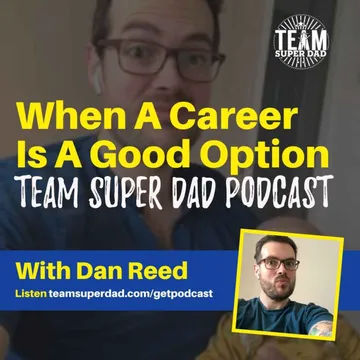
Is A Career A Good Career Option with Dan Reed 'Career Dad'

A corporate veteran dismantles the myth that entrepreneurship is the only escape from burnout while providing a blueprint for reclaiming family time without stalling professional growth.

Career DadFlexible workingCorporate growthWork-life balancePositive masculinityFinancial discipline
By The Jonnie Jensen Show | 1h 5m listen | 20 chapters
Is A Career A Good Career Option with Dan Reed 'Career Dad' cover

About this episode

Dan Reed, known as Career Dad, challenges the prevailing digital marketing narrative that entrepreneurship is the only path to personal fulfillment. In a conversation with Johnny Jensen, Reed argues that the corporate ladder at organizations like Barclays and Adobe can offer profound satisfaction when aligned with personal values. He introduces the concept of leaving loudly to normalize parental presence and therapy, advocating for a workplace culture where output-based performance supersedes traditional office attendance.

The shift toward hybrid models following the COVID-19 pandemic has democratized the professional landscape, allowing workers in Manchester and North Wales to compete for roles once exclusive to London's Canary Wharf. Reed details his transition from a wayward adolescence to studying English and American literature before entering the financial sector. He outlines the guilt wheel of career ambition, where men often mask internal conflict with consumerism and lifestyle creep. To combat this, Reed maintains a take-home mentality and utilizes a 25 percent rule for self-care, ensuring that personal health and family time remain non-negotiable priorities.

Johnny Jensen introduces the Balance versus Burnout Calculator to help fathers track domestic responsibility and avoid the self-neglect that often leads to marital strain. The dialogue turns to practical strategies for negotiating flexible working arrangements through one-month trials and KPI-driven trust building. Reed reflects on his early feedback at Barclays regarding his social nature, proving that authentic communication and being an open book are more sustainable than the mental drain of maintaining a corporate persona.


CHAPTER 01 / 20 Discussion

Johnny Jensen Introduces Dan Reed and the Career Dad Philosophy

Johnny Jensen introduces guest Dan Reed, known as Career Dad, to discuss finding success and work-life balance as an employee. The conversation challenges the prevailing digital marketing narrative that suggests starting a business is the only path to fulfillment. Jensen also promotes the Hero Academy and the upcoming Happy Dad five-day challenge starting August 16th.

johnny jensen· dan reed· career dad· team super dad· hero academy· adobe· barclays

00:00 Is a career a good career choice? In this episode of the Team Super Dad podcast, I talk being a successful employee and having a work-life balance with Dan Reed, aka Career Dad, role theme. Welcome to Team Super Dad. Real dads creating their best lives ever. More time, more money, more fun. You are not alone. You're on Team Super Dad. Welcome, dads. It's great to have you back here on the Team Super Dad podcast. You are with me, Johnny Jensen, dad coach, founder of the Team Super Dad community and the Hero Academy program.

00:42 Welcome to this podcast episode where we are going to be talking about being an employee, you know, having a job. And it's like, what? When do you ever get a video that says, oh yes, here are the secrets to having a good career and being a good employee? You just don't really. Certainly the ones I see and maybe the algorithms are at play, but the videos I get on YouTube and the ads I get on Facebook are all about creating a business, all about quitting your job, not sticking to it and loving it. If you are a dad and you're listening to this, then well, it doesn't matter who you are. If you're listening to this and you're enjoying it, then share it about.

01:23 Give us a like or a rating over on Apple or whatever podcast you listen to. Still, it's only really Apple that do the whole review thing. So be sure to leave us a review there if you're around those parts. Otherwise, definitely subscribe so that you make sure you get these real value added conversations. You know, speaking to dad experts, financial coaches, relationship experts, inspiring dads, Mark Ormrod, we spoke to the other week, the former Royal Marine who lost two arms, sorry, two legs and an arm.

02:00 If you go back and look, there's been some really brilliant conversations in the Team Super Dad podcast. And then, of course, weekly, we also do the wrap-up, which is our fun episode, our piss take banter in the pub, two dads, Glenn and I, putting the world to rights, fixing the world so you don't have to. But today, you are on the value ad, not the serious one, that makes it sound really boring, but you're on the value ad podcast and we're talking to Dan Reed. If you spend much time over on LinkedIn, you might have bumped into him as career dad. Well, that's what he is.

02:36 He's a dad who loves his career. And he shares with us as we chat just how he's managed to carve out a career for himself where he has that work-life balance, where he has his job on his terms, and his employee or his employer is okay with that. He's effective, he's successful, he's in demand. He's just moved to Adobe from Barclays, which is a bank in the UK. I'm sure wherever you are in the world, you've heard of Adobe. But Dan really tells the other side of the story, like being in a job and loving it. Married, two kids, top bloke. We hit it off straight away, even before we set press record on the podcast.

03:16 And I hope you find it inspiring. You know, it can feel like quite a lot of pressure when all the messages are about quitting your job and starting your own business or finding work you like, work in your flame, follow your passion, you know, all that sort of stuff. It can be quite intimidating for people, especially if you're someone who actually enjoys their job. So yeah, I hope you enjoy this. Wherever you are, though, whether you've got a career, whether you are working for yourself, there is always somewhere more you can take your life, whether it's your family, your relationships, your health and fitness. And that is what the Hero Academy is all about. We are pre-registering people for the upcoming Hero Academy.

03:54 If you want a taster of it, then you can come and be part of the Happy Dad five-day challenge, which is starting just in a couple of weeks, depending on when you're listening to this. There's always one coming up, but actually, right as I record this, we've got one starting on August the 16th. So be sure not to miss that. It's a free five-day challenge where we really go through five essential ways to increase the happiness in your dad life. And so come on over to I need to shorten the link, right?

04:29 The podcast that, sorry, the happy dad challenge is join.teamsuperdad.com forward slash happy dash dad dash challenge. So join.teamsuperdad.com forward slash happy dash dad dash challenge. And I'm pretty sure by the time you listen to this, if you just go to teamsuperdad.com forward slash happy dad challenge, that will also work. The internet, mate, digital marketing. How do you do it? I say that because I. I worked in digital marketing for the last 20 years. There's a career conversation we could have another day. So anyway, without further ado, enjoy this conversation with Dan Reed, the career dad, and I'll see you on the other side.

CHAPTER 02 / 20 Discussion

Corporate Career Satisfaction Versus the Entrepreneurship Narrative

Dan Reed and Johnny Jensen discuss the cultural pressure to abandon corporate jobs for entrepreneurship and online business models. Reed expresses his preference for working within an organization and climbing the corporate ladder while maintaining personal values. They critique the assumption that being in the corporate world necessitates misery or a desire for an "out" through sales funnels.

linkedin· corporate world· entrepreneurship· sales funnels· career satisfaction

05:17 Dan. Hello. Good to have you here, Dan. Thank you so much for having me. I'm really looking forward to this. I know. Have you been the guest on other people's podcasts much? Not as much as I'd like. No. It's usually me in your position. So I'm looking forward to having the easier job this time. Yeah, well I first saw you on LinkedIn doing some of your lives. You had your LinkedIn live flipping golden ticket way before me. Who is this chance? Who is this guy? Yeah, absolutely. Yeah. I flipping, put that form in about, I don't know, 30 times.

05:57 I probably sent it 30 times before I got my golden ticket. Literally did feel like Charlie Bucket. Yeah, I don't know how that happened for me because I didn't get a notification either. I just filled in a form and just left it. And then I went on LinkedIn on my desktop, which I rarely do. And it said, do you want to go live? I thought, okay. And there it was. Yeah. Weird. Were you dressed? Exactly. Yeah. Was it an appropriate time to do so? Yeah. I love that. I think people do, don't you just click it and then they're going, yeah. I have seen a number of tests where people just go live and it says this is a test.

06:39 And then you, yeah, it's very good. That is the modern parlance. Like, can you hear me? Is this working? So, Dan, yes, I saw you on LinkedIn and, you know, the career dad bit obviously spoke out to me with the Team Super Dad focus. And I think it's really exciting the message that you're putting out and you're bringing to this ever-growing conversation about dads because everywhere, whether it's our Facebook feed or YouTube in, you know, in video ads, start a career, you know, start an online business, set up a course, be an e-commerce expert, come on to my property thing.

07:24 You never see a video that says, have a really good career and enjoy going to work. You just don't see it. And yet thousands, in fact, probably the majority, I don't know what the numbers are, but it's got to be at least 60, 70% of people are in a career rather than starting their business. Yeah. No, absolutely. And I think that's, yeah, I mean, that resonates with me, right? I mean, even with the whole career dad thing as something as an aside, I quite like working for someone else. I don't know, you're kind of given this message of you need to set up on your own Steam and everyone wants to be a business owner.

08:09 Do I? I don't know. Actually, I want to play that game and I want to see how high I can climb in that arena without losing a sense of me and who I am and my values, but also with trying to be the best dad and husband and family belonger that I can be. And so, yeah, I completely get it. And I think, I think there's so much that says, if you are in the corporate world, you must hate it. Therefore, here is an out and here is your sales funnel. And you can now buy pre-made sales funnels.

08:49 And yeah, I just think it's insane when why do we not actually ask the question and try and support people through whatever avenue it is that they are in? Yeah. Well, and the traditional idea of work, you know, it's a fog. Your boss is a nightmare. You know, you're going to be tired. You're not going to be appreciated. That, for a lot of people, is the motivation to get out. And yet companies' working culture is evolving so fast. No, it's not. It's taken bloody decades.

CHAPTER 03 / 20 Discussion

Evolution of Flexible Working Models Post-Pandemic

The shift from traditional office attendance to output-based performance measurement accelerated significantly due to the COVID-19 pandemic. Companies are now navigating the transition between full office returns and hybrid models, while employees advocate for the flexibility they maintained during the last 18 months. This shift has specifically opened doors for men to request flexible schedules, a conversation previously dominated by women.

covid-19· flexible working· remote work· paternity leave· workplace culture

09:31 Now it actually is. Yeah, it's funny because pre-pandemic, the work that I'd started doing with companies with my career dad hat on was around flexible working, was how do you engage people who are working remotely? How do you monitor performance? How do you look at metrics instead of nine to five bum on seats? Measure. output, not time and all of these things? And then COVID hit and then everyone was, well, not everyone, but a lot of people in companies who I were talking to then went to that operation model, whether they liked it or not.

10:10 So, yeah, it definitely, you know, it took away one avenue that I was working on with companies. But it has absolutely changed the game. And I think now what we're seeing, which is quite interesting, is companies who are saying, here is our new flexible working model, which means you can work from home on this day and this day. It's not quite flexible working. Or it's, you know, we want you all back in the office. We all want you back to work. And you've got employees going, well, hang on, what have I been doing for the last 18 months? Because it's not been sitting on my ass doing nothing. And then you've got companies going, we realize the world has changed. And let's have a conversation about that and see how we can move forward together.

10:57 And that's for women has been an evolving conversation over the last few years. But I don't really get the sense that it was for men until the pandemic. Yeah, we've had some changes to paternity sort of break when our children are born. But the idea of men knocking on their MD's door and saying, oh, yes, can we talk about some flexible time, please? It was sort of like, oh, well, that's what women get, not what men are able to ask for.

CHAPTER 04 / 20 Discussion

Normalizing Parental Presence and Leaving Loudly

Dan Reed advocates for "leaving loudly," a practice where he openly announces when he is leaving the office for family commitments or therapy to normalize these actions. He argues against the traditional separation of work and personal personas, suggesting that fluid integration leads to better performance. The discussion emphasizes that workplace flexibility should be available to all employees based on output rather than just parents.

work persona· therapy· parenting· work-life integration· kpis

11:33 Yeah, I could completely agree. And I think that's been a huge problem. And I think that's been a problem for everyone, for men, women, and also kids. I think that for whatever reason, over the years, I've become incredibly comfortable with who I am, what I stand for inside of work and out. And they're actually kind of the same person. When I first started work, the advice that I was given was you have your work persona and your out-of-work persona and the two will never meet. It's kind of that don't talk religion and politics at work kind of mentality.

12:11 And that never resonated with me. I find it really, really hard. So I thought, I'm actually going to bring my life into work and I'm going to bring my work into life because they're both important and I need them to be fluid to operate in the best way that I can. What that led to when I became a dad was one of the phrases that I like is to leave loudly. So when I was going, when I was in an office and I was going to pick my son up at school at three o'clock, I'd stand up and say, I'm going to pick my son up from school. I'm on the phone if you need me and I'll be back online later this evening. And regardless, I mean, I obviously was doing that, but even if I wasn't, sometimes I feel like I just want to say that I'm doing, you know, I had a bit of a side tangent that I'm happy to talk about.

12:56 I had therapy a few years ago for a number of months. And it was always on a Friday afternoon at 11 o'clock. And I'd be in the office and I'd say, I'm going to therapy now. And it wasn't like a how, you know, an oversharing type thing. It was just to try and normalize some of this stuff. And I think that that's, I think what COVID and the pandemic has done is probably normalized that dads and men want to and are able to be involved in their family and their kids' lives and also to work. And so I think that, yeah, it's moved that conversation away from being a mum thing and a female thing to being an everyone thing.

13:37 I think the thing that I'd like to move it on from again is it being a parent thing. You know, if I was in my early 20s and I wanted to go to the gym before work and the gym was quiet at nine and I wanted to get in at 11 and then stay till eight or whatever, then let's do that. Let's just move away from this conception of, you know, nine to five being a thing when actually company profit and loss measurement and KPIs, they all measure output. They all measure something happening and that's never related to a nine to five. It's never related to a physical time as a physical place. Yeah. Yeah. Well, and it's an interesting conversation about responsibility and goals and output and performance that thinking back to my early stages of my career were never really talked about.

CHAPTER 05 / 20 Discussion

Geographic Democratization and the London Table

The transition to remote work has democratized professional opportunities, allowing individuals in regions like North Wales or Manchester to have a "seat at the table" previously reserved for those in London. Dan Reed recounts his experience commuting from Northampton to Canary Wharf to progress in his career at Barclays. This geographic flexibility is credited with bringing more diverse voices and richness to corporate environments.

northampton· canary wharf· london· remote work· diversity

14:30 It's just come in, sit down, work, try and like by osmosis, work out what your boss is doing so you can end up doing it. Yeah. And if all of us are being measured on performance and attitude and how we show up. when we show up, then it gives everyone a greater platform to show their talents and to mold themselves into a job than just sit there and get on with it and hope for the best. It's actually quite exciting. I think this is the thing, and it really democratizes geography as well, like where people live and work from.

15:15 So, I live in Northampton. When I was at Barclays, there is a huge Northampton office. So, I'd spend two days in the Northampton office, two days in the Canary Wharf office, and a day from home would be my usual thing. But when I started, I was 100% in the Northampton office. And I quickly learned that if I wanted to progress, rightly or wrongly, I had to have a physical seat at the table, and that table was in London. So, I had to split my time. And I was lucky enough that I could afford to do that, and that I had the support around me for the time to, you know, two hours each way, like a four-hour commute as opposed to 20 minutes.

15:58 But now that's not as needed. You could be in Manchester and have a seat at the table with the London people, and it doesn't matter. And I think it brings more voice and more diversity to the conversations. And I think it makes companies richer. So I think that's a fantastic thing that I hope just isn't lost as soon as the doors open back up and we all scramble to return to an office. Yeah, totally. And that's wow. I mean, I could end up talking about that for the mind boggles at the idea that someone amazing is living in North Wales and

16:38 thinking, oh, I don't want to go back to London, but I want to have a career. The pressures that could put on themselves mentally, the pressure that could put on a relationship. Yeah. Wow. Absolutely. Absolutely. And a little question about fatherhood for you. Because you mentioned earlier about what work means for you. What does fatherhood mean for you and your role in that as far as your family goes? Yeah. And again, I'll try not to talk about this for 45 minutes. So do cut me off.

CHAPTER 06 / 20 Discussion

Dan Reed on Childhood Influences and University Years

Dan Reed reflects on his parents' divorce and his father's stereotypical career-driven absence as the primary motivation for his own family-centric vision. Despite a wayward adolescence, he attended university to study English and American literature, admitting he coasted through the degree with minimal effort. Johnny Jensen shares a similar anecdote about his father encouraging university as a refuge from a poor job market in 1993.

divorce· english degree· university of kent· career drive· family vision

17:15 But yeah, I think it's probably before I answer that, it's worth giving kind of like a two-minute history because I think that'll help as to where I've arrived to. So my parents divorced when I was quite young. And so I was seven or eight. And even up until that, my dad was the really stereotypical career-driven dad. So even when they were together, he wasn't really about. And then obviously at a young age, I went to see him every other weekend. And it was still kind of work focused. Sometimes, I was thinking about this the other day, actually. Sometimes I would spend the evening with his girlfriend and their friend to like have like a take as like a 10-year-old kid because I'm assuming he was working.

18:06 I don't know. So what that led to is as I got older, probably mid-teens, I knew that I wanted to have a family. I knew I wanted to get married and I wanted to have kids, which is a weird thing for like a 14, 15 year old boy to have so solidly in their mind. And I knew that I wanted to try and provide that environment that I didn't have. Now, I was then a really wayward teen and an adolescent. So I definitely wasn't living a lifestyle that then supported that vision that I wanted. But then I was also quite fortunate in that I met my now wife at university.

18:50 We had our ups and downs, as I'm sure everyone does. But, you know, by the time university ended, we'd started dating again. And then we got together, got engaged, got married. And that was 10 plus years ago. So that's cool. Then I, so I've got two kids. So I've got a son who's just coming up to being seven and a daughter who is two in a couple of weeks. And when I had my son, I really struggled with that because I was also at the point I was in my mid-20s and I was forging this career.

19:29 And I'd never been career focused. I thought, like, my two choices were I went to university not because I wanted to, but because my parents told me I was going. So I just drank for three years and scraped by. What did you study? English and American. So again, I wanted to go into sales, right? I just wanted to leave Sixth Form at 18 and go into sales. And that was going to be me. And it was, no, you're going to university. So I thought, okay, I am naturally quite good at English without putting in very much effort at all.

20:04 So I'm going to do three years of that. And I'm going to take all the creative writing courses, all of the film into novel courses, and I'm just going to coast for three years. And that's what I did. And I got a 2-2. I did the bear. And also, the English degree had, I think, six hours a week of contact time, which meant that the rest of the week was just my own. So that was fab. My university's career story journey is almost identical. I can picture this moment clearly in my mind. My dad and I standing outside the mid-Kent College.

20:47 And he goes, Well, I've got no bloody money and there's no bloody jobs. You should get yourself off to university and have a good time. There you go. That was again, that was my ticket to the vote. 1993. Wow. So, yeah, I mean, so, so then I, yeah, so came out, came out the other side and thankfully, then, you know, got, yeah, so it was, do I, do I, do I work in retail as like a, you know, a sales assistant and basically just continue getting drunk and partying and just having enough to pay some rent in a one-bedroom flat somewhere?

CHAPTER 07 / 20 Discussion

Overcoming the Guilt Wheel of Career Ambition

Dan Reed describes the "guilt wheel" he experienced while trying to balance a rising corporate career with being a present father to his two children. He details the internal conflict of working long hours in London to provide financial stability while feeling like an absent father and husband. Through therapy and honest conversations with friends, he realized the need to align his career pursuit with his family's actual needs rather than just financial provision.

financial stability· guilt wheel· anxiety· therapy· work-life balance

21:30 Is that my life? Or do I do something else? And it really could have gone either way. And then I, you know, I did then think, oh, I'll get a proper job. And I went back to university after having a year of kind of office experience and did a master's, applied the work ethic to that, got a first and thought, oh, actually, I am capable if I apply. So then I applied in the workspace and started getting promoted in kind of the corporate career at the same time that my son came along. And I really struggled because I selfishly wanted to keep pushing my career forward.

22:09 But what that meant was more time in London, some international travel, going for drinks with my bosses after work to hear about the new projects and to build those relationships. And then I found that I was spending more less time with my family, that my wife was kind of becoming a bit of a weekday single mum because I was out the house at 6 a.m. and sometimes getting back at 8 p.m. And it was hard because I was choosing to be an absent father because I was pushing my career forward. And what that led to was a huge amount of guilt and anxiety.

22:50 And, you know, being about to leave, trying to leave the office at four o'clock so I could get an earlier train home and then missing the train and feeling panic. Stress. It's real stress. And having, you know, having a friend then say, Hey, Dan, I've not seen you for like three weeks. Do you want to go for a drink at the weekend? And I'm like, I can't even bring this up with my wife because that's selfish me time. And so that I really struggled with that. And then that leads on to kind of the therapy stuff that then helps me through the other side of that. But off of the back of that, that's kind of where Career Dad came about because

23:35 I wanted to have a career selfishly, but I also wanted to be present for my family. And I thought I wanted to provide that environment that I didn't have growing up. And I'm and I'm not because I'm providing it financially. But I kind of had that growing up from my dad's side anyway. So actually, what am I doing? And it was really, really hard. So yeah, it was, it was a struggle. And I talk about this thing called the guilt wheel, which I think kind of resonates, it resonates with me. And it might resonate with you in terms of, you know, I am man, I need to provide.

24:17 So by provision, I equate that to financial stability, which means I'm going to work really hard and get that financial stability. And then my wife or partner who says, I never see you. And why are you, you know, why are you not about? And I'm thinking, but I'm doing this for you. I'm doing this for us. And so then I start to feel a bit of. resentment of, well, I'm going to, I'm busting my gut here to make sure we're financially stable. And you're telling me that I'm not about enough. What do you want? And so obviously, I don't have that conversation. I just internalize it. And I think, well, actually, I'm feeling like a bit of a failure at this side of my life, but I'm getting promoted and I'm doing really well at this side of my life.

24:59 So let's double down on this, work harder, get more money. And it just becomes, you know, a self-fulfilling prophecy. And where I'd got to in that start of the stage of the life cycle, thankfully, the same friend who said, I never really see you, he called me out on it and he said, How much provision do you need? And I was thinking, yeah, that's that's who am I doing this for anyway? And when I realized that I was doing it for us as a family, but I was also selfishly doing it for me, it almost broke this image in my head. And I thought, I can't say to my wife, I'm going for a beer with the boss after work, but I'm doing it for you.

25:37 And then realizing that actually I enjoy work, I enjoy all of those things. And that really helped, as I say, shatter that kind of internal glass and be able to then move forward in a way where I didn't have that guilt and I didn't have that anxiety. And I could have those open conversations. And that, and you know, I'm covering summarizing the last kind of seven years here, but you know, now I'm in a space where it's just so much better and everyone's so much happier. Yeah. And the word happy, happiness, being happy, feeling happy, having having happiness. It's, you know, I've read books on it.

CHAPTER 08 / 20 Discussion

Alignment of Values and the Science of Happiness

Johnny Jensen and Dan Reed discuss how a lack of alignment with personal values leads to resentment and declining mental health. They explore how many men attempt to mask unhappiness with consumerism, such as buying new cars or lavish holidays. A mentor's advice highlights the tendency for spending to rise alongside income, emphasizing the importance of defining "enough."

mental health· values· happiness· resentment· personal finance

26:18 I've been on seminars on it. You know, there's there is a science around happiness and there is an impact on our mental health if we don't have it. We feel like it's something we should just find it at the week, find it at the evening. But it actually does come from an alignment with our values. If you're thinking, oh, I'm going to be happy at work, and then you're coming home and you know that your relationship's not working and you know that you're not, you're feel you're feeling resentment towards her, but you love her and you put a smile on, but underneath it,

26:58 you're not happy. Then it eats away, like a lack of it eats away at our mental health. Then that's going to impact on performance. It's quickly a vicious circle, which I see so many dads then try to then cover that up with spending money, going out, drinking, partying, having a holiday, buying a new car. Like it's, it's, if you wrote all these things down, it's, it's a mess. It's like a complicated mess. And what I took from what you just said was actually the other version of that is: if I had none of this, where would we be?

27:39 What would we be like? Oh, I'd be happy. I'd let my wife have my kid. How much money do we actually need? Do we, if we lost all of this, would we be okay? Yeah. And would we be together? Yeah. That's when it comes down to what's important. Yeah. And do you know what's so what's really interesting about that is I caught up with so my first job after university, I caught up with someone I used to work with there who I kind of saw as a bit of a mentor. And I haven't seen him in 10 plus years. And we had a beer the other night. And we were talking about this. And he says, you know, the thing is, you always, no matter what you earn, you always spend up to what you earn.

28:18 And that's why you see people who, you know, have very good salaries and very good incomes, but you know, they kind of live off credit. And I said, I don't kind of want to proclaim to be the exception to the rule. But one of the things that I did very early on is there was a point in time where I was earning not enough to just cover rent and stuff. And it was hard. You'd get to the end of the month and you'd have six pounds in your account. And that was for clothes or whatever it was. And I think it's really hard to then hear the message, do what you love, and the money will follow when you're thinking, I can't afford a bus into town. But then there gets to a tipping point where you earn enough not to, you know, go on lavish holiday, but you earn enough where you're not worrying about your bank balance at the end of every month.

CHAPTER 09 / 20 Discussion

Financial Discipline and the Take-Home Mentality

Dan Reed shares his strategy for avoiding lifestyle creep by maintaining a "take-home mentality" based on a modest salary, regardless of his actual earnings. He credits his wife with teaching him financial discipline, such as saving small monthly amounts for desired items like an Xbox to ensure they are truly wanted. This shift in mindset helped him manage an addictive personality and improved his stability in both work and relationships.

personal finance· savings· addictive personality· lifestyle creep· xbox

29:05 And you're not, you know, yeah, you don't have a new car and you don't have all these things, but you have what you need and you and you earn it. And for me, that was that was around having a salary of around 35 grand. Around that point, we were good. And I've kind of lived as if we haven't ever really gone above that. So no matter what salary I've earned over the last few years, I take it to the point where I have this almost take-home mentality of like, £2,400 or whatever it is. And anything above that, I just put it away. I don't need it. And so

29:43 that's then meant that when we've come to want to move house and we've got a bigger deposit, so then we can pay not as much of a mortgage and all of these things. But it's also helped with that mentality of do I need this thing? Because actually, yeah, do I actually want to get the new iPhone? Is it any better than mine? Or can I keep what I've got? And yes, if we want to go on holiday, do we want to go on this £15,000 holiday or do we want to go on this £4,000 holiday? And I think that that kind of mentality has really helped not to just overstretch and be like, because I've got a really addictive personality and I very

30:25 enjoy the chase more than arriving at the destination with everything. And that's why pre-my marriage, a lot of relationships didn't work. I moved jobs a lot. I just wanted that chase. And that also came in the form of buying things. So I'd have to buy the latest thing and do all that. And it was actually my wife who she said to me, she's like, look, instead of buying the thing and then regretting it, I want you to save a nominal £10 a month, £20 a month, put it to one side. And if you still want that thing, whether it be £60, if you still want that thing when you saved for it, then get it.

31:03 Do what you want. That was a game changer. Because, you know, I'd save up a few hundred quid that would take me about a year, despite, you know, I've got this disposable income, but no, no, that's not for that. I'm going to save this few hundred quid. Do I want to buy that Xbox that's going to sit there and I'm not going to play it? I don't think I do. And just that change in mentality then really helped applying to relationships and work. And yeah, it was, I think that was probably one of the biggest things that has impacted. Yeah. Wow. The that is just not talk. And I've read it in book, you know, whether it's the Philistine prophecy or Rich Dad, Poor Dad, or any other books on sort of personal finance and wealth creation.

CHAPTER 10 / 20 Discussion

Positive Masculinity and Taking Control of Life

Johnny Jensen reclaims the concept of "taking control" from associations with toxic masculinity, defining it instead as having a strength of purpose and clarity of vision. He uses Dan Reed's commitment to a Peloton bike as an example of making intentional investments in health and fitness to support the family "totem pole." The discussion focuses on how financial and physical discipline allows men to lead their families more effectively.

toxic masculinity· leadership· peloton· health and fitness· responsibility

31:46 Even Darren Hardy's compound leverage book is about those incremental steps or the incremental money that you save and what that builds up to. But it's a completely different mind shift than what we're taught by marketing messages and bank accounts and credit cards. Absolutely. And given the industry I've come from, right? I've just spent eight years in financial services, which is which is, you know, how can we help you live your dream of tomorrow today? Yeah. So that ethos, and this is an important message for dads, is that there is a level of responsibility here.

32:25 I talk about taking control of your life. And I've come across or I've received some flack from that around people love to grab hold of the toxic masculinity flipping flag. And I'm saying, I don't mean control, like coercive control over everything. I'm talking about a strength of purpose and a clarity of vision where you can take steps and actions to boldly lead. Now, does that mean that the woman can't do that? Well, maybe 100 years ago, but not today, right? So when your wife said to you, because she is maybe, and I'm just putting this out as a label, but it occurs like she was the one that was more financially careful or astute.

33:09 And so she's leading you in that regard. You're comfortable enough in your masculinity to take that on and learn from it and still go out and lead your family. You're making changes in your work, which are based on your values and your confidence and commitment around things. Which, if we're not in control of these things, like we're just money's just flying out the window and we're working late and we're feeling guilty and we're not talking to our boss and we're not talking to our wife and we're not seeing our friends and we're feeling more guilty. It just shuts down, shuts down, shuts down compared to taking steps to take control, having the confidence of a bank account that's got an emergency funding,

33:52 having things that you've bought that you knew were worth it. I mean, I see in the background of the picture, podcast listeners won't hear this, but you've got a Peloton jumper on and the Peloton. I do. That's not a small financial commitment, but it is a commitment to your health and fitness. It's a commitment to your relationship. And whilst that seems like a very loose link from those two subjects, it is about taking control, deciding what's worth it, and creating it so that it fits this life that you've painted the picture for. Yeah. it's so funny. There's so many things that you've mentioned there that I could go down a little avenues on.

CHAPTER 11 / 20 Discussion

Influence of Spousal Ethics on Personal Growth

Dan Reed discusses how his wife, a law graduate, has influenced his ethical framework and decision-making. He shares a specific example regarding "floor money," explaining how she taught him to donate found money to charity rather than keeping it. This openness to being influenced by a partner is presented as a strength that mirrors effective teamwork in a professional setting.

law degree· ethics· charity· marriage· personal development

34:35 But, you know, even starting with my wife, that yes, she is more, she's always been more sensible with kind of everything. I'm a very heart on my sleeve, say it as it is, you know, just want to, you know, very open book. And that is how I have lived with money, with emoji, with everything. And she's not reserved in kind of like the traditional kind of English sense, but she's more, she takes stock of what's going on and then will, you know, address something once she's got more. Her degree was in law, right? So she's, she's, that, that's her trade. And that's how she kind of operates.

35:17 And it's, it's interesting because I have, she has instilled even just different ethics into me, just even little things. Like, if I would have found a fiver on the floor, that's floor money. That's mine. That, that, that, that, that is mine. And that's not how she lives. She's like, well, that's not yours. So you need to either give it to a charity or you need to, yeah, I go and buy five pound scratch cards. Like, that's my, that's, you know, the universe rewarding me. And now I absolutely wouldn't. And if I see like a pound on the floor or whatever it is, I, I, I have to do something with it that is not for me.

35:59 Now you can get into this whole question of, well, it's giving me a feeling of good and a sense, and therefore I don't want to go down that route. But I cannot financially benefit from that. And it's just when you're talking about, you know, having being comfortable enough in myself to let someone else influence me and that not be another man, I think, absolutely. Like, that's what we're all taught to try and do at work, build up a team around you made up of different people and all of that. So that's quite interesting. And I think when you're talking around that financial security, and you know, yes, I've got Peloton in the background.

CHAPTER 12 / 20 Discussion

Prioritizing Me Time and Modeling Self-Care for Children

Dan Reed emphasizes the necessity of "me time," such as his weekly golf outings, to prevent burnout and maintain his role as a family provider. He explains the importance of explaining these boundaries to his children so they learn to value their own needs as they grow up. By modeling self-care, he aims to teach his son that doing things one loves is not a betrayal of others.

golf· self-care· parenting· minecraft· boundaries

36:38 I look like a brand ambassador. But I think what, whether it's money flying out the door and not having control of that, the thing that I found the hardest to control or to justify control of was time for me. How do I make time for me when I'm spending so much of my time doing work and so much out of work time still doing work? You know, I stopped going to the gym because I couldn't justify the travel time there and back. So therefore I stopped exercising. And that gets to a really dangerous place. And so for me, it was actually getting to a place where realizing I'm the bottom of this totem pole and there are chips and cracks.

37:19 And if I don't focus on that, I can't be the best support for this totem pole that is my family. And that has been a game changer. You know, I play golf nearly every weekend. And people say to me, Dan, you have two kids. How are you out playing golf every weekend? That's my time. And I've had to have conversations with my son, particularly when he was a little bit younger. He'd be crying at the door saying, you're always playing golf. You never have time for me, Bubba. And I have to not react to that and say, two things. We've just played Minecraft for two hours. So you can't say that I don't have time for you.

37:57 But also, this, I love you. I also love this. And I want him to either subconsciously or consciously see that I am doing something that I love that actually doesn't hurt him because I want him to do the same. I don't want him to feel he has to do things as he grows up to please other people. And now he's a little bit older, that has manifested, that's manifested. You know, he will do things that he wants to do. And I'll say, oh, your nan's on the phone. Will you say hello? Sometimes he'll say no. And I'll have to go, that's okay, because I can force him to do it.

38:40 But then I'm no better than telling him to do the opposite of what I'm trying to teach. So I know that's a real roundabout, but I just, the point was just to, we need to, as dads, as men, to get more comfortable with looking after ourselves and making purposeful time for ourselves and not be ashamed of that. Absolutely. I've made a I've changed the name of it because the SEO and for people searching it stuff, but it's called the work-life balance calculator. It started just as the balance versus burnout calculator, which is much more realistic of what it is because I don't like the work-life balance.

CHAPTER 13 / 20 Discussion

Work-Life Balance Calculator and the 25 Percent Rule

Johnny Jensen introduces the "Balance versus Burnout Calculator," which helps dads track how they spend their time across work, family, and self. He posits that 25% of a person's week should be dedicated to themselves and their family to avoid resentment and exhaustion. Dan Reed adds that wives can help their husbands take this time by first modeling it themselves and then inviting the husband to identify his own needs.

work-life balance· burnout· time management· team super dad· relationships

39:25 semantics, but I like to say you need life balance, yeah. And inside of life is work, is relationships is you. So, the balance versus burnout calculator, and you put in there just the time that you spend doing everything. It's not flipping rocket science, it's not like I've discovered the meaning of life, and then there's a total number of hours during the week. And then at the bottom, um, and people can get hold of this. They come if they go to teamsuperdad.com forward/slash group, um, uh, you'll come into the team super dad world and you can get all these resources. But, um, it's inside of family and you time,

40:07 the magic number is it needs to be 25%. So that 25% of your week is spent on yourself and your family. And then that split between yourself and your family, and yourself, family, and friends is vital because if it's all like, oh, well, I've only got this amount of time, I've got to give it to the kids, and I've got to give it to her. Exactly like you were saying, if you're not fit, if you haven't sat down and read, or you haven't done the meditation, you haven't journaled, like whatever the you time is done the gardening, whatever the you time is for you, um, you end up literally pissed off, resentful, exhausted,

40:44 um, which is aka burnt out. Yes, and I think as well, if you then try and take that me time or you time, but you're you don't make the proper time for it, you're just trying to fit it in against other things. This might just be me, but you feel guilty about taking that time and not doing other things that needs to be done, whether that just be the laundry or you know, whatever it is. And interestingly, with the whole career dad thing, about half of the audience are women and mums, and they're like, I'm getting an insight into my husband's kind of life.

41:23 And one of the questions I get a lot from mums when I talk about, you know, give dads time the gift of time. And they say, oh, my husband will never take that. He'll never ask for that. And I'll say, no, he won't. And it's about giving it without an agenda and or making it about the mum or the woman. So, for example, I said to one of the women, if you recognize this in your husband, why don't you say to him, Do you know what? I really want a night with the girls, or I really want to watch, you know, this Netflix series in the bath with a glass of wine for an hour.

42:02 I just really want that me time. And the husband most likely will say, absolutely, whatever you need. And then flip it around and say, what would you like? This is what I want. I'm going to take this time for me. What would you like for you? And that can start to help. Oh, actually, yeah, maybe I'd like to, you know, go for a run or just exercise, you know, not even read a book. And I think that if we can start to do those things, it'll just really help everyone, like say, happier, just be a bit more happier. Yeah. Dan, when I coach dads one-on-one, I mean, we do this in the groups as well. But, you know, when I'm working one-on-one, I get to ask the specific question week in, week out.

CHAPTER 14 / 20 Discussion

Overcoming the Habit of Self-Neglect

The discussion covers the difficulty many fathers face when trying to re-establish habits of self-reward and personal time. Dan Reed shares how he replaced a time-consuming gym membership with a home bike to fit exercise into his 6:30 AM routine. A brief tangent occurs regarding Jensen's recent find of two pounds at Tesco and Reed's past experience finding twenty pounds while working at McDonald's.

gym membership· morning routine· habits· dementia· mcdonalds

42:44 Right, what did you do for yourself this week? How did you reward yourself? And those first weeks, oh, what do you mean? You know, I can't do that. I can't like they're so out of the habit of practice of doing something for themselves. Yeah, they can't even imagine what it is, let alone do it. Yeah, 100%. And that's that's why I've got that bike behind me because I was like, well, actually, I've got a gym membership. It takes me 20 minutes to get there. Then I've got to get changed. Then I've got a shower there. You know, I've got an hour of dead time before actually doing anything. Whereas actually, I get I'm an early riser anyway. I don't know where that came, probably kids, because it definitely wasn't the case when I was younger.

43:24 But I'll get up at 6:30 and I'm like, do you know what? I could do up to an hour on that and still have a shower and then get the kids ready for school. And that's my time. And sometimes my son does kind of walk in and he wants to have a chat with me. And I have to go, I need to talk to you about this later because I can't. But yes, so you know, I think it's, it's fine, it's taking that time unashamedly, but it's, but it's getting comfortable doing that. And it's, I think, when exactly as you say, when you're talking to these guys who cannot even comprehend that, for them to think of being in that place of non-comprehension to doing something for themselves, it's too big a leap.

44:09 And it's how do you connect those dots, I guess, isn't it? Well, the important thing to say on that before I ask you about how to approach your boss. boss to get the kind of flexible time and you want but an important part um i've lost my train of thought completely um around connecting the dots was my my thing how do you yeah uh oh it's gone there we go it might come back might come back yeah yeah either there i'm getting dementia um isn't funny for some people but uh

44:51 i'll tell you what we have done though in this conversation you've just ruined um me ever finding money sorry about that i found two pounds outside tesco's last night and uh and i'm and i'm and it's there right in front of me i'm looking at people who've kind of walked past and i think that could have been them and that couldn't have been so i just picked it up and carried on but yeah okay so now i've got to put that in the charity box okay look i don't don't let me shame you don't let me guilt you into you know you you you do you and i i definitely you know i i used to work at my my first one of my first jobs was at mcdonald's uh sweeping up the floor and once i i swept up a 20 pound note which was late 90s i kept that that was not you know so this

CHAPTER 15 / 20 Discussion

Domestic Responsibility and the Reality of Divorce

Johnny Jensen and Dan Reed discuss the importance of men taking equal responsibility for household chores like ironing and hoovering. They argue that maintaining the home is a shared responsibility rather than "helping" the wife. Jensen provides a "reality check," noting that in the event of a divorce, men will have to perform all these domestic tasks anyway, so they should master them within the marriage.

housework· laundry· divorce· partnership· gender roles

45:39 isn't something that is deep rooted within i've i've definitely learned or or been taught should i say over the years yeah yeah uh point the point has come back so around connecting the dots you know dads that go to the pub too much whatever too much might look like or play golf too much their uncomfortableness in being okay with doing it is that they already know they're doing it too much or they know that they're not giving their wife the time that she deserves or they're not doing some putting the washing out or helping out or yeah yeah we we on the wrap-up which is the other podcast uh with the friday or the monday now it is the episode

46:19 we do inside the team two dad podcast called the wrap-up is where um glenn and i and we literally wrap up our week you might want to come on one week one of the other we just talk talk crap at each other take take the piss topic and um and yeah it's like dads if you're not ironing your shirts then we've got to talk you know like they probably and that might mean that actually she doesn't like cleaning the bathroom and you don't like ironing okay great you can swap you can jobs but but but if you're not doing enough around the house it's not about what what she does for work or not does for work in a in a working relationship that you should be supporting each other to the degree that one of you's whose hobby is play golf two hours a week that's completely okay and even better than that is celebrated um because they know when you come home you're the you're

47:12 a better version of yourself for doing that and your relationships yeah exactly and and and and that's it you know and i and i spend you know my my my father-in-law and my mother-in-law my mother-in-law in particular thinks i'm some sort of superhero because i've got this high flying corporate corporate career but also they pop around on a weekend and i'm hoovering and and putting the laundry on and right after this i'm on you know i'm just on general house duty my wife's working i'm i'm off work and it's not i don't see it as i'm helping my wife out i see it as i'm maintaining the house that we live in like it's as much my responsibility as it is anyone else's well dan the the the

47:58 the answer to that or the or the reality check for people around that is um when you're divorced you're gonna have to wash it like or you're gonna have to yeah or so don't exactly this is her job because um when when and it cuts both ways right but when either of you have had enough of the other then you're gonna have to do all the things that you didn't think you needed to do so absolutely so look an important part of this conversation is uh the way i'm going to ask it actually makes it perfect that we can cut it out as a as an individual piece of training for the team super dad uh crew but it's around

CHAPTER 16 / 20 Discussion

Strategies for Negotiating Flexible Working Arrangements

Dan Reed outlines how to approach bosses for flexible working, distinguishing between formal contract changes and informal flexibility. He recommends a "test and learn" approach, suggesting a one-month trial of remote work or flexible hours measured against specific KPIs and stakeholder feedback. By focusing on output and building trust through delivery, employees can secure the autonomy they need without appearing as the "weakest link."

negotiation· informal flexibility· managing director· agile· kpis

48:36 approach we've talked very much about being a dad having a structure at home that supports this clear on the values that you want but then taking that to your boss and yeah yeah some people are going to think if i go and ask for this and no one else does then they're going to think i'm the weakest link or what if i go and it's a really uncomfortable conversation and they say no like there's a there's a whole load of possible answers and maybe only one like that they're going to say yes so i can imagine a lot of men and women asking for flexible time i guess um they think oh well i'm not going to risk risk asking.

49:16 So we know that in the world we live in today, that it's definitely worth that risk. But how does someone approach that conversation? And how should they be asking so they get, you know, it's a win-win for the company, good for them? Absolutely. So a couple of things. I think, firstly, if you're asking for a flexible working request, there's generally two ways of doing that within organizations. There's a very formalized route, which is a change to contract. And then there's an informal route. And I think it's worth figuring out: do you want to formally change your contract to a four-day working week or to compressed hours or whatever it is?

49:58 Or are you just looking for some flexibility within your 24 hours that you have within a day? And I think it depends on which route you want to go. I've always gone down the informal route because I actually think that going down the formal route isn't actually flexibility. It's just a different working pattern. And what I've always wanted is true flexibility. So how to approach informal flexibility and let's say, what does that look like? That looks like, I want to go to my kids' sports days. I want to be able to take them to the dentist.

50:36 I want to be able to, now we're working from home. When they get home at half three, I want to take half an hour out and hang out with them and then go back to work, work later. How do you approach that? And I think there's two things and two things that I've done. The first is when I've been established in my role and I've had a new boss, the conversation that I've had is: this is how I like to work and this is how I operate. And it works really well for me. So when I, so a few about four years ago, I was in a team, I had a new boss come in, new managing director, and I said, I take a really fluid approach to work.

51:16 And what that means by that is, as long as I'm happy and you're happy and the stakeholders are happy and I'm hitting my targets, I don't really care where or how the work gets done as long as it gets done and it gets done in the right way. What are your thoughts on that? And her view was, crack on, that sounds great. And then I continue doing what I'm doing and build up that authority. And then no one really cares where you are at what time because they know that you can deliver. So that's one way. And that's when you are established and someone new is coming in. If you are the new person going in and you want to address that, or maybe you're both established and you want to change the dynamic, I think a test is always great.

51:58 And particularly, you know, a lot of buzzwords at the moment are around agile mentality and, you know, test and learn. And don't just treat that to work and projects, but to ourselves. So again, something that I've done is I've said, I want to change. This was when I wasn't really allowed to work from home. I want to do a trial of working from home a day a week. I don't want it to be a set day a week. I just want that flexibility. And we're going to measure it. We're going to measure. And I put like a little survey together for me and the little team that was some qualitative stuff around feelings and happiness.

52:39 And, you know, are we fun to work with? Because I went out to some of our stakeholders as well. And some quantitative things of how much work are we getting through? How are projects getting delivered quicker and all of that? And I said, I want to trial it for a month and I want to see what happens. And if it works, then why would we not just carry on anyway? And if it doesn't work, then it doesn't work. Why would we carry on anyway? And I found that coming at it with that approach when someone is a bit more resistant just helps because who can say, no, I don't want to find out if there's a better way of doing things. And so that's really, really worked for me. And then, as I said, now that I'm in a position where I at Barclays was running an area, running teams and on that senior leadership team, then it's for me to set an example for others and say, this is what I'm doing.

CHAPTER 17 / 20 Discussion

Interviewing for Values and the Power of Authenticity

When Dan Reed moved from Barclays to Adobe, he was transparent about his "Career Dad" identity and his need for a fluid working environment during the interview process. He emphasizes that being one's authentic self in all settings—work, home, and social—prevents the mental drain of maintaining different personas. Johnny Jensen notes that this alignment leads to confidence and prevents the depression associated with not being oneself.

adobe· barclays· job interview· authenticity· relationship management

53:33 And, you know, I'm still getting the good ratings. I'm still getting the promotions. And I'm still not sat somewhere nine to five because it's just not how I work. Yeah. And going into your new job, you've obviously had to have that conversation with a new before you were offered to as a potential, an interviewee, a candidate, saying, I'm really brilliant. But by the way, I'm only prepared to come if it looks like this. Yeah. And you know what? And that was a real position of power because I did. didn't leave Barclays because of anything that I was just like, I'm done with this, I've got to leave.

54:15 I was really enjoying my job and that team. So when Adobe came, I said, Here's this is who you get. Yes, you get someone who can do all these technical things, pretty good with people. The roles around a technical role and relationship management. So fantastic. I'm a good fit. You also get Dan Reed Career Dad. And this is stuff I talk about. I like to go on podcasts. I like to do all of this thing, these things. And also, the way that I work is very, very fluid. And their response was, fantastic. We want you as an individual.

54:53 And that's how we treat all of our employees. So I get that there are going to be things that go in my diary, especially the role I'm doing as an international role. It's an American company. There are things that I am probably going to be on calls with California that are nine or 10 o'clock at night in the UK. And that's okay, because that means that I might take my son for a leisurely ice cream when he finishes school. And that's okay. So I think it's just about having that, you know, it's not saying here are my demands. It's saying I work best in this environment and I want to give you my best and I want to be the best I can be. So why don't we just see what happens? Yeah.

55:37 That you just encapsulated there goes back to the top of the conversation about values, about what you want out of life, about how you want your relationship to go. I mean, I can just, no, I see in the positive in the dads who are part of Team Super Dad and the friends I've got whose relationships are working, it's it, you know, they're like unicorns, aren't they? And you're kind of like, well, you do that. And then success aren't that secret. They say, well, we make time for each other, we communicate, we don't hold grudges, we're really clear on both each other's goals, but our shared goals, our values are aligned, which sounds a bit stuffy for a relationship and a bit boring.

56:21 But if you're going to stick together and you're going to make it work and you're going to be excited about being together, those things are important. But then, if on an individual level, if you're going to feel like your life's working, if you're going to be excited about what you're doing, if you're going to have a confidence in each and every situation, then being that person all over the place with your wife, with your job, with your kids, means that you show up like that. And that might sound a bit ethereal to some people listening to this, but bring it back down to basics. It's about when you're not being yourself and you're not pulling what you want towards you, you become depressed.

CHAPTER 18 / 20 Discussion

Building Relationships Through Authentic Communication

Dan Reed recounts receiving feedback early in his career at Barclays that he spent too much time talking to colleagues. He defended his approach as essential relationship building, which eventually proved successful as he rose through the ranks. He argues that "managing upwards" by pretending to be someone else is unsustainable and that being a "joker" or an "open book" actually helped him achieve his goals.

barclays· feedback· relationship building· corporate persona· communication

56:59 You become really low. You think life is crap. But when you are being the person you want to be and you're making everything work, like I said, positive masculinity, then the response is wonderful. Yeah. And you know, you've touched on something there that is so important because, again, with the influence that I had growing up, particularly from my dad, was work was a thing that you go and you put on your work face and you do work and then you can go home and be the jokey, whatever you want to be, but work is a serious thing. And that is how, even the start of Barclays, that's how I was. And it's only when I started to loosen up and I thought, this is too hard.

57:43 I'm actually just going to be myself. And that is a bit of a joker. And I talk too much and I talk too loud. And, you know, the first feedback that I got at Barclays from a colleague was, Dan spends half an hour talking to someone where it only needs five minutes. And my comeback was, but I'm building relationships. Like, that's what I'm doing. And when I allowed myself to be me, not only did people see, oh, actually, that guy's a bit different, but he's still getting the job done. And people seem to like him. So let's, you know, let's work with him. But also, I stopped having to pretend.

58:18 And it was such a mental drain to not be my whole self. And you don't have to remember who you said to what and how you've been with such and such a person because you've just been you. And then you can't get caught out. And I see so many people who are, they manage upwards, right? They, they, they are a certain someone to their superiors and someone different someone else. And then you get those two people in the room with the person and they're like, oh, I don't know how to deal with this. And it's just actually just be yourself. And it's so much easier. And it's only when I did that that I started to then get the things that I actually wanted. It's insane. Yeah. That's a beautiful way to

59:03 bring us up to the to the end of. of the conversation, Dan. What's, you know, your career, Dad, I think I shared it. No, I'll put it up on the screen now, actually, if I haven't done that already. Career Dad.co.uk. You can search up Dan's podcast as well on all the favorite podcast channels. Career Dad. Just finally, what would be your encouragement to someone who's struggling, juggling their career and their family? You know, it's a silly question, perhaps, but

CHAPTER 19 / 20 Discussion

Internal Validation and Choosing Your Hard

Dan Reed concludes with advice for those struggling to balance career and family, urging them to seek internal rather than external validation. He suggests that many perceived problems are actually internalized societal expectations rather than actual unhappiness within the family. He encourages open communication and reminds listeners that while change is difficult, doing nothing is often more painful.

internal validation· societal expectations· work-life balance· risk· communication

59:47 is there something that you say you say regularly on your podcast as encouragement to people? Yeah, I think I'm a huge, huge fan of internal validation over external validation. And what I mean by that is there's a number of people I talk to who say, I don't think I've got the right work-life balance. And when you dig into it, it's actually they're happy and their family's happy, but their sister's friend's, you know, boyfriend thinks that they work too much. And the first thing is, actually, is there a problem? Or are you just hearing a societal expectation that you're internalizing as a problem?

1:00:25 Is the first thing. If there actually is a problem and you think that you're just not happy with whatever the setup is, I just say talk about it. Just figure out why that is and talk about it either with your friends or with your partner or with me or with you or just talk about what you feel the problem is and where you think it's going wrong. And you'll either come to realize that it isn't and you'll become happier with that or you'll be able to pinpoint pretty quickly as to what the problem is. The hard bit is, do you want to do something about it? And that's where I'd say it comes down to if there's one hard thing and another hard thing, it's just picking which hard you want.

1:01:11 Yeah. Absolutely. And going with the flow. Roll with the punches. Absolutely. It's more painful to do nothing than it is to take a risk and do something. Absolutely. Absolutely. Awesome. Well, Dan, thanks so much for coming on and spending this time and sharing your wisdom. Podcast listeners, be sure to subscribe to the Team Super Dad podcast so you never miss out. We'll be back on the weekend with the wrap-up, which is, like I said, Glenn and I's car crash through our matters and through the week it was.

CHAPTER 20 / 20 Discussion

Team Super Dad Community and Modern Masculinity

Johnny Jensen wraps up the episode by encouraging listeners to share the podcast and join the Team Super Dad community. He emphasizes the mission of the Hero Academy to support motivated men in becoming confident leaders within their families. The sign-off reinforces a vision of modern masculinity that embraces equality and active participation in children's lives.

johnny jensen· team super dad· hero academy· modern man· equality

1:01:53 And actually, I've got some great guests lined up for the podcast who you'll see on upcoming shows. If you're watching live or on the replay, then by all means, please give us the hashtag live or replay and be sure to share this live stream. Thank you. Dan, all the better. Thank you. Thanks so much for having me. I've loved it. Welcome back. I hope you love that. Like I said, Dan and I hit it off as soon as we met and I really enjoyed that conversation with him as I hope you did too. Be sure to share this podcast with anyone who you know who talks about their career with frustration and stress, but doesn't really want to work for themselves.

1:02:33 You know, Dan is an inspiration in that regard. And also, you know, any dads that you're speaking to are feeling like their life just isn't quite how they want it to be, then come on over and join the Team Super Dad community. And indeed, pre-register for the, what am I talking about? For the Hero Academy. Yes, you can go to join.teamsuperdad.com for that, or you can take part in the Happy Dad challenge, which we've got coming up as well, which is at teamsuperdad.com forward slash happy dad challenge. Whatever you need, we've got it here for you. If you can't find anything, then just message me, Johnny Jensen, Team Superdad, Google will get you there, okay?

1:03:18 And I look forward to welcoming you into the group, having you be part of our awesome community and helping you create the life you desire for yourself, for your family, and like, I guess, for the world as well. You know, we need motivated men, men who are up to stuff, men who are confident in their masculinity, having fun, creating strong families, creating families of the future. The world's a bit messed up as far as masculinity and family goes. Thankfully, there's a growing army of men, of coaches, of modern men, modern dads, who are really putting a stake in the ground and saying.

1:04:00 like to hell with the past, yes to equality, but also this is what being a modern man looks like. We do have a voice, we do have a part to play in our children's lives, in our relationships, in being leaders and having the confidence to do that alongside strong women inside our happy relationships and inside families that are thriving. Like I said, if that message resonates with you, then come on over and be part of the work we're doing at Team Superdad. Just go to teamsuperdad.com forward slash group and I will welcome you into the community. That's it. I'll see you on the wrap-up and on further Team Super Dad podcasts where we give you lessons, tips, encouragements on being the best man you can be and the dad that your family needs.

1:04:48 Team Super Dad out. Bye. This has been Team Super Dad. Find us at teamsuperdad.com. Join the program and create the best life ever for you and your children. You are not alone. You're on Team Super Dad.