

Wednesday, 12 August 2020

Believe Anything Is Possible - podcast with Lean Warrior Dean Coulson

A performance coach reveals how mastering the gut-brain axis and releasing repressed childhood trauma can reverse chronic health issues and restore peak male performance.

Male InfertilityNeuroscienceGut HealthSelf-DefenseLean WarriorEmotional Intelligence
By The Jonnie Jensen Show | 1h 7m listen | 13 chapters
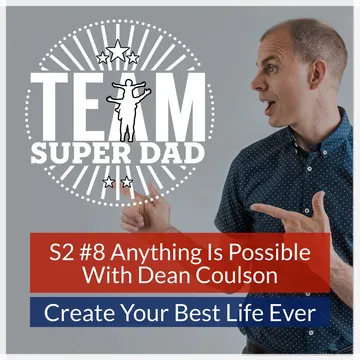
Believe Anything Is Possible - podcast with Lean Warrior Dean Coulson cover

About this episode

Dean Coulson reversed a terminal male infertility diagnosis by rejecting conventional medical prognosis and targeting undiagnosed lactose intolerance through clinical nutrition. After two failed IVF cycles, the Lean Warrior coach utilized gut-brain axis optimization to conceive naturally, eventually transitioning from IT consultancy to performance coaching for high-level CEOs. His methodology integrates the Seven Principles of Health with neurobiology to resolve the burnout and anxiety common among high-performing fathers.

Johnny Jensen and Dean Coulson detail how the vagus nerve connects the enteric nervous system to emotional triggers, often causing the limbic system to override the neocortex during stress. This biological 'fire and wire' mechanism explains why men struggle with emotional eating and repressed energy blocks dating back to childhood trauma. The discussion references the Real Combat System developed by Jeff Thompson in Coventry, the Five Love Languages by Gary Chapman, and the 'pavement arena' of self-defense. Coulson argues that physical presence and situational awareness are direct results of internal self-worth and NLP-based behavioral patterns.

One striking moment features a raw account of a 40-year-old emotional block dissolving during a Zoom coaching session, triggered by a forgotten childhood tonsillectomy. Coulson describes the 'warrior' as a man brave enough to face his own ego rather than just a physical opponent. Johnny Jensen closes the session with details on the Hero Academy Launchpad Summit scheduled for September 19th.


CHAPTER 01 / 13 Discussion

Team Super Dad Podcast Introduction and Hero Academy Launch

Johnny Jensen introduces the Team Super Dad podcast, focusing on helping fathers optimize their time, money, and health. He discusses the challenges of summer holiday childcare as a divorced co-parent and mentions a potential trip to Lake Annecy, France, pending COVID-19 quarantine updates from Boris Johnson. Jensen promotes the upcoming Hero Academy Launchpad Summit on September 19th and encourages listeners to leave reviews on Apple Podcasts and Spotify.

johnny jensen· team super dad· hero academy· launchpad summit· apple podcasts· lake annecy

00:00 Welcome to the Team Super Dad podcast. In this episode, I'm joined by the Lean Warrior, Dean Coulson. We talk burnout, martial arts, and fighting big blokes with dogs. Roll theme. Welcome to Team Super Dad. Real dads creating their best lives ever. More time, more money, more fun. You are not alone. You're on Team Super Dad. Hello, Team Super Dad, friends, family, everyone around the world. It's good to have you here. We're back at the Team Super Dad podcast. My name is Johnny Jensen, the founder and creator of the Team Super Dad program and the Hero Academy, which we're going to find out more about as it kicks off in September.

00:47 So what's going on? It's the summer here. Time stamping this for anyone who's listening in the future, but it's hot, hot, hot, and it's the summer holidays. So kids, we're just managing all of that that comes with that. Being a co-parent, a divorced co-parent, I have them here and I don't have them here. And trying to juggle that is a challenge. It's something that anybody who experiences it will know all about. And of course, if you're in a relationship, then you'll know all about juggling the summer holidays as well. Whether you're at work, off work, taking a holiday, and that's before flipping Corona comes into the mix.

01:23 It is indeed a crazy time all around the world. We're due away on Monday, Monday, to France, to my brothers, to Jim and Andrea's in Lake Annecy. It's going to be beautiful and epic. The cousins just can't wait to see each other. It's been too long. But even then, it's all kind of hanging in the balance because Boris, our prime minister, he could put a pin in France at any time to put that on the quarantine list. And quite frankly, we can't come back and them not see their mum for two more weeks. So tricky times, but staycationing, as is the norm in many parts of the world these days, could well be the answer.

02:04 A friend of mine has just shared with me, and if I mention it, you're not allowed to all go there, right? But Abbasock in Wales, it looks absolutely beautiful. If you know that part of the world, let me know. And in fact, if you are listening, welcome. If it's the first time, then it's great to have you here. The Team Super Dad podcast is all about dads, busy dads creating their best life ever. You know, life is tricky. And quite often, what we planned, what we hoped we could have achieved is not actually what's going on. And we're fed up, we're exhausted, we're working our ass off. Excuse me. We're working our ass off without really feeling like it's going anywhere.

02:44 And you may be incredibly successful and have all the challenges that come with that. Or you might be, you know, working towards creating your own success. But for dads that want to have the home, the money, the lifestyle, for dads that want their own business, have their own business, want to increase their success, start a second income, you know, that's what it's all about. Your fitness and your health, as we will talk about in today's podcast with the Lean Warrior, is equally part of that. And it's not okay to live second best. You know, it is okay to expect to have an awesome life. And that's what being part of Team Super Dad and being in the Hero Academy is all about. We just don't always know how to do it. And that's where we come in.

03:27 The experts and coaches, the awesome people in this world, you know, Amazon's full of them. You know, if you want to find someone who's awesome at something, go on Amazon. They'll have a book or something. Look on podcasts such as this. We've got some amazing guests being lined up. Some Olympians, some fighters, some soldiers, some business gurus. They're all being lined up to come onto the Team Super Dad podcast, let alone the coaches who are being lined up for the Hero Academy. If you're interested in the Hero Academy, be sure to look out for the summit. I'm running an online summit on September the 19th. So if you're listening ahead of that, make sure you get over to teamsuperdad.com forward slash launchpad.

04:10 That's teamsuperdad.com forward slash launchpad. And you will find out everything you need to know about our half-day summit, which is an intro to the Hero Academy. So the stuff online on the September the 19th is a complete event. You'll learn absolutely loads from it, get inspired about your goals and ambitions, reconnect with what you really want and then actually make a blueprint for it happening. But it's also a taster of getting fully involved into the Hero Academy. As for tasters, make sure you give everybody you know a taster of the Team Super Dad podcast. Please, please, please feel, click like, click share and feel like you're helping out by giving us a review.

04:52 You know, if you're listening on iTunes or on your phone, head over to Apple Podcasts because that's a great place to give us a review. review. And of course, if you're on Google, Spotify, Stitcher, ACAST, if you go over to the teamsuperdad.com forward slash podcast, you'll be able to get links to all those places where you can go and leave it a review. It'll be incredibly helpful. The more reviews we get, the more reach and the better promotion we get for the Team Super Dad podcast. And we are totally committed to equipping dads around the world to make sure that our children, our families get the very best of us.

CHAPTER 02 / 13 Discussion

Dean Coulson on Overcoming Male Infertility Through Nutrition

Dean Coulson, known as the Lean Warrior, shares his journey from IT consultancy to performance coaching, triggered by his mother's illness and his own struggle with infertility. After being told he could not conceive naturally due to poor sperm motility and volume, Coulson rejected the medical prognosis and sought a nutritionist. By addressing a previously undiagnosed lactose intolerance and cleaning up his diet for three months, he and his wife conceived their son naturally despite two prior failed IVF attempts.

dean coulson· lean warrior· infertility· nutrition· ivf· lactose intolerance

05:30 So, without further ado, to help you get the very best for yourself, I'm going to push you through the little jingle, the intro, to the interview with Dean Coulson. He's an awesome guy, an emotional, emotional healer, a nutritionist, an absolute black belt 10 times over in a whole bunch of martial arts, and a family man. He's a great guy from up the north in Newcastle. I will see you on the other side. Enjoy. Hey, good afternoon. Welcome. It's the Team Super Dad podcast. And today I'm talking to Dean Coulson.

06:15 Hey, guys. The Lean Warrior. Hello, Dean. Hey, how are you doing? Yeah, it's my pleasure. Dean is known as the Lean Warrior. He's a nutritionist, martial arts expert of actually a very long time, performance coach, and a whole bunch of other stuff, which is exactly why I've got you on. Dean and I got connected through coffee with Dan, actually. Yes, yeah. His group just keeps on growing from strength to strength. I don't want to say too much about it because everyone's going to go. Yeah, but that's not the spirit of things. Dan, I forgot his second name now.

06:56 Dan. Dan Meredith, yeah, top bloke, top bloke. So, so, Dean, why don't you introduce yourself? I'm sure you can do yourself better justice. We've got your accent is a Newcastle up north in England. So I'll challenge our foreign friends listening in. But yeah, tell us a little bit about yourself. Yeah, okay. So originally, a long time ago, I had an IT consultancy. I worked for myself. And then from there, I realized I was here for more than that. And so I had a couple of, I'd say, experiences along the way, which really just changed the whole course of my life. First, when I was in my teens with my mum who was ill, and I couldn't help her, so I got frustrated with that.

07:41 I also got frustrated with the fact that she wasn't there around for me because she wasn't very well. And then that kind of sort of steered me towards looking after myself and training. Not so much the health and nutrition side back then. You've got to remember, you're just a good northern lad at heart. What do you like? What did an average after-school tea look like when you were a kid? I remember eating a lot of bachelor's savory rice and cheese savoury baked potatoes. I remember that a lot.

08:19 Carry on, yeah. You were. Yeah, so, and after that, obviously, you just get on with life. And then I got married, and then we tried our kids for five years. And this is the real thing: the fact that we were told we couldn't have kids naturally after the five years and were tried. You know, there wasn't always no great hurry, it'll happen when it happens, but the more it didn't happen, the more you start wondering about it. And, you know, we went to see the doctors, we got the tests. Problem was mine. Everything that was wrong with sperm was wrong. There's three things: there's motility, mobility, and volume. Well, there was about three of them instead of like five million. None of them were good swim, and they were all hunchbacks.

09:00 So it was like literally the worst sperm party ever. Yeah, yeah, exactly. And so that really, really hit me hard because obviously you take that on board as your own fault. So I went about thinking, okay. How old are you at this point? How old when you got married and all this happened? I was 1998, so what was that? 27, 27, I think. Okay. Yeah, 27. So, and we've been kind of trying before that because we've been going on for a while. It wasn't until 2004 when Sam was actually born naturally. And the only reason he was born naturally is because I didn't accept the medics reason.

09:39 I didn't accept that we couldn't have kids naturally. Yes, we could have gone down other routes, but I really believed that we could have kids. And so I started looking at different things and I started looking at nutrition and what nutrition really was. So we booked an appointment with. with a nutritionist, but back in the day, there was no social media. It was yellow pages and thumbing through, you know, no one knew what nutritionists were. But we found one anyway, and she blew our minds. The stuff that she revealed was just crazy, and it all fit because, you know, for the longest time, I mean, that's like 11, 12, always had a block nose, always carried handkerchiefs with me. And it turns out I was lactose intolerant. Now, nowadays, that's just a common occurrence. Everyone knows about lactose intolerance, but back then, it wasn't a thing.

10:23 I had two nose operations through the doctors because obviously they don't deal with nutrition in any way. It's just symptomatic stuff. And then she blew our minds about that. All different things. We actually came home that night and we'd look in my cupboards and everything we thought was healthy, you know, the normal government stuff like skim milk, brown bread, that kind of stuff. It was just all crap. We looked in the cupboards and we didn't have anything to eat that night. We had nothing to eat. We're that shell-shocked by the revelation and the truth of it that we didn't eat. And that was the start of it. And that was, you know, I've started looking at sort of studying. I've bought so many books. I contacted the authors of books.

11:00 I did courses and turned it, they got to internships. That was a bit later on, but I realized that there was something that could be done. So I found a fertility nutritionist, got in touch with her through our book. We worked with her. And three months later, Joe was pregnant. And that's no fluke. No fluke. Because the maturation of sperm is three months. And we've done a lot of work up to that point. We really cleaned everything up. We stopped drinking. We did everything that was possible in the house of us, supplementation, all that kind of thing. And yeah, and Joy was pregnant three months later. And it was just a chance thing. It was, you know,

11:38 when you get to a fact, when you, you know, it almost becomes regimented that you have sex to try and have kids at the right time and all that kind of stuff. It was a quickie in the morning before work, and we nearly didn't have time because we're all this. That's what happened. And that moment, we both remember it. Yeah, yeah. Well, I know categorically the occasions where my kids were conceived as well. I think it might sound weird to some people. And I guess if you only have sex occasionally, or it was a one-light stand, then it is easy to pinpoint that. But I agree. I know the exact times both my children were conceived. Yeah, yeah.

12:21 And so I was like, it was such an amazing time and something that should have been an amazing time, but wasn't because, unbeknownst to us, there was some kind of, let's say, Joy was just ill from the moment she was pregnant. Once she found out that she was, she was ill. Just always morning sickness because she was really nauseous and she just felt sick all the time. Yeah. Well, listen, hang on a second, Dean. Let's jump into the finer details of it all in a moment. But that's a brilliant intro into how you sort of started this nutrition journey. But just for the listeners, right now, you're the Lean Warrior and what does that mean?

CHAPTER 03 / 13 Discussion

Lean Warrior Coaching and the Seven Principles of Health

The Lean Warrior coaching program targets successful businessmen and CEOs who suffer from burnout, anxiety, and neglected health. The methodology relies on seven core principles: portion control, mindful eating, protein intake, vegetable consumption, healthy fats, rest recovery, and hydration. The approach emphasizes "degrees of slippage," encouraging clients to make small, comfortable dietary adjustments rather than overwhelming lifestyle overhauls.

lean warrior· performance coaching· nutrition· portion control· hydration· habit formation

13:00 What do you do right now? So, Lean Warrior is a coaching program. I'll coach men. So I coach successful businessmen, entrepreneurs, CEOs who are stressed, they're anxious, feel burned out, just optimise their health and performance because I think so many guys, you know, especially people who've got that drive for financial success, they kind of get there and then they realize it's kind of a hollow because they've neglected their health, they've neglected our relationships with themselves and other people close to them. And then the hide behind this bravado because guys just don't like talking. They like to bury it. It's almost like a saying of weakness. And so I work with guys to bring that out, help release internal self-limited emotions, which are the deep-rooted beliefs that stop us from doing the other things, from optimizing our health, from cleaning up our nutrition, from moving better,

13:48 being able to express ourselves. And so that's the kind of stuff I do. So that helps these guys start to relax more, to feel happy, feel more fulfilled, and just spend more time with our family. So I think they just get that business. A lot of guys I've worked with have big disconnects with that. It's just helped kind of reintegrate, I suppose, through the health paradigm that I use. Yeah, yeah. Well, and that's how I came to reach out to you is that so much of what you say about yourself on your website and stuff is aligned with the Team Super Dad and everything we're setting out to do for busy business owning dads and dads with second incomes, people who want to actually grow and expand in life, create their best life ever.

14:31 They're coming up against this kind of glass buffer. They can't quite realize where they're not getting through it. Brilliant. And again, because your story blew me away about you and your wife. And we kind of just dive straight into it. But it's really interesting for dads. you know, who've been through this experience of trying to get pregnant. And there may even be some men on here. I hope there are some men who are listening to our podcast. And perhaps they might be struggling with getting pregnant. But you went through IVF and everything, didn't you? Yeah, I went through IVF twice. So when we were told that we couldn't have kids, obviously that was the route because we didn't know any difference.

15:11 That was the medical route. We're fortunate to be able to get that twice, but both times it didn't work. And each first time was devastating because that was another sort of smack in the face type of thing. And then sort of regrouped and tried again and it didn't work again. And that was harrowing then. It's easy to talk about now, but obviously when you get in that bubble, you really feel it. You know, we really struggled. At one point, I didn't know whether we'd get through it because you get consumed by this. And I was consumed by guilt as well because it was my issue. But I just was almost like, I'm not accepting this.

15:52 There's got to be a way. And that's part of who I am, really, is the fact that I believe there's always a way to figure something out to get something to work. It might not be, you know, medics, it could be some of that health practitioner. It might not even be dealing with health. But I always believe there's a way to find your path. And that's how we found ours. So that's through the yellow pages. Where did you start in the yellow pages? I mean, like, I guess nowadays you just dabble around, don't you? A bit of a Google this, Google that. But like, did you just go to N, N for nutrition? Did you go must have been the yellow page? I remember putting the yellow pages up. 20 miles from here. And you know, the house and we're there for hours.

16:37 And she was very knowledgeable. And as I said, it was just such an eye-opener. It was like, I couldn't believe what I was hearing. You know, like blood, just talking about blood type and all kinds of different things. You know, she said I should be eating wheat. We shouldn't even really eat meat. We should maybe eat it once a week. I was eating it like three, four times a day because that's what you did. Yeah, you know, cereal or toast or pasta or sandwiches. I'm thinking, how am I going to live? It was like that blow your mind. What the hell am I going to eat? type of thing. Yeah, yeah. Well, since we spoke last week, since we spoke last week, I've put myself on an unofficial challenge to not buy bread products. Now, I still eat Muesley each day, which has got some oats and a bit of, I think there's bits of like bran flakes in the muesli, whatever.

17:20 But I've not bought any bread products. And I'm going to try and see if I can go 30-day. I'm going to France, which is clearly going to cause a problem with croissants and things. But just to see, like, okay, right, right, in the supermarket, I'm not going to buy bread products. I'm not going to buy bread products. And those kind of challenges are dead easy for any dad to just take on, isn't it? Like, whatever it doesn't have to be some big diet overhaul that you can literally say, I'm not going to drink beer for a week, or I'm not going to. Do you do anything like that sort of thing? Can you recommend anything like that? Oh, yeah. I mean, you know, I've got a whole foundation health program that I look at. And for me, it's based on seven principles. You know, so it's like having, you know, like it's

18:04 portion control in there. So always looking at portion control, having like mindful eating. So we're not just eating on the go. So that's when we eat too much and we're not being mindful of what we're eating. If we can create food as an experience and slow down, we know we're full and we don't overeat, for example, then you know it's protein with every meal, veggies with every meal, which sounds oh, people are so hardcore, cereal, and the thought of having like veggies in the morning. But you know, bacon and eggs, it's still a cooked breakfast. We can start shifting people along the way. What else? Some fats for every meal, unless you've been training, in which case, then supplement with some carbohydrates. And then we've got rest recovery and we've got, you know, water, hydration. Those are the principles.

18:47 But then we get, you know, when I work with people, it's all about, okay, where are you at right now? It's always a coaching approach. I want to know where you're at. I don't want you to be able to say, right, you've got to do this right now. Yeah, totally. Yeah. That'll trigger people. That'll stress people out because it's too much. No, no, exactly. Like in an extreme, go vegan next week. You know, you're going to freak the living daylights out of someone there. Much better to say, do you know your breakfast is a bit weird? How about trying this? Or here's a good one. Because I do love a McDonald's sausage and egg muffin, okay? Guilty pleasure. But don't get the hash brown, get the bag of carrots. Yeah, it's just a little step. I call it degrees of slippage, and you can do what you can do.

19:29 It works both ways. Degrees of slippage could go from salmon and rice to a cheeseburger. If you just take one thing out every time, but you can also reverse that. So you can go from cheeseburger, then you can make just a hamburger, then you have it with like without a bun. Without the bun, exactly, out of the bun. And then that kind of stuff. Then you can sort of step by step, it just becomes the new normal and then the new normal. And then over time, all of a sudden, you're just in this different place and you're eating different things. Yeah, after being an immediate thing, it's just where you're currently at and where you are comfortable with it. I always say, take the next step that feels comfortable, that feels good. Because if it doesn't feel good, it's too much of a stretch. Yeah. And how much does food affect people's mood? You know, quite often you hear people talk about, I get stressed and I just eat that because I like it.

CHAPTER 04 / 13 Discussion

Gut Health and the Emotional Triggers of Eating

The human gut acts as a second brain, connected to the central nervous system via the vagus nerve and containing its own enteric nervous system. Stress often triggers the limbic system and reptilian brain, switching off the logical neocortex and leading to "fire and wire" emotional eating habits established in childhood. These emotional attachments to food often override willpower, requiring an understanding of neurobiology to successfully change long-term behaviors.

gut health· vagus nerve· enteric nervous system· limbic system· emotional eating· neocortex

20:14 Or even myself, I know I like a bit of chocolate, a bit of dark chocolate more than white. But how much of a mind trick is that? You know, and what's the effect of the wrong food on our stress levels? Well, the wrong food, the first thing we do when we ingest is it goes in our stomach. And gut health is massively important. Because the gut's known as the second brain, it's connected directly to the brain by the vagus nerve. So it's when we're born in the embryonic stage, they're together and they break, but they don't detach. And so, you know, we've got the same amount of neurotransmitters in the stomach as we have in the brain.

20:55 Sorry, sorry to cut in. That is fascinating. Yeah. Because I've read that before about it being the second brain and how close our gut is to our central nervous system. And I'm sure you're going to talk in a second about leaky gut, but I'd never heard it explained that it literally is our second brain because when we first became an embryo, those two things are connected. That's amazing. Yeah, when they do that divide, they still stay connected. And they're very similar. We've got the autonomic nervous system, which is the brain controls, and then we've got the enteric nervous system, which is controlled by the stomach. It could actually run by itself. It doesn't need the brain necessarily. It doesn't rely on the brain. That's probably the easiest thing. I think I've seen some people like that

21:40 on the beach last week for sure. Exactly. And so, whatever you eat, if your gut is not happy and healthy, your brain isn't. Because it's a direct link. If you're putting stuff in that your body doesn't like, your brain's not going to like it. It's not an automatic thing. And so it's really important. That's the first line. You know, get your gut right, get everything working right. And that, of course, relies on putting better food in there, you know, food that's nourishing as opposed to, you know, I always say sometimes you can be overfed but starving to death because if you're putting food which has got devoid of nutrients in it, you know, like if you live on young food all the time, there's very little nutrition in there.

22:22 So we're eating energy-dense foods, which of course expands our waistlines. But it doesn't help our body look after itself, which is then leads to other things like diseases from, you know, BCD, diabetes, lots of different things, metabolic syndrome. There's loads of different things. And, you know, we can absolutely control that. But as you said before, it's not even a mindset thing because we fire and wire things. And what I mean by that is if we have an emotional event, you know, it's usually when we're younger, we usually fire and wire when we're very young. If you think when we're a baby, we do three things. We cry, we sleep, four things. Cry. When we crack, when we're crying, it's all one of those other three.

23:06 You know, since the babies can't speak, we'll either check the nappy. If they've had a nap, let's take a bottle in. Yeah, but it could be something else, but that's what we do. And so milk's sweet. And so we kind of get that early association with, I feel safe, I'll calm down, and there's something sweet in my mouth. Yeah. And assumes as we get older, if we feed that, and you know, or you know, I see a lot of parents where, you know, they keep their kids quiet, they're getting sweets and all that kind of stuff. And so we've got that fire and wire association of there's an emotional event, what made me feel better, or I had sweet things. And so that can carry in adulthood, you know, men or women. And that's often the case.

23:45 So anytime we have a stressful time, whether it's at work or you know with our partners or whatever it is, we will, our brain gets switched. The one part of the brain, the thinking part of the brain, the logical brain, the neocortex gets switched off. We end up in the other two parts of the brain. I have a phytophyte response, which we all know about, they're a reptilian brain to keep us alive. Also got the middle part of the brain, which is the limbic system, which is your emotional center. And so anytime we're stressed, the thing gets switched off immediately. So even if you're being good and having a diet, you know, on a diet and eating good food, you haven't dealt with the debat issues. So you get stressed, your brain says, what did you do the last time? And it reacts. It doesn't get you to think in the last, whatever you've wired to that, or last time I was stressed like this, I drank a bottle of wine.

24:28 I had some Ben and Jerry's. I ate a box of chocolate cakes. Whatever it is. So that association is formed, that unhealthy association is formed. And we don't even realize we had control over it in the first place. yeah that's definitely the foundations are there we then expand and it's as well but i i don't have those kind of connections with food but i know a lot of people do and so it's just whatever else has happened during that the you know the person's lifetime then we get wired in different things and we can absolutely change that because we put it there in the first place unbeknown to us once we understand how the brain works and what how

25:04 triggers work then we can look at what the real reasons as to why we're doing and reaching for those things because once we reach for them and we'll eat them our brain calms down feels safe again you get access to that front part of the brain and your brain says what the hell have i just eaten that or i'm gonna die i was watching what i was eating and then the guilt starts and then you get that that's vicious circle yeah yeah sod it oh well what's another day what's another day then you realize a month has gone yeah yeah whatever whatever it is and then of course then we get this yo-yo diet where we you know or we might use willpower for a week two weeks 30 days you know and you'll endure something this is this is why will power short term will cause great it gets

25:44 you over a hurdle but if we try and use it for long-term things it's just we're just trying to endure something for a period of time that we don't like yeah that's not a great long-term strategy no and so people need what they need the an empowering context is part of it yes they need some willpower and then they need the practical steps to change their habit yes exactly and understanding what that is because sometimes we can mechanically change habits but it's at the emotional level there's always an emotional you know we can change humans can change habits immediately you don't have to wait the 30 days or the 60 60 days we're going to change them immediately if there's an emotional attachment to it for example

26:23 i'll use this you know um if we you know if we've got kids in primary school this is hard hitting which is why i use this we've got kids in primary school that's saying you know happy we're happy and then you hear the next day that the teachers on the sex offenders register you won't wait 30 days to take them off to school there's an emotional you know firing there so hold on unsafe my kids don't come back there and it's that type of thing where we can immediately change and you would never take them back there because it's a it's an event that's been changed emotionally and you can do it mechanically like you know drink more water every day or you know cut out bread and that can absolutely become a new habit but if you use bread to uh to appease yourself emotionally on some stressful event whether it is whatever it is then that can easily just go back to there because

27:15 it's it's tied emotionally and it's the emotions that we get to look at the emotions that drive a lot of behaviors you mentioned before about you know what you put in your mouth absolutely what you put in your mouth can create uh different behaviors because what we ingest changes like creates hormones uh which change behaviors which change habits and so we can you know there's this huge link we just you shouldn't have to be aware of it but in the what modern world the way things are in marketing you know everyone's trying to get you to buy the next quick spit and the fads and all that kind of stuff we'll get caught up and it's so easy yeah

CHAPTER 05 / 13 Discussion

Emotional Healing and Repressed Energy in Men

Men often suppress emotions to "push through" professional and family challenges, leading to physical manifestations like backache, migraines, and burnout. This repression blocks emotional energy that needs to flow, often resulting in sudden outbursts of rage or chronic illness. Addressing these deep-rooted stories and allowing emotional expression is presented as a necessary step for fathers to maintain their personal "tank" of energy.

emotional healing· repressed emotions· burnout· physical pain· stress management

27:53 when when they've got teams of scientists working out how to make us do things we should at least have one scientist aware of how to to to not do things i.e ourselves well example yeah exactly and i think that's when you start this is you know the other part of the lean warrior is i mean the literally means you know find your lean is find your essence it's all about stripping away all the things that are not necessary the non-essentials so that could be thoughts it could be people it could be material objects it could be lots of things to get to what your truth is because we've always everyone knows who we are deep down but we if we feel unsafe in any way emotionally then we'll put a story around it

28:33 we'll put we'll put the like armor up there we'll put yeah like a like bubble wrap we just keep putting bubble wrap bubble wrap bubble wrap and protect yourselves of course it's the metaphor literally bubble wrap yeah yeah but it doesn't have to be it could be other things and it's it's one of those things that this is why i work on an emotional level because if i can help people process the emotions because if they're very painful well go straightly straight in that stressed place so we'll not even get a chance to think about it yeah well this does this this kind of dives in dovetails into a little bit to what was going on with your wife after the after the baby and this was this became a bit of a breakthrough for you didn't it in it around the understanding of how this part of the about

29:13 how we work about this part of the mind yeah because it wasn't she wasn't uh she didn't have moron of sickness she had acute anxiety and it was a deep-rooted story playing from when she was younger um so consciously she wanted babies unconsciously it felt unsafe because of an event that happened with her and her mom and i'll not go into the details but that got stuck on the hard drive just sitting there and until the unique event of getting pregnant, really getting pregnant, fired it up. And so it wasn't until we tried the strongest anti-nausea drugs that you can even use. It didn't even touch the side. That's when we knew it wasn't one and six. Yeah. That. No, it's funny, isn't it? You kind of got to laugh because it's just that's just modern medicine, isn't it?

29:56 We're just going to dig, dig, dig, dig, until, and like, no, that wasn't what was wrong. There was something else causing this problem. The dam up the road was stopping the water. You know, we didn't need to dig for the water. Exactly. And so this was so, yeah, this was an exciting time, it was horrific. It was awful. I think that that's important for dads to hear. You know, I and my ex, you know, at the time, wife, obviously, first pregnancy was amazing, just like this beautiful experience. And the second one was the pregnancy from hell off the back of three miscarriages, which kind of putting words in her mouth, but my interpretation of it, incredibly anxious about the miscarrying, the fourth one miscarrying.

30:39 And then the pregnancy was very, very difficult. Yeah. And that's no slight on any woman that's going through that. But it is interesting for anyone in that situation to consider maybe there's something emotional going on, something more deep-rooted, and that you could find some freedom in that area. Well, exactly. And I think, guys, you know, we are there to help our wives, you know, especially if they're pregnant. And, you know, we'll look after them the best way we can, but then nobody's really looking after the guys. We kind of park that and we bury it. Yeah. And then, you know, once we have stopped being, you know, person who's helping, that's still there, it's unresolved.

31:18 And yet, but we just let it sit there because we don't know. But then that manifests into other things. That could be, you know, adding to stress, emotional, you know, problems that down the road could start them leaking out as other things, you know, rouse, shouting, you know, just rage. We've got a lot of these things because all emotions are just like energy. Everything's energy and it's meant to flow. But if we put a block on that, you know, whatever that emotional event was, whether it was when you're young, whether it was later in life, we don't allow that out. We don't allow it to express. Then it comes out in other ways. And that could be physical pain, that could be illness, disease, all manner of things. Your body is trying to express itself. It's trying to allow you to express, but we repress it, we suppress it.

32:03 Yeah. Well, the classic ones for dads, aren't they? Just, I've just got to get my head down, get us through this, sort of, you know, get us through this at work, get us through this at home. Backache, well, of course, I've got backache, I'm old. Migraine, well, I might be tired. I'm probably a bit stressed. They kind of understand it, but it's yeah, but I know I just kept thinking if I just keep pushing through, if I just keep pushing through, it'll be all right. Failing to realize that I was draining the tank, my tank, there was literally nothing left, but the engine was still being run at 100 miles an hour. And that's ultimately where the break came. I'll tell you what, on that point,

CHAPTER 06 / 13 Discussion

Childhood Trauma and the Psychology of Fear

A story about a child knocked over by a neighbor's Labrador illustrates how the brain "fires and wires" specific fears that persist into adulthood. These traumatic events create protective stories that limit a person's life, such as avoiding the beach or parks, long after the original threat has passed. Identifying and releasing this blocked energy allows the brain to reprogram itself and discard outdated survival mechanisms.

childhood trauma· fear· psychology· behavioral patterns· neuroplasticity

32:44 when I was feeling really, really bad, I was doing searches for what is burnout. Like, am I burnt out? Yeah. Was it that obvious that I should have just been realizing and nodded at myself and got, yes, I am burnt out? Or is there a kind of a telltale checklist for busy executive dads or any dads really to recognize they're pretty much burnt out? I think they know because what they do is they always tend to nomuncate. There's always something that's pressing. They know in ourselves that there's something amiss. But instead of dealing with it, they'll distract themselves somewhere. They'll drink, maybe take drugs, gamble, make a phone.

33:26 The thing is that they do, they'll kind of do it because at the end of the day, it's one of those things where, again, we feel emotionally unsafe. So we're immediately going to play a story. For example, if we've got some story playing, we always think, or we think, and then we feel. But that cannot be possible. Because usually we get triggered on an emotional level. And as soon as we get triggered, the thing gets stopped. It cannot be thoughts. All it can be is stories that the brain uses to take us away from that pain.

34:04 So my son, for example, when he was three, he was the next door neighbour Labrador came over to see him, lovely, soft dog, didn't lick him, knocked him on his ass. So my son, a three-year-old, so was this big monster with a big goat coming, you know. And so ever since then, he's fired and wired that dogs are dangerous. And he's 15, he's now 16, he's shit scared of dogs still. But now what's happening is, whereas before, he wouldn't go to the beach. you knew dogs were off the he wouldn't go beside the river because there's dogs off the lead. Just or just did he know that he knew that was why he didn't like the beach or he just decided he didn't like the beach? No, well, well, when he was younger, yes, because there were dogs there, but now he just doesn't go

34:47 because what happens is over time, if he doesn't resolve that, but I can't make him resolve it either. That's the key. Yeah, all I do is remind him that there's you know, when he's ready, we'll sort that out. But if he doesn't, all he'll do is he'll layer a story on a story. And when he's all out, maybe he's got kids himself, and the kids want to go to the beach. I don't like the beach, you know. And he'll forget why because he doesn't even know. Because at an emotional level, the brain's saying that's the story to play, so we're not dangerous. And it doesn't matter who it was when he was three and he's 30. The story is still there because it was blocked at that point. And like, that's where the energy is blocked, and that's when it needs to be released. Because when you release that energy, and there's some techniques that I use to do that to be able to help face these things and let them go, once you let them go, the story goes because that story was there to protect you.

CHAPTER 07 / 13 Discussion

Neuroscience vs Counseling for Emotional Breakthroughs

The distinction between coaching and traditional counseling is explored, with a focus on using neuroscience to ask better questions rather than constantly revisiting painful memories. One speaker recounts a breakthrough during a Zoom session where a conversation about childhood hospitalization for a tonsillectomy triggered a ten-minute uncontrollable sob. This emotional release cleared a 40-year-old energy block that had previously caused him to push people away in his adult relationships.

neuroscience· coaching· counseling· zoom· emotional release· trauma

35:33 But if the reason that you were being protected is not no longer there, then it's not needed. So your brain kind of processes and rejigs itself. Yeah, like reprogramming the computer, basically, like just putting some new instructions in there. Do you know, like, a lot of dads would think about this as they might know something like this is going on, but they might think of it as counselling. Yes. And they're like, I don't want a counsellor. I'm a successful business person. I don't want a counsellor. I'm a tough guy. I don't want it. Like, in some ways, the distinction between coach and counsellor is really easy because you say, I'm working with you to take you somewhere, as opposed to I'm working through something to help you, you know, to help you move forward.

36:13 But in other ways, and I, it doesn't matter whether you call it a coach or a counsellor, we're like, we're with we're dealing with, we're dealing with stuff head on and we're moving you forward. If someone's concerned about working through with these things, how would you reassure them or address that? Well, the reassurance is really that we don't do anything that they want to do. We don't even really need to keep revisiting things. I know counselors, certainly experienced counselors I know, they'll keep revisiting the same thing, but your brain doesn't really know the difference between reality and memories. And so if you're revisiting something that's painful, it's going through it as if you were there over and over and over.

36:53 Yeah. The stuff that I do coaching, for example, from a neuroscience perspective, we're just getting that. Yeah, that's what we're talking about in neuroscience, really, isn't it? Yeah. So neuroscience and emotional healing, very slightly different, but I use them. I just use them as tools as to what is the best tool to use. Neuroscience, we're just asking better questions. We're allowing them to answer their own questions. So for me, it's asking good, like better questions for them, then I'm getting them to answer, find their own answers to their questions. It's not for me to tell them because that's not coaching, that's mentoring. Yeah. Coaching for me is asking questions specifically to bring out what they're struggling with.

37:36 And that can be tough. And sometimes that's when I use the emotional stuff because sometimes we don't need to talk, we don't even need to talk about stuff. There's a trigger there. We look at where the trigger is, we allow it. I'll take somebody through a procedure or process where I can allow them to let that energy go. You know, I've had this experience myself. When I was, I think I was two, three, I had my tonsils out. I was taking into a hospital. And the memories, I've still got vivid memories, you know, visual images of I know the story. You know, my mom didn't want to leave me. She was crying. They wouldn't let us stay. You know, the day that

38:14 she came, you know, obviously it was a phone box. There's no mobile phones back then. She actually ran from the car park, the payphone nearest the car park in the hospital. When could she pick me up? She wanted to come get me. But meanwhile, three-year-old Dean in the cot, like, you know, like out of like bars in pain, and his mom's leaving, and he's being abandoned by the person who loves him. Yeah, yeah. That sticks. And you know, even though consciously I knew the story and unconsciously, there was energy blocks. And I was just talking to a coach. It wasn't eye coach the same, it was just like a PR conversation, yeah. Yeah, we're just having a conversation about stuff. And he was just talking about something specific. And so I actually shared with him

38:57 these vivid images and I described them. And as I did that, I just absolutely burst in tears from nowhere. And I just sobbed for 10 minutes uncontrollably in front of him. It was on Zoom. I was like, just blubbing for 10 minutes. And then I just felt this energy just leave me. It just came up and up and up and just gone. And I know it's gone because I can talk about it now, like with you, for example, I describe those images, and there'll be no feeling there. There'll be no energy. energy because it's gone. But for 40-odd years, it was there, even though I knew the story, little Dean was still in there. Like that energy was stuck at that level. And once I found that out, I started looking at how I was proving.

39:40 We always go out where we prove our beliefs true, and they're unconscious, conscious beliefs, so we're not aware of them. So, consciously, you might say you want to lose weight. Unconsciously, you know, last time you did that, something happened and it was painful. So, we'll go out away to prove that true. And it was the same with me. So, I was pushing people away, not intentionally, because I'm thinking, well, they're going to abandon me anyway. So, I would do things to yeah, and this is the really important part about what you're sharing: is that what's going on in people's relationships won't necessarily be what's going on in their relationship.

CHAPTER 08 / 13 Discussion

Five Love Languages and Relationship Dynamics

The Five Love Languages by Gary Chapman is highlighted as a vital tool for maintaining healthy marriages and family dynamics. The five categories—words of affirmation, physical touch, receiving gifts, quality time, and acts of service—help partners understand how to fill each other's "emotional buckets." Misunderstandings often occur when partners speak different languages, such as one person performing acts of service while the other requires physical touch to feel loved.

gary chapman· five love languages· marriage· communication· acts of service· physical touch

40:18 And say, fallen in love, they've got married, everything seemed absolutely rosy, and now there's some struggle going on. You're thinking, why don't you love me anymore? Why is our why is our marriage going wrong? And actually, all that's say all that's happening, but possibly what's happening is something from before, something from your past, something completely unrelated, is bubbling up and now stinking the place out. Um, I think speaking for myself, I think that would have been very powerful to have realized that in my own marriage. I think a lot of people will either, you know, particularly people who are still in a marriage but unhappy, they're like, We're never going to fix this. Actually, a bit like you were getting pregnant by addressing the problem in the right way, a whole new

41:01 beginning was created. Because when you know, when couples argue, and we all do, I mean, to be fair, I've argued with my wife for a while because we've done a lot of work with emotional healing and energy work and all that kind of stuff, just to realize who we are and what was triggering us about us. And you know, when I remember for years, I remember having arguments and thinking, why should we fly off the handle? It was just an innocent remark, or like you know, and it was because the thing is never the thing, it's just a trigger to something that's much bigger. And if we don't, if we're having an awareness of it, we'll just keep doing it. And you know, we did, but if you then start realizing what these emotions are, you know, if you work with somebody who can then explain what you're feeling and how to let it go, and you know, and it's safe and it feels okay, because it's a very fearful thing.

41:50 Fear B just being a word where you know we don't want to address something because it feels unsafe, then we can absolutely do it. And, you know, there's just a side note now. We're talking about relationships. There's a great book by I can't remember his name. You tell me what it is. I'll look it, I'll look it up whilst you're talking. The five love languages. Oh, yeah, five loving. I would, I would have definitely have said that. Yeah, so that now, which is a really good way of understanding, you know, your half or like even your kids or whatever is understand what the love language is. Because sometimes, you know, we think you're outpouring your love to somebody because that's your love language, because that's what you love, but the other person just doesn't get it.

42:30 So they don't feel love because you're totally. Gary Chapman is the author. And it's been, this has come up in a number of podcasts. And I totally advocate, in fact, it's part of the Hero Academy book list because it's unbelievable. You know, just to run through them, the five languages are words of affirmation, physical touch, receiving gifts, quality time, and acts of service. And me, yeah, I'm definitely physical touch and I'm words of affirmation as well.

43:10 Like, and it's exactly the same. Right, okay, yeah. Yeah. So I want to be, I want to be hugged and told I'm great. And I want to be hugged and told everything's going to be fine. And I'm like, okay, got that. And I'm off. I'm like, I'm ready. And so it's different. So as long as my wife makes quality time, she's fine as well. Yeah. It's just if we don't know that and what pulls apart, then Chris. Well, totally. Maya, my ex, she was very much acts of service. So she would cook dinner. I would cook dinner as well. It was a shared sort of responsibility. But when she cooked it, she wanted like flipping

43:52 trumpets and flipping, you know, party poppers and everything. And I was just like, oh, yeah, cheers. Not because I didn't appreciate it. And I would always say thank you because that's how we've been brought up. But, you know, it wasn't enough for her. And amazing, like for any couple, and even for your children, like you mentioned, if you can get, you know, blind me, what that love language is between you and your and your daughter, you and your son, you and your wife, and then know that. that as a family, so that no one's love language gets left out. And if you, if people imagine it like a bucket, everyone's bucket, if everyone's bucket's full up, we've all got full up buckets and we're happy.

44:30 Like, if someone's bucket has been completely drained, um, and it's obviously it can be mum or dad, the kid could be flipping depressed and upstairs. It's generally like they're just not getting what they need. I agree with that. And married with you know, um, the stuff that I do with the emotional stuff and the neuroscience stuff, it's very, very powerful. Even, you know, people, you know, if guys are having relationship issues, that's the first place of voting because sometimes just by understanding that and changing their behavior because of that, then that could be enough. But usually, it's deep reader, deep-rooted roads. But yeah, it's very powerful. Totally. Well, listen, let's change packs a little bit or change gears, as our American friends say.

CHAPTER 09 / 13 Discussion

Martial Arts and the Pavement Arena Reality

Despite earning a black belt at age 17, a practitioner describes feeling paralyzed by fear during a real-world confrontation with a bully and an English Sheepdog. This experience revealed the gap between the controlled environment of a dojo and the "pavement arena" of street violence. Traditional martial arts training often fails to teach students how to manage the acute adrenal response and fear encountered in unregulated physical conflicts.

martial arts· taekwondo· black belt· jeff thompson· self-defense· fear management

45:13 What about the martial arts? And, you know, I know a bit about it, so I kind of already prompted the questions, but you've been, you, you're a bit of a badass martial arts person, yeah. Well, you've been doing it long enough, you should be. If you're not, then I need a word with your sensei or whatever. But just tell us a little bit about how you like, why it's so important to you. And well, not never good to give someone three questions, but yeah, why it's so important, where it started, and what you get out of it as part of your practice day to day. It started when I was 15, Bruce Lee, obviously, the man.

45:54 Seeing some of these movies, got really like the idea of this. And so I found a club which was really good. And so I've actually dabbled with Judo first a few years earlier, but I wanted a punch and kick. And I didn't know Judo wasn't punching. I lasted three weeks. Yeah. And that was myself in the bathroom. I wouldn't come out with that. I said, come on now, and I'll take you back. And he was true to his word he didn't. So it turns out that that would have been a good thing to learn, but there we go. And so I've learned, it was called Jindiando at the time, which it was a combination of Taekwondo and Takedo, which were more mainstream. And I got my first black belt when I was 17. But even when I got my black belt when I was 17, I still felt a lot of fear.

46:36 And what does that, sorry, what does black belt mean? I mean, people hear about black belt all the time, don't they? But, you know, is it really hard? Is it not so hard? Does it make you a super guy? Or what is a black belt even? Well, here's the thing. It depends on the person and the persona of the person. Sometimes people are just like fights anyway. So if they came in, you know, it wouldn't be different. But for me, when I did it back then, it's learning skills to a proficient level. And that's sort of first down, the first black belt you get, and it goes to the dance after that. So when you get your black belt, you just demonstrate that you're proficient in the techniques that you've learned over a period of time. And obviously, there's 10 gradings to black. You start at white, and 10 graders later, black belts.

47:19 And yes, you can fail them if you're not good enough. You know, if you don't perform the techniques correctly, you'll put the cross sport. When I was personal, it broke boards, so breaker boards, break boards, and the grades. So really, it's just a proficiency. After that, for me, that's when you start learning, when you get your first dance, because that means you're proficient. That means then you start learning more. However, some people don't get there, or some people think that's the be all and end all. What I discovered was the time, not long after I got that, I was having a pro issue with a guy, a bit of a bully. And one Friday night, I'd just be in the local shops with my girlfriend and our wife.

48:03 And he just appeared out of nowhere. And I was just getting in the car and he was just shouting his, you know, swearing at me. He's a big Geordie. Give us some Geordi swear words. Come on. Just with an accent. Okay, I got it. Yeah. And I shit myself. Yeah, I would be. I would be. I locked the door and then he left. And then I went home, which is around the corner. And then I was so angry with myself. I told my dad or dad was in the house. I was angry. I felt shame because your girlfriend was there and I was worried and all that kind of thing. And I just didn't like it at all. And then the next few weeks, I couldn't live with it.

48:44 And I thought, I'm going to have to control this guy. So I actually went looking for him on the streets and I could never find him. And then I found out where he lived, which wasn't that far from me. So I went to challenge him. I actually went to his door. I said, right, let's have it out. And I'll still shit myself, but I knew not doing it. And again, he was all full of mouth. And then he got his big old English sheepdog out, which I knew was a bit micey. He had to go, dog away, let's go. And he was telling us he was going to take us to the beach and rip me out. arms off and all that kind of stuff. I said, well, let's go. He didn't. He was just all that. And then he just shrunk away into the house. And I never saw him again. But that told me then that, you know, you can have a black belt.

49:26 But if you learn, you know, it's not the pavement arena, as I discovered later on. The pavement arena is out, you know, street fights. That's out when it's real. When you're in a dojo, it's a control environment. And I get some people can make it work from there. I get that. I know some people can, but the majority of people can't because they're not taught how to deal with fear. And when fear is really, really, you know, acute, we find ourselves rooted to the spot, literally frozen. And I've seen fifth down black belts get the horsehand at them on the street because they didn't that safe environment, you know, being inside and there were rules and regulations and how to do things, but outside there's none. And so over, I don't remember when it was, I think it was

CHAPTER 10 / 13 Discussion

Jeff Thompson and the Real Combat System

Training with Jeff Thompson in Coventry for five years shifted the focus from physical fighting to the metaphysical and mental aspects of self-protection. The Real Combat System teaches that internal shadows and the ego can lead to self-sabotage, such as a CEO overeating to avoid a stressful public appearance. True "warrior" status is defined as having the courage to face oneself and strip away the non-essential stories that block personal progress.

jeff thompson· real combat system· coventry· self-protection· ego· sabotage

50:11 2001. I started buying books from a guy called Jeff Thompson because I wanted to understand this. I'd left it for a while, but I still felt fear with it. And I found a guy called Jeff Thompson based in Coventry. And he had created something called the Real Combat System. And he'd done things like Animal Days, where the pressure tested the martial arts. Now actually, I took it as really as I could do so. You know, it would go down to hitting people under the ground and choking them out in this environment just to try and trigger the adrenal response to handle it. So I sought him out. And then 2010, I actually started going, he was running what you call a masterclass.

50:54 So it was six months, one afternoon a month for six months. But like to get a self-protection certificate. And I knew how good he was. And he's wrote so many books about fear. He's wrote 40-odd books. He's after when an author and all that kind of stuff. He doesn't teach in martial arts now. What was his program thing called? The Real Combat System. That's his. The Real Combat System. Jeff Thompson, the Real Combat System. Yeah. A couple of instructors who are based in Company who are still teaching it, but Jeff doesn't teach it now. How long did you see him for? Sorry, see again. How long did you go and see him for? It ended up five years. I traveled. Five years to Coventry. Tell people how far Coventry is from Newcastle.

51:38 500 mile round trip. You seriously wanted to see this guy, okay? For five years. Five years. Because when I went to see him, it wasn't just about the fear and the martial arts and the physical side. That's how he taught it. But he was very much into the metaphysical side, the mental side, like getting past fear, understanding what fear was, stopped allowing fear to block you from having the life that you wanted. So it wasn't just about the martial arts. It was just that was just a catalyst for something massive. And it was around that time when I realized that my job, like being an IT consultant,

52:16 I just didn't like it anymore. It wasn't why I was here. And so he had a book called Shapeshifter, which I read around that time before I started working with him. And I opened a gym. I became a personal trainer and a coach. And like 2010, around this time, I started working with Jeff. And then after a year of going down there, he invited me onto his black belt course, which is like it's invite only. He doesn't, he didn't invite many people on there. So like first down, again, he did a lot of physical stuff, and the grading was physical, it was brutal. But it was all about the metaphysical stuff. It was about the deeper stuff. And what I learned was self-protection starts with itself. So his is all about self-protection physically. But all those same

53:00 rules, principles, I suppose you could say, work internally as well because you've got an inner body, your ego, the shadows, all them sub-personalities, all the stories that we choose to believe. You know, the things where you might, you know, eat too much food. That's a shadow. You know, that's you become somebody else. You're not your true self, then you're just, it's just a sub-part of you. Yeah. But that could play out in making sales calls. It could play out in asking a woman out in a bar or going up to a woman in the street. Yeah, all of that, fighting, anything and everything. We go from dating to fighting.

53:42 Yeah, could be the same. So yeah, it could be anything, anything you've got a deep-rooted fear of, and then you create a story as to why you can't. And that's the things that we did, like in the black belt course. So we used to used to sit for an hour just talking about things, like deep roots of really getting into fear, understanding fear, sitting with fear, and all that kind of things. And I mean, Jeff's, I mean, he's deeply spiritual. He's says, wrote some of his. books, but he's read hundreds of books. Um, and he's it's one of those things where at the end of the 12 months, yes, you do like a physical grading to see whether you pass or not, but it was the journey, it was always about the journey.

54:22 And then I still trained with him, and then I was invited back firstly to present on one of his courses. He'd created a course course called the self-suffering course, which he created for directors, CEOs of companies, because there's people in London who are like sort of seeking them out. So, he created something for them and he asked me to present on that course for him with health and nutrition. And it was there that that's when I realized that these guys, you know, are getting to this pinnacle, but they've still got shit going on. You know, I worked with a guy as a result of that course where he came initially to help me to get in shape.

55:02 But over time, he got into shape and then he was asked to do something which triggered him deep down. And all of a sudden, his nutrition went to shit, his training went to shit. And so, when we got on a court, I sort of dug deeper and found the real reason is that he felt that he was going to be humiliated by doing this thing, he'd been invited on. So, unconsciously, he started eating more, so he would be unfair to be overweight. So, he couldn't possibly do that course, he wouldn't be ready for the course. He sabotaged the whole thing, he did, and he didn't even understand that until we went, you know, would dug deeper and found out the real reasons. And this is why coaching is so powerful, and this is why I created the Lean Warrior. You know, as I said, I said Lean before was like find your essence, the warrior part.

55:42 Warrior literally means have the courage to face yourself, and so it's your fight facing your adversity, facing the stripping of it in a way, facing the reasons why you were stuck, facing the reasons why you're not moving forward. That is, it could be anything, um, and of course, it's usually deeper-rooted stuff that's just kind of um disguise yourself as something else, you know. And so, usually, it's it's not a surface-level thing. Most people, for example, they want to lose a bit of weight for it, you know, that's that first trigger to look themselves in the mirror, but it's not no one's unhappy, they're overweight, they're overweight because they're unhappy. There's something that needs to be resolved. We're talking about the bubble wrap earlier, yeah, yeah, yeah. These are all these things are all linked, it's just it's just the magic of this entire conversation, yeah.

CHAPTER 11 / 13 Discussion

Situational Awareness and Carrying Oneself with Confidence

Self-defense begins with awareness, avoidance, and escape, focusing on becoming a "hard target" through how one carries themselves. Criminals often select victims who appear oblivious to their surroundings, such as those distracted by headphones or phones. Developing self-worth and being "brutally honest" with oneself changes a person's physical presence, which can be analyzed through NLP techniques and facial inflections.

situational awareness· hard targets· nlp· victimology· self-identity

56:25 Um, well, and having met you the other, you know, a few weeks ago and talking this through today, um, you know, so keen to get you involved in the in the hero academy and sharing this with the dads there as well, part of team super dad. So, uh, that's going to be be absolutely amazing. And in terms of like, so people could just like martial arts is a great way to to relieve stress to get fit, and you know, people and businessmen should always be conscious of their of their level of fitness, right? Or any dad's dads should be level consciously level of fitness, any dads, because you know, it affects you, you know, you'll make excuses why you can't play with your kids, you know, I haven't got time, but really it's because I'm unfit and you know, you'd be blown up your horse.

57:11 I get that work with a lot of successful guys who have been in that position because they just they just push the health back. They think that you know, like they spend so much time creating money, and then you get to that point and they've lost their health, and then they're spending all money, you know, the health. And it's one of those things where you know, martial arts, absolutely, it's a great stress reliever, for example. Uh, you know, the real combat system that I still teach, I still teach that. But I, you know, when I do things like retreats, it's because like you know, having to have an obligation on the street is so scary, it's really trying. Especially in the world today with flipping knives and nonsense, yeah, exactly.

57:53 So, you know, I always, you know, this part of my coaching from a physical self-defense, it's an awareness, avoidance, escape. So, being aware of your surroundings at all time, people who get mugged, for example, the people who are just code, what I call code right, just oblivious to their surroundings, they might be in their headphones, they might be looking at their phone, they might be just away with the fairies, whatever it is. And these are the easy targets. But I help people become hard targets from a physical perspective, you know, from a self-protection, but also in turn, the hard target observe, be aware, you know, avoid things that an avoidance isn't running away, it's being switched on enough to not allow yourself to get pulled into that.

58:35 Yeah, yeah. When I was at university, the estate, we, the student university, the student halls run on the state, and I'd walked through there to the shops, the bus shops, the pub, you know, many, many times. And then you get a notice come around saying, be careful, so-and-so, you know, someone's been mugged. And then, no disrespect to whoever it was that got mugged, but you was like, no surprise. You just go, I'm absolutely no surprise that it was him. And of course, he didn't ask for it. And that's what he's saying. Why? Why me? Why me? But the reality is, why you is because how you carry yourself, and that's why it's always you. Exactly right. So it's always comes back to awareness. We've always got that awareness of how we feel about ourselves.

59:17 You know, we always know what's true. We can't bullshit ourselves. We know when we say something, we know it's a lie, we want to feel it. We can disguise it. We can ignore it. We can distract ourselves from it. We know it's there. And it's about stripping that away and being so brutally honest with themselves. You know, for me, it's like being honest, looking in the mirror and actually seeing things to yourself. You can always see because you always have some kind of inflection. You might have some kind of movement in your face. You might look down. You know, it's well known. You know, there's been research on where you look when you're talking. Yeah. Things, you know, whether it's shame, guilt, anger, whatever it is, deceit.

59:55 There's so many things, but you can't do that to yourself. You really can't. You can try, but you know, you don't. You always know. Yeah, touching on NLP there for any of our NLP listeners. Brilliant. So, you know, such what I love about this conversation is that it's the different dimensions of our being that governs our success and our happiness, whether it's what we're putting in as food, whether it's what we're taking in through our eyes and ears, whether it's how we're reacting to that information or food that we've taken on board.

CHAPTER 12 / 13 Discussion

Responsibility and Challenging Societal Norms

Personal empowerment requires taking full responsibility for one's life choices, including failed marriages and business challenges, rather than blaming external factors. Men are encouraged to challenge the random thoughts and societal conditioning that dictate their behavior. By reclaiming time from a 168-hour week for meditation and training, individuals can move past "blindly accepting" their current circumstances to create a more intentional life.

responsibility· mental health· meditation· divorce· conditioning

1:00:36 And to be oblivious to any one of those elements means that we don't know what's going on or why it's going on. And if we're experiencing challenges in our relationship, if we're experiencing challenges in our own sort of self-identity and self-worth, and if we're experiencing challenges in leading a team, running our business, then just going on the next business course or just taking her out for dinner isn't necessarily going to fix it. So if someone's committed to making improvements in any of these areas of life that both you and I focus on, then it's important they start to understand how the machine that they are works

1:01:16 and be willing enough to take on board knowledge like you have, experiences like you have. Because at our age, we're both a similar age, it's only now that we fully understand what it is to be alive. Very true. Very, very true. And I think that's important. That's why the health paradigm I look at is health for me means we're not just looking at what we eat. That's the physical health perspective. But then we've got the mental, the emotional, and the spiritual all four together, like a jig so they're synergistic. There's not either all. There's not one or the other. We can absolutely concentrate on all of them. We've got to be very honest with ourselves.

1:01:54 It always comes back to truth. Having time, yes, you have. You've got 168 hours in the week. And if you start adding work in and sleep time, you've still got 70 hours. You've still got 70 hours to be able to do some training, to prepare some food, to give yourself some me time to meditate. There's lots of reasons and excuses. Well, first, we get to strip away the non-essentials, as I said before. We get to do that because there's so many things that we're doing that isn't even for us. They've just been put in there. We're doing it for somebody else. Somebody may suggest something, whether it's friends, family, wives, whatever it is. And then we just blindly do it without challenging it. And from a mental health perspective, for me, it's always about challenging the stories, challenging these thoughts.

1:02:40 Because we're not our thoughts, I think so many people just blindly accept the thought that comes in ahead is that's true. That's what we do next. But no, they're just random and they're coming through conditioning, they come through any kind of triggers that we have. Emotionally come from, you know, cultural norms, societal norms, you know, what we were brought up, you know, and that's all fine. We just get to have that awareness. We can't do anything until we're aware that something can change. Awareness is always the first thing. Then you take responsibility because it's easier than to blame. But when we blame, we're disempowering ourselves because we're giving it over to somebody else. We can never fix it if we blame somebody else. We can only ever fix it when we accept responsibility.

1:03:24 That everything that we've done up to this point is our fault. Everything. That's my marriage. And I think anyone who's been divorced or having trouble in their marriage needs to realize that responsibility started most likely when you asked her out or when you asked her to marry you. Like when I started to peel away all the blame, blame, blame, I was like, oh, yeah, well, I did ask her out. Like there is, if you want to go back, there is ultimately a responsibility that we all have to take. Yeah, that's very true. Very, very true. Absolutely brilliant. brilliant. Well, Dean, we're coming up on a 60 minutes, which I'd like to try and keep things to.

CHAPTER 13 / 13 Discussion

Podcast Outro and Launchpad Summit Details

Johnny Jensen concludes the interview with Dean Coulson, recapping the key takeaways regarding nutrition, male fertility, and mental equipment. He invites listeners to connect with Coulson at bealeenwarrior.com and promotes the Launchpad Summit on September 19th. The episode ends with a call to share the podcast and a reminder that Team Super Dad is dedicated to helping fathers become their best selves.

dean coulson· team super dad· hero academy· launchpad summit· nutrition

1:04:05 It's been absolutely brilliant. Hilariously, for people who are still listening, we had pretty much this exact conversation in our get to know each other chat. We did. So I hope we've done it as well as we did it without pressing record. Exactly. Where can people connect with you or find more out about you, Dean? Obviously, I'm on social media as Dean Coulson. You'll be able to find me on there. My website, billeenwarrior.com. We've got a blog called Dean Coulson.codeuk. So they're my main areas that you can connect with me. Brilliant. And I look forward to seeing you more involved with Team Super Dad and the Hero Academy for sure.

1:04:50 Well, in the firewalking, there's always the day kind of starts with board breaking and stuff. So have you ever done a fire walk? No, I haven't actually. No. Here we go. We're in. We'll get you involved. Absolutely brilliant. Well, we're going to say goodbye to everyone. Hold tight and I'll catch you on the other side. Guys, thanks for listening. I'll wrap this up after the credits. See you on the other side. Yes, thanks. Wow, wow, wow. That was brilliant. I hope you enjoyed it as much as I did. Dean is a brilliant bloke. He's an absolutely brilliant guy. Sorry a little bit about the echo. We gave Dean some instructions about getting a better microphone. But that shouldn't have put you off, I hope. His story,

1:05:36 getting pregnant, the birth of his child, struggling through IVF, learning about nutrition himself, becoming a flipping healthy sperm producer. I mean, when doctors tell you go and sort out your nutrition? So I hope that's been a value to some people in that situation. And as for the rest of it, your martial arts, the equipping yourself mentally as well as physically, all absolutely vital and so aligned with the Team Superdad message and everything we do inside the Hero Academy. The summit is on September the 19th. Dean will be speaking, as will I. You can go over to teamsuperdad.com forward slash launchpad because it's the Launchpad Summit and you can get everything you need there.

1:06:19 There's early birds on the live event and you can also pay to get the recordings and access to all the VIP content and the workshops and the extra special bits that are available as well. It's going to be awesome. Spread the word, share this podcast, share links to the launch pad and we will continue to help you be the best possible dad you can be. Thanks for joining us. I'll see you on the next episode. Team Super Dad out. Bye. This has been Team Super Dad. Find us at teamsuperdad.com.