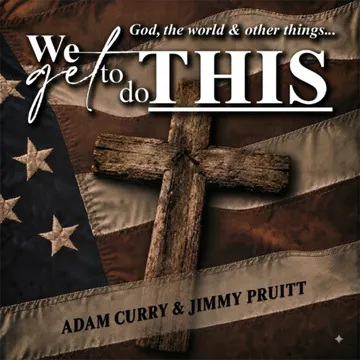
Episode 47 · Wednesday, 26 August 2026

Data Centers, Disciples and Discernment

From the $12 billion Meta settlement to the strategic manipulation of AI data centers, this analysis uncovers how digital infrastructure and ancient scripture collide in a failing secular world.

By We Get To Do This | 1h 42m listen | 23 chapters
Data Centers, Disciples and Discernment cover
We Get To Do This · No. 47

About this episode

Meta reached a historic $12 billion settlement with 47 states on August 26, 2026, over allegations that Facebook and Instagram were engineered to addict teenagers. This landmark agreement, which mandates a two-hour daily time limit for minors, arrives as state attorneys general ramp up pressure ahead of the midterm elections. The legal battle draws direct parallels to the 1994 nicotine hearings, where tobacco executives famously denied the addictive nature of their products before the Master Settlement Agreement fundamentally changed the industry.

Leonard Kleinrock, a pioneer of the DARPANET, recently warned that the internet has evolved into an invisible global nervous system driven by AI software agents rather than human interaction. This shift coincides with the rise of loneliness influencers on YouTube and a surge in manifestation content, which critics describe as a dopamine-driven biohack for spiritual isolation. Meanwhile, political movements are increasingly targeting the periphery of social networks to bypass central influencers, a tactic utilized by figures like RFK Jr. to build viral momentum. In Texas, the construction of AI data centers has become a flashpoint for Governor Greg Abbott, with claims that local opposition is being coordinated as a strategic Democratic operation to strain the state's power grid.

Pastor Alan Jackson prepares to host the Christianity and Culture conference in Murfreesboro, Tennessee, while the hosts reflect on the legacy of John C. Dvorak and the transition to their new podcast format. A viral clip of Josh Howerton and James Talarico serves as a cautionary tale about the dangers of headline culture and the loss of intellectual integrity in digital spaces. The program concludes with a reminder from 1 Kings 19:12 that the divine often speaks in a gentle whisper rather than through the loud, dramatic events sought by a world addicted to breaking news.


CHAPTER 01 / 23 Discussion

Opening Prayer and Mission for Episode 47

The program opens with a prayer of gratitude and a declaration of mission for the listeners. The hosts acknowledge the date as Wednesday, August 26, 2026, marking episode number 47 of the series. A brief musical harmony transition leads into the primary discussion.

jesus· mission· purpose· episode 47· prayer

00:00 Father, we honor you today. What a joy. What a privilege it is to be here sitting at these microphones, sitting across the table, doing life together, and just saying out loud, we get to do this. Thank you for your goodness. Thank you for your mercy and your grace. Thank you for the love that you show us. And thank you for how you give us a reason to get up on a Tuesday morning, a Wednesday morning, a Thursday morning, because we have a mission and you've given us purpose. I pray for our listeners today that they would find themselves inspired and encouraged today, and that they too would be able to say, whatever they're facing in life, I get to do this. And we say this and pray this in the name of Jesus. Amen. Amen.

00:45 It's Wednesday, August 26, 2026. We get to do this. This is episode number 47. This is the life we've been blessed with. This is a gift. We get to do this. This is a chance we dare not miss. This is a life. We get to do this. A little harmony there. Pastor Jimmy Pruvin. If it was harmony, it was accidental. Trust me. You know, I always tell Tina, I said, when you sing a song, it's perfect harmony. It's completely wrong when you're singing it by yourself, but if you just sing along with the song, it's unbelievable.

CHAPTER 02 / 23 Discussion

Podcast Business Cards and Christianity and Culture Conference

A host presents new black business cards featuring a QR code designed for quick networking. Plans are discussed for attending the Christianity and Culture conference in mid-September, held at Pastor Alan Jackson's church in Murfreesboro, Tennessee, near Nashville. The cards are intended to help spread awareness of the podcast among attendees and speakers.

business cards· qr code· murfreesboro· nashville· alan jackson· christianity and culture conference

01:26 She doesn't, and I don't know how she does it. Does she not believe you when you say that? I mean, does she go along with that? It's worse. She thinks she's singing everything perfectly. No. Oh, okay. She's an American Idol moment. She knows lyrics. She knows lyrics. I'll tell you that. No, she has an uncanny ability to sing perfect harmony. Hey, brothers, brother. Yes, children. Oh, man. Plank the cups. Yes. You've got Black Rifle. I've got Laird's Laird's coffee. You know, I've done many podcasts in my life, arguably one of the first. This is the first podcast I've ever had a business card for. Brother, I am holding your business card in my hand. It's amazing. You know what I love about this?

02:11 Annette saw it today and she was like, oh, who chose those colors? That looks amazing. I said, well, I did. Yeah, we did. You did. You did. I wanted something black, but I love the QR code. There's the key. Nobody keeps a card. No, of course not. Just scan it, talk. Scan it, talk. Scan it, talk. And that's the beauty of it. That's exactly right. I love it, man. That's yours right there. Thank you. I finally got a bundle of things too. We're going to a conference mid-September. We are. We are. That is the Christianity and Culture, Culture and Christianity is what it's called. And it's right in Murfreesboro, Tennessee, Nashville. Yes. Pastor Allen Jackson's church.

02:48 It's got a great lineup of speakers, and it'll be great. I mean, we'll be able to just, man, do life, hang out, and learn and just sit under the water hose. And that's why I said we need business cards. We need people to hear about us. Now, at this conference, it's not like a bunch of vendors showing up. No, but I want to give one to Pastor Alan. Good luck with that. Good luck getting to him. That guy. He'll be way down off in the distance. Yeah, I hear it. Josh, what a great church and a great pastor. I just love having business cards. That's just cool. It's cool. It makes it feel official. Legit. Big good morning, everybody, to Get Too Nation.

CHAPTER 03 / 23 Discussion

Finding Faith in a Failing World and Hebrews 10:23

The discussion shifts to the increasing number of people seeking faith as secular systems fail. Reference is made to a conversation with Pastor Brian regarding living in a "down world." The hosts cite Hebrews 10:23 as a foundational scripture for remaining firm during personal storms and mention Joe Rogan's public comments about the need for a life owner's manual.

faith· brian pruvin· joe rogan· bible· hebrews 10:23

03:30 Yeah, come on. All those doers out there. All the doers here. Come on. Everyone who's decloaking. Like, we saw you. We saw you decloak right in front of our eyes. And all the Christ Curious. Come on, man. And they are here, and there's so many reasons for it. I mean, I heard you with Pastor Brian yesterday. I'm living up in a down world. And, you know, you're so right. I think it's not even that people are coming into their faith. They were probably already there. They grew up with it. And they're all looking for something. And everything else has failed. Yeah. And we'll get into that. But first, I want to thank you as my friend and as my pastor, which is an interesting role because I see you as my friend and we talk to each other as friends, but sometimes you'll slap, you know, slip in a little bit of Pastor Jay there.

04:20 I try to give a warning when I do that. Because, you know, I've been a little bit in the storm. Yeah, you have. And did you send me a scripture about that? Or were you thinking of one? Well, I did a DG about that. It had to do with that. Pull it up real quick just so you have the scripture right in front of me, unless you have it there, but I've actually from yesterday. And I called it firm in the storm. But I love the scripture, Hebrews chapter 10, verse 23. Let us hold unswervingly to the hope we profess, for he who promised is faithful.

04:56 And that was very helpful to me. Good. Because I, you know. I think it was a while back, maybe two years ago, there was a clip of Joe Rogan, you know, to one of the clips. We'll be talking about a lot of clips that clips in general. Cool. And it was Joe Rogan saying, you know, if only there was like an owner's manual to life. And all the comments were like, who's going to tell Joe? And I have personally found, and I think most believers, that the Bible, it is the word. It is the truth. And every single time I can go back and find the truth. And, you know, history just repeats over and over and over again.

CHAPTER 04 / 23 Discussion

Biblical Context and Relevance in the 21st Century

A host questions how to apply first-century biblical instructions, such as James 1:27 regarding orphans and widows, to the modern era. An analogy is drawn to the United States Constitution and the Second Amendment, where critics often cite the difference between historical muskets and modern AR-15s. The conclusion emphasizes that context is king when interpreting ancient texts for contemporary life.

james 1:27· context· scripture· constitution· second amendment

05:37 The cycles probably keep getting shorter and people's memories even shorter. There's a Bible verse for that. Which one is that? The book of Ecclesiastes says there is literally nothing new. Nothing new under the sun. Right. Right. So I was struggling with some things. I'm going to have to go into too much detail. But I said to you, I said, you know, the word tells me that I need to care for orphans and widows in their distress and refusing to let the world corrupt me. Now, that's 1 James 27. I mean, it goes all the way back to Genesis, you know, words about

06:14 widows and orphans. And you said something very interesting to me. You said, well, in the first century, it was a very different deal for orphan, well, for widows and for orphans. And that was tremendously helpful. But it immediately gave me questions. And I'll tell you how it went in my mind. Because very often, the Second Amendment of the United States of America is discredited by people who say, well, when they wrote that, they had cannons and muskets, not AR-15s. And so if you take the Constitution strictly at its word, it's like, it doesn't really matter what that is.

06:58 Can we, should we? Is it an option to look at scripture in the first century versus the 21st century? Does it apply everywhere? I mean, do you understand my question? Absolutely. Because this is where we're trying to make something that was written centuries ago relevant to a totally different place, time, and context. So when you read scripture, you always want to read it from two perspectives. You always want to make sure I love context is king. Let me just use that. I want to use a phrase that'll help us remember this. Context is king. Yes. So primarily, whenever I read a scripture, for example, I used Isaiah today, and we'll talk about this particular scripture in a moment, Isaiah 8:12.

CHAPTER 05 / 23 Discussion

Isaiah 8:12 and the Biblical Definition of Conspiracy

The hosts examine Isaiah 8:12, noting that the Hebrew word "keshur" translates to conspiracy, treason, or an unlawful alliance. The historical context involves an alliance between Ephraim and Syria threatening Judah, causing public panic. The scripture advises believers not to fear what the crowd fears but to maintain a reverent fear of God instead.

isaiah 8:12· conspiracy· treason· ephraim· syria· judah

07:43 Now, I read the scripture at face value, right? What does it say to me today? But I also realize and understand this is in the Old Testament under the Old Covenant. I want to find out what it meant to Isaiah in his day. Right. So I did some background scripture study because I want to know the context of that. Can I read the whole Isaiah 8 to 12? And I love this. This is one of my favorite scriptures because in almost every translation, it uses the word conspiracy. It sure does. Conspiracy from the root word conspire to breathe, to breathe together. Don't call everything a conspiracy like they do, and don't live in dread of what frightens them.

08:28 Whoa. Yeah. I mean, hello. That sounds pretty relevant to me. Also, I like reading the whole, there's a whole, in my Bible, there's a whole block. It goes from 11 to 17. And I'll just read the whole block of context. That's exactly. Oh, man, we're going to be talking about that today. So we start with 11. The Lord has given me a strong warning not to think like everyone else does, he said. He said, don't call everything a conspiracy like they do, and don't live in dread of what frightens them. Make the Lord of heaven's armies holy in your life. He is the one you should fear. In this case, not, oh, I'm afraid, but I revere him as we speak about a God-fearing man.

09:10 He is the one who should make you tremble. He will keep you safe. But to Israel and Judah, he will be a stone that makes people stumble, a rock that makes them fall. And for the people of Jerusalem, he will be a trap and a snare. Many will stumble and fall, never to rise again. They will be snared and captured. Preserve the teaching of God. Entrust his instructions to those who follow me. I will wait for the Lord who is turned away from the descendants of Jacob. I will put my hope in him. So that's the whole, and it's literally indentated, indented. It has a block around it in my Bible. So I like the context of all of that.

09:51 That's critical to understanding it. So you read it at face value. value, but you want to know what it said then. What did it mean to the people then? And now what is it saying to me today? Because the neat thing about the word of God, we believe that it was actually authored by him through the hands and pens of men, right? And people. So we say, you know, the word was dictated in a very real sense. It was written. It was guided. It was inspired by the Holy Spirit, him at work. So it, and it has layers of truth, and it will speak to all men at all times. And here's why: is because there's a word that's used called Rhema, the word Rhema. That means God breathed. So the Rhema word of God is the breathed word of God.

10:35 In other words, it has the breath of life in it, which is why Paul later says that the word of God is living and active and sharper than any two-edged sword, piercing even into the joints and marrow. You know, so that's that's what the word is. It's a living word. So it may say something to you at one point in your life, and then 10 years later, you're scanning, you're reading, and you come over the same verse, and it may say something I wouldn't say entirely different. It'll just be enhanced. It'll be more. It'll have more depth. But it can say something different to you in different times because the emphasis will be on a different part of the verse.

11:13 The object of the verse may change, if that makes sense. So context gives us this is what it meant to those folks in history. And it's like the Constitution. We need to understand the times in which we live. That's why it's so important to know our history. But then we also have to adapt and interpret it for our time today. Same way with scripture. So in this particular scripture, you're right. I mean, the Hebrew word keshur literally is conspiracy, treason, or an unlawful alliance. Wow. I mean, how relevant this look around right now of what's happening. Unlawful alliances, treason, conspiracy. It can describe a genuine political plot.

11:56 God isn't saying conspiracies never exist. I like that. He's warning Isaiah not to adopt the crowd's interpretation and fear. How relevant is that? I mean, it is exactly speaks to our time. Completely. Because here's what we have to understand: the nature of man has never changed since the garden. I mean, it's the same old story, just played as a fairy. It's always the woman's fault, is what you mean. I'm not going to say that out loud. I'm not leaving that level of an Easter egg for my wife. I'm just saying. Just kidding. Although she would probably say that, actually, because she's like, it's always women. I'm like, but you are one. She's, I know. But I love what that says. And that I'll read that sentence again.

12:40 It can describe a genuine political plot. And that was the issue in the day. Wow. So what was happening was Ephraim up in the north, one of the tribes, had joined forces with Syria. So it was a Syria-Aphraim alliance, which was an evil alliance. God had told them not to align with enemies, never to become allies. But by definition, a political alliance. It was a political alliance. Now they come together and they're threatening to attack the South, Judah. So Isaiah is in the South and he's dealing with all these people who are losing their minds because their internet, their version of the Internet, is saying, We're about to get killed.

13:22 We're about to get crushed. This is going to be bad. It's over. You know, we're at the end of an era. We're at the end of an epoch. You know what I mean? The same things we say today. And it was the same language, and they were in fear. God, through the prophet Isaiah, whispers to them, not so much of a whisper. He basically says this: if you're going to fear or dread anything, you should fear and dread me. Yeah. Not what other men fear and dread. And that's exactly how the verse reads. I read mine in the NIV 84 version. So listen to it in that version. Do not call conspiracy everything that these people call conspiracy. Do not fear what they fear and do not dread it. Now, later, you read the content to context.

14:05 He's saying, if you're going to fear anybody, fear me. Fear me. I mean, he's literally, he's saying, you've got your attention on the wrong thing. Yes. You know, the object of what you're fearing is wrong. That's so good. And as a political conspiracy, just to make it clear, I have to say this. Almost whenever I talk to anybody about anything going on in the so-called news, which we'll get to that, everything, everything, everything is about the midterms. Everything, just everything. I don't care what topic it is. It has a midterm slant. And this is how America runs.

CHAPTER 06 / 23 Discussion

Meta Social Media Settlement and Child Safety Allegations

Meta, the parent company of Facebook and Instagram, reached a landmark $12 billion settlement with 47 states over allegations that its platforms were designed to addict teenagers. The agreement includes a default two-hour daily time limit for minors and enhanced reporting systems for harmful content. Critics argue the settlement is a political maneuver by state attorneys general ahead of the midterm elections.

meta· facebook· instagram· settlement· attorney general· child safety

14:45 It's a multi-billion dollar business, like multi-multi-billion dollar business. dollar business. And I had quite a setup going for us today because I was going to talk about the lawsuit. Do you know anything about the lawsuit? No, I don't. The meta lawsuits? Have you heard? No. Oh, oh, yeah, yeah. Meta. I didn't know what you're doing. Maybe a little bit. You know, it hasn't really been top of news. It hasn't. But it will be tonight, probably, because just this morning, we got this breaking news. Corporation that owns Facebook and Instagram has settled the case for a landmark $12 billion and up to $17 billion over the next 10 years. In addition, they'll have to make major changes to their social apps that the states claim got kids and teens hooked.

15:30 Some of the changes are a default daily time limit of two hours for users under the age of 18 that can only be changed by a parent. Also, an enhanced system allowing teens to report harmful content that Meta must respond to within six hours. Now, I only just got the full settlement. There's a lot more in there, like a lot more. But it's kind of a punt. This is 47 states. They were suing Meta. So that's Facebook, Instagram, WhatsApp. All social networks are looking at this, like, okay, what do we have to do? Right. And it wasn't so much the content, but it was the mechanisms, what we would call the algorithms, or the quote-unquote addictive nature of it.

16:14 And I do want to go through a couple of these clips that I pulled anyway, just so we can understand, because they didn't really settle on anything. And this is only focusing on kids. So the whole, and that's how you, I mean, everything, you can build a lawsuit for anything as long as it's hurting children. I mean, please think of the children, that is a primal reaction from any parent or any adult, even if you don't have kids. True. Like, oh, it's hurting kids. Now, of course, they're going to get into, just to show you how weak this is, there won't be age verification. There'll be age assurance. So, you know, I was like, okay, so.

16:54 We're not on video, so you can't see the look on my face. But I'm also pretty sure this was punted by the states to get it out of the way before the midterms because everybody needs the social media networks for the midterms. Yep. Everybody needs it. Absolutely. And so even though it's just attorney generals, attorney generals are political as well. They're not supposed to be. But look at Ken Paxton. He was, was he attorney general? Yes. And now he's running for Senate. Yes. So, you know, so everybody's political and everybody wants to stay on the good side of everything.

17:31 But this was what the basic suit was about. Meta is back in court, this time facing allegations that it knowingly designed Instagram and Facebook to keep children and teenagers hooked, even as it learned about the potential harm to their mental health. Attorneys General from California, Colorado, Kentucky, and New Jersey are seeking changes to how Meta operates its platforms and roughly $200 billion in penalties. Now, that was just for those states. The total of all the states, which is kind of what makes this settlement quite laughable, was $1.3 trillion. Wow. So $17 billion, of which $12 billion now and $5 billion later on is quite,

18:14 it'll leave a mark. It'll hurt them, but it's not the end of the world by far. They're part of a larger group of 29 states that sued the tech giant over child safety and privacy. The other states will go to trial later. The states argue Meta designed its apps to, quote, hook the users, hold them for as long as they can, harvest their data, and hide the truth from the public. Hook them, hold them, harvest them, hide them. Beautiful. That's alliteration. Well, you know, that's some consultant came up with that, you know, to work against it. A Meta spokesperson called those claims unsubstantiated, saying the company stands by its record of protecting minors on their platforms. For more, we're joined by Bloomberg Tech reporter Alexandra Levine, who's been covering this trial.

18:58 Alexandra, welcome. Thanks for joining us. Thanks for having me. So Meta and other social media companies have faced similar allegations. They've gone to trial before. How is this trial different? Yeah, well, we've been hearing about alleged harms to children through social media for so many years at this point. I think what makes this moment very different is that in the past, a lot of the focus has been on the content posted, the platforms and how that content could be harmful. Right now, the focus is mainly on product design. So how the actual products of Instagram and Facebook have been built to, as the state attorney general has alleged, to keep children hooked and to harm them. Certain design features, and these are deep-seated business practices that are integral to both of the platforms.

19:42 But I think the difference between the content posted. posted and the product design is a key difference. The other key difference here, of course, is that in addition to seeking monetary penalties, the state AGs would like to see injunctive relief measures, which would actually fundamentally change the way that the platforms operate. So it's really great when you get to change something for a relatively small age group, which isn't really that interesting. Advertisers and people who want to advertise, advertise, want to advertise to one specific group, 1824. Now, if they can get kids early, yeah, I guess there's a benefit to that. But anything you do for children, I don't think it's a big deal to these companies in general.

CHAPTER 07 / 23 Discussion

Big Tobacco Analogy and the 1994 Nicotine Hearings

The current legal scrutiny of social media companies is compared to the 1994 Congressional hearings where tobacco executives testified that nicotine was not addictive. That era resulted in the Master Settlement Agreement and mandatory warning labels. The hosts suggest that just as tobacco settlements did not stop smoking, social media regulations may not solve the underlying issue of addiction.

nicotine· big tobacco· congress· master settlement agreement· surgeon general

20:25 But there's quite an analogy to this entire setup, which I've been discussing with Rob Cardi, the constitutional lawyer. By the way, if you got hit by a truck, call suits and boots. Come on, man. They'll get you maximum money, I guarantee you. They are friends. Friends of the family. Friends of the family. We laid out in our case today, which is essentially this: that Meta has designed and deployed dangerous product, a dangerous product with dangerous features that they knew would create excessive use and compulsive use by children, and it would create mental health harms, including things like anxiety and depression, like body image issues, like addictive tendencies, like learning

21:15 loss. They knew all that. They knew their product was dangerous, and they lied to the public. They lied to Congress. They told the public. They told the world that their product was safe, that it wasn't dangerous. Okay. Where have we heard this before? Where have we heard this before? I take you back in the time machine. Close your eyes so you don't get nauseous. If the room is spinning, look at the ground. It'll all go away. 1994. Let me begin my questioning on the matter of whether or not nicotine is addictive. Let me ask you first, and I'd like to just go down the row whether each of you believes that nicotine is not addictive. I heard virtually all of you touch on it, just yes or no. Do you believe nicotine is not addictive?

22:00 I believe nicotine is not addictive, yes. Mr. Johnston. Congressman, cigarettes and nicotine clearly do not meet the classic definitions of addiction. There is no toxicity. This was all the big tobacco guys sitting in Congress, sitting in Congress. We'll take that as a no. And again, time is short. If you could just, I think each of you. This sounds like Raskin. I'm not sure if he was there back there. It sounds like him. We believe nicotine is not addictive. We just would like to have this for the record. Yeah, just get it on the record. I don't believe that nicotine or our products are addictive. Next? I believe nicotine is not addictive. I believe that nicotine is not addictive.

22:38 Well, spoiler alert, they go all the way down the line. I don't believe it's one outlier. So what is interesting in the analogy between these two is that, you know, of course, they lied. They literally made the product more addictive, not just with nicotine, but with other properties. And what was really the result of that? The state sued the states. In the tobacco case, the states got something called the Master Settlement Agreement. And a tax, when you pay tax on cigarettes, which is now probably much more than the product itself, that money is split up amongst all the states and goes to healthcare.

23:18 Laughable, of course, because that just gets sucked up now into the general ledger. And they've written bonds against that income. But what did they really do for the children? I mean, they put a warning label on it. Say they get a sticker on the sticker. You can't buy it in the store. Warning, the Surgeon General is deemed blah, blah, blah. Age assurance. It actually turns out, for a while, they had those horrible pictures of a diseased lung on it. I don't know if you remember that. That was maybe 10 years ago. They started that campaign. Europe still does it. Research shows people actually are more inclined to buy it when you have that on the package. Kind of like, I can beat this. Wow. Like, they were trading them. Like, I have a diseased lung. You got a heart? Let me have your pack.

24:00 I mean, it's crazy. And I'm sure they thought about that before they actually put that into effect. The thing that is interesting, though, is people still smoke. It's not like, yeah, a lot of people have given up. That wasn't necessarily because of that lawsuit. It's less easy for kids to, well, you can't go in and buy a pack, but kids underage still smoke. But it never removed the problem. It never removed, and I don't think they ever actually removed any of the addictive properties. They didn't really change the product that much. So the analog here is: okay.

CHAPTER 08 / 23 Discussion

Loneliness Influencers and the Manifestation Trend

A Deutsche Welle documentary titled "Loneliness Influencers" highlights how young adults feel increasingly isolated despite constant digital connection. Many users are turning to manifestation content on YouTube to find a sense of power, which the hosts describe as a "mental hack" or "biohack." This trend is characterized as a self-centered pursuit of dopamine hits that fails to provide lasting spiritual fulfillment.

loneliness· dopamine· manifestation· youtube· oprah· neuroscience

24:40 you can do stuff for kids. Like, you won't be able to access it at night. It'll tell you to take a break. You'll be able to hide your likes, hide them by default so you can turn it back on. You know, whatever crutches they've come up with. But are kids really the problem? No. Do you really see children? I mean, yes, big, big problems, but is that really the problem? The problem, no. No. Who has problems? Us. Adults, 30-year-olds, boomers. Anybody with a pulse. Anybody with a pulse. Exactly. And this is, I think, CNBC, the woman actually, the news model, I call them, she actually admits it.

25:20 The courtroom doors are open, and it is time that the public see what the executives at Meta have known all along: that their products are designed to addict and harm children. We got a third of the planet on their products. They broke our brains, all of them. It's not just about kids. And so at the end of the day, I think there should be some sort of reckoning. Sorry, it was a male news model. He's saying it. They broke our kids. They broke our brains. They broke everybody. A third of the planet. And it's absolutely true. So the product is not just the problem. There was this fantastic documentary I found on Deutsche Vella. So, you know, it's German with English voiceover.

26:04 It was called Loneliness Influencers. I think I saw that. Not really. Just kidding. Sorry. It's possible. Impossible. But these are now late 20, early 30-year-olds who have just gone because of social media have gone into a complete state of loneliness while they've never been as connected before in their lives. I really noticed the intense doom scrolling, especially when I'm alone at home. The phone is basically a connection to feel some kind of fake closeness. At the same time, it makes you feel even lonelier.

26:46 Totally. I really felt that during the times I was doing badly. I'd sleep 15 hours and spend the other nine in front of a screen because it kind of pulls you away from your own reality and your thoughts. Do you think that's good watching that stuff? Of course not. I was doing badly, but that was my way of coping. It's kind of dumb. But it's also like there's this FOMO thing, right? Someone's traveling and you feel bad about your life. But if you just switch your life off and turn on the internet, it feels like you just travel too because you watched that vlog.

27:28 I think it's really just that dopamine kick. At the same time, like I said, it makes me lonelier. Social media is completely curated. People only post what looks amazing. So they're very aware of what's going on. Completely aware, yet they're fully into it. And what happens is these people aren't finding faith. They aren't finding God. They're finding people teaching them how to manifest. You know, like, I'm going to be okay. The world is going to be okay. This is literally the category known as loneliness influencers, which is just mind-bogglingly scary.

28:09 Part of my daily routine is watching videos from YouTubers who make content about manifestation. I basically have them in my ear all the time. What I love is that you get this sense of power, that you're truly the creator of your own reality. You don't need astrology or anything outside yourself. Don't even need that. Don't even, don't know us. Don't need any of that stuff. No. Every day it's me who decides who I am. That gives me a real boost. Hi, I'm Vanilan. I'm 34 years old, a Gemini, and I'm a trained actress, host, voice actor, mental coach, photographer, lecturer, and model. Yeah. Go ahead. There is an unholy trinity out there, and it's called Me, Myself.

28:49 And I. Yeah. That is all I heard right there. It's all about me. Yes. I remember when Oprah came out a couple of decades ago, and it just she started just throwing everything off and saying, it's all about me. It's all about, I've got to take care of me. Yes. And, you know, there is a level of truth that we do have to mind. We have to steward the gift that God's given us. That's us, mind, body, spirit. But it goes way over a line to where. And if you think about it, what she's talking about, dope, okay, she's downing dopamine hits, but yet she's getting them by doing this manifestation trick.

29:31 It's a hack. It's a biohack. It's a mental hack. Yes. Without even knowing it. Yeah, exactly. It's the same thing. It's just exchanging one dopamine generator for another. And so she's trading off things, but that will not give lasting, I mean, how long has she been doing it? A month, you know, three weeks. I mean, who knows? Yeah. Because everything in social media is a short shelf life. I mean, right now, neuroscience, everything's neuroscience. Andrew Huberman, they all great, you know, all this neuro neurology. Then it's breathing. You got to breathe right. All right, I'm going to teach you how to breathe. All right. We're going to do a double-hit breathe with a long exhale.

CHAPTER 09 / 23 Discussion

Headline Culture and the Dangers of Bible Devotionals

The prevalence of "headline reading" in digital news is compared to the use of short daily devotionals in Christian practice. The hosts warn that consuming isolated snippets of information or scripture without context leads to misunderstanding. They advocate for reading full chapters of the Bible to avoid the "quick fix" mentality fostered by social media algorithms.

headlines· clickbait· paywalls· devotionals· bible study

30:10 Then it's always something that's a hack. And people are looking for hacks for life. Oh, even believers are looking for hacks. Believers are looking for the next guy to tell them. And here's the tragedy about that. And I have this headline. Social media has changed not only what we read, but how we read. I mean, this is like a deep dive. Shall I tell you my view on that? Bring it. Because we are only looking at clips. And I'm not just talking about clips of video. People will literally post a screenshot of a headline of a story.

30:49 If they even post a link to, so headlines are a whole, you know, the writer of an article doesn't write the headline. Headlines are written by headline writers. They A, B, C, and D test them throughout the day, the minute it's released to see which one gets the most clicks. That's the one they go with. So that is literally how news is getting more clicks is by what clickbait headline works better. In eight times out of ten, you click on a news story, what do you get? Paywall. Definitely. So people are. There are 30 pop-ups on that. There's that. But the paywall is the problem because you're only seeing the headline.

31:28 You may be seeing the first paragraph. And this is, I had to go into myself on this one because this is very similar to reading the Bible. So if we only read Isaiah 8, 12 and not within context, we can miss a lot. And I got to be honest, I myself have been a lot of a Bible headline reader. It's called a devotional. And if you don't get the context of it, and you don't go in, and I have forced myself, it wasn't that hard because I enjoy it, to go read the entire chapter and verse.

32:06 Excellent. But people don't do that. So you're still getting just little quick hits of, oh, okay, I feel better without the context, which means you can lose everything of what that verse was written for and what God is trying to tell you with it. And I think we as believers, as get-to nation, as doers, we've got to help people understand that a devotional alone is not going to do it because we've been trained. Oh, this is my quick Bible fix. I was disappointed in myself. Like, wow, I'm actually doing this. So that's part of the problem. It is.

CHAPTER 10 / 23 Discussion

Law of Large Numbers and the Global Nervous System

Leonard Kleinrock, a pioneer of the DARPANET, describes the "law of large numbers," which posits that large populations of unpredictable players behave in predictable ways. Kleinrock predicted in 2015 that the internet would eventually become an invisible "global nervous system" embedded in physical infrastructure and human bodies. This system is now driven largely by AI software agents and sensors rather than human traffic.

leonard kleinrock· darpanet· law of large numbers· ai· global nervous system

32:48 So I'm glad you brought up neuroscience because just as actual brain scientists created the entire algorithm concept of firing dopamine, of, you know, there's plenty of documentation. There's some funny documentaries about it. Everyone's kind of aware that the minute you're about to leave Facebook or Instagram, bloop, bloop, bloop, you get all the alerts. They hold that back. Oh, I just got some dopamine hits. I'm staying. Way before this, scientists, brain scientists, network scientists had already figured out how network effects really work.

33:30 And this is important because this is where clips come in. I'm so blind today. Hold on a second. I'm like squinting all over the place. This is the law of large numbers. Have you ever heard of the law of large numbers? I love that one. No. This is Leonard Kleinrock. He actually built the first node on the internet when it was the DARPANET, Defense Advanced Research Project Agency. Defense, Advanced Research. Al Gore takes credit for it, but the Defense Department was on this. Long before. In 1969 is when they were already doing these experiments. And listen to his, this is just a, let me see, if I have this one, this is a,

34:14 here we go. This is just a quickie. This was a simplified but exact model at the time. Now we have other aspects of it, but it's basically the underlying principles of the network. And one of the things we found. surprisingly, was that the larger the network is, the far more efficient it becomes. Like a gambling casino that certainly makes money if you have millions of gamblers at the slot machines. Very much so. You've articulated what we call the law of large numbers. The law of large numbers says that a large population of unpredictable players or messages collectively behaves in a very predictable fashion.

34:58 A fashion we can write down exactly. And therefore, we can predict the performance of a network when it's large. Isn't that interesting? The law of averages. The guy even says in the background, oh, kind of like as long as you have enough gamblers, you're always going to make money. Yes, the larger the network, the more predictable the way the individual nodes, guess what we are? We're nodes, the way those nodes will behave. Now, this is him in 2015. So this is 11 years ago. Listen to what he predicted. Well, as I said, one of the challenges is to make the internet invisible, to disappear into the infrastructure surrounding us.

35:34 And to do that, what's happening now and will happen in the future is the deployment of embedded devices, small devices, actuators, sensors, logic, memory, displays, cameras, microphones in our environment, as I say, in our bodies, in our fingernails, in our walls, in our tables, etc. So the idea of physical devices embedded in our physical infrastructure communicating with us. At the same time, we'll have intelligent software agents out in cyberspace. Sound like a thing like your chatbot, like AI. Yeah. Doing the things we ask them to, providing us information, mining data, alerting us, reminding us, etc.

36:19 And you know, right now, those intelligent software agents and those embedded devices in our physical infrastructure are generating more traffic on the internet than our humans. That's already an indication that where we're heading for is what I like to refer to as a global, a global nervous system, a global internet nervous system for the entire planet. And that's where we're heading. It'll be invisible, it'll be everywhere, it'll be omnipresent, it'll be easy to use, and it'll be cooperative and functional. A global nervous system. That just needed an ominous soundtrack behind it. I know, but it's from 2015. We weren't doing that back in the network. We weren't doing that back in the day.

CHAPTER 11 / 23 Discussion

Network Diffusion and Political Influence on the Periphery

Research into network effects suggests that new technologies and political movements often take hold on the periphery of a social network rather than starting with central influencers. This explains why figures like RFK Jr. utilize small podcasts to build momentum. Politicians often target these "edges" of the network to trigger viral responses that eventually move toward the center.

network effects· influencers· rfk jr· donald trump· social movements

37:04 Wow. So they already knew that this is turning into a nervous system. Now, a nervous system, everything is connected one way or the other. So how does something go viral? Now, you'd think you want it to go to somewhere who was a node connected to all kinds of nodes, like what we would call an influencer. Turns out, in the law of large numbers, that is not true. That is, in fact, it's, I mean, I was like, what? That, okay. And where it does happen is interesting. And today, the way we tend to think about

37:43 this is in terms of networks. What binds people together are the patterns of connection between them and the people they know and the people they know and so forth. And when we look at networks, there are several key features that we think are the most important things for understanding human behavior and human behavior change. And typically, we pick out the people who have very highly connected networks who are in the center of the network and they've got ties reaching out in all directions. And then we look at people who are in the periphery of the network, shown in the right, who have many fewer connections, but also those connections are sort of clustered together. So it's not just the number of connections that differs between the center and the periphery, but also the structure of those connections that's different.

38:26 And when we think about any kind of technology diffusion process or innovation process, we have a kind of common idea of how it works. We say, well, typically someone who's highly connected adopts first, and that person influences the people around them. And from that initial process, then it spreads very effectively out towards the outer skirts of the network and then saturates the rest of the population. So that's our classic model of spreading. What I want to suggest is that a problem has arisen in the last 20 years. We've started to get really good data on how social movements spread, how new technologies like Twitter and Facebook spread.

39:04 And really what we tend to see is that when technology or new ideas, new political movements take hold, they tend to take hold out in the periphery instead of the center. And then when they spread, instead of jumping to the center, what they tend to do is they tend to spread around the edges of the social network. And they only reach the center of the network at the very end of the process. This is LGBTQ. But it's also far right, far left. This is why politicians are so, they know it. Yeah. They know it. They notice they can get a small group on the periphery on the outside to continue.

39:42 It's so counterintuitive because you think, well, as long as Megan Kelly says it or Sean Hannity, but no, that's not how it works. In the connected nervousness system, it's the small things on the edges. Which is why RFK was willing to do podcasts with almost anyone. Exactly. Nobody's, small podcasts. That's right. That's right. College kids. He would sit down with anybody and it worked pretty well for him. Yeah, he might not have made it to president, but he is right up there making a big difference in this world. I think President Trump also realizes this. I don't know if he understands the depth of the network level, but he does stuff which is clearly meant to trigger things way on the edges, like Lake Ontario, Lake America.

40:32 That's triggering all on the outside. But it's not as unimportant as we think it is, possibly. Now, one of the biggest, the company that understood this very well, which was attacked when Steve Bannon used it for President Trump's first campaign, but it really was brought to life during the campaign for Barack Obama is the outfit called, oh no, I forgot the name of it. It's in the clip. They were taking Facebook data and they were influencing people to vote for initially for President Obama.

CHAPTER 12 / 23 Discussion

Cambridge Analytica and Modern Propaganda Techniques

The legacy of Cambridge Analytica is discussed in the context of identifying mental vulnerabilities in voters to spread disinformation. The hosts express extreme skepticism toward current news cycles, noting that everything is filtered through a midterm election lens. They warn that even admired sources can inadvertently spread propaganda through out-of-context clips and emotional triggers.

cambridge analytica· propaganda· disinformation· midterms· skepticism

41:13 I think the name is in here. Cambridge Analytica sought to. Cambridge Analytica. There it is. Cambridge Analytica. You may have heard of them. There was a lot to do about them for a while, but they figured out how to activate people on the edges, but not as a central, through a central influencer. Cambridge Analytica sought to identify mental vulnerabilities in voters and worked to exploit them by targeting information designed to activate some of the worst characteristics in people, such as neuroticism, paranoia, and racial biases. To be clear, the work of Cambridge Analytica is not equivalent to traditional marketing. Cambridge Analytica specialized in disinformation, spreading rumors, compromise, and propaganda. There it is. Propaganda. This is where I wanted to get us.

41:58 Everything we see right now, including from people we admire and like, is propaganda. They may not even know it's propaganda. And this is what I think everyone misses, like, oh, Facebook, and they're giving you all the stuff from this political party or that political party. No, this is just people who know how to manipulate the network. And you manipulate the network the way people are already manipulated by headlines, by clips, out of context. Everything's out of context. I mean, this is one of the things I love doing is I love, oh, what's this outrage about this clip? Let me go find out the context. And you'd be surprised how sometimes it's even the exact opposite of why people might be sharing it.

42:41 So propaganda. Have we talked about propaganda in the past? I mean, bits and pieces here, but I like your take on this because what I'm seeing is, of course, I'm seeing everything through a midterm filter because, you know, the warning flag has gone up. Midterms are coming. I mean, we're close. I mean, already, I mean, October, I mean, we start voting in October, early voting. So it's literally around the corner. So everything I'm seeing right now, I am reading with massive skepticism. I mean, literally. So what I have started doing as a practice is when I see something, in fact, when I saw an announcement, Dolly Parton has died at 80 years of age. And my first thought wasn't, oh no. My first thought was, is this true? Yeah. I'm serious.

43:26 And that's actually literally. Because there's been other people, celebrities who have been announced with these with great emotion. They've died. And it turns out they didn't. They're alive and well. So I'm being trained now by this swill of information that's so you can't tell where it's coming from. It's the telegraph game gone insane, the telephone game where you talk to one person, talk to another by the third person. It's completely a different story. That's happening in real time right now. So the hard part for me and for others, and so I'm going to defer to you in terms of maybe an answer or a response, is how and where do we get real information now?

CHAPTER 13 / 23 Discussion

Ground Beef Futures and Gelman Amnesia

A discussion on the rumored importation of 300,000 tons of ground beef suggests the news was a tactical move to lower beef cattle futures rather than a literal plan. The hosts introduce "Gelman Amnesia," a phenomenon where experts recognize errors in news reporting within their own field but continue to trust the same source on other topics.

ground beef· donald trump· cattle futures· gelman amnesia· boots on the ground

44:12 Well, the answer is nowhere. There it is. It's the scary part. But it also means that nobody's in control and everybody's in control. control. So that's what I've always liked about No Agenda. If there was something with air traffic control and air traffic control, give me a boots on the ground to tell me what's happening. There was a great, I got a great note. It's kind of off topic, but President Trump is going to import 300 tons or 300,000 tons, whatever it is, of ground beef. And, you know, everybody's freaking out. It's going to be poisonous. It's going to be, you know, cheap.

44:51 It's going to hurt our farmers. And really, I don't think he has any intention of importing ground beef. The intent was to lower the price of ground beef. The beef cattle futures dropped immediately. Mission accomplished. He doesn't even have to bring in the ground beef. And I got this idea from a rancher, a Zoomer rancher, who says, Hey, man, I'm building my herd. This is great. We were expecting it. We have an 11-year cycle. It was a year late already. Anyone who's boo-hooing about this is, you know, is disingenuous. So that's how I see you got the real story. Well, and we have boots on the ground. But we have people in our church even who have boots on the ground in almost every single area of life.

45:35 But you have to have real human connections to man. That is so true. Wow. Well, I mean, you just blew something up in me because I do. I go, if I hear a medical something, you know, I'll go to Dr. Kay. Yes. I'll go to one of our guys and go, Is this true? And they'll just laugh and go, Exactly. This is also called Gelman amnesia. Really? Gell Man, two scientists, brain scientists. They said, if you read something in the newspaper and it's something you are an expert in and it's incorrect, you probably will forget to tell yourself that everything else on that page is probably incorrect as well.

46:15 That's interesting. That's Gelman amnesia. Wow. So let's go back to the propaganda because you said earlier, all that clip needed was a little bit of scary music. Yeah. Dude, talk about one of the best parts of propaganda that is built into the tools of online systems. Now, I'm going to create a clip. It adds to scary music. It does all the jump cuts. That is the essence of propaganda. The very essence of it. And then you've got YouTubers and podcasters and YouTube pastors and all kinds of people taking those clips, commenting on them, and validating them. Validating, even though it may not be entirely true. Right. But to understand this, we need to go back to the nephew of Sigmund Freud.

CHAPTER 14 / 23 Discussion

Edward Bernays and the Torches of Freedom Campaign

Edward Bernays, the nephew of Sigmund Freud, revolutionized marketing by using psychoanalysis to manipulate public behavior. In 1929, he staged the "Torches of Freedom" event at the New York Easter Day parade, hiring debutantes to smoke in public to frame cigarettes as symbols of women's liberation. This campaign successfully broke the social taboo against women smoking and remains a foundational example of modern propaganda.

edward bernays· sigmund freud· torches of freedom· tobacco· marketing

46:59 Sigmund Freud, we all know Freud. He was the guy who wrote the book on how the brain works, and he had his own ideas. I think they still hold true today. His nephew was a guy named Edward Bernays. I know about this guy. And he wrote a book called Propaganda. You can read all about his studies. And didn't his works get pulled into the marketing industry? I'm going to give you the exact example of propaganda going back to the days when Mr. Bernays, and this is him speaking, I believe, first got into the game of marketing with propaganda. It's a fascinating story. Bernays set out to experiment with the minds of the popular classes.

47:40 His most dramatic experiment was to persuade women to smoke. At that time, there was a taboo against women smoking. And one of his early clients, George Hill, the president of the American Tobacco Corporation, asked Bernays to find a way of breaking it. He said, We're losing half of our market because men have invoked a taboo against women smoking in public. Can you do anything about that? I said, let me think about it. And then I said, have I your permission to see a psychoanalyst to find out what cigarettes mean to women?

48:21 He said, what'll it cost? So I called up Dr. Brill, A.A. Brill, who is a leading psychoanalyst in New York at that time. How come you didn't call your uncle? Hey, how come you didn't call your uncle? I wouldn't call the top dog. Great answer here. Why didn't you call your uncle? Because he was in Vienna. He wasn't around, man. I got the other guy. He was in Vienna. A.A. Brill was one of the first psychoanalysts in America. And for a large fee, he told Bernays that cigarettes were a symbol of the penis and of male sexual power.

48:59 He told Bernays that if he could find a way to connect cigarettes with the idea of challenging male power, then women would smoke because then they would have their own penises. This is the whole phallic symbol. This is well-established psycho-psychiatry. So he took that, and here's what he did with it. Every year, New York held an Easter Day parade to which thousands came. And Bernays decided to stage an event there. He persuaded a group of rich debutants to hide cigarettes under their clothes. Then they should join the parade. And at a given signal from him, they were to light up the cigarettes dramatically.

49:39 Bernays then informed the press that he had heard that a group of suffragettes were preparing to protest by lighting out what they called torches of freedom. He knew this would be an outcry, and he knew that all of the photographers would be there to capture this moment. And so he was ready with a phrase, which was torches of freedom. And so here you have a symbol, women, young women, debutantes, smoking a cigarette in public with a phrase that means anybody who believes in this kind of equality pretty much has to support them in the ensuing debate about this because torches of freedom.

50:20 I mean, what's on all American coins? It's liberty. She's holding up the torch, you see? And so all of this is there together. There's emotion, there's memory, there's a rational phrase, even though it's using a lot of emotional elements. It's a phrase that works in a rational sense. All of this is together. And so the next day, this was not just in all of the New York papers. It was across the United States and around the world. And from that point forward, the sale of cigarettes to women began to rise. He had made them socially acceptable with a single symbolic ad.

50:59 And I would argue that the term freedom is still used to this day based on that initial campaign. That's fascinating. This is scary brilliance. This is when someone takes something that they discover a key to, like a golden key, but they also know they can use it for good and for evil. Welcome to the world of marketing of products and politicians and policy and political parties. And this is, it's only become easier. Again, it's not Elon Musk controlling your thoughts.

51:37 It's not Zuckerberg. It's not Google. It is the people who understand how to use the networks with the right message. And memes, really big one. I think President Trump's first memeological warfare. I mean, it was very, very powerful. Now with generative artificial generative intelligence, you got the guy out running for mayor in Los Angeles. Now he got screwed for other reasons. You know, he didn't win. I forget his name. But his entire campaign was based upon AI videos. So this is how powerful this stuff is.

52:20 And in fact, I have to say, this particular campaign is so powerful that I still remembered it as being suffragettes. But it wasn't even that. It was debutants pretending to be suffragettes. This was 1929. And they were like, you know, we want the right to vote. It actually was also a political campaign at the same time because women got the right to vote because they were acting like men with their cigarettes. I mean, we don't even know if there was a secondary client in the mix. So then you have to use this sense of, okay, if I smoke, I'm giving the finger to men. I mean, you know, I'm saying I'm powerful. Or I'm equal. I have a right to do this.

53:01 It's a symbol of freedom, the torch, the Statue of Liberty. Yes. Wow. Does it get any better than that? That's brilliant. And scary. But these things are being brought in all the time. An example, Sharia. There's nothing in Islam that talks about Sharia law. It is law. It is how you conduct yourself. But here in America, politicians use, they concotenate the two, Sharia law. Why? It's like freedom. Hey, man, law. We're a nation built of laws. You can't just come in here and change our laws.

CHAPTER 15 / 23 Discussion

Sharia Law Controversy and Viral Pastor Clips

A viral video of a pastor yelling at the Dearborn City Council about Sharia law is analyzed as an example of network manipulation. While the clip was shared as a defense of Christianity, the underlying issue involved local racial tensions and a specific arrest in Dearborn, Michigan. The hosts use this to illustrate how clips are often stripped of context to serve broader political narratives.

sharia law· dearborn· michigan· viral video· city council

53:42 That's not necessarily even what they're doing. But of course, you add a few imams doing a podcast somewhere, and then you add in, you know, scenes of Europe where this has taken 25 years to grab hold. And before you know it, people are losing their ever-loving minds. And then, so you get this pastor, I like this guy a lot. He spoke at President Trump's inauguration. And this was so taken out of context, but it was also him using virality to gain stature, I would say. You might have seen him yelling at the Dearborn City Council, literally yelling at the guy with an Irish name to

54:27 renounce Sharia law. But the whole thing was about an arrest not made for a black man who was protesting. And Dearborn has arguably a very racist past, where 26,000 black Americans could not live in Dearborn, but they work there at the factories. Oh, wow. And so, you know, when he says this whole city was built on our backs, it's a racial argument, which he actually is not incorrect about. But he's talking about someone not being arrested. That someone was a Muslim. He actually was arrested a week before he made this statement, which is kind of interesting. But what people share it as is a pastor who was strong, strong for God's strength.

55:10 Standing against Islam. Exactly. And it's really a city council, whether there's two Muslims on it or not, it goes viral and people pick it up for the wrong reasons. Tell me about it. It landed in my inbox. So here's one that I had to look at. And I mean, actually, we should talk about data centers just for a second. President Trump actually even called it out that this is a public relations issue. But the news sees it as one thing and one thing only. It's a midterm issue.

CHAPTER 16 / 23 Discussion

AI Data Centers and Midterm Election Politics

The construction of AI data centers has become a contentious midterm issue, with Gallup polls showing significant local opposition. While critics cite concerns over water usage and electricity grid strain, the hosts argue that data centers often utilize "stranded power" from solar and wind farms. They suggest the opposition is a coordinated Democratic operation designed to pressure Republican governors like Greg Abbott.

data centers· indiana· texas· electricity grid· greg abbott· midterms

55:51 It's a midterm issue. President Trump hosted tech leaders at the White House to discuss U.S. efforts on cryptocurrency and artificial intelligence. Trump says the technology is crucial to create more jobs and beat China, but voters have a different perspective. And Pierre's deepest shivron reports. The president argued that if he were the mayor of a town, he would want an AI data center there for the tax benefits. But if I were a governor or mayor, I would want that plant in my community, and many of them are designed in a very beautiful way. That puts Trump at odds with the majority of Americans. A Gallup poll from March this year said seven in 10 Americans oppose an AI data center getting built in their area.

56:31 Trump, in his remarks, acknowledged that AI data centers could use a, quote, little public relations help. But his stance underscores how his perception of the technology differs from voters' concerns, which could be a top issue in the midterm elections this year. There it is. There it is. That's why it's an issue. Because you see city council meetings from Indiana and other places. Electricity is sky high. There are some reasons for that in Indiana. But there's this confluence of marketing that has been put out against Republican politicians to distract them from everything else.

57:13 And it is a Democratic Party operation. And it's so psyop. It's so prevalent that even our governor here in Texas, he's like, oh, yeah, yeah, I know. I'm going to stand firm on these data centers. We're putting down some restrictions. And yeah, we'll stop these guys. But you've read up on data centers. Yes, I have. What have you found about the evil, evil, demonic data centers that are popping up everywhere? Well, the interesting thing about some of them is that there's different kinds of data centers, and they use different cooling systems. The ones that have the internal cooling system will take about 30,000 gallons to start the thing.

57:51 It has a 10-year-long shelf. We literally have a gentleman in our church who sells these closed-loop water systems. You can talk to him. He's not going to turn it out to me. And he will tell you that the water thing is not true. It's not an issue. And so then there's the electricity issue. Is it going to cause everybody? Is there enough on the grid to support it? Because it's going to take X megawatts to run. Then there's the issue of sound. It makes a hum. I'm going, what doesn't? I mean, the cars going on my highway make a hum. Let's go back to the electricity for a second because that's important. That's huge. The reason why data centers are coming to place like Texas is because we have trapped power, stranded power everywhere.

58:36 When the windmills are going crazy in West Texas and the solar farms are producing energy, the grid doesn't need it. The grid doesn't need it. So these data centers are going wherever there's power to take that power. But the only ones that will actually get used ever are the data centers that also can then connect to the grid. So you see them building their own power supply, their own gas-fired. Some will be nuclear, some coal. This is, I believe, is going. going to be net benefit. Now, Indiana, you know, why Indiana, they have huge solar farms. And so everything about the power is really just not true. Where it went up in Virginia.

59:19 Yeah, they just, Virginia has tons of data centers. We use data centers. We've been using them for decades. You got iCloud, you got Google, you use YouTube. Do you watch Netflix? Data centers, all data centers. But somehow, this confluence of the security state and the surveillance state and AI is going to kill us. Thank you, AI companies, for marketing that your stuff is going to kill us. It's so dangerous. Please, government, please create rules and regulations so nobody can use the cheap ones that are open source. Do you see what's happening? It works in their favor. Do you see what's happening here? Yeah.

59:58 So, but people lose their minds over. Well, it's because they pick up on these news stories. I've read several of them where it's scare the bejebis out of you. Oh, they're going to drain all the water out of the Pertinalis River. We won't have any water here. We already have water issues here in the Texas Hill Country. Kerrville has a group they put together to actually stop all this. So it's like people are picking up pitchforks and torches and looking for Frankenstein, the monster, showing up at doors. So it's creating this groundswell of rage. And it's interesting how mob mentality, mob rule works. Who are they raging against? They're raging against

1:00:40 politicians. I guess ultimately it comes back to that. Yeah. Yeah. Because they're the ones who will regulate. And now it's become an issue for the midterms. Well done, Democrats. Yeah, smart play. And well done, Governor Abbott, for walking right into the trap. The same people that are yelling about this are using Chad GBT like it's going to be in tomorrow. That's the funniest. That's the funniest thing about it. They're going to be jamming this stuff, you know? So it's like. But it's a very, very successful campaign. They've done a great job. And it literally is, there's a group in Portland that started a huge, you may have seen Mr. Wonderful, Kevin O'Leary. So he had a data center project and he's like, look at these leftist groups.

1:01:24 They're railing against my data center. Yeah, exactly. And what does it do? It creates turbulence in the community. The community is like, yeah, we don't really want this. It's dangerous. We got flock cameras. It's storing in there. I've got two outside of my gate. I thought about repainting the lenses. Are those flocks? What are they? They are. They are. Who puts it in? Kendall County. Yeah, really? By the way, Bernie just voted to get rid of them. I'm not able to. Now, I don't know if it's Kendall County or Bernie, Texas itself. So I'm not sure if it's county. Well, I got a warning on my ways driving to your house. It's a warning, mobile police camera. Those are flocks. You sure? Yep. I mean, so there's two there, and there's another one over by Hidden Springs on 87. Yeah. There's one there. That's another county. I don't think that's Gillespie. I'm not sure.

1:02:10 Everybody goes in and out of Gillespie, Kerr, and Kendall County. It's bizarre. You don't know which county you're in. But the answer is: hey, city council, let's get rid of them. Yeah. If not, we'll get rid of you. But instead, we're all losing our minds over this stuff. And you get the clips and these elaborate productions done by AI showing you how data centers are going to kill us all. Not really. In fact, in my mind, this $500 billion that is being, and we have people right here in the church who are part of data center building.

1:02:49 And they'll tell you, man, I wish I could get more people to work on this stuff. We need construction workers, welders, electricians, people driving. I'm going to employ a lot of people. And it is one of the largest transfers of wealth from all the people you love to hate, BlackRock, Goldman Sachs, the big hedge funds. I mean, take their money. These things won't be there forever. And then there's just, it's all about the midterms. The same thing where there is not an irrational fear of Islam taking over. They are about 1% of the entire U.S.

1:03:30 population. And yes. They are. They are. They do have plans to expand. They've had plans since 1990. Exactly. It's been around. So, yeah, this is not a new phenomenon. It's not new. But it sure is in our face right now. It's being used by conservatives to make sure people vote Republican. I'm not saying you shouldn't. I'm not saying it's a problem. But people are getting the nervous system of the network is very twitchy over. over these issues, and people are not necessarily reacting the same in a godly way, which we discussed on the last slide.

CHAPTER 17 / 23 Discussion

Josh Howerton and the James Talarico Bible Clip

The hosts critique a viral clip shared by Pastor Josh Howerton featuring Texas politician James Talarico. While the clip portrays Talarico as being "Team Satan" for opposing Bible stories in schools, the original footage shows a more nuanced stance on academic versus devotional teaching. The hosts emphasize the importance of intellectual integrity and verifying original sources even when they align with one's own political views.

josh howerton· james talarico· bible in schools· texas· midterms

1:04:09 So boil this down to kind of a simple thing because you've talked, what you've been talking about is systemic in nature. So you're talking about the philosophy behind creating these marketing campaigns dating back to pre-Freud. I mean, so now you bring it into the future, and we're seeing the flock cameras, we're seeing whatever issue it happens to be, issue of the week or month leading up to the midterms. How do we discern or distinguish if this is BS? I mean, how do we just, where do we, when we see these things drop into our text groups from all of our friends that are losing their minds, hair on fire, how do we look at that and go, hmm, so where do we look next?

1:04:57 So you've taught me, if anything, is if they're saying, look here, look here, you need to be looking around somewhere else. So how do we take that next step to push that down and our visceral reaction to these things and start looking for something that's true or accurate? First, start looking around you to the people you know. So if I wanted to know something about aircraft, I know I'm going to call David. If I need to know something about tennis, you know, I know who to call. And a good way is to have a church family and community. Community. And real people. That's the first place to turn to, just like we were saying earlier. Something about medicine, how many doctors? How many lawyers do we have here? Exactly. They're all around you.

1:05:41 That is the number one place to get your information. The second way is actually something that you can do. Well, first of all, question everything always if it's online, particularly if it's in a clip that's edited with music. Excellent. So I will give you an example to land this. Pastor Josh Howerton. We both like him a lot. Love him. We like what he's doing. So Tina sent me Instagram this morning. She's out the door. She's on her walk. So she's in her car to go to her walk and she sends me this video. And I'm like, oh, okay, Pastor Howerton on the Live Free podcast. I'm like, okay, let's see what it is. I only clipped a little bit of it, a little bit over a minute, just to prove a point. I just want to point this out.

1:06:26 You can't notice the music. So, and now he's on his podcast, and he's going to play a clip that is clipped by somebody else that he's playing from Instagram itself or TikTok or wherever. So this is now a clip of a clip of a clip, and we're playing a clip of that clip of a clip. It's so mind-boggling. I just want to point this out. You can't teach the Bible to kids, but we definitely want you to be able to kill them. So the New Testament talks about wolves in sheep's clothing. What that means is somebody that has a Team Jesus jersey on, but they're actually playing for Team Satan. He's getting asked about the concept of having kids. And the he in this case is James Tallarico, who will be running against Ken Paxton for Senate in Texas.

1:07:09 Is read the Bible. This is about the midterms, without a doubt. Bible in schools. Twan is maybe the most insidious. Let me just roll that back, Lou. I talked over the setup. It's important. Jesus jersey on, but they're actually playing for Team Satan. He is getting asked about the concept of having kids read the Bible in schools. Twan is maybe the most insidious. It was a new state curriculum that would teach Christian Bible stories as historical facts. So what's really insidious for the Christian guy is they're going to put Bible readings in schools and teach it as historical facts. Check this out. Teaching Bible stories as historical fact as the only truth to our youngest students.

1:07:51 And I mean this kindergarten, first graders. So here's what's insidious. We're going to teach the Bible as historical facts. We're going to teach it as the only truth. It is. To our youngest students, glory to God. All they're doing is they're trying to put a tiny amount of essentially one Bible reading in every grade, and they're trying to teach them what the bedrock of. So what, Pastor, first of all, notice the music. It's affecting my nervous system. I think it's from Damien Omen 3 or something. It's possible. So the pastor is now telling us about what they asked, and we're not actually hearing what was asked. The pastor is telling us what was asked. And he's, what is the impression you get so far of this clip about Tallerico?

1:08:32 Oh, Tallarico's disparaging the fact that we're going to have any kind of Christian content in public education. Okay. So that is your takeaway. So what I did this morning, just this morning, and you can use, it's funny enough, you can use your AI for this. You'll say, AI, please go find the original video of this video that Josh Howard. Howerton is showing and show me what Tallarico actually said and what he was asked. Now, I'm not going to vote for Tallarico anytime soon. Thank you. But it's a lot more nuanced. And that's why I love this example because we don't like this guy. We won't vote for this guy. But it's not exactly the Damien-esque thing about what Pastor Howard is saying.

1:09:16 And I don't think he knows either because he didn't go for the original question and answer. Here it is. It's going to be extrapolated nationwide because I think sometimes people hear they want to display the Ten Commandments on school property. Well, what's the problem with that? It's just a display. Like, what's the big deal? So I'd really love it if you could unpack that for our listeners. Yeah. And you know, you said Bible studies earlier. That would be one thing. You know, there are ways to teach the Bible in an academic context in a public school setting, as long as you approach it from a scholarly academic perspective, and as long as you are allowing students to study the holy texts of other religious traditions, right?

1:10:00 I believe that public school students should learn about by the way. I should mention this is from 2024. It's also two years old. Great faith traditions of the world. It's a critical part of engaging with other cultures, with entering into a global economy and being able to participate in a diverse democracy like we have here in Texas. My problem is when you slip from teaching to preaching. And again, I know the difference because I am both a former public school teacher and I'm also a current seminary student learning to become a minister. So I know that there is a difference between teaching and preaching.

1:10:43 And Greg Abbott and other Republicans here in Texas are fond of saying that schools are for education, not indoctrination. And I completely agree. And my concern is that the way these Bible stories are being taught to very young students as historical fact, that becomes indoctrination. That no longer is education. Now, I don't agree with everything he's saying for obvious reasons. I'm there with you. But if you ever want to make an argument with somebody against Tylerico, you can't use the Howarton abbreviation because you will lose because they will come back and say, that's not what he said.

1:11:22 Here is what he said. He's not against the Bible in schools. This is where we have to be careful. Even when we really want to agree, I know. We really want to agree. I saw that clip in real time. I mean, I watched that podcast and I was just like, yeah, there it is. You know, I mean, I literally just, I just didn't even question the veracity of that. And again, it's important if we want to be informed because the debate will come up and there'll be someone who saw this version and you're going to sound, you know what? You're never going to connect with that person. You're never going to connect on a human, loving, intellectual level because you, and the music, and remember, it's like American society has

1:12:09 to see the third Reich marching in the background. And again, I like Pastor Howard. Yeah, I do too. But he spiked the ball, I think, in a very bad way. And I don't think it's good that he does this. I wish there was a way to get this to him because he's the kind of guy, and I know him also, not from just being on a podcast, but as a pastor. Yeah. That he's a guy of integrity. And if he knew what we're saying, I think he would back up on that. At least that clip. Well, remember, everything's about the midterms. I know. And so is Pastor Howard. And to put this in perspective, especially if you're in Texas, there are 16 million Christians in Texas.

CHAPTER 18 / 23 Discussion

Christian Voter Influence and Theological Integrity

With 16 million Christians in Texas, the hosts discuss the potential for religious voters to determine election outcomes. They caution against the feeling of power that comes with large podcast download numbers, urging a focus on theological and cultural integrity. The segment concludes with a reminder that truth is found in human relationships and discernment rather than digital media.

texas· christian voters· midterms· live free nation· integrity

1:12:53 People are assuming that Texas' midterm race will be determined by five percentage points or less. So there are 16 million Christians in Texas. That race will be determined by less than 300,000 votes. So just to put it in perspective, like honestly, if Christians vote, if Christians just do their job, evil loses every time. So, and the reason we've done the podcast is, you know, honestly, I may be naive. I kind of think, I kind of think Live Free Nation can actually influence the dadgum thing. How many downloads a month are we at? Anybody know? Yeah. No, just overall. Does anybody know? Just on Apple. So just on Apple last month, we had 3 million downloads on Apple.

1:13:38 Total all platforms. Okay, like 6 million. So, you know, just put that in perspective. Hey, man, that's quite a bit. I go, hey, man, I think we move a dang needle. So I think he has to. to be careful about this, though. Because first of all, I don't think his stats are right. I don't think this is a 300,000-person race in Texas. This is actually a Democratic Party talking point. It's always about to flip blue and it never even comes close. I think he has to be careful. Like, hey, this podcast is going to make us win. That's what I heard. I would never claim that. I don't care how big you are. I agree with that. It comes back to me to the world I'm in, and what I want to walk in is theological integrity,

1:14:26 cultural integrity, just pure honesty. And if we're winning, thank God, be excited. If we're not, then you know what I mean? There's a sense of, can we do this right and still win? And I have to believe yes. Now, I don't think he's being nefarious in any way because I do know him. And that's not his heart. But I think he's caught a real wave that's making him feel very powerful right now. And I don't mean that in a bad way. He has caught a wave. I mean, my gosh, the fly is exploding everywhere. And he's a sharp young man. I think he's 44 years of age and just way ahead of

1:15:08 his age in terms of wisdom. But yeah, I think in real life, cameras are on, mocks are rolling. You're feeling very relaxed. Your best friends are there around you. We're all cheering, and we can get excited about things. And so I think it's a cautionary thing to say, man, I love that guy. And I won't stop watching because I do love him. No, of course. But again, watching him like I would watch anybody, and that is with a discerning heart. This is my point exactly. Yeah. Because you can watch all kinds of people and you love them and you take it as the gospel. Yeah. Because you agree with it. Yes. And you want that to be true. Exactly. Yeah. That's a good point, Adam. Exactly. Again, what you're doing is you're hearkening us back to integrity and honesty.

1:15:53 And at the end of the day, let's just be real. All this stuff's going to burn. The only thing we're going to have is our relationship with God. Amen. And if we have not walked in integrity here, the last thing I want to hear when I get to heaven is, I was going to say, well done, good and faithful servant, but man, what were you doing there? You know, you could have just thought critically a little more. And doesn't this come back to critical thinking? That we've got to not criticizing. When I say critical thought, I don't mean you're just judging harshly everything, but you're trying to live life with your eyes wide open and say, and for me, honestly, the only thing that helps me to have that clarity is God's word.

1:16:34 Yes. Being saturated in it, being informed by it, understanding the context of the day and then the application for now. That's what keeps me alive and well. I think that's what keeps my head above water. It keeps me living up in a down world. Yeah. Keeps me having a mindset of, gosh, I get to do this from a positive mindset. But it also helps me realize, man, there's some real evil, real dark stuff going on out there. And but God, but God. I'm going to end it with a butt God. I'm not going to land on, oh, no, the sky's falling. We're doomed. No. It's over. No, no, no. It's not over till it's over. And God will have the final word.

1:17:15 I've never been as positive as my life these past four years because I know who to be afraid of who to fear, quote unquote. And I know God's got this. And I've completely surrendered everything. My life has changed dramatically in so many ways, even in the past two months. I'm like, God's got this. But I hope that we've shown people and given them some background as to what's really going on and how we got to this point. And that nobody's in charge and everybody's in charge. And the only truth you can get is nowhere.

1:17:57 It's only from your relationships with other people, your discernment. You have to really do research. I mean, who has time for that? I don't have time for all of that. So he kind of kind of have to see everything as entertainment and just question everything because it's even from the guys you love, it's not the exact true story. Man, that's well said, Adam. And I'm just always concerned that people forget that part. But I was here at the beginning, man. I had one of the first websites, MTV.com, and I saw it happen. I saw it all take place and the whole commercialization.

1:18:41 But even when I was five years old, they were already thinking about how can we. manipulate these networks. And oh, goody, this Defense Advanced Research Project agency built this global network and everybody's on it. Hey, we happen to know how you can make things work on this thing. In the early days, they were branding, they were grooming children. They made Palmel gold candy cigarettes. And it looked charged cigarettes. There was just a piece of chalk or sugar. Sugar, yeah. Yeah, a piece of sugar, chunk of sugar. And kids would walk around with a fake cigarette in their mouth, building brand loyalty from the get-go generationally.

CHAPTER 19 / 23 Discussion

Victims, Volunteers, and Victors Framework

A conceptual framework is presented categorizing people as victims (those hurt by manipulation), volunteers (those who choose to remain in addictive cycles), or victors (those who choose obedience over impulse). Citing Hebrews 12:11, the hosts discuss how discipline and obedience to God's word lead to a "harvest of righteousness" and peace, particularly in overcoming the "loneliness epidemic."

victims· volunteers· victors· obedience· discipline· hebrews 12:11

1:19:20 And so this is not new, but it is definitely advanced in terms of the ability to get it out quicker. That's where it's. But the systems go back to 1929. Goodness. And it's happening every single day for everything, usually to sell you a political agenda, an entertainment product. Let's say entertainment product above all, actually. Political agenda and a pharmaceutical product. Wow. That's really what is being done to you. I think, you know, there's three kinds of people when I think about something like this. And it all starts with a V. There are victims, there are volunteers, and there are victors. Ooh, I love that. So let's start with victims. The victim is legitimate. Something happened. They were betrayed.

1:20:04 They were hurt. They were damaged. They were manipulated. I'm thinking in terms of marketing. They were manipulated and they drank the poison. Volunteer means there comes a point in a victim's life where they have to make a decision. I will no longer be a victim. Right, right, right. But they may choose to be. So now they're a volunteer. So there's the middle ground there. Right. That's a switch. You got to make that. That's a switch. So when we're reading about dopamine, we're reading about addiction to the internet. We're reading about all these things and we're still doing it. We're no longer a victim. We're now a volunteer. Because we're choosing to do it anyway. That's volunteer. Nobody's twisting my arm.

1:20:45 I know where the dopamine is coming from. I know how often I look at my phone. I'm going to have that cigarette. I'm going to have it out. I have that cigarette. I know what it can do to me, but I'm going to have that smoke anyway. The last one is victors. So you got victim, volunteer, victor. A victor has the ability to know that real life change happens when you feel the pull and you choose obedience. Yes. Obedience. Over impulse. Yes. That was a great daily grind you had choosing obedience over. Do you remember the scripture you had to go with that? I do. I've got it. All right. That was here, actually. And while you're looking for that, I'll add another V

1:21:28 value for value because we are going to thank people for supporting it. Beautiful, beautiful. We'll end on that V. So here it is. It's Hebrews 12, 11. It says, no discipline seems pleasant at the time. Later on, however, it produces a harvest of righteousness and peace. Yeah. So, yeah. There it is. And that's it. And that's it. Put down your screens, screens, pick up your scripture. I mean, it is so good. And just going back to the loneliness epidemic, this is what you're seeing. You know, people have, there's nothing left. Well, let me try this Bible thing.

CHAPTER 20 / 23 Discussion

Value for Value Support and Donor Thank-Yous

The hosts express gratitude for listener support through the "value for value" model, mentioning platforms like PayPal, Venmo, and Substack. Significant donations are acknowledged from Jill Holbrook, GWS, and Brian Maloney. A message from Brian Albright reflects on the passing of John C. Dvorak and the transition of the community to the new podcast format.

value for value· donations· paypal· venmo· substack· john c dvorak

1:22:06 Yeah. You're welcome. Come on in. Come on in. The water literally, well, our Dunkin' Tank here isn't exactly warm. I mean, we have a heater in it, but it's still a little bit chilly. But the water's more. Come on in, everybody. Man, thank you. That was good. I love those Vs, those three Vs. So we're going to thank people who've supported us. It's very simple. Value for value. At any point, you get value out of what we're doing here. We'd love for you to send that back. Time, talent, treasure. Your time and talent is a whole bunch of ways you can do that. Tell somebody about the podcast. Give us a boots on the ground. Tell us what's happening. New stories.

1:22:47 Leave a comment. Also, WGTDT.com is the website. I had to adjust it because we link it to our substack. And Substack was kind of sometimes throwing up this little thing that says, hey, subscribe for $500. Like, oh, yeah. So, I was able to find how to turn that off because that was quite annoying and people were getting confused. No, it is free, always, no charge whatsoever to subscribe to the substack. If you want to, you can support us with a subscription there and there's suggested amounts. You could do whatever you want anytime. We have PayPal. We have Venmo, all different ways to support us.

1:23:31 Just go to WGTDT donations.com. And we've got to come up with something for people who are. are really supporting us with a lot of value. Like, when we get to like 1,000, we've got to have something. Yeah. I'd love to send somebody something. I would love to do that. I have some ideas. Okay, good. We'll talk. Jill Holbrook comes in with $500 today. Oh, man. Mocking Jill. Never leaves us a note, which I'd love for her to leave us a note. But also, an unknown GWS. I have no idea who GWS is. Can you think of who GWS is? No, but thank you. Thank you for $500 from GWS. You can hear Jill's voice on any of our broad, any of our Bridge Church broadcasts.

1:24:16 She's the loudest person in the room. Great. Sorry about that. But yeah, thanks to GWS. I have no idea. Well, let us know. We'd love to thank you. Brian Maloney sent us $100, and he sent a note to me. He said, read any parts or none at all. It was a very sweet note that he sent me. He says, keep your eyes on the Lord, not the storm. I love what you're up to. Esther Rodin, 8888. I love the get-to nation. Happy birthday, Adam. Thank you. That's September 3rd coming up. Give that sweet grandbaby a big squeeze. Enjoy all the snuggles. Joseph Rojas comes in with our 77.77 note. Love that.

1:25:00 Let's see. He says, I have the distinct honor of making the first ever value-for-value pickle laundering donation. Okay. I love pickles, and hearing you both talk about Louisiana dill pickles compelled me to reach out to Bo to see if I could get some. No, this is fantastic. It's LouisianaDillPickles at gmail.com. Bo shared that he cannot sell across state lines, but he still sent a jar for me and two jars to share to spread the good news in exchange. He suggested a value-for-value pickle laundering donation so we get to do this. I can attest the pickles are amazing. My donation is for the shipping charge Bo paid to ship me the pickles, a little more for the cool numerology.

1:25:41 That's funny. God has been so glorious in connecting me to amazing people, connecting me to Bo Lacoste is the best example in my life so far. More amazing than the pickles have been the conversation I've had and the connection I made with Bo. He is such an amazing person. I can say that he is the first person of my life to actually be interested in hearing my stories. Thank you too for an amazing podcast. Great. Isn't that beautiful? That's awesome. Darius Walker, 7714. Thank you, brother. We know he's a veteran. Is he a pastor? He is a pastor, yes. Very cool. Yeah, he's a pastor. Thank you for reminding me. No note further that I had that I could find from him. Todd William, $50. Thank you, Todd. Johnsburt, it's John's BRT.

1:26:23 Johnsburt. He's donated to all kinds of podcasts. $50. Thank you, brother. Brian Albright, $50. He said, hey, guys, you read my donation on the last show. I'm set up for monthly, and I'm pretty sure I also post on the sub stack. But here is that note again if you want to read it. I agree with Adam that a change was coming. I was feeling it for him in the later No Agenda episodes. I could feel the change brewing. I had no idea God was going to make it so suddenly and definitely. The kingdom come, thy will be done on earth as it is in heaven. I'm very saddened by John C. Dvorek's passing as I feel like I knew him since I was a kid, reading his articles and following them all the way to No Agenda. I know WGTDT is going to be huge. I've listened to every episode.

1:27:08 I'm proud to support it. Look forward to continuing to grow in Christ with you both as we continue our walks and honesty and honestly talk about how the struggle is real and how with the Holy Spirit we can carry on. Wow, man. That is so nice. Thank you right there. Paul Erskine, $50. Thank you. And he says, apologies in advance, but it's a very long note. I'm going to edit it a little bit on the fly. He says, in the last show, there was a YouTube guy in Michigan who talked about, have you had a supernatural experience? I don't remember that. Oh, that was the street pastor talking to the Muslim. Oh, Lorenzo. Yes. Which seemed to imply that he has had those God experiences.

CHAPTER 21 / 23 Discussion

Seeking Supernatural Experiences and the Still Small Voice

Responding to a listener's question about the lack of "burning bush" experiences, the hosts reference 1 Kings 19:12. They explain that God often speaks in a "still small voice" or a "gentle whisper" rather than through epic, dramatic events. One host recounts the experience of "decloaking" as a believer on the Joe Rogan Experience and the subsequent support received from the community.

1 kings 19:12· elijah· supernatural· holy spirit· joe rogan

1:27:53 Also, it accounts for people who have had Jesus approach them in their dreams. These are amazing experiences that people have had. What I don't understand is why I haven't seemed to have had that experience. I need you to comment in a moment. He says, well, that's not entirely true. There are two points I can remember that was probably God, but it wasn't a smack-me-in-the-face, obvious experience like a burning bush. Just two things that could be coincidences or god sedences. He says, I'm clearly not as good as Pastor Jim at making words or phrases. Yes, I've been praying for God to show me the next step or push me or show me something. I think this is so common that people want this. aha moment.

1:28:36 This is your territory, brother. Yeah, 1 Kings 19, 12. We see that Elijah was at Mount Horeb, and he was in a real desperate position, and he comes out to the edge of a cave. And it's interesting because he hears God's voice, but it wasn't in the thunder. It wasn't in the wind. He says this. And after the fire, so there's thunder, wind, fire, no God. But after the fire, a still small voice. That's how he heard. Another translation says, and after the fire came, a gentle whisper. So I think those God nudges that he's feeling and sensing, that is God.

1:29:16 I mean, rarely do I get a brick in the head. I probably need one, but rarely do I get that. It's usually a gentle whisper, a still small voice. So it's not always the fire. It's not always epic. You know, a relationship with anybody, your own wife, it's not always epic. It's just daily stuff. It's a conversation you have as you're getting ready, as you're making the bed, as you're doing life, as you're getting ready to go out the door. Things are said here and there. They're not epic, but they form a fabric of communication. And that's really what happens in our walk with God. So it's not the big things that are said. It's the 50 little things through the day. For me, it's like it's that I got to call that guy.

1:30:00 Yeah. Just pops up. It's just a thought. And I'm just always considering if something pops into my head, it probably wasn't me thinking about something. It just popped in because the Holy Spirit gave me to it or somebody needs it and some godly communication thing was working. I don't know how I don't have to know how it works. So the pull you feel will be to, ah, that's nothing. Maybe I'll do that later. And you put it off. Yeah, yeah, you forget. But what we have to do, life change happens when you feel the pull and you choose obedience over impulse. So the impulse is to just go later. I'll do it later. I'll do it later. And we mean well. Yeah. But we don't necessarily.

1:30:42 For me, it's really those things. Obedience. It's a very, very small thing. You're so right about that. And it never has turned out. I should text somebody. I should text this guy. I mean, I haven't heard from him in a while. I should just shoot a text to him. And you go, that's a great idea. And then you don't do it. Yeah. But when you do it, the guy says, man, I was just having a bad day. It happens all the time. And you just really made my day. It's small things like that. That's it. So I would say, just as a word of counsel, quit looking for epic. Yeah. Don't look in the fire. Don't look in the thunder. Don't look in the wind. Look for the gentle, still small voice. So I'm just going to finish here with, thank you, brother, with Paul's note here.

1:31:23 That's a great question. He's really, yeah, he has the right question. He says, he winds up, maybe I'm not ready to take the next step in faith. So he's waiting on me. I think I'm ready, but maybe I'm not. My current plan is to keep showing up. Yes. What a great guy. There's not really a cohesive question here. I'm not really even sure why I'm writing to you. We understand your question completely, brother. Maybe there's something here that God will put on your heart to speak about on the show. Yes, Paul. And that's it. I mean, the scariest moment in my life, which I was not afraid of at all, was going on Joe Rogan and saying, man, I looked at all the conspiracies and I finally checked out this Jesus thing and this God thing.

1:32:03 And like, sorry, it's true because there's too much written about it. There's too much going on with this. I can't believe I ignored it all my life. And you know what didn't happen? People didn't come after me and throw bricks at me and tell me I'm a nut job. The opposite happened. People came out of the woodwork, decloaked in front of me, rock and rollers who I had no idea. The most unbelievable people have just come in. And that's your community, man. That's it. You're lonely. Join us. It's a big club and you're welcome in it. I'm like what George Carlin would say. So good. $19.48 from Dr. Graham Brian Bischko.

CHAPTER 22 / 23 Discussion

Bible Study Advice and Local Church On-Ramps

A listener named Cameron Knapp asks for advice on reading the Bible and finding a church after experiencing family tragedy. The hosts recommend starting with the Book of John and suggest translations like the New Living Translation (NLT) or English Standard Version (ESV). They offer the Bridge Church website as a digital "on-ramp" for those hesitant to attend in person.

book of john· nlt· esv· bridge church· fredericksburg

1:32:47 Thank you, sir. Thank you. Kevin Halisey, $10. Twice a week. Love your perspectives. Twice a week. Oh, please. Just twice a week, please. Yes. Working on it, bro. Appreciate it. Love the perspectives and the conversations. We feel like we're all at the barbecue. Oh, I love that. That's what we want people to feel. You're in the conversation. Sharing the joys of getting to do this, praying as I drive 100. Easy, easy, brother. Maybe it's Highway 100. Nicholas Stark, $5. Thank you very much. Dwayne Spellman Jr., $153. And then a final. Thank you, Kevin. Whoever sent me this Larry Ice Galatians Freedom from a great guy. I know Larry. It's a 61-day study, Freedom From Bernays. from Religious Slavery.

1:33:31 Good guy. See, I brought this here because I want to show everything to my pastor brother over here. And when he says, yeah, that's good. Okay. Yeah, Larry's great. Good brother. We got a $5 check, and we love checks in the P.O. box. Checks, by the way. This is something so only in America. Yeah. Only in America. Do we trust this? It is like, I'm giving you this, and you're going to trust me that that check is good. It's not going to bounce. It's personal. It's written by hand. And people always laugh at me. You're so old-fashioned. We have Venmo. Also, no fees for checks. I think it's, you know, maybe five cents or something, some processing fee. I love checks.

1:34:11 I just do. And this was sent by Cameron Knapp. Hi. Hello, Adam and Pastor Jimmy. Enclosed is a $5 check. I'm hoping to continue doing this as a monthly donation. I've set up a monthly reminder to do this. Thank you so much. Now, she's listened to No Agenda since my Joe Rogan appearance in 2021. She says, I only donated once the show. I regret it now that John has passed. I'll likely donate monthly to No Agenda as well. The community within No Agenda was so much larger and tightly knit that I could have realized. It wasn't until recently with the outpouring love, prayers, and meetups, I realized how special it is. I'm sure this community will be just as great. There's a huge overlap. Now, she's had a lot of tragedy since 2009, 19.

1:34:54 Her father passed in 2019. 2017, when he's diagnosed, his father died. His mother's father's died. His wife's grandmother died. I mean, the last three weeks of my father's life is something I'll never forget. This is where I began believing in God. On his deathbed, he had a terminal lucidity moment. He was completely coherent, and although his face was half paralyzed, he was able to speak to me. His last words to me were, I saw the same thing grandpa saw. I have to find my way. Wow. I bring this up because despite believing in Jesus Christ and God at that moment, I have not gone to church.

1:35:35 I always felt uncomfortable at church when I attended with friends growing up, Catholic, Methodist, Lutheran, non-denominational. I feel like I'd be judged a lot for some reason. I'm sure they are all great people. I just can't bring myself to attend. I would like to someday, since we have two young girls and a third child on the way in this crazy world, I really want them to grow up loving God and following the path of Christ, which will help guide them once they grow up and move out onto their own. So I've been trying to read the Bible. I like the King James Version, but it's hard to read and understand. Doubt not saith so. Elizabethan English. I am so nervous. It's hard for me to understand.

1:36:12 So now I'm reading the New Kings James, the King James Version. I'm reading front to back, but I feel like there's a better way to read this and digest it. What are your suggestions? An app would be easier, but I just feel like reading text sinks in better, if that makes sense. Anyway, I appreciate this new show. I look forward to every week, and I feel like it's helping me find my way. Your advice. Yeah, start with the book of John. The book of John. John was one of the closest disciples to Jesus. Even John called himself the disciple Jesus loved. He was so humble. He was so humble about it. There's a great clip from The Chosen where Jesus and Nicodemus are meeting, and John's off to the side.

1:36:55 Writing, writing, writing. And Andrew starts to say something. He goes, I'm trying to write all this down. So should she read it in New King James or should she try a different translation? Well, I mean, she just has, she's using a physical Bible, and that's what she's got. New King James is great. That came out, I think, in 1981. And it's one I've used for a long time, but I'm really more partial to if I'm reading narratively, like just trying to read a bulk of scripture, like from as the NLT, the New Living. I love NLT. The New Living Translation is really good. It's idea for idea, not word for word. But it's well done. And it's more of a narrative flow, especially in the Old Testament. App versus physical.

1:37:40 You know, it depends on the person. I use a small tablet. You know, I use an iPad Mini. And I use that a lot because I use a lot of different translations. Right, right. Because I'm always jumping back and forth. Probably my favorite all-around translation is the ESV. It's called the English Standard Version. It's one of the best in-between where you've got good narrative flow, more modern English, but a little bit of the classic feel. So it's really a good and very scholarly translation, one of the better for sure. Wesley Huff, you know, he rated translations. ESV was at the top. And so I would agree with that.

1:38:23 So starting the book of John, though, because that. I was talking to Tina about this note, and she said, man, whoever it is, start with the New Testament. It just gets you into it. Because we're new. This is very new for us. Sure. Like flowing into the New Testament first. I mean, that gives you a lot of time. I started when I was a new Christian at 18, 19 years of age, I started with the Sermon on the Mount in Matthew chapter 5. Yeah, yeah, the Beatitudes. Because that's where Jesus is talking direct. It's all red. It's all the red stuff in the Bible. Read the red, pray for the power. That's what he says. I also want to say to this amazing, gosh, thank you for that letter.

1:39:01 I want to give you, Cameron, I want to give you an easy on-ramp for church. First of all, we're always going to direct people to a local church, find a local church. But we also recognize it's hard to do, especially if you're in another country. You know, there's just hard to find good Bible-believing, you know, evangelical type churches. But I want to give you an easy on-ramp in the meantime, and this is only an on-ramp, not a permanent thing, is go to bridgefbg.com. And every Sunday morning, we have all of our messages archived with me and Pastor Brian teaching and preaching. And we even have the worship on there if you want to watch that part as well. But you can also watch it live in real time, depending on where you are.

1:39:44 9 a.m., it's live at Central Standard Time, Texas Time. Central Standard Time, 9 a.m., it's live. And you can get that on YouTube. You can get it on our website, bridgefbg.com. And even the Godcaster Facebook. And the Godcaster runs it, runs the audio. Yeah, they run the audio stream of it. So there's four formats right there. You can get it live, or you can go back and watch and listen to the archives. And here's the three things that you'll hear. You'll hear, go on, preacher. That's Mel. Then you'll hear, woo, that's Jill. And you'll hear, amen, that's me. That's what you're going to hear because it's that good and it's that good. And Naomi says, good. That's good. That's good. So everybody's got their own little things. That's good.


CHAPTER 23 / 23 Discussion

Daily Grind: Breaking News vs. Good News

The episode concludes with a "Daily Grind" reading based on Isaiah 8:12. The message warns against "doom scrolling" and the fear generated by breaking news alerts, encouraging listeners to prioritize time in the Bible. A final prayer asks for peace and a rejection of the spirit of fear before the closing theme music plays.

daily grind· isaiah 8:12· prayer· doom scrolling· good news

1:40:27 That's good. What a great crowd. I'm saying that to you because that's an easy on-ramp where you're going to see a familiar face and hear a familiar voice. But also, we want you to find a local church. But maybe this will give you a template to help you do that. And that's it. Thank you, everybody. Can I read my daily grind for today? Which really ties up into a bow. Yes, please. Because I was informed by the topics you sent me and conversation. Isaiah 8:12 again, do not call conspiracy everything that these people call conspiracy. Do not fear what they fear and do not dread it. Again, Isaiah 8:12 and the NIV. The Daily Grind. Today's Daily Grind title is Breaking News or the Good News.

1:41:11 If you think that the days we live in are rife with conspiracy theories and misinformation like never before, you would be wrong. The Bible addresses this issue head-on all the way back to the Old Testament. It is a stark warning not to jump on the conspiracy theory bandwagon and not to fear what they fear or dread what they dread. The context tells us that we are to have a holy and reverent fear of God. So for today, do you find yourself doom scrolling, spun up and spun out over the latest breaking news alerts? Put down your screen and pick up your Bible. Prayer. Father, forgive me for defaulting to news feeds, notifications, and breaking news over intentional time in the word and prayer.

1:41:58 I reject the spirit of fear and receive your peace. In Jesus' name, amen. I love it, brother. Thank you so much. It's a joy. All right, brother. Do it again next week. Absolutely. We'll be here. And as always, we get to do this. Bye-bye. This is the life we've been blessed with. This is a gift we get to do this. This is the chance we did not miss.

1:42:40 This is the life we get to do this night.