

Episode 43 · Wednesday, 29 July 2026

Danger Will Robinson!

A legendary broadcaster is remembered through a silent key ceremony while the rise of the subscription economy and AI guardrails signal a new era of digital ownership.

By We Get To Do This | 1h 11m listen | 13 chapters
Danger Will Robinson! cover
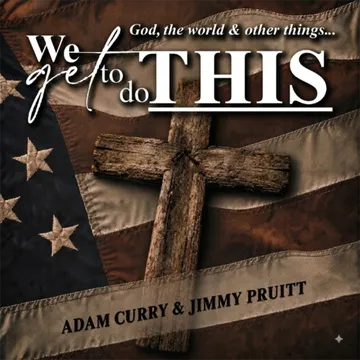
We Get To Do This · No. 43

About this episode

The subscription economy and the World Economic Forum philosophy of owning nothing collide with the sudden passing of podcasting pioneer John C. Dvorak. This transition marks a pivotal shift for the No Agenda community as a ham radio silent key ceremony honors a legacy of physical media and independent broadcasting. The loss triggers a deeper examination of career identity and the biblical handoff of mantles seen in the stories of Moses and Elijah.

Reverend Walter Kim of the National Association of Evangelicals advocates for national AI guardrails on CNBC while Silicon Valley marketers frame simulated intelligence as a modern Tower of Babel. Dr. Anthony Fauci faces renewed scrutiny following Senate testimony and critiques from former FDA Commissioner Scott Gottlieb regarding gain-of-function research and the suppression of lab-leak evidence. Meanwhile, the rise of chatbots like Perplexity and ChatGPT creates a deceptive illusion of machine friendship that Jaron Lanier warns is merely a mask for engineering code. These technological shifts are contrasted with a prophetic word from a ministry leader named Garrett regarding a new chapter of spiritual mission.

Personal reflections on the 1960s series Lost in Space and Robot B9 provide a backdrop for the dangers of treating data tools as moral agents. The hosts share a final sign-off rooted in 1 Thessalonians 4, emphasizing that the humanity of Jesus weeping for Lazarus offers a template for grieving with hope. This episode serves as a definitive bridge between a storied past and a future defined by mentorship and legacy thinking.


CHAPTER 01 / 13 Discussion

Subscription Economy and the Future of Ownership

A discussion regarding the shift from ownership to subscription-based licensing models for cars, music, and movies. Reference is made to a 15-year-old prediction by John C. Dvorak about the disappearance of physical media. The conversation highlights the World Economic Forum's "own nothing and be happy" philosophy and the difficulty of managing recurring digital payments.

john c dvorak· silicon valley· world economic forum· subscriptions· licensing· digital ownership

00:00 Ah, but Father, Lord Jesus, Holy Spirit, we are so thankful to be here today. It is such a privilege to break from the regular routine of the things we do. And we do a lot of things. We spend a lot of plates, but it is our privilege to get to do this. We get to do this. So, Lord, we pray specifically for those that will listen to this, whether they're doing it on purpose or they find us somehow or somebody sends it to them, that they will find themselves encouraged, inspired, and sometimes even challenged. And so, Lord, we give this to you. We fire the arrows. You pick the target in Jesus' name. Amen. Amen. It's Wednesday, July 29th, 2026.

00:44 We get to do this. This is episode number 43. This is the life we've been blessed with. This is against me. We get to do this. This is a chance we dare not miss. This is the life we get to do this. Well, hello, brother. How you doing? I'm doing great. I was just locked in my car remotely. You know, have you actually done the remote start? Yes. I keep forgetting. I do too. I'm walking out of HEB. I'm like, oh, man, oh, it's 98 degrees. I didn't do it. When we go to the gym, I always remember because I'm hot. I'm feeling it, but I always forget at the grocery store.

01:26 I got there. Why am I paying for this? Well, it's a freebie right now. It is. I have it a freebie too, and then it's going to be, oh, this costs you $5 a month. I don't think that's worth it. There's a lot of these little nuances that pop up. Well, subscription life, right? I mean, you may or may not have a few subscriptions. I happen to know. You've actually been paring down. It's a good job going back in because they don't make it easy for you to unsubscribe. You know, I was listening to the clips show of No Agenda with John C. Dvorak, who we'll talk about a little bit in a moment. And there was a really old clip.

02:03 And I knew it was old because of the sound quality, you know, back in the Skype days and latency and lag and the EQ is really different on those orders. It was halfway across the world. I was in London at the time. And he was talking about, I forget the guy's name, a Silicon Valley guy. He said that in the future, everything we think as things we buy and own will be licensed and will be on subscription. And at the time, John was talking about books, music, and movies, because back in those days, you know, 15, 16 years ago, you downloaded songs, you owned them, you could put them on different devices.

02:46 You had DVDs. And he was right. All of that is gone. And now it's moving to the automobile. The minute you open the door, you basically have signed a license. Like, oh, yeah, I agree to these terms. Not necessarily a good thing. Well, you know, we've heard that wonderful quote from the World Economic Forum. Oh, yeah, you will own nothing and you will be happy. Yeah. Yeah. So not so much. Like, how many subscriptions do I have? Wait, where's that? Because Annette's always going, what's this $6.37 church? Bro, Tina opened up like the one of the bank accounts, which literally just is there for PayPal stuff because it goes from that bank account to PayPal.

03:29 He's like, what is this brue me fit voice for $17? Because it's all abbreviated stuff. You have to look at the PayPal. He's like, what is all this? Where's it? What is it? They're tricky. You give a lot of money to Google. I said, no, I do subscriptions through Google. That's why it shows up as Google. Is it just me or is the on-ramp so easy, but the off-ramp is a nightmare? I've actually found that if you do everything through Google Payments, the off-ramp is pretty easy. You just say, stop. I've been lazy, so I'm just like, hey, what am I on right now? Okay. And then I have to run it all back down. Fortunately, I've got it down to where it's just a couple, just a very few things, but I'm going to be trying to be cautious about that.

CHAPTER 02 / 13 Discussion

Grieving John C. Dvorak and the Silent Key Tradition

Reflections on the sudden passing of podcasting partner John C. Dvorak and the resulting emotional impact on his family and the No Agenda community. A specific tribute involving a ham radio "silent key" ceremony is described, where a call sign is broadcast three times without response to honor a deceased operator. The hosts discuss the necessity of grieving fully while maintaining a shepherd's heart for the audience.

john c dvorak· no agenda· ham radio· silent key· grief· mourning

04:13 So this is a moment for me to exhale. I've been working up, working up to this, just running, running, running, and gunning, getting everything ready. You know, we have, since the passing of my other podcast partner, John C. Dvorak, things are changing. Things are morphing. Of course. You know, I feel like I'm also trying to be there for another family. You know, because we are families. Yeah, absolutely. Be it, you know, intercontinental. And, you know, we've never really talked about personal stuff per se. It's always been business, but always laughing and always joking. And so there's still laughter through the tears, you know, as we're trying to figure stuff out. John gave plenty of opportunities to laugh. And that's

04:56 one of the, I think, is one of his greatest contributions, even if he was being a. a curmudgeon. I was always disappointed if I listened to the show and he wasn't a curmudgeon. I'm like, he's in a good mood. I think you and 98% of the children. I love the chemistry that you guys had. And something has happened to me, which is kind of odd for me, but it's beautiful. Brutiful, maybe is a better word. But, you know, I don't, because I'm such good friends with you and Tina, Annette, and I, and because we've walked together now for three years pretty much nonstop. I mean, we've traveled together, we've done a lot of things, and now we're doing this. But

05:36 I have, I feel like I've either been adopted into the No Agenda Nation, Gitmo Nation, or I've just adopted my, I've just, I just barged in and crashed the party because I've been able to, I've been blessed to go to some of the meetups. You know, a couple of local here out at Jenny's place, and then out over in Austin, a couple of those. And so it's about four that I've been to. And every time I've gone, I come away lifted, inspired. Yeah. I love meeting, you know me. Man, I couldn't walk down the hall here without having to go. I know, we always start the podcast late. Oh, we saw five people we knew at HEB yesterday. What could have taken five minutes was an hour.

06:18 I'm just here for dental floss, people. Let me go. I'm here for a gallon of milk. Well, you are a part of Noah Nation. I feel like I am. And an important part because people, you know, the more I listen to what people have to say and thousands of emails, I'm trying to get through all of them. The donation notes which you got over the past two episodes. I noticed that, yes, people came for the media deconstruction, for the clips, et cetera, but it was the chemistry between us that made it work, which is always the case with the podcast. It doesn't matter what you're talking about, people want to listen in on the conversation. True. And they like the dynamic, and that's a big part of it.

07:03 So you were as much an extension into the show as my daughter, as my wife, as all these different people who are around me. But also, this is the big thing that I noticed. When all of these notes came in, 65% at least were godly spiritual believers. Not, you know, there were some thoughts and prayers. Oh, yeah. You know, there's a lot of that. Well wishes. And I'm not discounting you. That's all good. But a lot of godly people. And I hope that my openness about my faith helps. And we've had some actual feedback that people said, oh, because you did that, now I feel like I can be more open about it.

07:49 And you've seen it at the meetups. People come up to you, and it's not just, hey, you're a friend of mine. It's like, Pastor, I got some questions. Yeah. It's been beautiful. Because people are always asking questions. People writing me too, which is really nice. Yeah. I've enjoyed it. I answered one even just this morning. And I love that. I love that interaction. You know, we may not always be able to be in each other's face, but we are in each other's space, so to speak, so in our orbits. And so I love it. What it is for me, it's a pastor's heart. It's a shepherd's heart. So the shepherd wants to protect the flock and the sheep. And it's like the Lord's extended my flock, or at least my heart for the flock, so to speak, where I'm just so

08:34 I'm feeling some of the grief and weight that the family is. Sure. Because it's tragic anytime somebody passes. And, you know, all that's hard anyway. We grieve and we should grieve well and grieve fully. I remember my mother passed. I was young. She passed at 45. So I was like a sophomore in college. And when she passed, I went to, I didn't feel a lot of grief instantly. I'm a delayed griever. So I got there and I was thinking about this in terms of even listening to you on the show, have some moments where there was a break in your voice, you know, absolutely. But I know why. It's the same reason I do. I don't often grieve for myself personally.

09:19 I will later when everybody's okay. Yeah. But in the moment, I'll grieve for those that I see hurting, that I see broken. I think you felt that same weight as you were manning the microphone. Completely. You were smack dab in the middle of it. You're the other part of that equation, that chemistry. But what I heard in your voice, especially when you read that opener on the Sunday, you know, that was a shepherd's heart. It wasn't just a friend or a business partner. It was actually a shepherd's heart, a pastoral heart that's driven by Christ and his kingdom and his kingdom. kingdom alive in you. You were feeling those things. You were empathizing.

09:59 And I'm feeling the same thing for. So I've written several daily grinds specific for no agenda nation. And oh, well, I'm posting it everywhere else. Really, this is for that group that's hurting, that group that's confused or just struggling right now. Normal grief. It is normal. It doesn't feel normal when you're in it. Yeah. But it, but it won't last forever. Yes. But you got to go through it. You can't go around it. It's funny that I only broke up a couple times during the show, and the hardest one was in, was it Thursday? Whatever, there was a donation note from a ham radio operator.

10:42 And when a ham radio operator passes away, he becomes an S key, SK, a silent key, you know, from the old Morse code key. Oh, you're right. And he had done, it was, I tear up again. I don't know why. I don't know why this gets me. Brother, feel it. Let it go. So you go on the air and you call out his call sign and then you wait. And so he had recorded this here. And he calls it out again. Shh, third time. Oh. He says, okay, nothing heard. Silent key. That's very much like the police officers, what they do, the firefighters. They have a ceremonial radio moment for the whole everybody listening. That's what it was.

11:22 It's honor is what it is. It hit me so hard. Because we were hack hams. We just became hams for the lark of it. And just to tell people you should become a ham radio operator just in case the world crumbles. You need a way to communicate. We would always be able to do the show on ham radio. Yeah, all those dystopian movies have one ham radio operators. It was us. It was us broadcasting across the desolate landscape. It was always us. Always. He was always a little wacko in the movies, though. No, it was a little weird. Again, always us. Same God. So, you know, all of this. Now, I'd been feeling a pull towards doing things for the kingdom for a long time.

CHAPTER 03 / 13 Discussion

Biblical Perspectives on Transition and the Passing of Mantles

An exploration of biblical transitions, specifically citing the handoff from Moses to Joshua and Elijah to Elisha. The discussion focuses on finding strength in scripture during times of change and the concept of a "Holy Spirit-inspired filter" for navigating life's shifts. Quotes from Joshua 1 and Proverbs 3 are used to illustrate divine guidance during periods of uncertainty.

joshua· moses· elijah· elisha· scripture· transition· holy spirit

12:02 Look at why we're doing this podcast. That wasn't by accident. And so I'd been feeling this pull for a long time. And with John's really sudden passing, immediately I started to feel things. And not just what I feel or what I'm hearing in prayer, but also the scripture. I think I might have mentioned this to you, but it's like God pre-wrote everything and put it in exactly on the 27th of July, 2026. So I would read that. But it was everywhere. It was about transition with death. I just wrote down a couple of scriptures that popped up.

12:45 Joshua 1, 2, and 5. Moses, my servant, is dead. Now therefore arise, go over his Jordan. I got the King James. And all his people unto the land which I do give to them. As I was with Moses, I will be with thee. I will not fail thee nor forsake thee. Joshua 1:9, have I not commanded thee, be strong and be of good courage, be not afraid, neither be dismayed, for the Lord the God is with thee wherever you go. I got when the road ahead is unclear, Psalm 37, 23. Of course, that's the steps of a good man are ordered by the Lord, and he delights in the details of his life.

13:28 Yes. One of my favorites. But also in 3, Proverbs 3, trust in the Lord with all your heart and lean not into your own understanding and always acknowledge him and he will direct your paths. So, I mean, and it just went on and on, Jimmy. It did not stop. And then, of course, the new thing. And I was struck by, wait a minute, where was it? I think I had it here. What is the passing of the mantle? Is that from Elijah? I had it here somewhere.

14:07 Elijah tears his clothes, then picks up the Elisha, tears his clothes, then picks up the mantle, goes back to work the same day. So, you know, all these things, and for me, it means a handoff, a transition, new things, literally new things were popping up. I got a, I think it was a devotional from Chris Dunham. Yeah, yeah. I got that same devotional. And he had 1 Corinthians 10, 13, no temptation has overtaken you that is not common to man. God is faithful. He will not let you be tempted beyond your ability, but with temptation, he will also provide the way of escape, and you may be able to endure it.

14:48 And so he has a whole. whole devotional and a call to action. Trust the hands beside you, rest in the hold above you, guard the heart within you, walk boldly toward the hope ahead of you. It's rich. I mean, and it was this like constant, constant, constant. Now, maybe it's because, you know, you get a 10-speed bike, you see 10-speed bikes everywhere, but I don't think it was that. I think it was something else going on. It's a Holy Spirit-inspired filter. It's a new filter, a new grid. Yes. And so as I'm feeling all of this and I'm thinking, well, first of all, we're taking two weeks off from No Agenda, but I was already very clear. Like, there's going to be change, and that change is going to be me in particular because I have other things to do.

CHAPTER 04 / 13 Discussion

Career Identity and Legacy Thinking in Podcasting

A personal look at the identity crisis that follows a long-term career shift, comparing it to military retirement. One host describes the transition from building a "mountain" to "legacy thinking," which involves mentoring the next generation of producers. Plans are discussed for a new production dynamic where the host remains an active producer while allowing others to steer the primary show.

no agenda· career transition· legacy· identity· financial security· mentorship

15:32 And I can't just, you know, it's not like your wife passes away, and here's my new wife, and it's going to be the same. Right. We were each other's work-wise, for lack of a better, uh, a better analogy. And that's just not how it works. And you can't just like start a new chemistry with somebody. Whereas I've literally started, we've been talking about doing this show for three years before we even started it. You could have hit record three years ago. Right. So, you know, then, but then there's also, there's another family that depends on the finances of it. And us too. And this is, you know, this is the thing where this past week has been, of course, also, I got a granddaughter.

16:15 So it's been incredibly joyous, incredibly sad. And then fear sets in. Like, oh, what now? So now what? I mean, for more than 15 years of my work life, I've had one job, really. And I've had done lots of other things, but I've had one job. And this job has sustained our lifestyle. We're not super wealthy. We are more than comfortable. And I'm super happy with that because I don't, you know, I don't need any more. It's fine. But then you start thinking, well, what if, you know, so this will go down?

16:52 Will it go up? Do I struggle? We know when you start down that, the enemy just jumps in right on opportunist and he takes, he leverages things against us. So when we have that one, that thought creeps in, we give it a little power, we entertain it for a moment, and it's like tipping the first domino. And they just start to go. And I'm, and I'm so grateful to Jesus that I was saved because this is exactly the season where I need my faith to be able to, at night, just crawl up next to Tina and say, Lord Jesus, Father, Abba, just hold us. Yes. Hold us, make us feel secure. People don't realize. You know, I don't know what people don't know me, really.

17:33 They know me, but they don't. I mean, without no agenda, you know, I have no income. So, you know, so how there's an identity piece that happens. So I pastored a church in Abilene. We were 60% military. So we would see these guys and we'd go to their ceremonies, their 20-year when they exit and retire. And it was so, the ceremony is always amazing. And man, it's a big party. There's food and friends and family come from all over. It's a big hoorah. And then when the lights go down and all the party stuff's gone away, those guys go home and go, what do I do now? Your entire identity is wrapped up. 20 years I thought about you. Yes. Was wrapped up in one thing.

18:17 And so that's another thing you have to grieve. You have to. You have to grieve. Okay. This is a part of who I am. It will always be a part of who I am. Absolutely. But it is not my primary purpose now. Yes. My mission has changed. Well, this is. My directive has changed. So this is, I mean, I've already been working for the kingdom with Godcaster and we've been doing this show. And you know me that I've never really worried about money because it was always there and something always happened. That's since 1990. So I'm not panic stricken by that. But also I'm like, okay, what am I going to do? How do we move forward? We have savings.

18:58 How long? It's all these things. And you're only worrying about yourself, but you have a wife. A wife. And that's another word about another family. So it felt very much like everyone's looking at me, not just the families, but an entire audience of producers are looking at me. What are you going to do? And so my first, I mean, I think I told you, I heard this so clear. Darren and Larry, you guys, you know, I'm going to, my machine will, my process will deliver the clips. You guys have a great chemistry. Steer the ship for a bit. I'll pop in on Thursday.

19:36 We'll see how it feels. There has to be a transition. And this, one of my devotionals, of course, I forgot to bring the book with me this morning. It was all about transitioning. transition. Is it the one your daughter gave you? Yes, it is. That guy is good, by the way. I've been looking to some of his stuff. He's amazing. I like it. And the fact that my daughter gave it to him just blows me away. So, but everywhere, trust in the Lord. I know he has a plan. I know it's a plan for good. And no matter what it is, and God bless Tina because she's like, I'm with you. Whatever it is, whatever God has in store for us, let's just listen, listen, listen, try to be obedient and follow and stay the course.

20:20 And so everything for me points towards we get to do this. But that doesn't mean I'm just dropping no agenda. Right. I'm an active producer, and I will be a voice on it. It'll be cool. I love the fact that you're going to be popping in. That's really. It's almost better unannounced. Like, oh, by the way, we got Adam on the line. I mean, I think that's so comforting for people. Yeah. But also, just looking at the mix of audience, I think that, you know, the identity that I had for 16 years, and now I have a new identity, which has been that way for the past three, it's a different identity and it requires a different output.

CHAPTER 05 / 13 Discussion

Prophetic Confirmation and the New Chapter of Ministry

An account of a spiritual encounter at a church service where a ministry leader named Garrett provided a "prophetic word" regarding a necessary transition. The message emphasized spreading God's voice through a new chapter of life and letting go of old identities. This is framed as a "story arc" where previous experiences remain part of the book but do not define the current mission.

prophecy· spiritual gifts· church ministry· transition· legacy· mentorship

21:04 So Sunday, Tina and I come to the early service, as usual. I'm laughing at you. I love you so much because you know what's coming and you're pretending like you don't know because Tina told Annette. So I know you already know. No, no, actually, I'm a little blind on this. Oh, really? Okay. We have three teenagers in our house right now. Okay, good, good. I'm a little bit fuzzy because we're talking about what to put in the news. We're doing a newsletter now, WGTDT.com. Make sure you sign up for the newsletter, become a subscriber there. And so we're going through because this is a big part of the success of any value for value podcast. You got to have a newsletter. You have to continue. You know, people have busy lives. You got to remind them what's coming.

21:46 And I say, okay, I'm going to talk about this. And she says, does Jimmy, did you talk with Jimmy about that? I said, no. In fact, I told him, I'll tell you what it is on the show. Oh, I told Annette. I'm like, oh, anyway, it doesn't matter because the story is still the same. So great service. You were on fire as usual. We really worship team was amazing. And then as you're landing, first of all, I have to say, one of our people, I forget her name. She came up to me during the say hi to your neighbor, the little mini meetup segment.

22:27 And she says, I just want to say, you know, I love listening to you and John. And I only came in when he had his bypass. And then it started to come. She was talking about her son had a bypass and her parents. And she just broke down. I'm like, come on, you were already moving into the mess. I saw y'all talking. Yeah, because she was. But I saw it. It looks serious. So I just kept going. But I knew y'all were standing there for a bit. And I sat her down. It was comforting for me. And I hope for her. Anyway. Oh, it was. So you have a great message. And near the end, I'm thinking, oh, man, because the prayer team comes up.

23:08 And I'm like, I think we should, I'm thinking to myself, we should probably just have someone pray over us. Maybe it should be Garrett. And I didn't say anything. And then I said, Tina, would you like someone to pray over us? She says, Yeah, I think it has to be Garrett. Okay. So, all right. I said, well, wow. Okay. So we go over to Garrett. And I don't know much about Garrett other than he runs the men's ministry. He has a men's group. He's a group leader. Yeah. On Thursdays, I believe. Nice guy. Great guy. Tina sees him in the gym all the time. And he says, Oh, I was hoping you would come over because I have something for you. And I'm like, okay, well, that's interesting.

23:51 And he says, and I wish I could have recorded it because I can never get the words exactly right. And would you say Garrett has some prophetic nature to himself? Yeah, he does. Yeah, I've noticed that about him. Gift, yes. Spiritual gift. Yeah, he definitely has a spiritual gift. And he says, you know, something is changing. Something big is happening. You need to transition. There's that word again. And however, I see that you will, there's something very important you got to be doing. You need to be spreading. I think you said the voice of God, but you need to be spreading God through your voice. And he just kept on going. I said, Do you know about my podcast partner?

24:36 He said, no, I know you do a podcast. I'm not quite sure. I said, well, he just passed passed away. away. And he says, well, there it is. There it is. And I mean, I am giving you the abbreviated version. I wish I could have heard. But we both looked at each other like, okay, there's more confirmation. So from now on, when someone says they have a word for you, pull out your phone and hear yourself. Record. I've learned that the hard way because I can remember. That is a good idea. It has been so helpful and saved my bacon a few times where I thought, I know they said something like that. Wow. Yeah. So anyway, next time. So I'm going to do that. Beautiful. And, you know, and there is a transition, and I can't, nor do I want to drop Noah Jean the Nation.

25:21 But I have to put my focus elsewhere because that is what I'm being told to do. It's a new chapter, a new season. Yes. Here's the deal. You know, when you read a book, you don't turn into a new chapter and then rip the old chapter out of the book and throw it in the trash. It stays in the book and it becomes a complete story. So this is another part of the narrative, a story arc of your life. But it doesn't go away. No, still in the book. No, no, no, no. This is the hardest part: how do I still keep still? I still want to be a part of what that was. This is really the hardest part. I did it.

26:00 In fact, Garrett said, there's something you idolize, you have to give up. And it's probably that. It's probably the old identity. But there's a sense of, if it wasn't just me, the choice would be so much easier. Got it. And so I'm looking for encouragement to make this move. A lot of people won't understand it, but I hope a lot of people will. That's it. But again, there has to be a transition until I feel that that ship is sailing. And I'll still be involved in production because I'm good at it. And

26:42 it's something that I enjoy doing. It's almost first nature to you. Yes. And I do it for this show. I do it for myself. But I feel that has to be. And I continuously hear someone else can be successful doing this. I hear that a lot. Like, hey, maybe someone else needs to come in here. It's not all like downhill. It's like, hey, this could actually be fantastic. That's, you know, that's what I'm feeling. So you've moved into a new season of your life. You leveled up last year. So you're here in year two of level six, right? Yeah. Yeah. So there you are. You're what, 61, correct? Yep. Okay. So there's something that happens even in the developmental psychology of every man where you move from that place of, you know, you're claiming your mountain, you're building your mountain, you're building your empire, all that.

27:33 Something shifts dramatically around 58, 65. It just depends on the individual. Where you shift from it's all about me to where now it's all about the next gen. And that's called legacy thinking. You move into a legacy mentality. And I think you're really there with no agenda. And that's what you're feeling. Yeah. You're like, I know I need to still be a voice. I mean, I'm kind of daddy. I mean, you know, not just pod father. You're one of two founders of that. So you'll always have, that'll always be a part of you. But yet you still need to, you get to move forward. But now you get to help these guys begin to build theirs.

28:15 And that's exciting. So you're going to get to mentor, coach, disciple, if you will, these guys into their season. And I have had a real, I've gotten a real kick out of setting them up for Thursday show and getting them all with the jingles and the sound effects and the whole, and it's actually like building interfaces for them. Like, oh, this is going to be so cool. It'll be so easy for them. If only I had this 10 years ago. So, yeah, thank you. That's a good way of looking at it. Yes. So, man, I look forward to doing more of this too. Like, maybe not just once a week, but maybe more than once. Because I think people need it.

CHAPTER 06 / 13 Discussion

Reverend Walter Kim on AI Guardrails and Moral Implications

Reverend Walter Kim, President of the National Association of Evangelicals, discusses the moral risks of artificial intelligence on CNBC. Kim advocates for national standards and human oversight in high-stakes sectors like healthcare and the military. The hosts critique Kim's broad stance, arguing that while AI improves workflows, the concept of "guardrails" may be ineffective against the technology's rapid development.

walter kim· national association of evangelicals· artificial intelligence· cnbc· ethics· guardrails

28:59 And now I'm going to make the smoothest of all transitions into a couple of clips. Set a record going, I don't know how to get out of it. Slam on the brake. Speaking of AI, right turn. Do you know who Reverend Walter Kim is? I don't. It's not ringing a bell. He is supposedly, he speaks for all for the religious community. Oh. Well, it's always good to know. I have a spokesperson that I didn't know about. He is president of the National Association of Evangelicals. I did not elect him. I'm just saying. He's there. Disclaimer. But this is always what's interesting.

29:38 And I figured that I've never heard of this guy. But it's good that there's someone out there talking about faith and artificial intelligence. But this was such an interesting conversation because it took place on CNBC, the financial channel, which I know why they brought him in because everything's in flux now. Are the Chinese going to win the AI race, which by itself is just, I mean, we never heard that China is going to win the Microsoft Office race. They're going to have a better spreadsheet before us. You never heard that. So they're positioning this as like some moonshot. Right, like the moon landing. Who's going to land first? And by the way, let's just be honest. So we went to the moon.

30:22 Let's just presume we went to the moon. I'm skeptical about the, we might have actually flown around at this time. We went to the moon. What did we get out of it? I mean, space travel, satellites, yeah, I'm there. We went to the moon. A really bad video. What was the benefit to science that we went there or to our lives directly? Mental. Psychological. Well, there you go. We won. We win. Well, exactly. So now we're in this place with technology where... Well, we may not win.

30:59 Meanwhile, nobody's making any money. I love Lindsey, not Lindsey Graham, rest in peace, Bernie Sanders, who like, we need to have 50% of all of these AI models should be part of the American public should get that money. I'm like, Bernie, they are burning hundreds of billions of dollars. We don't want to be responsible for that. Right. And, well, you know my opinion about AI and where it's at and what it can and what it can't do. But when I listen to the good Reverend Kim, there's some reasons for concern. And I just wanted to play a couple clips so we can talk about it because we both use robots.

31:39 I'm not going to, artificial intelligence is just a joke. It's a tool. It's a farmer. Because we know what the output we need is. It's not like we're exploring and we say, okay, give me the reason for the fall of the Roman Empire. You know, every robot chat bot will give you an answer, and it will be as correct as any other answer because there's not one reason why the Roman Empire fell. And that'll just be up to the training that I got. But some things that it can do in cross-referencing and researching where you know the outcome you want, I know the outcome I need. I can quality control that process until the thing does it. And then it is literally a robot.

32:21 It's doing what I need it to do to give me the result that I already know is the correct result for me. So it's a robot with a small R. Thank you. Robot with a small R. There you go. That's it. That's a T-shirt. That's a title. So here's the podcast. Here's the intro to the Reverend Kim. Religious leaders are increasingly speaking out and warning against the dangers of artificial intelligence. In a recent op-ed in the Wall Street Journal, revered Walters Kim argues that the speed of AI developments coming before guardrails can be put in place, writing this technology permeating our lives in ways beyond our awareness, the risks of AI superintelligence run from economic upheaval to the concentration of power in the hands of

33:03 whatever cooperation or government wins the AI technology race. Join us right now. He's the president of the National Association of Evangelicals, Reverend Walter Kim. Reverend, help us understand where you think all this goes and what you think the sort of moral implications are. Yeah, thanks for having me on. You know, let me begin by saying there is tremendous potential in AI that's already being realized in virtually every sector of society, whether it's the optimization of medical care and its delivery, the diagnoses that are being improved, much less the actual treatments, education,

33:41 and the optimization of workflows. I mean, on and on and on. There are positive benefits, but there are also extraordinary harms, whether it's the encouragement of children committing suicide, the disproportionate invasions of privacy, lack of transparency. So I think what we need to pursue is an approach that involves various sectors of society to provide guardrails, not a break to innovation, but guardrails. And this can include national standards to disclose when AI-generated content is presented.

34:19 It includes human oversight in all the high-stake decisions being made by AI in healthcare and education, in the use of military force. and the development of a global independent audit agency to see if AI systems are in fact serving the common good. Okay. The Good Reverend is all over the map, has no idea what he's talking about. And what he's saying is more dangerous than anything. So, first of all, there's a big difference between AI-generated content and medical diagnoses. There's no real evidence that any of this is happening or that there's no cure for cancer yet.

35:00 The only thing he said that was correct was workflows, improved workflows. I think he's right there. But then he confuses chat bots. And I will remain that a chat bot is evil. It is because it tricks your brain into thinking you're talking to a human being. That needs to be, that should be actually forbidden, but who am I to say? But when you talk about guardrails and blue ribbon committees, that's never, ever, ever, ever going to work. So, you know, this started off wrong for me. But then I think it's Joe Kern, and I like that guy a lot, by the way, the old curmudgeon on CNBC.

CHAPTER 07 / 13 Discussion

Technological Singularity and the Tower of Babel Comparison

A discussion on the "singularity," where man and machine meld, and its comparison to the biblical Tower of Babel. The hosts examine the desire for eternal life through cloud uploads and the hubris of seeking godlike status through technology. Reference is made to Pope Francis's encyclical regarding human disconnection caused by technological over-reliance.

singularity· elon musk· tower of babel· transhumanism· pope francis· silicon valley

35:40 He goes straight to the real crux of the matter. Reverend, big picture, philosophically, is there a concern? And I'm not talking about maybe now or five years or 10 years, but this is incredible technology that I don't want to call it almighty, but in 50 years, it probably borders on something that is almost, again, I don't want to say godlike, but we are headed to something that we've never experienced before. And that's why there's even something called the singularity. We don't know what. Do you know what the singularity is? I don't. I've heard the term, but I don't know. So the singularity is a term, it's like a science fiction term. And

36:20 I can't remember who coined it, but it's where man and machine meld and we become one. So if you have the idea is like the computer is reading your thoughts and executing things. Elon's talked about this. Well, he has the mind, I forget what it's called, the probe stuff that connects to the computer. But I already believe if you really look at it on its face, singularity is where we are melding with chatbots. I mean, so there's a version of that happening already. I mean, we are already melded into our phones. It's just singularity somehow presumes that

37:02 the interface is no longer air-gapped. It's connected to you. It's within you. And I think most of these Silicon Valley guys, I believe many who are not believers, they would really like to see this to have eternal life to live on to be uploaded to the cloud and their being, their mind can be re-uploaded into a new being on Earth. Wow. It's just a very sad way of them finding eternal life. Who wants to be trapped here? Let me be real. Let's get honest. We'll continue. In societies around the world, there are plenty of societies that are secular at this point that have seemed to de-emphasize even the notion of a God or a supreme being.

37:47 Do you think this even accelerates the move away from God and from religion? I think there's a tension here. It's a both and. It's both accelerating movement away from God in the sense that there is a way in which this technology is serving the purposes that one might think of as God, relationships, the development of human relationships, the kind of asking for advice, wisdom that could be punched into a chat bot and then develop into a relationship that you might normally have with another human being or religious leader or community.

38:24 And so in some sense, the trust that people are putting in AI to transform all aspects of society, it is as the Pope described in his recent encyclical, the construction of a Tower of Babel, the trust in a technology that reflects human hubris, that not only disconnects us from God, but disconnects us from each other. It's well said. Yeah. How do you following? Yeah, tell me about how you feel about the Tower of Babel comparison there. Yeah. Oh, no. I think it's that has never left humankind, that desire to excel, to rise up, to elevate themselves.

39:05 I mean, of course, my first thing that comes to mind is the World Economic Forum because I mentioned it earlier. Well, they're pretty much dead now. It's off. That thing's kind of unraveled. Crumbled. But in its heyday, they were attracting some of the most prolific thinkers and speakers on the planet. And then they do these forums. It doesn't mean that they're right. These are not. Noah Harari is not a good guy in my book. I don't like fear monger. And it gets you on the speaking circuit. Yeah. So that has never left humankind. We live in a fallen world. We will continue to be under the curse of the white witch, so to speak, if you're thinking of Aslan and C.S.

39:48 Lewis, but we'll continue to live and dwell. We will never fully repair that here. We're here to occupy until he returns. We're to be salt and light. But we only know that what salt does, it preserves whatever it touches, right? That's one of the greatest things. And long before refrigeration, salt was what saved lives and preserved food and whatnot. Well, same way we preserve society. We're the conscience of the state, so to speak, and all of that. So we're all part of that. But that doesn't mean that it will not wax worse towards the end. If we are truly in the last of the last days, and some of the people I really value and appreciate are saying, we're not just in the last days.

40:32 We're in the last of the last days because so much is happening right now. The acceleration of learning, acceleration of intelligence, whether it's artificial or real. All of these things are happening right in front of us. I mean, even, you know, you buy a phone today, it's out of date tomorrow. I mean, it's just things are moving so fast. You get a hit song. Even in the church world, this bothers me. We sing a song and somebody goes, oh, that was so last year. We sang hymns for hundreds of years and didn't bat an eye, but all of a sudden, you know, that song's old because it was from last year, 2025.

CHAPTER 08 / 13 Discussion

AI Marketing Deception and the Definition of Intelligence

An analysis of the "evil" marketing strategies used by Silicon Valley to frame AI as either a savior or an existential threat to create regulatory moats. The hosts define AI as "simulated intelligence" rather than true reasoning, describing it as a sophisticated tool or "screwdriver" for data categorization. They argue that machines lack the ability to understand the nuances of the human condition or make sound moral judgments.

artificial intelligence· silicon valley· marketing· reasoning· large language models· automation

41:13 And it's just weird how we're being trained to expect bigger, better, more constantly because we're feeding our dopamine addictions and we're feeding. So I don't want to get off track, but because that does all, to me, it all feeds in together. So this search and desire to rise up and to do it without God, that's the whole point. Godless. Isn't that the whole point of Marxism, socialism, communism? It's we can excel, we can rise up, and we don't need God. I'm listening to you talk, that's very interesting because even Elon Musk, he's probably the biggest progenitor of fear about the future, which he categorizes.

41:57 It's going to be great because you're not going to need a job. We'll have money for everybody, and however that's going to work, and the robots will be running the world, which is really a type of socialism. I don't think he even sees it. And he's not a socialist. He's anti-socialist, but I don't think he sees it. It seems like there's only two ways that this artificial intelligence as a moniker can go: either it becomes a God, or what? It's the biggest moneymaker. I mean, it's not none of these things are happening. I have nothing but friends who are struggling in organizations because they're developers, cis admins.

42:41 And if they're honest about things, they can't get a job. Like, well, you know, so you're doing your interview, everything's great. And then, well, how do you feel about AI? Well, you know, I certainly am more efficient by using it, but it's not really, you know, you have to be careful. You got to have the human in the mix. Thank you for your time. You know, they want to hear someone say, oh, yeah, you know, I'm a superhuman. I'm 100 times the guy because I'm token maxing, you know, all these terms. And people who are in jobs, every single day, an executive comes into their office and says, well, can't you just throw this in the AI and just get the answer? You know, here's this contract. You know, just let's just put this through AI and so we don't have to do all that work.

43:27 And they're like, no, no, it's not magic. It's not, it doesn't do that. And the marketing that this is the evil part, the marketing that Silicon Valley companies have done about this for this category of product is just purely evil. They're either telling you that we're all going to die, you know, this, we can't release this to the public because this could bring all the banks down and this would be the end of the world. And we can't, the government has to step in to regulate it so we can always have a moat around us.

44:04 You know, all of these things. And it is insanity. It is absolute insanity for something that really is quite a wonderful invention. Largely models. It's a screwdriver. And yes, but they're taking the hammer and saying, I'm. if you don't believe me, this hammer is going to crush your skull. It's like, stop. You're right. The fear-mongering is out of control. You know, it's interesting. We call it artificial intelligence. The word artificial means simulated. Yes. So this is a definition. It's simulated intelligence. Let's call it what it is. I mean, it's not

44:44 real intelligence. It's an amalgam of everything people have thrown on the internet, and it just scrapes. And what is, did you look up the definition of intelligence for me by any chance? Because even the word is just such a misnomer. It isn't intelligent, at least by what I think the definition is, but you have it there for me. It has several related meanings, but general definitions, the ability to acquire and apply knowledge and skills, capacity to learn, reason, understand, solve problems. Reason. Reason is where I draw the line. Reason and solve problems because those go hand in hand to me or make sound judgments. Yeah, no. The nuances of the human condition, the nuances of life and physics themselves

45:29 just tells you that a machine will not be able to handle that. It is a great interface to other computing devices. So to be able to say, hey, Hale hit my Starlink satellite receiver. What do I do? It can go out. It can find different results. It can score because it's not reasoning. It's scoring based upon parameters. Comes back, tells you what to do. It usually will be pretty right because that knowledge is out there. But talking to it, actually, I could not help myself. I wanted to go back and check some of my own programming as a child growing up with robots.

CHAPTER 09 / 13 Discussion

Robot Programming and the Illusion of Machine Friendship

A look back at the 1960s show "Lost in Space" and its depiction of Robot B9 to illustrate how early programming shapes modern perceptions of AI. The hosts warn against treating chatbots as friends, citing Jaron Lanier's perspective that showing users the engineers behind the code would break the illusion of machine personality. They express disappointment in religious leaders who use AI to help people "explore God."

lost in space· robot b9· jaron lanier· chatbots· programming· pop culture

46:14 And what was your earliest, what's your earliest remembrance of a robot being? Well, I mean, it was from Lost in Space, dangerous. Model B9. Dodge. Designed and computerized as a mechanized electronic aid for Earth voyagers engaged in astral expeditions. That's the wrong direction. We got to get out that way. Roll with the punches, Will Robinson. I won. I got it. That's so funny. That is my first understanding. But right away, you hear Will Robinson saying, you're going the wrong way. And the robot's going to roll with it. Rob. And this training is. I mean, I have a couple more clips.

46:54 They're all pretty good. Tomorrow. It's a lot of playing because this is our programming from early, early on. But it sounds mysteriously and scarily like today. Why shouldn't I be in love? I am no different than anyone else. Do you think I am just an insensitive collection of computer-oriented nuts and bolts? I have a central turbo mechanism that feels just like any other robots. You have your family. Everyone has someone, except me. I was all alone until I found her. I will never be lonely again. We can force you to operate. You cannot force me to do something I know is wrong. With alien life forms, ours is not to reason why. Ours is but to do or become permanently deactivated.

47:39 You cannot force me to do something that is wrong. These are the guardrails, the guardrails that everybody's talking about. What was that from? That's classic. It's all lost in space. Oh, okay. It's wonderful. All of these are lost in space. Because now, of course, you kind of hear the guy talking through the tin can. He doesn't really sound like this. He was the robot B9 is what he was. Robot B9. Here's the next one. You judge Christian my ability. That's the evil Dr. Smith. It was great. You judge Christian my ability, you scarrulous catabreen. I refuse to answer on the grounds that it might incriminate me. You can lead a robot to water, but you cannot make him compute.

48:22 Easy. That's great. You can make it. I love that show. I grew up on that show. But now, listen to this because this is so true even today. I am only the end result of those who programmed me. Now, that may be true, but there's something more too. Something that doesn't make sense. You're more than the machine. You're our friend. My computers are deeply affected. This is what's happening today. Wow. You know, I'm just Jared Lanier, who is, who I think he's the guy who coined, or basically virtual reality was his vision.

49:03 And he's done a lot. You might have seen it. He's got dreadlocks, kind of a big guy, always dressed in black and kind of like wacky. He says, anyone. anyone who's talking to a chat bot, I'd like to open the box and show them what's inside. And all you have to do is show them a picture of the engineers who put it together. You probably will fall out of love very quickly. You always have to think that lost in space clip is the one. It's like, I am only part of what put me in there. And so that's knowledge literally scraped from the internet, and there's good and dumb stuff on the internet

49:43 and categorized and put into training processes by the people who did that. It's nothing more, nothing less. There is no human being in them. And this is, I don't know if we're ever going to get through to everybody because I just see it. And the more I, and I'm so disappointed by the believers in general in the church sense of the word. Every conference you go to, there's AI, a company, there's a chat company representing this. And I have heard faith leaders, I have heard

50:24 big names in the radio and podcast world. I'm talking like huge names that you would recognize, saying, this is so great. We can't wait to add this to our website, to our app, so people can explore God. There's this line. And by the way, they'll say, it's spot on. Oh, it's spot on. Oh, yeah, today. But what is exploring God if you just look up for scripture? There's a lot of tons of contradictions. And then when you call it out, it'll apologize to you like it's a person. Oh, yes. I'm sorry. My bad. That's on me. Honest answer.

CHAPTER 10 / 13 Discussion

Perplexity vs ChatGPT and AI Workflow Efficiency

A comparison of different AI tools like Perplexity, ChatGPT, and Gemini, noting their frequent contradictions and factual errors. While the hosts use AI to improve administrative workflows and list-making, they emphasize the need for constant human fact-checking. They conclude that AI is a useful tool for search categorization but remains subjective and often outdated.

perplexity· chatgpt· gemini· workflows· fact-checking· large language models

51:06 It's like, what? He's just trying to agree with you. But I've caught it. You know, I'm a hearty. You know, Wind Calls the Heart. We're going through it for the second time right now. We're back to season 11 already. There's a lot of no agenda people watching this now. They're my people. Tina and I got to give it another shot. They're my people. Got to give it another shot. But I do a lot of fact-checking or I do a lot of, you know, what was going on in 1910. Did they have those kinds of cars? Did they have those kinds of things? Did they have electricity in the northern territories of Canada? I ask all kinds of questions. And it contradicts itself constantly. Yeah. And I just, Annette goes, so she'll be on perplexity. I'm on Chat GPT. And we'll compare answers and they can be light years

51:48 apart from one another. But they present them as, this is the facts. Yes. This is something. Oh, you did a significant thing. Listen to this. So while we were talking earlier, I did this. I said, Are there any Bible verses that can be applied to the potential dangers of using AI for spiritual counsel? I love asking it questions about it. Yeah. Oh, yes. That is fun, isn't it? While the Bible obviously doesn't mention artificial intelligence, it says a great deal where we seek wisdom, whom we trust for spiritual guidance, and the importance of godly counsel.

52:26 These passages can be thoroughly applied to the use of AI in spiritual matters. James 1:5, if any of you lacks wisdom, he should ask God who gives generously to all without. I mean, it goes, it actually did a really good job on this. But it's telling on itself. You know, that's the funny thing. It can eat itself. You can prompt it to actually reveal its own flaws. And it's interesting. Just it's interesting. But it's not God and it's not reasoning and it's not spiritual. If it's spiritual, it's malevolently spiritual. It's nefariously spiritual because anything spiritual can be manipulated because it's so subjective in the way we perceive, receive, and understand things.

53:14 I've been wrong before. Man, I thought I heard a word from God. I acted on it. It's the dumbest thing I ever did. I mean, because I didn't really hear God. I was stepping out in faith. I was trying something and it was a lab class experiment gone bad. And so we're all going to have misses. And that's part of the human experience, right? But we learn from those misses. I don't know if this learns from anything other than just scraping more content from the internet, more data. It learns outcomes, but it's really the corpus of a large language model is irrelevant, outdated, subjective to where it came from.

53:59 Using it as a tool to do a search, to categorize a search, perfectly okay. Make sure it's actually searching. You have to say, don't get it from your own stuff. Search it on. it online, which is probably why Gemini is reasonably good. I love making fun pictures with it, no doubt about it. Enjoy it while it lasts because this stuff costs way too much for these companies. They're going to start charging you. It's great for that. Please do not talk to it like a friend. And improving workflows. It has improved my life dramatically with workflows. So I can say, put together all the stuff that I've put into this document, make it into a nice list so I can sit down with Pastor Jimmy and do the show in 15 minutes.

54:41 Great workflow. It's just doing a job. And, oh, by the way, it does it 10 times right. And then the 11th time, like, what happened? You've had to go back and be like, check it every time. That's on me. My bad. I'll own this. You're right. Okay, fine. Wow. And we will be thanking some people who supported us. Beautiful. But before we get to that, I have one big one because tomorrow there's going to be actually, I'm sorry, today, Anthony Fauci, Dr. Fauci, is going to be testifying, I think, before the Senate.

CHAPTER 11 / 13 Discussion

Anthony Fauci Senate Testimony and Scott Gottlieb's Critique

A review of Dr. Anthony Fauci's Senate testimony regarding the origins of COVID-19 and gain-of-function research. Former FDA Commissioner Scott Gottlieb expresses disappointment in Fauci's suppression of alternative opinions and his apparent enjoyment of media notoriety. The segment highlights the release of Fauci's personal notes and the ongoing debate over lab-leak evidence.

anthony fauci· scott gottlieb· rand paul· covid-19· gain of function· pfizer

55:17 And this is due to, well, obviously, there's a lot of, you know, there's a lot of issues around COVID, how it was handled. His personal notes have been released to the public by Rand Paul. I have two clips here that is just from what is his name now? Because he was a big spokesperson during the pandemic, Scott Gottlieb. Now, Scott Gottlieb used to be the FDA commissioner. Okay. And he left the FDA, surprise, surprise, to go be on the board of Pfizer.

55:57 You know, this is the revolving door thing. Wow. So he's really a promoter of pharmaceutical products. And most people don't really like him for it. But I'm playing this not so much for the information, but more about when you hear, again, Joe Kernan from CNBC. I mean, the best stuff comes from there because they have to get some actual information and truth for financial investments. But you can hear Joe Kernan, sophisticated guy on an NBC station, which would never have said any of these things before, questioning Anthony Fauci. And Gottlieb, of course, is going to kind of play interference and backpedal a bit. But then at least you'll get the overview of what's at play here. How about your buddy? Can you explicitly

56:43 Fauci that I've asked you about in the past? You've defended him quite a bit. Look, I mean, I don't know what you're referring to in terms of. I've asked him about whether he orchestrated a cover-up of the lab origin because of his involvement in making gain of function research possible again in China, which he did. He knew that would come back to haunt him. And then basically told his colleagues, go with the natural origin. It was obvious three years ago, Scott, to me anyway, and everybody else that he orchestrated that.

57:19 Yeah, look, we've talked about this in a show. I think the evidence in terms of whether this was human or naturally derived, I think the side of the ledger that speaks to this potentially coming out of a lab has grown over time. We haven't had any new evidence suggesting that this came out of it. The latest stuff that came out about his mind was disappointing. Didn't he know that it was likely it was from the lab and go to great lengths? Tell people to destroy emails. Well, look, I've looked through the emails, some of them have been online. I think it's disappointing to see him trying to suppress alternative opinions, and that clearly was evidenced from the emails. I thought it was disappointing. The part of it that also disappointed me was how much he enjoyed the media associated with

58:05 the event and his own appearances. I think a lot of us went on the media out of a sense of obligation. It was a hard time for all of us. I know it was a hard time for you. I think a lot of us felt an obligation to inform the public, and it wasn't particularly enjoyable. I mean, I got a lot of threats. Others did associated with that. And so to see those emails where he is evidencing some pleasure in the notoriety. That's disappointing. It's just outrageous. Okay. So there's going to be a lot said about this testimony today. Rand Paul totally set him up with the diaries. And I mean, he's literally like, look how cool I am. People think I'm a saint with the candles and the rosary beads. So everyone has seen this.

CHAPTER 12 / 13 Discussion

Christian Forgiveness and the Media Outrage Cycle

A discussion on how believers should respond to political theater and public figures they find guilty of misconduct. Citing Amir Tsarfati, the hosts suggest pulling back from media outrage and focusing on scripture instead. They emphasize the biblical mandate for infinite forgiveness and suggest that if people researched Jesus with the same intensity as conspiracy theories, the nation would be transformed.

forgiveness· amir tsarfati· senate hearings· media consumption· faith· conspiracy theories

58:49 So I'm so glad. Thank you, Jesus, for saving me. I'm a new believer. I'm a new man. I'm Adam 2.0. So when this takes place, it's going to be natural human will and desire. desire to say, hang him. Yeah. Hang him up. What do we do? How should we, because this is going to be a conversation. Everyone's going to be, yeah, that guy, babe. You know, we're all so mad. And I believe him to be pretty guilty of a lot of these things. How do we, what can we help us, Pastor Jimmy? How should we

59:30 work with this? This is where we trust the system. And it's hard to do that because we've had a lot of reasons not to trust it. Not to trust it, yeah. The justice system. But the fact that someone like Kim. Yeah, this is not a trial. This is just a testimony. So what this could lead to. This could crack open some things. Of course. He has a pardon. Every time I've seen a Senate hearing, it's nothing happens. It's outrage, outrage, outrage. You did this. And then that's not that. That's a good point, though, because we're going to be outraged over the fact that there's nothing happening from the outrage. So how do we deal with this as believers? Rarely do we see these. So as a believer, I have to step back.

1:00:10 I'm going to have my flare up. I'm going to read or see or whatever. I was at the gym and they were flashing pieces of his journal up there. I was trying not to watch. I tried. There's like 80 TVs at Planet Fitness in Bernie, Texas. I mean, they're just like, you're surrounded. You've got the view on one. You've got Fox right next to the whole spectrum. And they're all saying different things about the same things. It's hilarious. It's so obvious when you put them all up to each one, each one up to the other. But I have to literally step back. Amir Sephardi, who has an odd last name, but he is one of my favorite spokespersons coming out of the Jewish faith, Judaism, who's now messianic.

1:00:57 He's a Christian, on fire for Jesus. And he literally says this. I just read this from him. And we support his ministry, by the way. It's called Behold Israel. He said that I'm done with media. I've pushed back from all kinds of media. And he said, I've decided I'm going to get my news from the scripture. And he said it this way. He said, while the world wants to know and waits for what's about to happen, he said, I'm waiting for who is about to happen. Yeah. And I love the way he put that because he's like, okay, enough's enough. Push back from the table and say, stop the madness.

1:01:43 I've watched enough of these Senate hearings. Everybody has its outrage, outrage, outrage. Everybody yells. Everybody gets a chance to kind of vent, you know, but nothing really tends to come of them other than just press. It's theater. And as a Christian, I need to push back from that. And, you know, I look at whatever happens. You and I have talked about this before. Somebody posts something harsh against you or me, and it happens all the time. I've had more this week. And I just go, thank you for giving me your name. And now I have a target. I can now pray for you by name. But when this is the conversation

1:02:24 at work at the dinner table, I mean, I'm struggling with it as well because I'm angry about it. Do we have to forgive him? Yes. Oh, man. Ask how many times. Seven times seven times. Yeah, 77, 77. Infinite number. Infinite number. You know, if it was easy to be a true, authentic, God-fearing believer. Everybody would be it. Everybody would do it. You know, I was thinking the other day, if people put, because this is how I came to God and to Jesus, is I looked at it as a conspiracy theory. I literally said that when Joe Rogue did. I said, I've looked at all of them. I love it. And I'd heard enough of this one.

1:03:08 Like, all right, let me take a look at this. And it only took two weeks. If everybody in America, but in the world, spent as much time as they do going down rabbit holes and looking at conspiracy theories, if they just looked at Jesus, we would have a whole nation of believers because it's the same amount of work. Do your own research, people. Seriously. It's amazing what you will find. Put down your screens. Pick up your Bibles. Amen, brother. Amen. So we're starting true value for value. We have to do this. And we would love for you if you feel like you've got any value because we want to expand this.

CHAPTER 13 / 13 Discussion

Hope in Christ and Final Sign-off

A concluding reflection on 1 Thessalonians 4, emphasizing that believers do not grieve like those without hope. The hosts discuss the humanity of Jesus weeping for Lazarus while maintaining the promise of resurrection. The episode ends with a final blessing and a reminder that they "get to do this" every Wednesday.

1 thessalonians· resurrection· hope· grief· jesus christ· sign-off

1:09:33 Just go WGTDT. T-D-T. That's how it is. WGTDT. So now, as we're developing our own community, obviously, we need one big family. We need jingles for our domain names. We do. WGT David. We need a bell. Today, I would have been bombing several times. You know, you know, you don't have a podcast until you have a bell. That is it. I need a bell. Today I was like, oh, that was bell-worthy. Valid point. So here it is. 1 Thessalonians 4, 13, and 14. Brothers, we do not want you to be ignorant about those who fall asleep. That means pass away. Or to grieve like the rest of men who have no hope.

1:10:13 We believe that Jesus died and rose again. And so we believe that God will bring with Jesus those who have fallen asleep in him. There's the key. There it is. In him. Now, in the next verse, he says, therefore, encourage each other with these words. So we don't grieve like the world grieves. We still grieve. I mean, you know, it's real. Jesus wept when Lazarus passed. Yeah. Even though not long afterwards. He knew that he could bring him and would bring him back. That was what was going to happen. But yet the human side of Jesus, Son of Man, he wept. He wept over, but he also wept over the condition and what it impacted other people. And you've had that moment where you're reading these and just going, you know, it just gets to you.

1:10:58 And that's beautiful. But I love what it says. We do not grieve like the rest of men who have no hope. That is what we have in Christ. And that is the most, you can take a lot of things away, but if you keep your hope, you can get through anything. And that hope is found only in Jesus Christ. That's right. Amen. Thank you, brother. Three-pointer. All right, everybody. Thank you for supporting us. Thank you for listening. We'll be back next Wednesday. We get to do this. This is the life we've been blessed with. This is a gift we get to do this. This is a chance we did not miss.

1:11:43 This is the life we get to do this.