

Episode 38 · Wednesday, 24 June 2026

Presence over Pixels

From the technical evolution of Commodore computing to the spiritual necessity of digital detox, this session explores how to maintain biblical mindfulness in a screen-obsessed culture.

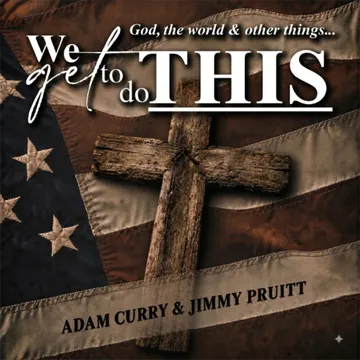
By We Get To Do This | 53m listen | 14 chapters
Presence over Pixels cover
We Get To Do This · No. 38

About this episode

Pastor Jimmy and Adam Curry connect via a mobile recording rig in Longboat Key, Florida, to challenge the modern culture of digital distraction. The session opens with a deep linguistic analysis of Matthew 5:3, where the hosts argue that being "poor in spirit" requires a state of total spiritual destitution to make room for the Holy Spirit. This theological foundation serves as a critique of the arrogance found among contemporary YouTube Pastors who prioritize outrage over the humble, teachable spirit required for biblical ministry.

Beyond theology, the discussion examines the Commodore Callback 8020, a new flip phone running Sailfish OS designed to facilitate a digital detox by blocking social media and web browsers. The hosts highlight the Wonder Project, an initiative by Kelly Merryman Hoogstraten and John Irwin aimed at producing high-quality faith-based content like House of David. Additional reports cover the evolution of computing from the Sinclair ZX80 to modern Linux-based Commodore systems, alongside a look at how gas price fluctuations remain the primary metric for American public sentiment ahead of the Fourth of July.

Adam Curry and Pastor Jimmy share a nostalgic laugh over loading programs via cassette tapes on the Commodore 64 before pivoting to the "Hardies" fanbase of When Calls the Heart. The hosts offer a practical "Bite Your Tongue" list to reframe daily chores as blessings, urging the Bridge Church congregation to prioritize scripture before screens. The segment concludes with observations on the multicultural atmosphere in Miami during the World Cup and the neurological impact of smartphone-induced narrow focus.


CHAPTER 01 / 14 Discussion

Pastor Jimmy and Adam Curry Remote Podcast Setup in Florida

Pastor Jimmy opens the session with a prayer before discussing his remote recording setup while on vacation in Longboat Key, Florida. He describes using a compact "Pod Mobile" rig consisting of a small interface, microphone, and computer to maintain the show's schedule. The hosts express gratitude for the technology that allows them to connect from different locations while maintaining their weekly dialogue.

florida· longboat key· pod mobile· remote recording· bridge church

00:00 Abba Father, what a joy and what a privilege to come to you today. And what a privilege to be able to do this remotely today. Just through technology, we often say it's a miracle any of this stuff works. But we get to do this and it's fun and it's joyful. Pray for our listeners today. And whenever they're listening to this, that they will be blessed. They'll be encouraged and even provoked to think deeper and to think critically. And so we pray for them in Jesus' name. Amen. Amen. It's Wednesday, June 24th, 2026. We get to do this. This is episode number 38. This is the life we've been blessed with. This is a gift for

00:43 we get to do this. This is the chance we dare not miss. This is the life we get to do this. Yeah, baby, remote. This is so cool. It is so fun. I love doing this. I was really excited. And it was like, you are so excited. In fact, I was so excited, I was an hour early getting on. And she's like, wait, why are you so ready already? And I'm like, what? And at about that time, you text me. I'm like, oh, I'm up an hour early. It's okay, bro. I must have been really excited. So you're on vacation, and it's highly appreciated that you still want to do the show.

01:26 You set up the rig. You got the pod mobile. I just want everyone to know the pod mobile rig is an amazing little device, pod mobile. You can find it on Google. It's fantastic. Super cool device. I'm just sitting here looking at it, going, This is amazing that we can do this so easily, actually, because I can pack it in a very small bag. As long as you have a really tiny mic stand, you know, it's, I mean, it's very small, it's light. I mean, super neat piece of equipment. So, what's your setup right now on your vacation studio? Yeah, so I'm sitting at a little table in my room here. We're in Florida on Longboat Key Island.

02:10 Just got ocean on each side of us. It's stunning. And then the room I'm in, it's not quite as sweet, but it sort of is. It's kind of hard to explain. But just got one, I'm on a small table, and all I've got is the pod mobile, my microphone, my computer, and a mic cable. Oh, I mean, it's that simple. It's the best. It's the best. Yes, very cool. I really appreciate that you're doing this because vacation is still vacation. But it's also we need to catch up. You and I need to catch up. Really? I know. I've missed you, bro. I mean, you were gone some. We've been gone some. I mean, it's just that time of year where everybody's kind of moving, traveling, and out and about. So, yeah, what's the latest? Well, there's a couple of things going on.

CHAPTER 02 / 14 Discussion

Biblical Interpretation of Poor in Spirit from Matthew 5:3

The discussion focuses on the "Just Jesus" series from the Daily Grind newsletter, specifically examining the meaning of being "poor in spirit" from Matthew 5:3. A linguistic analysis of the original Greek suggests the term implies being "reduced to beggary" or "destitute of oneself" to be filled with the Holy Spirit. This interpretation challenges common misunderstandings of the Beatitudes, emphasizing that spiritual emptiness is a prerequisite for receiving the Kingdom of Heaven.

beatitudes· matthew 5:3· greek translation· daily grind· jesus christ

02:55 You're on vacation. You still are doing your daily grind, which is appreciated. You're doing kind of an abbreviated version, which means, well, actually, I'll read the one from yesterday. It's Just Jesus Day Two. You're doing Just Jesus. And so the Daily Grind, it's on Hello Fred for those who listen to Hello Fred on the Godcaster in a spoken version. Pastor Jimmy sends it out on all the socials, and I get an early text version, which I'm always very appreciative of. So he says, We're enjoying time away this week. I'll be posting a simple Just Jesus reminder each day for the next week.

03:38 Signed Pastor Jimmy. And yesterday was Matthew 5:3 from the New King James Version. Blessed are the poor in spirit, for theirs is the kingdom of heaven. And I really enjoyed just the simplicity of this daily grind because what it led me to do is something that I've learned from you. It's like, I wonder exactly what poor in spirit means if we look at the Greek or Aramaic original. And because as a new believer, I read that as, oh, when I'm down, when I'm not feeling good, when I'm poor in spirit.

04:18 And imagine my surprise when I figured out what it really meant. And so I thought maybe we could kick things off today with you giving an explainer of poor in spirit. That's great. Now, if you go into the actual Greek of that, it really breaks it down. And it's going to read a little bit different than the phrase poor in spirit. But the word poor, literally, where it's it means reduced to beggary, begging, asking alms, destitute of wealth, influence, position, and honor, lowly, afflicted, destitute of the Christian virtues. So, I mean, just that word by itself is very intense. But he's not saying just the poverty-ridden here, he's talking talking about.

05:00 about poor in spirit. In other words, to me, the way I read it, and I'm not looking at a commentary. This is just off of my heart. When I see poor in spirit, I say destitute of oneself and needing more of his spirit. Yes, that's exactly what I came up with. I got you look it up. Yeah, I did. Oh, yeah, I did what it means to me. Well, there's a whole bunch of Greek words that are unpronounceable, like makarioi and pochatoi and bakchoi, and all this other stuff, and pneumati, and what I you think Greek's bad. Try to pronounce Hebrew words. Well, I can do walking up a logie.

05:43 Ani meterber es stat ivrit. So I speak a little bit of Hebrew. That's that's my go-to. Yiddish, actually, which they speak in Holland is very similar to it. So, what I came up with is only those who can admit they are completely empty-handed in front of God are eligible to receive everything God offers. Yeah, because look what the offer is: the kingdom of heaven, right? Theirs is the kingdom of heaven. So, when we come before him, impoverished in spirit, of saying, Lord, I want to be empty of me and empty of my own spirit, so that I may be filled with yours.

06:29 Yes, and I just rich. I wonder if this is if this is widely misunderstood. Because I certainly just the Beatitudes itself could be an entire sermon series for 10 years. It really could. And that's why I chose this. First of all, I wanted, I was thinking about what I can do while I'm on vacation that's simple, but also has some depth to it. And so, I've started thinking about, well, there's nothing more important than Jesus. I mean, than what Jesus can bring to the table. And so, that's why I just kind of took on, okay, just Jesus.

07:12 And I always ask the question: is Jesus just Jesus enough? And so, that's kind of why I went that direction. And I've been actually encouraged by the response to that because usually I write, you know, two or three, well, about six, seven sentences. That's the daily grind. But just putting the verse only and keeping it simple, people have been responding as if I've been writing a whole paragraph or something. And it's been really neat. Oh, interesting. People are thinking. And so that, to me, makes me happy. Yeah, well, and spot on, though, because, and maybe the simplicity of just Jesus in the daily grind, maybe that's what actually spurred me on to like, huh, what does that actually mean?

07:57 Oh, glad you did that. Yeah. Way to go. Well, I pay attention to what you say. He died. I didn't say it. Jesus did. That's the point. Good point. Good point. Just Jesus' words. Just Jesus. I love it. I bring messages from Bridge Church in Fredericksburg as well. Everybody misses you. And James handed me an, you know, James, who's on our safety team, and he sits in the corner in the morning. So every Sunday I come in, I have a little chat with James. You know, he listens to the podcast all the time. He loves the podcast. And he handed me a note and he said, I think we should own this.

CHAPTER 03 / 14 Discussion

Dangers of Opinion and Arrogance in Modern Preaching

A note from a Bridge Church safety team member prompts a discussion regarding the role of personal opinion in biblical teaching. The hosts critique "YouTube Pastors" (YTPs) who project arrogance and outrage rather than humility when interpreting scripture. They emphasize that the Word of God is living and fluid, requiring teachers to remain teachable and cautious about the "hills they choose to die on" regarding specific theological convictions.

bridge church· biblical interpretation· youtube pastors· humility· scripture

08:39 I'm like, okay. Hold on a second, James. And this is what's written on it. It was a question. Do you know what God left out of the Bible? And then underneath is the answer. Your opinion. Oh, boom. Booga. I've never heard that before. And he says, I came up with this or it came to me. And I think we should own this. I'm like, I love it, James. I love it. I think it's fantastic. You know what? He's named something that is the tension that me and Pastor Brian live with when we're preaching the word and we're preaching scripture. Every time we stand in the pulpit, I got to tell you, I still get nervous every time. And I'm not nervous because I'm nervous about speaking in front of people.

09:23 I'm way past that. I'm nervous because I want to rightly divide the word of truth. The last thing I ever want to do is perpetuate just my opinions. And yet, if you think about it, that's what an interpretation is, right? It's your opinion. That's why, even when I read commentaries or scholars or experts, I always take them with a grain of salt because it's just their opinion at the end of the day. And so I'm very cognizant of that. It's very humbling to me. And I keep reminding. I remind myself of this often because I don't ever want to get in a pulpit and just bang the pulpit and just, this is the way it is.

10:02 Because I'm telling you, there is so many layers to scripture, so many layers of truth that you peel one back and there's a hundred more. And yet you may peel one back and think, I finally found the secret. I found the answer. This is it. This is what this means. And yet the Bible even describes itself that the word of God is living and active and sharper than any two-edged sword. So if the word is living and active, then that means it's not just, it's not just stayed. It's actually fluid, not static, but fluid. And so to me, that's why the Bible, you know this, you'll stumble on a scripture and you go, oh, I've read that scripture before.

10:46 And then you read it and a different word catches you and pops out. And it's like, whoa, I've never seen it that way before. Well, that's the beauty of the word of God. It's the word of God. Yes, written by Paul, written by men, written by people who dictated things, but yet it's inspired by him. And that's why we call it the Bible, the word of God. It's inspired by him. God breathed is another way to say it. You know, you said something that I hadn't even considered when I read James's note because I took it as, yeah, my opinion. Okay. I didn't even consider what you just said there, that as a pastor, you literally are giving your opinion whenever you're in the pulpit.

11:33 Absolutely. I mean, just by definition of what you're doing, you give your opinion. That is, that is, that's a little deeper than I thought it would be, actually. Well, what it means is I got to be careful about what hills I die on in terms of convictions about things, because as we're always hopefully ever learning, ever growing, then the hill I died on five years ago probably is not the hill I would die on today because I've learned, I've grown. And that's, that's the idea. You know, at my age and season of life, I want to still remain as teachable, as moldable, as open to hearing other people's thoughts and, dare we say it, opinions

12:15 about and say, you know what? I have not considered it that way. Thank you. You've added something to my, now you're helping inform me as I read scripture. And that's part of the journey of faith. And that's why the scripture says we walk by faith and not by sight. So the day we think we've got God figured out or we've got the Bible figured out. And I see a lot of you call them, what do you call it? Why call them YTPs? Yes, the YouTube pastors. Man, those guys are ripping off like they have got it figured out. And I'm sorry, man. I just, I have a hard time with any level of pride or arrogance in preaching.

13:00 That's just a personal thing with me because when we're before God and we're handling his word, man, you better be at the most poor in spirit you can be. Yeah, what you said there is deep again because another Jane, another one of my favorite James has said, be quick to listen, slow to speak, and even slower to get angry. And it seems like a lot of YTPs go straight to the anger part and the outrage. They know that they just skip over everything. I'm like, oh, what are we doing here, man? What are you talking about? It always reminds me of that band, Rage Against the Machine. You know, I mean, they were chiller, right? But, man, one thing they had was passion.

CHAPTER 05 / 14 Discussion

When Calls the Heart Series and Family Values Media

In response to a listener's letter, the hosts discuss the Hallmark series "When Calls the Heart," a period piece set in the Canadian Northwest Territories during the early 1900s. They praise the show for its focus on faith, family, and freedom, contrasting it with modern Hollywood content that they feel includes "obligatory" social agendas. The series is highlighted for its character development and its depiction of historical moral dilemmas, such as the introduction of comic books and jazz dances.

when calls the heart· hallmark channel· canada· family values· pride month

15:05 she sent in a note. I don't know if you guys, but I think she only sent it to me. She wanted it to be show content, which I appreciate since you bring it up. And I'll read it to you. She says, Adam, we get to do this. Was wonderful this week. I thoroughly enjoyed it. The thing Pastor Jimmy read was a good reminder of exactly how spoiled we really are. I'm trying to think what that was exactly. It was that thing about I get to travel. Oh, yeah, yeah, yeah, exactly. Oh, I have to pack, but I get to travel. I'm doing the dishes because I get to eat. Yes, perfect. Right. She continues. Also, I too am enjoying all the patriotism and the FIFA visitors enjoying our country, which it just continues, man.

15:46 It's snowballed. I saw an English guy at Java Ranch the other day when I was playing chess with Willie. Oh, yeah. We love it. Yeah, we love the hill country. You know, we were in Houston. Now we're going to Dallas. It's amazing. It really is so lovely. We're at a resort today this week. So we're hearing lots of accents from other worlds and other places. It's beautiful. I love it. So the Pickle Princess's question is regarding when Calls the Heart, which she says she is now binge-watching as well. I have not seen this. I have not seen this. Can you explain briefly what this series is about?

16:29 It's set in the early 1900s, so it's a period, a historical period piece. It's a romance. It's like watching a harlequin romance, basically, but without all the fluff. But it's based on family. It's based on values. We use the three F's: faith, family, and freedom. They're all included in this. Interesting enough, though, it's not in America. It's set in Canada, in the Northwest Territories of Canada. And it has the Canadian Mounted Police in the early days. These guys were constables of their communities. So it goes into some politics. It goes into, but it's very lighthearted. It's somewhat predictable.

17:11 It's made by Hallmark back before they lost their minds. And yet it's the longest running series on Hallmark. They're in the 14th season, 14 years. And all the same characters. Now they come and go. But oh my gosh, the character development is amazing, but they constantly hearken you back to God, harken you back to faith. One of the main characters is a guy named Joseph. He's black, by the way, and he's the town pastor. And it's beautiful. Well, Tina and I have been looking for something to watch. So we're going to start on that

17:49 because we're a little tired. And I'm just going to say it. Maybe because it's the month of June, which is known as Pride Month, but every single show for no reason has to have gay guys kissing. I'm like, you know, I grew up in Amsterdam. Like, nothing shocks me, but it brings nothing to the story. You're doing it just to do it. And I mentioned this on No Agenda, and people said, oh, you have no idea. It's happening in books. It's everywhere. Like, this is a attack we got to be careful of. Anyway. Yeah, obligatory, right? It's just, and I got to tell you, if I was that, I would be insulted by the way they treat it.

18:32 I mean, even from that angle, it's like just sort of a tip. And anyway, I don't want to dive deep in that, but this is what I love about this particular series that has been such a blessing to us is because it has faith. It's all about family values and it's about freedom and in a time period, too, which is fascinating. They've just entered into the roaring 20s. And so the youth are wanting to learn these new, you know, scandalous dances, you know, the shimmy and the Charleston. And it's like, oh my gosh. And so they had an ethical, moral dilemma over a youth dance, you know, and it's so fun because there's an innocence about it too.

19:18 And the things that startle them, like when comic books came on the scene, all of a sudden it created a scandal because now all the youth's attention is going to be stolen by these books out there. Just not much has changed. I mean, the dynamics don't change, even though the methods do and the delivery of it changes. Whether it's a phone in your hand, well, they were struggling with the kids having comic books in classes. Oh, wow. man. It's like peeking them. Everything you're saying, it's like, oh, yes, I have this topic ready. I've got this topic ready. So put a pin in that. I just need to finish the letter from Jody. Yeah, she argued. She digressed. No, she has five questions about the show. Oh, my.

CHAPTER 06 / 14 Discussion

Fan Questions for the When Calls the Heart Hardies

The hosts address specific fan questions from "Hardies"—the dedicated fanbase of "When Calls the Heart"—regarding plot inconsistencies and character exits. They explain that changes in showrunners often lead to shifts in character arcs, such as the departure of Pastor Frank. The discussion also touches on the redemptive story of Henry Gowan, which is cited as one of the most significant narrative arcs in the long-running series.

hope valley· hardies· showrunners· redemption arc· character development

20:00 You may not be able to answer them, but I figured she wrote in, We love Jodi. We love that she introduced us to Bose Pickles, Louisiana. And Louisiana DealPickles at gmail.com.com. So here's question number one: Why do the people of Hope Valley never close a door when they walk in a room? Man, I've noticed that. I don't know. You know, they had no air conditioning there. I mean, literally, no AC, brother. Number two, when Bill sold his land to Madeline, they never said a price. He just offered to sell it and she accepted. Was there no money exchanged? And did he just deed the land over to her?

20:41 That was weird. That was weird. They did not discuss the price. Maybe because of values back then. I don't know. But yeah, you're right. She's absolutely right. I noticed things, quirky things like that as well. That's interesting. I'm on the same page. All right. Number three, what happened to Pastor Frank? He was there and then he wasn't. Did he go work with orphans or something? Okay, so here's what I do. When I'm watching a show like this, I've got my iPad on my lap and I'm looking up stuff. Oh, you're like Tina. Oh, man. I like to know the facts. I like to know what's going on. She's looking up actors. She's looking up historical facts. And she says, no, you don't have to pause it. Keep going. I'm like, how can you even do that? All right. So you're like Tina. The people that are followers of this show are called Hardys.

21:25 Hardys? Yeah, what he calls the heart. Hardies. And man, it's a culture, brother. I'm just saying. The questions she's asking, the questions everybody's asking. But Pastor Frank was great because he had a great redemption story. He had a really hard past. He had been convicted and had a felony, was in prison for a time. And then he was redeemed, radically redeemed by Jesus. And so he comes on the scene. Great redemption story. But for some reason, they have different showrunners that cycle in and out of these shows. And then the shows will kind of take a different direction. You know what a showrunner is, right? So the kind of the CEO of the set.

22:03 He kind of oversees the direction a show is going. Well, when they hire a different showrunner or another showrunner who's gone somewhere else, the shows will take a different direction. That's why when you watch a long series, you'll notice changes and shifts and emphases on different characters or different themes. And so I think they had a showrunner change and they wrote him off. He ends up going to, you know, serve a children's, an orphanage somewhere and he falls in love with that as his primary ministry. So he did. Okay. And he gets replaced by Pastor Joseph, who's phenomenal. Precious, precious. I can't wait to see this show now. This is already interesting. Number four.

22:44 Very good. Where does Henry live? They never say, but I do love Henry. Oh, I don't know where she's at, so I don't want to go too deep into it. But his redemptive story arc is the highlight of the show. Okay. We'll leave it in the middle. We get to follow Henry Gowan, who starts off as a scoundrel, greedy, angry, mean, powerful. And his life goes through a major, massive redemption. So his whole story arc, we're now in season 12, I think. And it's still going, by the way, it's still in production for season 14 right now. But his story by Hardys is one of the most beloved story arcs in the whole thing.

23:29 And the final question: no one ever pays a tab at Abigail's, especially when they're taking food from the kitchen. How does Minnie? How does Minnie stay in business? I don't know. I've never seen money exchanged. Every once in a while, I'll see somebody drop something on the tables. They're heading out, like Lucas or some of those guys. But yeah, that's interesting to me. I said that to Annette. I said, no one ever pays for anything. That's great. I don't know. It's that local thing, right? Beautiful show. Well, worth a watch. And it will be refreshing to you because you will not hear the crap that Hollywood is putting out. Well, we actually, so we watched two different things that I wanted to highlight because people are always looking for something good to watch.

CHAPTER 07 / 14 Discussion

Faith-Based Film Recommendations and the Wonder Project

Recommendations are provided for wholesome media, including "An Interview with God" and the miniseries "Seeking Persephone" available on Angel Studios. The hosts mention the Wonder Project, a production company founded by Kelly Merryman Hoogstraten and John Irwin, which aims to create high-quality content for believers. They describe the initiative as an "HBO for believers," focusing on projects like "House of David" and "Jesus Revolution."

angel studios· interview with god· seeking persephone· wonder project· house of david

24:14 And this was on Angel. It's called An Interview with God. It's from 2018. Have you ever seen this movie? No, I haven't. Oh, man. I'm intrigued. Yeah, it's a journalist who gets a three-session interview with a man who claims to be God. And I mean, the whole story is just fantastic. It's a great movie. You'll enjoy watching it. It's streamed. streaming. It's on Angel. It's Angel Guild approved. Very cool. And then the other thing, since we both love period pieces, was Seeking Persephone. Huh. And, you know, the story of Persephone and Hades. I don't know if not everyone knows their Greek mythology.

24:58 Persephone is P-E-R-S-O-P-H-O-N-E. So you look at it, you go, Persephone, but it's a Persephone, a period piece. Now, this is nice. It's a four-part miniseries. And I think that was also on Angel. Fantastic. Absolutely fantastic. All right. I'm going to have to remember that. You're going to have to text those to me because we're always looking for something. There's not as much God in that as the obviously interview with God, but man, you want a good movie, a period piece, a beautiful love story. That's the one. It's fantastic. You know, people are calling out for wholesome TV, and that's why, in movies, and that's why you see the onslaught of Christian and faith-based movies and morality-based and wholesome movies coming out right now.

25:45 And it's working because people are sick and tired of Hollywood. We were supposed to have Diederik and his wife, Kelly, who's the CEO of the Wonder Project. They were supposed to come out this weekend, supposed to have dinner. They had to cancel, unfortunately. So we'll catch them after we're back from Europe. But I can't wait to hear her story since she was at YouTube. Right, exactly. And they're both faithful people. And she's one of the founders of Angel, correct? No, Wonder Project. The Wonder Project. Yeah, they did House of David. Yeah. Subsidiary of Amazon? No, no, Amazon distributes for them. Okay, gotcha. It's all confusing. Yeah, it's a standalone. She and

26:30 John Irwin, the director of House of David and Jesus Revolution. Yeah, so they founded this together literally as a HBO for believers. Nice. I love it. I mean, you're listening. Now, we're watching a Hallmark series and that, again, back when things were more wholesome. And they've stayed with the formula. They have not ventured outside the lines on that. Right. So far. And I'm assuming it'll stay that way because, I mean, this is what it has a massive following. Yeah. And the Hardys are intense. And so, yeah. Anyway, you'll enjoy that. And man, thanks for the suggestion for some good, wholesome things to watch. Yeah, you guys got your streaming sets there.

27:14 If you're sitting in the hotel in the evening, like, what are we going to do? We plan our evenings around this. We ate at six, so we can be back in the room at seven. Wait, a half hour later than usual? What are you talking about? This is AARP approved. We couldn't get a 5.30 reservation. We had the big dinner last night at the CW steakhouse, and it's like elite. It is like a, it cost a shiny penny. I'll bet it did. But it was worth everybody a 16-ounce Kentucky ribeye. Amazing, amazing food. Yeah. So you were talking about

CHAPTER 08 / 14 Discussion

Evolution of Computing from Commodore 64 to Modern Hobbyists

A nostalgic look at early computing covers the Sinclair ZX80, VIC-20, and the Commodore 64, detailing how programs were once loaded via cassette tapes and radio broadcasts. The discussion transitions to a modern enthusiast who purchased the Commodore brand to build a new operating system based on Linux. This system retains the classic aesthetic while allowing users to play legacy games on modern hardware.

commodore 64· vic-20· sinclair zx80· bbc· linux

27:55 in the series, how comic books came along and this would be, you know, this is going to destroy our youth. And scandalous. Scandalous. And you correctly say that, you know, the challenges are the same. It's always, it's the, actually, it's the medium that has changed throughout the years. Comic books were a whole new medium. And something came out, and this is really for parents at Bridge Church. And of course, anyone who's listening, we do this for our church first and foremost. But anyone else is listening, you're welcome to it, and we appreciate it.

28:31 Do you remember the Commodore 64 computer? Absolutely. So my first, actually, my first, first, first computer was a Sinclair ZX80. People can go look that up. Mine was a tandy. Right. So you had the color computer, probably, the TRS. No, monochrome. Monochrome. So the Commodore, I started with after the ZX80, but had the VIC-20. And that was the precursor to the Commodore 64. And I really learned a lot of my computing chops, understanding data. And for people who don't know, back in the day, you didn't have hard drives or floppy disks.

29:15 You actually recorded computer programs on a cassette tape. Oh, wow. And so if you bought a program, it would come on either two ways. It would be a big ROM, like a module, like a cartridge that you stuck into the back of the computer, or you could hook up a cassette. cassette recorder and then you'd put the cassette in, and the cassette would literally have tones that sounds like an old school modem, like and then that would read into the memory, and then you could load the program. And just as an aside, back in the day, the BBC had a computer program, and I think it was Monday night at seven, they would broadcast a new computer program.

30:03 That's pretty cool. So you would sit there with your cassette, you record it, and so over the air for maybe three or four minutes, all you'd hear was you record it on the cassette, and then you could play that into your computer and it would load the program. So anyway, long historical walk down memory lane. Fascinating. To get to a new device, which I, you know, I've always been searching for the perfect phone, you know, what I call the OTG off-the-grid phone. Then I've never really been able to find the right combination.

30:41 You know, I mean, I've had the light phone, I've had flip phones, all kinds of different devices for just when I just don't want to be bothered. And it actually hampered my professional life quite a bit because it was hard for me to even participate in certain text conversations because of how Apple doesn't want to work with Android, et cetera, et cetera. And so Commodore, the company was purchased by really an enthusiast several years ago. He bought the company, which meant he was able to buy a lot of the old computer casings,

31:20 the classic Commodore 64 style. And he rebuilt a whole operating system based on Linux, which is very analogous to how the old computers felt and how they operated, but it's very modern and it's actually quite usable. And of course, it plays all the old classic Commodore 64 games and everything. So it's a real, it's a hobbyist device, but it's cool. And it's, you know, I'm actually considering ordering one just because it's such a cool nostalgia, nostalgic item. But they just came out with a phone. And

CHAPTER 09 / 14 Discussion

Commodore Callback 8020 Flip Phone for Digital Detox

The Commodore Callback 8020 is introduced as a specialized flip phone designed to block web browsers and social media while supporting essential apps like WhatsApp and Signal. Running on Sailfish OS, the device features a physical privacy switch and is marketed to parents and individuals seeking to reduce screen time. The hosts highlight its $399 starting price and its focus on "no data selling" as a solution for those wanting to go off-grid.

commodore callback· flip phone· android· sailfish os· digital detox

32:00 it's a real phone. I look at this thing. It's like, it's actually cool to look at. It has a very Commodore kind of look to it. And there's the way they've set it up is, well, actually, I have a clip here of one of the YouTube reviewers who explained shortly exactly what the big deal is about the, it's called the callback, the Commodore callback. Very weird and kind of retro. It's a flip phone which runs Android, but purposefully blocks web browsers and social media apps. Not that it doesn't include them, it blocks them so you cannot install them.

32:44 And apparently it has a touch screen, but it's disabled so that you won't be tempted to use a touch screen. And it costs $550. So this thing is kind of, you know, lead us not into temptation. So you can load your, you know, like your messaging apps. And a lot of people use WhatsApp. That's increasingly popular throughout the world just because there's no text cost to it, but it does text messaging. You can put, you know, if you need a navigation app or, you know, like a rideshare app, like Uber, it'll load all that fine, just standard Android, but literally blocks all social media apps and the web browser.

33:32 And I'm thinking, parents, you might want to look into this. This might be the perfect device for your child who still needs to be able to communicate, still needs to be able to call and text, and you need to be able to reach him because Lord knows these days we have to be able to check on our kids all the time. And it has other apps that are useful and productive apps, but it literally blocks anything else. So how do you get access to this? They sell it at, I think it's Commodore.com. I'm not sure if that's called Commodore phone. It's Commodore Callback. Let me see. I have it. I'm going to look it up. You got me interested. It's a good question. Commodore.

34:16 It might be Commodore.net. Yeah. Commodore Callback. There we go. Callback 8020. Commodore.net. Yeah, Callback 8020. Exactly. It's the feature of, it's a flip phone. phone. Yeah, it's a flip phone. Oh, classic looking too. Isn't that awesome? Ooh, I like it. I know. You look at it like, I kind of want that. So it runs 99% of all Android apps. It's a flip phone, so it is kind of cool. You know, you could do your podcast. You can do music. It has old school and FM radio built in. All right. We haven't had one of those in a while. Does Wi-Fi, but blocks social media and browsers.

35:00 The no data selling. It's a complete open source version of Android called Sailfish. And, you know, almost no pop-ups. It has LED notifications. And you can completely go off grid with a physical privacy switch. Wow. I think it's showing here starting at 399. It could be. Yeah. Yeah. Starting at WhatsApp, SMS pre-installed, support signal, Telegram, WeChat, and more. Even iMessage, it says. So there's a way to connect your iMessage to it. Wow. The speed of predictive, all at the speed of predictive text input.

35:40 So it is the old school way of using the keyboard, the keypad to text. But you can get pretty good at that because we were fast back in the day. So you can bring back your old skills. I just saw this. I'm like, that's very cool. This is what I get from my parents. Yeah, I'd give my little byline, not your granny's flip. That's great. That's great. Good marketing there. Yeah. So that was my fantastic. That was my. How's the weather there, by the way? The weather is hot here. Very humid. It'd be like 89 degrees and 102 heat index.

CHAPTER 10 / 14 Discussion

Florida Tourism and the Distraction of Mobile Devices

Observations from a Florida resort lead to a discussion on the multicultural atmosphere during the World Cup in Miami and the prevalence of phone addiction. The hosts criticize the sight of parents ignoring their children at pools and restaurants in favor of their mobile devices. They advocate for "unplugging" during vacations to focus on local environments and family connections rather than national news or social media.

florida· miami· world cup· mobile addiction· parenting

36:21 Whoa. So, yeah, just it's the heat, the humidity is like having a hot, wet blanket on an August Texas day. As we would say, as we would say in the old country, de missa followed fun a duck, which translates to the sparrows are falling dead from the roof. Oh, that's a good one. Bro, that's a good one. Yeah, I mean, literally, it's just a different kind of heat here. Different kind of, you know, being on the coast, it's a different kind of sun, too. I mean, you just, it'll fry you in a very short amount of time.

36:59 But it's beautiful, though. It's stunning. No rain this week. I think maybe a little bit tomorrow and Friday, but very little. So it's been gorgeous. We come back on Saturday. We'll get in late Saturday night. Right. And it has been such a great experience. Man, I love our city. I love our town. But the truth is, if we don't get away, we can't get away. Of course. And it's one of those things. We got to get out of town. And so every year we try to get to a coast. And we love Florida. So we tend to come this way. And Florida is weird for me because it feels very familiar.

37:37 I feel, I don't feel no culture shock whatsoever when I'm in Florida. You know, just feel very at home here. Not that I want to move here. Just we love visiting. I don't like hurricanes. I'm sorry. I'll take tornados any day. Talk to Tina about that. Yeah, talk to Tina about that. She'll tell you. She's lived there for many years. Yeah, I mean, it's beautiful. And the people here are very, very southern, gracious, just very much like Texas and Tennessee. Oh, you should see the tourists who are going to World Cup in Miami. They're like, holy mo. They're like, this is like the most multicultural place I've ever been. You know, they're going to, you know, seeing all the Cuban stuff. Right.

38:20 That was wonderful. Doesn't it make you feel good, though, watching these clips? It gives me such a pride in the right way. Not a weird pride, but a good pride. Patriotism. I'm proud of my country. And what it also highlights for me are all the entitled people who talk bad about our nation and about our country. Here's the thing. Let's be real. Presidents, different cabinets, different, you know, red, blue, whatever, they come and go. And we need to get over who's in office right now and get back to our local level, our local life.

38:58 We get so spun up thanks to news media and social media about what's going on in Washington when we need to be focused on what's right in front of us. Now, that's not to be ignorant of. We need to be praying for, but we've got to get people with their eyes back on their own, you know, on their own terra firma right where they live and be involved in that and quit over worrying about the world scene. And, you know, we're because of so. social media and because of these bricks, by the way, I wanted to say this on the show. I've never seen more men sitting with their wives at a pool at a restaurant that all are on their phone. I want to go take it out of some guys' hands and go. I've been leaving my phone in my room in the safe.

39:43 So I don't have to see it. And praise God. What I love about our church, they're so good. When they know we're gone, they don't text us. They don't mess with us. Our people are wonderful. But I see these men at breakfast, three kids losing their minds. Mama's over there trying to control them. And they're on their phone. You cannot put it down. I want to go over and grab it out of his hand and say, you know, what really matters is sitting right here. Yeah. You know, just, oh, they're, you know, they're moving, shaking, you know, doing business, or they're watching the next soccer game or whatever. But it's like, it has really, I've noticed it on this trip more than any because this is a really getaway resort.

CHAPTER 11 / 14 Discussion

Podcasting 2.0 and Technical Conflict on GitHub

The Podcasting 2.0 initiative is discussed, highlighting its role in creating an independent index and improving features like transcripts and chapters. The hosts describe the "Board Meeting" podcast and the technical discussions that occur on GitHub. They note how even calm individuals can become heated during open-source coding debates, leading to a broader reflection on how digital interfaces affect human psychology.

podcasting 2.0· mastodon· github· open source· dave jones

40:25 You're on an island and it's like there is no excuse for being on your phone 24-7 here. This is where you put it away and just go about trying to have fun. Took me a couple of days to unplug, to wind down once I got here, but man, I'm in full relax mode now. You know, I was having a conversation with my buddy Dave Jones. We do the Podcasting 2.0 podcast. And so that, you know, the Podcasting 2.0 is an open source, open group. And we kind of came together to improve podcasting.

41:02 And part of that was by creating an independent index so that no one really owns podcasting and anybody could develop an app. And it's like 190 apps are now out there. And yeah, some are very small. You'd be amazed how many people in South America use what is that thing called? Pod2. It's a very small podcast app that fits on flip phones and smaller cheap devices. Africans, a lot of Africans use it as well. And that all connects to the index. You know, people can't just easily use an iPhone for the cost.

41:41 And so they have these different kinds of stuff. But that's beside the point. So this group is, it's ad hoc, and we do a podcast. And the podcast we do once a week. And it's very interactive because we have a live chat room. We record it live. And we call it the board meeting. We're just talking about whatever's going on in the group. And through this, you see transcripts in your podcast that comes from us. You see chapters in your podcast that comes from us. There's a whole bunch of improvements that we've created that now are being adopted by this whole quote-unquote industry. And there was a comp, so we have a Mastodon, a closed Mastodon server, which is kind of like a social network, but it doesn't, there's no algo, so it doesn't really behave like Facebook or Instagram or X.

42:32 But then there's technical discussions take place on something called GitHub. And GitHub is literally where you publish code. People can say, hey, I want to add some code. Take a look. It's called a PR, a pull request. You can take a look at this code, merge it in. But then there's also discussions. So someone will have a proposal. In this case, it was, it doesn't even matter what it was for. But the GitHub discussions, it's kind of like a forum, almost like Reddit, I should say, where you have someone proposes something and then there's 150 comments below and people are quoting another person.

43:12 And this thing, it always, I don't care what project it is, GitHub discussions about code always get heated. Always. And Dave, who is part of my faith journey, is the most loving, kind, calm man I know. You and he are kind of equal in that regard. And he was getting upset. And so we, and we talked about this. And he says, you know, I realized that, and he actually is also kind of a hack philosopher. And he was telling me about this book he was reading with right brain, left brain.

CHAPTER 12 / 14 Discussion

Neurology of Screen Focus and Biblical Mindfulness

Drawing on a "right brain, left brain" analogy involving sparrows, the hosts explain how intense focus on a smartphone screen can narrow a person's world and rewire the brain. They cite Proverbs 4:25 and Psalm 119 to emphasize the importance of guarding one's gaze. To combat the shortening of attention spans caused by social media, they suggest engaging with long-form content on platforms like Substack to retrain the mind for deep thinking.

neurology· amygdala· proverbs 4:25· substack· attention span

43:52 And there's a lot of talk about that. And these days, we use a lot of our left brain, which is really controlled, controls the right side of your body. So your right, what you see with your right eye. Right. And, you know, feeds into your left brain. And the left brain is analytical. It controls a lot of other things like your amygdala and how upset you get or how you analyze things. And the right brain is kind of the loving creator. creative half. I'm really cutting corners here on this. And he said that he read that sparrows, I think it was sparrows, when they're like picking seeds off of the ground, one eye is focused solely on the food and the other eye is looking out for predators.

44:38 Whoa. And as we're talking about this, we realize that what happens is us humans, we focus both eyes, but probably the right eye more than the other. And what you're seeing on your screen, and it's even worse on your phone, at that moment, what is happening right there, and you can feel this. Next time you look at your phone, look at a newsfeed, that is at that very moment, your entire world. That's why the fathers you see, they're locked out. They're not seeing anything. We don't have the sparrow capability to have one eye on what's going on around me. That's so true. Are my kids in danger? Is my wife getting frustrated? There's none of that.

45:21 We are focused, and that literally becomes your world. And so then now you see why people respond the way they respond because the whole world is tuned out. Wow. Now, I had a solution to this, which is you should just cover your left eye when reading anything. So then, you know, your right brain kicks in. You'll have love and better normal emotions. I haven't. Does that work? No, it doesn't really work. But it just dawned on me that that is what's happening. We used to have this. We call them TV junkies. Willie Wonka famously had TV Mike. And our parents would tell us, you better not sit in front of that TV. Your brain's going to rot.

46:05 But we were mesmerized, hypnotized. And then the remote control came along. Oh, man, if I'm bored for two seconds, I can zap over to something else. It is the same mechanism, but it becomes your world. And we got to be on the lookout for something like that, you know, becoming your world because literally you don't see that your wife is frustrated, your kids are mucking about, they're giving her a hard time. They're not, you know, they're not settled. And the awareness is really what helps me every single time. Just the awareness of, oh, wow, I'm sucked in. I'm focused. That's why, you know, we all have that. You say something to your spouse and then they'll respond seven seconds later. What?

46:50 Right. Because it takes that long to process, to get through all the synapses for them to process, hey, wait a minute, someone outside of this world that I'm in is talking to me. Wow. You've really hit on something here. I mean, even as you were speaking, I was thinking how one of the reasons I've been able to relax so much is I've put my phone away. Yeah. I just haven't been messing with it. I'm doing these little simple daily grinds that don't require anything other than putting together a little graphic and sending it out. So I'm not drilling in and going, okay, what are people going to like? What's going to help somebody? I've been able to kind of check out. And what I've become very aware of is my environment.

47:34 I'm looking at the ocean. I'm looking or we're at the pool and just watching kids have a blast and be kids. That's refreshing right there, just seeing kids throwing a nerf football across the pool and having a big time, or a tennis ball. And listen to this out of Proverbs 4:25. Let your eyes look directly forward and your gaze be straight before you. Wow. And then in Psalm 119, turn my eyes from looking at worthless things and give me life in your ways. There is a lot of scripture about what we're looking at and where we put our, you know, what we gaze upon.

48:14 I've always said you become what you behold. Yep. And it's just this idea that whatever you're setting your eyes on is also going into your mind and it's transforming you, whether you think it is or not. Now, neurologists are proving what the Bible said all along on these issues, right? You know, neurology is fascinating to me because it actually confirms and affirms so much of what the Bible teaches. And this is one of those where we're actually rewiring our brains as we're so focused on this one little screen in our hand. It's literally, we're rewiring our brains. We're training ourselves to 144 plus characters.

48:54 You know, where we can't hardly read a book. We can't read anything long form anymore. And I know I found myself, if there's something that's too long, that's why I've enjoyed going back to Substack because there's some long form things in there. And I am forcing myself to read them because I want to retrain my brain. to have long-span attention and long-form attention as opposed to just short-term. And it's helping me and it's helping me think different too. And I'm finding I'm more at peace and more at rest. I keep asking Annette, so did anything blow up today? I mean, I'm just not looking. In fact, Annette said, What are you and Adam going to talk about? You don't even know what's going on. I said, I know.

CHAPTER 13 / 14 Discussion

Economic Metrics and Gas Price Fluctuations

The hosts discuss the recent drop in gas prices as a primary metric for American public sentiment heading into the Fourth of July holiday. They observe that while political debates continue on social media, the average citizen is most concerned with practical economic factors like the cost of fuel. They note that even owners of electric vehicles remain culturally attuned to these price shifts as a sign of national stability.

gas prices· inflation· fourth of july· economy· indiana

49:37 I'm just going to bring scripture. He's going to bring the issues. I'm going to find a biblical worldview towards it. It's easy for me. Well, as predicted, it looks like the war is over. Gas prices are falling down drastically every single day. It will be a good 4th of July celebration. I'm quite happy. I configured. Just like you called, you called the ball on that one. You said, he will get it done one way or another, whether all the terms are what everybody's liking, because all I've been reading is how mad everybody is. Of course. We can't just say, hey, but we're not firing bombs right now. Right. Well, and ultimately, what we care about is the price of gas. That's just the American way.

50:22 That is the metric. That's what you talk about at the cookout, man. You believe those gas prices? Yeah. That's Annette's first thing. That's the first thing she notices. She's, oh, look, gas is down another 15 cents. I'm like, honey, you have an electric car. You don't, why does it matter? You know, it's amazing. Tina, who has, I mean, she's like, it cost me over 50 bucks two months ago. 50 bucks to fill it up. I'm like, you know, you're, it's okay. You know, I mean, I know it's expensive, but that particular expense is not going to break us. We're okay there. But she still gets really mad. I mean, that's the Indiana girl still going,

51:03 this is no good. Outreach. And so the inverse is happening. It's like, wow, it was like $4.29. It was almost under $4. And she's really happy. But this is good. And, you know, what you're seeing on social media, people, it's probably 8% of our entire country who's on there. It's not everybody. It's not everybody. Not everybody cares. Not everybody is as spun up as you think they are. That's right. There are some people that are actually grateful in this world that they have a car to drive. Amen to that, brother. Yes. Yes. Hey, can I land the plane with this bite your tongue and read this thing that I did last week?

CHAPTER 14 / 14 Discussion

Gratitude Practice and Outro from Florida

The episode concludes with a "Bite Your Tongue" list that reframes common complaints—such as laundry, dishes, and taxes—as evidence of blessings like having clothes, food, and income. The hosts urge listeners to prioritize "scripture before screens" and offer a final greeting to the Bridge Church congregation. Pastor Jimmy expresses his eagerness to return home while acknowledging the gift of his time away in Florida.

gratitude· bridge church· daily grind· bible· vacation

51:44 Yes, please do. I think it's one of these things we need to keep in front of us, especially in these times when the news just keeps trying to spin us up. Let's spin down with this. You complain about traffic because you have a car. You complain about laundry because you have clothes. You complain about dishes because you ate. You complain about packing because you get to travel. You complain about taxes because you earned. You complain about your job because you have one. You complain about a full inbox because people need you. You complain about noise because you have a family. You complain about exercise because your body moves.

52:24 You complain about wrinkles because you lived. You complain about gray hair because you made it this far. You complain about change because you're growing. And listen, I agree with Mr. Adam Curry that we need to put down our phones and pick up our Bibles. Put down your screens and pick up your Bibles. Scripture before screens and all cases. Brother, enjoy the rest of your vacation. Just have a great time. Thanks. And we look forward to having you back home and back in our church, too. Hey, one quick shout out to my church family. Listen, don't think we're out here. Woohoo! We're out here going, good night. We miss our church.

53:08 We miss our family. So just know you're missed and you're loved. And I can't wait to be back. But also so thankful that we get this time away. It's such a gift. And we pack because we get to travel. That's right, brother. We'll see you next week, everybody. We get to do this and we love it. This is the life we've been blessed with. This is the gift we hope we get to do this. This is the chance we dare not miss. This is the life we do. We get to do this.