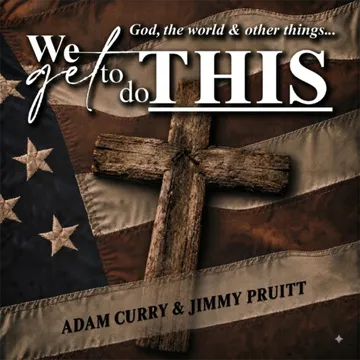
Episode 37 · Wednesday, 17 June 2026

True North

Global soccer fever meets a call for spiritual recalibration as international tourists rediscover American hospitality and religious leaders advocate for a return to foundational faith.

By We Get To Do This | 53m listen | 15 chapters
True North cover
We Get To Do This · No. 37

About this episode

The 2026 FIFA World Cup has transformed American cities as international fans from England, France, and South Africa arrive to celebrate the USA victory over Paraguay. These visitors are praising American staples like Buck-ee's and Texas barbecue while marveling at the safety of public spaces and the novelty of Waymo self-driving cars. This influx of global perspective serves as a backdrop for a deeper look at national gratitude and the cultural evolution of soccer in the United States.

Vice President J.D. Vance recently detailed his journey from atheism to Roman Catholicism in a CBS interview, highlighting how his wife Usha supported his spiritual search despite her Hindu faith. This move toward the 'simple gospel' mirrors a shift seen at a recent Anaheim conference where Pastor Brett Fuller abandoned a formal sermon to focus on basic Christian tenets. Meanwhile, digital communication pitfalls on platforms like Slack are contrasted with the 2002 film Time Changers, starring Gavin McLeod, which critiques how modern institutions complicate morality. These stories emphasize the necessity of face-to-face interaction and the 'Texas wave' over smartphone-driven isolation.

Navigating life requires a spiritual 'true north' to counter the shifting magnetic poles of cultural trends and social media hostility. Drawing on 1978 prophetic counsel from Neal A. Maxwell, the discussion focuses on remaining principled yet pleasant in a secular age. Personal moments include a humorous slip where a host accidentally called his colleague 'honey' after a long vacation with his wife Annette, plus reflections on walking a dog named Phoebe through local neighborhoods.


CHAPTER 01 / 15 Discussion

Opening Prayer and Introduction to Episode 37

The program opens with a prayer of consecration and gratitude for the community being built around the show's core mentality. The hosts identify the date as Wednesday, June 17, 2026, marking episode number 37 of the series.

jesus· prayer· community· grace· mercy

00:00 Father, we honor you this morning that we get to do this. It's a privilege to do what we do. And we pray for our listeners, our friends, Lord, this community that you're building around this mentality of we get to do this. We get to do these things. And so, Father, I want to encourage them today. And I pray that you continue to open their hearts to your goodness, to your mercy, and your grace. And, Father, we just lay everything we do. We consecrate these next few moments to you. In Jesus' name, amen. Amen. It's Wednesday, June 17th, 2026. We get to do this. This is episode number 37. This is the life we've been blessed with.

00:43 This is a gift for we get to do this. This is a chance we dare not miss. This is the life we get to do this. Hello, honey. I knew you were going to go there. I was going to go there if you did. You were going to be the elephant in the room right now. Literally, it's a big fat elephant right now. So we're chatting just before we hit record. And I'm apologizing for not being able to make a lunch. And my brother over here just throws out a honey. It's okay. I'm like, all right, darling. Can I give some backstories? Yes, please. We're going to be brief. So, once a year, we take off.

CHAPTER 02 / 15 Discussion

Vacation Reflections and Accidental Terms of Endearment

One host recounts spending several weeks of 24/7 vacation time with his wife, Annette, leading to an accidental slip where he called his co-host "honey" during a pre-show conversation. The discussion touches on recent family trips to Las Vegas, local neighborhood interactions while walking a dog named Phoebe, and a brief visit to Bridge Church Studios to see Pastor Brian.

florida· vacation· annette· phoebe· bridge church studios

01:25 We take all of our vacation in one shot. So that's one month. And so we take off, usually July, but we took off June. So Annette and I have been together 24-7 for several weeks. And then, you know, ends at the end of June. Going to end with a big trip starting Saturday out to Florida and just get some beach time. And having been with her 24-7, she's the only adult I've been talking to for a while. My response when you made a comment was, it's okay, honey. And as soon as it came out of my mouth, it was too late. Uh-oh. I couldn't even. Couldn't block it. If I could have, I would have caught it before it got to the end of my mic stand here. I love that, man.

02:09 I'm on that level. I love that. Well, yeah, take it as a compliment. I do. I don't call any men honey, frankly. You in the South. Tina's been traveling. Yeah. Yeah, she's on a trip now, but she was in Vegas with her sister to see Gwen Stefani, which is like the sisters. I mean, how often do you get when you're in your 60s? How often do you get to go to Vegas to a concert with your sister? That'd be like me and my brother going to see Fog Hat or something. Well, exactly. That's pretty much the same thing. I'll meet you in Vegas for a fog hat. Great analogy. And so I also, I've just been home with Phoebe, you know, so I talked to Phoebe a little bit, Bubba, Phoebster, you know, that's it.

02:52 And so honestly, I hadn't like showered or shaved for 48 hours, and I'm walking Phoebe. And our neighbor, Cameron from Caliban's, I learned how to pronounce it. Right. They have a house right near us. She's like, Adam, come on in. Come on. Because they're rarely ever there. They live in California and back and forth. Come on in. I'm like, I got Phoebe with me. Yeah, bring her in. She's shedding. Come on in. You're doing everything you can. Anything I can do. And I realized my hair was all crazy. But it was such a sweet time. Oh, they were so, so nice. And those are very busy people. And Phoebe was adorable. She's just like rubbing up against everybody. Look at me.

03:33 Phoebe's turned into a teddy bear. Yeah. I mean, she's doing pretty well. She's come a long way. Since when she bit Annette, yes. So, oh, man, it was nice to see. We're here at Bridge Church Studios. It's a Wednesday, so it's always fun to see who's around, who's hanging out in the parking lot. You know how we used to hang out in the parking lot as kids? Some guys still do that here. Tommy Hay is out there hanging out in the parking lot. No, it was Tommy. Tommy Watson. I'm sorry. Yes, Tommy Watson. Hanging out. Waving at everybody drive by. We're all trying to rev our engines on the empty lot. I mean, we flew through there, too. So I'm not working. Yeah.

04:16 I'm trying to sort of be incognito. So I'm like hauling through the parking lot to get to the back. I'm the flash. I'm not here. I mean, I do miss it, and I miss our people, but I try to really protect that vacation time. It was nice to see Pastor Brian. He's got a good idea. He has a great idea for his message that he's preaching on Sunday. I'm very low. Very excited to see it. Me too. So good news. Good news. Just positive. And it came off of social media. And I just want to exactly. I just want to stop and I just want to acknowledge that this is a wonderful trend.

CHAPTER 03 / 15 Discussion

FIFA World Cup Soccer Fans Arrive in America

The 2026 FIFA World Cup has brought international soccer fans to various U.S. cities, including Los Angeles, where the USA team defeated Paraguay four to one. The hosts discuss the evolution of soccer broadcasting for American television, specifically the use of digital screens and "hydration breaks" to accommodate commercial advertising.

fifa· world cup· soccer· paraguay· los angeles· advertising

04:56 It's something that came out of left field, and I'm just. I brought a couple clips just because it's so cool. It's so cool. Good. So we have a lot of people coming into the United States, America right now for World Cup soccer. Oh, that's right. Now, I watch World Cup soccer because I grew up. FIFA or FIFA? FIFA. Okay, FIFA. Federation, International Football Association. Should be FISA, but that's something else. So all these fans are coming in. You know, it's multiple cities. It's in Florida. It's in Texas. It's going to be actually USA played in Los Angeles, 70,000 people. And they beat Paraguay. Not a huge feat, but not bad. But four to one was stellar.

05:40 They've got the commercials figured out. Football, soccer was never appropriate for American television because you couldn't jam in commercials like basketball and football or our football. So now they have the field is filled with digital screens and wraparound. Yeah, and they're managing that really well. I was like, that's working for me. Cool. And they've added something because it's two times 45 minutes, so there's a halftime. They've added something which they call a hydration break, which is totally laughable because these guys don't need a hydration break. It's not 120 degrees. That's weird. So that's for world-class athletes.

06:20 But that's for the commercials. Oh, gosh. So they jam the commercials in there. But I'm happy because, you know, a lot of people don't get it, are not interested, but without a doubt, it's a huge sport. So people from all over the world, the Dutch, oh man, if you see orange anywhere in your town, the Dutch are there. They are super excited. And these are just salt of the earth people who really will travel to see their team play. And they are posting on every social network how much they love America, how awesome America is, all these fantastic things that we have. Beautiful. And, you know, what do you see on social media? Normally, sucks, it sucks, it's no good.

07:04 You know, everything's crap. You know, I'm going to leave the country. And I always say, good luck with that. I lived in a couple of countries. We'll see in a few years. Now, a lot of it is, for obvious reasons, surrounds food because we have more fast food restaurants than any other and franchises and versions than any other country in the world. True. But the pure joy of people. So let's just listen to a couple of snippets here. I'm so excited about arriving at Buckeys. I'm going to put these in my suitcase. These are Buckies. So you like shopping in America a lot better, honey?

CHAPTER 04 / 15 Discussion

International Tourists Praise American Culture and Hospitality

Social media clips feature international visitors from England, France, and South Africa expressing their admiration for American staples like Buck-ee's, Wingstop, and Texas barbecue. Tourists highlight the friendliness of the people, the massive scale of Costco, the novelty of Waymo self-driving cars, and the safety of walking in public spaces compared to other countries.

buck-ee's· wingstop· texas barbecue· costco· waymo· chick-fil-a

07:42 We've already got three items. This is fun. So millions of World Cup fans are in America to cheer on their teams. And some are going viral as they enjoy all the unique experiences the U.S. has to offer. One of those fans is with us now. Sammy Bell is from England and has been sharing her time in the States on social media. Sammy, you are joining us from Inside an American Staple, a wing stop. And we want to get you to try the wing stop for the first time at the end of this in a couple minutes. But first, what has surprised you about America? Just how friendly everyone is, how welcoming everyone is to the World Cup. We arrived last week for two games in Florida in Tampa and Orlando, and everyone's just been so nice.

08:28 Now, this has to be remembered. We are a nice people. True. Europeans are always surprised when they're in a shop and someone says, have a nice day. That's always a big joke in Europe. Like, they say, have a nice day. Do they even mean it? Well, that's not the point, is it? Right. That's not the point. Because, of course, to some degree, we mean it. And here's another one. To understand, that's huge. There's a French guy here. I just love this guy. To understand, that's huge. Why is this so big? So I am in Asheville, Tennessee, and I bought this hat. And now I'm a real country girl. And apparently, I know how to ride horses and to grow potatoes.

09:12 People want to talk to me. People want to make noises at me. I don't know what's that about. She went, wee! I was like, okay, do we to you? Everyone is literally has a heart full of gold, it seems like. That was the nicest thing. Pockets full of gold. And pockets full of coins. I just had Texas barbecue for the first time in my life. Better than any moment in my life. And I am married and have two kids. Oh, but in France, you have the crepe left. I give my life croissant for a Texas brisket. Don't even get me started on Costco.

09:53 Costco is bigger. bigger than my village where I live. Whatever you want at Costco, it's there. You just show up and you could buy your whole life there. We need to start a revolution just to get Costco in France. I will be the first one to say I will start a revolution to quit Costco. I'm sorry, but ranch makes pizza better than anything I've ever tasted. This car right here is called a Wemo. Huemo? Is this Cesar? Yeah. Waymo. And for the longest time, I wondered why it was called a Wemo.

10:35 It is because Amerique has Wemo than the rest of the world. Ranch was the big hit, by the way. Pizza with ranch dressing. Everyone's running away with it. Oh, gosh, that was so fun. Oh, it makes me happy. There's one more I want to play. And this is, you know, there's a lot of, oh my gosh, and what the hell is that? So please forgive me for the clip. It ends exactly the way. And I didn't make this clip. This was put out there. I'm in awe of the United States of America. I'm in America. When they say everything in America is big, I understand it. Why the hell is this quesadilla the size of my head? And I've got three of them. Americans, you are so lucky.

11:17 And you take your fingers and you lift it up and you eat it. Okay, not with a fork. Nothing comes close to the USA. Chick-fil-A for the first time as a fire maker. Dang. Woman walking alone with fancy handbags, jewelry on, glasses on, and not being harassed. Nothing. If there were South Africa, gosh, first of all, I wouldn't be able to walk through this blooming park by myself. Everything's just big, ginormous, extra large. Oh my God. Give it a go.

12:06 I'm talking about not shooting. It's delicious. Better than KFC. I'm saying so. I'm saying it's better than KFC. It's good. It's good. They have Bible verses on the bottom of their cup. Never. I just feel like you're so lucky to live here. Everything in the U.S. simply beats anything I've ever experienced anywhere in the world. God bless America. This place is freaking awesome. You can't make this up. This is too wonderful. All glory goes to God for preserving this wonderful country. Boom. There it is. Wow. There it is. Man, I find myself getting emotional listening to that. Me too. Because it seems like anytime you turn on your news feed, it's just, I mean, now, you know, Instagram just pops up and there's a video of a brawl in the street or kids beating up another kid or a school bus, you know, out of control.

CHAPTER 05 / 15 Discussion

Gratitude and Perspective on Daily Complaints

A reading titled "Bite Your Tongue" encourages listeners to reframe common complaints about traffic, laundry, and taxes as evidence of blessings like owning a car, having clothes, and earning an income. The hosts reflect on how international travel often provides a necessary perspective shift that fosters gratitude for basic necessities often taken for granted in the United States.

gratitude· perspective· instagram· mindset· travel

13:00 I mean, just or ice or whatever. And it just, it's so disheartening. And it makes you, it, it steals your attention into the negative. Steals your joy, literally. Exactly. Instead of actually seeing that there's so much more good out there. And sometimes it takes outsiders coming in to point out what we take for granted. Costco, that was awesome. That whole bit on Costco was amazing. Revolution. Revolution. So let me read this in light of what we just tell me what you think about this. The title of it is Bite Your Tongue. You complain about traffic because you have a car.

13:42 You complain about laundry because you have clothes. You complain about dishes because you ate. You complain about packing because you get to travel. You complain about taxes because you earned. You complain about your job because you have one. You complain about a full inbox because people need you. You complain about noise because you have a family. You complain about exercise because your body moves. You complain about wrinkles because you lived. You complain about gray hair because you made it this far. You complain about change because you're growing. Wow. If that would only fit on a t-shirt. Man, I read that. Who wrote that? That is so good. Well, it's from

14:26 a web thing in Instagram, Key to Success. Key for Success Mind. So it's just one of those. So good. Just a reminder. Just like hearing that, that they did the same thing to me. What it does, it makes me pause and go, take a step back. What hit me the most is you clean up, you complain about dirty dishes because you ate. Like, how much of the world does not get to eat? Every one of those carry a lot of weight. I mean, just unfair to read them all off that quick. But here in these precious, you know, I love the world. I mean, I love the people of the world because when you go to their culture, you're introduced to things, and we're just as wow in their country.

15:12 We love the art. Absolutely. I'll give my left arm for a crystal. I'll give my ribs for a crystal or my ribeye. But, you know, that's the beauty of when you get to go to other places and experience that. But it also still makes you grateful for what you have. I mean, even though you're wowed by these things, you're still grateful. And always come back from those kinds of trips, whether it's a mission trip, it's a working trip or pleasure trip, and then come back just grateful. Yeah. You know, because you're reminded, wow. Like you're upset you have to pack because you get to travel. Are you kidding me, Nan? That is so recognizable and so good.

CHAPTER 06 / 15 Discussion

Soccer Rules and the Origins of the Word Soccer

The conversation shifts to the technicalities of soccer, including the Video Assisted Referee (VAR) system and its impact on the "drama" of the game. The hosts explore the etymology of the word "soccer," noting it originated from "Association Football" in England, and briefly discuss the intensity of the New Zealand Haka and the camaraderie of Scottish fans.

var· rugby· new zealand· haka· association football

15:55 Count your blessings is that's what it is. Just count your blessings. That's amazing. So welcome, everybody, to America. We love having you here for the World Cup. Absolutely. Not everybody hates soccer. We actually love a lot of people. I love the sport. I especially love the Drama Kings. Oh, that's the whole thing. That's part of it. That's hysterical. They've actually, I think they've ruined it a little bit because now we have something called the VAR, the video assisted referee. Oh. So someone can say, you know, he didn't actually kick him in the shins, and then they can go and check it. Right. And like, so that happened during the, it was at that was America Paraguay. One of my guys got a yellow card, a yellow card for tripping a guy.

16:39 They called a VAR. The referee goes over. The guy didn't even touch him. But of course, the player went down like, oh, yeah, like wall on the ground. And then he actually gave the yellow card to the other player, which is something that has never happened in World Cup history. But it kind of ruins the game. Yeah. Because the drama of it is part of that's the show. You're supposed to be arguing with your buddy. It's a show. That's bull crap. He didn't even touch him. And then there's the offsides monitor, too, which that's out of bounds, basically. Right. If a player gets behind any other player before the ball gets there, I don't even know exactly how it works.

17:15 Now they have that electronified. So, okay, we'll live with it. But listen, I thought I was tough playing football, like American football, which it is. It's always. I mean, I'm paying for it now. You're in my body. You can watch rugby. You complain about your body because you can't. You got to move. You can move. That's right. Well, rugby. Rugby. Those guys are beasts. Hardcore. My gosh. That's hardcore. Sometimes I'll just watch videos. And I love watching New Zealand when they, New Zealand, when they do the Hakka, you know, that war dance. Yeah, yeah, you know what I'm talking about. Oh, my gosh. It's intense, man. Those guys are like, for real. But I do love soccer. I do. It's a great sport. And by the way, we're allowed to say soccer because

18:00 I looked at food. Even the Europeans are saying it's okay. Okay. I don't want to insult you. And the reason why football used, that's what rugby was. It started off with football a long time ago in the UK, sorry, in England, it was football. And then this, what we call soccer started, they call that association football. And they took the S-O-C-C from association and calling it sock. Oh, you go into sock instead of association. So that's how it became soccer. And actually, they used it in England for many years. Oh, wow. So it's okay. Everyone loves us. We love having them here.

18:40 They're good fans. Come get some barbecue. You haven't lived until you see the Scots in a bar, Scottish fans, with a guy standing on the table with an acoustic guitar singing Country Road. And they're all singing it. They all know the words. They all know the words. There's nothing quite like that. That's life. That lifted my spirit so much. It's a spice of life. It is. This is what makes life joyful. Yes. And it's a reminder that it's not bad everywhere. It's not all bad. Yeah. And I think that's what, you know, you and I, we keep talking about social media, but it's not that. It's legacy media. It's news media. It's all the different mediums out there. It's not all bad.

CHAPTER 07 / 15 Discussion

Digital Communication Pitfalls and the Importance of Face-to-Face Interaction

An article by Justin Jackson illustrates how digital disagreements on platforms like Slack can often be resolved in minutes through in-person meetings. The hosts warn against the "bleed-over" effect where the negative tone of social media arguments can inadvertently influence how one interprets text messages from a spouse or friend.

slack· social media· conflict resolution· texting· zoom

19:21 And people are not all bad. We need to be reminded of that. When we were watching video and doom scrolling, watching people line up in a protest and yelling in each other's faces and getting physical. And it's so easy to get taken down the hole, the rabbit hole of humanity is done. You know, they're just, we're screwed. We're all screwed. Well, actually. actually, it's not that bad. It's not that bad. I was reading an article today that my friend Dave Jones shared with me. And it's about a guy named Justin Jackson. He wrote an article about that he had a company, he has a business partner.

20:02 They're not in the same state, and they communicate over Slack, which is basically just another text messaging app. And they got into a real disagreement over something, which went on for weeks and weeks and weeks. And until their wives said, hey, you guys need to get together to figure this out. So they figured the thing out within 30 minutes. So the person-to-person thing is incredibly important. But what struck me about the article, and this comes down to social media. So all day long, we are texting. You and I text. We text with our wives, our husbands. We're texting, we're texting.

20:41 Then we go on social media and we text back at someone and we're arguing with someone. And then we switch right back to our spouse. What can happen there? What could possibly go wrong? Or even that you're hearing the person on social media, hearing their words. You don't get what you're talking about. And then your spouse sends you something and you hear it in that same voice because it was only separated by 1.5 seconds. Wow. Got to be aware of this. It certainly made me think, oh, wow. You know, do I sometimes interpret? Because, you know, text has no context often. Do I interpret things? And vice versa. You know, do I think period? Right. They must be upset.

21:25 They wrote all caps. They're mad. We start to interpret text and try to give it a nuance. Here's something that's fun to do. Whenever your friend, partner, spouse says, oh, look at this text I received, ask them to read it out loud. I guarantee you, you will start smiling because they will start acting out the words. They'll add it at the inflection. They will, I don't think, choppa, tap, pa, tap, pa. And I was like, wow, you're really mimicking that person's voice. You're going to say, honey, like I did. Honey. Honey. No, I say darling. I say darling. Okay. I throw out the darling. And I never throw out the babe. I never do that one. No, no, that's bad.

22:11 But it's just another thing that I'm trying to be more cognizant and conscious of of what I'm actually doing, man. So anyway, and I think in that regard, Zoom meetings are probably not a bad thing. Yeah, at least you can see expressions. Just hope they don't have to get up and go to the bathroom. They didn't put their pants on. You know, those kind of meetings. Well, that only happens with CNN commentators. So we watched the movie. Yeah. Wow. This was a movie that's interesting was freely available on YouTube, which I guess they have some kind of deals and they'll put older movies up on YouTube.

CHAPTER 08 / 15 Discussion

Time Changers Movie Review and the Simplicity of Faith

The hosts review the 2002 Christian film "Time Changers," starring Gavin McLeod and Jennifer O'Neill, which follows an 1890s Bible professor traveling to the future. The movie serves as a critique of how religious institutions can sometimes complicate morality while disconnecting it from the core message of Jesus Christ.

time changers· gavin mcleod· jennifer o'neill· bible seminary· gospel

22:52 And I got this from Sir Brian Lawson. He's a no agenda listener. And he says, I found, I was searching for something to watch, found it on a Christian movie YouTube channel. I'm a semi-atheist, but I thought it was plus one for entertaining, plus one for fun. And he said, I think you'd enjoy it. And I happened to be alone by myself. I'm like, all right. And it was the afternoon. I'm like, oh, I don't know. I'll turn this thing out. It's called The Time Changers. And you want to, because I then told you you should check it out. And you want to tell me what your impression was in the summer. Because we're on vacation and we're binge-watching Wind Calls the Heart. I said, Oh, let's take a break.

23:36 Let's break from this. We'll take three seasons. And we're on season 10 right now. I'm like, let's take a break. And I said, Adam sent me a link to a movie, so let's check it out. She said, okay, let's do it. And Adam doesn't recommend stuff off. No, no, you don't. And so we watched the movie and it was a delight. But there was also a lot of weight and gravity to it. It's one of those movies. It's made in 2002. It's called Time Changers. Probably mention that. And it's a Christian movie. And, you know, Christian movies have come a long way, production in the last couple of years. But even that one from 2002, of course. It's not bad. It has Captain Stubing from the love boat plays a major role. And it took me a bit to get over that, but finally got there. Gavin McLeod. Yeah, that's right.

24:18 Jennifer O'Neill. Yes. Yeah. There's some real actors in there. And the movie was delightful, but it was also. You want me to just give the premise? Yeah, the basic premise. People will enjoy it no matter what. Okay, yeah, yeah. So it's set in the 1800s, and it's at a Bible seminary, and all all of these very smart deans, knowledgeable men, professors, and Bible professors sitting around a table, and they're talking. And one of the guys comes in. He's very excited because he has just written a new book. He asks them to review the book, and they all go around the table, and everybody seems real happy about it, except for Captain Stubig.

24:59 He comes in and he kind of throws, man, water on the party, you know, on the fire. But he makes an observation: the book was written from a Christian perspective about, you know, Christian things and morality and all that, and yet very little reference, if any, to Jesus Christ. Or just disconnecting it. Yeah, yeah, it was disconnected. So they were the biblical principles, but not connected to the gospel. Yeah. That was kind of the Captain Stubig's thing. I don't know. I can't remember his name in the movie, but anyway. So he calls it out and he's very firm in his stance.

25:40 So he's the party pooper of the whole group. Right. And they needed unanimity. Yes. They had to have unanimous to actually get his book published. And he was up against a deadline. So what we didn't know is that Captain Stubig's father had invented something. Yes. That's going to get this all. No spoilers. No, no spoilers. Yeah. Okay. So, but it, but it had to do with, you know, being able to be in another culture, so to speak. There you go. See different things, different perspective. So he invites the guy over, says, We need to talk. I need you to come over to my house. He's real resistant. Long story short. He ends up going there, sees this invention, and it puts him on an adventure that is fascinating and funny.

26:30 There's a lot of funny moments in it. Took me back to ELF, you know, in that sense. Yes. Sort of that innocence. Yes. You know, that being in another place. Yes. Where in the world am I? Yeah, exactly. So anyway, there it is. And it's a major shocker for the guy. And there's a lot of just little vignette scenes that just really teach some great lessons. What it did for me coming away was how quickly we can lose the simplicity of the gospel and the simplicity of walking with God to where, like all these Bible professors sitting around making it complicated, using very pontificating, and have this

CHAPTER 09 / 15 Discussion

Pastor Brett Fuller on Returning to the Simple Gospel

A story about Pastor Brett Fuller at a large conference in Anaheim describes him setting aside a prepared sermon to speak candidly about the "simple gospel." He challenged thousands of attendees to focus on basic Christian tenets like loving neighbors and feeding the poor rather than the glitz and complexity of modern church growth strategies.

brett fuller· anaheim stadium· washington dc· christianity· ministry

27:15 very elegant language, which nobody can understand, even themselves sometimes. And bringing it back to just the purity of the simple Christian life. So let me share a quick story. Please. So in 2005 or 6, Annette and I, we were a part of a movement of churches and we would do these world conferences. And so we'd have many nations show up and we'd be thousands and we'd meet at LA at Anaheim Stadium or wherever. Huge. One time, Pastor Brett Fuller, African-American, brilliant guy, sharp, classy. He lives up in up in the Washington, D.C. area. Pastor's a great church.

27:57 Every time he preaches, he's going to bring something sharp. I mean, you just go, whoa, every time he's that guy, brilliant, classy. He walks up on the stage and there's a stool up there in a music stand, not normal in these big conferences. Right, right. And he's got his iPhone, no Bible. He opens up his phone, sits down, and he looks around the crowd and he said, you know, I wrote a sermon for today, but we don't need another sermon. He said, we need to talk. And he sets his phone down. He had left it open because he has some notes. And he said, what would the world be like? What would we be like if we just were good Christians?

28:42 He spent the next 30-plus minutes talking about what would it mean to get back to the simple gospel? Loving your neighbor, treating others like you want to be treated, not judging your neighbors, feeding the poor, taking care of the broken, ministering. I mean, he just, those conferences are always hype, hype, hype, glam, glitz. You know, it's kind of like, it's kind of like when Trump comes out on the platform and there's sparklers going off, kind of like a TPUSA event or something. Another good example.

29:22 Yeah, typical raw-raw. He just comes out. He totally strips all that down and slayed the whole place. And when he was done, he got a standing ovation because everybody in that room was going. was going, We have run too far. We have so convoluted and complicated this thing. Yeah, we've got church growth conferences. We've got missional conferences. We've got missions conferences. We've got, I mean, we've got all this worship conferences. We've so convoluted and so complicated things that we don't even know what we're doing. We have Christian radio conferences. We sure do. You'd be surprised. We sure do.

30:01 You'd be surprised how far it's going. It's amazing. Sometimes it takes one voice, just like Captain Stuby coming in that room and shutting the room down. Yeah. It just takes one person going, wait a minute, let's get back to the foundations. Let's get back to a childlike faith. That's what that movie did for me. It reminded me of that moment sitting in that room with thousands of people from all over the world. And you could have heard a pin drop literally. It's like no one was breathing for a minute. You could hear the fans running in the auditorium. But because he, you could tell it landed. And that movie did the same thing for me. I told Annette, I said, I need to process this movie because it really spoke to me in some deep places of, you know, where have I gotten too far out?

30:46 Too complicated, too clever with messages and titles. And where have we gone too far? You know, and not that we're going to go start cutting things and throwing things out. It's just how can we make sure we're keeping the message simple and clear? We're competing with, and when I say we, you and I, you, Pastor Brian, pastors, church leaders, you're competing with so much breaking, so many things that have to grab someone's attention. A new approach is sometimes really refreshing, but it's not easy. I mean, the enemy has just, and it's interesting that he put his phone down there because you know me.

CHAPTER 10 / 15 Discussion

Smartphone Skepticism and Reviving Neighborhood Friendliness

Referencing a comment by John C. Dvorak regarding smartphones, the hosts discuss the isolating effects of modern technology on local communities. They contrast current social media-driven hostility with the traditional "Texas wave" and neighborhood friendliness, suggesting that intentional kindness is the key to reviving human connection.

john c dvorak· smartphone· antichrist· texas· community

31:28 And I mean, it's John C. Dvorak actually said the other day on the show, I think the smartphone is the Antichrist. What? What? Wow. He's convinced of this now. He's convinced of it. That's a strong statement. So, you know, there's, but I mean, just I observed my own mannerisms and usage. And yeah, after seeing that movie, I had exactly the same. I'm like, how, I mean, yeah, overcomplicated, I think, is a very good way of describing it. And I have a unique perspective of having, well, I don't remember much, a little bit of when I was seven years old before growing up in Maryland before moving to Europe.

32:16 Then coming back in 86, being in New Jersey, where, and to me, it's always been the neighbors. And neighbors were always like, hey, neighbor. You know, I don't remember half the neighbor's name. It just says, hey, hey, bro. Hey, neighbor. Our next door neighbor, Dennis Mampshire, was just one of those guys. He put down poinsettos and Christmas at everyone's house. You know, one of these larger than like, he sold Jostin's rings, you know, top sales guy. I haven't met him. I think he's still with us. He's been around for a bit. And then I went back to Europe for quite a while and then came back and, you know, saw how much of that was gone, which is why it was so delightful that my neighbor said, hey, come on in.

32:59 Just come on and just have a chat. And interesting how I was pushing back. Right. Like, no, no, no, no, no. Come over with me. I'm not prepared for this. Yeah, precisely. And clothes on. I don't know. You know what? They're not presentable. Their hair wasn't great either, to be honest about it. And yeah, we have lost. Well, I don't know if it's lost or what it is, but there's something that I think is still there. Oh, it's there. We just need to figure out the triggers to revive it. Yeah. Which I think can only come through loving your neighbor. What a crazy, uncomplicated thought. And, you know, I'm always waving. This is what I love about Texas, man. You got to wave at everybody.

33:43 You know, just no matter what. I love, I always gauge waves. You know, you can rate them. Yes, you can. So, you know, growing up in Lubbock was, you know, it was a big enough city that people didn't wave there. But when I moved to Post-Texas, you had to wave or you'd get in a fight. Yeah. He's like, hey, man, why don't you wave at me? Hey, what do you want some of this? I mean, literally, I learned real quick, man. I drive with my hand on the top of the steering wheel and you learn that. Two fingers once. Yeah, two fingers are a bump, whatever. So this morning, Annette and I were walking our neighborhood and people wave, you know, until they don't. And then we're like, what's wrong with them? I mean, literally, like, it's out of place. Yeah, it's weird. Yeah. Well, they're driving a Subaru.

34:25 So that told me a lot. But anyway, Rice Burner, the bedding sticker. But. you know, it was funny today because then the funniest wave was like a schoolgirl driving a pickup, but she was young and she could tell she never waved at anybody because we wave real big and she didn't know what to do. I just laughed. I said, well, that was an awkward way. I don't think she's ever waved at anybody. But that idea of just that general friendliness, it's still there. It's still there. I think we can get so lost in the web and podcasting and news media to where we think the whole world is like that microcosm that is on that small screen.

35:09 And it is just that. It's just that. Yes. And real people are not like that. No. And I don't know where they get all these goofballs to go do all these protests, but that's paying them. I know they do that. But at the end of the day, that's not the majority of people in the world or in America. And I want to keep finding those golden, there's gold in those hills. We've got to keep finding it and calling it out and just be good neighbors. But I love what Pastor Brett Fuller said: just be a good Christian. Yeah. And, you know, I love the movie. It calls us back to the gospel, though. And people need help understanding what that means. Just be a good Christian. What does that mean? I'm a good person. I'm a moral person. It's not the same as a good Christian.


CHAPTER 11 / 15 Discussion

True North Navigation and Spiritual Recalibration

Using an aviation analogy, the hosts distinguish between "magnetic north" and "true north," noting that while magnetic poles shift, true north remains constant. They relate this to faith in Jesus Christ, describing the gospel as a spiritual "true north" that requires regular recalibration to avoid being pulled off course by cultural trends.

aviation· magnetic north· true north· jesus christ· scripture

35:54 That's the thing: we have a basis for our morality and a basis for our apologies and our needing to ask forgiveness for our mistakes. It all comes back to Jesus Christ, most controversial figure, so controversial, you felt like you needed to dive into this conspiracy theory, you know, because I keep hearing about him from people. You know, what was up with that dude? He keeps coming up. I better do some investigation. And three weeks later, you're like, okay, it's true. Okay, there's a lot of evidence. Two weeks, two weeks, two weeks. Yeah, I got there real quick. But yeah, you're right. We've got to try to bring this back down to the simplicity of the gospel.

36:35 And it is gospel-based. It's not just morality-based. If you just base morality on the season you're in, the seasons change. Everything changes. But the thing about a compass, it has to have a true north. And so that's what scripture is. That's what belief in Christ is. It's a true north that you can always go back to. Even if you abandoned it, even if you failed, even if you messed up, you can always find true north again. That you see my face go, hmm, because you said true north. Now, in aviation, we have a compass and we have a magnetic north and then we have a true north. They are not the same thing. Interesting. In fact, you have to calibrate.

37:20 Every airplane in the front will have a little deviation chart to show you how far the magnetic north is from true north. But which one do y'all drive? What's your basis? What's your reference point? It depends if you're dead reckoning. If you want to go straight up, you want to go north, you know, as on as the map, or you're going towards a coordinate. Oh, gotcha. It's there for if it's really there for, oh, Lord, I have no idea where I am, but I have this map. I need to go true north versus magnetic north. I see. And that magnetic north changes regularly. You know how the poles shift? Yes, it does. So they change regularly, and that is always posted in the aircraft.

38:04 So the analogy for me is: you know, here's the magnetic north, which is pulling me towards what I believe is north, but it's not actually true north. It is. That just dawned on me. For me, Jesus Christ is that. It's true north. That's who and what I come back to. I come back to the gospel. That's the what, the good news of who he is. That's the message. The who is him. I come back to him. And it's always come back and say, here I am, Lord. Again, again, I'm the persistent widow banging on the door. And Lord, I just need, I need to recalibrate. And I do that often. That's an ongoing thing for me.

38:48 You know, our grandparents had those old rusty bottom scales, you know, in the bathrooms. Remember that? Oh, yeah. You didn't want to stand on it? Yeah. Then if you had to calibrate it, which they were never right, you know, what am I? Crusty dial. Why is it rusted? There's a visual for you. Yeah. So, you know, there's that. And so there's a recalibration that as believers, we have to do. And I think that movie did that for me. It was like, take a pause here and go, okay, am I really flying towards true north or am I just moving with magnetic north wherever it happens to be? at the time? I hadn't even considered this. What an analogy it is.

39:29 Yeah. So that's what that movie did for me. It just made me recalibrate and make sure I'm on Dead to Rights, as you said, that I'm on, and that's where I'm going to go. Okay. I'm back. So it was good for me. Still good for me. I'm still really reveling in it a little bit in a good way. No, I thought the movie was pretty cheesy. I mean, the special effects were hysterical, but I'd say it was five on the cheese scale. I liked it, though. Yeah. And the cheese factor was kind of good. Yeah. Especially when our subject was going through his adventure.

40:09 That kind of made it even more relatable to me. Paul Rodriguez, another famous actor. Paul. He's the comedian. He's Eddie. Yeah, Eddie. Fun, Eddie. Oh, I just remembered, I want to mention, just throwing back to the World Cup. You know, the Netherlands is not a very faithful country anymore, but it was so beautiful to see a Dutch player who scored a goal. I think Somerville is his name. I can't remember. And so they have a close-up of him as he's, you know, and he goes up, two arms up like this, looking up, pointing towards heaven, and his whole arm was tattooed, child of God. Wow. And I just love that. Love to see stuff like that. God is everywhere.

CHAPTER 12 / 15 Discussion

Vice President J.D. Vance on Faith and Interfaith Marriage

Vice President J.D. Vance and his wife Usha discuss his journey from atheism to Roman Catholicism in a CBS interview. Usha, who is Hindu, explains how she supported his spiritual search because it made him a more reflective and comfortable person, highlighting the strength of their interfaith relationship.

jd vance· usha vance· catholicism· hinduism· interfaith marriage

40:54 He's all over the world. He's moving. He is moving. Yes. He's even moving in our vice president, who wrote a book about his faith journey. I heard about this. And, you know, I always thought, like, wow, man, I came out of the atheist closet on the Joe Rogan show. It's a little different when you're vice president, you know, and you say, hey, by the way, I'm a believer. Another level. And it's interesting because he has an interfaith marriage. His wife is Hindu. Right. And I just pulled two clips from this interview they did together just to hear another believer. And it's wonderful to just hear how easy he is to speak about it. This is on CBS.

41:35 President Bance, you dedicate this book to Usha. You write about her extensively in the book. Sure. Why was she so pivotal to your journey to faith? Well, because one, she was the person who encouraged me most to do it. You know, Usha said very early on that the business of thinking about my faith, thinking about converting, was good for me. And so I think that her encouragement was one of the things that needed to happen because when Usha and I started dating, I was sort of a proud atheist. I was kind of skeptical of religion and skeptical of religious people. And when I started thinking to myself, you know, I might want to start going back to church.

42:15 One of the big concerns I had was, well, Usha didn't really sign up for this, right? She didn't sign up for church every Sunday. She didn't sign up for a person who was a very devout Christian. And so I was worried that you were going to be, you know, not supportive of that journey, but she was very supportive of the journey in ways that, you know, big and small, right? She's supportive in the sense that when we take three little kids to church, they're always misbehaved. And so, you know, she's one of the two people, including me, who's trying to deal with that. But she was supportive in, I think, more philosophical, almost theological ways. She just kept on talking about the way in which thinking about these things fundamentally made me a better person.

42:54 This interfaith thing I thought was really interesting. Yeah. Because we have in our church certainly men and women whose spouse aren't believers and don't come to church with them. And I just love hearing how they support each other. And she doesn't really talk much about her faith or her beliefs. It's really his book. But here she is talking about that in our second clip. So much of the vice president's new book is about his journey from being this person who was vaguely atheist to being a practicing Roman Catholic today. We know him today as he is as vice president of the United States, a practicing Catholic.

43:36 You knew him when he was this other person as he describes himself. What was he like then? And how drastic is this change to who he is today in terms of faith? Well, he may have called himself an atheist or maybe an agnostic at the time, but he had been raised in a sort of varied evangelical faith tradition. So it's not like that wasn't a part of the way that he thought about the world. In some ways, being an atheist was kind of a separation from what had come before, but it still came through. His past, his background, and the foundation that he got from his grandmother still came through. So there are a lot of continuities.

44:19 That said, I think he's more reflective at this stage of life. Some of that just comes with age, with fatherhood, with maturity, and sort of seeing how the world developed. But some of it comes with religion and what it demands of him. And I do think that that is really valuable. Both in our personal relationship, he's maybe more reflective in our conversations about what's happening in our marriage, what we think about things. He's also just more comfortable, I would say, in himself today than he was then when he felt like he was searching for something and didn't know what it was.

45:00 He feels like he has found that something in a very meaningful way. And that's really nice. That's something that you want for someone that you love. And I thought this was encouraging because what you don't hear is one spouse saying to the other, you've got to convert to this. You've got to be like this. You've got to come to church with me. They're supportive of each other, but she recognizes how he's changed. Yeah. And I really like that. I thought that was a good thing. That was really well done. And she's sharp. Boy, she's sharp. I mean, I'd seen that in some earlier things. You know, irregardless of her faith, you know, background, I was like, she's, she's, I can see how she slayed him.

CHAPTER 13 / 15 Discussion

Spiritual Growth and the Struggle Between Old and New Self

The hosts discuss the ongoing internal tension between one's "1.0" former self and "2.0" self in Christ, referencing the Apostle Paul's writings on the struggle to do good. They emphasize that marriage requires recognizing when conflict is driven by the "enemy" and leaning into grace rather than defaulting to old behavioral patterns.

spiritual warfare· marriage· apostle paul· grace· personal growth

45:40 Oh, yeah. Oh, yeah. He's sharp too, but he's a little more rural colloquial. You know, she's just, man, spot on. That was really, boy, that was, I love her heart in that. You know, she wasn't trying to drive him towards something. She wanted him to find his way. Yes. And that's, and that's just a lesson for us all. I mean, I'm so blessed that Tina and I are on this journey together. And we thank God, we thank Jesus every night for being right in the center of our marriage, man. We were good, but now we're great. Yeah. Yeah. Even in the hard times, you know, it was like, it's amazing how a disagreement or an argument often can be stopped by saying, this is the enemy.

46:25 Yeah. Do you see what's happening here? Let's just recognize that. And then, and you know what? It's like that old record skip sound, you know, you know, it's like, whoa, okay, all right. It's abrupt, you know, but you realize, wait a minute, okay, where's it coming from? And we have to ask ourselves, too, you know, what mindset are we thinking from? Are we defaulting to our upbringing and where we were informed by that? Or are we defaulting to who we are now in Christ? 2.0. Am I acting 1.0 or am I 2.0? No, no, no, wait. We got to behave like we're 2.0. And it's a constant reorientation. Reminder, reminder, reminder, reminder.

47:04 Ongoing. Because it is easy to default. I was talking to my son, who's a pastor of a growing multicultural church in Houston. Go figure, Houston, right? 6 million people. And I mean, you talk about an international city, and he loves doing it, but he told me yesterday, he said, Dad, it's hard. And I said, what do you mean? He said, he said, even though we've all, to a degree, laid down who we were to become who we are in Christ, I stopped him. I said, so you mean when the heat and the pressure's on, there's a tendency to default to our cultural core.

47:42 And he said, yeah. He said, that's the struggle. And I said, but won't that be the struggle the rest of our lives to fight against the old man so that we can become the new man, the old woman, so we can become the new woman, the new child in God. And there's that constant tension. And I said, Chris, that tension will never go away. Yeah. It'll always be there. What's hard is when Tina and I, if we default into something like that, is to, with love, say, maybe you want to look at this from, I've never said it this way, but from a 2.0 version.

48:22 And she's actually much better at that than I am. And that's always the challenge when someone is stuck there. And we're like, well, maybe look at it from this angle. I'm just saying it's not easy. But let me be real with you. I mean, you've been at this a little bit less than I have time-wise, but it's still there. It's still a struggle. Remember, Paul, he says, I want to do this, but I do this. Then I want to do this, but I end up doing this. He says, oh, what a wretch I am. I mean, he's just like crying out to God. I'm so conflicted. And that's when he says,

CHAPTER 14 / 15 Discussion

Neal A. Maxwell's 1978 Prophetic Counsel

A 1978 recording of Pastor Neal A. Maxwell offers counsel on maintaining integrity and humility in the face of a rising "secular church." Maxwell's message encourages believers to be "principled but pleasant" and to avoid complaining about the "heat" when the metaphorical summer of spiritual challenge arrives.

neal a maxwell· secular church· integrity· righteousness· prophecy

48:59 when God says, but his grace is sufficient, his grace is enough. And that's when we lean into and go, okay, I'm not a finished work yet. I'm finished, but I'm being finished. I'm complete, but I'm being complete. forged. Both. Yeah, at the same time. That's the Eastern mindset, and that's where this all comes out of. So, yeah. Yeah. Good stuff. Actually, I had a four-clip series, which I'm not going to do. And I was kind of going to tie it to the movie. It's old from 1978. It's Pastor Neil Maxwell, and he was kind of talking about, I don't know if you ever heard of him. I'm not sure.

49:44 He was predicting what would happen in the future. So, you know, this is why it ties into our whole conversation. And what you just said, I was going to skip it, but I will play the last clip. Thank you. Please do. Because you got me going. Yeah. You cannot do it now. I think the ending is pertinent to what you were just saying. If the challenge of the secular church becomes very real, let us, as in all other human relationships, be principled but pleasant. Let us be perceptive without being pompous. Let us have integrity and not write checks with our tongues, which our conduct cannot cash.

50:27 Let us be humble and not try to magnify our calling by shrinking in the calling of others. Before the ultimate victory of the forces of righteousness, some skirmishes will be lost. Even these, however, must leave a record so that the choices before the people were clear and let others do as they will in the face of prophetic counsel. There will also be times, happily, when a minor defeat seems probable, but others will step forward. Having been rallied to ripeness by what we do, we will know the joy on occasion of having awakened a slumbering majority of the decent people of all races and creeds, a majority which was till then unconscious of itself.

51:14 Jesus said that when the fig trees put forth their leaves, summer is nigh. Thus warned that summer is upon us. Let us not then complain of the heat. I love that ending. I love the ending of that. Man, that is rich. Isn't that good? He's weighty with his words. I love that. Yeah. That's called economy of words. He's thought through every single one. Yeah. That's why it survived. I just loved at the end, you know, the summer's here. Don't complain about the heat. Yeah, it kind of goes back to my little rolling it full circle. Yeah, that's so good. Can I end with a scripture? Please do.

CHAPTER 15 / 15 Discussion

Closing Thoughts on Living Worthy of the Gospel

The episode concludes with a reading from Philippians 1:27, urging listeners to live in a manner worthy of the gospel. The hosts reiterate that the essence of faith is found in how people treat their neighbors and even those with whom they disagree, before signing off with the show's theme music.

philippians· gospel· kindness· community· sign-off

51:54 Philippians 1.27 says this. And this is Paul speaking to a church and a group of people that he loved. And it's been called a book of joy because he says rejoice in it 16 times. So he says this, just one thing. One thing. Live your life in a manner worthy of the gospel of Christ. Just one thing. That's it. There it is. That's so good. It's right back to where we started about keeping it simple and getting back to what matters. And you know what matters is how we treat one another. It's how we treat our neighbor. It's how we treat the person on the road that cuts us off. Yeah.

52:35 You have a choice to make. And we have these choices every day of how we're going to respond and how we're going to treat people. And I think just being a good Christian starts with that, how we treat one another. Yeah. When we can see each other as a child of God, this is a person for whom Christ died. She's a person for whom Christ died. And they may be standing there yelling in your face with a picket sign or something, throwing their bullhorn or something. That's a really good visual. That is a person for whom Christ died. And if I can see them that way, what Bill Lovelace called seeing in 3D, I can get past what's being presented here to see that there's a human being back there.

53:19 And when you do that, don't be surprised when you accidentally call someone honey or darling. That's right. It's a term of endearment. All right, brother. That's it. We'll be back next week because we get to do this. This is the life we've been blessed with. This is a gift for me gets into this. This is the chance we dare not miss. This is the life we've got to do this.