

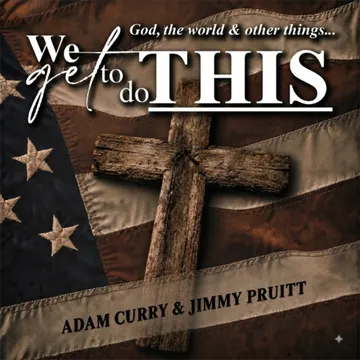
Episode 27 · Wednesday, 8 April 2026

Faith in the Fog of War

A harrowing vehicle malfunction reignites the debate over automotive technical debt while cultural battles over Texas education and AI-driven bioclasm redefine the modern spiritual landscape.

By We Get To Do This | 59m listen | 19 chapters
Faith in the Fog of War cover
We Get To Do This · No. 27

About this episode

A new Lexus equipped with advanced digital safety sensors suffered a catastrophic unintended acceleration event, crashing into a church Life Center in Texas. Despite the vehicle's driver-inattention warnings and collision-avoidance systems, the airbags failed to deploy as the car struck the building intended for special needs ministry. The incident mirrors the 2009 Toyota recalls and raises urgent questions about the persistence of legacy spaghetti code and technical debt within modern automotive software architectures.

Investigations into the $1.2 billion Toyota settlement reveal a throttle system reliant on 11,000 global variables, leaving vehicles vulnerable to bit flips caused by cosmic radiation. Beyond the road, the Texas State Board of Education recently heard testimony from activist Rick Green regarding Christian influences in social studies curricula, sparking a six-hour debate over the separation of church and state. Meanwhile, Secretary of Defense Pete Hegseth draws parallels between the rescue of an F-15 pilot and the Easter story, while Donald Trump utilizes aggressive rhetoric on Truth Social as a form of strategic propaganda against Iran.

Evangelist Abdul Murray joins the program to define bioclasm as the modern deconstruction of biological reality and the image of God. Between discussions on the theology of war in Ecclesiastes and the dangers of date-setting for the Second Coming, the team enjoys a delivery of pickles from a listener named Bo. The session concludes with a warning against cognitive debt, comparing over-reliance on AI tools like MidJourney and LLMs to a diet of digital fast food that erodes human critical thinking.


CHAPTER 01 / 19 Discussion

Opening Prayer and Technology Reflections

The session opens with a prayer in the name of Jesus, expressing gratitude for the privilege of serving listeners. The hosts reflect on the gift of life and the ability to adjust hearing settings via smartphone technology. They acknowledge that while technology has significant upsides, it also presented challenges that prevented the show from airing the previous week.

jesus· prayer· technology· easter· pastor brian

00:00 Let's pray. Let's pray more. Yes. Father, in Jesus' name, it's always a joy and a privilege to be before you on these microphones, having a conversation with my best friend. Thank you for Adam. Thank you that we get to do this. It's not just another cute saying. It is a mantra. It is a motto of life. It's a maxim. So thank you, Lord, that we have the privilege of serving you, but we also get the privilege of serving one another and serving people. So we pray for our listeners today. Anyone who will stumble on this, maybe even by accident, which shall not be by accident, we ask that you would lead and guide people to this, and that what we say would do something in terms of putting lift under their wings.

00:41 And Lord, we do it in the name of Jesus. Amen. Amen. It's Wednesday, April 8th. We get to do this. This is episode number 27. This is the life we've been blessed with. This is a gift for we get to do this. This is the chance we dare not miss. This is a life. We get to do this. Well, hello, brother. I'm just adjusting my ears. Old man talk. Might as well start with what's happening. You're doing it right there on the phone. Yes. The ears are the most important part of the show. You know, technology is so fun. It's just cool.

01:24 I mean, I can adjust my hearing on my phone. It's the coolest thing ever. There's really good things. There are good things. There's upsides and downsides to all of it. You preach the truth. And we're actually going to talk about some of the downside of technology, which thwarted the show last week. No kidding. I got to say, I love it, it's good and bad at the same time, but I love it when I walk in Sunday morning. It was a special morning, of course, because it's Easter. And people come up to me and say, What happened to the show? What happened to the show, man? What happened? I got a lot of people. We got a couple emails too. Even Pastor Brian had people in his distant family saying, What happened, man?

CHAPTER 02 / 19 Discussion

Lexus Safety System Failure and Building Collision

A host describes a harrowing experience involving a new Lexus that suffered from unintended acceleration. The vehicle lurched forward while the driver was braking, eventually crashing into a new church Life Center building and causing significant interior damage. Despite the car's numerous digital safety sensors and "driver inattention" warnings, no safety systems engaged and the airbags failed to deploy during the collision.

lexus· toyota· car accident· safety features· life center

02:07 Wow. Yeah. Wow. Yeah, it's good. Yeah. So we have a little technology issue that we're dealing with. So we bought a new car. I bought Annette her dream car. I'd made her a promise years ago when we were in a really poor situation and we had to sell her car, her favorite car. Oh, wow. I did one of those commitments. I said, Hey, one day when we can, I'm going to get you the car of your dreams. And we ended up doing that. It's Alexis. Nice. Oh, I was ready for a Bentley. I know. This is what she wanted. And we actually had the car built. I mean, we chose all the features. And so it's got about 10,000 miles on it. About a week and a half ago, I'm driving, pulling up to an intersection.

02:47 Car goes in full tilt forward mode. I mean, the engine just full on. You're braking? I'm breaking. I'm pulling up. I'm probably doing 10 miles an hour, 12. Just about to stop. Had enough room in front of me that I was able to pump the brake three times to cut the whatever was going on. It took three pumps to stop it. And then the engine died back down. It was acting normal. And we were on our way to see you guys at Calivance. Right. That's what happened. Oh, really? So, but you didn't even mention it then. Because I didn't think anything. We're guys like, yeah, whatever. It's just a car. I literally never thought about it again until last Wednesday. Annette's just pulling into our parking spot up to our new building, our life center. Which hasn't even officially been opened.

03:33 We're getting ready for. We had people in the building getting it ready for our grand opening and going to do a little open thing. So she's pulling up five miles an hour, maybe not even that. Foot on the brake because I actually tested it this morning. You can't pull into that parking space without riding the brake. No, you have to. Yeah. Because you got to make a right turn, a left turn. She gets up almost to that little concrete bumper. Car does it again, full tilt forward. She jams on the brakes because her foot was already on the brakes. She just goes to the floor with it. And the car lurches over the concrete barrier into the building. Oh, man. Made a massive dent, but it also moved an interior wall, which damaged everything in three rooms.

04:16 The ceiling, ceiling tiles fell out, cabinets broken. Just unbelievable. Now, it wasn't quite like the cartoon where she was in the building, you know, looking at everybody on the other side. Oh, goodness. Because she hit the wall square on the interior wall. Had she hit on either side of that, she would have gone into the building. Man. So she backed it up and was able to get the car, and then she turned it off. Of course, fluids running out from under it. The front ends smashed. Did the airbag deploy? Did not. No warning lights. Here's what's weird about that. That's why I know this is an issue, a safety issue. If I'm pulling the car in the garage and it thinks, this car just thinks too much. much, for one.

05:01 I like to drive my car. It doesn't even let you look away too long. Oh, no. I was on the road. I was on the road. It tells me sit up constantly. Sit up. I'm like, are you my mom? This is my mama here. Sit up. This car tells me, or your driver, and attention. If I'm like looking at a cow or something, you know. So anyway, when I'm pulling in my garage, if I'm like within a certain distance to the side, the car slams on its brakes and stops. I mean, it'll even pull up a big sign on the dashboard, which is all digital. Danger, danger, yeah. Brake in big orange lights. Right. And so this car has all kinds of safety features. None of them, airbag didn't deploy. Safety features didn't engage.

05:45 Nothing. Straight into the building. And so I actually texted you at that moment. Said, hey, we on, is the studio good? You're like, that's right. It was right before the show. It took you a few moments. I'm like, he says, no, Annette had an accident. And it's happening. And Tina's standing right over my car. We're all flipping out. Like, what's going on? What do we need to do? And you said, no, it's okay. And then as we got the story, and then, you know, there was just so much that you had to do. Phone calls, insurance. Everything just. So, you know, I've been on the phone this morning. You even wanted to come out on Friday morning, brother. Because it was Holy Week and everything. I know. I got to say something about this Lexis/slash Toyota issue.

CHAPTER 03 / 19 Discussion

Toyota Unintended Acceleration History and 2009 Recall

The discussion examines the historical context of Toyota and Lexus safety issues dating back to 2008. A 2009 news clip details a massive recall of 4 million vehicles, including the Camry and Prius, due to accelerator pedals getting trapped by floor mats. Safety experts at the time questioned the electronic connection between the throttle and the accelerator pedal, suggesting the mechanical fix might not address underlying computer issues.

toyota· lexus· recall· accelerator pedal· nhtsa

06:31 And I actually want to bring in the constitutional lawyer, Rob Cardi, boots and suits. And I'll tell you why. Because amazing. This has been an ongoing issue with Toyota and Lexus since 2008. And because I know that some people here look stuff up. And so I sent my robot out to go and find some stuff. I got two clips, which will first, the first one is alarming. You'll probably remember this when this happened. This was 2009. I do remember. And the soundbite is a little bit alarming, but this is what it could have been, you know. So I'm really, I'm deadly serious about how bad this is.

07:18 Toyota, which built its reputation on safety and quality, now says it knows how to fix the problem behind the biggest recall in its history. Yeah, this is actually the scary clip is the other one, but this is the idea. The automaker will redesign accelerator pedals in 4 million Toyotas and Lexuses, including the Camry, America's top-selling car, 436,000 sold in 2008, and the Prius, the best-selling hybrid. The trouble is, in Toyota vehicles like this 2009 Tacoma pickup truck, the gas pedal can get tangled up in the floor mat, causing the vehicle to speed up. Even if the driver pumps the brakes, it's not enough to stop. Five deaths have been blamed on this unintended acceleration.

08:01 And the recall was prompted by a crash outside San Diego last summer that killed four family members. This is the clock, the family's horrifying last moments, captured in this 911 call. We're in trouble. We can't. There's no brake. We're approaching everything. Hold on, play, pray. The redesign pedals will be ready for installation beginning next April. In the meantime, Toyota will recall the cars and shorten the accelerator three quarters of an inch, perhaps as early as January, so the mat can slide under it without trapping it. Simply put, Toyota's engineers weren't up to the job on this one.

08:44 While Toyota says it's very, very confident the problem's been addressed. Safety expert Clarence Ditlow says Toyota still has more work to do on the electronic connection between the throttle and accelerator pedal. Some of this is clearly. So in 2008, 2009, this was called an electronic connection. We weren't really thinking about computers at the time. Neither do the electronic controls in the vehicle. In fact, Toyota is doing more work, planning to install a system sometime next year so that if the brake and gas pedals are pushed at the same time, the brake wins. Jim Axel on CBS News. So what they're really not saying here, and we really didn't have that much knowledge at the time, is both the accelerator pedal and the brake pedal are not actually physically connected to anything.

CHAPTER 04 / 19 Discussion

Toyota Spaghetti Code and Technical Debt Risks

Following a $1.2 billion settlement in 2010, investigations revealed that Toyota's throttle system relied on "spaghetti code" containing 11,000 global variables. The hosts discuss the concept of technical debt, suggesting that legacy code issues may still persist in modern vehicles. They also explore the risk of "bit flips" caused by cosmic radiation in lower-grade chips, which can cause catastrophic electronic failures in cars and aircraft.

akio toyota· spaghetti code· technical debt· bit flip· cosmic rays

09:29 You're not hitting hydraulics. You're not hitting wires. It's all electronic sensors. And so this went on, and of course, the news was very different in 2008, 2009. We didn't, I mean, we remember this. I remember the podcast, and it was blamed on the accelerator getting stuck under the mat was the biggest lie in automotive history. Totally agree. Here's the second clip. clip, and then I have some interesting follow-up to it. An emotional Akio Toyota assured thousands of workers in Japan today that his company has changed.

10:07 But how much is debatable? Because over the last two weeks, more than 60 Toyota owners in this country have complained of unintended acceleration even after their cars were recalled and supposedly fixed. Carolyn Kimbrell of Whitesville, Kentucky, says her Avalon shot past her driveway mail. You had one of those, didn't you? An Avalon? On its own and headed for the street before she turned off the engine. Exactly the same thing. That was February 28th, eight days after the prescribed fix. A metal shim was inserted into the pedal assembly to keep it from sticking near the floorboard. Golly, if I'd have been at a busy intersection or something, I could have gone halfway through it before I got the car stopped or ran over someone or something like that.

10:52 So now I'm really scared to even drive it. In a statement, Toyota said it's taking such complaints seriously and has sent technical SWAT teams to investigate a handful of cases. All along, the company has insisted that despite what a growing number of critics claim, its computer-controlled throttle system is not to blame. Today, Congress said company documents fail to show that Toyota rigorously investigated that possibility. So there was a guy who investigated this on behalf of the court, and he found that in the computer system, which was running the accelerator and the brake at the time, there were 11,000 global variables, which is anyone who knows computer code will go, I know.

11:37 Wow. He called it spaghetti code. And ultimately, Toyota wound up paying $1.2 billion in 2010 to avoid prosecution for misleading and deceptive statements to regulators. Now, what I believe has happened here is, first of all, praise God that this happened where it did happen. And it could have been so, so, so much more severe. But when you start with a code base that has 11,000 variables and you've got spaghetti code, unless you really go back to the drawing board, stop your production for at least a year, two, maybe three years, you're living with that legacy.

12:26 It's what we call technical debt. Wow. And it's still in there. The crazy thing is that it could also be at this point the type of chip that they're using. This recently happened on an aircraft. Do you remember when both engines shut off at the same time and the plane crashed? Wow. This is because they were using lower-grade chips, which can, there's a bit can flip inside the chip based upon a cosmic ray. So literally sun radiation, which happens everywhere. And most of these systems are shielded, protected, certainly in aircraft, so that this can't happen.

13:10 But they need to do that in their vehicles as well. And I got to be honest with you, brother. Like, I'm afraid for all kinds of stuff like this. I am too. Particularly the bit flip. The bit flip is just cheap. It's cutting corners. And you can sit there and go, well, you know, we had all the software right, but the chip failed. Well, this has to be protected. So I think there's more work to be done on this. No doubt. And, you know, I know that you all are going through a lot now with Toyota and insurance and all that, but we may want to investigate what can be done, not for money or for anything, but so that this doesn't happen to other people.

CHAPTER 05 / 19 Discussion

Texas State Board of Education Social Studies Testimony

A host recounts testifying before the Texas State Board of Education regarding the inclusion of Christian influences in the social studies curriculum. The testimony involved debates over the separation of church and state, with mentions of "woke pastors" opposing religious content in schools. Activist Rick Green is noted for challenging board members on the constitutional basis of their arguments during the six-hour session.

texas· state board of education· social studies· rick green· religious influence

13:48 This is just frightening. Well, I did a little research before I started making calls because, you know, there's code language in this. One of them, unintended acceleration is a code word. And when I use that, a customer service rep just very serious, but it was good because, and also, you know, that this is a, you know, it's a safety event. This is a catastrophic safety event. Had she been, you know, when I explained to the guy I was talking to that she was in a church parking lot and there could have been people. There could have been people in front of the car. I mean, so many things could have gone wrong.

14:30 And this is why, in the middle of this insanity, I'm praising God because the book of James tells us where to count it all joy, my brother, when you fall into various trials. So I'm like, okay, we're in a trial right now. I've been on the phone and in the middle of the Super Bowl weekend, which we call Easter, you know. We call it the Super Bowl weekend for churches, insanity, crazy busy, huge services, three services back to back. Then I get an emergency call. I run to Austin. I'm supposed to testify before the Texas State Board of Education. I was so far down the list, they didn't even get to it yesterday.

15:08 I would have had to stay overnight again tonight, even to get on. But we were there for six hours listening to testimony about social studies and not having religion and Christian influences in our curriculum. And that in Texas, huh? That's another conversation. But there's some good things on the horizon for Texas in that regard, even though it was hard to listen to some of this testimony by people posing as pastors. Oh, really? Oh, the amount of woke pastors. I call them imposters. They're not pastors. They're imposters. They're not pastors. They're imposters. And they're saying we don't want anybody teaching our kids religion.

15:47 We don't want anybody in schools. Yeah, school is not the place for, I mean, you know, in separation, if I heard that term 16 or 20 times. Yeah. And finally, a couple of people schooled them on that, which was amazing. Rick Green being one of them. Good. Could you point to that in the Constitution, please? Oh, well, actually, one of the board members, state board. Oh, really? Oh, good. Again, great conversation. And I learned a lot through this process. Good for us to be there. But in the middle of that, my phone's ringing from Houston, from Indiana, South Carolina, because we're trying to get this all taken care of.

16:24 But it's just, man, it's just been a crazy few days of just travel, being in an environment that I can't answer a phone call. So anyway, that's where we're at. I'm not whining. I'm counting it joy because it could have been so much worse. Exactly. Now, after my joy counting, I'm saying now we need to do something about this. So that's where I'm at now of getting serious about getting this taken care of and our building taken care of. Yes. Because that delays our opening. Oh, huge. And, you know, the first thing, well, after, not the first thing went through my mind, after we know everything's okay and everybody's good. I'm like, you know, this life center, which is meant for children basically who are challenged.

CHAPTER 06 / 19 Discussion

Life Center Mission for Special Needs Families

The damage to the church's new Life Center is framed as a spiritual attack intended to delay a ministry for families of children with special needs. The hosts emphasize that this demographic is often unreached by traditional churches due to a lack of qualified staff. While working cooperatively with Toyota through a guest portal, the hosts plan to escalate the safety event to the National Highway Traffic Safety Administration.

special needs· life center· church ministry· toyota· highway traffic safety

17:05 What is the term we're using? What is the now you threw me a curveball? I had it. We have been. I've been saying this for days. So it's for children with special needs. Special needs. There we go. And families. And they can't come to church because there's no one to help their children. And most churches aren't qualified to do that. We've got the qualifications. We've got the people. Now we have the building. Yeah. But now it's being delayed in terms of exist. And Leslie, who's been running a lot of this, Pastor Brian, other Pastor Brians, one of the five Pastor Brian's

17:43 wife, she talked about this at church a couple weeks ago, and she said, you know, this is the largest unreached group for faith. The largest. Yes. And so when I see this happen, all I can think is, oh, the enemy's like, what? You're going to bring 10, 20, 30 kids to Christ? No, I got to stop this. And their families come to church. Yes. So I'm like, wow, okay, not today, Satan. Not today at all. And that, honestly, that's been motivating me. That has energized me to not just get frustrated on these phone calls. I will say this about Toyota Lexus. They've been very congenial, very cooperative. They have returned calls. They set me up on a guest portal.

18:28 You know how these are. It's like a little board, a little whiteboard. And I'm actually documenting everything as we go. And I'm documenting it on the portal called no answer called return call. I'm being generous. And I want to work with them. I want to get this done. And so far, so good. Right. But there's other things that we, this is much bigger. This is what me and Annette are worried about. Other people driving a car that is having similar issues. We're also going to send a letter to the Federal Traffic Administration. Highway Traffic Safety Advisor. Thank you. I can never remember the title. It's got a bunch of initials. So I've got that letter drafted and ready to fire off.

19:09 And I told them I was sending it, and that got their attention as well. Of course, of course, it's within your rights to do so, you know, reading off the script. But anyway, it's interesting. We're going to be fine. Everybody's going to be okay. Cars can be fixed, but she won't be dressed. She does not want that car. No, we're done. I wouldn't either. I'm done. Yeah. I'm done. So I don't know. We'll do that. Back to the Berkeley, brother. There we go. Right now we're driving the beater. The beater is on the case. My beater. Just because everyone always wants to know. you know, what's our view on the world and what's happening in Iran? I pulled the clip. This is an old clip that represents theory about

CHAPTER 07 / 19 Discussion

Donald Trump, Iran, and Strategic Propaganda Tactics

The hosts analyze Donald Trump's aggressive rhetoric toward Iran, comparing his public persona to a calculated "power play" or professional wrestling persona. They discuss a specific Truth Social post containing an F-bomb, arguing it is a form of strategic propaganda designed to make adversaries believe he is unpredictable. The segment also touches on the economic impact of global tensions, noting fluctuations in the stock market and oil prices.

donald trump· iran· truth social· hulk hogan· iron sheik

19:54 President's F-bomb tirade. Let me play this clip and maybe it fits right in with your theory. World Wrestling Federation heavyweight champion Hulk Hogan against the Iron Sheik. What? That's your surprise to miss. Well, I'll tell you something. You show the match. You go ahead, Jack. And don't you ever pull no surprise on me again, or I'll tighten your tie. Good for you, boy. We are going to go up to the ring right now. The introductions to our championship ball with the World Wrestling Federation Heavyweight Champion. So this was the 84 Mary Square Garden. The Eye of the Tiger, Hulk Hogan, rest in peace, and the Iron Sheik from Iran.

20:36 And when I saw what happened, that's all I could think of. I'm looking forward to your analysis of that. Oh, my absolute thought was this is a power play. This is a calculated. He did not just sit down and peck that out in 30 seconds and send it off. This is calculated to say, I'm a nutcase. You better believe I'll do what I said I'm going to do. It's him going freaky on purpose. We already know this. Donald Trump does not care what anybody thinks about him. He doesn't care if a bunch of Christians are going to lose their mind because he's suddenly not walking in the boundaries. You know what I'm saying? And we need to get over all that stuff. This is a man who's trying to protect the globe.

21:19 Amen. So give the guy some grace and cheer him on a little bit instead of getting upset because he used the F-bomb or threatened to annihilate a race of people. I read it and I went, whoa. At first, I was like, this has got to be AI. So I actually fact-checked it with AI, of course. He's a chat check. And it said the one I sent them had was not the original, so they couldn't give the accurate. Right. So then I looked on Truth Social, which I actually still have an account with him. I've never used it, but I looked it up and sure enough, there it was. Find out it is true. But I know it's this is called

21:57 strategic propaganda, where he literally throws something out there that sounds so crazy that it's going to make crazy people think he'll do it. And this is his work. This is his algo. I actually think that he already had the deal in the pocket. I think that, you know, that's part of it. He said they'd already been meeting. And we have two weeks. May I just say, I guarantee you, there will be another event like this. It's going to happen. That's the algorithm. That's how it works. We kind of forget the crazy rocket man. Hey, little rocket man, the button on my desk works. I don't mind pushing it. You know, we've forgotten about we forget so many things.

22:37 But I truly believe he has figured it out. The straight afore Moose today, this is Wednesday, April 8th. The stock market opened 1,300. That's okay, whatever. But oil went down below 96. You know, every fact, it takes time. The whole, it's, it's going to be okay. And I've said this from the beginning. Now, is it a real war? Absolutely. Is war ugly? Do people die? Yeah, absolutely. This is actually something I wanted to talk about. We have our Secretary of War, Pete Hegseth, who has been,

CHAPTER 08 / 19 Discussion

Pete Hegseth and the Good Friday Pilot Rescue

Secretary of Defense Pete Hegseth shared a story regarding an F-15 fighter pilot shot down and subsequently rescued in a mission involving C-130s. Hegseth drew parallels between the pilot's three-day ordeal and the Easter story, noting the pilot was rescued on a Sunday morning. The hosts discuss the "cringy" nature of mixing military reports with religious sermons while acknowledging the reality of faith in combat.

pete hegseth· secretary of defense· easter· f-15· iran

23:17 and I like him. I have to say, I like Hegseth. I do too. But he's been really laying it on pretty thick with the scripture, et cetera. And I just want to play a few clips and discuss it because as a new Christian, and I'm sure others have this feeling, it's hard to put war and faith and God all into the same bucket. And I see how the mainstream media have actually posted lies, which will say, well, Trump's pastor said that he's fighting for Jesus. And she didn't say that.

23:59 Nobody said that. But here's, I think this is the Good Friday message from our Secretary of War. He sent a message. God is good. Hegseth drew a parallel between his journey and the weekend holiday. You see, shot down on a Friday, Good Friday, hidden in a cave, a crevice, all of Saturday, and rescued on Sunday. Flown out of Iran as the sun was rising on Easter Sunday. Now, I like it, but it feels a little cringy to me.

24:37 It's cringy. Okay, it's not just me, right? It's like. it's cringy. And there was some more here. Secretary of War Pete Hegs has posted, God is good. This is not something you write on the back of an envelope. These are contingencies that have to be prepared ahead of time and activated when something goes wrong. So, what went wrong is we had a pilot shot down. Right. And the account that I have heard from my military contacts is pretty much what you've heard about the C-130s and how they flew in, how they got this pilot. Pilot was injured. And again, here's Hegseth's recount of the communications with this F-15 fighter pilot.

25:15 When he was finally able to activate his emergency transponder, his first message was simple and it was powerful. He sent a message: God is good. In that moment of isolation and danger, his faith and fighting spirit shone through. You see, shot down on a Friday. Hidden in a cave, a crevice, all of Saturday, and rescued on Sunday. Flown out of Iran as the sun was rising on Easter Sunday. A pilot reborn, all home and accounted for, a nation rejoicing.

25:59 God is good. Pretty dramatic, but very good sermon. I mean, that's like sermon stuff right there. Sermon level. Sermon story. I may use that. But it's just harsh. It is cringy. Because a lot of people are, you know, will be reaching out or saying stuff or slinging stuff. Well, you know, this is your godly president and your secretary. Oh, I've already got stuff. So to me. As Christians, how do we respond to this? I mean, help me even think how I feel about it because war is in the Bible everywhere. And David prays to God, like, help me whoop my enemies' butt. So

CHAPTER 09 / 19 Discussion

Ecclesiastes and the Theology of War

The hosts reflect on the biblical justification for war, citing Ecclesiastes 3 and its declaration that there is a "time for war and a time for peace." They argue against "replacement theology," asserting that the Old and New Testaments must be read in harmony. The discussion concludes that in a fallen world, conflict and "rumors of wars" as described in Matthew 24 are inevitable until the world is fully redeemed.

ecclesiastes· bible· old testament· matthew 24· theology

26:44 how does it, and he does. How does it all fit together? Yeah. Yeah. Without getting too deep in the weeds on this, I'm going to read a scripture that you may have heard this before, especially if you were listening to music in the 60s and 70s. This is from Ecclesiastes chapter 3. Are we doing some birds? We're doing some birds. Here we go. But here it is. And it's one of those things we need to hearken back to and remember that the Old Testament was the New Testament concealed. And the New Testament is the Old Testament revealed. They're not separate books. God and his storyline and his story arc made them work in harmony. So you don't say, well, now that Jesus has come, we throw away the Old Testament.

27:29 When you do that, that turns into replacement theology real quick. And so it turns into a lot of bad things real quick. Selective theology. So let's just read. I'm just going to read this. This is out of the NIV, 1984 version before they went woke. So here he is. Before they got, we got to take all the pronouns out. Here we are. There is a time for everything and a season for every activity under heaven. A time to be born and a time to die. A time to plant and a time to uproot. A time to kill and a time to heal. A time to tear down and a time to build. A time to weep and a time to laugh. A time to mourn and a time to dance.

28:12 A time to scatter stones and a time to gather them. A time to embrace and a time to refrain. A time to search and a time to give up. A time to keep and a time to throw away. A time to tear and a time to mend. A time to be silent and a time to speak. And it ends with this verse: A time to love and a time to hate. A time for war and a time for peace. I'll let the scripture stand. You know, we can get into the weeds and start parsing out theology and nuances and phrases. And if we need to do that, we can do that as well. But at the end of the day, we live in a fallen world.

28:53 It is not redeemed yet. And it means that there will always be love and hate, good and evil, peace and war. It's going to be that way. Well, there will always be wars and rumors of wars. Kingdom will rise against kingdom, nation against nation. That's Matthew 24. Yeah. Yeah. Well, and that's kind of what's happening: there's people who say this have probably not read the Bible. Also, even if you read the Bible, you're not going to remember anything. True. I mean, we're on the third go-through now. And like, oh, I don't remember that. What? Look at this differently now. Yeah, I mean, just in the New Testament, I mentioned this on Sunday, how many actors.

CHAPTER 10 / 19 Discussion

Eschatology and the Dangers of End Times Predictions

The conversation shifts to eschatology and the pitfalls of setting specific dates for the return of Jesus, referencing the failed 1988 predictions. The hosts express concern over "YouTube pastors" who claim the end is imminent, suggesting such sensationalism can lead to a lack of actual preparation. They emphasize the importance of the Parable of the Ten Virgins, focusing on maintaining "oil in the lamp" rather than tracking headlines.

eschatology· resurrection band· prophecy· youtube· second coming

29:34 actual prophecies have come true? No, no, how many actual verses there are in the New Testament just in the New Testament, 7,957 verses. Yeah, memorize that. Okay. Yeah, it's hard to stay on top of it, just like it's hard to step on top of the laws in our land and all that. So, yeah, you got to go back. So, there's another thing, and you brought this up in the Resurrection Day sermon, which I think is a better description of the day, but okay, Easter. Yeah, Res Day, absolutely. Res. Res day. You know what resing is? No. Oh, it's like in a video game where you die and then you come back.

30:19 You resolution back. Oh, it's called Res. Interesting. Well, another term that's used for res is there's a band. Christian, one of the early Christian rock bands called the Resurrection Band. Oh. Then their name went to Res Band. Okay. Az Res Band, the Resurrection. How come this is not on Hello Fred? I got to find these guys. Oh, brother, they rock. I'll get through. I can hook you up with some res band, brother. Excellent. Now, you brought up, say, you know, you were talking about eschatology and the end times, and how in 1988, you know, the book came out, like Jesus is coming back in 1988, and he didn't.

31:00 And I find you always cautious about end times and talking about prophecy coming through, but coming true. But obviously, we're one closer, one day closer to Jesus coming back today than we were yesterday. But it kind of hit me that when you see what's going on in Iran and Elam and all the different prophecies that are in scripture, and there's a lot of YouTube pastors, a lot of them, who really go all in, like, this is it, we're getting close. I have a problem with this because to me, that's like 1988 book.

31:44 And the whole point is we have to be ready. You did this beautiful piece about the ten brides and the oil and the lamp, and half of them didn't have oil in their lamp. And the analogy is, you know, the parable is clear. We have to be ready for Jesus' return. But if we keep watching YouTube people who are telling us that it's here, it's here, it's almost here. We're in these times. Aren't we setting ourselves up to actually fail and not be prepared? Or is this something that keeps people prepared as long as you keep watching it? I mean, I don't know. I got problems today, Pastor Jimmy. I got issues with. Please, this is why I'm here, brother. So, first of all, you have to embrace the tension of how we live.

CHAPTER 11 / 19 Discussion

Hebrew Wedding Traditions and the Second Coming

The hosts discuss the 2,400 biblical mentions of the Second Coming of Christ, contrasting them with the 300 prophecies of his birth. They explain the timing using the Hebrew wedding tradition, where the son does not know when to claim his bride until the father gives the command. This cultural context is used to explain why Jesus stated that only the Father knows the hour of his return.

hebrew tradition· second coming· book of revelation· paul· timothy

32:28 You know, we're living towards something that we know is inevitable. It's going to come if we believe the Bible, if we believe what he said is true. We have some substantiation and some solid ground. You know, there were over 300 biblical prophecies of Jesus' birth, of his first coming, right? The Messiah's coming. And they were all fulfilled in Jesus. In hundreds of years of time. Right. Over time. Exactly. Exactly. They waited a long time. There are also 2,400 biblical prophecies of Jesus' second coming. So think about the disparity there. Wow. 300 for his birth, 2,400 for his return. Right, right. Now, some of these weren't specific prophecies. It's how it's mentioned in scripture.

33:11 So saying it's going to happen, but it might not have been a prophet saying it's going to happen. You know what I'm saying? It's mentioned by Paul. It's mentioned by Timothy. It's mentioned by, I mean, you go through the New Testament book of Revelation. So 2,400 mentions of Jesus' second coming. That's a pretty big disparity. 324, which says to me, this is not just inevitable. It is not probable. It is inevitable. It's happening. It's coming. Now, when it's coming, Jesus doesn't even know. He even said he said that. The reason is, is because he's the son of the father. And in the Hebrew wedding tradition, the son didn't know when it was time to go get the bride until the father told him.

33:56 That's why Jesus used that analogy several times. And even talking to his disciples at the Last Supper, he says, not even the Son of Man knows. Right. He said, but my father, he said, I go away to prepare a place for you. In my father's house are many rooms, not mansions. We're not getting a six-story Elon Musk house when we get there. Oh, I know. Sorry. I thought I had a view of Easter bubble. Come on, man. You're getting a bridal chamber because that's exactly what he's talking about. And, of course, they knew what he was talking about. You have to get context and we got to learn it, right?

34:34 So he goes away to build this house. And in the Jewish tradition, it could be up to a year, which that's a long time after you proposed. And now you're betrothed and legally married. Do you know, even during the betrothal period, if they decided to split, they had to get a legal divorce. They could not, by law, they were legally bound. Right. Right. Just through their commitment to that. And they drank a cup of wine over it to literally solidify the covenant. Yeah. At Calibance. Yeah. Probably. Theirs is pretty good. So, yeah. So anyway, we see the setup here. Yeah. But what can we do to protect our hearts from disappointment? Okay. All right. I got that. Again, you got to live in tension. You've got to live with an element of mystery.

35:18 Jesus said we walk by faith. Not Jesus. Paul said we walk by faith and not by what? Sight. Sight. But we live with expectation toward the future, but we trust God with it and its timing. If Jesus himself doesn't know the timing, only the Father, then Jesus himself is waiting to get the call. He's on call. I mean, it's going to happen. His beeper is going to go off, right? Remember beepers? Old school. It's very off. It's going to happen. Like that restaurant. Oh, wait. I got a 911 on my beeper. I got to make the call. It's time. Hello, old people who are listening. You know what we're talking about. Wow. That's yeah. Yeah. It's going to go off. It's going to happen. So here's the deal, though.

36:00 When you live with expectation, you can get into a weird place where now it's going to be today or it's going to be tomorrow. Or I've looked through the Gregorian calendar. I've looked through the Jewish calendar, the Roman calendar, blah, blah, blah. And I've calculated it. I mean, come on. If Jesus didn't know, you think you're going to get it figured out? You're not. You're going to solve the puzzle. That's where I struggle with a lot of these guys and gals that are just constantly saying, well, according to this, it's going to line up. And I'm like, that's way above my pay grade. And frankly, it's above theirs too. Now, he did say, you'll know the seasons. In other words, there's a sense where we begin to see world events and we can go, it's closer.

CHAPTER 12 / 19 Discussion

Muslim Listener Perspective from Bahrain

A listener named Muhammad from Bahrain sent a message expressing his appreciation for the show and the commonalities between Islam and conservative American values. He shared how his mother's view of Americans changed after visiting Florida and experiencing the kindness of strangers. The message included a Hadith from the Quran regarding charity, which the hosts received warmly while expressing their hope to eventually lead him to Christ.

bahrain· islam· quran· florida· christianity

36:44 And that's as far as I'm going to postulate. Right. World War I'm closer. World War II. I'm sure people. American Revolution. I mean, can you imagine? You start going back through history, the Crusades. I mean, you go back through all that and you start to, or the war between Islam and the Christian church, all that back, the historic wars, people had to be saying, this is it. I'm glad you brought that up. We got a note from one of our newer listeners who lives in Bahrain. Wow. His name is Muhammad, and he's been, I've been in touch with him for quite a while. Very cool. He has a lot. He lives there with his family and he knows a lot of what's happening in the region.

37:28 And he's been listening to the show. And he's Muslim, and I wanted to share what he said. Brother, I enjoy your conversation with Pastor Jim. You find it fascinating how much we share in common, unlike the nonsense you hear from the mainstream media. We, as Muslims, believe in Jesus' message and his teachings. I personally find Christianity the closest religion to Islam and Jesus as one of the most beloved figures we have. I always saw true conservative American values as some of the most realistic representations of what Muslims should become. Greeting strangers with a smile, close families, supporting each other in need. My mother used to have a view of American people as immoral and indecent aggressors.

38:08 Her whole worldview changed when she visited Florida and was thrilled by all the cheerful and good Americans asking how she's doing. I'm a big fan, but you don't know how happy I am to see you following Christ, hearing about your experience and your newfound relationship with God brighten my life. I worry a lot about abundance, which rots the soul. I see this wherever someone orders a meal with a side of salad he doesn't even eat, or when a fast food restaurant throws 12 packs of ketchup in my bag. Whenever we are vacationing in the U.S., my wife and I always pack the rest of our food whenever we eat outside. We give this to random Latino workers, homeless guys, or park attendees. The response we get is wild.

38:48 And then he sent me a hadith, which is a piece from the Quran. It's a verse from the Quran. Cool. And, you know, I always say to be understood, you first must seek to understand and vice versa. And this is just a few lines. You're smiling in the face of your brother is charity. You're commanding what is right and forbidding what is wrong is charity. You're guiding a man in a land of misguidance is charity. You're helping a man with a weak eyesight is charity. You're removing a stone, a thorn, or bone from the road is charity. You're pouring from your bucket into the bucket. bucket of your brothers is charity. And I like that last one, of course, because of leaky buckets.

39:30 So, all this to say, I really, I love this guy. I appreciate that he sent that. Absolutely. There's a lot going on in Texas right now. You can find Christians who are insane. You can find followers of Islam who are insane. Absolutely. Just beware of the person who's actually talking to you. It's not all one group. Totally. And when I read this, it's like, I just want, I want to share that. And I appreciate Muhammad sent that. I do too, Muhammad. Thank you for connecting. Feel free to write me. Love to engage with you, brother. Oh, we definitely want to bring him to Jesus Christ. I mean, wow, I'm on a mission. He's not getting off that easy.

CHAPTER 13 / 19 Discussion

Bo's Pickle Ministry and Community Sharing

The hosts discuss a gift of pickles sent by a listener named Bo, intended for the entire production team. They joke about the "addictive" quality of the pickles and the potential for a "pickle ministry" to help distribute them. The segment highlights the importance of small acts of kindness and community engagement within the listener base.

pickles· ministry· dopamine· community· snacks

40:15 Hey, speaking of cool people, Bo wrote me. Oh, yeah. And Bo, I just want to say, I've not written you back because my last five to seven days have been insane. So he reminded me that some pickles came your way. Oh, I have not received pickles yet. Yes. Oh, no, I have not seen it. He did. And he said to make sure and tell Adam and Tina that those pickles are for all of us. Oh, oh, oh, okay. Like I would be hoarding them and like pickles? I didn't see any pickles. I'm not going to lie. I would be tempted, brother. They're that good. And also, he wants us to be sure and share some of those. Apparently, it's several with others. And give the good news of Jesus.

41:00 Thank you, Bo. And I'm so sorry I didn't write you back, brother. In fact, it's been like a weight on me. I got to get back with him because he's such a neat guy. And I love his heart and what he's doing with this. Who would have thought it? Pickle ministry. I mean, that's something. I love that. It's like Devos and Donuts. There's got to be a way that we can help him distribute some of these pickles, pay him fairly for it because I think he loses it. He deserves it, and I want to bless him. Yeah, absolutely. And they're also extremely tasty. They are unbelievable. I think there's something in them that creates something, some massive dopamine release or something. Because you take a bite and you're like, I can't. I need more. I need more.

CHAPTER 14 / 19 Discussion

Men of Issachar and Practical Wisdom

Referencing the "Men of Issachar" from 1 Samuel, the hosts discuss the difference between having knowledge and possessing the wisdom to apply it. They warn against extreme reactions to end-times prophecy, such as people quitting their jobs or accruing massive debt under the assumption that the world is ending. True discernment is described as the ability to walk in faith while remaining practically prepared for daily life.

men of issachar· king david· discernment· wisdom· debt

41:43 Eating Pringles, man. You can't eat just one. Very different quality. I know, I know. I'm talking about the addiction. Yeah, the addiction. The addiction is real. Hey, thanks for bringing all this up. I want to kind of maybe close the loop on this. Yeah, please. You know, it's so easy to jump on the YouTube, you know, jump on YouTube and start getting caught up. And then once you watch one, your whole feed's going to fill with this stuff, right? The algos kick in. I just want to share with all of our friends, be careful. There's a great scripture in 1 Samuel says that talks about David's mighty men.

42:21 You know where I'm going with this. And he says, they were like the men of Issachar who understood the times and knew what to do. And by the way, it was one of the smallest group of men of David's mighty men, but they were the ones he went to the most because of their knowledge and their wisdom. It's not just knowledge that'll get you through, it's wisdom, which is the ability to take knowledge and apply it practically to life. And so we want to be of those who are wise, not just knowledgeable, but wise. I've met a lot of brainiacs that couldn't put together a ballpoint pen if it fell apart.

42:58 I mean, they just, they had a lot of information, a lot of knowledge. But if you have no practical wisdom, and we, for me, faith works in real life. Yes. In fact, our little magnet that we made for cars, I came up with that little thing where faith meets life. It's on the side of my car, brother. I'm rocking it. I was going to put it. Actually, it's on a net sitting out there with a big dent on the back of it, but I've got to put it on the side of my car because I got the same issue. I can't put it on the back. It's my car's plastic, apparently. I just took it on there and I let go and it fell to the ground. I'm like, what just happened? My car's not metal. Yeah. Anyway, but I just want to say we have to walk with wisdom, not just knowledge.

43:38 And so as you, we call it discernment. That's the ability to kind of parse out the bad and the good and to weigh it out. That's another way to say that is to put it in the balance. And as you're watching these YouTube videos, just know there are people who want Jesus to come back so badly right now that they're going to say things and it's going to cause them to go over the line, I would call it. Yeah. Where they sort of lose. And we've seen people through the years, as a Christian of 40 plus years, I've seen people literally go into debt and let their debt go and not they quit paying on it because they literally thought he was coming back. Wow. People who've moved up into a commune or a mountain, you know, just I want to.

CHAPTER 15 / 19 Discussion

Prophetic Words and the 1990s California Vision

A host shares a personal story from the 1990s in California, where a worship pastor gave him a prophetic word about a future church in Texas with 1,200 people and tiered seating. Decades later, the church reached that exact milestone, illustrating that God's timing operates on a different scale than human expectation. The segment concludes with a sobering story about a high school friend's sudden death, serving as a reminder to always be spiritually ready.

california· texas· church planting· prophecy· fellowship of christian athletes

44:19 want to be that much closer. I'm getting rid of everything. And that's not wisdom. No. Wisdom says this. We know Jesus is coming back. We know we're one day closer than we were yesterday. Yeah. And it could be today because I will say this. I believe biblically the stage is set. I think we're there, but it could be another century. Yeah. You know, for God, a blink. Yeah, it's come on. Yeah, what could that be, right? Yeah. So I was talking about this. Somebody gave me a prophetic word. You know, everybody sees these things differently. But back when I lived in California, our worship pastor was walking through our chapel where I was setting up to have 200 youth in our youth group that night.

45:05 I was setting up the band and he walks through and he stops and looks at me. We already planned to move to Texas and plan a church. And he goes, Jimmy, he goes, can I give you a word from God? I said, man, lay it on me, brother. Hold on. Can you let me just hit record? Yes. Yeah, go ahead. And he said, he said, I was praying for you and Annette as y'all moved back to Texas. He said, I see 1,200 people in your church, and I actually saw the building. And inside it, you had stands going up in the back. No way. For real. He said that. Wow. And I said, thanks, bro. Appreciate it. And he went on about his business. I thought about that this weekend when we saw, you know, over 1,200 people in church on Sunday.

45:47 And the seats go up in the back here. And the seats go up in the back. And it was like, and we were talking about it in a staff meeting because Brian remembered that word. I'd shared that before years ago. And he said, I couldn't help but think about that word that you got in California back in the 90s. Yeah. And it took this much time. And I said, that was less than a blink for God. We think it takes so long, you know, but for God, that was nothing, right? Yeah. So just in terms of when he's coming back, don't get so caught up in the wind. Just be ready now. Yeah. Be found doing what he's called you to do, what he's led you to do, walking with him.

46:28 Be found doing that. That's what we mean by get ready. And the way I see it, I'm going to meet him no matter what. It's a win-win. You live a good life. I know where I'm going. I don't know. I'm going to see him. You're not living on this with this guilt and shame saying, gosh, I got to get my hack together. I mean, what if he does come back? Well, maybe tomorrow I'm going to eat and drink and be merry right now. Like I told the story about being in a pickup with my friends with a whole case of lone star beer. And we're all talking about God with a dash on the Bible. I mean, a Bible on the dash. Yeah. And it's kind of comical to think these four boys in high school riding around getting drunk after a financial, no, it was an FCA meeting, fellowship of Christian athletes, and we're talking about Jesus.

47:12 And we're all saying, yeah, someday we're going to get right with God. One of them ran his motorcycle underneath a parked semi. Wow. And there was three instead of four. And suddenly, I mean, that kid, that young man did not wake up that morning thinking, I'm going to die tonight. No. You know, nobody does. No. Very few do. So be ready. You just took me on a downer there, Pastor Jimmy. It's like, hey, but the upper is the other three and that. No, that's truck. We're all with Jesus. They're good. We're good. They're good. Even that, that was a wake-up call for us, you know. So be ready. You know, on the Godcaster, we have

CHAPTER 16 / 19 Discussion

Abdul Murray on AI Generation vs Human Creation

The hosts review an interview with evangelist Abdul Murray, author of "Fake ID," regarding the distinction between AI generation and human creation. Murray cites the case of Jason Allen, who won an art contest using MidJourney, to argue that AI does not possess inspiration but rather cobbles together existing human work. The conclusion is that while AI can generate impressive outputs, it lacks the fundamental human capacity to create from nothing.

abdul murray· artificial intelligence· midjourney· jason allen· creation

47:56 every digital station. So we have Bridge Church and Hello Fred, and we have all these different podcasts, and they're promoted. And so all of these promos come through on my screen every morning and I have to approve them. And if I don't like how, honestly, the AI wrote the script and voiced it, I'll either go remix it or I delete it, whatever. We also have focus on the family, the daily focus on the family daily, which is, it's a good, it's a good show. And I'll just want to finish, because we've gone a little long today, but I wanted to finish with this because we've talked so much about AI and how and how to deal with it and how to look at it and how to talk about it and how to use it.

48:37 And he had a really interesting interview with a guy named Abdul Murray, who is an evangelist. He is the author of Fake ID, How AI and Identity Ideology Are Collapsing Reality. And he had some really solid advice and solid things to say. And I wanted to share that because I thought, you know, everyone is kind of struggling with how do we, even you and I talk about it all the time. It's like, well, I used AI for this, but I, but I, but I did it this way. You know, it's like, I didn't actually let it take over my life. I mean, I find myself making these. excuses all the time. Here you do the same thing.

49:19 But, you know, so here he is. This is the first kind of but thing, which is interesting. And this is the fundamental distinction I think we should make: is that AI doesn't create. AI generates. And there's a fundamental difference between creation and generation. Is that when you look at what an AI does, and you can create a painting. And in fact, one of the things that got me interested in this topic in the first place was a guy named Jason Allen. It was big news about a few years ago, I should say. He won first prize in an art contest in the digital art category. He won first prize with a painting that was remarkable. Turns out he used MidJourney, which is an AI generative software, to make it. He just typed in prompts, didn't put pen to paper, brush to canvas, none of that stuff, just created this.

50:00 And the artist got upset about it and said he shouldn't win first prize, but he kept his first prize. And when I saw the painting, I thought, well, that's remarkable. What does that say about what it means to be human? And then you realize these things don't work by creating a painting. The AI wasn't inspired. He had to prompt it. That's the first thing. It didn't do it by itself. He had to prompt it. The second thing was it took samples of millions, if not billions, of paintings that human beings did. Right, the whole inventory it would look at. Exactly. And then cobble that stuff together using a sophisticated algorithm and put an output out. So it didn't create. It used people who did create and it generated. So no matter how sophisticated and how impressive this thing looks, it's not actually creating anything.

50:44 It still doesn't do what you and I do. That made me feel good. Solid distinction there. You know, it doesn't create, it generates. And we're actually part of the creation process by prompting. So that is where that comes from. Now he has some other things. He has some cool little phrases we can stick into our arsenal as well. AI can do that very, very easily because we use it for efficiency's sake. Okay, I wrote something and I got to get it down from 1,500 words to 1,300 words. Hey, can you help me suggest which words to remove? And it does that. You're like, great, that was so great. I would have spent two hours editing this thing. Now I spent a half an hour. I got 90 minutes back.

CHAPTER 17 / 19 Discussion

Cognitive Debt and Digital Fast Food Dependency

The discussion explores the concept of "cognitive debt," where over-reliance on AI for critical thinking and memory leads to impaired judgment. AI is compared to "digital fast food"—convenient for efficiency but harmful if it replaces original thought. Research from MIT and Microsoft is cited, suggesting that heavy users of AI voice features report higher levels of loneliness and an inability to make simple decisions without consulting an LLM.

cognitive debt· digital fast food· chatgpt· open-source· productivity

51:24 And that's wonderful. And thank goodness for that. But then you're busy again, and then you use AI to say, Hey, I have an outline for an essay I created. Can you write this thing? I'll edit that. And then, hey, I need an outline for an essay. And then it creates the essay for you. And before you know it, you've seductively engaged in the same kind of thing, the tyranny of small decisions you were using with fast food. Now you're using with AI. So the issue is AI can be very, very beneficial, but it's like digital fast food. Before you know it, you've used it to do everything for you. And what's interesting as well is the research that's coming out from OpenAI, from MIT, from Microsoft itself. These are the people who are making this stuff. They have put out research, and it's all in its nascency.

52:09 It's kind of early, but it shows you that the more you use AI for original content, for original thinking, the more you use it, the more cognitive debt you incur. And cognitive debt is just a fancy way to say, essentially, that our critical thinking goes down. Our memory actually is impaired. Our sense of judgment is impaired. And what's interesting is the more you use the voice features, the lonelier you get. They were reporting that a high number between one in four and one in five people under the age of 25 were reporting an inability to make any decision at all without first asking an LLM like ChatGPT, what should I do? Where should I go? So that dependency is there. It creates a tremendous dependency.

52:53 Digital fast food. Wow, Chris is the verbiage there. This is a good way to look at it. Yeah. Because we all like a burger, but you can't eat burgers and Chick-fil-A all your life. Okay, did I just make you feel real bad now? No, no, I'm fully aware of everything he said. I'm in agreement with that. Yeah. Which is a real caution for us. I've told you that I like to pray before I use it. Yes. I don't go into like a 15-minute diet. I just like, Lord. And I don't do that for the little things. Like if I'm looking up, you know, who's the dog on Hudson and Rex and who trained it?

53:35 That's to me, that's Google stuff. That's different. Yeah. But when I'm actually using it in terms of helping me with research or whatever, I do pray. And I just, it's a very quick, just, Lord, guide me through this, Lord. Because I don't want to get so dependent on it. It's a great tool. And so, as with any good tool, it can be a tendency to where, man, that crescent wrench doesn't just do this. It can do this too. You know what I mean? You find a thousand uses for a crescent wrench, right? Or vice grips. We've talked about the vice grips. That's the all-around tool, right? can take off any screw with that. He may not get it back on, but knurls everything up. But, you know, that's the idea there. I so agree with that.

CHAPTER 18 / 19 Discussion

Bioclasm and the Deconstruction of Biological Reality

Abdul Murray introduces the term "bioclasm," which he defines as the destruction of biological "givenness" in favor of self-dictated reality. Unlike iconoclasm, which targets cultural symbols, bioclasm targets the human body and the "image of God" distinction between male and female. The hosts discuss this as an enforced ideology that exploits vulnerable individuals, such as those experiencing gender dysphoria, by promising they can dictate their own reality.

bioclasm· iconoclasm· gender dysphoria· ideology· biology

54:19 And great. Yeah, digital fast food and cognitive debt. Yeah, that was really good. That's a big one because that's exactly tyranny of small decisions was another one I liked. He's got one more zinger for us as the last one. I'm so happy that Jim Daly had this guy. And I met Jim Daly the other day in a meeting. I'm like, God, he's a great guy. He's sharp, man. Very, very sharp. So, anyway, here we go. You make a distinction. You talk about AI mania and bioclasm. Yeah. It's a great word, bioclasm. It sounds like something out of Star Trek. What is bioclasm? Yeah, and I have some Star Trek references in the book because there are some good illustrations there.

55:02 So bioclasm is a slightly different, it's got the same effect, but a slightly different topic than the AI mania. But there's a confluence of these two things at the same time. So you have this word iconoclasm. So an iconoclast is someone who takes the icons of tradition that uphold a certain cultural way we look at things. So for example, the icon of New York City was the yellow cab. You know, they were everywhere. They were more numerous than the regular cars. Uber. Before Uber. Uber came and it was an iconoclast because it destroyed the image of New York by removing the yellow cabs and replacing them with everybody's cars. So that was an iconoclastic thing. It destroyed the icon of what New York is and made a new thing.

55:46 Bioclasm is iconoclasm with biology. It takes biological givenness, the thing that makes human beings, human beings, male and female, create an image of God, smashes that and says, you are your own God, and your biology is not a given thing. Your body's not a prison, it's a plaything, and you can do what you want with it. And I think that does take advantage of the very vulnerable in our society, those who have various, whether it's underlying comorbidities, a mental illness, or gender dysphoria, and says, don't worry about that. That's not a problem. That's actually a gift. And you can become this godlike being who can dictate what reality actually is.

56:26 That's bioclasm, and it's become an ideology. It's not just an option, it's an ideology that's enforced. This is where the danger lies. Another level right there. That's where the danger lies. So we just, we got to be aware of this all the time. And brother, I got to tell you, I mean, I have really found some incredible tool-like uses for AI. As have I. And I'm a lot less anti-AI than I was, but I have really pushed myself past any barrier of having any kind of conversation.

CHAPTER 19 / 19 Discussion

AI Production Workflows and Tool Dependency

The hosts conclude by discussing their personal use of AI in production, such as generating transcripts and summaries for long podcasts. They emphasize treating AI as a tool that could disappear or become prohibitively expensive at any time, urging listeners not to lose the ability to create ideas manually. The show ends with a sign-off and a promise to return the following week.

production· workflow· transcripts· automation· software

57:03 I just do this, do that. Right. I don't say thank you. I don't say please, because that's when you get into a relationship without even knowing it. And it's dangerous. It's not good. So I just say, do this, do that, and boom. So I told my daughter, Faith, she does all of our digital production, manages our website. It's real easy to get a blurb or throw something in there, and she's really good at it. But I told her, I said, treat this thing like it could go away tomorrow. Don't become dependent on it to where you can't write a blurb or you can't write a script or whatever for a or you can't generate an idea, create an idea.

57:45 It's a good distinction between create and generate. So you can't create an idea for a video that you're depending on it to lead you down that track. And she said, no, that's the way I think. And I've told her what you've said. Enjoy it while we have it. It may not go away, but it may get so expensive that you can't afford it. I mean, it may move into that. That was my biggest fear because I put together a whole production workflow. And I'll tell you what it really does, which is great because I have some large, powerful machines that can do this for me. I run everything at home pretty much. So I'm not dependent on anybody, but I still am to some degree. So like, go get a transcript from this podcast that I don't have two hours to listen to, make a summary, tell me what's in it.

58:30 Okay, pull that clip. And it's actually doing clips. I mean, it's amazing. This is great. But my first immediate fear was, wow, what if all of a sudden this stuff that is only 20 bucks a month is going to be $2,000? I would still pay for it because that would be worth it in my job. But what if the company just goes away because they go bankrupt? And I don't think either of those will happen, but there's bumpy times ahead. And there's a lot of things. And we should treat it as though it's a tool and it could go away. It's something that could not be there tomorrow. And could you still function? It's like the vice grip. You'll get the bolt off. You may not get it back on. All-around tool.

59:13 Hey, brother, it's good to be back on the microphone. Always. Man, we love our people, don't we? We do. See you next week, everybody.