

Episode 20 · Wednesday, 28 January 2026

When What Sells Isn't What Matters Most

A new era of American isolationism takes hold as the Board of Peace replaces traditional diplomacy and digital algorithms drive a global wedge between the sexes.

By We Get To Do This | 51m listen | 15 chapters
When What Sells Isn't What Matters Most cover
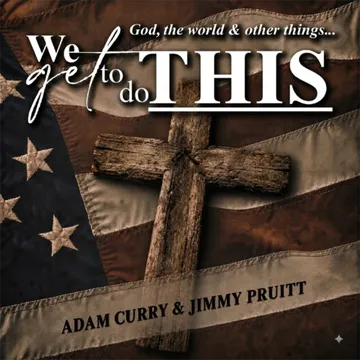
We Get To Do This · No. 20

About this episode

Donald Trump and Secretary of State Marco Rubio are spearheading the Board of Peace initiative, a radical shift in American diplomacy that prioritizes economic leverage over traditional statecraft. This new strategy coincides with a 35-page National Defense Strategy document outlining a Fortress America doctrine, which demands increased burden-sharing from NATO allies and a strategic decoupling from Chinese industrial dependencies. The transition away from globalism marks a pivotal moment for the administration as it attempts to rebuild the domestic manufacturing base while securing semiconductor interests in Taiwan.

Recent reports from The Machine highlight a growing global gender polarization driven by smartphone algorithms that push men and women into divergent ideological silos. In Minneapolis, the repetitive cycle of social media violence has triggered a wave of worldly sorrow, contrasting sharply with the biblical mandate for gracious speech found in Proverbs 16:24. Meanwhile, Bridge Church in Texas recently navigated a severe ice storm by pivoting to remote worship production, a move that mirrors the broader shift toward digital ministry. These developments occur as political organizations like the Democratic Socialists of America face scrutiny for their internal influence on United States border security and foreign policy narratives.

This landmark 20th episode features a candid reflection on the pitfalls of video-based ministry and the performative nature of modern social media. Listeners Jodi and Brian share how they are utilizing biblical armor to navigate the black hole of online conspiracy theories and outrage culture. The hosts advocate for a return to the theater of the mind, drawing inspiration from the legendary Paul Harvey to foster a revolution of tone in a media landscape currently dominated by rage syndrome and dopamine-chasing validation.


CHAPTER 01 / 15 Discussion

God, the World, and Other Things Episode 20 Introduction

The hosts open the 20th episode of the podcast with a prayer of gratitude and a reflection on their journey since the first episode. They introduce the theme of "God, the world, and other things" while referencing the "Daily Grind" newsletter. A reading from Proverbs 16:24 regarding gracious words and the sweetness of the honeycomb sets the spiritual tone for the discussion.

jesus· proverbs· daily grind· podcast· prayer

00:00 Father, we honor you. Thank you for the privilege of what we get to do. We don't take it for granted, Lord. Not any of this. Pray for our listeners today. And whenever they're going to be listening to this, wherever they find themselves, that they would be encouraged, they would be lifted. And Father, they would adopt this simple saying, we get to do this. Father, we do this in the name of Jesus and for your honor. Amen. Amen. It's Wednesday, January 28th, 2026. We get to do this. This is episode number 20. This is the life we've been blessed with. This is a gift for you.

00:40 We get to do this. This is the chance we dare not miss. This is the life we get to do this. Brother, we get to do it again. 20. It is. We're racking them up. This is racking up. When do we start? What was the first episode? I don't even remember when the first episode. I'd have to look at something. It's gone real fast. It has gone fast. It's been such a pleasure. It's fun. God. God, the world, and other things. I wanted to get back to that a little bit because I'm in. This morning, you sent out your daily grind, which we've talked about it several times. You write one every single day. I've been doing it for 137 years. Give or take.

01:22 And it was beautiful. Proverbs 16, 24, gracious words are like a honeycomb. Sweetness to the soul and health to the body. What was interesting, my brother, is you sent two versions. Well, I did. I sure did. You corrected, you said correct it. And I went, hold on a second. You removed a piece. I did. Which was like super meta because it was like, do you mind if I just read the original version? Well, then I'll tell you why I removed it. You probably caught it. Of course I did because that really spoke to me. But I think I understand why you changed it and removed that. So

CHAPTER 02 / 15 Discussion

Holy Spirit and the Correction of Negative Speech

A host describes a moment of self-correction after realizing a sentence in his daily newsletter was inconsistent with the message of being life-giving. The original text mentioned the ease of gaining attention by exposing wrongs, which he removed to avoid practicing the very behavior he cautioned against. This experience is framed as a prompt from the Holy Spirit to maintain integrity in public communication.

holy spirit· daily grind· gracious words· repentance· communication

02:03 it starts off. Have you noticed how people are attracted to those whose speech is consistently encouraging and life-giving? It's not difficult to gain attention or approval by exposing what is wrong with everyone and everything around us. When you choose to be gracious, joyful, and hopeful with your words, it's like the sweetness of a honeycomb to others. Today, choose your words wisely and release that which is sweetness to the soul and health to the body. Have an amazing day on purpose. You tagged that. So the piece you removed was it's not difficult to gain attention or approval by exposing what is wrong with everyone and everything around us.

02:43 Right. And that actually, I'm so glad you sent me the original version because that really centered me for a second. Like, wow, I kind of do that to some degree in my job. And it's kind of meta the way I saw it is by even putting the sentence in there, you were actually literally doing that which you wanted not to do. Bingo. Is that what it was? That's why. So I posted this on several platforms, probably four or five. And then all my text groups, you know, some of the men in the church. Good morning, brother. Our staff. Every once in a while, I'll do that. Our staff, you and Tina and Annette, and then you and me, we'd have our own thing.

03:26 And as I was doing that and just read back through it, I thought, you know, you write something and then you come back 40 minutes later, an hour later, and you've got a different viewpoint, right? You've already moved down the track. And I saw an inconsistency. And the inconsistency was I was doing exactly what I was saying don't do. Exactly. Talking about gracious words, but I'm so thankful I caught that. And I was able to correct all that on platforms. That was no big deal. It had only been up for a little bit. But I was just that reminder of how the Holy Spirit will sometimes tap you and say, hey, hey, I want you to notice something the next time you read through it. I caught it immediately. What is so beautiful? Thank you, Holy Spirit. I got the original.

04:10 Yep. And I immediately. You have a green bubble. Green bubble syndrome. I can't correct either. Oh, that's right. On an iPhone, it would have actually changed to the guys. Oh, green bubble, baby. No, you can't cover any. Please. You can't cover up anything with me. No, you can't. But you send it. It's there. But it was so good because this is exactly what everybody's doing. And, you know, especially we have what's happening in Minneapolis, which seems to dominate all news. Oh, gosh. You know, it's like the Zapruder tape. You know, we're going back and forth who shot JFK. By the way, totally tragic. The whole thing, everything about it is tragic. It is.

CHAPTER 03 / 15 Discussion

Desensitization to Violence and Worldly Sorrow in Media

The discussion shifts to the tragic news cycle in Minneapolis and the desensitizing effect of seeing real-life violence on social media. The hosts compare the repetitive news coverage to the Zapruder tape and warn against the "black hole" of sensationalism. They contrast "godly sorrow," which leads to repentance, with "worldly sorrow" found in modern media that leads to death and despair.

minneapolis· zapruder tape· charlie kirk· social media algorithms· 2 corinthians

04:54 But we were, and I, and I, before we can get back to the Daily Grind, I had to step back. It's like, it used to be shocking when you saw a movie with a murder or a killing of any kind. And now, in the span of two weeks, we have two people who were killed by gunfire, real, you know, filmed on, by the way, you know, video, you never have a full awareness of the situation, but and only just a few months after Charlie Kirk. I mean, this, this is affecting us in so many different ways.

05:36 For sure, it's numbing us, desensitized, it's completely desensitizing us to it. And even worse, the algorithms on social media immediately pick up. Oh, look at this guy fighting. Look at this person getting shot. Because it's, of course, these things happen in daily life. And the influencers and podcasters, they're all, and I, and that's what struck me. It's like, I'm also, I part of what I do with no agenda, certainly, and what we do often here is exposing what's wrong. And it really set me back. I'm like, let's not do that today.

06:17 Let's look at what's good and what's right and the things that are beautiful. And I know the Holy Spirit gave me, you know, made sure I ordered an Android phone months and months ago so that I would not get the correct piece completely systemic. It's all to make this happen. And I was just like, wow. And I hope that people read this and they really think about it for a second because it is just, it's become our second nature. Like, let's wake up. What's happening? Who said what? You know, who said what to who? The timelines are filled with, oh, here are all these people telling you how to poison ice and all this crazy stuff.

07:02 I mean, broken doesn't even begin to describe it. It's just it's, and I was reading what was I reading this morning. What was this? It was, this came through on the on Pastor Brian's. Oh, right. Yeah, it's what is it? It's from Everyman Ministries, I think. Yeah, Bridge Church Men's Devo. Yeah, and it was 2 Corinthians 7, 8 to 10. Even if I cause you sorrow by my letter, I do not regret it, though I did regret it. I see that my letter hurt you, but only for a little while. Yet now I am happy, not because you were made sorry, but because your sorrow led to repentance, for you became sorrowful as God intended, and so were not harmed in any way.

07:48 Godly sorrow brings repentance that leads to salvation and leaves no regret, but worldly sorrow brings death. And this is it. It's the worldly sorrow. And I think we get stuck in that, man. I really get stuck in it. It's painful. It takes us down. We call it going down the rabbit hole, right? Down the black hole. And it's so easy to do. Sensationalism has just become the pastime, you know, the cultural pastime to where we sensationalize everything. Sadly, it drives clicks and comments and algorithms and sponsors and all of that. And I think what I've been heartbroken over, I was talking to Pastor Brian earlier this morning about this: that, you know,

CHAPTER 04 / 15 Discussion

Intentionality in Speech and the Donald Trump Communication Style

The hosts discuss the need for intentionality in speech, noting that the current political and social season requires a different tone than previous years. One host mentions using a weekly briefing to stay on script and avoid the rambling style associated with Donald Trump's rallies. They critique the "breaking news" culture of the podcasting world that prioritizes applause and clicks over character and truth.

donald trump· texas tech· breaking news· pastoral leadership· intentionality

08:34 when we had the prior administration in charge, there were so many outrageous things happening. It needed to be addressed. People like me, pastors, influencers, we were all saying, whoa, whoa, enough's enough. This has gone off the cliff. We need to take a different tack to all this. And so it predicated that we needed to say something, but we're in a different season now. Now, that doesn't mean we don't still need to say things. And it's not even what you say, it's how you say. We need to be conscious and intentional with our words. That's why I've asked you to write the weekly briefing now so that I don't get up in the pulpit and go and pull a Donald Trump and go off script.

09:19 As much as I love Donald Trump, big, beautiful sanctuary. You all, you people look so beautiful this morning. I can't even watch him do a speech. I literally, I love the man, but I cannot watch it. It's a little painful watching Texas Tech play and lose this playoffs. I just try it. What did they lose? I'm out of touch, Jimmy. So, I mean, they were doing great and off the rails. I told my brother, I can't even watch it. You know, same thing. Yeah. So, so that we've got to be intentional with what we say because it's so much more how you say than what you say. So, as you know. in the podcast world, it's you know, breaking, breaking, breaking news, you know, alert, nobody knows anything.

10:00 False news, alert, alert, you know, and it's just like, you know, we've got the inside scoop. And, and I get it. I get, I understand the game. I understand the algos. I get all that. But at what cost are we doing those things? You know what I mean? Or, as a believer, as a follower, someone who says, I follow Jesus Christ, I've given my life to him, but then I jump on a mic and I just go completely contrary. I go down this track where now I'm saying things that are not in my character to say, but I'm doing it because it's getting applause. I came across because I've been thinking about this. A lot of the, I'll just call them the YouTube pastors.

CHAPTER 05 / 15 Discussion

Video Distractions and the Performance of Modern Ministry

The conversation explores the pitfalls of video-based ministry, suggesting that the visual medium can be performative and distracting. Referencing Matthew 6:1, the hosts argue that being seen can lead to self-consciousness and "prefabricated" thinking rather than authentic reflection. They emphasize that faith comes by hearing and advocate for the "theater of the mind" provided by audio-only formats.

2 timothy· matthew 6· truman show· youtube· theater of the mind

10:46 I get it. Because I think there's a huge difference between doing audio, which, you know, the word is meant to be heard. I mean, there's ears to hear. Now, I know there's also eyes to see. Theater of the mind, though. Well, what was I found? I was writing all this down. Instead, this is 2 Timothy 4. Instead, to suit their own desires, they will gather around them a great number of teachers to say what their itching ears want to hear. So that's right there. Now, that's just the ears part. But then I see faithful people, not just pastors, but people who are preaching the gospel.

11:27 And they're so hell-bent, if I can just use that in this context, on doing video. And what hit me was Matthew 6:1. Be careful not to practice your righteousness in front of others to be seen by them. They will have no reward from your Father in heaven. That really, I'm like, you know, isn't everything you do on video, isn't it kind of performative? I mean, you're doing lighting, you're making sure you look good. It's so different to me. It is different. It really just feels wrong. Well, you have a different sense of consciousness.

12:07 You have more self-consciousness if you know you're being seen as opposed to being heard. Right. You know, I'm not sitting here fluffing my hair. I'm wearing headphones. I'm going to have like a big thing through my hair after I could care less, but because I'm not being seen, sort of. But you know what I mean. I do. And so it changes the way you say what you say. It changes even the way you process and think. You know, we tried, we did video for a while. We did a few with Annette. We brought some guests in, did some things. It was fun. I enjoyed it. But to be honest, I wasn't as relaxed.

12:49 I wasn't in my own headspace like I am now, where I'm not worried about, you know, micro expressions and various things, nuances. So I see a lot of my friends in ministry, good friends, people I would call dear friends that seem to be, I call it prefab housing. Remember the Truman show? Of course. Every house was a slam on the block. You look down at the neighborhood, every house. It's prefabricated. And a lot of times we can dive off into prefabricated mentalities, ways of thinking, constructs. Because all my friends are thinking this way, instead of me thinking, it's a lot easier to just think like them.

13:33 I can park my brain and just jump into a prefabricated construct mentality thinking, whether it's about politics or culture or scripture or theology. It's just a lot easier to not have to think. It's a lot easier to just grab somebody else's thoughts and roll with it and jump on the bandwagon, the proverbial bandwagon. And now I'm just playing that tune. It's harder to actually be someone who's willing to think different and think through things outside of those constructs. And what I hear every single time, because I have these conversations with all kinds of different people. And I think that there's valid reasons for people doing video,

14:15 you know, if it's really a visual type of thing. But, you know, whenever I make clips, because I make clips, I have a recording like a YouTube, and it's usually a news, some news report. And I'll be watching, I'll record it, and then I go and edit it. And sometimes not even, sometimes during the edit, but sometimes it won't be until I actually play that clip that I went, oh, wow. I never heard that. I never, because I was, you're always distracted by the visuals. Right, true. What did I have here?

14:51 I had another, I just wrote down all these different things in preparation today. So, faith comes by hearing and hearing the word of God, Romans 10, 17. Just all these things that telling me, like, seems like the video was really a distraction. It's just, it's pulling away from things. Yeah. And I don't know what it is, but it's really bothering me. It's bothering me. Like, what do you hope people, you know, it's like, well, you'll get more viewers. And I've learned to say, God doesn't care about size.

CHAPTER 06 / 15 Discussion

Listener Feedback and Biblical Armor for Conspiracy Theorists

The hosts share encouraging emails from listeners, including one from a woman named Jodi who is moving away from daily news to focus on heavenly things. The feedback highlights how the podcast provides "biblical armor" for those prone to conspiracy theorizing. Another listener, Brian, shares how the show supports his spiritual growth through its mix of news and sermon-like content.

romans 16· bridge church· biblical armor· listener emails· faith

15:31 If he wants to scale something, he'll scale it. That's true. It's like, why are you going for that? And the reason I bring this up is because we've got some beautiful emails to share. Oh, wonderful. And so, you know, we've always figured we're doing this for Bridge Church and the people who go to Bridge Church. Anyone else who hears it, it's all going to be a plus. This is from Jodi. Just wanted to send you an email. I found the new podcast. I'm loving it. This is us, of course. Here recently, I've moved away from the day-to-day news. I'm trying to focus more on the things of heaven. The Lord gave me a verse a few months ago, Romans 16:9. But I want you to be wise about what is good and innocent about what is evil. It really spoke to my inner

16:15 conspiracy theorizing. It was also heavy, and I really needed more biblical armor. So to find out about the new podcast, I was stoked. And she says, she can hear the faith. She's talking about me, of course, because I'm, but it is about our show because she says very specifically, please say hi to Pastor Jimmy Pruitt. I can hear the faithfulness and eagerness to learn and be loved by Jesus. It makes my heart so happy. Beautiful. These are coming in one after another right now. One after another. Brian, I'm leaving everyone's last name out. I don't know if it's okay. I love how we get to do this. It's a little news and then actually a sermon as well. And I love to hear about your walk.

17:00 I've been a Christian my whole life. Well, sort of, because, well, the parable of the seeds, some in the path, some in the rock, some in the thorns, and finally some in the fertile soil is my story. And at some point in my life, I'd been every one of those seeds. My walk is now truly strong and growing. And we get to do this is going to be an addition to my podcast. I mean, this kind of feedback makes me so happy that, I mean, it's just insane. See, well, I mean, it just goes on and on. So many people. Thanks for sharing that, Adam, because that prayer we open up with is always, we're not just praying for us.

CHAPTER 07 / 15 Discussion

Bridge Church Ice Storm and Remote Worship Production

The hosts recount how Bridge Church handled a recent ice storm in Texas by pre-recording the worship service and communion. They discuss the challenges of preaching to an empty auditorium, a skill learned during the COVID-19 pandemic, and praise their production team for seamless editing. The segment concludes with a mention of the "adopt, adapt, and overcome" mentality used to maintain the church's connection with its congregation.

bridge church· texas· ice storm· boxcast· communion

17:38 We're praying for those that will hear this. Yes. That there will just be this open communication, this open receptivity to the good news because it is good news. It's not okay news. It's not so-so news. It's good news. It's good news. We had this big ice storm here in Texas. And the whole message was pre-recorded in the worship team. And you did the communion. It's a communion that you're doing by yourself. It's a union? That must have been so weird to do that.

18:16 You know, it wasn't too bad because we were trained, unfortunately, by COVID, you know, where we did 11 weeks like that in a row. Now, we didn't pre-record. We came up and did the service live in real time. Right. But just doing to a completely, you know, vacant auditorium. Empty. Yeah. You know, like I said, at first, when we started COVID, you know, doing it during that time, we were forced to do that for a while. And then we decided not to be forced to do anything. We quit doing it. But it trains you. So I told our team, this is not new for us. We've been down this track before. And so what we're going to need to do is go in and faith will put it all together.

18:59 So we did it all in segments. And faith is just so good. She just edited all that, created transitions. I was more concerned about Brian because it was his week to preach. And he's never done that before because he and he likes feedback. He's likes a feedback. I presume all pastors like feedback. If you're not getting an amen or something from the sanctuary, it's like, where's my when I was younger? That would make me very insecure. And I'd have to do something, you know, like a seal, you know, balancing a ball on my nose or something, you know, to get reaction. I don't do that anymore, but I hopefully outgrew that. But I knew it would be hard on him. And he did fantastic.

19:40 And the whole team, the worship, we were going to have worship practice on Thursday night anyway. anyway before the storm hit. So I said, hey, just don't show up in your pajamas. We're going to record it. We're going to use it. And everybody showed up gray, ready to go. And it just, that was one of our better worship sets, not because we were being filmed, but because we were all in the moment. It was good. It was good. Well, and Brent, our friend Brent, put his mojo spank on the sound. Amazing. That's the best it's ever sounded. The only thing that I forgot to tell Faith is like, remember to trigger Hello Fred to go live. That did not just get. Well, she was doing it from home, I guess. Was she streaming it from what?

20:23 Boxcast did a live stream thing for churches that were showing video like that, which was a real nice thing they did. Thousands of churches. I know that she had all her settings here. I'm like, ah, and I'm like, see, can I patch this in real quick? She was trying. Yeah. It was all good. She came through. Yeah, big time. It was really, really good. It was fantastic. Thank you. I enjoyed it because I got to sit in a different seat through the whole thing. So it was good for me. And we came back on Tuesday for staff meeting and we unpacked the whole thing and just said, what did we learn from this? And we took notes. You know, we learned some things. So it was good. Yeah. And, you know, what's adopt, adapt, and overcome.

21:08 That it is. Adapt and overcome. So, yeah, it was a privilege to do it. Do you have the air conditioning remote control here by any chance? I do not. It's because you're wearing a hoodie. I know. I know. I wanted to represent as always with my iron. It was 27 degrees outside when I woke up this morning. No, it's going to be 66 today. So, yes. No, I'm just saying so. What's next? Well, we both read this article about how I think this article calls it the machine. Yeah, that was

CHAPTER 08 / 15 Discussion

The Machine and Global Gender Polarization in Values

The hosts discuss an article titled "The Machine" which details how smartphones and algorithms have caused a global separation in values between men and women. They argue that women are being targeted by algorithms that push them toward extreme liberal views and a "prefabricated" need for group belonging. This phenomenon is linked to the high number of women participating in recent protests and the loss of self-awareness in the digital age.

smartphones· algorithms· maslow's hierarchy· minneapolis· liberal values

21:50 which kind of started in 2007, 2008. And that this, and I'll put it in the show notes. The person who wrote this thesis has all this data about how men and women, and it's not just America, it's global, have really separated in their values. Or women going very, very liberal, very almost anti-man in a way, you know, because of this whole machine that started with smartphones and algorithms that completely target women in such an evil way, in particular women, by

22:36 really pushing them towards being in the group, 100% empathy. You cannot at any point have any other opinion. And when I thought about it, you may remember more than I do, but when I thought about it, it's like it's not just the phones, it's not just the algorithms, it's the entire culture. This roadcaster is crapping a little bit, too. The entire culture has been geared towards this. And I'm like, how, Lord, how do we do something about this? Again, we're back to prefab thinking. It's prefabricated. Here's the, if you want to belong to this group, these are the things you need to espouse.

23:19 These are things you need to talk about. Yeah. And you'll be in the group. I mean, you go back to Maslow's hierarchy of needs. What's the number one thing? Belonging. Yeah. Everybody wants to fit into a group. You want to go to a place where everybody knows your name. You know where that song came from. Cheers. Yeah. Cheers. I mean, so, but they were playing on something that's real, and that is this need to connect, need to belong. It's important. Are you hearing that snap? Yeah. Okay. We'll just pretend it's not there. Not today, Satan. Oh, by the way, construction going on. There's drills running out there. Of course, it all matters. It's always something. But anyway, this prefabricated thinking, this falls right back into it. And there's such a need for connection and belonging. Yes. And even more so than women, or at least they're more verbal about it.

24:03 I think we're the same. We just don't say anything about it. We're more to ourselves. Yeah. But definitely. And so these algos. This article was fantastic, by the way. I was immersed in it. I showed it to Annette, and we were both like, yeah, this is exactly what's happening. Interesting thing is it's not just American, though. This is what one of the discoveries in the article was: this is global. Yeah. That women are more susceptible to this. And, you know, the emotions, the tugging on the heartstrings. So you look at the outrage you're hearing and the raging you're hearing, and you look at a lot of these protests, even in Minneapolis. Look who. who's there. Yeah. More in droves. And that's what kind of not freaked me out, but I'm like, man,

24:49 people aren't even aware. I mean, I see people saying things on social media, women, particularly. I'm like, you know, you can actually be arrested for the things you're saying. You're making unbelievable threats. And the fact that they're oblivious to it is concerning. And I mean, I guess the only thing you can do is like tell people or ask them, are you aware of what you're actually doing or what's actually happening? I just feel compelled. Like, every single time someone, because of course, people send me these videos all the time. Like, you know, I'm not going to play this as a clip. It's just completely. But I just pray.

CHAPTER 09 / 15 Discussion

Human Nature and the Subconscious Chase for Dopamine

Reflecting on historical period pieces, the hosts conclude that human nature remains unchanged across centuries, driven by the same cycles of greed and lust. They discuss the difficulty of maintaining self-discipline in a world of constant notifications and the subconscious chase for dopamine through social media validation. The segment warns that people risk becoming "tools" of the technology they use.

human nature· self-discipline· dopamine· social media· period pieces

25:30 I'm like, oh, please help this person. There you go. There's your trigger. It's trigger is to pray for humankind because the world, it's always been bad. We were talking about some of the period pieces we're watching right now, some of the period series that are on. They're fascinating. But one of the revelations for both of us, you mentioned this, is that human nature hasn't changed at all. It's the same song, 300th verse, where we keep going around these same mountains. We keep getting in these same issues of flesh, lust of the flesh, lust of the eyes, greed, all those things. It just happens over and over. It's cyclical. So human nature is not changing globally.

26:14 And the tragedy is if you don't have any sense of self-awareness, you'll get sucked. You'll get hooked like a fish, you know, on a hook, and you'll go right down the same track. And that's what we're seeing. When we see these derangement videos, you know, it was Karen there for a while. And now they've, you know, they've morphed into the super Karen. Yeah. And it's wild to watch. It's heartbreaking, though. It hurts my heart to see it. I don't laugh at those. I did maybe at first just because it was so what? Did we just see? It gets to the point now where people will play. It's like, look at this. And I'm like, I'm sad. I am too. I'm just sad. And people look at me like, what? Don't you get it? Say, yeah, I get it.

26:57 Exactly. That's this is the problem. 2.0, brother. 2.0. Adam, 2.0. But anyway, it is clear that the less you allow yourself, and algorithms get men in a certain track as well. There's all kinds of issues there, certainly. You look at my Instagram, it's surfing videos, like just bombarding mega waves. You know, really, that's your algo. I know. That and motorcycles or Red Bull videos of guys doing stupid stuff. Yeah, climbing lazy. Climbing up a tower. Jumping motorcycles off ski jumps. Why not?

27:37 Why not? And guitars. But it is truly, it's just every day it's a reminder. It's like, just put down the screen. You have to have such self-discipline to do this. I mean, because I've turned off every notification. It's actually, it wasn't on silent when I came in here to do a show. I heard it binging away. But just, you know, it's hard, though. It's hard not to go, oh, click, click, click, click, click. Let me do my round of apps, taking the apps off. But it's really, and I think everybody can feel this when you're being sucked in.

28:17 And it's like, click, click, the phone actually should be beeping at you. You know, like when you're in the car and you're doing, you go over the speed limit and it'll go, you know, and everyone turns that off, of course. It doesn't have to be a lot of fun. Well, the dance car, if I look in the mirror, too, it says you moved your head off of it. I mean, it's got a camera. I thought we were going to put a piece of tape over it. Eyes on the road. This is ridiculous. You're slumping. Shit up. I mean, it'll tell me that. And I'm like, I don't like your car. That's a little extreme. It is very. What you're saying is so spot on. This is important because, again, you can lead or be led. You know, there's not a lot of in-between there. And leading, I'm talking about the micro choices we make every day.

29:01 Not the big epic stuff. You know, that gets all the press. But I'm talking about the micro choices that all of us make on an ongoing basis. And we make thousands of them a day. And a lot of them are subconscious. You know, not always. You know, we're doing things autopilot. But, you know, this chasing dopamine and all that, that just, boy, it just takes you down this track. Because it feels good when people applaud. Feels good when somebody jumps on your comment. You know, like, oh my gosh, I got more, I got more comments on my comment than you did on your actual. piece. You know what I mean? We start to live for things that have no value whatsoever.

CHAPTER 10 / 15 Discussion

Board of Peace and the Trump Economic Strategy

The discussion turns to Donald Trump's "Board of Peace" initiative, which aims to solve international conflicts through business and economic perspectives rather than traditional diplomacy. The hosts mention Secretary Marco Rubio's role in this strategy and the potential for 21 countries to join. They also express optimism about upcoming tax benefits and the rebuilding of the American industrial base.

donald trump· board of peace· marco rubio· united nations· tax benefits

29:42 Exactly. And we become the tool. We're getting used. And meanwhile, we're missing all the fantastic things that are taking place in our world. We're missing the God, the world, and other things. We're missing all of the big picture stuff, which is phenomenal what is taking place. I mean, no one's even talking about Greenland anymore. Not that that was really actually the President Trump, the Trump, I call him now. He has an uncanny business sense of how to focus people on something while he's doing something else over here. And then he says, oh, yeah, that's exactly what I wanted because he gets, man, it's getting worse. He gets exactly what he wants.

30:27 But then in the background, he's doing the Board of Peace, which is this is going to. Has that gotten any press whatsoever? Very little. It's only like, well, you know, you got to pay a billion dollars. Do you know how much the United States pays the United Nations that we support? It's an unbelievable amount of money. So I think there's 21 countries now, and it's growing every single day. And it's real arch enemies. You know, President Netanyahu has been asked, he's joined. President Putin will be joining. Wow. But also leaders from Saudi Arabia, United Aramates,

31:13 Qatar, Hungary, of course, the European Union. Now, this is interesting because everyone's been invited and they're all like, well, you know, the President of Finland's like, well, I can't just join because this would be a parliamentary thing and we have to get approval from Starfleet Command, et cetera, et cetera. But the idea that instead of having a big, beautiful building in New York and having all these meetings and roundtables and all this different stuff, that instead we sit down and try to solve things from a business economic perspective, like how do we all help each other and work together?

31:53 This is what the president has said. He says, I believe America will reunite when we have success as a people. And I'm hoping he's right. I am too. But once everyone feels better about their life, about their city, about their economic position, which I truly believe we're going to see some big changes because all these tax benefits are kicking in this year. And you'll see people taking less withholding from their paychecks, which is money straight into your pocket right away. What he's doing with, and I know I sound like a fanboy, but I am a fan of what he's doing.

32:35 I am. I call it as I see it. I'm a fan of what works. Exactly. I could care less if I had a C.W. Miller came up to me a couple of weeks ago, and he just went off and he said, you know, I don't care about his tweets. I don't care about his hair. I don't care about his complexion. He said, America needs a leader who will lead, who will be decisive and will get it done and do what they. And he said, that's what he's doing, but no one seems to be looking at that. They're looking at all the ancillary things, the silly things. And I said, there are narratives out there that are designed for that. There's algos in the digital world, but there's another algorithm in the cultural world, in the behavioral world, and the thinking.

33:23 The mob think, all of that is happening too. So, you know, it's not popular to talk about that. It's not a watercolor, water cooler discussion to say, can you believe what he just did, how amazing that is? We should all try it from time to time. I'm saying we should talk about creating some gracious speech. And what I tend to do is I say, did you see what Secretary Rubio did? Because he's really running the Board of Peace. Great memes about him, by the way, with the multiple hats. He's the general of every country. That's hilarious. And, you know, we were talking about, we're all kind of watching these period pieces right now.

CHAPTER 11 / 15 Discussion

Historical Period Pieces and the Royal Family Ego

The hosts share their recent interest in historical dramas like The Gilded Age, Downton Abbey, and The Crown. One host recounts a personal visit to Buckingham Palace and critiques the Royal Family's historical obsession with appearances and ego. They discuss the disconnect between the monarchy's public image and their actual concern for the Commonwealth.

gilded age· downton abbey· the crown· buckingham palace· queen victoria

34:04 We kind of went in reverse. We started with the Gilded Age, then went to Downton Abbey, then went to Victoria, had a little detour on Death by Lightning, which is about President Garfield. And now we're watching The Crown. You're going to have to pick up The Empress. Yeah, we're talking about you. We're going to do The Empress. That'll be next. But the Crown, and I'm not only. only have I met this queen that it's about most of the time in her older, older days. You know, I went to Buckingham Palace, I went through those gates and everything. I went, but I didn't get to go in. I was a tourist. I was going. No, they opened the gates for me, Pastor Jimmy Pruitt. Welcome, sir.

34:47 Welcome. Funny enough, they picked me up in a Mercedes, which is just so unbelievable for not to have a British car to bring me. But anyway, a lot of German influence there. But the whole they're all Germans. Exactly. But the whole thing, certainly in the 19th century, up until now we're Princess Diana, 87, 88. And I was very aware of what was happening. I lived in Europe. I'd been to London several times before that. The royal family seemed to only care about appearances. And particularly underneath the queen, it's like, well, you got more press than I did.

35:31 And look at what the news, and it's all the same thing as today. Only there, it's newspapers. Look at what the Daily Telegraph said. Look at what the Times said. Oh, you know, this is, you know, it was just all about appearances, everything. And it's kind of really disappointing. Like, you know, and they, well, I care about the Commonwealth and our constituents. No, you don't. You care about your own ego, says the lady who is supposed to be the connection between God and the Anglican church. Yeah, that's another conversation. Yeah, it's just theological. And I just look at that. I'm like,

CHAPTER 12 / 15 Discussion

Political Parables and the Truth of Border Security

The conversation analyzes Donald Trump's communication style as a form of "parable" that eventually reveals underlying truths about border security and foreign collusion. They discuss documented evidence of South American countries and political organizations like the Democrat Socialists of America working to influence the U.S. internally. The hosts compare Trump's eventual vindication to the historical narratives of Queen Victoria and Prince Albert.

donald trump· democrat socialists of america· queen victoria· border security· transparency

36:11 we have had nothing but examples for this. In a way, President Trump hurts us because he is all about making the headline and he does it on purpose. In a way, at least he tells you what he's doing. I mean, there's nothing hidden here. Well, it's in parables, though. It's still kind of a parable because he'll go on and on and on about all these other countries and they let people out of jail and insane asylums. And he says it so much and so often. I went back and looked at this. And then when you look at what's actually happened, it's true that there's been a whole organization of countries, South American countries, who have literally done this as a tactic to take over America from inside.

37:03 And they've done this in collusion with some political organizations, specifically Democrat Socialists of America. There's documented evidence of this. They're not even shy about saying it. It's true. But because the president has said this over and over and over again without any kind of further explanation, even I was completely desensitized to it. And I'm like, okay, I got it. But it's actually true. And this, and it's just mind-boggling to me how he sometimes doesn't help

37:41 with the way he does. The thing is, he's so honest. Maybe this is it. We're so used to people covering up the truth when they speak publicly, particularly in leadership roles. I agree. That we forget that he's actually just telling you exactly like it is. Isn't that crazy? It is. Yeah. We don't know what to do with him. We don't know what to do with the truth. Yeah, you're exactly right. We don't because we're not used to seeing somebody that open, that transparent, especially at that level. My takeaway is we have to remember this. We have to remember that he's actually telling the truth and that we just forget that. Well, everything he's been doing, I can't say everything, but most everything he's done, it ends up being the right thing.

38:25 It just, you look down the line. It's kind of like Queen Victoria. Remember, you know, her, Albert was like, am I getting, I've watched so many period pieces. I'm going to get it all mixed up. You're doing good, Queen Victoria. Her husband, you know, remember he kept trying to do different things. And then it would come back to she was right after all. Yes. Didn't he do something? She was right after all. And he kept bucking it. That's kind of like marriage, modern marriage. In general, right, sure. I always come back to Annette. Your wife is always right. You're right. I can't believe I haven't learned that by now. You were right. And so, yeah, that happens a lot. But that idea that he may actually know what he's doing. Oh, totally. He totally knows what he's doing. And he's been saying this for 30 years.

CHAPTER 13 / 15 Discussion

National Defense Strategy and the Shift from Globalism

The hosts summarize a new 35-page National Defense Strategy document that emphasizes "Fortress America" and a shift away from globalism. Key points include reducing dependence on China, protecting semiconductor production in Taiwan, and demanding "burden sharing" from NATO allies. The strategy focuses on rebuilding the domestic industrial base and avoiding the "spread of democracy" in the Middle East.

national defense strategy· china· taiwan· nato· greenland

39:10 You go back, he's been saying the same stuff over and over and over again. But he has broken something, this Davos thing. Something broke. Something really changed in what they call the liberal rules. rules-based order, i.e., globalism. And all these other leaders are saying it. And now they're all off like, well, we don't need America. We're going to do a trade deal with the South American countries. That's the EU with the Mercursor deal. Keir Starmer just went to China with executives from GlaxoSmithKline and Range Rover, and we're going to do a deal.

39:51 And our president's like, yeah, you should. You should do a deal. By the way, it's such a misconception. I still hear lots of podcasts about, well, the CCP, the CCP, and the Chinese Communist Party, and they're going to, you know, they're sending all these people in. They're going to take over our country, military age, men. I'd like people to understand that we are China's customer. We are definitely in bed together. And they would never want to hurt their customer. We're their best customer. We are. Best price. And so you remember the national security strategy document that we discussed?

40:31 Yes. Guess what? A new document dropped. Oh, really? It's also only about 35 pages. Everybody can read it. It's in pure English. This is the national defense strategy. And I'll just summarize it because it's not what you think it would be. One, Fortress America. We're protecting ourselves. This is, of course, part of the golden dome, whatever that is, but it'll be something. It'll be big and beautiful. But it's also putting China down a couple notches. We're not going to go and be all freaked out about China. If China wants to take over, it's really about Taiwan because all semiconductor chips basically still come from Taiwan.

41:15 The president has started building our own capacity here. That will take a while. But ultimately, okay, so if China decides, you know, we just want to show everybody that this really is ours, and there's lots of arguments to say that it is, but it's not even our argument to have. What, they're not going to sell us chips? They're just going to shut it down? No. So the deterrence by denial is what it's being called. So we're not going to be all freaked out about China, which I think is probably good. Burden sharing is a big one. We're no longer going to be the guys who you call every single time.

41:54 We pay for everything. You don't do anything. That's really a big part of what Greenland was. It's like, hey, we just want to have this Greenland thing that we can take care of because it's big new shipping routes and someone needs to be watching over that. We want to do that for our own because it's, you know, it's Alaska. It's up there. It's the North Pole. It's North America. Yes, Canada. We actually want to help you too. But like the European Union, no, we'll still, you know, I think NATO is still good to go, but it's very much, you know, you guys got to take care of your own business now, which

42:32 I think is really, it's about time. It's cheap. We've been fighting wars for other people for a long time. And then, of course, the number one thing is to rebuild our industrial base, which has been ongoing. And man, I sure hope I see these factories coming. I hear about them a lot. I hear about $18 trillion of investment. I'm just praying that it comes because only the people who make stuff get to get their survive in this world. And that is seen as a part of our defense strategy. And I think it's, I mean, this is so different than, you know, we're going to spread democracy in the Middle East. How many times have we heard that nonsense? And how many times has that come to burn us over and over again?

CHAPTER 14 / 15 Discussion

Shifting Tones and the Challenge of Positive Podcasting

The hosts discuss the difficulty podcasters face when transitioning from a crisis-based "outrage" model to a more positive tone during a successful administration. They note that many creators struggle to find content when "low-hanging fruit" like government failure is absent, leading them to search for new controversies in Minneapolis or with ICE. The hosts commit to being a positive voice that highlights good developments while still addressing corruption.

audience capture· podcasting· minneapolis· ice· positive news

43:16 So I just pray that people will see some of the bigger picture and enjoy, if anything, enjoy this time in this administration. You're never going to go. You will never see anything like this again. In a lifetime. That's been an important theme that I've been trying to help people understand that when we had the other administration and the Biden administration, things needed to be said and loud and often. We were in major crisis. We were at a turning point, tipping point, so to speak. And it needed to be said from pulpits, from podcasters, from everybody.

43:56 We're in a different season now. That doesn't mean we don't need to be speaking, but we need to be speaking differently. We need to have a different tone. First of all, we need to be cheering on the good that's happening and not just constantly focusing on the hard stuff. That will always be there. There will be more than enough material for that from now on until Jesus comes back. I mean, literally, he said it. In fact, if we are in the last of the last days, there is a good chance things could get worse and globally speaking. So, my attitude right now is I want to accentuate the good things that are happening, still address what needs to be addressed.

44:35 Immorality, unrighteousness, ungodliness, corruption still there. I mean, all that needs to be spoken into. But let's let us why I don't want to just be known for what I'm against. Amen. I want to be here. We're right back to the beginning. Perfect. Perfect. There it is. Yeah, that's exactly right. And that is part of the problem: we all, we got our shows, we got our influence sphere, we got our ex and our Instagram account, and we're so trained. It's like, can you believe this? Look at this, look at that. Yeah. And then the world is changing around us, and it's hard for people because it's always a draw.

45:16 What is that? Is it the enemy that always just wants us to be all enthralled by the negative? Why is positivity? Of course. It's so hard to. Think about it. You know, how you build something is typically how you have to keep and maintain it. And so if your podcast or whatever you're doing was built on controversy, built on conspiracy, built on outrage over whatever, you know, it's hard to shift gears midstream and go to a more positive orientation when you built that way.

45:53 And I think a lot of great podcasters who are sharp and tuned in and culturally savvy are finding themselves. And we sense this. You and I talked about this right after the election, and things started to really work. Those first 115 days were insane. Every day you couldn't keep up with the good things that were happening. And it left podcasters going, what are we talking about now? What do we do now? You know, I mean, a lot of them were like, and I could sense that as I looked at some of the people I enjoy or I wouldn't even say enjoy, people that I was getting informed by, they were struggling because they didn't have the most obvious low-hanging fruit like they did for the last

46:34 four years. That was easy. But all of a sudden, they're having to find problems within that. And that, even the narratives on TV, you know, they, for a while, they didn't know what to do. We've talked about this. They were in a little bit of a shutdown mode. I mean, they're firing people right and left. They don't know what to do. I mean, now we've reinvented things. We've now found Minneapolis. We've found ICE issues. We've found things to go after. And now it's kind of keeping everybody. It's like the weather channel. You know, they get so excited when something bad happens. Exploding trees. They're trying not to. You know, you can tell they don't want to be excited about it, but they live for this stuff. And so we just have to be, I just want to be a positive voice. And I want to live up.

CHAPTER 15 / 15 Discussion

Rage Syndrome and the Revolution of Gracious Speech

The episode concludes with a critique of "rage syndrome" in modern media and a call for a revolution of tone in the podcasting world. The hosts reminisce about the positive influence of Paul Harvey and emphasize their independence from sponsors as a way to maintain authentic conversation. They end with a final reading of Proverbs 16:24, encouraging listeners to practice gracious speech throughout the week.

paul harvey· rage syndrome· gracious speech· proverbs· podcasting

47:18 I want to live up the world. Exactly. And do address what needs to be addressed. Yeah. I just want to live there. I think that is that living? No. I don't want to live there. No. I think the hardest thing, and we've talked about audience capture before is, you know, because whenever I speak positively about what's happening, the first thing you get is there's a section of people who say, oh, you're such a fanboy. Why don't you kiss Trump's ass more? Pardon me for saying that. But I'm like, don't you see that it's not about that? It's about seeing something that's good. Everybody,

48:03 a large portion of people just want to hear bad. Doesn't matter. President A, President B, they're all bad. They all suck. Well, yeah, they're all human, so they're all going to be broken. But when good things happen, they just have a problem here. This is the rage syndrome. But it drives me. It's just rage syndrome in general. We used to have the shining moment of the day news. Remember, we had Paul Harvey. Yes, yes. And the rest of it. And that's the rest of the story. Oh, my gosh. Classic. But it was always this life-giving, positive thing. And here I was a teenager, you know, driving to school, high school, coming down 380 into post, you know, off the cap rock in my truck.

48:46 And either I had Kiss going or bad company or I had Paul Harvey on the radio. I was like, man, this is so cool. In that AM. Oh, yeah. Oh, yeah. Totally. Yeah. When the lightning would strike, you know, you'd hear it crackle on your radio. That was the day. But what I, there were so much more positive voices out there. I just wish there would be a revolution in the podcast world into a different tone. Again, you don't have to not. not address things. You can address them, but again, tone is everything and intent. Why am I saying what I'm saying? I'm so glad that we're not sponsored or anything.

49:25 We can get in here and talk like this and have a real conversation as opposed to, man, we got to lean into this, lean into that, because we got to get the comments up, got to get the likes. Or a friend of mine, I'm not going to say a name, but every podcast he comes out, this will be controversial. Listen until the end. And you know what? His podcast is blowing up. Of course it is. It is. Real Christianity isn't in America anymore. Wow. I mean, he's just going there. And I'm like, I'm almost sad I was on a show. I've started saying no to some shows. I've kind of backed off. And I've been invited and said, hey, thanks. But man.

50:04 And a lot of times I do have schedule issues. But I literally just, I'm not trying to get out there like that anymore. I'm a local church pastor. I want to help people live up in a damn world. I want to find some good in this thing. You are doing it, brother. Find hope. So let us end again. Gracious words are like a honeycomb, sweetness to the soul and health to the body. Let's speak graciously for this week, just for this week. And the enemy is all over our system here. He's telling us, I'm trying to show you. It's all good stuff. It's all good. He can't do it. He can't do it. All right, brother. We'll do this again next week. We get to do this. That's right. God, the world, and other things. We get to do this. We'll be back next week. Thanks for listening, everybody.

50:50 This is the life we've been blessed with. This is a gift that we get to do this. This is a chance we did not miss. This is the life we get to do this.