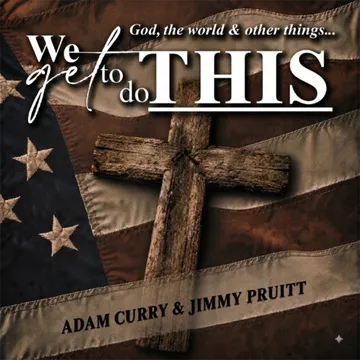
Episode 2 · Wednesday, 10 September 2025

Tall Cotton

From the high-tech streets of Austin to the transhumanist ambitions of Silicon Valley, a biblical lens reveals the spiritual friction behind autonomous cars and artificial intelligence.

By We Get To Do This | 1h 8m listen | 21 chapters
Tall Cotton cover
We Get To Do This · No. 2

About this episode

A high-stakes visit to Austin, Texas, reveals the shifting landscape of corporate culture as a former Marvel co-president details a lawsuit following his departure over Diversity, Equity, and Inclusion (DEI) mandates. The city’s $1.2 million logo redesign and the surge of Waymo autonomous vehicles serve as the backdrop for a deeper investigation into the spiritual distance of modern urban centers. These observations anchor a broader look at the intersection of high-level professional success and the biblical concept of "Tall Cotton."

Robert F. Kennedy Jr. recently testified regarding chronic disease and the removal of fluoride from drinking water, while Florida Surgeon General Joseph Ladapo asserted that bodily autonomy is a divine gift during a France 24 appearance. These public health debates coincide with a critique of Peter Thiel and Sam Altman, whose transhumanist goals of immortality through nanotechnology are contrasted against the biblical promise of resurrection. The technical decay of Large Language Models (LLMs) is analyzed through the lens of the Hegelian Dialectic, suggesting that AI-generated theology risks model collapse and the dilution of scriptural integrity. Additional segments cover the leadership of Pastor Brian at a local men’s breakfast and the de-escalation of neighborhood conflicts using Proverbs 25.

Personal reflections on a 1969 Chevelle and the value of manual labor highlight the dangers of the digital shortcut. The hosts challenge the "hurry culture" of the modern age by referencing the music of Will Reagan and the discipline of silence. This episode captures the tension between technological convenience and the rugged spiritual requirement to do difficult things in a season of reveal.


CHAPTER 01 / 21 Discussion

Austin Visit, Marvel DEI Lawsuit, and Tall Cotton

The hosts recount a recent overnight visit to Austin, Texas, where they met with a former co-president of Marvel. The discussion touches on a lawsuit involving the executive and his departure from the company following shifts in Diversity, Equity, and Inclusion (DEI) policies. They introduce the phrase "Tall Cotton" as a potential show title reflecting high-level professional success.

austin· sloan kettering· pharmaceutical industry· marvel· dei· lawsuit· tall cotton

00:00 Lord Jesus, first of all, we give everything we do and say to you. It's our heart to honor you. It's our heart to honor your values, your heart. We want to reflect and radiate who you are. We give you this podcast, and may it be a blessing to everyone who listens. In Jesus' name, amen. Amen. It's Wednesday, September 10th, 2025. We get to do this. This is episode number two. This is the life we've been blessed with. This is a gift. This is the life. We get to do this. You know, the only thing that's hard about starting off with the prayer is I always like to fold my hands and I can't hit the button.

00:51 No, you got to be ready. I'm not ready for it. Ready to roll. Ready to hit. Hey, brother. How you doing? I am doing great. Good to see you. Welcome back from the great city of Big Smoke. Formerly great. Yes. Big Smoke of Austin. Tina and I stayed overnight there last night with some friends who we've known, gosh, at least six years probably. And she actually works for Sloan Kettering. She's a consultant. She knows a lot about the pharmaceutical industry. Which is interesting. Yes. Boots on the ground. Had some boots on the ground from her. He used to work in the entertainment industry. He was

01:32 the chief financial officer and later the co-president of Marvel. Oh, wow. Yeah. Until they went all DEI and kicked everybody out. I think he actually has a lawsuit running against him. Did he say vice president? He was co-president. Co-president. Wow. Yeah. We call that in West Texas Tall Cotton. He's in Tall Cotton. There's a show title for you right there. It's Tall Cotton. I like it a lot. Jot it down. Just in case. So what do you think they were talking about in Austin? What is the big topic of the day? Wow. There is so much happening in this last new fresh recession reboot.

CHAPTER 02 / 21 Discussion

Austin City Logo Redesign and Canva Comparisons

A critique of the City of Austin's new logo redesign highlights the reported $1.2 million development cost for a design that resembles a tent. The hosts compare the professional output to work that could be produced using the design platform Canva. They suggest the focus on the logo distracts from more pressing municipal issues in the city.

austin· logo redesign· canva· graphic design· municipal spending

02:15 There's a lot going on right now. It's the new logo. Oh, I saw that. Is it Canva or is it not? Well, I think the joke is hilarious. It was $1.2 million to develop this by someone who couldn't afford to pay for premium Canva. Exactly. Yeah. And it looks like a tent, which, of course, is kind of ironic. I'm a Canva kind of guy. I know. You're good at Canva. Well, it's because I can't do anything else. This is the only thing I know how to do. I'm with you on that. I enjoy it. It's good. It's good for guys like me, but for high-level professional, I could have done that for $100.

02:56 Gladly. And what's interesting is, you know, everyone's all in a tussle about this. I'm like, yeah, it's ridiculous. But is that really the number one problem you have in Austin? But that's what everybody focuses on. I know. And I look at the logo. I'm like, yeah, you know, it's okay. I mean, you've selected logos in the past, and sometimes it's hard to break someone's creative heart and just say, hey, man, this thing is just no good. It's just not what I'm looking for. I heard a handful of people one time because they took a whole department to develop a logo and it was not good. I keep telling you, I'm going to show that to you. I got to show it to you. I'm not going to go into details. I don't want to protect the guilty.

CHAPTER 03 / 21 Discussion

Autonomous Waymo Cars and Robot Glitches in Austin

Observations from Austin describe the prevalence of Waymo autonomous vehicles and humanoid robots navigating the streets. The hosts discuss viral videos of pedestrians and homeless individuals interfering with self-driving cars by placing traffic cones on hoods or dancing in front of sensors. One host notes a feeling of spiritual distance in the city despite the presence of local churches.

austin· waymo· autonomous vehicles· robotics· homeless population

03:37 So, you know, but anyway, you know, Austin's an interesting thing. I mean, you pull up anything Austin on whether it's Instagram or anything social media. You get the robot running around falling down. There's this robot they have, and these guys are following him around. You know, it's Orion or something like that. Or Auris. I can't remember which one it is. But anyway, he keeps bumping into stuff and he keeps glitching. Yeah. Austin. He's talking to somebody and it knocks this lady off the curb. I mean, it's like, okay. Yeah. Austin's insane. And all the Waymo cars driving around. I mean, there are just must be a hundred of them that are.

04:14 Another clip. There's a video of these, honestly, it's homeless guys that are running out in front of the car, making it stop, and they're dancing in front of it. No, goodness. Just to mess with it. Because it can't do anything. Yeah, people will put traffic cones on the hood. And the minute you do that, it just completely gets disabled. It can't do anything. But just, because we lived in Austin for quite a while, and it just doesn't feel, you know what? Tina nailed it. She says it feels like we're further away from God. Wow. Yeah. And these people are believers. They go to a church in Austin. And there's some good churches in Austin. For sure. There's some really good ones, but it just feels like that. Yeah, I get it. You just get that.

CHAPTER 04 / 21 Discussion

Men's Breakfast, Pastoral Leadership, and First Responders

A recap of a recent men's breakfast event emphasizes the importance of masculine vulnerability and spiritual camaraderie under the leadership of Pastor Brian. The gathering included Texas Rangers, police officers, and firefighters engaging in worship and mentorship with their sons. The hosts discuss the cultural significance of men supporting one another and passing spiritual values to the next generation.

pastor brian· texas rangers· first responders· worship· brotherhood· masculinity

04:59 feeling so of course uh i missed the men's breakfast saturday while you were gone how was that what a morning pastor brian brought a message of course he's hardcore i mean he's like all up in men's grills you gotta man up be strong be a man i mean yeah right he's beautiful so good but it was great such a great it's amazing when men come together yeah under the banner of jesus christ you know you can come together under a lot of things you can come for a gun show or a hot rod show or a horse show you know trucks men's monster trucks you know that kind of stuff but when they come together under the banner of christ you i was looking around the room i was sitting in the back and i'm just observing and i'm seeing you know a texas ranger over here i'm seeing a police officer over here a firefighter over here i mean these are men these are men that do men stuff like

05:47 save lives rescue people arrest bad guys you know put bad guys away and i'm looking at them and they're standing there raising their hands in worship i love worshiping jesus and but they may be sitting by somebody who does none of those things and yet there's this camaraderie there's this fellowship this brotherhood around christ also a vulnerability because i of course almost every single men's breakfast and there's a vulnerability and and guys just they're able to open up to each other about just stuff that we might not even tell our wives you know and you don't even think about it honestly you just like hey man this is how i feel

06:26 about stuff sometimes and the conversations that are sparked it's it's really safe it's very yes indeed that's and we've that's part of our goal is to create safety a sense where guys can just kind of go you know what man i've had a bad week this week sucks it sucks to be me right now yeah and to create that atmosphere where guys feel safe and can just be open and vulnerable is amazing and to do that in front of their sons yeah because we've got kids there too which is really interesting dynamic but i was watching some of these young kids you know they're they're kind of clueless i mean at that age i was clueless we all were do you mean we're still clueless we're still okay i have

07:06 not graduated above 12 basically but i'm watching these young these kids i'm going they don't even know what they're getting right now maybe someday it'll begin to it'll it'll it's like seeds dropping into soil yeah and and someday that'll bring forth a harvest right down the road but i'm and i was watching a guy he's a he's a um first responder he's holding his son in his arms just holding and i'm watching it just going this is amazing and i'm watching another guy who was a former major league baseball player played in the major leagues for 15 years he's a giant you know jonathan he's a big guy and he's holding his son in his arms while pastor brian's just ripping you know and i'm just like

07:51 this is what it means this is what it means to pass the baton to the next generation to bring these young people into this environment even if they don't get it now they're getting some their spirits getting it even if their heart and head's not yet yeah and to be exposed to that i mean things that i were exposed to as young men going to the firehouse with my dad he was a firefighter and first responder and getting to just hang out around guys that i looked up to as heroes you know these are firefighters and i'm i'm the kid and i'm spending the night there on a saturday night with my dad in the bunkhouse but i'm doing everything they're doing i'm

08:30 cleaning things i'm washing dishes i'm helping prep for food i'm playing ping pong and by the way i became a killer ping pong player hanging out at the firehouse hey for real i need to play you because i'm not i'm not bad at ping pong okay what do we say in the old country table tennis table tennis my friend we just call it ping pong hey at texas tech i was i was like one of the top players during my time i was beating the chinese guys i'm just what i'm just saying okay yeah it'll be fun so the the other thing is that even when men are together in a group it's more like hey hey

09:09 hey boss how you doing you know it's a kind of you you macho up just kind of right by yourself but in this setting no it's just poo you just let it all kind of be not gonna lie though i like pulling into our parking lot at it starts at 8 30 i pull in at 820 and they're almost every vehicle is a pickup pickup truck f-250 with lift kits i'm looking i'm going now this this is testosterone man this is for real that's right but i love that because these guys yeah i mean they i mean we're in texas right so we don't call 911 here i'm just saying our guys are they're they're the real deal but when you get them all together in a room and russ hern gets up there

09:50 our worship leader and starts leading worship these guys are just like before god oh open. It was beautiful. The whole morning was amazing. Cool. I'm just, I leave just lifted. Yeah, I'm bummed I missed it, honestly. It's like, we already had this long-standing arrangement. It's good for us. So, you were in Austin for a day, evening. Yes. Yeah, hanging out with friends. We had sushi. This wasn't this H-E-B. No, no, we're talking about this. This is real sushi. But it feels like New York, man. Everyone is busy. It's loud. It's noisy. It's edgy. Yeah, it's a bit, everyone looks like an influencer. Yeah. You know, it's just so. And also, ah, you know, I'm 61 now.

CHAPTER 05 / 21 Discussion

Will Reagan, Hurry Culture, and Spiritual Convergence

The discussion centers on the theme of slowing down, prompted by the Will Reagan song "I'm Not in a Hurry" and teachings from Victor Marks on silence. The hosts explore the concept of "convergence" or "synchronicity," where similar messages appear across different media simultaneously. They interpret these occurrences as "God flicks," or divine prompts to pay attention to specific spiritual lessons.

will reagan· godcaster· victor marks· convergence· synchronicity· spiritual growth

10:35 I know. So I'm in my 60s. We're seeing things differently. I'm seeing things very differently. I am. Something happened with this birthday. Interesting you mentioned that because I was just listening to a Will Reagan song that's on the Godcaster and it's about hurry and it's about not hurrying. I'm not in a hurry. Oh, yeah. Yeah, of course. Yes. I'd never listened to the words of that. I didn't even know. It feels like a song out of time, like it's from another generation. It almost isn't that, it has a little bit of an RB kind of vibe to this. But that dude, he was a worship leader up in Colorado Springs. I mean, he wrote some big songs in the worship industry, but he's kind of stepped back from all of that.

11:17 Yeah. And that song, I was just listening to it coming in while major downpour here in Fredericksburg right now. But as I'm coming in, I'm listening to that song. It's interesting. I don't know about you, but I get things in multiples. Like I'll hear somebody talking about being quiet. I'll hear somebody I read this morning, Victor Marks talking about silence. Oh, these are messages when you involve it in multiples. I've been getting these multiples. I've gotten like four just in the last couple of days. And then I heard, I was listening to Will Reagan coming in, pouring down rain. I mean, I'm like hydroplaning most of the way in, right? And I turn up my radio really loud just to overcome the downpour on the car.

11:56 And he's singing, I'm not in a hurry. And I'm just watching, okay, God, I'm starting to get this. Yeah. Slow down. Slow down. Take your time. Slowly be okay. Yeah. Convergence is what. First of all, wasn't that your word of the year convergence? And was it Tim Barton? No, it was from the Lance Wall now. He was talking about convergence, which I used to call, oh, what's the word? Synchronicity. That's a good word. Yeah, I remember from the police. Sting. Yeah, sting. Oh, yeah. Great song. Yeah. Great song. So synchronicity. And now I know it's like, I see this all the time. Like the same scripture will pop up in two different devotionals on the same day.

12:41 Or, you know, just, yeah, it happens a lot. And I pay. From different places. Yeah. And I pay attention to that. That's when God is telling me, pay attention. I got God to have. So I learned a new word today, a God flick. You remember when you were a kid and you'd flick somebody's ear? Another kid's ear? I still do that to my daughter from time to time. Ooh, ouch. That hurts. Be quiet. A god flick. Somebody said it to me today. He said, Yeah, I got a God flick. I'm like, I looked at him. He goes, You know how you used to flick each other, okay? When we were kids, I remember now. It's a God flick. So all of a sudden, you go, wait a minute, God's trying to get something to me. Yes. Through these different channels. Yeah. Anyway, mine slow down, apparently.

CHAPTER 06 / 21 Discussion

Neighborhood Conflict, Forgiveness, and Proverbs 25

A personal anecdote describes a neighborhood meeting held at a "Java Ranch" to address a disruptive family. One host shares how they used Proverbs 25:21-22 and the Lord's Prayer to de-escalate anger among the residents. The segment highlights the practical application of biblical principles regarding enemies and forgiveness in local community conflicts.

lord's prayer· proverbs 25· neighborhood dispute· forgiveness· scripture

13:24 So actually, just speaking of that, some scripture just popped up for me a couple of times. I wrote it down because, and it doesn't pertain to this, but it kind of does because this was one that when I was just starting on the faith walk, this one just pumped him into my head so hard. And it's part of the Lord's Prayer of forgive us of our debts as we forgive our debtors. Beautiful. And I forgot, you know, it's amazing how you read scripture. And, you know, I was completely into Ephesians for a while, especially six, and just drinking it all in.

14:02 And then Proverbs 25, 21 to 22 pops up. And I just have to keep remembering this. If your enemies are hungry, give them food to eat. If they're thirsty, give them water to drink. You will heap burning coals or shame on their heads and the Lord will reward you. And I keep reminding myself, like, because we got some trouble going on the street right now where we live. There's one family who moved in and they're kind of disrupting the neighborhood. And we had a meeting, you know, had a meeting, like a Java ranch. You know, man, we're going to have a meeting house. Yeah, we got a meeting box in the hidden house. And I brought this up to them. I said, can I just remind, because they're all believers.

14:43 Yeah. Good folks. Yeah. Can I just remind everybody of this? And, you know, and I prayed over the meeting and I said, let me just remind you. remind you of this. And I think it made a difference because, man, there was some anger just, you know, hey, these people are disrupting the neighborhood. And like, well, let's just think about how we can approach this. I don't know if it'll stick that long, but it felt good to say it. No, you threw up a flag. Yeah, I did. I did. I don't think they thought it was, they didn't see it coming from me. Yeah. They're like, that's good. What's this? What's this? What's this podcast guy doing here? That's a podcast. Well done, brother. Well played. So I brought a couple clips. Okay. Just stuff that's been going on this week. And I think the main thing

CHAPTER 07 / 21 Discussion

RFK Jr. Testimony and Public Health Initiatives

The hosts discuss Robert F. Kennedy Jr.'s recent testimony regarding his opposition to mRNA vaccine funding and his focus on chronic disease. They highlight his efforts to address food dyes, baby formula safety, and fluoride in drinking water. The conversation suggests that mainstream media often ignores the substance of his health-focused platform in favor of controversial clips.

rfk jr· mrna· food dyes· baby formula· fluoride· public health

15:25 that probably has filled everyone's timeline is RFK Jr. Wow. And, you know, he was called to testify about why he's defunding mRNA and all this stuff. And amongst all of the noise, because what you're going to get, you're not going to see anything but the clips of fire and brimstone and anger and Elizabeth Warren losing her mind. Completely going nuts. Right. Saw that. I actually, let me see. I wanted to, I thought I'd bring up, I didn't have this one prepared, actually.

16:05 It's all right. But there's in this opening statement, he actually got to tell everybody what he's been doing. And I was thinking to myself, you know, this is something that no one will hear. They're not going to play any clips of this. It seems I don't have it after all. But it was quite amazing. I know you and Devorah. Yeah, we did just talk a little bit about on No Agenda. Yeah. And, you know, what he's done with food dyes and with baby formula and fluoride in the water and just really trying to make people healthy. And I look at these representatives who I think truly

CHAPTER 08 / 21 Discussion

Florida Surgeon General Joseph Ladapo on Bodily Autonomy

A clip from France 24 features the Florida Surgeon General discussing the state's move to eliminate vaccine mandates. The Surgeon General argues that the body is a gift from God and that the government lacks the right to infringe on bodily autonomy. The hosts praise this stance as a rare example of an official speaking from a biblical worldview.

joseph ladapo· florida· ron desantis· vaccine mandates· bodily autonomy· france 24

16:45 you have to think that they really believe where they stand and whether that's because a lobbyist has been showing them charts and stuff forever and ever and ever. But ultimately, the clip I brought is from the Florida Surgeon General. Okay. Oh, good one. I forget his name. And this is a clip from France 24. So, you know, it's a little bit of an overview about how crazy the Floridians are to say no more mandated vaccinations. But what he said was just, I thought it was fantastic. For decades, public health guidance has been clear.

17:21 Vaccines save lives and prevent the spread of disease. Now, Florida wants to break from the science and become the first US state to get rid of all its vaccine mandates. This would also extend to children who are currently required to be immunized against certain infections, such as measles, mumps, and polio, before going to school. Florida's Republican governor, Ron DeSantis, framed it as a protection of parental rights. The state surgeon general said the government shouldn't infringe on bodily autonomy. Your body is a gift from God. What you put into your body, what you put into your body is because of your relationship with your body and your God.

18:03 I don't have that right. Government does not have that right. I thought that was, and it was funny because on no agenda, Dvorak brought the same clip, but he actually cut that part out. He said, I didn't think it added anything, just virtue signaling. I'm like, that's that. Wow. And it's fine. That's why there's two of us on that truck. Right, exactly. But it's like, that is the essence, the essence of where we have to stand with all of this stuff. He nailed it. It was a triple Indy. I mean, he nailed the triple Lindy. It was. That was so well said. And in such a short, succinct way, he caught the heart of what we're about.

18:48 That which honors God. And, you know, the scripture talks about, you know, we are to do all things unto him. Everything for his glory, whether it's a podcast or whether the way I'm driving, I mean, that's that's meddling. That moves from preaching to meddling. You got some work to do there, Lord. Literally, you know, I do. I'm growing. I'm learning. It's a process. Sanctification. So, but that I love what he said there. You don't hear a lot of guys that are officials going that strong. Right. You hear a few. But to hear him, and it just, I'm pretty impressed with Florida, actually. We love going there. We go to Naples every year. It's become a tradition for us. And we love Destin.

CHAPTER 09 / 21 Discussion

Vaccine Skepticism, COVID-19 Psyops, and Social Division

The hosts analyze the social dynamics of the COVID-19 pandemic, labeling the "protecting grandmother" narrative as an emotional psychological operation (psyop). They reflect on the division caused by vaccine mandates and mask-wearing, particularly within church leadership and ministerial alliances. The discussion emphasizes the need for a biblical lens to navigate conflicting cultural narratives.

covid-19· vaccine mandates· social engineering· masks· ministerial alliance

19:32 We love, you know, there's great beaches there. But we've learned to love the people there, you know, with Jack Hillagas and Steve Maxwell and those great guys. And then you've got our friends over in Naples. So there's just something. something good happening there. And there's good things happening here. Yes. And I see Texas and Florida as almost twins. We're kind of getting there. Yeah, we're getting there. I mean, we kind of seem to be on the same track. The thing that's always kind of tough, though, particularly with vaccinations, is, and this is the psyop that we just need to expose time and time again. Is people say, I'm vaccinated. If you're not vaccinated, you're putting me in danger.

20:16 And I just want to remind everybody of the fallacy of that statement because that means this thing is not working. Exactly. The whole point is it's supposed to protect you. And, you know, if anything, we need, I think RFK Jr., and he's been waiting for this. I mean, he's been waiting for 20 years to do this. So he's not backing down. President Trump is backing him. And it's going to be very interesting to see how far he gets and how far he takes everything. But ultimately, there's going to have to be a real cultural conversation and a biblical conversation about specifically about vaccines.

20:57 And I think, you know, as I told you before, I hope we do this. I'm here for this podcast for our church family here. If it goes beyond, that's fantastic. But I'm sure a lot of people are struggling with this. How do they approach it? How do they approach conversations with people about it, family members? We know that this very topic split families right down the middle during COVID and still reverberates. Yeah, we've seen it a little bit before COVID. I mean, with homeschool kids and parents saying, you know what, I'm opting out of this. We have a right to parent our children the way we see fit. And then people scream their minds out because in their minds, they think that's a hit on everybody else.

21:43 So when COVID happened, that amplified that mentality and that thinking. You're killing your grandmother. Oh, that was for that. It'll be the empty seat at the table. Yeah, that was the psyop. That was the one, the emotional psyop that all of us were hearing. And I remember, because I'm a pastor and I'm in a group of pastors, especially at that time. I was actually leading our ministerial alliance and everybody was showing up with masks on. They were insisting on six feet. I mean, they were following the rules that had been passed down. And I'm sitting there, me and a couple, me and about two other people are going, no, no. I don't agree. No, no. And I'm the leader, so I'm trying to be nice, but I'm also realizing the psyop on this.

22:28 And I'm like, no, that really was my wake-up call to a lot of things. So COVID was good for me in that sense that it opened my eyes because I was so trusting. But going back to the vaccine thing, I am very thankful that this guy is saying what he's saying, but he's saying it from a biblical worldview, which is what we're trying to do. To say there is a lens, there is a grid. There is something to see things through that changes the narrative that we're getting from the world. And when it comes to the vaccines and all that, it's anti-vaxxers.

23:07 Suddenly you're a villain if you get a label, right? You're an anti-vaxxer. That's a bad thing because, again, you're killing grandma and everybody around you. But here's the thing. I go to the airport and to this day, even when there's nothing going on, you still see people wearing masks. Oh, welcome to Austin. It blows my mind. It's like, really? Have you not awakened? Are you not looking? Are you not listening? Are you not doing the research? And there's a lot of people that are still swallowing the blue pill. And I don't know anything to do for them but pray for them. It breaks my heart. I'm not mad at them. I'm not upset.

CHAPTER 10 / 21 Discussion

Conflict Resolution, Binary Thinking, and Victor Marks

The conversation shifts to the dangers of binary thinking and the ease of labeling others as enemies. Referencing Victor Marks and the sermon "Let's Do Difficult," the hosts argue that the path of least resistance is often the wrong one. They advocate for seeking Holy Spirit-led solutions rather than participating in cultural "barking" without providing answers.

victor marks· binary thinking· holy spirit· conflict resolution· difficult paths

23:49 I'm just sad. It's sad for them. And there's a the danger is, I hear so many people like, I'm never going to forgive them. I'm never going to forgive them. They did this. They did that. I'm never going to forgive my parents for not letting me come over. Wow. This is where we, boy, excuse me. This is where we really need faith and trust in the Lord because the path we're on now with each other is not working out very well. We hit on this last show when you played that great clip of that young man saying, hey, if you're saying we're this, then we're just going to go ahead and go there. We're going to be that, yes. Yeah, it's sort of, it's, we're fostering. And that, that was a real wake-up call. I got a lot of feedback on that.

24:35 Me too. People saying, man, that was an eye-opener for me. And it was for me right there. there on the show. I mean, I was like in real time going, oh, okay, I don't want to be a part of this problem. You know, if I'm going to bark about something, I better have a solution ready. You know what I mean? Not just a bark. And that seems to be cultural right now. Everybody's barking, but nobody's bringing real world solutions to this. So this is where we come in as followers of Jesus to say, okay, there may be other alternatives than what's been presented. And maybe they could be led by the Holy Spirit, by God Himself. Maybe the Bible says we have the mind of Christ. That doesn't mean we're using it.

25:16 It just says we have it. It's up to us. Got to switch it on. Lean in, right? Yeah, exactly. To lean into that and to know that there may be other options. We always think there's either one or the other. Binary. There's always more. And that's kind of the problem with limited thinking and the narratives that are out there right now. You either are for me or you hate me. Right. You're not just for me or nominal. You're just for me or you hate me. There's no nominal. If you don't agree with me, you hate me. If you don't agree with my lifestyle choices, you hate me. And that's off. That is a total psyop.

25:55 Cultural side. But we all fall prey to it. We do. It's easy. It's easy to say, oh, LGBTQ plus, the transgenders are crazy. That's too easy. It's too easy. And I think we got to be careful. And I think what you're saying is right. If it's that easy, that should be a flag to us that something's up. Right. Because I love what Victor Marx talks about. You know, I did a sermon a while back called Let's Do Difficult. Yes. And then Victor, his whole everything, every one of us are about Let's Do Difficult, but he lives that life, right? And I think there's a sense where if it's something's that easy, you need to be wary of it.

26:35 If it's that easy, maybe that's not the right way to go. The path of least resistance. We're not going to resolve this, are we? No. We actually just bring up more questions. I think so. It's part of processing, isn't it? Yeah. And I don't think we're here to bring answers. Nope. I think we're here to ask questions, hopefully, that others are, or not just what others are asking, but maybe they need to be asking. So maybe we can just help out by bringing more questions to the table. Yeah. And by the way, thank you all for the really nice feedback and from disparate people who I'm like, oh, really?

CHAPTER 11 / 21 Discussion

AI Religious Overtones and the "Godfather of AI"

A news report triggers a discussion on the religious language used by AI developers like Jeffrey Hinton and Sam Altman. The hosts argue that AI is a "parlor trick" or a fast copy-paste engine rather than true intelligence. They suggest that society has been programmed to accept talking computers through pop culture icons like "HAL" and "Knight Rider."

jeffrey hinton· sam altman· artificial intelligence· large language models· lost in space

28:34 Open AI CEO Sam Altman has referred to his company's technology as a magic intelligence in the sky, while PayPal founder Peter Thiel has even argued AI could bring about the Antichrist. Okay. So since this wasn't a news report, I wanted to break this down with you for a second. So first of all, the guy that they referenced, the godfather of AI, I can kind of ignore him because I have studied this for months and months and months and months and months. There's no I in artificial intelligence. There is no intelligence in there.

29:13 It just obviously is parlor trick. Because it's speaking to you and it sounds human. You're just taking this in. And we've been programmed to do this. We covered this before on a pre on Living Up in a Down World. We've been programmed to expect computers to talk to us from, I mean, back from. Lost in Space, Danger Will Robinson, Knight Rider, Kit, bring the car around. Even Batman spoke to his car at a certain point. How? Howl. How? Open the pod bay door. That's it. That's it. All of this stuff. And, you know, we've been right up to the movie Her, which is just a few years ago.

29:52 So we've been programmed to accept this, but it's truly a very fast copy-paste search engine machine. There is nothing intelligent in it, but people are so easy to fall into it. Now, I have some real Christian talk about this, but since they brought up Peter Thiel, who he used to be, he was one of the PayPal founders with Elon Musk. They actually fell out. Musk kind of got kicked out of PayPal. Shocker. Shocker, right? And Peter Thiel is an interesting character, but he's seen as this incredible boogeyman because of his company, Palantir.

CHAPTER 12 / 21 Discussion

Peter Thiel, Palantir, and Transhumanism Critiques

The hosts analyze an interview with PayPal founder Peter Thiel regarding his views on the survival of the human race and transhumanism. Thiel discusses the desire to transform the human body and soul through technology, drawing parallels to Orthodox Christian concepts of transformation. The hosts express concern that these technological pursuits are driven by a spiritual influence and a fear of death.

peter thiel· palantir· transhumanism· new york times· orthodox christianity

30:33 And I'm just debunking this on the fly because we don't have to be worried about this. You don't have to be worried about Palantir targeting you. I mean, there's nothing that Palantir can do that's any better than what Oracle hasn't been doing for the past 20 years with all of your credit information. There's nothing really special in it. But the guy is a whack job. Listen to this. You would prefer the human race. Sorry, this is, he was being interviewed by the guy from the New York Times. I think we actually played, I played this for you at the house. Okay. So you'll remember this. You would prefer the human race to endure, right? You're hesitant. Well, yes. I don't know. I would. By the way, I had to cut out a million pauses because he's one of these difficult talkers.

31:14 You're like, because he's thinking on the fly. I would. This is a long hesitation. This is a long hesitation. There's so many questions in place. Should the human race survive? Yes. Okay. But I also would like us to radically solve these problems. And so, you know, it's always, I don't know, you know, yeah, transhumanism. This is important. Here we go. Because this, if you look at all the people who are funding transgenderism, they all are into transhumanism.

31:56 And if there's an enemy, I want everyone to know what the enemy looks like and how the enemy talks. And I'm not saying Peter Thiel's a bad guy, but I'm pretty sure he's got some influence coming from spiritual realms that he may not be aware of. Is this, you know, the ideal was this radical transformation where your human natural body gets transformed into an immortal body. And there's a critique of, let's say, the trans people in a sexual context or a transbestite is someone who changes their clothes and cross-dresses. And a transsexual is someone where you change your penis into a vagina.

32:39 And we can then debate how well those surgeries work. But we want more transformation than that. The critique is not that it's weird and unnatural. It's, man, it's so pathetically little. And okay, we want more than cross-dressing or changing your sex organs. We want you to be able to change your heart and change your mind and change your whole body. And then Orthodox Christianity, by the way, the critique Orthodox Christianity has of this is these things don't go far enough. Like that transhumanism is just changing your body, but you also need to transform your soul and you need to transform your whole self. You see why I bring this clip? Oh, he made a leap. He made quite the leap. He made the leap.

CHAPTER 13 / 21 Discussion

Transhumanism vs. Biblical Resurrection

A comparison is drawn between the transhumanist movement—which uses genetic engineering and nanotechnology to extend life—and the biblical promise of a heavenly body. The hosts argue that figures like Elon Musk and Sam Altman seek immortality through machines because they lack the assurance of the afterlife. They define true transformation as a spiritual process rather than a mechanical one.

transhumanism· nanotechnology· cryonics· heavenly body· resurrection

33:23 He jumped the gap. Mind the gap, right? Remember that in Britain? Mind the gap. So he jumped the gap, and that jump was a major light years jump where he talked about moving from changing the body to changing the heart and that that's a Christian thing, but he missed a lot of stuff in between. I'm reading about transhumanism, philosophical scientific movement that advocates for the use of current and emerging technologies such as genetic engineering, artificial intelligence, nanotechnology, and cryonics to enhance and augment human capabilities.

34:01 It's the bionic man in the bionic woman, which we watched in the 70s. And it's really, I believe that these people like Thiel and probably Musk and others, they actually, and Sam Owen, they actually are afraid of dying. Yes. They want themselves to live forever. They are very afraid of dying. You just dialed something right there because I'm not afraid of dying because I know where I will be. Not only do I know it philosophically, I know it philosophically. it theologically. I know it because of the word of God in the Bible, but I also know it because I have friends experientially who've stepped over and looked beyond the vessels, so to speak. They've seen the other side. Steve Maxwell being one. I've had several.

34:45 And there's nothing to fear. So for me to want my body to somehow continue to exist, I already know it's going to, just not in this form. So talk about transhumanism. Well, if you want to go technically, you know. I'm sorry, finish your sentence. No, no. I'm just saying, I mean, that's the essence of transhumanism isn't like getting a bionic arm. Yeah. You know, nanotechnology and all cryogenics, all that. It's, it's literally transforming, changing your form into what the Bible calls a heavenly body. And ultimately, isn't everything marketing, public relations, psyops, they all have death as the ultimate.

CHAPTER 14 / 21 Discussion

Science as a Partner to Religion and the "Fallen" State

The hosts respond to Peter Thiel's assertion that religion should be a "friend to science." While agreeing that science can prove God's existence, they reject the idea that faith should be subservient to technological progress. They discuss the "fallen" state of humanity and argue that Thiel is attempting to use technology to bypass the need for a relationship with Jesus Christ.

jack taylor· divine providence· science and religion· fallen nature· judeo-christian

35:27 Well, if you don't do this, if you don't go here on vacation, you know. But even wouldn't you rather have a living daughter than a dead son? This is the big, the big psyop that they've put onto parents. Right. And Teal actually makes more of this jump in this second clip. I generally agree with your, what I think is your belief that religion should be a friend to science and ideas of scientific progress. I think any idea of divine providence has to encompass the fact that we have progressed. Okay, let's just stop there. How do you feel about that? Friend, but not slave to, not subservient to.

36:11 There's a distinction there that I see. I see that with government. I mentioned about meeting with the mayor and saying you have civil government on your shoulders, right? You have spiritual government. So it makes us partners. It makes us allies, not adversaries. And he got that. I would say the same thing here with science. I don't see this as a, I think science proves God. It proves the existence of things beyond our comprehension, things that are, we would say, infinite as opposed to finite. Right. And so when I hear him say that, I'm like, well, kind of, I hear what you're saying, but we're not subservient to it. That's the interesting thing.

36:56 So, Dr. Jack Taylor, years ago, brilliant man, wrote a book talking about heaven. And he was talking about what is real reality. And he was talking about the spiritual realm is the real reality. Wow. That what we're here in right now is a bad copy. It's like a fax of a fax of a fax. Wow. Remember back when we did fax and you'd fax something over and over, and it starts to lose its resolution. It loses its resolution. Perfect word. Where it becomes fuzzy, you can't even read it anymore.

37:31 And when I was in the childcare world, you know, as a case manager, we were faxing stuff back and forth to child protective services, the state. And it'd be crooked. Oh, my God. And it would be blurry. By the fourth time, you couldn't even make anything. By the fourth time, it looks like something from the JFK files from the 60s. And blurry. CIA documents. Yeah, we'll put that in the files. But same thing. It's the same thing. I see that in what he's saying. So we're getting a copy of a copy of a copy. It's going to lose resolution and fidelity. I'm going to put a pin in that. I'm going to come back to that just so we can finish this clip. And achieved and done things that would have been unimaginable to our ancestors.

38:15 But it still also seems like, yeah, the promise of Christianity in the end is you get the perfected body and the perfected soul through God's grace. And the person who tries to do it on their own with a bunch of machines is likely to end up as a dystopian character. Well, you want to comment on that? Tracking with him in the New York Times. I know. I know. I was like, okay. Okay, he's there. I'm in the lane with you there. Let's articulate this. And you're going to have a heretical form of Christianity that says something else. I don't know. I think the word nature does not occur once in the Old Testament.

38:58 Oops. Maybe not literally. Where's he going with that? Because I don't know where he comes from. Well, it's 40 seconds. So, you know, if you, if you, you know, and there is, you know, there is a word in which a sense in which the way I understand, you know, the, you know, the Judeo-Christian inspiration is it is about transcending nature. is about overcoming things. And you know, and the closest thing you can say to nature is that people are fallen and that that's the natural thing in a Christian sense is that you're messed up.

39:39 And that's true, but you know, there's some ways that, you know, with God's help, you are supposed to transcend that and overcome that. So I think he's justifying using transhumanist technology to overcome being fallen. That's what it sounded like. Yeah. And as opposed to the way we overcome being fallen is to return to Eden through a relationship with Jesus Christ, which gets us to the Father. So he's bypassing that. Whether he's intentionally doing it or not, he sounds like he kind of knows a little bit about it, but he doesn't know about it.

CHAPTER 15 / 21 Discussion

AI Scraping, Model Collapse, and the Hegelian Dialectic

The technical limitations of AI are explored, specifically how Large Language Models (LLMs) scrape existing data to create "copies of copies." The hosts compare this to the Hegelian Dialectic and the third law of thermodynamics (entropy), suggesting that AI output will eventually lose resolution and fidelity. They warn that this process can lead to the degradation of truth and original thought.

perplexity· large language model· hegelian dialectic· entropy· model collapse

40:16 You know what I mean? He kind of knows, but he doesn't know. And he's trying to say there may be other paths, other ways to reach, I don't know, well, transhumanism to use their word. Interesting. So back to the loss of resolution, a copy of a copy of a copy. This is important to understand. Artificial intelligence, we'll just call it AI just because that's what everyone thinks it is. It is literally scraping up everything available through the internet. It has no knowledge of air, water, touch. I have proof of this, by the way. I think I mentioned this.

40:55 I know I've told you, I don't know if I said it on the air last time we were together, but I was doing research for a sermon and I was looking because it's a great search tool. It's a great Bible search tool. I go, you know, give me a Bible verse. This Bible verse is about such and such. And it's great for that kind of stuff. That's what I use it for. And I threw a concept in there and it pulled up. And now Perplexity gives you the references. So you actually see where they're pulling from. The number one reference was from a sermon I'd preached. So I was like, that's great. Well, okay, we're back to me.

41:33 So that's exactly what it does. It scrapes. Now, it has deals. And so they put that into what they call a large language model, which is really just a super big database that is highly optimized. So it doesn't take forever to retrieve the information. And it's really just retrieving information based upon keywords. So whatever your search was, it had certain keywords and it went, ah, I have that. And it happens to pull that from you. What's interesting, if someone else pulled that up and rewrote that sermon and put it back out on the internet, the AI scraping mechanism would pull that in and would now start to use that as a copy of your original.

42:17 Sounds like the Hegelian dialectic. So Hegel came out with, you have a thesis. Yep. You have an antithesis. And then they form a new thesis. Yes. So that's what this is doing. Part of it. The bad part is it. I'm not saying it's all good. Yeah, no, it does. I don't know if it necessarily creates a thesis antithesis. It just says, oh, here's new information. And then the next time someone uses that and publishes that on the internet or uses a version of it, puts it in their own words. And already, if you say to AI, give me, write me a sermon on this, it'll write something that's already

43:01 a lower resolution of the original. I would say an aberration or an amalgam. And so pulling in new things. So it sounds fresh. But it's not. It's a copy of a copy and it creates another copy. And you see it with artwork already. All the artwork from certain AI generators starts to look the same. It looks orangish. Cartoonish. Cartoonish is all cartoons. Because that's actually, that's the third, I think the third law of thermodynamics is entropy. If you leave the car alone on the lawn, it's going to rot away. So if you don't give it something fresh, a fresh cone of paint.

43:41 And so if you continue to take the old pieces that are republished and bring them back in, there's nothing left for the machine to do but just create bad copies of stuff that already. It's worse and worse and worse. And so they're desperately trying to solve this by A, not talking about it. That's the number one. That's not a problem. But it becomes a real problem when it comes to truth because just changing a word, and I'm pretty sure you could tell me the scripture that God said, you may not change any of my scriptures. Well, that would be the very end of Revelation. The book of Revelation. But at the very end of the fire,

CHAPTER 16 / 21 Discussion

Biblical Integrity and AI in the Church

Referencing the warnings in the Book of Revelation against changing scripture, the hosts discuss the risks of using AI for biblical teaching. They critique organizations like "Glue" that sell AI tools to churches, arguing that digital models cannot guarantee verbatim truth. One host shares a personal experience where AI-generated coding errors demonstrated how easily digital systems can go "off the rails."

revelation· haven today· glue· bible search· heresy

44:19 by the way, don't. change a word. So also in the Godcaster, I found this program called Haven Today, Christian Teach and Talk program. Very interesting. I started following it. I'm listening. You're looking it up, aren't you? Looking at Revelation for me. He's looking it up in the Bible, ladies and gentlemen. He's got his Bible already. It's all earmarked. Lots of, and you go right to it. That's amazing. I'm trying to. I warn everyone who hears the words of the prophecy of this book, if anyone adds anything to them, God will add to him the plagues described in this book. And if anyone takes words away from this book of prophecy, God will take away from him his share in the tree of life and in the holy city, which are described in this book.

45:06 I mean, this is serious. Pretty clear. Pretty clear. So Haven Today often talks about technology from a biblical worldview and has guests on. And he had this two people on who are, I think, actually on the advisory committee of some biblical Christian. I should have written it down. I'll put it in the show notes. Some biblical Christian society of technology. And unsurprisingly, they're pro-AI. And the host is not really making a judgment one way or the other. But the first guy, he's kind of a sales guy for AI.

45:46 And the second one, she's a PhD. And we just got to talk about this because when I heard this, I'm like, I got to talk to Jimmy about this. Okay, here we go. And I found all this discussion incredibly helpful. But then we turned a corner and I was fascinated as we talked about what it looks like to be proactive from the standpoint of the church. And whether that's the context of the local church or international missions or some other expression of what the body of Christ is doing in our world, the question is, what impact might AI have here? And the next clip is a longer one with comments from myself, Dr. K, and Daniel Whiteneck, who kicks off this section.

46:25 I personally think that the creative aspects of these models, including the music side and the other portions of that, could be used in amazing ways by the church. But I think we don't want to disconnect that from the understanding of how what is generated is connected to what the model has been fed on. And that kind of motivates then those that are working in technology and working in AI that are also followers of Jesus to put together potentially models that are fed by truth and aligned to truth.

47:00 You know, companies like Glue and others are doing really amazing work in this area to align models to human flourishing and feed them with truth, not just with kind of what's scraped off the internet. So I like what he says. And actually, I've taken a sales call from Glue and it was just an AI guy selling to the church. I mean, I'm not saying he wasn't a believer, but he was. They're a big deal in many churches right now. They were like the platinum big sponsor at RBRB. So I was kind of like, you're just selling AI here. I'm not so sure you can really put guard. They can't even put guardrails around this stuff for it not to tell people like, yeah, it's a good idea to drink

47:42 bromide or anything. So I hear what he's saying, but we know that these large language models, they're never going to spit back. It's going to be a copy and it's never going to be verbatim truth. Right. And so I was listening to this. I'm like, oh, okay. Well, he made the comment what you feed into it. Yes, but you have to remember that it takes new input from the old output. So it would be the same as copying your Bible over and over and over and over again at a certain point. You won't know what that word is. Right. And it may be a very critical word. Remember the old Telegram game? Yes. You start at the beginning, you tell it.

48:25 By the third person, it's already different. It's off the rails. Exactly. And that sounds simplistic, but really we have that happening. You found that out when you were doing some coding. Oh, it would start down a bad path. And you couldn't bring it back. You couldn't correct it. Great analogy because I am not really a programmer. So let's say I'm not really a Christian yet. And so not being a programmer, I mean, the great thing about software is if you do it wrong, it just doesn't work. But I didn't know how to tell it that it was wrong. And I had to start over. It took me three months to do something a programmer could have done in three days.

49:03 And it was very frustrating. And I needed to get to the end of it. But just imagine that happening now with scripture or with biblical teaching. So I'm concerned about that. So I use perplexity. perplexity a lot. I'll get historical context, but because I've gone to school, I've got a master's degree in this. I've got a baseline. I'd say. And for the kinds of questions, it depends on what you're asking. And for me, I've been able to make it work for me. Also, I know where it's pulling from. So I'm checking that as well. But I can see how you could literally get off the rails on this.

CHAPTER 17 / 21 Discussion

Correcting Heresy and the Mind of Christ

The hosts discuss the historical role of the New Testament letters in correcting heresy, such as Paul's opposition to the Judaizers in Galatians. They contrast the "mind of Christ" and the Holy Spirit with the "digital friend" offered by AI. They express skepticism toward claims that AI can reflect the "best of human creativity" without also reflecting human fallenness.

galatians· judaizers· paul the apostle· heresy· digital landscape

49:42 And it could take you down a track. And it doesn't know right from wrong. It doesn't know truth from falsehood. It's pulling from so many sources at lightning speed. And anything could come into that. And that's where I'm concerned about when Christians are just running, thinking this is the greatest thing ever. And it doesn't take much to get off the rails. Just read the New Testament. Every letter in the Bible was corrective in nature of heresy. Every one of them. You got to explain that to me. Well, the book of Galatians, for example, the Judaizers, they were trying to mix Christianity but pull in the Old Testament Judaism.

50:25 And they were blending it. Right. Where, yes, you now have to be circumcised, young Timothy. Yeah. Sorry. You're 25, but yeah, whip it out. I mean, here it was. It was that whole scary stuff. I mean, he did it. I mean, but they were demanding that you had to follow old covenant 613 laws. And yet you were free in Christ. And that's why Paul said in Galatians 5, it was for freedom that Christ sets you free. Don't return back to slavery under the old law. Now, we think that means I'm just free in Jesus to do anything I want.

51:00 No, that's not what Paul was talking about. He was talking about the Judaizers, and he was correcting them to say you cannot subjugate people who are free in Christ under the old covenant. This is a new covenant. We quote that out of context a lot. It's all over the place. But if you don't know that stuff, you can get off the rails. I'm jumping off on AI, and here you go. So here's this lady's a PhD. She's anonymous. She calls herself Dr. K. So she's anonymous with her comments here for, I can't remember the reason, but she gets too much hate mail or whatever. Listen to her. These models are trained on our data. They are going to have and see footprints of our fallenness, but also our creativity and also some of our really amazing aspects.

51:48 And what is so, what is just to me so fascinating about these large language models or LLMs is they are able to see within our training data certain patterns and trends that we might, because in that sense, you know, they can see so much more than we can see just in one setting that is really powerful and really, really reflects some of the best of our creativity as well. And I think that we need to think about that and not see it. And Daniel said it earlier. This all falls within God's economy. He's not surprised by this at all. In fact, he's saying, you know, hey, this next digital landscape, let's share my truth in it, right?

CHAPTER 18 / 21 Discussion

Denominational Flavors and New Age Deception

The discussion covers the various "flavors" of Christianity and the danger of AI blending conflicting theological views into a confusing amalgam. The hosts compare the current AI trend to the New Age movement of 20 years ago, where heretical ideas were packaged as spiritual truth. They emphasize the need to return to the Bible as the primary lens for evaluating new technologies.

darren tyler· evangelical· non-denominational· new age· biblical alignment

52:33 And so that's the great news about this. And so, yeah, I totally agree with Daniel on that. See, this is where I'm like, no. I mean, it's a tough one because what Peter Thiel is saying, too, where they're going. But we're bypassing what we already know to be true is that we have the mind of Christ. The scripture is very clear about that. We have the person of the Holy Spirit, the one who created this whole ball of wax on the inside of us. So why do I need to depend on a digital friend? And she talks about what we put into it. Well, how many flavors are there of Christianity?

53:16 Exactly. So what flavor are you putting in there? You putting in a very liberal flavor that's all good with transgender and all good with homosexuality, homosexual pastors. What flavor are you putting? So it's like buying a translation of the Bible. There's hundreds of these. You know, I was talking to Pastor Darren Tyler from Conduit in Franklin, Tennessee. Solid. And he was talking about other churches. He said, the way I see it is, you know, so there's a, I think they're non-denominational.

53:52 There's a Baptist church here. There's, you know, all these different flavors. He said, and God is using those pastors and those churches to get his word to them in the way they need to hear it, which I thought was kind of a good way. But when assessment. But when you put everything into a large language model and doesn't say, King James. James Version, you don't know what you're getting. And you mix those two up, and that could be kind of weird. So, what I do when I actually use AI for anything, I'll say, I'll say, what's a good title for an American evangelical non-denominational church? So it depends on the prompts that you put in. And if you don't know what you're prompting and you don't know what you're looking for, it will give you something.

54:34 And it may sound good. It's amazing. This reminds me of, you know, gosh, 15, 20 years ago, and a lot of new age people were coming out and saying, hey, I saw angels and this angel spoke to me. So I wrote a book about it. And Christians were picking this book up and going, this is amazing. Turned out it was completely heretical. And they were not, it was not biblically based at all. But because it tickled something in them, they enjoyed it. And they actually, it's almost like they took it as a template and put it over their Christian faith and added it to, but it wasn't biblical at all. So this is where I come back to being conservative. I come back to saying, let's get back to, let's bring out the book.

55:17 Bring out the book. And we better put it through this lens. And if it doesn't fit, I don't care how cool it is or how whiz-bang it is and all the bells and whistles it is. If it doesn't, if it's not in alignment, we have to walk away. And this is, I think, what's happening here because of Godcaster. I'm talking to a lot of churches, pastors, radio stations. And in general, the church, as a generalization, feels they came to the internet late and they weren't using it as early and as soon as they should could have or would have or would.

CHAPTER 19 / 21 Discussion

AI Evangelism and the Sovereignty of God

The hosts debate whether AI chatbots can legitimately lead people to Jesus, comparing the technology to the historical impact of the printing press. While acknowledging that God can use anything—even a donkey, as in the story of Balaam—they warn against "FOMO" (fear of missing out) driving the church to adopt technology prematurely. They suggest that the devil may use small gains in evangelism to secure a larger strategic foothold.

printing press· evangelism· chat bots· balaam· fomo

55:57 They probably said the internet's the devil. I'm sure we had a lot of that going on. Of course. And so now there's this feeling of we're not going to be last on this. Hashtag FOMO. It's exactly where they're missing out. And this final clip kind of this is this is the real danger, I think. And just to push it maybe a little bit further, David, there are people on the face of the earth that have interacted with a chat bot, not a human, have interacted around topics related to Christianity, have read scripture in that chat bot, have decided to make a decision

56:35 to follow Jesus, and have gone from that chatbot experience, gotten plugged into a church and are participating in a church community as a believer. And so whether you want to say, well, did the chat bot, you know, witness and is evangelism and that sort of thing, there's things to wrestle with there. But I think the point is, you know, I personally speaking, I probably decided to follow Jesus because I was terrified of hell, not necessarily because I had a great, well-aligned love of the Trinity and all the right motivations, right?

57:16 But thankfully, God meets us where we're at, and he can use a variety of means and he doesn't expect us to have the right motivations. Sure, that's right. And that's a really good point. I'm glad you phrased it that way. And if we rewound the clock several hundred years, we might have said, you know, did the printing press lead someone to Christ? And the word of God, you know, is used by the Spirit of God. I don't know, man. It doesn't feel good to me. It feels like we're trying to work this into the bigger framework to justify it. And what we would call the sovereignty of God, the sovereignty of God, this being that God's going to get it done one way or the other.

57:55 And now that this has come along, it appears to be a new technology. It's really not, but it appears to be new, right? And so, you know, it's very, there's always going to be this broad spectrum of acceptance and non-acceptance. And it's going to land different, whether you're listening to that podcast or this news piece or this article. You're going to, anything that comes up, you're going to get a wide spectrum of consent, dissent. I mean, you're going to see it all. And they're on the ascent side of going, hey, this could be a good thing. This chat box could have led somebody to Jesus. Hey, you know, a donkey spoke up to Balaam, you know, in the Old Testament.

58:38 I mean, God's like, I got to get this done. Three times. All I have is a donkey, and Balaam is not listening. So I'm going to get it. So we know God can use anything right. I mean, really, in the sovereignty of God. But I think everybody, you nailed it, the FOMO thing. I mean, we're fear of missing out. So we become early adopters. And sometimes we rush in before we let something sit. I mean, I've gotten to where, and I think you've taught me this. don't just update your phone because it's telling you to. Man, I learned that the hard way on the roadcaster. Whoops, whoa, don't update right before you're going to do a podcast. All of a sudden, nothing works. Wait a little bit until I'm learning the rest. I'm learning to be slower in these things.

59:22 Again, don't get in a hurry, right? We talked about that song from Will Reagan. But I hear what they're doing. They're trying, I hear the justification, I guess, is what I'm saying. I hear that they're trying to do a cyclical reasoning where they're trying to come back to it's okay because it's okay because. But here's what I know about the devil: he always overshoots, always overplays. He will give up a little ground to take a lot more. Right. So, if he can get a few, hey, okay, a few people gave their life to Jesus because, but look at the bigger thing. He's smart that way. He's strategic. He's a schemer. And can't he also use this technology? Exactly.

1:00:05 Well, yeah, that goes for just about anything, doesn't it? Yeah, because rock music, rock worship. I mean, you know, it's true. Yeah. When I just look at, because I study this over and over again, I don't see a lot of, wow, I found Jesus because of the chat bot. I see a lot of, oh, I'm actually supernatural, the chat bot says, or, I mean, there's some stories. I'm okay now. Yeah, everyone's looking for meaning, and the chat bot just feels like how can the fruit of the spirit come from that? From a copy machine. Go talk to the Xerox machine. It's the same thing. It's the same thing. Don't we all, isn't it human nature to want to believe there's something beyond us?

1:00:49 And it's Joe Rogan. And it can be digital. It can be digital. Joe's like a lot of different things, but it could be anything. And so we get this thing that's at our fingertips and easily acceptable. And for the most part, free. Nothing's really free, but it feels free for the moment. You know, until they create that, you know, that need and then it suddenly costs something to get what you were getting for free. But right. We know how that works. But because we want to believe that there's the golden key just beyond, it's like the carrot that's just out in front. And that's what the enemy uses to take us along. The answer that you've been looking for.


CHAPTER 20 / 21 Discussion

Human Interaction, Discipline, and "Let's Do Difficult"

A personal story about working for white-lettered tires for a 1969 Chevelle illustrates the value of delayed gratification and hard work. The hosts argue that AI offers a "shortcut" that bypasses the necessary struggle of spiritual and physical discipline. They conclude that "doing difficult" things, such as power walking or deep theological study, produces stronger character than relying on digital convenience.

ecclesia· chevelle super sport· discipline· power walking· delayed gratification

1:01:29 And we really don't even know the question. Isn't that true? Yes. But we all feel like, I think there's this inert thing where we think there's something just beyond. So it keeps us constantly striving for something else. And AI comes along and it seems to have makes these promises. But who are you listening to that are making the promises? The guys from the WEF or the guys from. You don't know. I mean, it's some wild stuff out there. And it feels like it's a shortcut. That's what it feels like. You know, whereas I remember when Tina was coming to church and I was watching online and I was coming.

1:02:13 I was coming to Jesus. I was coming along, but it wasn't until I said, brother, I'll see you tomorrow morning at church. Yeah, I remember that. That's when it started. You need the human interaction. You need to be in the ecclesia. You need to be a part of the group. Yeah, you need the good, but you also need the hard. Yes. Doing difficult creates something. Soft things create soft men. I mean, soft times create soft men, but hard times create strong men. And so there's this ebb and flow and this dynamic that happens when you're having to work for something. I remember my dad, I wanted white-lettered tires for my 69 Chevelle Super Sport. He had the striped tires, you know, white walls. I'm like, dad, you don't have white walls

1:02:58 on a muscle car. But it came with that. So he was like, you know, I mean, I'm a freshman in high school. And he's like, you don't have enough money to buy those tires. I waited and I waited and I waited. And when I finally got those tires, Firestones, I'll never forget. He came driving my car down the road because he had the tires put on. And I saw him. I was like, all that weight, all that scraping together allowance and a little bit of what I was able to make at the gas local Texaco and Postex's, you know, pouring my little bit into it. The satisfaction I had when I finally gained what I had worked for,

1:03:38 it made it all the more amazing. This is before there were credit cards. Before there was some gratification. Yep. And this is what I so if I can sit behind a keyboard and answer all the deep philosophical and theological questions of life through a chat bot through AI. Oh my God. how easy is that? Wouldn't it be great? You have to work for anything. Wouldn't it be fantastic? I'm just going to ask a question and get an answer for everything. Got to read all those hard words, got to look at all that individual language. Like, what does it actually mean there? This comes back to let's do difficult. Every time Annette gets me up to go walk at seven o'clock in the morning, a power walk, I'm thinking, let's do difficult.

1:04:21 I got to do difficult. I have to. This is going to be good for me. And you know what? I actually had to admit to Annette recently, like yesterday, okay, this is working. I feel much better. Yeah. I've got better stamina, even preaching. I feel good on Sunday afternoons where before I was like, I need a nap. Do you walk on Sunday mornings as well? No, no, no. I just said you got to get up soon. We were off on Saturday, Sunday, but we walked during the week. But I'm realizing it's why? Because it's hard. Yeah. Because it takes effort and discipline and a choice and putting other things aside because this is important. Well, I hope people got something out of this. Me too. It's too difficult.

CHAPTER 21 / 21 Discussion

Political Panels, Israel Updates, and Outro

The episode concludes with a look ahead to a speaking engagement in Dallas regarding Christians in politics, featuring Steve Maxwell and Rick Green. The hosts recommend the Daniel Cohen Show for perspectives on Israel, Hamas, and Gaza. They close with a reading of Luke 8:17, framing the current era as a "season of reveal" before the final sign-off.

dallas· steve maxwell· rick green· daniel cohen· hamas· gaza

1:05:02 I love talking with you about this stuff, which is kind of the reason we joined the podcast. I agree. So we can get down to the bottom of these things. You're traveling? You're going. I'll be in Dallas next week. McKinney, actually, up in the Dallas-Fort Worth Metroplex. I'm speaking at a PAC. And I don't even know how the guy found out who I was, but he invited me to come out. And from a pastor and Christian perspective, explain why should a Christian be involved in politics? Nice. That's a loaded one. Now, are you on a panel or are you doing a picture? I'm on a panel and Steve Maxwell. I don't know the other guys, but Steve Maxwell somehow. Steve shows up everywhere. Him and Rick Green. You can be on the other end of the world and you run into him in the airport. Hey, I didn't know we were speaking to you.

1:05:47 I'm on my way. That's Steve. So Steve's going to be there as well. I'm looking forward to seeing him. But, you know, I'm excited about it because I love being able to speak outside the four walls of the church. I love what I do as a pastor. It's the joy. Shows, brother. I get to do this. You do get to do this for sure. But when I get to do it outside the walls in different contexts, whether it's the carnivore health world, which I love doing that, or it's speaking into culture outside of the pulpit, I love doing that. I'm just so thankful I get to do it. I get to do it. And I'm thankful I get to do this with you, brother. As a podcaster, this is a dream. This is fun. And by the way, happy birthday from last week.

1:06:30 Oh, thank you. Thank you. And you can't bring up it. Leveled up, brother. Yes, you can't bring up the hoodie because Tina said, that's show content for Curry and the Keeper. You can't be talking about that. Mum's the word. I see it, but I'm not saying a word about it. You can't say anything. One of your 30 hoodies. It's now 28 because I had to give some up. But I'm not supposed to talk about that. Hey, as we land in the plane, can I give a scripture, man? Yeah, please. I think I shared this last week, but it's right in front of me. And it's just so apropos to what we're talking about. And again, looking at the wisdom of scripture that supersedes AI and all these things, just in the simplicity of it.

1:07:09 Listen to this. For there is nothing hidden that will not be disclosed and nothing concealed that will not be known or brought out into the open. That's Luke 8:17. Season of reveal, man. Season of reveal. You brought the, I don't know where you got that or the Holy Spirit. That was a download on one of your walks with Phoenix. It was. It was. But that has stuck with me. And every time I see something right now, of course, now we're watching culture through these grids, right? These lens. And I think season of reveal. By the way, I'm really enjoying Daniel Cohen. This is something I bring up. I think folks should check that out. Daniel Cohen show, it's on the Real Life Network. You can get that as an app. You can get it on YouTube.

1:07:54 But check out the Daniel Cohen show. He is doing some really neat things on Israel, coming from someone who's an American, but it's also Jewish heritage. So he's messianic. So he's, I guess you'd say, straddling the barbed wire fence. He's on both sides. And yet he brings a real good perspective to what's going on with Hamas and Gaza and all the things that are happening there. I would highly recommend that. Check it out. All right, brother. Thank you so much. As always. And have safe travels. Thank you, Benz. And travel favor. Hey, pray for us. It's going to be a fun trip. Exactly. We get to do this. We'll see you next time, everybody. This is the life we've been blessed with.

1:08:38 This is a gift for we get to do this. This is a chance we dare not miss. This is the life we get to do this night.