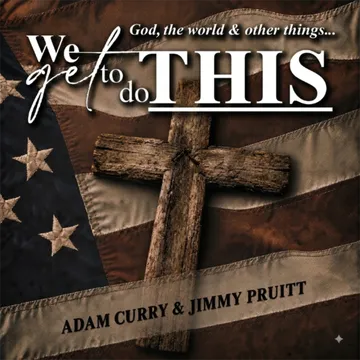
Episode 17 · Wednesday, 7 January 2026

Venezuela or Bust

A massive $2 billion energy play in Venezuela and a new Arctic security pact with Finland signal the definitive end of globalist dominance in the Western Hemisphere.

By We Get To Do This | 57m listen | 28 chapters
Venezuela or Bust cover
We Get To Do This · No. 17

About this episode

The Trump administration has initiated a massive strategic pivot toward Venezuela, pledging 50 million barrels of oil valued at $2 billion to stabilize the nation following the collapse of the Nicolas Maduro regime. This maneuver, rooted in the Monroe Doctrine and the National Security Strategy, marks a definitive end to the failed Juan Guaido era as millions of Venezuelans take to the streets to celebrate the shift. The move signals a broader reclamation of the Western Hemisphere from socialist influence while securing critical energy resources for the American market.

Secondary developments include a major manufacturing deal with Finland to construct eight icebreaker ships in Pennsylvania and Louisiana, a move designed to secure the GIUK gap as Arctic shipping lanes open. Domestically, the administration reports that over one million people have opted for self-deportation, a trend credited with driving up construction wages and lowering housing costs for citizens. Meanwhile, the emergence of the Core Five—a trade alignment between the United States, Russia, China, India, and Japan—threatens to render the United Nations and the World Health Organization obsolete. Secretary of State Marco Rubio is currently spearheading these diplomatic withdrawals as the U.S. exits globalist institutions to reclaim national sovereignty.

Cultural shifts are equally pronounced as schools abandon physical textbooks for Google Chromebooks, prompting concerns from educators about a lack of fundamental technical understanding among students. Amidst these changes, the program highlights the value of the Pray for America Bible and the importance of generational wisdom in an era of instant gratification. The session concludes with a nod to Black Rifle Coffee and a listener letter from Casey, emphasizing the need for direct prayer for local and federal leaders without the hesitation of modern skepticism.


CHAPTER 01 / 28 Discussion

Opening Prayer and New Year Greetings for 2026

The session opens with a prayer seeking wisdom and truth from the Holy Spirit to guide the conversation. The speakers acknowledge the date as Wednesday, January 7, 2026, marking episode 17 of the program. They exchange New Year greetings and express gratitude for the opportunity to share their perspectives.

prayer· holy spirit· jesus· new year· episode 17

00:00 Father, we honor you today. Thank you for the privilege of getting to sit down at this table on these mics and talk about life. Talk about what matters. What matters to us, not just in the larger sense, but even just day to day, the things that are happening in our world, the things that are coming at us. Father, we ask for wisdom. We ask, Holy Spirit, you give us the Bible says you're the spirit of truth that leads and guides us into all truth. So we lean into you and we receive from you wisdom. And that's our heart, Lord. And Father, as we share, I pray that this would help anyone who's listening to be encouraged, to be lifted up, and to borrow our title from another show, to live up in a down world.

00:43 That's our heart for them. Thank you, Lord, in Jesus' name. Amen. Amen. It's Wednesday, January 7th, 2026. We get to do this. This is episode number 17. This is the life we've been blessed with. This is a gift for we get to do this. This is the chance we did not miss. This is the life we get to do this. Happy New Year, brother. Hey, we're already there. Yeah. 26. I saw a video somewhere and it was of this young lady and clearly an older woman. And she's like, you know, it's 2026.

CHAPTER 02 / 28 Discussion

Reflections on Aging and Generational Perspectives

A discussion on the subjective experience of aging follows a story about a woman turning 100 who feels much younger. One speaker reflects on being born in September 1964, placing him on the cusp of the Baby Boomer and Generation X eras. They remark on the physical signs of aging noticed in mirrors and barber chairs compared to their internal sense of youth.

aging· generation x· baby boomers· generational gap· perspective

01:26 And this woman's going, 2026, I was born in 1926. So I'm going to be 100 this year. I only feel 50. She says, Lord, let me make 100. Maybe get it through 100. It was just so beautiful. And Tina and I were talking about this this morning. I feel so much younger than the age that than the number that's there. So agree. I mean, we've talked about it before, but it's just like, wow, man. What happens? I mean, I know. You know, it's great. I'm like in my own world, right? And then I walk in front of a mirror or a glass at a store and I look at myself and I go, who's that old guy?

02:08 I'm like, man, what happened? The worst is the barber chair. Oh, wow. Those mirrors are harsh. I mean, they're real. They're a little gray hair that's laying on the ground around me. Where did they come from? It is what it is. It's also we do. And it's given me a real sense of the generational gap. You know, for years, for decades, I was the youngest guy. I was always the youngest in class. I was, you know, because I'm a September baby, September 64. So although technically a boomer, I am Gen X adjacent and sorry, the face of Generation X and the hair of Generation X.

CHAPTER 03 / 28 Discussion

Shift from Textbooks to Chromebooks in Schools

The conversation shifts to the disappearance of physical textbooks and lockers in modern schools, replaced by Google Chromebooks and digital tools like Google Docs. A computer lab teacher's observation is cited, suggesting that children today understand how to scroll but lack a deeper understanding of how technology actually functions. This shift is linked to the implementation of Common Core standards and Google's dominance in the classroom.

chromebooks· google docs· common core· education· technology

02:53 For sure. But I'm on that cusp, kind of. And then somewhere around, I think it was probably around 50 where that started to switch. And now it's really there. I see, wait a minute, there's a generation that not only really has a whole different world view and perspective. I didn't even know that in school, books, textbooks have not been around for a decade. It's Chromebooks. Wow. And, you know, that didn't, there's no lockers subsequently. You got no, he has no locker for you to put your stuff in. You don't need to. You just come in, you got your Chromebook. That is it everywhere. Fredericksburg has a massive locker system. Okay. Not everywhere, but I'm sure.

03:38 But this probably started with Common Core and all these things. Right. And Google, of course, overtook it. They did what, you know, Apple initially did this. They were giving all the computers to schools. And Google came in with the Chromebook and they came in with Google Docs and what is the Google Sheets and all of this stuff. And I was watching some, actually, a computer lab teacher. He said, children have no idea how it works. All they know is how to hit next and scroll up. That's all they know. And I'm like, well, first of all, that's kind of sad. But second of all, that's the reality of it. We just have to realize. And with that, I just been getting so much

CHAPTER 04 / 28 Discussion

Biblical Instructions for Generational Respect and Conduct

A reading of Titus 2:1-8 emphasizes the biblical obligations for older men and women to live wisely and train the younger generation. The speakers address the modern "OK Boomer" sentiment, arguing that it represents a loss of respect for the wisdom and historical knowledge held by elders. They advocate for integrity and wholesome teaching to bridge the gap between generations.

titus· bible· scripture· elders· generational gap

04:21 scripture that has just been coming inside. You have some handy? I do, actually. Hold on a second. Everything just synced this morning. It's been so busy. Let me see. The one that I wanted to read, I think was Timothy or Titus, Titus, it was, to Titus 2:1-8. And I thought this applies in all directions. As for you, Titus, promote the kind of living that reflects wholesome teaching. Teach the older men to exercise self-control to be worthy worthy of. of respect and to live wisely.

05:02 They must have sound faith and be filled with love and patience. Similarly, teach the older women to live in a way that honors God. They must not slander others or be heavy drinkers. Instead, they should teach others what is good. These older women must train the younger women to love their husbands and their children, to live wisely and be pure, to work in their homes, do good, and to be submissive to their husbands. And then I'll skip a little bit. And you yourself must be an example to them by doing good works of every kind. Let everything you do reflect the integrity and seriousness of your teaching. It was just like this whole, you know, we have an obligation for it to go both ways.

05:40 You know, as Paul was teaching Timothy, and we also have to treat the elders with respect. I just see this, there's this gap, and the gap is usually filled by one word, two words. Okay, boomer. And I'm like, you know, people are missing so much of, and I don't just want to say wisdom, but just common knowledge and history that we have that is lacking, even from people younger than us in their 50s. And I would say what we witness with Venezuela. Nice segue. Well done. It cut hard.

CHAPTER 05 / 28 Discussion

Media Narrative Shifts and Personal Health Update

The speakers observe how mainstream media narratives shifted overnight to focus on Venezuela and regime change, displacing previous coverage of Israel and domestic politics. One speaker shares a personal account of suffering from "cedar fever" and a flu-like illness for ten days. He credits a friend's suggestion of cedar allergies and the use of Claritin for his eventual recovery.

venezuela· mainstream media· cedar fever· allergies· tiktok

06:24 Hard right. But what happened is the narrative changed overnight. And the first thing I noticed is that the legacy mainstream media, they still control the narrative overnight. Epstein's gone. Israel's gone. The MAGA America First split is gone. Candyland is closed until further notice. And everyone's only talking about Venezuela and regime change, etc. And what's interesting, and I don't expect the legacy media to give us any kind of historical perspective, but every influencer, podcaster, they have no perspective on these things.

07:05 They have never learned even the, I mean, maybe, no, I don't think they've ever learned even the slightest bit about history, even in our hemisphere, which is just baffling to me. And of course, it doesn't really fit in a, you know, in a three-second TikTok or real video, you know? And so I was really sick these past 10 days. It was a flu, which had a confluence with cedar allergies, which I did not recognize. Cedar fever, they talked about it. Cedar fever. And I prayed, like, Lord, please heal me of this.

CHAPTER 06 / 28 Discussion

Venezuela Crisis and U.S. Humanitarian Oil Aid

A discussion on the current crisis in Venezuela highlights the need for immediate resources to prevent a total collapse. The U.S. administration's plan to provide 30 to 50 million barrels of oil, valued at approximately $2 billion, is presented as a direct effort to help the Venezuelan people. The speakers argue that the situation serves as a primary example of the failures of a socialist system.

venezuela· oil· humanitarian aid· socialism· regime change

07:43 And he works in fun ways. So I'm sitting at the table three days at the breakfast table three days ago, and one of Tina has a friend on the phone. And she says, you know, Adam could have cedar fever. And I hadn't even thought about it. And so I'm like, oh, thank you, Lord. You know, got some, what is it? The clariton. Wow. By the way, the non-drowsy, that's not true. I don't care what they put on the pill. I was crashing at the end of the day. But within 24 hours, it started to clear up. And it's just like, ah, okay, now I'm feeling better.

08:22 Yeah, I really did come back. And then I just saw what was happening. And it's been crazy. But I gave you a boot because I wasn't at church. Which is great, too. I gave you like a quick boots on the ground Sunday morning. Very helpful. Well, and then I'm watching the service. I'm like, holy cow, Pastor Jimmy's given an update that I just sent him on a text. I did ask your permission. You did, no, but that was. I said, you mind if I share this? Yeah, go for it. I didn't. I didn't expect that. I'm like, wow, okay. That was awesome. And I really appreciated that you did that because with what happened in Afghanistan, the way, I don't know if I said it, but you translate it to right now, we just need to pray for the people of Venezuela, for our administration.

09:09 And today that paid off. You know, because I said that, you know, the number one thing with this change, and we can get into that a little bit, is that something needs to happen within 72 to 96 hours because these people will run out of actual resources. And today, the president said, well, listen, we're going to take 30 to 50 million barrels of oil. It's about $2 billion. We're going to give that right to the people of Venezuela because they have a socialist system. And so what happened here, I think, and by the way, I have no clips today. So feel free to interrupt me whenever because I think we just need a talking session. Yeah, this is good. Talking session because I can just play clips all just outrage.

CHAPTER 07 / 28 Discussion

History of Venezuelan Oil and the Rise of Maduro

The history of Venezuela's oil industry is traced from its development after World War II to the nationalization efforts under Hugo Chavez. The speakers describe the heavy, tar-like nature of Venezuelan crude and the subsequent economic decline when oil prices dropped. They detail how Nicolas Maduro, a former bus driver, took over after Chavez's death in 2013, leading to mass migration and the collapse of production.

hugo chavez· nicolas maduro· chevron· exxonmobil· pdvsa

09:54 Regime change. change, foreign wars. The thing that is so interesting that is a sub-narrative is this shows you how socialism works, or better yet, doesn't work. Bingo. I mean, do you know anything about the kind of the history of the past since the 1990s of Venezuela? Yeah, Cesar Chavez, Chavez, and before, and that started the tumble. Yes. So oil was found in Venezuela in like 1925 or something.

10:31 And then after the war, they started to develop that after the Second World War. But really in 1990 is when the American, the three big American oil companies, Chevron, ExxonMobil, and ConocoPhillips, they took a risk and said, we're going to go in and we're going to start developing this and ship it off. We built refineries, mainly in Texas and Louisiana, because oil is not oil, it is not oil. The crude oil in Venezuela is like tar. I mean, you can't even put it through a pipeline. Really? No, it's so thick. It's literally like the tar that you put on the road. Wow. It's that is that thick, which is really good because you need that for jet fuel and diesel oil and shipping fuel too.

11:14 So it's a very important resource. But it's not like our shale here in Texas, we can take it out of the ground, like shake it around, throw it in your gas tank. I mean, that's the champagne of oil. And so Hugo, not see it, Hugo Chavez. Hugo Chavez, he decided that he was going to change the whole idea of Venezuela into socialism. And this is when the oil prices started to skyrocket. So he was doing great. You know, you're looking at $100 a barrel. Like, yeah, here's free food, here's free education, here's free health care.

11:56 Never diversified that. And they used to do cocoa and other types of farming commodities. And so if 98% of your economy is based on oil and the price drops by half, oops, we have a problem, Houston. And so instead of diversifying, he said, you know what? We're just going to nationalize these companies. And instead of giving the traditional 60-40 split, they owned all the oil. America never owned the resources, but we had a deal with all these companies, 60% for us, 40% for you. He said, nah, you know what? We're going to do 25% for you, 75% for us, 30% royalty, and 50% tax.

12:40 So basically, our companies were losing money. And at that point, it's like, well, what are we going to do? We can't really do anything. He fired all of the people who were working at PVDSA, which is their petroleum company. They even went on strike. They said, you can't do this. It's not going to work. Corruption came in. So everything just started to fall apart. The thing that he never got to see the full destruction of the country because he died in 2013. And his handpicked guy, former bus driver, literally, I don't know if people know that Maduro was a bus driver before he was

13:18 brought into the government. Perfect. It's not to say that a bus driver can't be the president of a country, but it just sets you up for some expectations. And he went, yeah, you know what? We're going to take all of this. We don't need these Americanos. We're going to kick them out completely. And so, of course, the result is that their production went down to 20% of what it used to be. Everything got old. But what did he do? Well, I'm going to diversify. I know. I'll diversify into drugs and human smuggling and all this stuff. But 8 million Venezuelans left, and it's been a real problem. Every single president has said this. Is it true that upwards of a third of that country has fled? Yeah, left.


CHAPTER 08 / 28 Discussion

Trump Administration Strategy and Venezuelan Celebrations

The speakers contrast the failed policies of previous administrations regarding Juan Guaido with Donald Trump's current approach rooted in the Monroe Doctrine. They reference the National Security Strategy document as a blueprint for the current actions in the hemisphere. Footage of millions of Venezuelans celebrating in the streets is cited as evidence that the population welcomes the change.

donald trump· monroe doctrine· national security strategy· venezuela· juan guaido

14:00 Wow. I heard that. Yeah, a lot of them came here. And throughout the history, our presidents have said, well, do you remember Guaido? Does this name mean anything to you? This was the candidate that Barack Obama, President Obama, supported. It's like, yeah, no, this guy should be the president. Of course, he was completely ignored. He was just some dude. And he came into Congress and everyone was applauding him. And nothing happened. And then Biden, President Biden, was there. He's like, well, we're going to be tough and sanctions. They never really did what had to happen until President Trump said, you know, there's so much trouble here because who was in there getting what oil was left?

14:43 China, Russia, et cetera. I guess nobody thought the national security strategy document was real. Remember, we discussed this on the show? Yes, we did. This is exactly what I'm doing. We were like, wow, this is historic. Yes. And part of it is kind of the Monroe doctrine. I mean, no one really. Because nobody reads Pastor Jimmy. That's true. Nobody reads this. It wasn't on a 15-second video on Instagram. And I'm literally hearing news models saying, you know, it's funny in this document, President Trump kind of said he was going to do this. And now that we read this, it seems that it's kind of happening. Wow.

15:23 But the way this is spun into this is regime change. No, it's not. And all of that's starting to fall apart. And it's miraculous what has taken place almost overnight, where the loudest voices are saying, this is a foreign war, this is regime change. They're being shot down by their own fans now. Wow. This happened within a 24-48-hour time period. And it is. And those poor Venezuelans, the millions of them that went out into the street and been partying ever since. It's like, oh, yeah, that country's distraught. No, they are celebrating. They're happy. It's unbelievable. Some of the footage of these gatherings, millions of people.

CHAPTER 09 / 28 Discussion

Commodity Trading and the Louis Dreyfus Empire

The role of massive commodity trading firms in moving global resources is explored, specifically mentioning the Louis Dreyfus company. The speakers note that actress Julia Louis-Dreyfus is an heir to this multi-billion dollar empire. They discuss how oil functions as a form of currency and how traders facilitate the exchange of different grades of crude oil between nations.

louis dreyfus· commodity trading· sitgo· oil· julia louis-dreyfus

16:09 And they're so elated that relief is coming. Yes. Well, and so that, and that's what my boots on the ground to you was: like, well, they need to get money in there somehow. Yeah. By the way, I've started to learn about the commodity traders. Have you ever heard of like Sitgo? Maybe you've heard of Sitgo, but Louis Dreyfus. Does that name ring a bell? No, Richard Dreyfus does, but not. Have you ever heard of Julia Louis Dreyfus, the actress from Seinfeld? Yes, yes, yes. So she is the sole heir to the Louis Dreyfus commodities trading empire, which is probably worth $10 or $20 billion.

16:50 And I read, so I talked to Paul the oil baron, our guy, Paul, and he's been so helpful. And he gave me a book to read called The World for Sale. And it's all about the commodity traders who are actually moving the oil, trading thick crude for light crude, wheat from one country for stuff we never hear about. You've never even heard of these companies. We kind of have a category for that. So literally, oil is literally money. So when President Trump says, we're taking this 30, 50 million barrels of oil, that is truly oil. And it's one of these guys. I'm sure it's Paul Singer or Sitco or somebody who's doing the actual transporting.

17:33 That money is paid right away. That money can actually go to the Venezuelans. Yes. Wonderful. Now, that doesn't fix their socialism. No. And it's just amazing to see the shallowness of every single commentator. Well, it's always about the oil. Please do not confuse what the Bush dynasty did in Iraq with what is happening here. It is phenomenal. And everybody should be really optimistic about this. And I think that's kind of the message that came with, you know, came out of the gate with it's like, we need to be positive about this and not be influenced by this nonsense.

CHAPTER 10 / 28 Discussion

Proverbs on Wisdom and the Power of Prayer

A reading of Proverbs 2:1-5 encourages seeking insight and understanding like hidden treasure. The speakers reflect on the importance of praying for the president, the cabinet, and the global situation rather than reacting with immediate skepticism. They also mention positive feedback received regarding a previous segment on the "Israel conundrum" featuring Sir Brian of London.

proverbs· wisdom· prayer· israel· church

18:13 I got a word today, Proverbs 2:1.5. My child, listen to what I say and treasure my commands. Tune your ears to wisdom and concentrate on understanding. Cry out for insight and ask for understanding. Search for them as you would for silver. Seek them like hidden treasures. Then you'll understand what it means to fear the Lord and you will gain knowledge of God. Oh, that is rich. You can turn the air on for me, brother. I want to give this hoodie. Well, this, by the way, is being retired after this show. No way. The armor of God has. Yeah. Tina said it's time to retire this hoodie. It's stretched out. It's faded. But it's so comfortable. And I said, you're right, Darn.

18:54 I have a Haynes sweatshirt that's an extra large. I don't wear an extra large. No. And it looks horrible, but it's my, I wear it almost every day when I go home. I have other favorites. I'm okay. Man, it can be replaced in the future. It can be replaced. We digress a little bit. Well, so I agree with you. This attitude of gratitude for what's happening. We've been praying for our president. We've been praying for the cabinet. We've been praying for America. We've been praying for the global scene and situation. And when movement happens, our first reaction, my knee-jerk reaction, isn't to go, what was he thinking?

19:31 Oh, that dictator. No, it's like we've prayed for movement. We've prayed for solutions and for the wisdom of God to be implemented into these arenas. And when we see it, it's this. this is why I have so pushed back on media that I have to ask Annette and you what's going on because it got it became overwhelming to where I can only swim in a cesspool for so long. And I hope that this podcast gives our people, when I say our people, our church, because that's really who I consider to be doing this for. If anyone else out there gets something out of it, we're real happy. By the way, got a lot of good feedback on the Israel conundrum.

CHAPTER 11 / 28 Discussion

Devotional Habits and the Pray for America Bible

One speaker shares his experience using the "Pray for America Bible," which includes daily prayers for the country alongside scripture. He expresses a preference for reading full biblical contexts rather than short, "quick hit" devotionals. The discussion emphasizes the importance of understanding what comes before and after a specific verse to gain a complete perspective.

bible· devotionals· pray for america· scripture· genesis

20:14 Nice. I mean, you saw Sir Brian of London, his eight-minute reply. That was amazing. He was just away. It was fantastic. I like that guy. I could be friends with him. He's a good guy. Yeah. I've known him for a long, long time. Appreciated it. So, you know, being kind of down for the count, and, you know, I took my Sabbath, which always helps so much, just getting, you know, words coming in. Or, you know, I tried to just read other things, a book, you know, some scripture. I got the Pray for America Bible from the show. This thing is great.

20:53 Check it out. It starts with a prayer every day for the country, and then it has full scripture. So it'll have Genesis 3 and then Matthew 25. Not full, but it's more than just a devotional. It's not like a devotional book. I'm getting a little tired of that. Just like quick devotionals, quick hits. You don't have to read mine. No, I never get tired. I never get tired of the daily grind. But with every devotional that I have. Oh, there's millions of them. But I have to go, I want to see what came before it and what came after it. I find that that's really important. Anyway, to bring this all around,

CHAPTER 12 / 28 Discussion

Economic Factors Affecting Housing and Energy Costs

The conversation addresses the concerns of younger generations regarding home affordability. The speakers argue that closing the border and removing illegal immigrants will reduce government-funded housing scams and lower rents. They also link falling oil prices to lower energy costs, asserting that cheaper energy leads to overall economic prosperity and increased purchasing power.

housing· inflation· oil prices· blackstone· immigration

21:34 there's this gap between the boomers and the Zoomers, if I can just call it that. And when I distill it down to its very basics, if you have a conversation with them, it'll always, you know, be like, well, this is tough for us and this is tough. And I can refute every single, like, well, you know, we didn't have e-bikes. You know, we put playing cards in our spokesman. We didn't have lattes. We had Folgers with flavor crystals. You know, come on, give me a break. But the one thing they all come down to, and this is interesting, for all the griping, and I've spoken to many over the past few weeks, it always comes down to

22:14 buying a home. And how does helping Venezuela, how is that helping us here in America? And this is such a valid question. But again, it's not being addressed. What President Trump is doing, and it started with shutting down the border. You shut down the border. You get illegal immigrants out of the country who were literally, their homes were being funded by the government at exorbitant prices. It was a scam that started pretty much during COVID. So rents will come down. Housing, and of course, there's all kinds of nefarious actors like Blackstone, who bought up a whole bunch of houses and just there to jack up the rents.

23:01 This is all going to start coming down. If anyone's interested, look at the price of a barrel of oil. It's going down now. Now, it's not great for our friend Paul the oil baron. Luckily, 60% of his revenue is gas, natural gas, which is good. But the oil revenue goes down. What happens when oil revenues go down? The cost of energy goes down. Energy is life. Energy is life. And the cheaper you can get the energy, the better your life is going to be. And that will make everything more prosperous. So there's really... But look how long Donald Trump's been president. Not even a year. I mean, this should have happened in the first five weeks, right?

CHAPTER 13 / 28 Discussion

Instant Gratification Culture and the Value of Hardship

The speakers critique the modern "instant gratification" mindset driven by social media and digital convenience. They argue that the culture of "participation trophies" has failed to prepare young people for real-world hardships and long-term goals. However, they note a positive trend of young men pursuing skilled trades like welding and construction to find economic opportunity.

dopamine· deconstructionism· parenting· workforce· training

23:46 That's the thing is we have such a temporary temporal mindset. I just want to like and subscribe and immediately be gratified. Exactly. I need that dopamine right away. It's got to happen. And so we've lost our ability, and we see this in a lot of research. We've lost our ability for the long game. Yeah. You know, we have a different worldview where we're so used to instant everything. I mean, literally everything. I mean, you sit at a Chick-fil-A line, which I've only done once. I've only been to Chick-fil-A once here. But you sit in line there, and if it's more than three or four minutes, you get an answer. What in the world? So we've been conditioned. So now Trump comes in and says, here's what we're going to do.

24:27 It's going to take a while. He said that multiple times. And he said it may get a little worse before it gets better. And it did, and it had to. But now we're starting to see this domino effect, the ripple effect. And I'm not knocking the next generation. I'm a champion for the next generation. We have to be. But there are things that have to be addressed. And one of them is this attention span of a gnat. You know, it's like if it doesn't happen right away, then it's not working. And that's sort of the value of getting older: we've got a long span of life and a lot of history under us. And because of that, we've got a longer view on things simply because of age and time and timing.

25:09 And we've seen how things work and roll. But when you're 19, 17, 22, you know, everything you've been used to and conditioned to getting everything instantly. We even had this conversation in our staff meeting this morning about deconstructionism and what's going on with young people not having the value of hard training. You know, everybody gets a ribbon, everybody gets a trophy. You're amazing. You're wonderful. You're special. You're one of a kind. I mean, they hear this from day one because our culture in an attempt to rescue the hurt we felt, supposedly, not me, but some.

25:50 Now we go overboard to make people feel special and wonderful. So now we do that, and we mean well, but at the end of the day, if they don't face any real hardship until they move out of the house, which is like 25, 30 now, you know, then they're not trained for longevity. They're not trained for hard things to do difficult and those kinds of things. I see more and more, certainly men, young men who are saying, hey, you know, like I saw where the opportunity was and I moved to this state and I took this course and now I'm either driving a certain type of truck for a construction company or I'm welding or and that that doesn't mean that

CHAPTER 14 / 28 Discussion

Inflation and the Impact of Self-Deportation

The discussion attributes inflation to the printing of money and the resulting $37 trillion national debt. The speakers claim that wages are rising in sectors like construction because the supply of cheap illegal labor has decreased. They mention that over a million people have reportedly chosen to "self-deport" from the United States, creating more opportunities for domestic workers.

inflation· wages· self-deportation· labor market· mainstream media

26:33 you know if if those businesses are successful, we'll need marketing people, we'll need lawyers. You know, it's not like anyone gets tuned out of it. But it is just to go back to the affordability, because that's what the Democrats jumped on so quickly. Affordability, affordability. Right. It is absolutely true that inflation, which comes from one thing and one thing only, the printing of money, that's how you get to be $37 trillion in debt. That's what raises or reduces your purchasing power of each individual dollar. Wages are already going up. I mean, it's not like everyone's seeing an immediate change, but in certain sectors at the bottom end of the economy, construction, manual labor, wages are going up because the cheap illegal labor has been removed, or they've removed themselves, actually.

27:26 You know, everybody had the opportunity to take $2,000 and self-deport. A lot of people have done that. And they can actually come back in if they want to, but a lot of, I think over a million people have self-deported. Wow. So that's where, you know, it's just, you're right. It's a longer term, but not even that long. It won't even take a long time. It hasn't been that long. But for if you're used to instant gratification, it seems that way. And the mainstream media is all about instant everything. And well, everybody has an agenda, of course. Right. And I see a lot of influencers, podcasters, who mainly because of the algorithms, but also just for their model, they have to do a show every single day.

28:11 I could not do this show with you every single day. We wouldn't have enough to talk about unless we just do what's happening in the news. Let's talk about it. Let's get all over. Isn't that what moves algos? Controversy. Oh, of course it does. And getting people to DM you, you know, and have conversations and comments back and forth. That breaks the algo. There's something else. I'm not here for that. There's something else that I didn't do any preparation on to talk about, but I think since probably since 2015, but really massively in 2020 during COVID, the feminization of the world, but let's just talk about America for a moment,

CHAPTER 15 / 28 Discussion

Gender Roles and the Feminization of Society

The speakers discuss the perceived "feminization" of America and the blurring of traditional gender roles. They argue that men and women have distinct, God-given strengths and that overrepresentation of women in certain roles may be detrimental. One speaker uses the example of his wife, Annette, to illustrate the value of supportive roles within a marriage and a church.

gender roles· biblical roles· masculinity· family· farming

28:48 which is the idea of instead of men and women being equally important, but designed by God for different types of roles in the world and the household, it just became we're all equal and gender is a construct. I think it feels like people are starting, even young people are starting to say, no, wait a minute, this is just not true. And I mean, I can get in so much trouble for this, so I'm trying to walk a very thin line. But having a lot of women in certain roles in organizations overrepresented, it may just not be a really great thing.

29:34 I mean, mean, how do I put this into context without people throwing stones at me the minute I walk out of the studio? Well, because it's not about their competency, it's about roles. It's about what we have strengths in, where our wisdom lies. If I did not have half of my life being Annette, I would be lost. Ditto. Ditto. I need her. She keeps me firmly planted on the ground. She keeps me thinking. She keeps me everything. I'm just saying the role is so valuable that I would elevate that, but she does not have any desire to be the senior pastor of a church.

30:14 She said, I could never do what you do. I could never live with the weight. And she said, I get the value of being married to you. You carry the weight, and I get to tell you what to do. But she understands that role. I lived half of my life on a farm, half of my life in the city growing up, growing up. Ask anyone who was raised on a farm, and they'll tell you the difference in gender. Dope. Anyone who's ever birthed a calf. Yes. It's real obvious. Castrated a hog. I'm just saying, I mean, most of America gets this because it's so obvious. But I don't want to just digress into that.

CHAPTER 16 / 28 Discussion

Masculinity and the Cultural Shift in Young Men

The conversation touches on the "demasculinization" of men and the frustrations of women who have missed traditional dating windows. The speakers praise young men who are reclaiming a masculine worldview through athleticism and hard work. They observe a difference in "stride and swagger" between older generations raised with masculine values and younger men raised in a more feminized culture.

masculinity· tiktok· gym culture· athleticism· dating

30:55 I'm just saying simplicity. Yes. And I think it's destroyed a lot of young lives. You know, my podcast partner, Noah Janda Dvorek, he's always bringing in TikTok clips of women going nuts on TikTok or whatever. And first of all, I'm really sad, but I listen to it. I think, here are women who are past their prime dating age. They're now in their 30s. And I think they're frustrated. They've missed out on something because they were told to do things a certain way. And I don't think it's biblical. I don't think it's right. And then the complete feminization and demasculinization of men

31:41 has been very destructive. And so when I see young men standing up and saying, hey, I want to grab the bull by the horns. I want to go out there and do something. I'm not afraid of being a man. It sounds so simple to us boomers, but it's really a big deal. It's huge, really. It is. And I see this whether I'm in the gym, which I love to go to a gym because I still like the smell of a gym. I still like the feel of real weights, you know. That's just the part of me that gravitates towards athleticism and all those things. And to a large degree, a masculine, you know, a masculine worldview.

32:20 So that's not to put anybody down who doesn't. I'm just saying it's interesting looking at the different ages that come into a gym and how they're wired and how they work out and how they approach working out. Guys from my generation, they were raised very masculine. I mean, our generation was. And they walk into a gym with a different stroll, a different stride, different little swagger. You know what I'm saying? There's a different mentality. I see this on farms. I see this in rodeo. I see this in things that the oil field. I see this in various arenas where

CHAPTER 17 / 28 Discussion

Practical Skills and the Trap of University Debt

The speakers lament the loss of practical skills, such as changing a tire or working on a car engine, which are now often "subcontracted" out. They criticize the push for every student to attend university and accumulate debt for degrees that may lack real-world value. They advocate for a return to manual labor and skilled trades as a viable path to success.

trade schools· college debt· firefighting· welding· manual labor

33:03 it doesn't take long to figure out, okay, this guy's never turned a wrench. This guy's never changed his own oil in his car. This guy's never had to change a flat tire. By the way, all these things are gone. You can't work on your car. You can't change your tire. I open my hood. It's a big piece of plastic. I'm like, really? I got to take this piece of plastic off even to get to the engine. I know. It's hilarious because we've specialized everything out. There's no wrench in it. We subcontract life now. So it's a different, it is a different approach. And I'm not here to put that down. I'm just saying they didn't have the value. We were talking about this in our staff meeting, how some of us had the value of being raised by dad, who my dad was a firefighter.

33:45 So that's masculine to start with, just that intensity. But I was raised building fence and welding and digging post holes and changing my own oil and just doing the stuff that it takes to keep a farm running, working our cattle and stuff. So I grew up with that. And I'm so thankful because I was kind of the last generation that did. Now, a lot of young people who have raised in rural settings, they'd go, no, me, I did that too. But you see a difference in those young people than you do the kids that were raised on a screen in a bedroom. This is really it because all of the push was towards going to university, go to college, get into debt, which is a.

34:29 just a horrible, horrible trap. And people will say, well, you guys did that. Yeah, I guess. I guess we weren't paying attention. Sorry. We have to move forward now and get degrees that just really aren't that meaningful. But if you open your eyes, there's going to be so much opportunity because even though no one will say it, literally the tariffs are bringing factories back to America, which will be Japanese auto factories building cars here. We are going to build eight icebreaker ships in America,

CHAPTER 18 / 28 Discussion

U.S. Manufacturing and the Strategic Importance of the Arctic

A new deal with Finland to build eight icebreaker ships in Pennsylvania and Louisiana is highlighted as a major boost for American manufacturing. The speakers explain the strategic importance of the "GIUK gap" (Greenland, Iceland, and the United Kingdom) for global shipping. They argue that as Arctic ice melts, these northern routes will become as vital as the Suez or Panama Canals.

icebreakers· finland· arctic· shipping lanes· national security

35:11 which is a deal we did with Finland, which kind of leads into the next thing, just so I can let you all know what's coming this week of nonsense and what everyone's going to be yelling about. It's already started. And when you need to build big, big, beautiful ships, big, beautiful icebreakers, you need all kinds of people. You need accountants. You need lawyers. You need marketing people. You need managers. You need workers. This is going to be a bonanza. Pennsylvania, Louisiana is all going to be built here. All of this oil. Oil is not just a bunch of guys with hard hats twists and wrenches. This is millions of opportunities. It's also not landman. Don't want to steal.

35:57 No, it's not landman. I grew up in that culture. It's not like that. It's fun to watch, though. It is funny. So the next thing is Greenland. Oh, gosh, Trump's going to invade Greenland just like he did Venezuela. I didn't vote for this. No, you did. If you look at, can we, so remember the national security strategy, our hemisphere, north to south. If you understand the globe, if you believe in the round earth, if you look at the globe from the top, you'll see that it's a very short distance between Alaska and Russia. Very short. And how there's this thing called the GIUK gap.

36:42 And this is the water in the Arctic between Iceland, Greenland, and really the United Kingdom. And, you know, United Kingdom protectorates. And that is just as important now, particularly when you start breaking the ice with your big, beautiful icebreakers, which you got from Finland, who are a really good ally, who, by the way, have a thousands of mile border with Russia, still haven't been invaded. If you look at it from the top, that is as important for shipping as the Suez Canal or the Panama Canal, because all of that has really started to open up.

CHAPTER 19 / 28 Discussion

Greenland Security and the GIUK Gap

The speakers address rumors of a U.S. "invasion" of Greenland, clarifying that the focus is on expanding existing security agreements to police northern shipping lanes. They mention a Russian submarine recently spotted off the coast of Britain as a reason for increased vigilance in the GIUK gap. The strategy is framed as a move to protect the Western hemisphere's interests rather than a territorial conquest.

greenland· russia· nato· shipping· bering strait

37:23 It is the exact same reason why China uses the 200 economic, 200-mile economic zone in the Straits of China. It's like, hey, this is our protectorate here. If you want to come through here, you can only go this far. Otherwise, I'm going to start spraying your boat with water. You've probably seen that in the past. So when Britain reports that a Russian submarine was right off of their coast, which happened just a few weeks ago, don't worry, you didn't read about it because you wisely are not watching the news feeds. That sub came through the GI UK gap.

38:01 And that is our hemisphere. It is, yeah, it feels like it's a long way away, but it's really just Alaska. It's our part of the world. It's our hemisphere. So no one is policing that. Wow. So trade is very important to have some control over that in case somebody decides to do something nefarious. Look at all the problems we had with the Houthis in that region of the world. Big, big oil shipping lanes. So we need to, sorry to say it, be the policeman of that region so that we can at least control legal goods, et cetera.

38:43 This is all part of the national security strategy. So we're not going to invade Greenland. We're not going to, I don't think we're going to buy it. If it was for sale, we would. I mean, we've tried it in the past. I think Roosevelt tried to buy it for $100 million. They said no. All we have to do is say, hey, we don't even have to do a deal, really, because there's a 1954 agreement. We just have to say we're going to expand this. We're going to be patrolling this. And we already have a base in Greenland, and we're just going to expand that, which we have the agreements and the right to do. So where's the outrage coming? What's the fear of the invasion that we're doing? The outrage, well, there's two parts.

CHAPTER 20 / 28 Discussion

U.S. Relations with NATO and the European Union

The discussion explores the potential withdrawal of U.S. influence from NATO, with the speakers suggesting that European nations should handle their own security. They criticize the EU's reliance on Russia as a "boogeyman" and advocate for an "anti-globalist" approach. The speakers express hope that people will migrate from Europe to the U.S. through legal means as European systems face increasing strain.

nato· european union· ukraine· russia· immigration

39:24 One is just. what are we doing? Trump is going to invade Greenland. He's out of control. He's crazy. We didn't vote for this. The real fear is NATO. Because we are kind of withdrawing from NATO and saying, you know, you guys are insane. You clearly don't really want peace. You want to continuously have Russia as your boogeyman for all kinds of political reasons, mainly so they don't have to say we were wrong and they can stay in power. You know, there's this security agreement that supposedly was just signed in Paris.

40:00 And, oh, we know we, the EU is going to have a security agreement for Ukraine when peace comes with Russia, and America's a part of it. But if you read the fine print, it says we will assist with monitoring intelligence. We're not even going to do intelligence. We're not even really a part of it. So there's a bit of a withdrawal. And if we actually invaded Greenland, well, then NATO would fall apart. I don't think President Trump wants to do that. But that's just the familiar response of people who have been left out of the deal. I hate to say it, but I think the EU, the president is just saying, hey, you do your thing up there.

40:43 We'll do whatever we can to help you. But we're really not interested in being involved anymore. We're busy here keeping America fantastic for our people. By the way, you want to leave Europe and come over here, come through the legal means. There's the front door. Come on in. We're happy to have you. And it's the anti-globalist move. Do you think we're going to see a migration of people out in America? Because Europe is like the wheels are coming off. I sure hope so. All over. I hope it starts with my daughter. I know. Me too. I'm praying the same thing. Come on, Christine. Yeah, just come on, come on, come on, hang out with us. They'll be much better. I'm looking at a top-down map. I've never looked at a top-down map before.

CHAPTER 21 / 28 Discussion

The Core Five and the End of Globalism

A new geopolitical alignment called the "Core Five" (C5) is introduced, consisting of the United States, Japan, Russia, China, and India. The speakers argue that these independent nations will trade based on mutual respect for culture and resources, bypassing globalist institutions like the UN and WHO. They frame Donald Trump's actions as a direct assault on the globalist system to benefit future generations.

china· russia· india· japan· globalism

41:26 Isn't it crazy when you see it? What's crazy is how connected everything is. When you look at bottom-up, it's different. It's completely different. But when you look at top-down, everything converges there at the top of the world. That's wild. I did not realize, like you said, those waterways all around the North Pole, that whole wow. And you see how close. Very close. You see how close Russia really is to Alaska. Is that the Bering Strait? That is the Bering Strait. Yeah, there's talk of a tunnel being built between. Believe me, we're going to be doing lots of business with Russia, and we should be. And we're going to be doing lots of business with China, which we've done for decades and decades.

42:09 They're not necessarily our enemy. China's not going to attack us because they need us. We are right now still their customer. So it's ridiculous to think that China, you know, they could come take us over. No, no, they don't want to be buying from themselves. They want to buy from us. So these are, it's called ARC, America, Russia, China. We may add India. You know, there's the core five. You probably haven't heard of this yet. C5, the core five, which is kind of like the new G7. And it's United States, Japan, Russia, China, and India. And we will be kind of the core five independent nations with respect for each other's cultures, but also trading with each other for the resources we have, the customers we have, the services we have, which could be really good.

42:56 And it's a blatant, full-on assault on the globalist system, which you and I have basically grown up with and have seen just create crap, particularly for our brothers and sisters in the Zoomer generation. So guess what? We've got the biggest boomer of the universe actually working for the Zoomers. President Trump is really, really doing it. But it's hard to understand it and not be swept up with, well, that guy's just doing this. We really are. It really is happening. And I think our job is to help communicate that because the president,

CHAPTER 22 / 28 Discussion

Political Communication and the Legacy of Ross Perot

The speakers compare Donald Trump's communication style to that of Ross Perot, who famously used charts and television airtime to explain economic issues. They suggest that Secretary of State Marco Rubio provides more detailed context for the administration's foreign policy moves. A viral meme featuring Rubio in various international uniforms is mentioned as a humorous take on his diplomatic role.

ross perot· marco rubio· donald trump· communication· youtube

43:39 he's not a perfect man. He does not know how to. I don't know if it must be intentional, but no one ever, he says, well, it's our oil and we're going to take it back. No one understands that unless you have the context of the history that it literally is our corporation's oil, which was stolen in the first place. If no one gives you that context, and I don't know why he doesn't do that, it would be great if he, remember Ross Perot when he was running for president and he'd buy airtime on television. You got to look this up, people on YouTube. It's like, well, right here, and have his chalkboard right here is the money we're spending and the money's coming in and this is why it's not working.

44:18 And he was great. And of course, of course, his life got threatened, and he withdrew because they said we're going to kill you and your family because he was splitting the Republican vote. Oh, yeah. Oh, he would. And he even said, I'm withdrawing for the safety of my family. Wow. Yeah. But I wish President Trump would do that, but I guess I'm not going to get that from him. That's just not his vibe. But if you listen closely to Secretary of State Rubio, he says a lot more. You got to listen to him. That guy's sharp. Yeah, he is very sharp. And by the way, he speaks the language of all these countries that we're invading. I'm sure you've seen the meme with him wearing all the uniforms of those countries as like being the president. It's hilarious, actually. Quite funny. It is funny. It is funny. But yeah, he's gold.

CHAPTER 23 / 28 Discussion

Withdrawal from Globalist Organizations

The speakers reiterate that the U.S. is pulling back from international bodies like the United Nations, the WHO, and the WTO. They argue this is a necessary step to prevent national destruction and reclaim sovereignty. They suggest that globalist leaders are realizing they cannot simply "wait out" the current administration's drastic policy changes.

united nations· world health organization· world trade organization· nato· national security strategy

45:02 So without bringing any clips to rant on, I just want everyone to know that this is a plan. It's written. You can go read it. Go download the national security strategy document. It's written in English. We've read it. You've read some of it on the show. It's very enlightening. It literally says, no, we're not going to be part of the globalist system anymore. The globalist organizations, no. So for you people who are listening, that means United Nations, World Health Organization, World Trade Organization, even NATO to an extent, United Nations, all of this. No, we're not going to be a part of that big system where they're running the show.

45:42 We are literally, in my opinion, being pulled back from the brink of destruction. It's not just rhetoric when President Trump says, if I wasn't elected, we'd be Venezuela. I think he's probably right. And here's the beautiful thing to watch. Well, not really beautiful, but here's the thing to watch. You have what President Trump is doing, and I think he'll achieve a lot in the next three years. In fact, you know, a lot of these globalist institutions, they're saying, well, they were saying six months ago, we can just sit him out. We'll just wait until Trump, until Trump's gone, and we'll get a new guy in, and we'll go back to where it was.

CHAPTER 24 / 28 Discussion

New York Socialism vs. National Strategy

The speakers contrast the national strategy with the rise of socialist politics in New York City, specifically mentioning Zohran Mamdani. they criticize the city's direction regarding property rights and the prevalence of marijuana. They predict that the socialist approach will eventually fail, prompting residents to seek "footing" in other parts of the United States.

zohran mamdani· new york city· socialism· property rights· migration

46:23 And now they're like, can we really sit him out? Because these changes are pretty drastic. Oh, man, I was going to make a point, but now I lost it. Oh, so there's two ways to solve the Zoomer crisis, which is real. I'm recognizing it. You do not have the purchasing power you should have. One is what President Trump is doing, and it will take time. Two, you elect Mamdani, and you become New York. Let's see which one turns out better. There you go. You know, if I'm wrong, I will eat my hat and say, boy, I had no idea a socialist approach would work. I also don't believe he's going to implement much, if any, of what he said he would.

47:10 But that is a short-term like and subscribe instant gratification strategy is to elect someone who clearly says, I'm all about socialism and collectivism and no property rights, which is now literally being said by people in his administration. Wow. About property rights. So, you know, next is centralizing production. And then, you know, before you know it, it will fall apart. I hope not. I always love New York. I love living there. I love working there. I love visiting there. Not so much in the past five, 10 years because I just can't stand the smell of weed everywhere.

47:50 I think that was, they made a mistake somewhere. It's like Vegas. I can't stand this too much. But that is not the, I don't think that's the strategy. But that's clearly, and I have loved ones in New York who are like, yeah, go for it. Mamdani, you know, he's going to help us out. You're going to learn. You're going to learn. And you're welcome back to stay with us for a little while when it falls apart. You want to find some footing in the United States of America outside of New York. So prayer. Let's talk about how we can direct people to pray for our country. Now, you started down the track with your new Bible. And what are some things you're gleaning out of that so that we can direct our friends listening to this, how do we pray for our country and our president?

CHAPTER 25 / 28 Discussion

Practical Advice for Praying for Government Leaders

The conversation provides guidance on how to pray for elected officials, including local, county, and federal representatives. One speaker suggests removing the word "just" from prayers to be more direct and confident when speaking to God. They emphasize that prayer should focus on truth, justice, and righteousness rather than praying "against" specific individuals.

prayer· theology· government· representatives· 2 chronicles

48:36 Wow, you caught me flat-footed on that one. I was not prepared to answer that. But I have a feeling, I have a feeling that I know a theologian somewhere who could give us a couple of ideas and some scripture that might work or just a way to pray for our country and our president, which to me, Tina and I, we pray at meals before we go to sleep in bed, we'll pray. And for the past several months, we've been including like just we pray for our president, for all of our elected representatives, all of them, which includes Democrats. Absolutely. We have senators and representatives and we have local government. and county government. All of them need prayer. That's actually a lot of what is in.

49:20 I'm only, of course, on January 7th, so I've only read Say just getting started in this Bible. But it literally has, it starts with this prayer. Pray for our representatives. Pray that. And, you know, it brings in Abraham when he was Abram and how he trusted God and how he didn't trust God or how Sarai didn't trust God initially. And, you know, and then how it does pay off, you know, when you trust in the Lord. So that's my short version of the answer, which I hope you'll expand on. Well, very short. General is better than nothing. I mean, if you don't know what to pray, you can pray in general terms.

50:02 I mean, it's not like God's up there waiting for us to say the right thing. He just wants to hear from us. In fact, I read this morning, like, you don't need to repeat words and say things over and over. God already knows what you're praying for. Take just out of your prayers. That'll really impact you. Take what? Just. Just. Yeah. Like, I need to take um out of my podcasting. You know, I'm still learning. It's very hard. Right. It's not going to be just out of your prayers. You should write that down and see how that goes. Interesting. Yeah. Interesting. Lord, I just, Lord, we just, we just, we just, we just what? Lord, we be direct. Okay, so, but I'm digressing big time. No, that's interesting because you remember we've had the episode with the interview with the devil.

50:46 Yes. And one of the devil's recommendations for defeating him was: don't whine and beg your God. Just tell him what you want in your prayer. And I thought that was really interesting. So I found myself saying, Lord, I pray for this. Being more direct. Instead of, would you please maybe kind of, if you have a moment, I know you're a busy guy. That's what just is. It's that fear of walking in too harshly. Right. Like we're going to disturb him. That's like we're bugging him. It's like kingdom come, will be done. Kingdom of God come, will of God be done. Yes. Yeah. Yes. So very simple, but maybe that'll help somebody. So praying for our country, praying for our president, just pray for them. Don't make a big deal.

CHAPTER 26 / 28 Discussion

Local Government Engagement and the Texas Minute

The speakers recommend using resources like the "Texas Minute" to identify and pray for local representatives by name. They share anecdotes about the positive impact of telling officials they are being prayed for. The "KISS" principle (Keep It Simple, Saint) is applied to prayer, focusing on the three pillars of godly truth, righteousness, and justice.

texas minute· city council· senate· righteousness· justice

51:30 Lord, we need your help. Yeah. Lord, we're crying out as a people. 2 Chronicles 7.14 is a great go-to for that. It says, if my people who are called by my name will humble themselves, pray, seek my face, and I will hear from heaven and I will heal their land. And he says in the next verse, I will be with you. So there's a good start. 2 Chronicles 7, 14. I recommend the New King James or the ESV for that. Another simple thing to do, and I do this on occasion. I don't do it all the time, but I get a thing called the Texas. I get it every day in email. So I've gotten so familiar with it, I don't even look at the title anymore.

52:13 The Texas flyover. There's another one. There it is, Texas flyover. So what you can do with that, you can go down to the end of it, and it actually gives you, you can look up all your representatives. Actually, it's Texas Minute. I get so many of these things. Texas Minute. At the end of it, it gives you links. And when you click on it, it says, here's your representative in your district. Here's your representative. Oh, okay. Yeah. Breaks it all down. And you can take a few of those and pray for them by name. Yeah, that's it. It felt good when I met several representatives when I prayed for the Senate last time to say, I've been praying for you by name.

52:53 It was like, what? I mean, they appreciate it. It has an impact when, you know, after I got saved and I went public with it on Rogan, the amount of people who said, I've been praying for you for 10 years has a huge, huge impact. We can do the same thing for them. But I would start with your local government. Find out who your city council is. And this is the deal. We don't pray against people. We pray against the enemy, which is the devil himself. But for people, we pray for them. And if they're doing things that are nefarious or they're greedy or whatever, they're off, they're corrupt. You can still pray for them for three things, for truth, for justice, and for righteousness.

53:36 Those are the three things that I always pray for. You know, it can get real complicated and long if you go get down in the weeds. We don't need to get down in the weeds. Stay up at the 30,000-foot level and pray for our country. Pray for godly justice, for godly righteousness, and for godly truth, biblical truth. And that's it. And then do it again tomorrow. You know, come back and do it again. But it doesn't have to be a 30-minute prayer. It's keep it simple, Saint, the kiss thing, right? Used to be keep it simple, stupid, but we're not stupid. We're saints. So keep it simple, saints. and just those three things: truth, righteousness, and justice. And I pray that for our government constantly, local, state, federal.

CHAPTER 27 / 28 Discussion

Listener Feedback and Connection in Podcast Land

An email from a long-time listener named Casey is read, expressing appreciation for the hosts' faith journeys and the "coffee table" feel of the show. The hosts discuss the lack of feedback loops in podcasting and express a desire to open more channels for listener interaction. They mention drinking Black Rifle Coffee during the recording.

no agenda· black rifle coffee· faith· community· email

54:18 Yeah. And international. I mean, global. So anyway, there's a simple, simple pro tip on praying. Pastor, pro tip. We got a note I want to. You need a thing for that. We do need. We need some sound effects. Yeah. I don't have enough jingles and sound effects in my life. I need that. We got a really nice email from Casey. I just want to share it. Adam, I want to introduce myself. I've been a long time follower on Listener of No Agenda since around 2008. So that's like episode one. Wow. I found myself praying for you and your salvation for a long time. So this is one of these notes I was talking about. It's been amazing to watch you find your way to Christ. I enjoy listening to your conversations on Tina with your podcast, by the way.

55:00 Tonight we're recording a new one. You probably got the news already. And I just started listening to your new podcast with Pastor Jimmy. I'm hungry for connection like what you have with Pastor Jimmy. I love that you two found each other and listening to you and Jimmy. I feel like I'm sitting at the table drinking coffee with you. It's absolutely wonderful to see you growing in your faith. God bless you and Tina and Pastor Jimmy. Hope we get to meet someday. Casey, thanks, Casey. Man, that's encouraging. Just the fact that you feel like you're here sitting drinking coffee with us. Because we are drinking coffee. We are drinking coffee. It's exactly. I can't say on the air what we're drinking. It's black rifle and it has an expletive in it. Yeah, but it's really good. Those guys have funny ways of getting products.

CHAPTER 28 / 28 Discussion

Outro and Plans for Future Episodes

The episode concludes with the hosts expressing their mutual enjoyment of the weekly recording sessions. They reflect on how their off-air kitchen conversations naturally evolved into the podcast format. They commit to returning next week and close with a final blessing and the show's theme music.

podcast· fellowship· closing· gratitude· weekly show

55:44 Well, thanks for joining us, Casey. And thanks for taking time to send an encouraging note. You know, there's not a lot of feedback loops in podcast land. Well, we haven't really opened it, honestly. You know, I think we're getting close. I think we should start thinking about feedback loop and some sound effects. Oh, definitely. Bring the sound effects, man. I love it. Okay. And, you know, on the next show, I'm sure there'll be something that I have clips. But, you know, whenever we, before we started this podcast, we were already doing the podcast. We'd sit together and we'd hang out in the kitchen, your kitchen. True. The girls are talking to each other. We're just deep into it, going back and forth without any clips. But if there's, it was just, it was just too much stupidity for me. It was too much outrage.

56:28 And like, no one needs to hear what you've been here and all that. No, we don't always have to have that. Brother, I love doing this show with you. It is the highlight of my week. Same for me, brother. It really is. I mean, it. So shall we do it again next week? Let's do it again next week. One more. Let's give it another. One more. We can do one more. All right, everybody. We get to do this. We'll see you next week. Till then. This is the life we've been blessed with. This is a gift for we get to do this. This is the chance we dare not miss. This is the life we get to do this night.