Episode 12 · Wednesday, 26 November 2025

Recognition Steps

A deep dive into the biblical roots of national holidays and the strategic 'recognition steps' required to navigate modern political propaganda and digital noise.

By We Get To Do This | 58m listen | 15 chapters
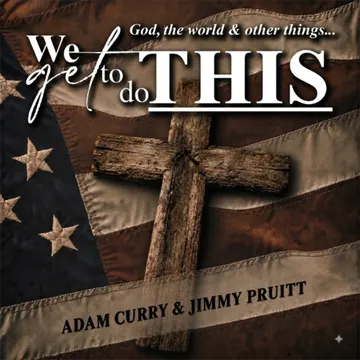
Recognition Steps cover
We Get To Do This · No. 12

About this episode

Abraham Lincoln established the national Thanksgiving holiday in 1863 during the height of the Civil War, influenced heavily by magazine editor Sarah Josepha Hale. This historical pivot point reveals a document deeply rooted in the King James Bible, specifically drawing from Psalm 65 and 2 Chronicles 7:14. The explicitly religious nature of Lincoln’s proclamation stands in stark contrast to modern secular interpretations of the holiday, highlighting a shift in national identity and spiritual priority.

Governor Greg Abbott recently issued a proclamation targeting the Muslim Brotherhood and CAIR in Texas, a move local lobbyists suggest was timed to capitalize on viral social media concerns regarding mosque construction. Meanwhile, Marjorie Taylor Greene’s resignation from Congress illustrates the circularity of modern media, where political drama dominates X and podcasting circles while remaining largely disconnected from the daily lives of the working class. In Nigeria, reports of Christian persecution are often complicated by geopolitical struggles over oil and mineral resources, exacerbated by Chinese infrastructure debt traps that destabilize the region. These events underscore the necessity of discerning financial motives, such as gold and drug pipelines, over simplified religious narratives.

Using a football metaphor, the concept of recognition steps provides a defensive strategy against the adrenaline spikes of breaking news alerts. By pausing to survey the field before reacting to digital triggers, individuals can identify propaganda and the influence of the Prince of the Power of the Air. This episode emphasizes the Men of Issachar’s wisdom and the practical application of spiritual gifts to navigate a world saturated with screen noise and media clamor.


CHAPTER 01 / 15 Discussion

Episode Introduction and Wednesday Morning Coffee Routine

The hosts open episode 12 on Wednesday, November 26, 2025, with a prayer focusing on a biblical worldview and cultural awareness. They discuss their morning routines, including heavy caffeine consumption and the questionable effectiveness of small energy drink bottles. The conversation sets a casual tone for the pre-Thanksgiving broadcast.

episode 12· coffee· energy drinks· prayer· thanksgiving· morning routine

00:00 Father, what a privilege it is to be before you, my friend, my brother Adam, as we simply have conversations about what's going on in culture, what's going on in life. And Father, we put on the lens, we put on the glasses of a biblical worldview that we may see accurately and see rightly what is happening around us. We ask that you would speak to us, guide our conversation today. For those that will be listening, Father, bless them, encourage them. Put some lift under their wings, Lord. Encourage them by your spirit and the wind of your spirit. We give all this to you. We dedicate it to you in Jesus' name. Amen. Amen. It's Wednesday, November 26, 2025.

00:43 We get to do this. This is episode number 12. This is the life we've been blessed with. This is a gift for you. We get to do this. This is a chance we cannot miss. This is the life. We get to do this. Hey, brother, how you doing? I'm doing great, man. I'm just, I'm waking up. I've got coffee in my cup. I just took one of those E energy things. What, those little bottles that Tina has in the fridge as well? Yeah, those little tiny ones. Did you get energy out of that? Placebo effect, maybe. I'm not sure. It kind of makes it the water taste good. You know, it tastes good, but I don't know.

CHAPTER 02 / 15 Discussion

Thanksgiving Pronunciation and Regional Texas Dialects

A discussion emerges regarding the regional pronunciation of Thanksgiving, specifically the shift in emphasis between the first and second syllables. One host notes that in Texas, people often say "Thanks-giving" with emphasis on the latter half, contrasting it with his own upbringing. They speculate on whether the different pronunciations carry secular or religious connotations.

thanksgiving· texas· pronunciation· linguistics· holiday traditions

01:26 I'm so over caffeinated all the time. I drink a lot. I do, too. In fact, Annette's like, I can't believe you want more energy. You want even more energy. It takes a lot to keep this going. Well, we were all the help I can get. We were quote-unquote partying last night. Yeah, yeah. Over at the house. And by the way, happy Thanksgiving to everybody who's listening. Maybe you're on your way as this drops on the day before Thanksgiving, or maybe you're listening on your walk after the turkey or maybe on your way home. Before I even get to the partying last night, we're such party animals. I grew up saying Thanksgiving. Right? But I hear in Texas, I hear people say Thanksgiving.

02:12 Wait a minute. So the emphasis being on Thanksgiving instead of Thanksgiving. Oh, so you grew up Powell? Thanksgiving. Okay. Which I think is kind of confusing and wrong if you really think about it. Because I think about it, I can't say it. How to enormously. Thanksgiving. Thanksgiving. Having Thanksgiving. Yeah, Thanksgiving. That's how I've always said it. But I've never noticed. I think it just comes from a secular world, like Thanksgiving. Like, you know, giving, gimme, give me stuff. Giving Thanksgiving. Okay. With the emphasis on the thanking part. I don't know. It's just one of those things I noticed. Yeah. I need more coffee. That's one of those little things, right? Yeah, but I just noticed it.

02:53 I'm like, I wonder why I've always said that. It doesn't make any sense. I'm sure someone's going to write in and say, oh, this is why you need to do that. Secular, probably. I'm fairly observant, but I have not caught that. Yeah. It's there. So that's pretty nuanced. We had a nice dinner at the house last night. Ray and Heather were over. We had, I think I have to say, pretty perfectly cooked filet mignons. That was about to be my next brag point: to boast on your K and C tenderloins fillets so good. Yeah. I mean, it's really, it's all in the cow. I mean, the K and C beef is just spectacular.

CHAPTER 03 / 15 Discussion

Meater Thermometer Performance and Dinner with Friends

The hosts recount a dinner party featuring K and C tenderloin filets cooked using Meater thermometer probes. They share an anecdote about a cooking mishap where a probe was misplaced, leading to a reliance on a second steak's temperature. The conversation transitions into a reflection on a recent sermon by Pastor Brian regarding the communal importance of food in the ministry of Jesus.

meater· filet mignon· tuscan wine· pastor brian· costco christian· dinner

03:34 Phenomenal. Once we use our meter thermometer probes, you almost can't go wrong. I mean, it's just, it's so. It's pronounced metor. Is it metor? O-R. Metor. It's an O, an O-R at the end. Isn't that weird? Metor. I know. Metor. Yeah, well. I know. It's weird. It's an outstanding product. It is. Everybody who grills needs to have this product. Definitely needs to have this. Yeah, there are little issues with it. Like I accidentally speared through my fillet. Oh, yeah. And I didn't know it. And it was totally off. I was like, what is going on? Fortunately, I had speared Annette's fillet perfectly. So I just cued off

04:17 of number one. You got real lucky. Yeah, you know, you learn those little things, right? So I'm a little fuzzier than I might have been because we did have some wine. At least, you know, Ray brought this really nice, fantastic Tuscan wine. And I really drink maybe one glass at dinner. So I had, I think, three. I'm like, especially you're an older dude like me now. I was like, I had three glasses. Well, I didn't have to drive, so that was good. It was a wonderful evening. Great wine, obviously, with that, which was a perfect pairing with that fantastic. But also, Tina made some killer vegetables. Yes, with the pear. And I can do a little pair on that pair.

05:00 was live. Surprise. I could have had more of that. Surprise pair. So, yeah, I mean, just a great evening. You know, what's so fun is if you think about it, Jesus, Pastor Brown was bringing this out a couple weeks ago that Jesus always did things around food. Food. Always. Disciples are always sitting around a table. He was always making food for thousands of people with plenty left over. So, I mean, there is something about sitting around a table and just having random conversation that's so life-giving. Absolutely. I love it. That was Pastor Brian's message. It was on point. That was pretty funny. I think the term Costco Christian is stuck in my head for the rest of my life.

05:42 We just go get little snacks. Hunger games. Hunger games. Hearkening back to youth ministry title days. When he threw up the AI image, though, I almost lost it. I'm like, oh, man. Oh, no. He's using AI. He cops. Was that for the background? Yeah, yeah, yeah. Okay. If you eat ding-dongs, what was it? If you eat Twinkies, don't be surprised if you turn into a ding-dong. Wow. He was taking it to place that fire. It was interesting. He's on fire. So, regarding Thanksgiving. So here's what happened to me. First of all, Tina had horrible cramps during the night in the top of her feet, which is odd.

CHAPTER 04 / 15 Discussion

Abraham Lincoln and the History of National Thanksgiving

A historical overview of Thanksgiving traces the holiday from the Pilgrims in 1621 to George Washington's 1789 declaration. The segment highlights the 1863 proclamation by Abraham Lincoln, which established the last Thursday of November as a national holiday during the Civil War. The influence of magazine editor Sarah Josepha Hale on Lincoln's decision is also noted.

abraham lincoln· george washington· sarah josepha hale· civil war· proclamation· chicago history museum

06:23 So I was kind of awake. She's jumping around. I'm waiting for her to come back in. And then I wake up at 4 a.m. And this is not, I mean, I sleep. You've been up since 4? I went back to bed at 5, but I woke up at 4. Okay. It was like, download from Throne Central because I had been really asking the Lord, like, what am I going to do on the show before Thanksgiving? What are we going to talk about? And I really, I just, you know, especially because we had you guys coming over and there were other things I was doing at meetings. And I just didn't, nothing really jumped out. And I'm like, well, Lord, I presume you're going to give it to me tomorrow morning.

07:03 Funny enough, he thought 4 a.m. was tomorrow morning. And what he gave to me just blew me away. And it's gone. It's about the history of Thanksgiving. Wow. Yes. So now, John C. Dvorak every year goes through the history of Thanksgiving. I make him do it. He repeats the same thing. But when I went to look at certain things, I'm going to play a clip that kind of sets it up. This is when God just went like, don't you recognize what this is? So I'm going to play this. This is from the Chicago Museum of History. It's from, this is a report from last year about the history of Thanksgiving.

07:43 Long after the Pilgrims landed at Plymouth Rock in 1621 and celebrated a successful harvest with a three-day gathering that became the first Thanksgiving, it was the first president of the United States, George Washington, who declared November 26th, 1789, a day of public Thanksgiving. While a lot of people trace the origins of the celebration of Thanksgiving in the United States back to the Pilgrims in Plymouth in the 17th century, our kind of contemporary understanding of it really has to do more with these proclamations that were made by various presidents. Chicago History Museum Director of Exhibitions, Paul DeRica, says the holiday was observed on and off for years.

08:25 President James Madison proclaimed a Thanksgiving Day in 1814 and 1815. Thanksgiving as a national holiday really kind of takes shape and then becomes part of American culture in the 1860s. But it wasn't until October 3rd of 1863, in the midst of the Civil War, that President Abraham Lincoln made what is now regarded as the Thanksgiving Proclamation. He wrote, The year that is drawing to a close has been filled with the blessings of fruitful fields and healthful skies. He called the nation's people and its prosperity, quote, gracious gifts, and said, It has seemed to me fit and proper that they should be gratefully acknowledged.

09:06 I do therefore invite my fellow citizens in every part of the United States to set apart and observe that last Thursday of November next as a day of Thanksgiving. Lincoln's proclamation took effect just one week after his most famous speech, the Gettysburg Address. Even though the United States is in the midst of this great civil war and there are all of these challenges that the nation is facing, there's still a lot to be thankful for. It was the culmination of a decades-long campaign by a prominent magazine editor named Sarah Josepha Hale. She lobbied Lincoln for the holiday. Thanksgiving and establishing it as a national holiday certainly stands as one of his enduring accomplishments.

09:47 And in the 1940s, Congress issued Joint Resolution 41, forever making Thanksgiving a public holiday. So here's the path I took. So first I was like, I got the word, look up the history of Thanksgiving. I'm like, okay, I know exactly where to find that. And then I found this clip, and I'm listening to this clip. I'm like, I want to read the whole proclamation. This is what blew me away. So I took the liberty of dissecting Abraham Lincoln's proclamation. This was a crazy time. This was right in the middle of the Civil War. I mean, the country's being torn apart.

CHAPTER 05 / 15 Discussion

Biblical Origins of Abraham Lincoln's 1863 Thanksgiving Proclamation

An analysis of Abraham Lincoln's 1863 Thanksgiving Proclamation reveals heavy linguistic ties to the King James Bible. The hosts map specific phrases from the historical document to verses in Psalm 65, James 1, and 2 Chronicles 7:14. They express surprise at the explicitly religious nature of the founding document compared to modern secular celebrations.

abraham lincoln· king james bible· psalm 65· deuteronomy· chronicles· scripture

10:25 It's 1863. And as I'm reading this proclamation, I'm like, oh man, this is all from the Bible. The whole thing. Did you know any of this? Yes. I mean, and I took the liberty. I didn't know this. So in the clip you just played. You could already hear it. Very little, though. That was really what marked it. I was going. Well, this is Chicago. I mean, they're not going to give you all the scripture. Well, and just being thankful to God. That's the thing. So that was what jumped out to me while I appreciated the history and the dates and what, I'm going, but we have to direct our gratitude somewhere. He wrote this proclamation literally from the Bible, literally from scripture.

11:11 So I'll read his language as kind of King James. And I have the King James where I'm like, I'll do an NIV version just to make it a little more palpable. So he starts by saying, the year is drawing towards its close, has been filled with the blessings of fruitful fields and healthful skies. Well, that comes from Psalm 65. And I just took 9 through 13. You care for the land and water it. You enrich it abundantly. The streams of God are filled with water to provide the people with grain, for so you have ordained it. You drench its furrows and level its ridges. You soften it with showers and bless its crops.

11:52 You crown the year with your bounty, and your carts overflow with abundance. The grasslands of the wilderness overflow. The hills are clothed with gladness. The meadows are covered with flocks and the valleys are mantled with grain. They shout for joy and sing. He goes on. This is the blessings that they're a gift. No human counsel hath devised, nor hath any mortal hand worked out these great things. They are the gracious gifts of the most high God. I didn't know any of this. James 1, 17. Every good and perfect gift is from above, coming down from the Father of the heavenly lights who does not change like shifting shadows.

12:33 Then he goes on, who, while dealing with us in anger for our sins, hath nevertheless remembered mercy. And this is, praise the Lord, my soul. I immediately hear Wendy singing. Right. All my inmost being praise his holy name. Praise the Lord, my soul. Forget not all his benefits, who forgives all your sins and heals all your diseases, who redeems your life from the pit and crowns you with love and compassion. The Lord is compassionate and gracious, slow to anger, abounding in love. He will not always accuse, nor will he harbor his anger forever. There it is. He does not treat us, our sins. He does not treat us as our sins deserve or repay us according to our iniquities.

13:19 So then he goes just completely verbatim. When their herds and their flocks multiply, when their heart be lifted up and they forget the Lord their God and say in their heart, my power and the might of my hands have gained me this wealth. Deuteronomy 10, 18. When you have eaten and are satisfied, praise the Lord your God for the good land he has given you. Be careful that you do not forget the Lord your God. When your heart will become proud and you will forget the Lord your God, you may say to yourself, Self, my power and the strength of my hands have produced this wealth for me. But remember the Lord your God, for it is he who gives you the ability to produce wealth.

14:00 I'm like, he was, I mean, this, I don't, this is just not known. I had no idea. Exactly. There's a little more. Fervently implore the interposition. This is Lincoln again, of the Almighty Hand to heal the wounds of the nation with humble pentitence for our national perverseness and disobedience. This is actually what got me on this path. When I read this, I'm like, I know this. Chronicles 7, 14. If my people who are called by my name will humble themselves and pray and seek my face and turn from their wicked ways, then I will hear from heaven and I will forgive their sin and will heal their land.

14:40 And then he closes it out. Praise to our beneficient Father who dwelleth in the heavens. Commend to his tender care all those who have become widows. orphans, mourners, and sufferers. Psalm 104.5. Enter his gates with thanksgiving and his courts with praise. Give thanks to him and praise his name, for the Lord is good and his love endures forever. His faithfulness continues through all generations. And then Psalm 68, a father to the fatherless, a defender of widows is God in his holy dwelling. I'm just like, I have, I mean, all 60 Thanksgivings in my lifetime.

15:20 I'm actually 61. This will be, no, this will be my 61st. I didn't know any of this. You know, I've never read that on Thanksgiving. I think that would be something really cool. We're going to be at the Mosteron. Thank you for saying. I was actually going to ask, do you think that's appropriate? I think it's absolutely appropriate. It is so amazing when you hear that. And this was Lincoln. This was our president. He was copying and citing the Bible, the word. And I can only imagine how back in the day, this was just different, man. It wasn't even that long ago, you know, 140-some years ago that people were speaking this way and talking this way.

16:02 That's the norm. It was just, and so I'm like, thank you, Lord. You know, of course, I had some help from Chad GPT to find the right scripture. Like, find a scripture that says this. Whoa, there it is. And it wasn't even a choice. It was like, this is it. This is the one. And I go back and look. And, of course, I'd read the beta. Yeah, the King James is much closer to it. But it's so early in the morning. I can't get the Hath and With enough. I can't get all that out of my mouth. So I figured I'd do NIV. But it was just mind-boggling. That is amazing. I really, and I thank you, Lord, because he woke me up for that.

16:43 You know, all my years of being a follower of Jesus, we've never actually thought about going back to that proclamation because I too did not know this. Why would you? Yeah, I think about how I grew up in a public school system where we just did not go down that road. And I had great teachers that were godly and love the Lord, but it's just, it's been so segmented and categorized and then set over in a corner that, you know, it's just accepted culturally. We just don't do that. No. And we think about pilgrims with funny buckles on their shoes and turkeys and maize, you know, whatever is corn.

CHAPTER 06 / 15 Discussion

Screen Noise Reduction and Morning Meditation Habits

The hosts discuss the concept of "screen noise" and the importance of prioritizing spiritual stillness over digital consumption. One host describes a new morning routine involving the Simple Habit meditation app and Australian guide Kate James to manage physical and mental stress. They reflect on how a recent "staycation" provided more rest than previous summer vacations due to reduced digital engagement.

screen noise· isaiah 30· simple habit· meditation· staycation· morning routine

17:27 I love corn. You know, it's like, okay, I'm not sure. And, you know, the president pardons two turkeys. By the way, he made a funny joke about that, that last year's turkeys were pardoned by Auto Pen, so it wasn't illegal. I've got to take that back. Of course. But I was just really surprised that I never, ever had even read the full proclamation. Wow. Thank you for bringing that. Well, that's already made my Thanksgiving better. It's partially your fault that this happened. You had a daily grind yesterday, which was Isaiah 30, verse 21. And this is whether you turn to the right or to the left, your ears will hear a voice behind you saying, this is the way, walk in it.

18:16 And I love this so much because I realize that myself included, but in general, we are so dulled by screen noise that we don't even hear God talking to us. And so I'm really making an effort. And when I hear something, I just go for it right away. It may be a dead end. Maybe I heard it, misheard it, but nine times out of ten, it's great. He's like, no, no, don't skip that. Go look at that. And, you know, and I used to think that was just my own brilliant inner voice because, of course, Podfather, I'm brilliant. And now I know it's like, he's literally directing me. And I think he does it all the time. But there's so much noise. I call it screen noise now because that's really what it is.

19:01 It just fills up your head with stuff. And so when I hear these things, I'm like, okay. And I just follow it. That's what I was also not worried about today. I'm like, I know you'll bring it to me. I know you'll show me something. Again, he's like, okay, 4 a.m. Come on. Now it's 5. Can I please go back to bed? Can I please go back to bed? Wow. So my morning routine has shifted significantly in just the last little bit since we've been having these conversations. And, you know, I'm not throwing my phone out the window. I mean, these things are helpful.

19:40 But I'm learning to prioritize when I put energy. energy into it, when I allow it to have my attention. And two, always trying to treat it like a tool instead of you being the tool. So my morning has shifted where now when I get up, of course, I let Chevy do his thing. I got to feed him. I got to take care of him for 15 minutes. We all have a sequence. Oh, my God. It's all about him in the morning. Of course. So I get up, and then once I get him taken care of, I go into my office. By then, I've got my little cube heater going, you know, so it's really nice in there. Yep, toasty. A little hum, you know, a little brown noise, it sounds like. And so I'm very relaxed when I get into my morning routine, sit down with my coffee.

20:24 And I used to, first thing, even before I sat down, just opened my computer as I'm sitting down. Right. Yeah, just automatically. Yeah, just like auto. And now it's like I'll reach and I go, whoa, wait. Yeah. Sit down. Sit down. And now I just, I'll either put my earbuds in and put on some really, really just relaxed music just to have that going. And then I do a little morning, kind of a morning meditation thing. It's just a relaxation thing, very simple. It's like five minutes. It's an app, right? Yeah, I guess it's called Simple Habit. Simple Habit. Okay. Kate James, she's from Australia, obviously. I'm prone to Australians.

21:04 Just soothing, and she just walks you through being mindful of your physical body. Just totally relaxes me. But also, if my mind was trying to spin up, it just spins it down like immediately. Yeah. So then I'm sitting there and I'm like, gosh, I don't even really want to open my screen right now, but I need to do my daily grind. I want to do that. And so I'll jump in on that. But it's been really very peaceful and helpful and starting my day better and better and better. And I'm getting, now that's becoming a habit. Yes. Instead of reaching for it, now I'm saying, no, no, I'll do this first. I need to just be still. There is a proneness to feel hurry in the mornings because you've got to get the day going.

21:48 You know, I've got to get to the office. All right. We have a staff meeting. All right. We're recording. I need to at least think about it. I mean, I need to go. I need to get in the shower. You know, and Annette's buzzing around. We both work. You're back timing your morning. Like, I got to fit it in. You already have a schedule. Just unwritten. I need 20 minutes for the shower. I need this and that. So now I've had a little downtime, which is nice because we were supposed to be on beaches right now. We are, brother. We're on the beach of podcast land. We were actually going to do a podcast from the beach. From that. But then with all the government shutdown, the plane issues, we were like, I don't really want to lose $3,600 in plane tickets, you know, and our hotel built.

22:32 So anyway, we put all that off, but it's been good because in my mind, I was just going to come to work. And Annette goes, no, no, let's take this time off. Yeah, right on. And so it has been, it's actually been better for me than my summer vacation because we had a flood of July. You were working. You were working. All of that threw me into chaos mentally, whether I was actually having to go do anything. It was mostly feeling phone calls, talking to people. Feeling the weight and sorrow and all that. So I've actually been more at peace, more relaxed, more rested during this little accidental vacation, staycation than I was in my whole summer vacation.

23:14 I think personally, because it was going to be pretty short. It was like five days. We're going to out and back. I personally think that we would have come back tired because, you know, there's flights and connections. That was the main reason. I'm like, I don't think this is going to work very well. No, it wears you. I mean, it does wear you out. And it's been good for me, too. I've been like, oh, I'm not really doing much, you know, except downloading scripture. You know, you and I, we do our little morning thing. Like, hey, here's what's happening today. There's not a lot to write right now. Well, I went to HEV. Going to the gym, Planet Fitness and Temple Care. It's just not a lot to write. And it's really great. It's been good. Regarding the, you know, the morning routines.


CHAPTER 07 / 15 Discussion

Marjorie Taylor Greene Resignation and Media Circularity

The news of Marjorie Taylor Greene quitting Congress serves as a case study for the "circularity" of modern media. The hosts argue that while political drama dominates X and podcasting circles, it often has little impact on the general working-class population. They compare modern influencer culture to the celebrity gossip found in the National Enquirer.

marjorie taylor greene· congress· x· podcasting· national enquirer· influencers

23:59 And by the way, I recognize now as a believer that you're so vulnerable when you wake up. And I always immediately try to get right into the Lord's Prayer right away because I will wake up and like have these thoughts running through my head. I'm like, I know what you're doing. No, you're not going to start because I know how that used to be. I'd wake up, these thoughts would come into my head. I'd be preoccupied with it. It was probably something stupid or dumb or old or whatever. I was annoyed. I get that out of my head right away. But I learned something. It's kind of unrelated, although I can come back to it about Marjorie Taylor Greene quitting Congress.

24:39 Right. That's. That's important. That's a big deal. Well, what's interesting about it is, so I actually got a note from a lobbyist in Austin who laid out for me, did we talk about this on the last show? No. Oh, okay. This is good. Well, what's interesting, so the interesting part comes first because I mentioned this on the No Agenda show. And John says, hold on a second. Why don't you tell everybody what's going on? Like, doesn't everybody know about Marjorie Taylor Greene? I got several emails from people saying, hey, man, I work in Detroit, and I listen to you guys to kind of catch up on some of that stuff.

25:15 I have no idea what's going on with her. And then I started to do the math. If you really look at the podcast and the actual size of X and the actual amount of people, it's a small portion of the country that is in the know and indirectly kind of spun up. I mean, we're all kind of on it. You know, like, oh, what's going on? It's so not important. In fact, I believe the president is really trying to build a new Republican Party for the working class, you know, for which will be much better if all of this pans out and all the manufacturing that is supposed to come actually comes. And we should pray for that because a country that doesn't produce anything isn't really a country.

26:00 True. So, anyway, so that really reset my mind. I'm like, wow, it's really not all that big a deal. And it's only, we're only kind of in our own little circle spinning around. And it's really a luxury issue because, you know, I guess I'm a knowledge worker. You know, I don't have to, you know, get in my car every day and drive somewhere and be at Ace Hardware helping people all day. So this just, just put it in perspective for me that, no, it's really not that big a deal.

26:35 I mean, thank you for saying that because what I have seen, okay, the further I take a step back from trying to be in the know on everything, you know, to, you know, what's Candace Owens up to today? What's, you know, who's upset with her? Who's not, you know, Marjorie Taylor Green? Oh, my gosh, she's walking away. She's taking her toys and going home, you know. And I, I literally, I'm not mocking, but it is laughable in a sense that we get so. This reminds me of my grandmother, Miss Virginia Sims. She read The Daily Star, the National, no, no, the, oh, what was the one?

27:16 The National Inquiry. And she believed it. She actually would talk about celebrities on a first name basis. She felt like she knew them. Yeah. And she, you know, you know, Angelina. I'm like, who? Jolie. Jolie. Yeah. Yeah, yeah. And she'd get into it. And I would just sit back trying not to laugh out loud. But that had become her world. And so in her mind, she assumed that's everybody's world. See what I'm saying? And this is what happens with a lot of the influencers. A lot of what's going on with podcasting. They just assume that everybody's swimming in this water. Especially now that the podcasters, the big name podcasters are all going on each other's podcasts, talking about what they talked about on that podcast, with that podcast.

CHAPTER 08 / 15 Discussion

Governor Greg Abbott and Texas Mosque Virality

A lobbyist in Austin provides context for Governor Greg Abbott's recent proclamation against the Muslim Brotherhood and CAIR. The hosts suggest the timing of the proclamation was a strategic campaign move to capitalize on viral social media concerns regarding the number of mosques in Texas. They compare the situation to similar political fear-mongering tactics used previously in Tennessee.

greg abbott· texas· muslim brotherhood· cair· mosques· political campaigning

28:00 It was like the circular. Throwing the grenade over the fence back and forth. You're calling it the circularity. There it is. There's a good word. That's exactly what it is. Yeah, circularity. So just briefly, just because it was interesting that we have a friend who's a lobbyist in Austin. Yeah, yeah. So you recall that we talked about these all of a sudden it's going viral. The Muslims are in Texas, 48 mosques in two years, et cetera, et cetera. First of all, I looked up how many churches there are in Texas. Oh, brother. There's over 3,500 in the Dallas area alone. So 48 mosques, not to worry about.

28:37 But what turns out, you recall that Governor Abbott made a proclamation and he said, I'm proclaiming Muslim Brotherhood and the Council on American Islamic Relations, terrorist groups. They won't be able to buy any land, no Sharia law. So he announced his candidacy for running for governor again on November the 9th, I believe. Yeah, October 9th. And according to this lobbyist, who knows people who run his campaign, this was no accident. This was no coincidence. Now, there was no accusation of him actually paying influencers to jack this up and talk more about this particular issue in Texas, which, by the way, this was done in Tennessee many years ago.

29:27 And the same thing was like, oh, Tennessee is going to be Sharia law and under a Republican governor. I don't think Tennessee has become a hotbed. of Sharia law. But it's no accident that he comes out with this proclamation right kind of at the peak of this virality of these of the mosques and fear-mongering. And it's all political. Yeah. And gameplay. I thought first maybe it was against him, but no, it seems like it really was his campaign taking advantage of something that just happened to be viral at that very moment. When I started hearing about all this, I found myself getting a little worked up. Oh, no, here they come.

CHAPTER 09 / 15 Discussion

Global Religious Conflict and Resource Wars in Nigeria

The discussion shifts to reports of violence against Christians in Africa, specifically Nigeria. While some media outlets frame these events as purely religious persecution, the hosts argue that the violence is often driven by geopolitical struggles over oil and mineral resources. They caution against simplified narratives that ignore the complex role of nation-states and gang activity in the region.

nigeria· islam· christianity· resource war· minerals· geopolitical conflict

30:09 The only reason I did that is because my point of reference was being in Paris in 2019 and having to step over on the Louvre, having to step over people that were dropping, stop, drop, and roll three times a day. Yeah, because of the Batiklan nightclub shooting. So they were everywhere. And it's even worse now. I had a friend that went back and he said, man, I'll never go back again. It's not even the same place. So same way with London. So there is some reason for being aware. Of course, always. And saying, okay, Lord, what's going on? I told Annette in the car. I don't know if I should say this out loud. I said, can't blame them. They're just doing what we're trying to do as Christians.

30:53 We're trying to take over the world. Isn't that what we're doing? Good point. It's kind of like, wow, I kind of get it. I mean, not that we're trying to take over the world, but you know what I mean. We're trying to propagate what we believe. They're doing the same thing. And there's interesting things. There's dynamics around Islam that most people don't understand. There's a lot of fear. Yes. And, you know, when Muhammad originally got, you know, his download from Gabriel, you know, in the cave, when he was meditating, it was actually a peaceful, the initial writings were very peaceful. And I've read some of that, and it sounded a lot like Christianity. I mean, a benevolent God or forgiving God, a loving God.

31:37 That is not what we're hearing today. No. And I lived around and with many Muslims in the Netherlands when I moved back in the end of 99. And, you know, they'd have their sugar, sugar festival, what do they call it, the Ramadan. And then they say, hey, man, you should come over tonight and we'll eat. And really, there was never any issue. So we got two things going on. We have fear-based things going on. And there are things that have happened that with Christianity, too. Oh, my God. Well, I'm just thinking what's going on in Nigeria right now.

32:18 30 Christians beheaded in the last few weeks. I mean, that's really happening. I will have to say, I've been looking into this. I don't believe it's just targeting Christians in Nigeria. So it's regional. And this is all geopolitical, resource-based. It's not specifically, as far as I can tell, because I've been following this story for many years as well. It's played here as they're targeting Christians specifically. Are they killing Christians?

32:53 Yes, they're also killing Muslims. They're killing all kinds of people. So here on Christianity Report today, Christians targeted in wave of Islamist violence across Africa. It's resource-related. It's gang-related. It's who has access to the minerals, to the oil. It's location-based. There happen to be a lot of Christians in that area. And so I'm a little apprehensive to just jump on, beat that drum. Yeah, I'm a little, you know, because it kind of comes back to the, be careful, the evil Muslims are coming. So that begs the question, you know, you're usually throwing a question at me, so I'm going to throw one at you as a conspiracy therapist.

CHAPTER 10 / 15 Discussion

Foreign Influence and Infrastructure Debt in Africa

The hosts examine the history of foreign intervention in Africa, contrasting the brutal colonial legacy of the Belgians in the Congo with modern Chinese economic strategies. They describe how the Chinese Communist Party uses infrastructure projects to create debt traps, eventually seizing assets when nations cannot repay loans. This systemic instability is cited as a primary driver of regional violence.

china· belgian congo· xi jinping· infrastructure· debt trap· africa

33:35 So how do we find that balance in these things? Because it is to read, and I've read Christianity Report for quite a while and I found it to be very helpful, very informative. So why do we take this kind of news? Because this does sound alarm bells. Oh my gosh, Christians are getting slaughtered in the Congo and in Mozambique for their faith. And in Syria and in China and all over the world. There's a lot of Christians. Right. So it's, you know, when a group of people is attacked, you know, well,

34:16 okay. So I just always look at everything from all angles. My initial, of course, my initial reaction is, what? They're targeting Christians? I mean, the scripture talks about this. We have to pray. pray for our brothers and sisters who are in dire circumstances, even though ours are great. I don't think that even that any Christian publication is no more or less prone to using this to get clicks and draw people to the story. I doubt they have boots on the ground in the region

34:58 really doing the reporting. So I really dive into this very, very deeply. And that's kind of what I do. So specifically, the mosques here in Texas and the targeting Christians in Nigeria, I went real deep. And when you really look at what it's about, it's not about, hey, we want to go kill some Christians. No, it's like we want this land because of the minerals that are here and the oil resources. And we have an army. Now, these are always financed by other nation states, which it could easily be France.

35:39 I don't have any proof on who it is, but China is the big one financing a lot of things. And then look at the weapons. What weapons are they using? Oh, they got Kalistanikovs. Okay. So you can kind of figure out where that's coming from. So there is no sure. Well, what does scripture say about discernment? I mean, there's I'm looking at you with like looking up on perplexity quick. No, it just literally talks about like the men of Issachar who understood the times and knew what to do. So there's a sense of understanding the times, being aware, which is why we're having these conversations, right? Yeah. So with this issue,

36:23 we have to be wise and aware, but not running around with our hair on fire like what we named last year. Exactly. Episode. So how do we intelligently engage these things and help people not just lose their mind over it? Well, I wasn't prepared for this particular issue. Next week, I will bring in some information about Nigeria that's actually happening. I just wasn't prepared for it. But I have looked into it far. It's a hot topic. Yeah. In Christian influencer land, everyone's talking about it. Everyone's beating the drum. Yes. And it feels very fear-based, fear, just,

37:09 oh, my gosh, it's coming. What we've been warned about. Oh, yeah, no. Kibbs. I mean, all these different guys talking about it. Josh Howerton, some of these boys. Well, good. This is probably part of our calling here together is to do just that. It doesn't make the killing any better. It doesn't make any of it. But it's not just Christians. You know, the whole kidnap schoolgirls. I mean, this thing, you've been hearing this for many, many years. It all comes back around. It's all kind of the same system. Africa, honestly, is a mess.

37:45 And it's been kept a mess purposely by many. In fact, the United States has actually done the least damage, in my opinion, in Africa. If you look at, well, look at the Belgians in the Congo, man. They slaughtered millions and millions and millions of people. The Chinese in the past, and when I say the Chinese, I mean the Chinese Communist Party, the government, and their industry. I mean, it's not just Xi Jinping, isn't just the guy. They've come in, they built infrastructure and then said, oh, you can't pay it back. Okay, well, then it's just ours and we'll bring our people in. And so that's what they've been doing.

CHAPTER 11 / 15 Discussion

Recognition Steps and Defensive Strategies Against Propaganda

Using a football metaphor, the hosts introduce "recognition steps" as a method for processing inflammatory news. Just as a defensive back steps back to survey the field after the ball is snapped, individuals should pause before reacting to social media triggers. This technique is presented as a way to identify propaganda and avoid the emotional manipulation of bot farms and viral headlines.

recognition steps· football· propaganda· social media· discernment· psychology

38:27 So this has been happening. It's been going on for a long time, but it takes different nuances depending on who's reporting it. Of course. So how do we, how do you, how do you, I'm going to ask you, the conspiracy therapist, because it's easy for me to read these things and just find my blood pressure blowing up. I'm going, oh my gosh. Oh, my God. It's coming. It's here. They've been warning us about it. And now it's here. Now it's Epic City. It's McKinney, Texas. It's Plano. It's, you know, all these things. So how do we what should okay? When I played football for many years growing up, I was a defensive back.

39:07 So what they taught us, every time the ball is snapped, we have to take our recognition steps. That's afraid. That's an actual phrase. That's a recognition step. That means you move your feet and you bounce back about two or three steps. And it's called recognition steps. And what they're training you to do is evaluate what's going on. You're king off the tackle, your king off the end, your king off the center, quarterback, where's he going? So it's like as soon as the ball is snapped, you step back. You don't go forward. Now, the guys on the line got to go forward, but as backs, because we're trying to protect the long game, the long passes, the passes across the field.

39:46 So I remember our coaches drilling into take your recognition steps. So the sense is, this feels the same. It's exactly the same. Instead of just firing off the line and hitting somebody, we need to take a few steps back and go, what's really going on? So, first of all, don't immediately go on social media looking for other answers. Oh, my God. You'll find something. I like this idea of recognition steps because this is pretty much what I always do. Like, oh, my God, have you heard this? Can you believe this? This is going on. And the first thing I'd say is, hmm, I'll have to look into that. Yeah. And there's your recognition. And it's so easy to hit like,

40:32 share. That's too easy. Comments. Send it to a friend. This is horrible. Send it to your text group. That is, in fact, the entire purpose of this. You have to remember: of the few million people who are on these social networks, there are multiple actors at play with bot farms. And it's really true. I mean, it's very sophisticated. Once the internet came in, propaganda from all over the world became much easier, much easier. And so you just have to step back, calm down. First of all,

41:16 I mean, I just take nothing at face value except the word. That's the only thing. It's the only thing. Okay, I believe this. This is good. It's nothing. And you just have to understand that there is propaganda going on all the time. So there's an actual war taking place, a gang-related resource war in Nigeria, very resource-rich region. And there are, of course, there are all kinds of victims. But I would say that in this case, this is probably riling up a group, Christians in the United States specifically to

42:01 maybe garner some support for an attack. And it's gotten to the president. The president's like, this is an outrage. And he's not immune from this light. It's obvious. Yeah. Now, he may have other reasons for saying, well, this is going on. We have some interest there. This is what's happening. I want to intervene. I'll do it under this cloud that's already there. So that's like a double whammy. And he will not tell you that that's what he's doing because he understands. He understands how to play the public. Right. So we got to take our recognition steps. Recognition steps is a good thing. And all that is, basically, it's three steps back. But you're not just taking steps back to do it.

42:43 You're actually surveying the field. You're looking at all the moving parts. So you got, you know, you got all these players. You got 24 players on the field, right? 12 on each team. You're surveying and you're looking for cues of what's really going on because, as you know, a quarterback may fake a handoff and run it the other way. So you've got to cue off of all that. So that just, that makes sense to me. I can't believe we're going to be. We're talking sports ball, brother. I know, right? Think about it. So out of my league. But it works. If you think about it, it's a simple principle. And really, you can apply that to just about anything. So the next time you, I would liken it to the ball being snapped, but I get something that drops, you know, I'm on several text lists as you are, and there's no way to unsubscribe from, you know, just leave the group being rude, right?

CHAPTER 12 / 15 Discussion

Men of Issachar and Discerning Financial Motives

The hosts reference the biblical Men of Issachar, who were known for their understanding of the times and strategic wisdom. They advocate for a discernment process that looks past religious or political veneers to find the underlying financial motives, such as oil, gold, or drugs. One host suggests using tools like Perplexity AI to research the actual resource pipelines involved in global conflicts.

men of issachar· 1 chronicles· discernment· perplexity ai· pipelines· money

43:32 And these are people I love and do life with, but, you know, I'll get two or three or four or five, sometimes more a day, you know, these hot, hot topic, you know, something from X that somebody said. And oh, here's the link, click on it, and then you clink on it. And then there's taking that step back. So then there's the second part is we now have an entire cottage industry, which is deconstructing these things and showing you what the connection is. It's like basically the board with the pins and the red yarn and making all these connections. And it has become a very profitable industry.

44:13 I've been doing this for 18 years. And because I don't do it that way. jumping up like, wow, and here you can pull this in and these guys and that. And then there's always an Israeli and blah, blah, blah, blah. Because I don't do that, I think that I have a much more sustainable audience in general because they know that, okay, there's probably a lot more behind this. And it's just, it's not healthy to go looking for these people. And they are everywhere. And they'll show you maps and they'll show you flight data and they'll show you ships and they'll show you all these things.

44:58 Do not conform to the ways of the world. Just please don't. That's your recognition. It's easy to do because you've got a lot of people who, you know, this title influencers. And they're people that I'm thinking in terms of some pastors. When I listen to them preach and teach the scripture, boom, man, amazing. But then you get them behind a mic where they can kind of take the boundaries off, take the little gutter guards off of, you know, the kitty lane at the bowling alley. They take everything off, and then it's like they're saying things. And I'm thinking, man, is this going to be good?

45:36 So I looked it up. It's 1 Chronicles 12, 32 of Issachar, men who had understanding of the times to know what Israel ought to do. And that's what these guys were. They understood what was going on. They could read the times. And that's really where I feel like we need more help from the Holy Spirit. Not more. We just need to listen to him. I think he's always, we talked about that. You started saying this. He's always talking, but are we always listening? And the answer is no, because I think what happens once the alarm goes off, you know, that the latest Candace Owens controversy.

46:19 The chemicals in your brain have changed. You're hooked. You're opening it. You're pulling you in because you don't want to miss out, that FOMO, fear of missing out. And so I need to get on this. And I've talked about this on this program before. And Annette and I talk about often, how there's a lot of pressure on me as a pastor who I want to be a man of Issachar. I want to understand the times and what to do. So that leads me toward being susceptible to all these news hits that come out. So tell me about the men of Issachar. Do we have any under because it wasn't a man, it was men. So it was multiple men. It was 100, I think. 200 chiefs. 200 chiefs and all their kinsmen under their command.

47:01 So that could have been, gosh, that could have been a lot more than 200. These were a certain select group of people who really, they understood, they were wise on what was happening. I'm looking to see if my, I'm looking for my. So here's my rule of thumb while you're looking that up. Whenever there was something going on, I always look for oil, pipelines, gold, money, and drugs. I look for those things. And, you know, you can, you can literally go into Perplexity and say, tell me what oil resources and pipelines are in Nigeria, where they run, and what groups around them.

47:44 And you'll be astounded when you see, oh, well, this pipeline. I mean, that's what Afghanistan was. Right. Big pipeline into Pakistan. It was, you know, a very important Unicol, very important oil resources that kept getting jacked by some guys down there in South Afghanistan. Oh, the name escapes me now. That's where we had drones circling all day. So here we go. We're coming back to where we seem to always end up, and that's following the money because resources is money. And so we may think something is religiously motivated because on the surface, it appears to be. We know the root of all evil is the love. The root of is it all evil?

CHAPTER 13 / 15 Discussion

Spiritual Gifts and the Word of Knowledge

The conversation explores the "manifestation gifts" of the Holy Spirit, specifically the word of wisdom and the word of knowledge. The hosts argue that these supernatural insights are available to believers who prioritize listening to God over sifting through news feeds. They emphasize that spiritual discernment is a practical tool for navigating a world saturated with digital noise.

holy spirit· word of knowledge· manifestation gifts· discernment· spiritual wisdom

48:29 No. No, the love of the, for the love of money is the root of all evil. There you go. Thank you. Yeah. So I was looking up about these, this is some interesting biblical context around these men of Issachar. So they were listed. They were 200 chiefs and their kinsmen. But unlike other tribes described in scripture in terms of troop numbers and military readiness, Issachar's contribution is highlighted by their discernment rather than their martial strength. So this is interesting that they're actually high and we're a smaller group than most.

49:06 Others are like 50,000. I was just looking at a couple hundred dudes. Yeah, these are the small number, but there was something about them that was trusted. trusted and they carried some kind of wisdom. So the meaning of understood the times, which is really important, it means it's commonly taken to mean that these leaders could read the political, social, and spiritual situation of Israel and recognize that God's purpose was now to establish David as king because that's where they were moving. This was some of David's mighty men. Their knowledge of what Israel should do, quote, suggests they offered strategic, wise counsel that helped guide the nation at a critical transition point.

49:46 We need men of Issachar and women. We all should be able to strive to be the men of Issachar. We have the helper. We have the Holy Spirit, the Paraklatos, the one called alongside to help to give us. There's a wonderful spiritual gift called the word of wisdom and the word of knowledge. There's different ones. These are called manifestation gifts of the Holy Spirit, which means I can know nothing, but if the Holy Spirit manifests to me a word of knowledge, I now know something I didn't know before. And it's supernatural. And can you imagine if we spent as much time asking the Lord to speak to us as we did

50:26 sifting through news feeds? Can you imagine how much wiser we would be? We would be men of Isachar. Take a look at how much text messaging you write on a daily basis. You could write a book. The same amount of writing you do on a daily basis in your text messages. You could write a book. Just so you know, since we've been talking. Okay, a small book. My book is getting smaller because as I'm not throwing money out into the wind, they're not coming back. Very few. It's interesting. To bring this all around. Yes, it's good. If we reduce our screen noise, we will be able, because this is what happens to me. I just gave like the four things: pipelines, oil,

51:11 gold, or minerals, and drugs. I mean, that really makes this broken world go round. And I usually, I think now, in hindsight, that when I'm looking into these things, this is when I need to hear the helper. Yes. And the helper will say, type this in. Look for this. I mean, this can't just be coming out of thin air into my head. Like, okay, some of it's practice and I look for those four things. But if we can reduce the screen noise, i.e., I've seen this. Okay. Instead of going full on, full board to find every article about it,

51:54 do your take your recognition steps. Take your recognition steps. Listen. Listen because he will help us. He must. That's exactly what the men of Ishikar were doing. They were listening and they were aware of what was really going on. I love the way this said it. This is neat how it was worded. That they could read the political, social, and spiritual situation. Spiritual being a big one right there. Of the landscape and know what to do. That word of knowledge, spiritual gift, is ours as sons and daughters of God. Yeah. But do we ask for it? Do we actually lean into it? Do we say, Lord, I really need wisdom here?

CHAPTER 14 / 15 Discussion

Adrenaline Spikes and the Prince of the Air

The hosts discuss the physiological effects of "breaking news" alerts, noting how adrenaline and dopamine spikes create a form of addiction to controversy. They warn that the "Prince of the Power of the Air" uses media clamor to cause people to lose heart. They observe how even environments like gyms are saturated with competing news broadcasts designed to capture constant attention.

dopamine· adrenaline· prince of the air· planet fitness· social media· fomo

52:34 And I do that kind of just on an ongoing basis because, man, I just need it to drop down the road. You know, Lord, give me wisdom. That should be the definition of recognition steps. Lord, give me wisdom. Give me wisdom. So take that pause. So maybe just to help people who are listening who are quick to jump on board. They're on a text chain. We all are. We all are prone to this. Everybody is. So the first thing when something drops into your, I was at the gym yesterday and I'm in this long text chain with guys and one thing dropped and it was just like alarm bells, you know, breaking news, alert, alert, you know, all that stuff, you know, sirens.

53:17 And it frustrates, I got a little bit like, really? I was having a great workout. I'm listening to some good stuff. That means such a good effect on you. I'm so proud of this. Oh, man, brother, I'm telling you. I'm tainted. I am not good. This is good. So what it's doing, and now I felt like, gosh, that was an intrusion, you know, because it popped up on my screen while I'm working out. So I was like, oh, yeah, there's, and I went, oh, you know, not only that, there's 18 to 20 TVs in the gym at Planet Falls. They're all blasting the same messages. Yeah, they're all different stations, but they're all saying some version of the same thing.

53:54 Remember, he is the prince of the air. Oh, my God. The prince of the air waves. It is so hard not to look up because, of course, they've got, you know, the CC, you know, close to the corner. I'm reading. I don't know what's going on. I mean, we've got the view going on here. We got MSNBC. MSNBC over here. We got Fox Nation over here. And I'm just going, stop looking. I mean, it's work. Yeah. Because these things so clamor for our attention. And at the end of the day, John Eldridge talked about how what the world, what the enemy is trying to do, the enemy of your soul, we're not talking about Islam. We're not talking about some ideology or whatever. The actual Prince of the Power of the Air, he's after your heart.

54:37 He wants you to lose heart. And it's, in fact, your heart that jumps when you read these headlines. Oh, my. It's a spike. You get a flutter. What is that flutter? It's adrenaline. It's dopamine. It's, you know, it's something just happened. And the sad thing is, it feels good sometimes to get a little. That's why people watch horror movies and go on roller coasters. They like that flutter, that pomp they get. And we've got to be able to take our recognition steps and go, let that calm down for a minute. Now I need to come in with wisdom. What is really going on? Lord, Holy Spirit, help me see.

55:15 Would you grant to me the gift of wisdom, the spiritual gift of wisdom and the word of knowledge so that I can be like a son of Issachar or a woman of Issachar, that I will be able to discern the times and know what to do. Can you imagine if we just took a pause, this recognition step thing all day long? Can you imagine how we would stop forwarding and reposting things that come through? I mean, when I see something that's been reposted, I'm just go, oh man, somebody just took the bait. Facebook would go out of business, man. X2. Thank you for saying that, brother. Hopefully everybody will rewind that and listen to that, what you just said. Listen to that again.

CHAPTER 15 / 15 Discussion

Simple Prayer Habits and Thanksgiving Sign-off

The episode concludes with advice on maintaining a continuous, simple conversation with God rather than relying on formal, lengthy prayers. The hosts encourage listeners to use the "recognition steps" technique throughout their daily lives to seek wisdom. They sign off with Thanksgiving wishes, promising to return the following week.

prayer· thanksgiving· recognition steps· holy spirit· sign-off

55:59 That's a perfect instant prayer. The minute you feel the spike, like, Holy Spirit, I'm taking my recognition steps. I'm backing off. Give me wisdom. And you might not even want to immediately investigate. Take a pause. Yes. Yes. And just to say, just to encourage people who are listening, don't get fancy with your prayer on this. This is an ongoing conversation with God. You don't have to do an intro and an outro. You know, I try to, I talk to our staff. Every time we pray, it goes really long because everybody thinks they got to have an intro and an outro and a setup. I'm going to just pray the topic. You know what I mean? I can't get him to do it.

56:43 Simple things. Yeah, something that you passed on to me very early on. You pray a lot and it doesn't have to be long. And every time you don't have to reintroduce yourself to God, every time you talk to you, it's Adam. Hey, I'm just thinking about you, Lord. And yeah, thank you for this beautiful day. I mean, you don't have to do all that. Just say, I need wisdom. I need you, Holy Spirit. And then by faith, receive it. This is a little help. Just assume that when you asked for it, he's given it to you. And then so you thank him for what you believe he just gave you, even if you don't feel any different or see anything different. But it will change your lens and the grid through which you see. Take your recognition steps.

57:28 That's it. That's the title. And we're going to land it right there. Look at that 58 minutes and 25 seconds. Does it get much better than that? Thank you, brother. Happy Thanksgiving. Right back at you, my friend. We'll be here next week. We get to do this. This is the life we've been blessed with. This is a gift for me. This is the chance we did not miss. This is the life we get to do this.