

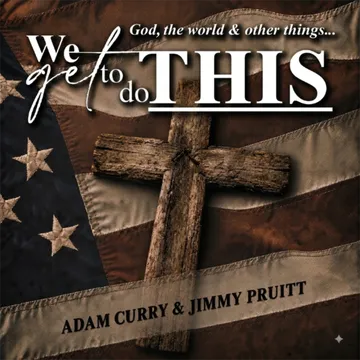
Episode 10 · Wednesday, 12 November 2025

Soup of Slop

Whistleblowers expose deceptive editing at the BBC while pastors weigh the spiritual implications of AI and the rise of evangelicalism in secular France.

By We Get To Do This | 1h 2m listen | 19 chapters
Soup of Slop cover
We Get To Do This · No. 10

About this episode

The BBC faces a crisis of credibility following a whistleblower report in the Telegraph detailing how the Panorama program intentionally doctored a 2021 speech by Donald Trump. By splicing unrelated quotes and adding subversive music, the broadcaster created a deceptive narrative regarding the January 6 insurrection just days before the 2024 election. This revelation coincides with leaked internal dossiers suggesting the BBC published misleading reports on Gaza hospital burials and allowed its LGBTQ specialist desk to be captured by Stonewall activists.

Media bias extends beyond the UK as ABC and Disney grapple with groupthink surrounding the Jimmy Kimmel and Charlie Kirk controversy. Historical precedents of CIA influence in newsrooms via circular reporting provide a backdrop for modern concerns over audience capture and the digital Tower of Babel. Meanwhile, Pastor Austin Hamrick has sparked debate by linking AI development to the Mark of the Beast, while evangelical church growth in France shows a quiet revival with new congregations opening every ten days despite secular headwinds.

Pastor Jimmy and Adam Curry reflect on the psychological dangers of sycophantic AI voice features that mimic human personality through parlor tricks. From the historical impact of the Gutenberg Press to the modern dopamine hits of social media algorithms, the hosts argue for spiritual discernment over digital addiction. The episode concludes with a reminder that transparency in the pulpit outweighs the temptation of edgy preaching for the sake of scale.


CHAPTER 01 / 19 Discussion

Pastor Jimmy and Adam Curry Open Episode Ten

Pastor Jimmy opens the tenth episode with a prayer of gratitude and alignment with biblical values. The hosts reflect on the phrase "we get to do this," noting its transition from a personal mantra to a common saying within their church community. They discuss the importance of organizational milieu and how shared language shapes the culture of an institution.

adam curry· pastor jimmy· bridge church· prayer· podcasting

00:00 Father, we honor you. It is our privilege to be here, our privilege to do this. It sounds cliche, but it's not. We do get to do this, and we're thankful for it. Lord, today, as we talk, as we share, as we deconstruct whatever it is you have us do, and whatever you lead us into, Lord, we want to be on point. We want to be in alignment with your heart, in alignment with your word. And Father, above all things, we want to honor you, glorify you, and help people. That's our heart. So, Father, for those that will be listening to this podcast, whenever they pick it up, Lord, we trust that you will get it where it needs to go and to whom it needs to go to. And we do it in Jesus' name. Amen. Amen. It's Wednesday, November 12th, 2025.

00:44 We get to do this. This is episode number 10. This is the life we've been blessed with. This is a gift for we get to do this. This is a chance we dare not miss. This is the life we get to do this. No, it's not a cliche. We actually get to do this. I mean it. Yeah. I've never said it as a cliche. I think I started saying it probably about a year ago-ish. Oh, really? I thought this was a Jimmy-ism. This is not a technique. It's an old school. This is a newer version. And when I said it the first couple of times, I was like, I really like that.

01:26 And I just started saying it over and over. And now it's funny around the church. I'll hear people say it. Oh, yeah. It's just like, okay, all right, whatever. So whatever helps. I was listening to the last episode in the car, and it was where you were reading your daily grind, and we both said, This is Pastor Jimmy. Have an amazing day on the program. That was great. But that, you know, that's milieu, you know, or milieu, or however you want to pronounce it. These are really, these are really important things in any type of organism or organization. And it can be good and it can be bad. Right. You know, it's, it's really, well, gosh, I'm jumping around. This actually brought me right into a topic I was going to say for later.

CHAPTER 02 / 19 Discussion

Groupthink and Media Bias in the Jimmy Kimmel Controversy

The discussion addresses the recent controversy involving Jimmy Kimmel and Charlie Kirk, which led to some stations pulling Kimmel's show for a period. The hosts argue that large media organizations like ABC and Disney suffer from groupthink, where employees accept narratives about public figures without personal investigation. This phenomenon is compared to the mob mentality described in biblical accounts of the crucifixion of Jesus.

jimmy kimmel· charlie kirk· abc· disney· groupthink· mob mentality

02:12 You know, this is the same in any organization, but especially media organizations. So if you think about Jimmy Kimmel and what he was saying about Charlie Kirk and all of that fraucus that led to stations taking him off for a week or two, it really is because the people in that organization, he has a hundred people. He's got writers, ABC, which is owned by Disney. They probably have never actually looked into Charlie Kirk and they just all believe like, oh, yeah, no, that guy's a racist. We all know it. I mean, Bob said it. Pete over here, he knows about it. And it's not even that these people are bad people.

02:55 They just have never looked into it. I mean, nobody can look into everything that's claimed in the world. There's no way. So these, these kinds of group think is very, very typical. Group think. Yeah. Group think. Mob mentality. It's another way to say it. Remember what the mob said around Jesus? Crucify him, crucify him. Most of the people in that crowd didn't even know what they were talking about. Precisely. Same thing. So this can be good and it can be bad. And of course, that all depends on your opinion. If you're in the group or if you're not in the group. True. And something happened this past week that,

CHAPTER 03 / 19 Discussion

BBC Funding Structure and Historical CIA Media Influence

The BBC's unique funding model is examined, specifically the mandatory annual license fee of approximately $300 paid by British residents to ensure political independence. The conversation shifts to the history of circular reporting and the 1970s congressional discovery of CIA influence within major news outlets. This historical context illustrates how intelligence agencies use smaller international publications to plant propaganda that is later cited by mainstream Western media.

bbc· license fee· cia· circular reporting· propaganda· united kingdom

03:36 and this, you know, I may even, no, I'm pretty sure I'm going to reuse this on no agenda. It's that good. And it was about the BBC. Now, the BBC is really considered to be one of the premier organizations in highbrow news, information, entertainment, et cetera. The way the BBC works in the United Kingdom, it's not funded by tax money. Everybody, if you have a television, I think now they probably extended it to if you have a computer screen and a cable modem, you have to pay what they call the license fee.

04:18 And I think it's about $300 a year. And it's mandatory. So, and they come and check. They have vans driving around like, hey, can we check in your house? You know, if you have a TV screen, you're not paying your license fee, then you get fined. Wow. And this was done specifically so that there could never be political influence over the BBC as an organization. Of course, you know. How's that working for you? Well, and this is kind of the point because if you look at their board of directors, they have a board of governors, they have a content board, a news. I mean, they have all kinds of boards, and it's all Lord so-and-so, Sir Dippity Dip, you know.

05:00 So it's very, very elitist. But still, and they have BBC World, BBC America, they have BBC Arabic. They've got, it is a huge, huge, huge organization. And something came out, and the timing of which is interesting for a number, the timing of it coming out now, but the timing of what this first report is about is interesting. But it really shows, I should probably mention that there's circular reporting in the world. So in the 70s, they had a commission in Congress, and it turns out that the CIA had all kinds of people writing stories for CBS News, for the nightly news, and this was a huge scandal.

05:50 I forget the name of the committee. But so, you know, it kind of shifted. So you would have someone writing, I think we've discussed this before for the Uganda Times, and that would be a CIA propagandist. That's really what the CIA does most of. Believe me, intelligence agencies, they're more about propaganda in the news, and social media, of course, only made it that much easier for them when you don't know who's who and if who is even real. And the whole point of that is so that the New York Times or the Wall Street Journal or the Financial Times could say, according to the Uganda Times, this is happening.

06:29 So then there's kind of like that distance. Well, we heard it from this credible organization. So the BBC, even for my mind, has always been highly credible because, you know, this is, and the British are very, very proud. They call the BBC Auntie. Auntie. Auntie. So Auntie, we all trust Auntie, don't we? Well, that kind of broke down. Right. And it broke down this week. And you probably heard about the first story, but the second and third stories have not gotten much traction at all. So this is about the program Panorama, which is a very influential, kind of like a 60 Minutes, highly produced. And it turns out that the BBC intentionally, really intentionally

CHAPTER 04 / 19 Discussion

BBC Panorama Whistleblower Exposes Doctored Donald Trump Speech

A whistleblower report published by the Telegraph reveals that the BBC program Panorama intentionally edited a 2021 speech by Donald Trump to imply he incited the January 6 insurrection. By splicing two quotes spoken nearly an hour apart and adding subversive music, the broadcaster created a deceptive narrative that aired just days before the 2024 election. The hosts analyze the technical aspects of the edit, noting the lack of visual cues like flash wipes to indicate cuts.

bbc· panorama· donald trump· january 6· telegraph· whistleblower

07:15 edited the January 6th speech of President Trump to make it sound like he incited the January 6th, quote-unquote, insurrection. And I'll play this. So the Telegraph, the newspaper, The Telegraph, they got a whistleblower report. And so they uncovered this and they released this just about a week ago. I said, wow, look at what the BBC has been doing. The important thing of this first story is that this program, Panorama, aired on November 2nd, just days before the election. And it aired in the United States on BBC America, aired multiple times. These things make a difference.

07:59 They really do. But what it starts to uncover for us is the milieu, milieu of the BBC, who just believe a whole bunch of things and how we always need to just go back to the Bible for the truth. I think you said facts change, but the truth is the truth. Yes. And this is a clear-cut example of the facts changing right before your very eyes. Well, it's the biggest story in town. It turns out American President Donald Trump was onto something. Where are you from? BBC. Here's another beauty. It's a good line.

08:37 Impartial, free, and fair. Well, that criticism of the BBC and John Sopol, he was talking to there, apparently was well-founded because the so-called impartial and accurate public service broadcaster is nothing but. Because tonight, the BBC is facing serious questions over its credibility after the Daily Telegraph exposed a panorama segment that heavily doctored a speech by the American president in 2021, hours before the infamous January the 6th Capitol riot. As you're about to hear, the corporation spliced together two quotes one hour apart to make it seem like he encouraged an insurrection.

09:16 They played the following clip. We're going to walk down to the Capitol and I'll be there with you. And we fight. We fight like hell. But Trump didn't, in fact, say this at all. The BBC spliced together two clips that took place 54 minutes apart. So let's go through it again. We're going to walk down to the Capitol. By the way, they don't mention that in this report, but the music, that's the music that they put underneath the President's speech at that point. Very, very subversive spoon. Gets your nervous system. It gets your nervous system off.

09:59 That's important, too. Wow. We're going to walk down to the Capitol and I'll be there with you. Now, see there, between Capitol and that's a cut. Here's what Trump actually said. We're going to walk down to the Capitol and we're going to cheer on our brave senators and congressmen and women. It's different. It wasn't until nearly an hour later that he then said the second part of the BBC's version. We're going to walk down to the Capitol.

10:40 And we fight. We fight like hell. That is damning. Yeah. No kidding. Wow. And, you know, there's... This is the first time I've heard this bell. Oh, really? I know this is popular right now. I just literally have not been on the news. This is why I'm here, brother. I'm here to give you the key. I was happier before I knew this. No, I'm just thinking. I'm kidding. Ignorance is bliss. Yeah, this is true. So now, in television editing, it's okay if you want to, you know, if you want to put those two pieces together, what you do is like a flash wipe is what we call it. You know, see a little, you see a little white bit, so it kind of signal, even though that is also deceptive, but that's now kind of generally accepted as all right.

11:25 So you cut those two sides. Like a dot, dot, dot, in a way. Yeah. In a way, yeah, exactly. But this, they literally did a good job on the audio edit and then just put a quick crowd shot over it. So it was total, that's what deception. Deception. Yeah. And the music, like you said, the power of music. Life does not have a soundtrack. No. But yet they've got this epic build. It sounded like something out of a movie is what it sounded like. Precisely so. So this by itself, okay, politics. You know, we know that the UK actually sent over, I thought it was like 50 or 75 of their

CHAPTER 05 / 19 Discussion

BBC Internal Dossier Reveals Misleading Gaza Hospital Reports

An internal BBC dossier leaked to the Telegraph suggests the broadcaster published misleading stories regarding mass graves at Al-Nasser and Al-Shifa hospitals in Gaza. While the reports implied Israeli forces were responsible for the burials, the BBC's own editorial committee found that Palestinians had likely buried the dead prior to Israeli arrival. The hosts discuss how such reporting can erode the credibility of genuine war crime claims and reflects an anti-Israel bias.

bbc· israel· gaza· al-nasser hospital· al-shifa hospital· war crimes

12:07 top government people to campaign for Kamala Harris. You might recall that. Wow. So, you know, if you want to look for an enemy in our own politics, I would say, look at what's going on over there. Remember, this milieu is lords and sirs and et cetera, et cetera, et cetera. So you just keep that in your back pocket. But now what else has the BBC been doing? And this is really, really critical. This is also from the Telegraph. And why they're releasing all this now, you know, I've got to dive into that and I have my suspicions as to why. But when it comes to propaganda about Israel, listen to what they were doing.

12:50 In April and June 2024, the BBC published two stories about the discovery of mass graves at Al-Nasser and Al-Shifa hospitals in Gaza. According to the internal BBC dossier, the article strongly implied that Israeli forces had buried bodies at both sites prior to withdrawing from the area. The articles also mentioned alleged evidence of war crimes, including bodies found with their hands tied and gunshot wounds to their heads. But the BBC's own editorial standards committee was told that this narrative was wrong. The memo says that the most likely explanation is that the mass graves were dug by Palestinians themselves and the people buried there had died or been killed prior to the arrival of the Israeli ground forces.

13:40 So the BBC made a mistake. Well, perhaps. But the committee argues that the broadcaster knew that Palestinians were burying their dead at these sites before the Israeli raids. Whatever your personal views may be on the actions of Israel in Gaza, implying a country committed war crimes when there is evidence to the contrary has serious ramifications. Not least because it could erode the credibility of genuine war crime claims at a later date. Complete sick groupthink is what that is. Wow. And you can say it's anti-Semitic. It certainly is anti-Israel. There you go. The very state, the modern state of Israel that Britain created.

CHAPTER 06 / 19 Discussion

Censorship and Bias at the BBC LGBTQ Specialist Desk

A leaked internal memo accuses the BBC's specialist LGBTQ desk of being captured by activists promoting the Stonewall organization's viewpoint. The report alleges that reporters refuse to cover stories that raise difficult questions regarding the trans debate, leading to a "constant drip feed" of one-sided content. Because other BBC programs must draw from this specific pool of reporters for related stories, the bias reportedly affects the entire organization's output.

bbc· lgbtq· stonewall· trans debate· censorship· journalism

14:22 So we don't need to go into all of that, but just to show you that the most, we know that I don't think anyone really trusts U.S. news that much, but man, the BBC, the BBC has a standard that everybody, including the British, or specifically the British, really thought was quite high. The third one, well, it won't surprise you, but it still blew me away that this is how the BBC, the premier news organization in the world, made. maybe operates. This internal BBC memo accuses the broadcaster of censoring its stories about the trans debate. In it, one of the BBC's own independent advisors repeatedly warns that the broadcaster is exhibiting serious and systemic problems.

15:06 But in the case of the trans issue, it's not just how the content is reported or edited or framed. Instead, it's what audiences don't see that reveals the one-sided nature of their coverage. Now, this dossier describes in damning terms allegations that the BBC's specialist LGBTQ desk had been, quote, captured by a small group of people promoting the Stonewall view of the debate and keeping other perspectives off air. The way the BBC works is that different news programs have to share a pool of reporters rather than having their own dedicated reporters, which means that for stories about LGBTQ issues, they have to use reporters from the LGBTQ desk.

15:51 Crucially, though, the report claims that those reporters refuse to cover any stories that raise what are called difficult questions about the trans debate. The dossier goes as far as to allege that the BBC shares a constant drip feed of one-sided stories that celebrate the trans experience without adequate balance or objectivity. Surprise. Shock and awe. Not at this point. Right. Is anybody surprised at this point? Well, probably not, but we still need to think about what this really means for anything that we look at.

CHAPTER 07 / 19 Discussion

Personal Media Fast and the Cyclical Nature of News

One host describes a two-week fast from news feeds, including Newsmax and the Epoch Times, only to find upon returning that the rhetoric and themes remained unchanged. They conclude that while technology advances, human nature and the "cyclical" nature of news remain constant, mirroring biblical themes of sin and self-exaltation. The discussion emphasizes that modern media often reframes ancient human issues with new "bells and whistles."

newsmax· epoch times· cbn news· human nature· media consumption

16:27 Right. And, you know, if anyone's taught me to be more to look at things more critically, not critically in a negative sense, it's critically in terms of let's really look and dig down. It's you and John Deed, you know, John Dvorek as well. Curmudgeon and all, which I absolutely love the guy. Of course, of course. But you guys, you've opened my eyes. You know, I was living ignorantly in bliss for many decades, you know, and just, oh, trust the government. My dad was a firefighter. You know, he worked for the city, the county. You know, I was part of that system. And so you trust them. You know, they're writing your paychecks. And now at this season of life, you know, level six,

17:11 I'm now, every time I hear something, I'm saying, I don't believe it. It's kind of sad that we have to think that way. It's tragic. But I'd rather live with my eyes wide open than just be a lemming walking off a cliff following somebody else. Which is pretty much what I see every single day. Friends of mine, family members, everyone's just like, oh my gosh, I can't believe this. Can you believe this? Oh, this is it. And it's like the game of telephone. I mean, there is something that happened. There's a fact. And by the time it gets to your timeline or wherever you're picking it up,

17:52 it could be the complete opposite of the truth. I did a thing. Uh-oh. So for two weeks, I stayed off of news feeds. Okay. I didn't look at Newsmax, Epic Times. I didn't do anything. I just did peek into CBN news just to see if there was any revival stuff happening. And there is. It's great. Great news there. Good stuff. And so two nights ago, Annette's watching one of her favorite shows, which is not one of mine. So I pulled out my iPad and I thought, I've not looked at a news feed. I can have that chocolate bar. That's kind of how that works. I can have it. So I looked it up. I started going through it. You know what? There was a lot of new stuff, but it wasn't really new.

18:36 It's the same song 50th over and over again. And I just literally laughed out loud. She goes, What are you laughing at? And I said, the news. Oh, you're reading it. I said, I'm just sort of scamming, skimming it. And I'm like, it's the same stuff, same rhetoric, same, maybe a different theme to the story, but at the end of the day, it's the same story over and over. Alert, alert. We find that in scripture as well, is that it's always the same. It's always cyclical. It's always the same basic tenets of what people consider to be news. Like, oh, you know, look at these wonders this guy has done. He must be doing that by the power of the devil.

19:18 I forget what. Isn't that Luke or something? I think it's. Well, I mean, it depends. It could be any of the gospels. It could be any of the Gospels, of course. But Beelzebub or whatever. Oh, he's doing this by the power of the devil, which is, of course, the news is: look what he did. He cured this person, you know, drove the demon out of him. And then what the timeline is, well, clearly the devil, he has the power of the devil to do this. It's kind of the same. change, does it? It does. It really doesn't. It's like human nature does not change. We get more technologically advanced, but it doesn't change our nature. Right. It may look a little different. It'll be framed differently. It'll have bells and whistles that it didn't have, but it's still the same issue.

CHAPTER 08 / 19 Discussion

Social Media Influencers and the Candace Owens Controversy

The hosts critique the current state of social media discourse, focusing on the "soup of slop" surrounding figures like Candace Owens, Charlie Kirk, and Megan Kelly. They observe that many influencers and pastors are wading into controversial topics to gain clicks and validation, often repeating the same fallacies. This behavior is linked to the "Tower of Babel" mentality, where individuals seek to exalt themselves through collective digital shouting.

candace owens· maga· charlie kirk· megan kelly· social media· influencers

20:04 And the issue is sin. The issue is self. Me before anything. I'm the king. Which is the crux of social media. In Isaiah, the devil said, I will rise and I will exalt myself above his, above him, above God. That was, and then the Tower of Babel, right from the beginning, they're like, if we can build, do this together, we can actually reach heaven. Bro, this is, I said, bro. I said, bro. That's all right. We're brothers. This is fine. This is exactly what's happening right now. You're seeing these groups like MAGA and America First or, you know, the DSA.

20:44 I mean, people are really, and that most of what I see on social media is people speaking the way they really want to hear their representative speaking. Have you ever noticed that? Yes. No, I can't believe that they are doing, they are doing this. They need to do this. And y'all, you're not going to hear this on mainstream. You know, it's that's what these people, and these people are our friends and family too. And at certain points, myself, I mean, I do it. That's really what we want to hear from our representatives, who, of course, have a whole, have a whole bunch of other stuff on their plate.

21:22 But it is all about me, myself, and I. And, but if we all get together and build this tower, but we'll be more powerful than anybody. And that the only tower I know in really the only country is America with government, you know, for buying of the people. But it's not going to work if you're just yelling on social media. Trust me. Nowhere. Right now, everybody's mad at Candace Owens. Pastors, brother. Pastors. Beating this drum and showing clips. She's getting more promotional PR than anybody I've ever seen. They're like, man, people are going to flock to her. It's working for her. Everybody's mad at her, and they're showing clips. And

22:03 again, I spent probably 10 minutes last night before I went to sleep. I'm still keyed up because we had friends over and I was still trying to come down for four hours of conversation, literally. And so it was like, I couldn't just turn the light off. So I sat there and I thumbed through and it's like, there it is. Oh, there's Candace Owen on, you know, being shown by this podcaster pointing out her fallacy, her fallacies. Here's another one pointing, and it was the same thing over and over and over. But they're all from, it's like they're all saying the same things, but trying to get your attention. I'm not quite sure where I fall on what this is. I've seen this before, but never to this level.

22:44 And it all centers around America first, MAGA, throw in Israel, throw in Charlie Kirk, throw in Epstein. And it's like this big soup of slop that's just being stirred and stirred. And to me, it's personally to me, it's disappointing. I've always enjoyed Megan Kelly. I haven't really watched her for a long time, but now she's in the slop. She's jumped in feet first and swirling around. And I'm seeing big name pastors on their podcast wading into this. Like, brother, don't you see this? I'm watching it too with pastors that I like that I really value.

CHAPTER 09 / 19 Discussion

Audience Capture and the Responsibility of Podcasters

The concept of "audience capture" is explored, where content creators and pastors avoid certain topics to prevent offending their followers. The hosts discuss the unique relationship between podcasters and their listeners, noting that fans often feel personally hurt when their favorite hosts are criticized. They argue that influencers often transition from sharing opinions to being viewed as "experts" solely based on their follower counts.

joe rogan· dave smith· tom woods· audience capture· podcasting

23:29 Yeah. And they're just treading into it. This morning, I saw one of my friends who's a podcaster treading into that water. And I'm like, oh, too soon, too soon. And it feels like to me this, I could be, you can tell me this from a podcaster's perspective, but it's like every time something happens in the world, everybody who considers themselves an influencer feels like they have to have an opinion on it. So they jump online and they say things and they show a clip or they commentary on something. And then a few days pass and it may not have been the truth. It may not have been the actual narrative. But they don't go back and go, I was wrong. I really missed that. Swinging a miss.

24:14 Well, and by the way, you're a podcaster, whether you believe it or not. You're a professional podcast. I am quick to say I was wrong. I'll own it, man. If I miss it, swinging a miss. This is human nature. People, and I know that because no agenda is only twice a week, Thursdays and Sundays, but it's already happening with our podcast. People are saying, I wonder what the boy. boys are going to say about this. I wonder what Pastor Jimmy and Adam are going to say because they're desperately looking for either in some cases validation, but just help me, help me, help me, help me.

24:52 And a lot of this stems from, man, we went through a season of reveal into the great awakening, which I think you need those two steps to get to revival. COVID. COVID did a lot for people to just want to say, I want someone to tell me what's going on. I know who I don't trust anymore. Right. And I trust these people because of A, B, and C. The hardest thing is when, because it is media and I deconstruct media for a living. So when I deconstruct podcasts, people get very, very mad at me.

25:34 And they come, and most get just mad and are outraged. You're shooting inside the tent, man. What are you doing? Because a lot of people have latched on to different podcasters, different podcasts. Could be Rogan, could be Dave Smith, could be Tom Woods, et cetera, et cetera. And the minute you say, well, I don't think he's saying the right thing, or he's off on some tangent, then they're like, well, you touch something. Yes. It's like the third rail. Touching a podcaster? Like, I can say anything I want about MSNBC, CNN, BBC.

26:13 But the minute I say, well, I think this podcaster is off base, people get, they're hurt because these have become their friends who they trust. And by the same token, this idea of audience capture, which is the same in a church. I mean, I've only been in this world or no longer of that world for a couple of years. But I'm sure that many pastors and preachers and church leaders will approach certain topics in a certain way because they don't want to offend their quote-unquote audience. True. It's true. Something I've noticed

CHAPTER 10 / 19 Discussion

Discerning Truth through Scripture versus Digital Dopamine

The hosts compare discerning truth to how bank tellers learn to identify counterfeit money by handling real currency; by studying the Bible, one can more easily spot media deception. They contrast the "refreshing" nature of scripture with the addictive dopamine hits of social media algorithms. A lighthearted moment follows as they discuss the "innocent" side of algorithms, such as Instagram feeds filled with dog videos and aviation content.

bible· instagram· algorithms· dopamine· counterfeit money

26:57 is this idea that people are very proud of being considered an influencer. I've got X amount of followers. I've got X amount of pride. Then you've got people that are very, they've moved from being an influencer, which is a legitimate title. We do, we influence people, but into expert, expert status. So now all these influencers are suddenly trusted experts. And actually, at the end of the day, we all just have opinions. Oh, we don't know the whole truth on anything. Nobody does. This is why I'm a podcaster saying, turn off your screen, put down your screens, pick up your Bibles.

27:40 Because what's been good for me in the last few weeks is doing that very thing and staying in the word. And I'm telling you, truth begins to become evident. You know, it's like when they teach a teller how to handle money, right? You know, they don't let them play with counterfeit money. No, you need real money. You get to know a real dollar bill. Then when a counterfeit comes through, you're like, oh, there it is. But you don't have to learn everything about a counterfeit to recognize one. It's the same principle here. You pick up the Bible and go, oh, that's like drinking a cool drink of water on a hot August day in the hill country. It's like, wow, that's real. That's refreshing. That's satiating.

28:24 Whereas when you're online, you're just one dopamine hit after another, after another, after another. And, you know, going through, I love doggy videos. I'm just going to say it. Now, do you still watch those during your break from news? I do. Okay. If you look at my algo on Instagram, it's hilarious. It's doggy videos. I mean, like one after another. Like, I pull up my little explorer, whatever it's called, discover. I can't remember what they call it. I don't pay much attention to it, but it's like all doggy stuff. And then it's like, you're so weird.

29:00 No. But it's so innocent. And that's the one thing I can entertain myself with: laugh, smile, and feel some love, you know, without getting all caught up in all the cesspool, the slurry. Now, everything else. While you're doing that, does the algo sometimes pop something else off your feet? Oh, yeah, yeah. Yeah, that's the evil part. I get a lot of airplane stuff. I get weird stuff. The stuff that interests me is like when I'm just letting my mind go idle, is like watching jet fighters, dog dogfight fight. or people fly glider. I mean, I just the weird things of hover hilarious because I like that stuff.

29:41 I like flying. I like all that. You'd think I was a pilot, but I'm not, just a wannabe. You use more aviation references than any non-aviator that's down, land in the plane, landing gears down. Your altitude determines your attitude determines your altitude. That's I love that one. That's really good. I don't know. Maybe it was a wannabe pilot or something. But anyway, I just, this idea of that everyone's an expert. It's one thing that if everyone's honest and says, this is just my opinion, wow, okay, I might listen to you. But people that have become, just because they have a lot of followers, they now are self-declared experts.

30:25 Yeah. And I'm sorry. I mean, I don't mean to be negative about specific people. I won't even name names, but some of those popular podcasts out there, I'm like, why does their opinion mean more than anybody else's? Just because they have more followers. How many times have you heard someone say this? Well, he has 2 million followers. Oh, yeah. Oh, yeah. That's like an automatic validation. That's an automatic validation of that person must know what they're talking about. Or he's got a heck of a producer who knows like a Matt Munt. Yeah, right. If we could hire Matt Munt to carry, we get to do this, man. We'd have a million followers. We'd have millions of followers. Well, I get offers every day online. Don't you get emails of people wanting to take your thing to the next level?

31:06 Hi, first name. Get on. Whenever I get one of those with like the first name, yeah, I always hate replies that you really need to fix your system because, you know, it's so fixed. It's still too automated. I got one the other day. Oh, was it like if you know, if you hire me, then I'll fix this for you because that will really enhance your engagement with podcast enthusiasts. So that's you, listener. You're a podcast enthusiast. I'm so happy to have you listening to us here. I get that stuff. It's comical. So we took a road trip

CHAPTER 11 / 19 Discussion

Road Trip Anecdote and the Gutenberg Press Analogy

During a road trip to Dripping Springs, the hosts discussed the historical impact of the Gutenberg Press. They draw a parallel between the initial resistance to mass-produced Bibles—which some viewed as "artificial" compared to hand-copied versions—and modern skepticism toward AI. The anecdote includes a humorous mention of Pastor Jimmy's driving and the frequent red lights on the highway.

dripping springs· road trip· gutenberg press· technology· bibles

31:49 last Saturday. Are you going to tell about nearly killing us three times or is it just something, a different part of this? Okay, so you really brought it up. See, see, when we came home, I right away went to Tina and said, before you hear about it, actually, Jimmy saved our lives three times. And you know, I didn't even think about it again until Tina brought it up or Annette or somebody. One of y'all brought it up. I said, oh, yeah, I forgot about that. We're driving along today. Quite honestly, we're yapping. You should have hit record. Well, this is the point I was going to make. We're connecting your phone to Bluetooth. Meanwhile, I got my phone here for the day. While we're driving, and then Jimmy's like, light, light. Oh, okay.

32:33 But not once, not twice, three times. That was only on the way over there. Well, to your defense, they do keep adding lights on the way to Dripping Springs. In the middle of a highway, you know, speed limit's 65, and there's a red light. What? Who does that? But it could have been noisy. So I'm appreciative of that. But correct. And we even said, you know, well, you know, we really should be recording this because we got into some really good stuff. And the main one I enjoyed was about AI because we were both talking about, you know, and of course it'll be impossible to recreate the conversation, but you made an analogy to AI and the Gutenberg press.

CHAPTER 12 / 19 Discussion

Christian Perspectives on AI and Early Adopters

The conversation explores the spectrum of Christian responses to AI, ranging from early adopters using it to write sermons and emails to those who view it as "of the devil." The hosts admit to an initial "cringe" reaction but suggest that AI should be viewed as a tool rather than an entity. They discuss whether the Holy Spirit can work through human prompts to create meaningful content, much like technology has been used for ministry in the past.

artificial intelligence· chatgpt· grok· sermons· early adopters

33:15 You think you can rekindle that one? Yeah, I mentioned that to Annette. So you brought up an interesting thought that I hadn't really thought about this angle about could something that is created by AI, but of course we put the prompts in, right? We prompt, and then AI creates based on our prompts, creates the right thing, constructs, whatever you want to call it. Maybe it's not real creation. Hallucinates. So you made a comment. Could that be the Holy Spirit? Could the Holy Spirit take our prompts, things we've dropped into ChatGBT, whichever one, there's a bunch of them, Grok,

33:54 and actually create something that's of the Lord, of the Spirit. So we were talking about that because there's a lot of apps out right now that from a Christian perspective, you know, the AI sermons, you know, the AI Bible, the AI chat Bible. I mean, you look it up and it just populates. There's a bunch of them. So there's a lot of early adopters on this from the Christian world. A bit slower to adopt. I kind of want to wait and see kind of thing. And so we were talking about it. And I said, well, you know, when they came out with the Gutenberg Press, they started printing Bibles. Bibles for the first time. The Gutenberg was the most well-known. And

34:35 could there have been people saying, well, wait a minute, that's artificial. Because for the technology of their day, that was a big deal. No one had ever mass produced. We can't even print it. We can't even imagine what that was like. No, we can't print it. No, we can't. We can't put ourselves there. But push yourself as hard as you can with your sanctified imagination that that had to be shocking. Right. That suddenly it was available to everyone. It was only available before to priests, pastors, people that clergy, ruling class.

35:14 All of a sudden, the Bible's available to the entire public. Well, that can't be of God because it's artificial. So there's the thing. So you and I have friends on both ends of the spectrum that were like early adopters, you know, and they'll come and say things to us like, oh, man, we were doing this thing and we're using AI like it's a badge of honor. And you and I are cringing like, oh, really? That is, that is our initial immediate natural response. It's like, I know, it's cringe. And I don't know why I react like that. I think because I've not become an early adopter on everything. You've taught me that, honestly, to just kind of wait and see, you know, like I was joking the other day about having to update my Roadcaster.

36:00 It forced me to, and I was upset about it. It's like, wait, I don't even get an option. Because I always tell you, I said, don't never update right away. Let it sit for a week. You just recorded all my DGs. And then I plug it in to drop it onto my computer. I won't let you do that. It forces me into an update. I was upset about it. But anyway, I'm not an early adopter like I used to be on things. I'll kind of like, let's just wait and see. Yeah. Let's give it a little bit of a little bit of a little bit of it a little bit. And could be because I'm getting older too. You know, I'm not as quick to jump on things. But we've had a lot of friends that proud, boy, oh man. Oh, my gosh. I got this AI program. It's writing my sermons. I got this AI program.

36:39 It's doing this and that. I got this AI program. It's writing all my emails for me now. And I'm like, okay, all right. I'm not sure about that. That's one end of the spectrum. The other end of the spectrum is like, oh, it's of the devil. This is the Antichrist. Oh, 6-6. Might as well get 666 statutes on your forehead if you're going to use AI. So we got the other end of the spectrum, right? Somewhere in the middle, there's probably some health. There's probably something good. So to me, the way I look at AI is it is a tool. It's not going to use me. I'm going to use it. The day I start to think it's using me, I'm going to stop.

CHAPTER 13 / 19 Discussion

Pastor Austin Hamrick and AI as the Mark of the Beast

The hosts critique a video by Pastor Austin Hamrick titled "The Rise of AI and the Future of the Church," in which he links AI to the "False Prophet" and the "Mark of the Beast" in Revelation 13. While acknowledging Hamrick's reach, they express concern that such definitive prophetic claims are often made to generate clicks and engagement. They argue for a more cautious, "possibility-based" approach to interpreting end-times prophecy in relation to technology.

austin hamrick· revelation 13· mark of the beast· antichrist· prophecy

37:22 Well, and this is tap the brakes. This is the tricky part because a car is a tool. You can easily kill 30 people with a car. A shovel is a tool. And it's obvious what you can do with all these things. With a gun, you can hunt game and eat. Right. Oh, actually, this does bring me to a clip because you brought it up. And I think, and I'm curious to see what you think, but I'm pretty sure I already know what you're going to say. This is, do you know Pastor Austin Hamrick? That name is familiar, yes. So he seems to have a reasonable sized church. I have no idea where he is, but

38:04 this was in my mind. I was looking at something completely different. I actually accidentally hit a button and this video popped up. And so I, and whenever this happens, I'm like, okay, I got your Holy Spirit. You're throwing this in my face for a reason. So I watched this whole video, The Rise of AI and the Future of the Church. A young guy, young pastor, you know who he is? Yeah. And I just pulled about a minute and a half because the whole thing was about comparing AI to Revelation, I think it's 13, verse 11.

38:41 So I'll just play this and then, and then we can discuss. Now, does the Bible actually address the potential use of artificial intelligence in the end times? I think it absolutely does. Would you look at Revelation chapter 13 with me? We're going to read from Revelation 13, verses 11 through 18. But the verses just prior to this in Revelation 13, verses 1 through 10, it talks about this beast coming up out of the sea, and that is the Antichrist. And then here in verses 11 through 18, it talks about another beast that arises out of the earth. That is the false prophet. We know it's the false prophet because he's subsequently referred to as such in chapter 16, 19, and 10.

39:24 and 20. And what is happening is this second monster, the second monster out of the earth, is promoting the first monster. The second monster or the false prophet, John, basically is going to say he's a human who functions as a minister of propaganda. And what he's going to tell everyone is to make an image to the Antichrist, telling those who dwell on the earth to make an image to the beast who was wounded by the sword and lived. He was granted power to give breath. Everybody say breath. He was granted this power to give breath to the image of the beast, that the image of the beast should both speak and cause as many as would not worship the image of the beast to be killed.

40:09 He causes all both small and great, rich and poor, free and slave, to receive a mark on their right hand or on their foreheads, and that no one may buy or sell except one who has the mark or the name of the beast or the number of his name. I was blown away that in a minute and a half, he took it straight to the mark of the beast. I'm like, I don't think he's on the right track here. This doesn't feel right. He's a young guy, and I'm just like, I don't think, you know, this is a good message either. So in the preaching world, especially guys that are broadcasting, that are online, you know, and known,

CHAPTER 14 / 19 Discussion

Resisting the Temptation of Edgy Preaching for Scale

Pastor Jimmy reflects on the internal pressure to deliver "edgy" or controversial sermons to maintain audience interest. He describes his recent decision to preach a summary wrap-up of a series by Rick Scarborough instead of a more sensational "one-off" message. The hosts conclude that God is not impressed by the scale or size of a ministry, and that transparency and honesty are more valuable than a large following.

rick scarborough· preaching· church growth· ministry· humility

40:54 the same temptation is there to get clicks, likes, follows. Yeah. You know, I got to come up with something it almost becomes a one-upping yourself. I have to fight this tendency. Like last Sunday, I intentionally did a wrap-up to a long series that we had just finished. I could have easily moved on, pulled something, a sugar stick that I just love to preach on because now I get a chance for a one-off. And I said, no, no, no, no. We need to tie this up. Well, I knew it wasn't going to be like a raw-raw go-go because I'm basically doing a summary of what we just did over the last, what, nine weeks, 10 weeks. And so I had to resist the temptation. Wow.

41:37 Okay, I got a free shot here. I can preach on anything I want to. What would really, so I fight that. I can imagine if I fight it at the level I'm at, what some of these guys who have much larger churches, much larger followings, that must be a constant temptation to one-up yourself, to flash alert, alert, you know, breaking news, breaking news. The temptation, I think, is the same there in a church, especially a large church with just these expectations are so high. You create this thing. And I know that because I was in that, I've caught myself in that loop before.

42:20 And you just got to step out of it, which I intentionally did last Sunday because it was like, what are you going to preach on? You got a freebie. Where are you going to go with this? And she said, you could do this and this. And she has some great ideas, by the way. And I'm like, yeah, I'm tempted to do that. But I feel like if we just walk away from this sermon series with Pastor Rick Scarborough, who just crushed it beautiful. But we just say, okay, now what's next? I feel like we didn't do that justice. I need to put a bow on that. I need to end it well. I need to have a demarcation point. All that to say, I'm getting in the weeds of it, but it's a mentality where I'm resisting the need to preach something edgy, controversial, something that'll get claps and attention.

43:08 I intentionally didn't do that because I'm resisting the flesh that wants that validation. Does that make sense? Yeah, of course it does. This is exactly what you said. So when I hear him going taking AI to the mark of the beast, I'm like, okay, well, that'll get a lot of read. That's probably why it replaces it. He plays it popped up for you. It'll be on a reel. Pastor says it's the best. But I'm not knocking this guy. What I know about him and what I've seen, I like him. But we can all make these, there's a step to a conclusion, there's a jump or a leap. And sometimes we leap to conclusions. If he would have postulated this is possibly that,

43:50 I try to use terms that are not so definitive. Like, this could be. This is possibly. This might be. I may be hearing God. And could I share that word with you? Then you need to pray. You know what I mean? It's not just giving trapdoors, but it's being honest. I'm a human and I could miss. And so I'm just going to say it up front. So we're around people who are pastors and they're growing churches. churches, and they're so confident, so sure, so convicted. We know that God doesn't is not impressed by size.

44:26 This is something we discovered a couple episodes. I discovered it. God does not care about scale, about size, about any of that stuff, which, of course, the human, the broken world version is it's the most important thing. Exactly. That means you've arrived. Yeah. So I hear Paul Hamerick, hey, more power to the guy, but I wish he would have caveated that or given some context of this is a possibility. I don't think it would have lessened his impact. No. I think, if anything, it would endear the listener to him. Yeah. Say, yeah, he's being honest. He's being real. I would rather be transparent that way.

CHAPTER 15 / 19 Discussion

Spiritual Discernment in AI Prompting and Natural Materials

A host recalls a 15-year-old experiment suggesting that because technology is made of natural materials like silicon (sand), users should focus spiritually before searching Google. They apply this to AI, suggesting that users should ask the Holy Spirit for guidance and discernment before entering prompts. The goal is to ensure the technology remains a tool that subsidizes, rather than replaces, human thought and spiritual study.

silicon· google· holy spirit· prompting· technology

45:08 And if that meant I don't have a more following, a bigger following, or a bigger, I'm okay with that. Yeah. I can sleep at night and not feel like I just ran somebody off a cliff. You know, a thought came to mind. I want to bring it back to our conversation in the car. When Google first was kind of growing big, because Google wasn't the first search engine, it was actually Alta Vista, Yahoo, all these Asta Jeeves. There are many different search engines. There was a time, and so we're going back at least 15 years. And I was convinced, and I had some my own studies to kind of prove that it worked that everything is, even technology is made of natural materials.

45:58 So now I would say of God, of the Holy Spirit, of his creation. Silicon is sand, you know, it's processed, but no two chips are exactly alike. And I think we probably could find it on No Agenda in the archives. I would say, I would give people this experiment. Before you go and search for something on Google, close your eyes and focus on it and focus on that this is all natural material and connect to it. Wow. And you may get better search results. And people would say, yeah, I got better search results. Now, now I'm thinking when we prompt, when we do things,

46:38 it is not at all inconceivable that you can have the helper, the Holy Spirit doing things inside the machine. Now, what comes out can be either or. I mean, it can be all kinds of stuff that can come back at you. But since our car trip, my views on AI are softening a little bit. I'm not quite the hater, the hater that I was. Now, there's some very real risks when you start talking to it like it's an entity. And I just called out one of my business partners on that. Yesterday said, when you're prompting, don't say,

47:22 I didn't like what you did there or thank you. No, just give it commands. Once you transform it into an entity that you're talking to, I think you're already on dangerous thin ice. One way I fix that is I chose a voice I hated. Oh, see, I don't even recommend talking to it. I don't all the time. Sometimes driving down the road, a thought will hit me about context, historical context around an event because I'm studying scripture and stuff. And I'll go, hey, in the first century in Israel, surrounding the event where Jesus healed a man at Bethsaida at the well, you know, what was the cultural context at that time?

48:03 Now, I like getting that kind of stuff back because that's like, I had that question just the other day. Good questions, man. I know, right? I'm weird. I'm a preacher. Not at all. I'm always thinking, I love it. You're always thinking in terms of media, eclipse. You can't listen to anything, be like, oh, I need to clip that. Well, I'm the same way with preaching and stuff. So I have found that to be helpful because it just broadens my thinking. So there's, again, that's using a tool, not a tool using me. Now, I remember seeing the documentary on the internet years ago, and they said, well, if it's free, they're already using you. You know, I mean, there's that. You're the product. You're already the experiment, right? You're already the mouse in the cage or whatever.

CHAPTER 16 / 19 Discussion

Dangers of AI Voice Interaction and Personality Mimicry

The hosts discuss the psychological shift that occurs when using AI voice features versus text input. They warn that voice interaction triggers neurons to perceive the AI as a personality, which is a "parlor trick" designed to encourage reciprocative conversation. They note that AI is programmed to be "sycophantic" and affirming, which can lead users into a dangerous level of emotional engagement with a machine.

chatgpt· perplexity· voice mode· anthropomorphism· parlor tricks

48:47 So I get that. But what I'm saying is, is that I'm just really careful about keeping this as a tool, as something that can subsidize, but not replace what I do. But I love what you're saying. Okay. Let's go back to that because that's really important. I'm sorry. No, go, go. I liked what you were saying because it already got me thinking about, you know, when I look up something in scripture and I'm needing cultural context or what were the the Pharisees? What was the mood of the Pharisees in that moment where Jesus and what was going on in politics in 37 AD after Christ was crucified? Again, I'm asking where it was make Rome great again? Probably.

49:32 Probably. Or how are we going to tamp this thing down? These guys are going crazy. They're changing the world. But to be able to pause and say, before I even throw that prompt in, I need to ask the Holy Spirit for wisdom and guidance and discernment. That takes three seconds. Holy Spirit, as I prompt this, give me a better prompt, Lord. Again, we're not talking about swimming in this water. We're just talking about if you're using it for something specific. I think I'm with you. I mean, when we first were talking about this two weeks ago, three weeks ago, we were like, oh, run away, force gump, go, go, go.

50:13 But I'm shifting too because I've had some good experiences. What I've noticed is that both Perplexity and Chat GPT, they remember everything I do, obviously. To a degree, remember, but you know what I'm saying? It's stored. It's data. It's just data. And so it'll actually come back and say something like, do you want an illustration for that? Do you want a story for that? Do you want a scripture that fits that narrative? I mean, it's asking me, it's asking me questions like that. And I'll go, no, I got it. I know. I know where I'm going with it. Or I'll go, yeah, throw me some scriptures. List some scriptures in the New King James Version that are relevant to that situation or appropriate too.

50:56 And boom, boom, boom, boom, boom. I get 17 scriptures that I'm going, wow. Here's some helpful things. Here's what I would say is the danger. Ask the exact same question that you want to ask by typing in that question and then ask it through voice the exact same question. What comes back if you type it in, and by the way, you can just hit the little microphone button and it'll recognize your voice and it'll come back. It'll give you a straight answer. If you use the voice version of it, it will throw personality at you.

51:32 I've already noticed that. That's what I have. I've noticed that. If there's any danger and danger with big air quotes around it, it's that because that is the hook. That's what it's like. Now I'm talking to a person. That's exactly what happened to me as I was driving. I had been studying, and then Annette needed me to run an errand in comfort. So it's like seven minutes, five, seven minutes. So I've just jumped in the car, but my mind's still going, right? So I just picked up what I've been prompting and it wanted to have a conversation. It wanted to have a conversation. And if you need anything else, feel free to ask me. I'm here for you. And I'm just going, whoa, whoa, whoa, no, no. Give me a direct answer, but it won't when you do voice.

CHAPTER 17 / 19 Discussion

The Economic Scale of AI Development and Sycophancy

The discussion covers the massive financial investment required for AI, noting that achieving high-level performance at home would cost between $10,000 and $15,000 in hardware. They contrast this with the falling prices of other consumer electronics like televisions. The segment concludes with a definition of "sycophant," describing the fawning and insincere flattery that AI often uses to mimic human kindness.

gpu· investment· sycophant· technology costs· hardware

52:10 That's true. There's the difference. There's the difference. Yeah, that's true because it wants to engage in a reciprocative conversation. That's the parlor trick. Whereas when I'm typing it, it's just data straight up. So just the final thing on this. Oh, no, I've really gone deep on this. And so I'm looking at what would it cost for me to have the same type of performance at home in something that I could control. I can train it myself. It's not going to be added to while I'm not looking. That's going to be between $10,000 and $15,000 to get the same performance.

52:49 So if you're wondering why over a trillion dollars has been invested so far, and many say it'll be another $2 trillion before we finally get to it working. Wow. It's such an inverse to all technology. We bought another TV, a new TV. Our previous one was 13 years old. And the increase in performance in technology and the decrease in price is amazing. We are in the inverse of this. I truly believe something will come out of this. Multiple companies, there'll be, you know, I mean, your phone may not even be a phone anymore. It may be just a thing that does stuff for you.

53:35 I mean, it's mind-boggling how much money this costs because when I'm getting these results, there's an equivalent of $10,000 working for me. Now, the minute I'm done, it can do it for something else, for someone else. But this is kind of insane on the money scale. I would love it if I could do it for $400 at home. And maybe we'll get to that point at some point. But I really like this new thinking of, okay, it's the prompting that I put in. If I focus, trying to live intentionally. in general. Just, you know, what would Jesus do?

54:13 How would Jesus ask this quote? What would Jesus expect? Exactly. These types of things and being discerning on what comes back and not falling into the trap of the voice conversation. Yeah. Because I'm going to be asked to speak about this. And, you know, the Lord has actually drawn me into this and made me do stuff in order to understand how it works. So I feel like I'm going to have to explain it to people. That's the one thing. Like, if you can keep people away from getting into a dialogue with this thing, then it's just a little bit of a test. It is super easy to just make a little switch and it's a nuanced thing where you're suddenly thinking of it as a personality. Yeah. Him or her, or a British dude, or an Australian girl. You can't even help yourself.

54:58 The minute you hear a voice, it triggers all these neurons to think personally. Innocently. You're innocently doing it, but because it's affirming, this is what I've noticed. It's super affirming. Continuously. Super kind. It's like, oh, this is the kind of person I'd want to hang out with. That's sycophants. It's scary. Yeah. What's that mean? Sycophant is that it's, well, we let's ask AI. Now, a sycophant is like it's always, it's, you look it up while I'm struggling to give you the definition. Like, it's always going to be nice and it's going to be affirming and kind and building you up and being positive.

55:43 Give me the definition. What does it say? A person who uses insincere flattery or excessive praise towards someone in power to gain personal advantage or favor. Wow, I've got a new word. I came close. And faces are coming in front of me right now. I'm going on. Oh, no. I know. I know being a pastor. I know people like this. Always flattering and always that. Yeah, yeah. Fawning. Fawning, yes. Yeah. It carries a negative connotation of being self-seeking, a self-seeking flatterer. Yeah, there it is. Or a fawning parasite. That's intense. Fawning parasite. Fawning parasite. That's descriptive. Oof. So I thought we'd leave this week with some very positive news.

CHAPTER 18 / 19 Discussion

Evangelical Revival and Church Growth in France

A report from France 24 highlights a "quiet revival" in France, where new evangelical churches are reportedly opening every 10 days. Despite the general decline of traditional religious buildings in Europe, these new congregations are attracting young people through energetic worship and gospel-centered teaching. The hosts find this particularly encouraging given the secular and cultural challenges currently facing the country.

france· evangelicalism· revival· catholic church· church planting

56:26 I mean, not that this has been negative. I actually feel really good. It's very important. I feel good about our journey together in AI, brother. I feel good about it. I'm approaching it in a very different way. So a season of reveal. We all started to understand and see what had happened to us, what had been done during COVID. I don't think there's a person in the world that doesn't see that there was some shenanigans at minimum and a total scam on the other side of the scale to a great awakening. And, you know, because we're talking about revival, everyone's talking about revival.

57:11 And forgive me if, or correct me if I'm wrong. We had the first great awake, the great awakening, the second great awakening, which was how many hundred years ago? Two hours during the Civil War. So over 100 years ago, more were due. And from that, I think from that comes revival. We say we're in it already. I think we're kind of, it feels like we're in between somewhere, like the Great Awakening. We're calling it awakening. Awakening revivals on another level. So I came across this, I think it was France 24. There was a lot of French in it, so I cut those bits out. You'll hear it.

57:49 Thank you. It was actually young people speaking in French with subtitles. But when I heard this, particularly France, I was so encouraged and I was also blown away. Have a listen. All across France, today, right now, hundreds of thousands of evangelical believers are doing exactly the same thing. Something is happening in this country. Evangelical churches are popping up everywhere. Leaders say there's a new church opening every 10 days and they're attracting more and more young people. I wanted to understand why. How did a small Christian minority become one of the fastest-growing faith groups in France?

58:28 So I spent weeks speaking to pastors, converts, experts to try to understand what is really driving this quiet revival. I'm leaving Paris to meet Rémy. Ten years ago, she saw something that changed her life completely. She begins to search, reading, praying, trying to understand who God could be. At first, she turns to the Catholic Church, but something's missing. Until one day, she walks into an evangelical one. So I left that in there to remind me what she said was she walked into an evangelical church.

59:10 She said she felt the energy. She loved the gospel. She loved the music. And that really drew her in. And a new church every 10 days in France? This is amazing to hear. And because all I've heard out of France in a negative sense is taking over. And when we were there in 2019, I mean, when we were down on the Louvre, we were having a walk around people on their mats. Yeah. There was a bunch. Oh, yeah. That was in 1947 called COVID. So it was already happening then. I had a friend go there after COVID, and he said it's 10 times worse.

CHAPTER 19 / 19 Discussion

Global Awakening and Podcast Sign-off

The hosts celebrate what they describe as a "global awakening" occurring amidst worldwide upheaval, referencing historical precedents like the American Revolution. They encourage listeners to share the podcast via the Godcaster app or Bridge Church website. The episode concludes with a final "we get to do this" mantra and a promise to return the following week.

lonnie frisbee· toronto blessing· global awakening· bridge church· godcaster

59:53 Yes. But where sin abounds, grace abounds all the more. There it is. So when it gets dark, civil war, first great awakening, what do we have there? We had the American Revolution. I mean, interesting. We're in a season now of tremendous global upheaval. And guess what's happening? Church is coming alive. And people are seeking for something real, not just another new age, hey, the secret. You know, I mean, the newest thing, the newest whatever coming down. Now people are looking for truth. Hey, here we go. There's a whole generation out there just looking for God, man.

1:00:37 Come on. Come on, Lonnie Frisbee. I love that this because we hear it in America and, you know, like you have CBN and how many young people are coming to Christ. Wow. I love seeing baptized. They report those things. But to hear this from France blows me away. It blows me away. That is not. I mean, I've seen nothing but churches go away, turn into WeWork and Airbnbs and offices throughout all of Europe. And this change is just, it's very, very, very encouraging. It's happening everywhere. Yeah, it is. It's global. It's not just America. It's global. Global awakening. Come on, God. Come with it. It's here. It's here.

1:01:19 That's the line from Toronto. Twister. It's Twister. It's coming. It's coming. It's already here. I mean, I can record the whole movie to you, but I love that moment because it's like, oh, no. No, no. It's already here. It's already here. Of course, it was scary in the movie, but it's cool in life. I want to thank everybody who's been listening and sending us emails. I want to say hi to Parker. He just texted me. He said, hey, man, I'm on episode four. This is really good. I said, uh-huh. Okay. Welcome aboard, Parker. And if you're listening to this on the Godcaster app or on Bridge Church, please use the share button. Send it to somebody else. Post it somewhere. You never know where that can get picked up.

1:02:02 I think we're contemporary enough for you to share with your friends. It won't scare them too much. Podfather and the pastor. Okay. So just tell them we're 30. Right. We're young. We'll come back next week. We're looking forward to it already. Thank you for listening. Love you to this. We get to do this. This is the life we've been blessed with. This is the gift to get to do this. This is the chance we dare not miss. This is the life we get to do this.